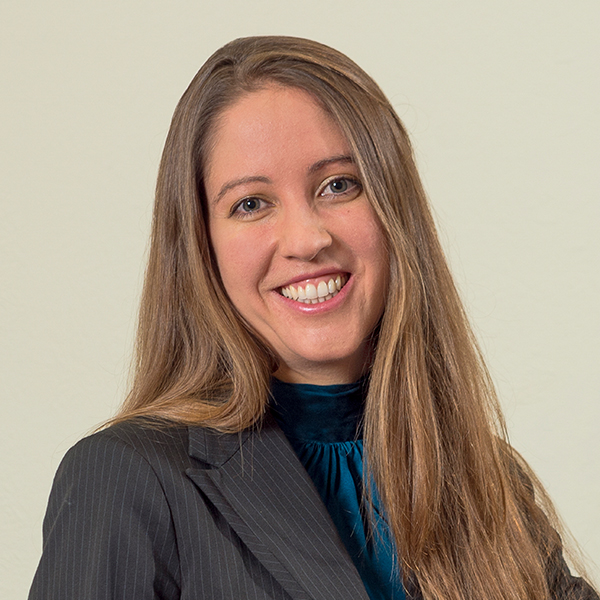
Dr. Christine Ryan is a Senior Lecturer in Politics and Global Studies at the University of Winchester's Department of Social Sciences within the Faculty of Humanities and Social Sciences. She holds a BA from DePaul University (Chicago), an MA from the University of Manchester, and a PhD in Politics from SOAS, University of London (2009). Her expertise spans War and Security, Sub-Saharan Africa, and Antiracism, with a focus on Children and War, Political Sociology of War, and Conflict and Development. Her research examines child soldiers in Sudan, media representations of conflict, and post-conflict societies. She has organized major conferences like the 5th International Children of War Conference (2013) and contributed to publications including Hurst & Co Publishers Ltd and The Round Table . Awards include the 2013 University of Winchester Learning and Teaching Research Funding and 2007 University of London grant. Dr. Ryan has published investigative articles on South Sudan's political developments and has presented widely on topics like Tunisian street children post-Arab Spring. Her work bridges academic research with practical interventions in conflict zones.
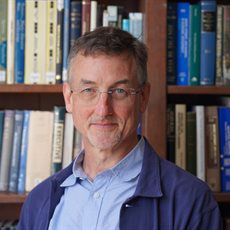
Scott Taylor is a Professor of Leadership & Organization Studies in the Department of Management at the University of Birmingham’s Birmingham Business School. He also serves as the Business School Director of External Engagement and Responsible Business and as Academic Lead for Accreditations. He has held academic positions at Open, Essex, Exeter, and Loughborough Universities, and has been affiliated with the University of Birmingham in two periods: 2002–2007 and since 2013, confirming his current active status. Education: PhD in Management, Manchester Metropolitan University MA in Human Resource Management, University of Bolton MA in Arts, University of Glasgow His research centers on feminism in organizations, with current projects exploring gender quotas in political parties and women in the craft brewing sector. His work critically examines misogyny, gendered workloads, and the roles of men in feminist organizational change. He has published extensively in top journals such as Gender, Work & Organization , Human Relations , and Organization . His recent publications reveal a consistent focus on gender, power, and organizational ethics, often from a feminist and critical perspective. Scott Taylor is currently Development Editor for the Journal of Business Ethics and serves on the editorial boards of Academy of Management Learning & Education , Leadership , and Organization . He supervises several postgraduate students including Jennifer Davies, Isbahna Naz, and Dannielle Dorn. He is also a member of the Chartered Association of Business Schools’ Equality, Diversity & Inclusion committee, reflecting his institutional leadership in equity issues. Scientific Awards and Recognitions: Member, Chartered Association of Business Schools EDI Committee He has taught and visited universities internationally, including Auckland, Delhi, São Paulo, Jeddah, Melbourne, and Lapland. His academic leadership, editorial roles, and sustained research output confirm his active and influential position in the field of organizational studies.
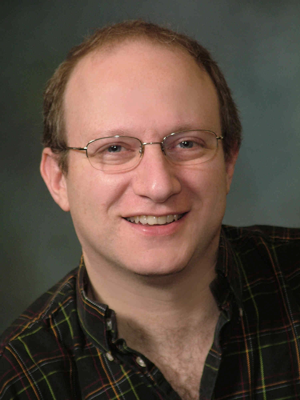
Daniel Leunbach is a Senior Lecturer at the School of Business, University of Oslo , specializing in Entrepreneurship . He teaches courses in strategy, innovation management, and entrepreneurship while integrating philosophy and psychology into his research to study decision-making under uncertainty. Ph.D. in Strategy and Entrepreneurship, University of Oslo MSc in Innovation and Entrepreneurship, University of Oslo BSc in Molecular Biology, University of Bergen His research explores the intersection of entrepreneurship theory , philosophy , and psychology , focusing on how entrepreneurs navigate situations where outcome probabilities are impossible to quantify. Recent publications investigate topics such as entrepreneurial imagination through poetry , resource acquisition negotiations , and Wittgensteinian approaches to defining entrepreneurship . Leunbach collaborates with scholars like Truls Erikson and Glenn Roger Kristiansen , publishing in journals such as Academy of Management Review , Scandinavian Journal of Management , and Journal of Business Venturing Design . He is affiliated with the Entrepreneurship (ENT) research group and consults on entrepreneurial decision-making frameworks.
Kenneth Ross is a Professor in the Computer Science Department at Columbia University in New York City. His primary appointment is within the Department of Computer Science, with affiliations including the Foundations of Data Science Committee. His work bridges theoretical database research and practical system implementation. His research focuses on database systems with particular expertise in query processing, query language design, data warehousing, and architecture-sensitive database system design. Additional research spans computational biology, especially analysis of large genomic data sets. Current projects include Linear Algebra Operators in Databases for machine learning workloads and Repeats and Somatic Mutation analysis in genomics. His work consistently addresses the intersection of hardware capabilities and database system design. Ross leads the Database Research Lab at Columbia, which has produced significant work on query optimization, GPU database processing, and hardware-conscious database systems. His recent publications demonstrate strong focus on adapting database systems to modern hardware including GPUs, SIMD processors, and persistent memory. His scientific recognition includes: Packard Foundation Fellowship Sloan Foundation Fellowship NSF Young Investigator Award Distinguished Faculty Teaching Award (2008) Ross actively advises undergraduate engineering students (juniors with last names P-Z) and has taught foundational courses including Introduction to Databases and Programming and Problem Solving for over two decades. His teaching portfolio shows consistent engagement with both theoretical concepts and practical implementation challenges in computer science education.
Academic Profile: Damir Filipovic is a Full Professor and the Swissquote Chair in Quantitative Finance at the College of Management of Technology (CDM) of École Polytechnique Fédérale de Lausanne (EPFL), Switzerland. He previously held academic positions at the University of Vienna, University of Munich, and Princeton University, and served as Head of the Vienna Institute of Finance. Research Focus: Quantitative finance, risk management, stochastic processes, term structure modeling, volatility risk, and machine learning applications in financial markets. Industry Collaboration: Co-developed the Swiss Solvency Test for insurance capital requirements while consulting for the Swiss Federal Office of Private Insurance. Publications: Contributed extensively to journals like Journal of Financial Economics, Mathematical Finance, and Annals of Applied Probability, with a textbook on Term-Structure Models. Academic Service: Editorial board member of multiple journals and organizer of advanced workshops on systemic risk and financial technology. Recent Research: His work emphasizes machine learning for portfolio risk management, kernel-based yield curve estimation, and robust stochastic modeling. Keynote speaker at international conferences on finance and insurance mathematics, with over 15 recent publications in 2023-2025 addressing high-dimensional financial problems, neural control systems, and causal inference in market data. Education: Ph.D. in Mathematics from ETH Zurich (2000). Graduate of ETH Zurich and University of Vienna. Teaching & Mentorship: Supervises current and former EPFL Ph.D. students in quantitative finance, including Nicolas Camenzind, Joshua Hayes, Andrea Ruglioni, and ten others. Former students like Damien Ackerer and Lotfi Boudabsa now lead research in risk management. Labs & Programs: Directs EPFL's Finance and Technology Programme, leads the Computational Finance Group (CSF) at EPFL, and contributes to Swiss Finance Institute initiatives. Scientific Leadership: Served on EPFL Committee of Academic Evaluation and Doctoral Program Finance committee.
Dr. Muhammad Rashed is an Assistant Professor in the Department of Computer Science and Engineering at the University of Texas at Arlington, within the College of Engineering. He holds a Ph.D. in Computer Engineering from the University of Central Florida (2024) and a B.S. in Electrical and Electronics Engineering from Bangladesh University of Engineering and Technology (2015). Ph.D. : Computer Engineering, University of Central Florida, 2024 B.S. : Electrical and Electronics Engineering, Bangladesh University of Engineering and Technology, 2015 His research focuses on electronic design automation (EDA), in-memory computing, AI acceleration, and sustainable computing. He explores novel computing paradigms to overcome the limitations of traditional architectures, particularly in data-intensive applications such as AI and scientific computing. His work emphasizes hardware-software co-design and leveraging emerging non-volatile memories for energy-efficient processing. The 15 most recent publications highlight a consistent focus on in-memory computing, particularly in path-based and flow-based architectures, logic synthesis, and AI acceleration. Key themes include optimization, fault tolerance, verification, and the use of advanced data structures like sentential decision diagrams. His work is published in top-tier venues such as DAC, ICCAD, ASP-DAC, and IEEE/ACM journals. Scientific Awards: UTA CARES Grant for OER Creation Research Experiences for Undergraduates (REU) Grant Alireza Seyedi Doctoral Research Innovation Endowed Scholarship David T. & Jane M. Donaldson Memorial Scholarship IEEE/ACM William J. McCalla ICCAD Best Paper Award Nomination Best Research Video Award, Design Automation Conference (DAC) Dr. Rashed advises several graduate and undergraduate students in the NextGen Computing Lab and is involved in research grants including the UTA CARES Grant and REU funding. He actively contributes to academic service through roles such as conference TPC member, journal reviewer (e.g., IEEE TCAD, ACM TODAES), and committee participation in the department and college. His lab, the NextGen Computing Lab, is dedicated to building scalable, energy-efficient computing systems for next-generation AI and scientific workloads, aligning with national initiatives in advanced computing.
Mehran Sahami is the James and Ellenor Chesebrough Professor in the School of Engineering and Tencent Chair of the Computer Science Department at Stanford University. He holds the academic rank of Teaching Professor of Computer Science and is also a Senior Fellow by courtesy at the Freeman Spogli Institute for International Studies. As a Bass University Fellow in Undergraduate Education, he has made significant contributions to computer science education at Stanford. Dr. Sahami earned both his undergraduate and PhD degrees from Stanford University's Computer Science Department. After completing his PhD, he worked as a Senior Engineering Manager at Epiphany before joining Google as a Senior Research Scientist from 2002-2007, while also teaching as a Lecturer at Stanford. In 2007, he joined the Stanford faculty full-time, continuing to consult part-time at Google until 2010. Professor Sahami's primary research interests focus on computer science education, machine learning, and information retrieval on the Web. His work has significantly influenced how computer science is taught globally, particularly through his leadership in the ACM/IEEE-CS Joint Task Force on Computing Curricula 2013 (CS2013). He has pioneered approaches to teaching introductory programming and probability theory for computer scientists, with a particular emphasis on analyzing student performance trends as CS enrollments have grown dramatically. His recent publications demonstrate a strong shift toward educational research while maintaining connections to technical expertise in machine learning and data analysis. Bass University Fellow in Undergraduate Education Professor Sahami serves as the ACM Steering Committee Chair for the CS2013 effort to define international curricular guidelines for undergraduate computer science programs. He is also the founder and first Chair of the Symposium on Educational Advances in Artificial Intelligence (EAAI), an annual meeting for researchers and educators to discuss pedagogical issues in teaching AI. He has received significant grant funding through these initiatives and has been instrumental in shaping national and international computer science curriculum standards. At Stanford, he teaches CS106A: Programming Methodology and CS182: Ethics, Public Policy, and Technological Change, with his educational materials widely distributed through the Stanford Engineering Everywhere initiative. Professor Sahami maintains connections to the startup ecosystem through advisory board positions and has published a book on Text Mining with Ashok Srivastava. His career trajectory from industry researcher to academic educator gives him a unique perspective on practical applications of computer science education.
Professor Sir Nigel Shadbolt is Principal of Jesus College Oxford and Professor of Computing Science at the University of Oxford. He is Chairman and Co-founder of the Open Data Institute which he established with Sir Tim Berners-Lee. His career spans multiple prestigious institutions including the University of Southampton and University of Nottingham, where he held leadership roles in AI research. He has served in significant government advisory positions including as Information Advisor to the UK Prime Minister and member of the Public Sector Transparency Board. Nigel Shadbolt earned his undergraduate degree in Philosophy and Psychology from the University of Newcastle (1st Class Honours, 1978) followed by a PhD in Artificial Intelligence from the University of Edinburgh. His academic journey includes positions as the Allan Standen Professor of Intelligent Systems at Nottingham and leadership of the Web and Internet Science Group at Southampton before joining Oxford. Shadbolt's research spans the interdisciplinary field of Web Science, which he helped originate, focusing on human-centered AI, social machines, open data, and ethical considerations in technology. His work examines how humans and computers integrate at web scale to create novel applications, with recent emphasis on children's digital autonomy and privacy. He has published over 500 articles exploring topics from cognitive psychology to computational neuroscience, Artificial Intelligence to the Semantic Web. His notable contributions include the development of data.gov.uk and leadership in establishing Oxford's Institute of Ethics in AI. His 2018 book 'The Digital Ape: how to live (in peace) with smart machines' has been described as a 'landmark book' in the field. Knighted in 2013 for services to science and engineering Fellow of The Royal Society (FRS) Fellow of the Royal Academy of Engineering (FREng) Fellow of the British Computer Society (FBCS) Technology Pioneer status by the Davos World Economic Forum UK national BT Flagship IT Award As an advisor, Shadbolt has supervised numerous PhD students who have gone on to positions at Google DeepMind, the World Bank, and other prestigious institutions. His research has been supported by multiple grants including SOCIAM, KOALA, and ReTiPS projects. He co-founded Garlik Ltd, which was acquired by Experian, demonstrating his commitment to translating research into practical applications that benefit society. Shadbolt leads the Web and Internet Science research group at Oxford, focusing on social machines - applications that succeed at web scale by integrating humans and computers in novel ways. His work on the KOALA Hero Toolkit and CHAITok system addresses critical challenges in children's data autonomy on social media platforms, reflecting his commitment to ethical technology design.
Dr. David Goretzko is an Assistant Professor in the Department of Methodology and Statistics at Utrecht University's Faculty of Social and Behavioural Sciences. He leads the Measurement and Machine Learning Lab and specializes in the integration of data science techniques with psychometric theory. His academic journey includes: Ph.D. in Psychological Methods from LMU Munich (2020) M.Sc. in Statistics from LMU Munich (2018) M.Sc. in Psychology from LMU Munich (2016) B.Sc. in Physics from LMU Munich (2015) B.Sc. in Psychology from LMU Munich (2014) Dr. Goretzko's research primarily focuses on the intersection of machine learning and psychometrics. His work addresses critical challenges in factor analysis, measurement invariance, and model fit assessment. He develops innovative methods that combine traditional psychometric approaches with modern data science techniques, particularly in the areas of exploratory factor analysis trees, regularized factor analysis, and cost-sensitive machine learning applications in psychological assessment. His research has significant implications for improving the validity and reliability of psychological measurements across diverse populations. His recent publications reveal a strong trend toward integrating machine learning methodologies with traditional psychometric approaches. A significant portion of his work focuses on factor analysis techniques, particularly addressing the challenge of determining the appropriate number of factors. His research also extensively covers measurement invariance testing across multiple covariates using tree-based approaches, and he has made notable contributions to evaluating model fit in confirmatory factor analysis. The interdisciplinary nature of his work spans psychology, statistics, and computer science. Dr. Goretzko serves as an Associate Editor for the European Journal of Psychological Assessment and is an active reviewer for numerous prestigious journals including Psychological Methods, Behavior Research Methods, and Structural Equation Modeling. He also reviews grant proposals for major funding agencies such as the German Research Foundation (DFG), National Science Foundation (NSF), and Dutch Research Council (NWO). He currently holds a Project Grant from the German Research Foundation (DFG GO 3499/1-1) since 2021. His research program focuses on developing and validating new methodologies for psychological assessment that incorporate machine learning techniques while maintaining psychometric rigor. His work has practical applications in educational measurement, clinical psychology, and organizational assessment. Dr. Goretzko leads the Measurement and Machine Learning Lab at Utrecht University, which focuses on developing innovative methodologies that bridge the gap between traditional psychometrics and modern data science. The lab's research has particular relevance for improving measurement practices in cross-cultural research, educational assessment, and clinical psychology settings where measurement invariance and factor structure validation are critical concerns.
Professor Stefan Goedecker is a distinguished faculty member in the Department of Physics at the University of Basel, Faculty of Science. He holds the position of Professor of Computational Physics and leads an active research group focused on developing advanced computational methods for materials science and quantum physics. Dr. Goedecker received his physics education at the Technical University Munich and the College of William and Mary, followed by a Ph.D. from EPFL Lausanne. His postdoctoral training included positions at Cornell University and the Max-Planck Institute in Stuttgart. In 2003, he was appointed Professor of Computational Physics at the University of Basel, where he has established himself as a leading researcher in computational methods development. His research interests center on computational physics with emphasis on electronic structure calculations, atomistic simulations, and the development of novel algorithms for materials science applications. His work has strong interdisciplinary connections spanning physics, mathematics, material sciences, chemistry, and computer science. Current research directions include machine learning applications in catalysis, fourth-generation neural network potentials for molecular chemistry, and methods for quantifying material synthesizability. Analysis of his recent publications reveals a strong focus on advancing computational methods for electronic structure calculations, with particular emphasis on machine learning potentials, molecular dynamics optimization, and accurate modeling of material properties. His work bridges theoretical physics with practical applications in materials science and nanotechnology, with increasing integration of artificial intelligence techniques into traditional computational physics frameworks. Machine learning for Catalysis (Ongoing) Fourth-Generation Neural Network Potentials for Molecular Chemistry (Completed) Towards Quantifying the Synthesizability of Materials (Completed) Professor Goedecker's research group operates within the Department of Physics at the University of Basel, which is part of the NCCR SPIN initiative focused on silicon-based quantum computing development. The department hosts over 20 research groups with more than 180 teaching staff members, creating a vibrant research environment for computational physics and quantum technologies.
Professor Helen Finch (University of Leeds) is a leading scholar in German Literature , with a focus on Holocaust Studies , Queer Memory , and German-Jewish Cultural Production . Affiliated with the School of Languages, Cultures and Societies and the Centre for Jewish Studies , she co-leads the LCS Queer Area Studies Network and contributes to equality initiatives through the LGBT+ staff network . Research: Holocaust representation in German works, queer identity in postwar literature, transnational memory studies, curriculum design in German studies Awards: Fellow of the Higher Education Academy (2014) Academic Output : Her 15 most recent publications span Holocaust poetics , queer life writing , translation ethics , and Sebaldian intertextuality , with a particular focus on intersections between trauma , identity , and intergenerational testimony . Supervision : Currently guides PhD research on topics including transnational transphobia , queer art practices , and LGBTQ+ cross-cultural representation . Her students explore areas from German exile photography to postcolonial queer narratives .
Dr Alexander Jacoby is a Senior Lecturer in Japanese Studies at Oxford Brookes University, affiliated with the School of Education, Humanities and Languages. He is also the Director of the Europe Japan Research Centre, where he promotes academic collaboration between Europe and Japan. His teaching spans undergraduate and postgraduate levels, covering Japanese cinema, manga, anime, classical arts, and translation. Research Interests: Alexander's primary research focuses on classical and contemporary Japanese cinema. He explores themes such as family dynamics, gender, space, and national identity in Japanese film. His work bridges academic scholarship and public film criticism, contributing to both scholarly journals and major cultural publications. Publication Trends: His recent articles examine socio-cultural themes in modern Japanese cinema, particularly family structures and contested national narratives. These works reflect a consistent engagement with postwar Japanese society as portrayed through film, with an emphasis on directors like Hirokazu Koreeda and Yoshimura. Notable Presentations: 'Hirokazu Koreeda's Family Values' (2021) 'Crime and Punishment in the Films of Hirokazu Koreeda' (2018) 'Female Self-Determination in Yoshimura's Kyoto' (2017) Professional Engagement: Jacoby has curated Japanese film retrospectives at prestigious institutions including the British Film Institute (London), Museum of Modern Art (New York), Il Cinema Ritrovato (Bologna), and Giornate del Cinema Muto (Pordenone). He has also served as Year Abroad Tutor, supporting student exchanges and international learning. Labs and Research Groups: He chairs the Europe Japan Research Centre, a hub for interdisciplinary research on Japan-Europe relations in media, culture, and society.
Dr James Herbert-Read is an Associate Professor and Whitten Lecturer in Marine Biology at the Department of Zoology, University of Cambridge. He serves as Deputy Head of Department (Postgraduate Education) and leads the Marine Behavioural Ecology Group. His research focuses on understanding how animals, particularly marine organisms, collect and process information from their environments to make behavioral decisions, with emphasis on social interactions, adaptation mechanisms, and ecological constraints. His group employs theoretical frameworks, controlled experiments, and quantitative field studies to investigate behavioral diversity in marine species. Key themes include collective behavior, predator-prey dynamics, camouflage strategies, and the impacts of environmental stressors on animal decision-making. Recent publications highlight work on lionfish vocalization mechanisms, cuttlefish camouflage, citizen science applications in marine research, and behavioral responses to visual and acoustic noise. Scientific awards and affiliations include: Whitten Lecturer in Marine Biology Associate Professor, University of Cambridge He has supervised research projects on topics such as: Social attraction in invasive fish species Evolution of coordinated movement Neurophysiological basis for leadership in shoals Maternal effects on offspring exploration
John C. Doyle is the Jean-Lou Chameau Professor of Control and Dynamical Systems, Electrical Engineering, and BioEngineering at the California Institute of Technology (Caltech), where he holds appointments in the Division of Engineering and Applied Science with primary affiliation in the Control and Dynamical Systems Department. His research bridges theoretical foundations with applications across biological, technological, medical, and ecological networks. He earned a BS and MS in Electrical Engineering from MIT (1977) and a PhD in Mathematics from UC Berkeley (1984), followed by consultancy at Honeywell Systems and Research Center (1976-1990). MIT: BS & MS in Electrical Engineering (1977) UC Berkeley: PhD in Mathematics (1984) Doyle's research centers on universal laws and architectures in complex systems, emphasizing robustness-efficiency tradeoffs, speed-accuracy tradeoffs (SATs), diversity-enabled sweet spots (DeSS), bowtie/hourglass structures, and evolvability. His work pioneers System Level Synthesis (SLS) for control systems with sparse, local, saturating, delayed, noisy, quantized, and distributed (SLSDNQD) components, integrating control theory, computation, communication, and machine learning to address challenges from neural networks to infrastructure resilience. Key concepts include virtualization, horizontal transfer, and virality in multiscale systems. Analysis of his publication trends reveals consistent interdisciplinary impact across neuroscience (brain connectivity modeling), systems biology (metabolic oscillations), network science (internet topology), and physics (turbulence, earthquakes), with recurring themes of robust-efficiency limits and architectural principles governing complex networks. His work demonstrates exceptional translation from abstract theory to practical tools like the Matlab Robust Control Toolbox and Systems Biology Markup Language (SBML). His scientific recognition includes: 1990 IEEE Baker Prize (ranked among top 10 most important mathematics papers 1981-1993) Three IEEE Automatic Control Transactions Awards (1998, 1999, 2021) ACM Sigcomm Paper Prize (2004) and Test of Time Award (2016) IEEE Control Systems Field Award (2004) Multiple early-career honors including IEEE Centennial Outstanding Young Engineer (1984) Doyle has mentored generations of students whose contributions include foundational software tools adopted globally. His research has secured sustained funding from NSF, NIH, and other agencies supporting theoretical advances in control frameworks and their applications to biomedical systems, network infrastructure, and environmental modeling. The SBML initiative exemplifies his group's impact in standardizing computational biology research. He leads a highly collaborative research ecosystem at Caltech that integrates engineers, biologists, neuroscientists, and computer scientists to develop universal principles for complex networks. Current efforts focus on translating theoretical insights into health technologies, resilient infrastructure, and climate-responsive systems through the application of robust-efficiency frameworks to emerging challenges in cyber-physical and biological domains.
Elette Boyle is an Associate Professor at Reichman University (IDC Herzliya) and a Senior Scientist at NTT Research . She holds a Ph.D. in Mathematics from MIT (advised by Shafi Goldwasser and Yael Tauman Kalai) and an undergraduate degree from Caltech . Education Ph.D. in Mathematics, MIT B.S. in Mathematics, Caltech Her research focuses on cryptographic solutions for secure data processing , particularly in secure multi-party computation , function/homomorphic secret sharing , and distributed point functions . Recent work explores topology-hiding communication , memory checking complexity , and sublinear-communication MPC . Key trends in her publications include: Advancements in Function Secret Sharing for branching programs and sparse vectors. Efficient Secure Multi-Party Computation protocols with preprocessing. Information-theoretic and computational Topology-Hiding Broadcast schemes. Optimized Oblivious Transfer with constant computational overhead. Scientific Awards European Research Council (ERC) Award Israeli Science Foundation (ISF) Grant United States Air Force Office of Scientific Research (AFOSR) Grant Google Research Scholar Award International Association for Cryptologic Research (IACR) Recognition As Director of the Foundations & Applications of Cryptography (FACT) Research Center , she leads collaborative work with institutions like Technion Israel , Cornell University , and NTT Research . Her students include Pierre Meyer (Ph.D.) , Matan Hamilis (Ph.D.) , and D'or Banon (MSc.) .