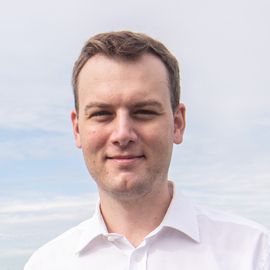
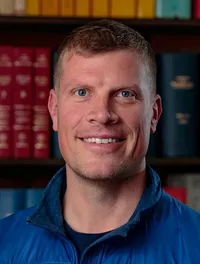
Jan Akmal is an Assistant Professor at Aalto University, holding dual affiliations in the Department of Energy and Mechanical Engineering and the Materials to Products group. His research specializes in additive manufacturing (AM), focusing on defect detection, smart materials, and 4D printing applications. He leads the AIM-Zero project (2023–2026), exploring AI-driven zero-defect AM processes. Akmal has received the Aalto Doctoral Incentive Scholarship (2023) and an Honorary Award (2023). He serves on editorial boards for Frontiers in Manufacturing Technology and Frontiers in Mechanical Engineering , and chairs the Finnish Rapid Prototyping Association (FIRPA). Key research areas include AI-based defect detection in metal AM, self-sensing components, and hybrid materials for dynamic displays. He collaborates globally on topics like optical tomography in powder bed fusion and medical AM applications. His work addresses sustainability, industrial adoption of AM, and legal frameworks for military logistics. Akmal has authored 24 publications and contributed to datasets on AM inaccuracies and defect classification, emphasizing practical applications and industry integration.
Patrick Kastner is an Assistant Professor at the School of Architecture and holds an adjunct appointment at the H. Milton Stewart School of Industrial and Systems Engineering at Georgia Tech. He directs the Sustainable Urban Systems Lab, focusing on environmental performance simulation and urban decarbonization. His work emphasizes software tools for sustainable urban decision-making, such as Eddy3D, a microclimate modeling toolkit widely adopted in academia and practice. Education: Ph.D. and M.S. in Systems Science and Engineering, Cornell University (2022, 2021) M.S. in Sustainable Building Science, Technical University of Munich (2017) B.S. in Energy Engineering, University of Erlangen–Nuremberg (2012) Research Interests: Environmental performance simulation, urban decarbonization, machine learning applications in urban systems, spatial analysis, and software development for sustainability. His work integrates computational fluid dynamics (CFD), surrogate modeling, and data-driven approaches to address urban climate challenges. Key Projects: Leads the Vertically Integrated Project SMUR (Surrogate Modeling for Urban Regeneration), fostering interdisciplinary collaboration across Georgia Tech. Developed Eddy3D, which streamlines microclimate simulations for architects and urban planners. Grants & Advising: Engages students from sophomore to graduate levels in sustainability research. Teaches at Cornell and UPenn previously. Advises on projects blending engineering, urban design, and climate science. Labs & Teams: Director of the Sustainable Urban Systems Lab, focusing on software tools for sustainable urban transformation. Collaborates with industry partners and global institutions on decarbonization strategies.
Prof. Ivan Cole is an Adjunct Professor at RMIT University's School of Engineering, specializing in rapid materials discovery for corrosion protection, nanostructures, and additive manufacturing. His work integrates computational modeling with high-throughput experimentation, focusing on corrosion inhibitors, biocompatible surfaces, and additive manufacturing process optimization. With over 30 years of experience across academia and industry (including leadership roles at CSIRO and Centro-Svilluppo Materiali), he leads the Rapid Discovery & Fabrication Team (RDF) to advance these research areas. Research Interests: Corrosion science, microbially induced corrosion (MIC), additive manufacturing surfaces, nanostructure sensing, multiscale modeling, and green materials discovery. His team addresses challenges in corrosion protection, biomedical implants, and environmental remediation through innovative methodologies. Awards: 2019 Australian Corrosion Medal 2016 CSIRO Lifetime Achievement Award 2013 Best Paper in NACE Corrosion Supervision & Projects: Active in mentoring PhD/Master’s students across corrosion inhibition, additive manufacturing, and nanostructure design. Notable projects include developing quorum sensing inhibitors for biofilm control, in-situ monitoring for metal AM, and eco-friendly corrosion inhibitors. Labs & Collaborations: Leads the Rapid Discovery & Fabrication Team and collaborates with industry partners to translate research into practical solutions for materials durability and sustainability.
Jun Zhuang is an Assistant Professor in the Department of Computer Science at Boise State University. He holds a Ph.D. from Indiana University-Purdue University Indianapolis (IUPUI), M.S. degrees in Computer Science (University at Buffalo) and Finance (Rochester Institute of Technology), and a B.E. in Safety Engineering (South China University of Technology). His research focuses on trustworthy and robust AI systems, Bayesian inference, generative models, quantum computing, and medical imaging. Education: Ph.D., Computer Science, IUPUI (2023) M.S., Computer Science, University at Buffalo (2018) M.S., Finance, Rochester Institute of Technology (2013) B.E., Safety Engineering, South China University of Technology (2011) Research Interests: Jun investigates robust machine learning algorithms, particularly in quantum information, medical imaging, and graph-based systems. He emphasizes mitigating adversarial attacks, enhancing model interpretability, and integrating blockchain for AI security. His work spans theoretical foundations and practical applications, including generative adversarial networks (GANs) and trustworthy AI frameworks. Recent Articles: His recent work addresses jailbreaking vulnerabilities in large language models (LLMs), quantum computing optimization challenges, and robust graph structure learning. These studies highlight interdisciplinary approaches to advancing AI reliability and security. Awards & Grants: Recipient of the SIGIR Student Travel Grant for CIKM 2022. Active in grant activities through research collaborations and institutional funding. Advising & Labs: Advisor to Ph.D. student Maqsudur Rahman and M.S. students Chia-Ying Wu and Shipra Kumari. Leads the T rustworthy and R obust AI L ab (TRAIL), focusing on developing resilient AI systems.
Piotr Indyk is the Thomas D. and Virginia W. Cabot Professor in the Department of Electrical Engineering and Computer Science (EECS) at MIT. He is co-director of the Foundations of Data Science Institute (FODSI) and a member of MIT's Theory of Computation Group, Computer Science and Artificial Intelligence Lab (CSAIL), and multiple research initiatives like Wireless@MIT and Big Data@CSAIL. Education: Magister (MA) in Computer Science, University of Warsaw (1995) Ph.D. in Computer Science, Stanford University (2000), advised by Rajeev Motwani Research Interests: Focuses on high-dimensional computational geometry, data stream algorithms, sparse recovery, compressive sensing, and machine learning. His work includes foundational contributions like locality-sensitive hashing (LSH), the Sparse Fourier Transform, and efficient similarity search algorithms. Key Contributions: Known for developing FALCONN (Fast Approximate Nearest Neighbor Search library), and for pioneering work in sub-linear algorithms, streaming algorithms, and geometric computing. Awards: ACM Paris Kanellakis Award (2012) ACM Fellow (2015) Simons Investigator (2013) Member, National Academy of Sciences (2024) Member, American Academy of Arts and Sciences (2023) Teaching & Mentorship: Advised numerous PhD/MSc students and postdocs, and taught courses on geometric computation, streaming algorithms, and algorithmic aspects of embeddings. Labs & Teams: Leads research in areas like FODSI, geometric algorithms, and data science at MIT's CSAIL.
Markus Reichstein is a Professor for Global Geoecology at Friedrich Schiller University (FSU) Jena and Director of the Biogeochemical Integration Department at the Max Planck Institute for Biogeochemistry. His research focuses on ecosystem responses to climate variability, climate extremes, and the application of AI in Earth system science. He holds a PhD in Plant Ecology from the University of Bayreuth and has pioneered interdisciplinary approaches combining machine learning with environmental modeling. Key roles include leadership in the Michael-Stifel-Center Jena for Data-driven and Simulation Science and founding director of the ELLIS Unit Jena. He contributed to the IPCC Special Report on Climate Extremes and has received prestigious awards such as the Leibniz Prize. His work bridges ecology, hydrology, and atmospheric science, addressing critical global challenges like carbon cycle feedbacks and ecosystem resilience. Recent research emphasizes AI-driven early warning systems for climate risks, integrating observational data with mechanistic models. His team explores land-atmosphere interactions, soil-vegetation dynamics, and the impacts of climate extremes on societal systems. Notable projects include GartenDiv, a citizen science initiative for garden biodiversity, and advancements in global water cycle modeling using hybrid AI-physics frameworks. Awards include the Piers J. Sellers Award (2018), ERC Synergy Grant (2019), and Leibniz Prize (2020). He collaborates with international networks like ELLIS and Future Earth, advancing data-driven solutions for sustainability science.
Yuri Levin is a Professor at the Smith School of Business, Queen’s University, where he holds the Stephen J.R. Smith Chair of Analytics and serves as Founding Executive Director of the Smith School of Business Analytics and AI. He also leads the Scotiabank Centre for Customer Analytics. His research focuses on Analytics & AI, with expertise in revenue management, dynamic pricing, and strategic consumer behavior. Levin holds a Ph.D. in Operations Research from Rutgers University and degrees in Economics and Applied Mathematics from Belarus State University. Levin’s academic contributions include co-winning the 2013 INFORMS Revenue Management and Pricing Practice Prize and the 2009 INFORMS COIN-OR Cup. He has advised companies like Scotiabank, Loblaws, and McDonald’s on pricing strategies and consumer analytics. As an Associate Editor of Operations Research , he shapes academic discourse in operations research and pricing strategies. Education: Ph.D. in Operations Research, RUTCOR, Rutgers University (2001) B.S. in Economics, Belarus State University (1998) M.S. (Honours) in Applied Mathematics, Belarus State University (1998) His research explores dynamic pricing models under social influence, strategic consumer behavior, and revenue management in hospitality and retail industries. He has pioneered methodologies for optimizing pricing strategies in networked markets and developed algorithms for cargo capacity management. Awards: 2010 Queen’s School of Business Award for Research Achievement 2003 New Researcher Achievement Award Levin’s teaching spans MBA, Master of Management Analytics (MMA), and executive education programs, covering analytical decision-making and pricing optimization. His advisory work includes roles as a Visiting Professor at the Skolkovo Moscow School of Management and the University of Cambridge’s Judge School of Business.
Prof. Dr.-Ing. Lars Linsen is a full Professor of Computer Science at the Westfälische Wilhelms-Universität (WWU) Münster, leading the VISualization & graphIX (VISIX) group. His primary affiliation is the Institute of Computer Science within the Faculty of Mathematics and Computer Science. He holds adjunct professorships at Jacobs University, Bremen, and has held previous academic roles including Full Professor at Jacobs University (2012–2017) and Associate/Assistant Professor roles in Germany and the U.S. His research focuses on interactive visual analysis, medical visualization, and scientific visualization, with applications in life sciences and engineering. Education: PhD (Dr.-Ing.) in Computer Science from Universität Karlsruhe (2001), M.Sc. (Diplom) in Computer Science (1997), B.Sc. (Vordiplom) in Computer Science (1994). Awards: IEEE Visualization Design Contest Winner (2008, 2022, 2018), Preis des Fördervereins des Forschungszentrum Informatik (2002). Research Highlights: Develops visualization tools for medical imaging (e.g., mass spectrometry imaging, MRI data analysis) and physical simulations (e.g., wildfire spread analysis, asteroid impact modeling). Active in EU-funded projects like Pig-Pro-QuO (surface coatings) and cells-in-motion initiatives. Supervised over 20 PhD/MS advisees, including notable graduates in medical visualization and simulation ensemble analysis. Publications: Over 100 peer-reviewed articles in top venues like IEEE Transactions on Visualization and Computer Graphics, Computers & Graphics, and EuroVis. Key works include SciVis contest-winning wildfire analysis frameworks and medical visualization tools for stenosis detection. Teaching: Offers courses on visualization, computer graphics, and computational science. Actively involved in thesis supervision and curriculum development at both WWU Münster and Jacobs University. Grants & Collaborations: Principal investigator on DFG-funded projects (e.g., hemodynamics simulations, ensemble visualization) and industry collaborations (e.g., Tascon GmbH for coating quality analysis). Member of the Cells-in-Motion Interfaculty Centre and CDH board at WWU.
Yves Wautelet serves as an Associate Professor at the Faculty of Economics and Business at KU Leuven, where he conducts research in conceptual modeling, business process management, and digital transformation. His work addresses critical challenges at the intersection of information systems engineering and business strategy, with particular focus on sustainability-driven modeling approaches and IT governance frameworks. His primary research interests include: Conceptual modeling methodologies and frameworks Business process management and information systems design Digital transformation strategies and implementation IT governance and business-IT alignment Sustainability-driven modeling for circular economy Agile software development practices and methods Requirements engineering with user stories Wautelet's recent publication record demonstrates significant scholarly productivity with numerous 2024-2025 publications spanning conceptual modeling frameworks for sustainability (Circulise), tools for identifying ambiguity in user stories (AmbiTRUS), and approaches to align strategic and operational agility. His work bridges theoretical foundations with practical applications across diverse domains including healthcare, circular economy, software development, and organizational transformation. His research consistently applies model-driven approaches to solve complex real-world problems, often integrating sustainability considerations into information systems engineering. As a promotor and co-promotor, Wautelet currently supervises multiple doctoral research projects including: Automatic generation of conceptual models from textual descriptions (2024-2028) Sustainability-Driven Modeling Assistant for Twin Transition in Vietnam (2024-2028) Home Care Business Process Management using Distributed Ledger Technologies (2024-2028) Teaching Modeling Skills in BPMN formalism (2021-2025) His research is conducted through the Information Systems Engineering Research Group (LIRIS) at KU Leuven's Brussels campus, where he contributes to advancing model-driven approaches for addressing contemporary business and technological challenges.
Filip Biljecki is an Assistant Professor jointly appointed at the Department of Architecture within the College of Design and Engineering and the Department of Real Estate at the NUS Business School, National University of Singapore. He is the founder and principal investigator of the NUS Urban Analytics Lab and was awarded the prestigious NUS Presidential Young Professorship in 2020. With over 150 peer-reviewed publications, his research bridges geomatic engineering, geospatial technologies, and urban data science to advance digital twins and data-driven urban planning. Dr. Biljecki's educational background includes: PhD in 3D GIS (cum laude), Delft University of Technology, Netherlands (2017) MSc in Geomatics, Delft University of Technology, Netherlands (2010) BSc in Geodesy and Geoinformatics, University of Zagreb, Croatia (2008) His research interests focus on emerging urban data sources, particularly urban imagery, and their application in 3D city modeling, digital twins, and GeoAI. He explores how crowdsourcing and open science can inform cutting-edge techniques for urban sensing and analytics at city-scale. His work significantly contributes to establishing smart cities through innovative methods that integrate recent advancements in computer science, geomatics, and urban data science. Analysis of his recent publications reveals a strong focus on street view imagery applications for urban analytics, digital twin development, and geospatial AI. His research spans multiple domains including urban morphology, environmental assessment, public health applications, and urban comfort analysis. The interdisciplinary nature of his work is evident in collaborations with researchers from diverse fields, producing impactful studies that address complex urban challenges through innovative methodological approaches. His notable scientific achievements include: Annual Teaching Excellence Award (ATEA), 2025 College Educator Award AY2023/2024, 2025 Urban Informatics Paper of the Year Award, 2023 Top 2% scientists worldwide (Stanford University), 2021 Presidential Young Professorship (NUS), 2020 As an educator, Dr. Biljecki has supervised dozens of students leading to publications in leading journals and placements at top universities and organizations. He has delivered talks at over 120 universities and organizations worldwide including MIT, Stanford, Harvard, and ETH Zurich. His research is supported through various grants and affiliations including his role as Principal Investigator at the Future Cities Lab Global at the Singapore-ETH Centre. The NUS Urban Analytics Lab, which he established, brings together scholars from diverse disciplines to drive research on making cities smarter and more data-driven. The lab has developed innovative tools like ZenSVI for street view imagery analysis and has produced influential research on urban digital twins, urban morphology, and GeoAI applications. Through his leadership, the lab continues to pioneer methods that advance data-driven urban planning and smart city development.
Prof. Mathias Drton holds the Chair of Mathematical Statistics at the Technical University of Munich (TUM), within the Department of Mathematics and School of Computation, Information and Technology. His research focuses on graphical models, algebraic statistics, causal inference, and multivariate data analysis. He has authored numerous publications in top-tier journals and conferences, including work on conditional independence, sparse factor analysis, and causal discovery in linear models. Drton has supervised a large number of theses, mentoring students in areas like high-dimensional statistics, graphical models, and causal inference. He is actively involved in teaching advanced courses such as 'Graphical Models in Statistics' and 'Fundamentals of Mathematical Statistics.' His academic contributions span theoretical developments in statistical methodology and computational tools, including R packages like SEMID and symRC . Drton collaborates internationally, contributing to projects like the TUM-ICL Mathematical Sciences Hub and Exzellenzcluster MCQST. His work bridges algebraic methods with statistical challenges, addressing identifiability in latent variable models and robust graphical modeling under non-Gaussian assumptions. Recent research emphasizes causal structure learning under partial homoscedasticity, distribution-free independence tests, and multi-domain causal representation learning. Drton’s lab actively explores applications in genomics, epidemiology, and machine learning, leveraging both theoretical rigor and practical computational methods.
Zhe Zeng is an incoming Assistant Professor in the Department of Computer Science at the University of Virginia starting July 2025. Currently, she serves as a Faculty Fellow in the Computer Science Department at New York University. She earned her Ph.D. in Computer Science from UCLA in 2024 under Professor Guy Van den Broeck, and her B.S. in Mathematics from Zhejiang University in 2018. Research Focus: Dr. Zeng specializes in neurosymbolic AI and probabilistic machine learning, developing methods that integrate symbolic knowledge (logical constraints, graph structures) with probabilistic uncertainty. Her work spans three core areas: Reasoning: Probabilistic inference, tractable probabilistic models Learning: Constrained deep learning, graph ML, weakly supervised learning Trustworthiness: Explainability, uncertainty quantification, domain-knowledge integration Awards & Honors: Rising Star in EECS (2023) Amazon Doctoral Fellowship (2022) NEC Research Fellowship (2021) ICML Travel Award (2018) Outstanding Graduate, Zhejiang University (2018) Advising & Mentoring: Has supervised six students including PhD candidates and undergraduates at UCLA, Tsinghua, and CAS, with placements at Princeton and UT Austin. Academic Service: Regularly reviews for NeurIPS, ICML, ICLR, UAI; served as UAI 2023 discussant; active in WiML mentorship programs.
Bingzhang Chen is a Senior Lecturer in the Department of Mathematics and Statistics at the University of Strathclyde, Faculty of Science. He previously held positions as a Chancellor’s Fellow at the same institution, a researcher at the Japan Agency of Marine-Earth Science and Technology (JAMSTEC), and was affiliated with Xiamen University and Mount Allison University. His academic journey began with a PhD from the Hong Kong University of Science and Technology. Education: PhD in Trophic interactions within the microbial food web, Hong Kong University of Science and Technology (Awarded 2009) His primary research interests lie at the intersection of biological oceanography and theoretical ecology, with a strong focus on ecosystem modeling. He investigates how biodiversity, particularly of phytoplankton, influences marine ecosystem functioning such as primary production and the biological carbon pump. A central theme in his work is understanding the differential temperature sensitivity between autotrophs and heterotrophs, a question that bridges statistical analysis, metabolic theory, and Earth system science. His recent publications highlight a consistent trend in developing and applying individual-based models (e.g., PIBM 1.0), analyzing large datasets on plankton thermal responses, and studying the impacts of climate change and anthropogenic activities (like nutrient input) on marine microbial communities across diverse regions from the South China Sea to the North Pacific and Scottish coastal waters. His work often combines modeling with observational data to address fundamental ecological questions. Scientific Awards: David Cushing Prize (2015) from the Journal of Plankton Research New Century Excellent Talent (2012) from the Ministry of Education of China Dr. Chen is actively involved in research supervision, currently guiding five PhD students. He has been the Principal Investigator on multiple research projects funded by organizations such as the Leverhulme Trust, FILAMO, and the National Science Foundation. His expertise in programming (R, Fortran, MATLAB) underpins his methodological approach. He also contributes to the scientific community as an Associate Editor for the prestigious journal Limnology and Oceanography . His work is associated with efforts to understand and model invasive species dynamics, such as the spread of Sargassum muticum in Scottish waters, and he is involved with external advisory groups like the MASTS Marine Artificial Intelligence Forum.
Dr. Alessio Russo is a Senior Lecturer in Landscape Architecture at the School of Architecture and Built Environment, Queensland University of Technology (QUT). As a recognized expert in urban ecosystem services and green infrastructure, his research bridges environmental design with human health and climate change mitigation. His research emphasizes enhancing urban human health and wellbeing through biodiverse green spaces, participatory design, and nature-based solutions that address thermal comfort, pollution removal, food production, and water runoff. Key projects include 2023-2024: Urban rewilding aesthetics & people's needs in blue/green infrastructure (UKRI RECLAIM Network Plus) 2023: Climate-resilient public spaces (RPA Small Grants, UoG) 2021-2022: Shared vision for urban greening (UCL & Net Zero Innovation Programme) His scholarly output spans 2014-2025, focusing on nature-based urban regeneration aligned with SDG 11. He serves as Associate Editor for Urban Agriculture and Regional Food Systems and sits on editorial boards of Urban Planning, Discovering Cities, and Urban Resilience and Sustainability. Professional memberships include IFLA, ICOMOS-IFLA, and IUCN CEM.
J. Daniel Kim is an Assistant Professor of Management at the Wharton School, University of Pennsylvania, where he teaches MBA and PhD courses on entrepreneurship and innovation. His research focuses on high-growth entrepreneurship, venture scaling, strategic human capital, mergers and acquisitions, innovation, and labor markets. PhD - MIT Sloan School of Management BA - Dartmouth College His research explores: Startup hiring challenges and firm-driven search strategies Timing and risks of venture scaling Post-acquisition employee retention patterns Founder impact on organizational change Immigrant founder contributions to entrepreneurship Key article trends show: Focus on talent dynamics in high-growth firms Analysis of organizational antecedents in acquisitions Quantitative approaches using population-level data Interdisciplinary connections between entrepreneurship, strategy, and economics Debunking myths about founder demographics Linkage between labor market mechanisms and startup performance Scientific recognition includes: Multiple Teaching Excellence Awards at Wharton (2024-2020) Best Paper Prize from Strategic Management Society (2020) Kauffman Dissertation Fellowship (2017) MIT Sloan Doctoral Thesis Prize (2019) Prof. Kim serves as an economist with the United States Census Bureau and has published in top journals including Strategic Management Journal , Organization Science , and American Economic Review: Insights . His work has been featured in The Wall Street Journal , New York Times , and Financial Times .