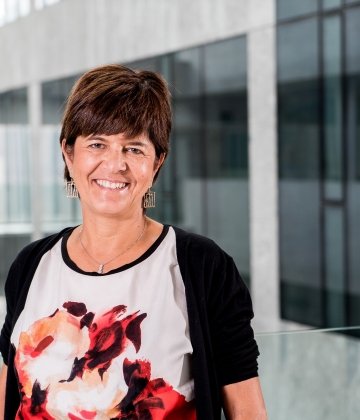
Anna Levina is an Assistant Professor for Computational Neuroscience at the University of Tübingen , affiliated with the Department of Computer Science under the Faculty of Science. Her research focuses on the self-organization of neuronal activity, critical dynamics in neural networks, and the excitation/inhibition balance in cortical circuits. Current positions: Assistant Professor (since 2018), Group Leader (2017-2018), Equality Officer (Computer Science) Previous roles: IST Fellow (2015-2017), Associated Researcher (2011-2015), Postdoc/PI (2011-2015), Postdoc (2008-2011) Her research integrates mathematical modeling , statistical physics , and computational neuroscience to study criticality phenomena, neural avalanches, and adaptive network dynamics. Key interests include: Self-organized criticality in neural systems Excitation/Inhibition balance mechanisms Network topology and dynamics Timescale analysis in neural processing Stochastic modeling of neural activity Recent publications reveal trends in understanding critical dynamics across biological and artificial networks, with applications to memory systems, sensorimotor integration, and disease modeling. She has received recognition as an IST Fellow .
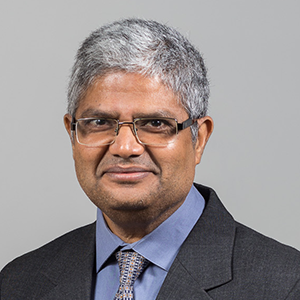
Sanjay Jain is a Provost's Chair Professor in the Department of Computer Science at the School of Computing, National University of Singapore (NUS). His research focuses on theoretical computer science with particular emphasis on inductive inference, recursion theory, complexity theory, and computational learning theory. Education: B.Tech. in Computer Science from Indian Institute of Technology Kharagpur, India (1986) M.S. in Computer Science from University of Rochester, USA (1988) Ph.D. in Computer Science from University of Rochester, USA (1990) Professor Jain's research spans multiple areas of theoretical computer science. His primary contributions are in computational learning theory, where he has made significant advances in understanding the intrinsic complexity of language identification and the limits of inductive inference. His work on recursion theory explores fundamental questions about computability and complexity, while his research in complexity theory addresses structural aspects of computational problems. A notable achievement was his work on "Deciding Parity Games in Quasipolynomial Time," which won the prestigious STOC 2017 best paper award and later the EATCS-IPEC Nerode Prize. Professor Jain's publication record shows a consistent focus on theoretical foundations of computer science, particularly in learning theory and computational complexity. His recent work has expanded into automatic structures, semiautomatic models, and connections between computational learning and algebraic structures. There is a clear progression from foundational work on language identification to more complex models involving automatic functions, transducers, and connections to mathematical logic. Scientific Awards: STOC 2017 Best Paper Award for "Deciding Parity Games in Quasipolynomial Time" EATCS-IPEC Nerode Prize (2021) Professor Jain has served on the editorial board of Information and Computation and has been actively involved in the academic community through program committee memberships for major conferences including COLT, ALT, LATA, TAMC, and PRICAI. He has held leadership roles as program co-chair for ALT 2000 and ALT 2013, and conference chair for ALT 2005. His work has been supported by various research grants, though specific details are not provided in the available materials. Professor Jain leads research in theoretical computer science at NUS, where he has built a strong research group focused on computational learning theory and related areas. His work often involves collaborations with researchers from around the world, particularly with Frank Stephan, with whom he has co-authored numerous papers. His research group has made significant contributions to understanding the fundamental limits and possibilities of computational learning models.
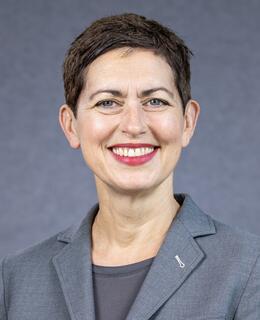
Dr. Sonia Petrone is a Full Professor of Statistics at Bocconi University's Department of Decision Sciences. She earned her PhD in Statistics from Bocconi University and has held academic positions at the University of Pavia and University of Insubria before joining Bocconi. Her extensive international experience includes research visits across North America, Latin America, Europe, India, and Russia. Her research specializes in Bayesian statistics, with contributions to foundational theory, predictive modeling, Bayesian nonparametrics, and stochastic processes. She currently directs the Bocconi Summer School in Advanced Statistics and Probability and previously led the PhD program in Statistics (2011-2018). Her research portfolio demonstrates consistent focus on Bayesian nonparametric methods, predictive modeling, and applications to complex data structures. Recent work explores urn processes, time series analysis, and network modeling using innovative Bayesian approaches. Awards & Honors: IMS Medallion Lecture Award (2018) ISBA Foundational Lecture Award (2016) Fellow of International Society for Bayesian Analysis Fellow of Institute of Mathematical Statistics Fellow of European Laboratory for Intelligent Systems Fellow of Bocconi Institute of Data Science She has held editorial leadership positions as Editor of Statistical Science (2020-2022) and Bayesian Analysis (2010-2014), and served as President of the International Society for Bayesian Analysis (2014).
Jan de Gier is a Professor at the School of Mathematics and Statistics, The University of Melbourne . He is also the Founding Director of MATRIX , Australia’s residential research institute in the mathematical sciences, and a former Deputy Director and Chief Investigator in the Australian Research Council Centre of Excellence for Mathematical and Statistical Frontiers (ACEMS) . Additionally, he co-founded the Australian and New Zealand Association for Mathematical Physics (ANZAMP) in 2011 and served as its inaugural Chair. His research focuses on solvable lattice models at the intersection of mathematical physics and statistical mechanics . Key areas include the application of quantum integrability , algebraic structures like the Yang-Baxter equation, Hecke algebras, and quantum groups, as well as analytical methods such as complex analysis and elliptic curves. His work bridges pure and applied mathematics through connections between enumerative combinatorics , representation theory , and real-world phenomena like traffic flow modeling via exclusion processes . The 15 most recent articles reflect his expertise in integrable systems , non-equilibrium statistical mechanics , and algebraic combinatorics . Topics span Macdonald polynomials , stochastic duality , quantum spin chains , and traffic modeling , with methodologies involving matrix product forms , exact solutions , and critical phenomena analysis. He has contributed to editorial efforts through the AustMS Gazette and MATRIX Annals, and has been involved in public science communication via opinion pieces on mathematics funding and applications. His work emphasizes the importance of fundamental research in driving technological innovation, as highlighted in media articles discussing pi calculation , zero-knowledge proofs , and mathematics education .
Laura Spitz is Dean and Professor at the University of Calgary Faculty of Law, with a concurrent Visiting Professorship at Université Paris 1 Panthéon-Sorbonne Law School. Her academic and professional journey spans multiple institutions, including Seattle University, University of New Mexico, Cornell University, and Thompson Rivers University. Educational Background: JSD, Cornell University JD, University of British Columbia BA, University of Toronto Spitz's research interrogates the legal construction of borders and identities, blending contracts, commercial law, and critical analyses of personhood in corporate and environmental contexts. Her work explores the limits of subject-object dichotomies in law and society. Notable awards include multiple Graduation Hooding Professor distinctions at the University of New Mexico and Colorado Law School, alongside teaching accolades. She contributes to constitutional pluralism debates and has co-authored influential works on legal personhood. A nonpracticing member of the Law Society of British Columbia, Spitz serves as a legal expert in contracts and business law, with experience in First Nations economic development and nonprofit law. She has advised on Supreme Court cases and held leadership roles in global engagement and international affairs.
Prof. Dr. Kai Cieliebak is a Professor of Mathematics at the University of Augsburg, where he holds the Chair of Analysis and Geometry within the Institute of Mathematics under the Faculty of Mathematics, Natural Sciences, and Materials Engineering. He has been at Augsburg University since 2012, following a professorship at Ludwig-Maximilians-Universität München from 2001-2012. His research group includes several researchers and postdocs working on symplectic geometry and related fields. Dr. Cieliebak earned his Diplom in mathematics summa cum laude from Ruhruniversität Bochum in 1992, with thesis on "Pseudo-holomorphe Kurven und periodische Orbits auf Cotangential Bündeln" under advisor H. Hofer. He completed his PhD in mathematics at ETH Zürich in 1996, with thesis "Symplectic boundaries: closed characteristics and action spectra," also advised by H. Hofer. His academic journey included positions at Harvard University, Stanford University, and research at IBM Zürich before his professorships in Munich and Augsburg. Prof. Cieliebak's research focuses on symplectic and contact geometry , with significant contributions to understanding symplectic manifolds, Lagrangian and Legendrian knots, Stein manifolds, and string topology. His work in Hamiltonian dynamics explores variational methods, periodic orbits, and celestial mechanics problems, particularly the restricted three-body problem. In global analysis , he investigates solution spaces of elliptic PDEs and symplectic field theory. His approach often bridges differential geometry, topology, and dynamical systems, with applications to mathematical physics. Over the past decade, Prof. Cieliebak's publications reveal a consistent focus on symplectic homology, Floer theory, and their applications to geometric problems. His work shows increasing integration of algebraic structures with geometric methods, particularly in cyclic homology and string topology. Recent research demonstrates strong collaboration with Urs Frauenfelder on celestial mechanics problems, applying symplectic techniques to the restricted three-body problem and related orbital dynamics. Prof. Cieliebak has secured significant research funding throughout his career, including multiple DFG grants under project codes CI 45/1 through CI 45/12, NSF grants, and participation in European Science Foundation networking programs. His most notable grants include "Foundations of Symplectic Field Theory" (2009-2015) and the current "Rabinowitz Floer Homology" project (since 2023), both in collaboration with U. Frauenfelder. He has mentored numerous researchers and maintains an active research group at Augsburg University, including postdocs and collaborators working on symplectic geometry problems. His team includes researchers such as Dr. Filip Broćić, Zhen Gao, Dr. Hanna Häußler, Emilia Konrad, Shuaipeng Liu, Dominik Meidert, Dr. Airi Takeuchi, Dr. Evgeny Volkov, Milan Zerbin, and PD Dr. Lei Zhao. Prof. Cieliebak has also organized numerous workshops on symplectic geometry, including the annual "Symplectic Field Theory" workshop series.
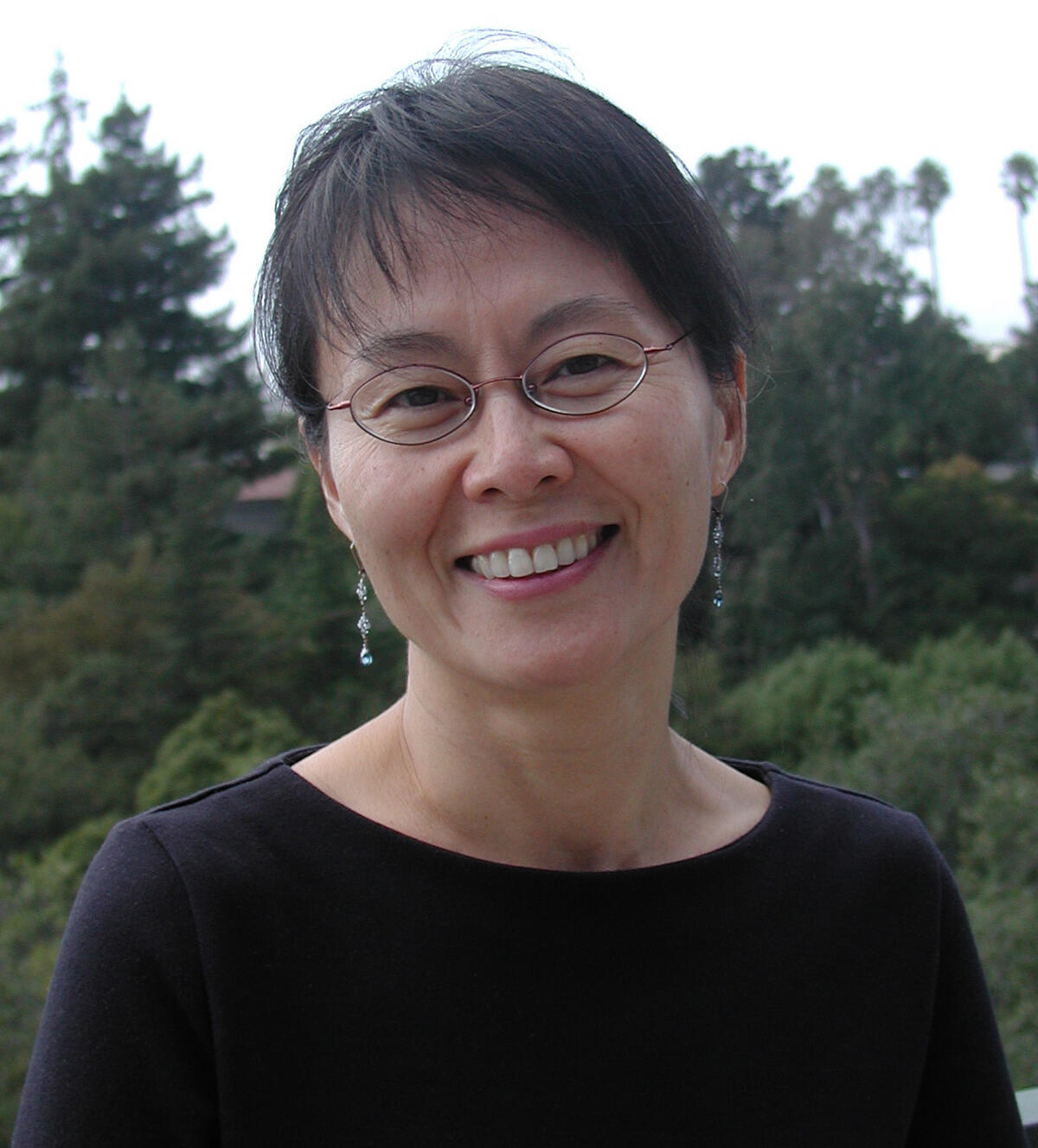
Professor You-tien Hsing is the Pamela P. Fong Family Distinguished Chair in China Studies at the University of California, Berkeley. Her research focuses on the political economy of development in East Asia, particularly China, examining intersections of power, space, urbanization, cultural politics, and environmental governance. Education: PhD in City and Regional Planning, UC Berkeley (1993). Her research integrates ethnographic methods with political economy analysis to explore how historical, geographical, and institutional factors shape social and environmental dynamics in China. Key themes include land battles, territorial politics, and the role of grassroots activism in state-society relations. Recent publications analyze urbanization, global-local capital interactions, and environmental politics in China. She has also co-edited works on social activism and urban-rural linkages. Scientific Awards: Pamela P. Fong Family Distinguished Chair in China Studies. She teaches courses on Global China, emphasizing critical engagement with China’s developmental trajectory through fieldwork, interviews, and theoretical frameworks.
Professor Libby Porter is a leading academic and researcher in urban planning and human geography at RMIT University, Australia. As Director of the Centre for Urban Research (CUR) and Professor in the School of Global, Urban and Social Studies (GUSS), her work focuses on critical urban governance, decolonising planning practices, Indigenous rights, and urban displacement. She holds a prestigious position as a Fellow of the Higher Education Academy and has contributed extensively to international policy debates through her role as Assistant Editor for Planning Theory and Practice . Her research examines settler-colonial dynamics in urban development, public housing policy, and the intersection of planning with Indigenous sovereignty. Notable publications include Unlearning the Colonial Cultures of Planning (2010) and Planning in Indigenous Australia (2018). Libby has held academic roles in the UK and Australia and previously worked in urban planning policy for Victorian Government departments. She supervises students in Honours, Masters, and PhD programs, focusing on topics like Indigenous housing, urban displacement, and environmental policy. Her work has been featured in The Conversation , BBC News, and academic journals. Libby also leads the Critical Urban Governance Research Program and oversees the Bachelor of Urban and Regional Planning at RMIT. Awards: Fellow of the Higher Education Academy Key Roles: Director, Centre for Urban Research; Co-founder, Planners Network UK; Member, Expert Advisory Panel for Melbourne 2030 Research Themes: Property rights, urban sustainability, decolonisation, Indigenous planning, gentrification
Song Ma is a Professor of Finance and Entrepreneurship at Yale School of Management and a Faculty Research Fellow at the National Bureau of Economic Research (NBER). He is also an affiliated faculty member at Yale Law School Center for the Study of Corporate Law and Yale SOM Program on Entrepreneurship, having joined Yale SOM Faculty in 2016. His educational background includes: PhD in Finance from Duke University's Fuqua School of Business (2016) BA in Economics from Zhejiang University (2010) Professor Ma's research primarily focuses on innovation economics, entrepreneurship, financial economics, AI, and big data. His work extends to corporate strategy, industrial organization, antitrust, labor, and business law. He has made significant contributions to understanding how innovation interacts with financial markets, corporate strategy, and competition policy, particularly through his influential 'Killer Acquisitions' paper which has been cited in Congressional antitrust reports and lawsuits against major tech companies. His recent publications demonstrate an interdisciplinary approach combining finance, economics, and data science methodologies. Many papers examine the intersection of innovation and corporate finance, with increasing incorporation of AI and big data techniques as seen in his video analysis research. His work shows evolution from traditional finance topics toward more policy-relevant research with real-world impact on antitrust regulation and innovation policy. Professor Ma has received numerous prestigious awards: 2023 Best Paper Award, China International Conference in Finance 2022 Best Paper on Competition Economics, Association of Competition Economics 2022 Jerry S. Cohen Award for Antitrust Scholarship 2021 GARP Best Paper in Risk Management Award 40 Under 40 Best Business School Professors by Poets & Quants (2021) Robert F. Lanzillotti Prize for Antitrust Economics (2020) Jensen Prize for Best Paper on Corporate Finance (2019) In teaching, Professor Ma delivers popular courses including 'Entrepreneurial Finance,' 'Venture Capital and Private Equity,' and 'Finance and the Society.' He co-organizes WEFI (Workshop on Entrepreneurial Finance and Innovation), a bi-weekly virtual research forum. His research has been referenced by major regulatory bodies worldwide including the FTC, EU Competition Commission, and UK Competition and Markets Authority, and featured in leading media outlets like Wall Street Journal and New York Times. Professor Ma actively incorporates new data science technologies into his empirical economic research, focusing on unstructured data analysis and machine learning applications.
Alexander Summers is an Associate Professor at the Department of Computer Science , University of British Columbia . He joined UBC in March 2020 after serving as a Senior Researcher (Oberassistent) at ETH Zurich from 2014-2020. His research bridges Programming Languages , Formal Methods , and Software Engineering , with a focus on automated verification tools for heap-based and concurrent programs. MSc Joint Mathematics and Computer Science, Imperial College London (2004) PhD Computer Science, Imperial College London (2009) Postdoc, ETH Zurich (2009-2014) Summers leads the Prusti Project , developing deductive verification tools for Rust, and contributes to the Viper Project for intermediate verification languages. His work addresses challenges in: Memory safety and concurrency verification Ownership models and aliasing control Automated reasoning with SMT solvers Resource-oriented programming specifications Debugging verification condition quantifiers Formal validation of verification infrastructure His research has been recognized with a Amazon Research Award and ACM SIGPLAN Distinguished Paper Awards . He teaches courses like Advanced Software Engineering and Program Verifiers and Program Verification , and supervises graduate students in formal verification and Rust-related research.
Yavuz Köse is a University Professor of Turkology at the Department of Near Eastern Studies, Faculty of Philology and Cultural Studies, University of Vienna. He currently serves as Head of the Institute of Oriental Studies (since June 2024) and previously as Deputy Head (October 2022-June 2024). Before joining the University of Vienna in 2019, he was W3 Acting Professor for Turkology at the Asia-Africa Institute of the University of Hamburg (2010-2018). His educational background includes a Master of Arts in History and Culture of the Near East as well as Turkology, Psychology and Economics from Ludwig Maximilian University of Munich (2001). Professor Köse's research focuses on social, economic and consumer history of the Ottoman Empire and Turkey, environmental and tourism history, history of science, and migration and workers' history. His work examines Ottoman social structures, economic transformations, cultural heritage, and identity formation, with particular attention to urban contexts and cross-cultural interactions. His recent publications show a strong emphasis on Ottoman social history, with particular attention to conversion narratives, cultural exchanges, and urban economic structures. The 2025 edited volume Becoming Ottoman represents a significant contribution to understanding identity formation in the Ottoman Empire. Among his notable recognitions is the Emerald Literati Award (2020) Professor Köse has supervised numerous doctoral students at both the University of Vienna and University of Hamburg, with research topics spanning cultural heritage in Turkey, migration histories, women's work and property, and Ottoman economic history. He has secured significant research funding including projects funded by FWF, DFG, and VolkswagenStiftung, such as the current 'Lebensmittelhändler von Istanbul' project examining Istanbul grocers as urban actors in supply chains. He is actively involved in academic leadership, serving as Head of the Institute of Oriental Studies and Deputy Spokesperson of the Doctoral School for Philological and Cultural Studies. He co-founded and serves as Editor-in-Chief of the Diyâr. Journal for Ottoman, Turkish and Middle Eastern Studies and is a member of numerous scholarly organizations including the Society for Armenian Studies and the Society for Turkology, Ottoman Studies and Turkey Research.
Markus Schmidt is a Professor of Fiber Optics at Friedrich Schiller University Jena and serves as Head of the Research Department of Fiber Photonics at the Leibniz Institute for Photonic Technologies (IPHT), where he leads the Hybrid Fibers work group. He previously held a team leadership position at the Max Planck Institute for the Science of Light (2006–2012) and conducted research at Imperial College London (2011). His research integrates fiber optics and photonics for applications in biophotonics, optofluidics, plasmonics, and nonlinear optics. Key innovations include 3D nanoprinted holograms for remote focus control, liquid-core fibers for stable supercontinuum generation, and fiber-integrated platforms for nanorheology and quantum spectroscopy. His work bridges materials science and applied photonics , enabling advancements in telecommunications, environmental monitoring, and bioanalytics. Scientific awards and student mentorship details are not explicitly mentioned in the provided texts. His email is markus.schmidt@leibniz-ipht.de .
Tara Brendle is Professor of Mathematics at the University of Glasgow within the School of Mathematics and Statistics, specializing in the interplay between algebra and topology. Her research centers on mapping class groups of surfaces and their profound connections to braid groups, Coxeter groups, arithmetic groups, and automorphism groups of free groups. Her primary research explores how these algebraic structures determine the topology of 3- and 4-manifolds through constructions like Heegaard splittings and Lefschetz fibrations. She investigates cohomological properties, subgroup structures, and representation-theoretic aspects of mapping class groups, with significant contributions to understanding the Johnson kernel and hyperelliptic Torelli groups. Over the past two decades, Brendle's publications reveal a consistent focus on geometric and algebraic properties of surface automorphism groups, evolving from foundational work on generators and relations to cutting-edge research on high-dimensional cohomology of moduli spaces and stability phenomena. Her collaborations with leading mathematicians like Dan Margalit and Andrew Putman have produced influential results across geometric group theory. She actively supervises doctoral research on mapping class groups, braid groups, and low-dimensional topology, guiding students including Bader, Philipp; Corrigan, Gabriel; Giannini, Riccardo; and Pietrzak, Alicja on advanced topics at the intersection of algebra and geometry.
Jari Puttonen is a Professor of Structural Engineering at Aalto University's Department of Civil Engineering, School of Engineering. His research focuses on structural analysis, fire safety, materials science, and nuclear infrastructure safety. He has held roles as Principal Investigator in projects related to nuclear waste repository concrete modeling and aging management of NPP infrastructure. He has advised over 20 academic visitors and served in doctoral thesis committees. Education: Doctoral degree (1987), Licentiate (1984), and Master's degree (1979) in Engineering and Technology from Helsinki University of Technology (now part of Aalto University). Research Interests: Steel and composite materials behavior under extreme conditions Fire resistance of structural systems Long-term performance of concrete in nuclear facilities Non-destructive testing of construction materials Seismic resilience of critical infrastructure Awards: Recipient of the Knight, First Class of the Order of the White Rose of Finland (2020), PUUPalkinto 2010, and Schweighofer Prize 2011 for innovative energy facade research. Grants & Projects: Led 13 research projects including PERCO2_2023 (nuclear waste repository modeling) and CONAGE2022 (NPP concrete aging). Active in EU-funded initiatives and industry collaborations. Labs & Teams: Core member of Aalto's Structural Engineering Research Group, collaborating with Chalmers University and Technical University of Munich on advanced materials testing.
Pengtao Xie is an Associate Professor (tenured) in the Department of Electrical and Computer Engineering at UC San Diego, with cross-appointments in the Division of Biomedical Informatics and affiliations across multiple schools and institutes including the Halıcıoğlu Data Science Institute, School of Biological Sciences, and Skaggs School of Pharmacy. His research bridges human-inspired machine learning and healthcare applications. Education: PhD in Machine Learning, Carnegie Mellon University (2018) MS from Tsinghua University BS from Sichuan University Research Interests: His work focuses on machine learning inspired by human learning strategies , including learning by testing, interleaving, self-explanation, and teaching. These techniques are applied to large language models , foundation models , healthcare , and biomedicine . Recent efforts emphasize generative AI for medical image segmentation and protein function prediction. Scientific Awards: NIH MIRA Award (2025) NSF Career Award (2024) Best Graduate Teacher Award, ECE UCSD (2023) ICLR Notable-Top-5% Paper (2023) Global Top-100 Chinese Young Scholars in AI (2022) Tencent Faculty Award (2021) AMIA Doctoral Dissertation Award Finalist (2020) Siebel Scholarship (2014) Teaching & Mentorship: He has developed and taught courses such as Deep Generative Models , Probabilistic Graphical Models , and Linear Algebra and Applications . He actively mentors PhD, master's, and undergraduate students, with alumni now at CMU, Stanford, Mila, and industry roles. Labs & Teams: He leads a research group within the Center for Machine-Intelligence, Computing and Security and collaborates with the Institute for Genomic Medicine and Institute of Engineering in Medicine at UC San Diego.