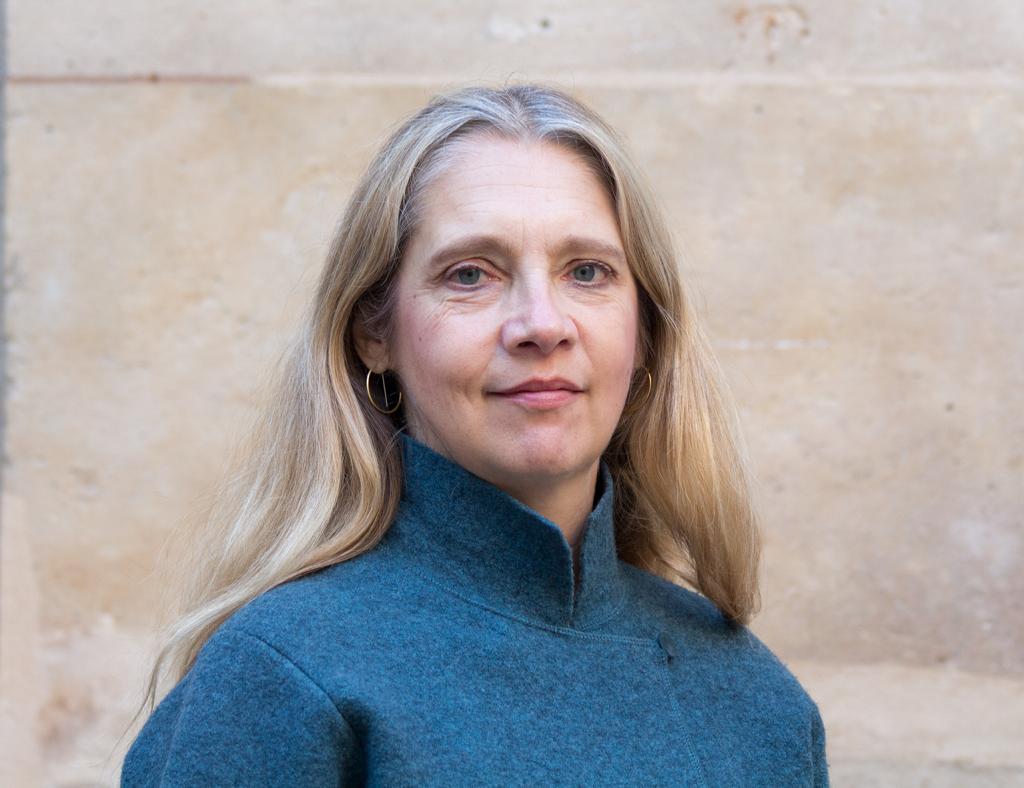
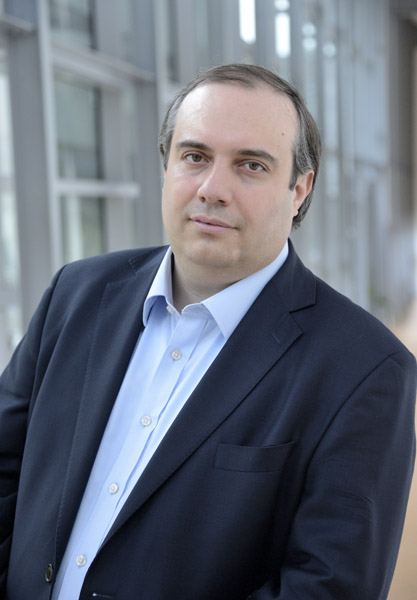
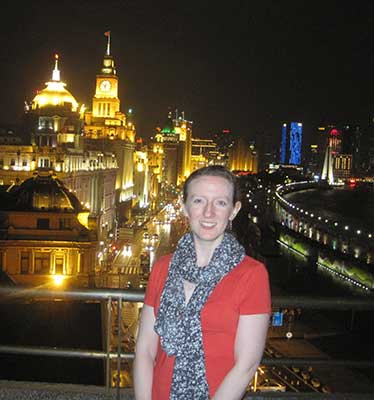
Associate Professor Quek Su Ying is affiliated with the Department of Physics at the National University of Singapore (NUS) and serves as Assistant Dean (Special Duties). Her research focuses on theoretical and computational approaches to understanding the electronic, vibrational, and transport properties of emerging materials, particularly 2D and organic systems. Affiliations : Institute of High Performance Computing, Centre for Advanced 2D Materials, NUS Research Interests : First principles calculations (mean field and many-electron perturbation theory), interface science, electronic energy level alignment, and transport in emerging materials. Her work includes studies of exciton condensation, quantum emitters, and valleytronic control via magnetic fields. Article Trends : Recent publications highlight investigations into 2D materials, organic-inorganic interfaces, and quantum phenomena. Topics include exciton dynamics, defect engineering, charge density waves, and spin-dependent transport, employing advanced ab initio methods like GW theory. Scientific Awards : Singapore NRF Fellowship Advising & Collaborations : Her group develops state-of-the-art computational methods and collaborates with experimental teams. Notable affiliations include Google Scholar Profile and partnerships with institutions like the Institute of High Performance Computing. Labs & Teams : Associated with the Centre for Advanced 2D Materials at NUS, which supports interdisciplinary research on graphene and related 2D systems. Her work bridges theoretical modeling and experimental validation.
R. Edwin García is a Professor at the School of Materials Engineering at Purdue University, where he has been faculty since 2005. He holds appointments in the Materials Engineering department within Purdue's College of Engineering, specifically in the School of Materials Engineering located in the Neil Armstrong Hall of Engineering at Purdue's West Lafayette campus. His educational background includes: B.S. in Physics from the National University of Mexico (1996) M.S. in Materials Science and Engineering from Massachusetts Institute of Technology (2000) Ph.D. in Materials Science and Engineering with a minor in Applied Mathematics from Massachusetts Institute of Technology (2003) Professor García's research focuses on the design of materials and devices through the development of a fundamental understanding of the solid state physics of individual phases, their short and long range interactions, and associated microstructural properties and time evolution. His current research emphasizes establishing relationships between material properties and resultant performance and degradation in electrochemical systems. He integrates computational approaches ranging from kinetic Monte Carlo, phase field and level set methods, to finite elements, finite volumes, and symbolic computing. His work particularly addresses microstructure design, crystallographic texture, and grain boundary science and engineering to control the topology of underlying phases and establish practical relations between processing, microstructure, and material properties. His recent publications demonstrate a strong focus on lithium-ion battery technology, ferroelectric materials, and computational modeling of material behaviors. The research trends show increasing integration of machine learning with traditional computational methods, exploration of novel sintering techniques like flash sintering, and deeper investigation into the fundamental mechanisms of material degradation in energy storage systems. His work spans multiple length scales from atomistic to continuum modeling, reflecting a comprehensive approach to materials design and analysis. Professor García teaches several courses including MSE 230 (Structure and Properties of Materials), MSE 350 (Thermodynamics of Materials), MSE 597G (Modeling and Simulation of Materials), MSE 597I (Introduction to Computational Materials), and MSE 597N (Physical Properties of Crystals). He mentors graduate students in areas related to computational materials science, battery technology, and microstructural evolution. His research group, the Laboratory of Computational Microstructures, focuses on developing home-grown analytical theories and algorithms to resolve relevant time and length scales in materials systems. The group's work has significant implications for portable power sources, including rechargeable batteries and fuel cells, as well as for ferroelectric ceramic applications.
Dr. phil. Andrej Holm is a Researcher at the Institute of Social Sciences , Humboldt University of Berlin, specializing in Urban and Regional Sociology . As a Women's Representative and active academic, he focuses on gentrification, housing policy in international comparison, and European urban policy. His work bridges academia and activism, contributing to housing referendums and social movement analysis. Research Themes : Gentrification dynamics, financialization of housing, socio-ecological housing transformation, and post-socialist urban development. Key Projects : Expert analysis for Berlin housing socialization referendum (2022), comparative studies on Amsterdam/Barcelona/Berlin/Vienna (2022), and social infrastructure reconceptualization (2021). Holm's publications span urban policy critiques and housing justice , with recent 2025 works examining financial investors' impact on Berlin housing and pandemic-era housing conditions. His research integrates political economy with spatial inequality frameworks.
Lars Eriksson is a researcher at the Department of Chemistry, Stockholm University, affiliated with the Faculty of Science. He is part of Gunnar Svensson's group, which focuses on solid-state inorganic chemistry, including the synthesis of energy-related compounds and their crystal structure analysis. Research interests span inorganic chemistry, solid-state chemistry, crystallography, energy applications, organic synthesis, catalysis, and chemical education. His work bridges experimental and computational approaches, with recent publications exploring molecular design for energy storage, asymmetric synthesis, triplet-to-singlet energy transfer, and pedagogical strategies in chemistry education. Trends in his research highlight applications in materials science, environmental chemistry, and educational methodologies. While no formal scientific awards are mentioned in the provided texts, his contributions include collaborative studies on catalysis, molecular structure, and student learning processes. He has no listed grants or students, but his publications emphasize tutor-student interactions and practical epistemology analysis. The research group he belongs to investigates fundamental properties of synthesized compounds, often with energy-related applications, and maintains strong ties to the broader chemistry community through peer-reviewed publications and educational studies.
Heather A. Haveman is a Professor of Sociology and Business at the University of California, Berkeley. She holds a B.A. in History (University of Toronto, 1982), an M.B.A. (University of Toronto, 1985), and a Ph.D. in Organizational Behavior and Industrial Relations (University of California, Berkeley, 1990). She has served at Duke University's Fuqua School of Business (1990-1994), Cornell University's Johnson Graduate School of Management (1994-1999), and Columbia University's Graduate School of Business (1998-2007) before joining UC Berkeley in 2006. Her research explores organizational evolution, industry dynamics, and career mobility. Key projects include studies of American tech firms, Chinese listed firms, and historical analyses of U.S. collegiate women's sports and 19th-century American magazines. She employs mixed methods, including NLP for literature reviews and corporate culture mapping. Recent publications span topics like organizational change and economic inequality (2025) computational literature reviews (2024) gender equality in corporate practices (2023) institutional logics in organizational behavior (2023) coevolution of capitalism and enterprise (2022) She has received prestigious awards including the 2016 ASA Best Book Award for Magazines and the Making of America 2017 Barrington Moore Book Award Her teaching portfolio includes graduate courses in organizational sociology and undergraduate classes on entrepreneurship and evidence evaluation. She actively mentors PhD students and provides detailed research design guidance via her personal website.
Dr. Christopher M. Wolverton is a Professor of Materials Science and Engineering at Northwestern University , where he leads the Wolverton Research Group . His work focuses on computational materials science with applications in energy sustainability , particularly in batteries , hydrogen storage , and thermoelectrics . PhD in Physics from University of California, Berkeley BS in Physics (summa cum laude) from University of Texas, Austin His research leverages first-principles quantum mechanical simulations and machine learning to enable virtual materials synthesis before laboratory testing. The group specializes in hybrid computational methods integrating Density Functional Theory (DFT) , Monte Carlo simulations , and phase-field microstructural models . The article portfolio shows leadership in energy storage materials , with recent work on data-driven nanoparticle facet control , mixed-anion semiconductors , and machine learning-accelerated discovery . Publications span top journals including Nature Energy , Nature Materials , and Science . 2006 Ford Motor Company Technical Achievement Award 2005 Ford Patent & Publication Awards 2003 Ford Environmental/Physical Sciences Recognition As advisor to PhD candidates Zhenpeng Yao , Shiqiang Hao , and Shane Patel , he fosters interdisciplinary research connecting materials informatics with experimental validation . The group maintains active collaborations with Argonne National Lab and MIT/Harvard teams.
Dr. Julia Costa López is an Assistant Professor (tenured) in History and Theory of International Relations at the Department of International Relations and International Organisation, Faculty of Arts, University of Groningen. Her work bridges international relations, history, and political thought, focusing on how historical frameworks shape modern disciplinary concepts. PhD from University of Oxford Lecturer at St Hilda's College Fulbright scholar at University of Denver's Josef Korbel School Graduate studies at University of Cambridge Research spans medieval political authority, sovereignty emergence, racialized medievalisms in extremism, and translation politics in global scholarship. Key projects include Routledge Handbook of Historical International Relations (2021) and the Oxford Handbook of History and International Relations (2023). Publications address Eurocentrism, conspiratorial ideology, and ritual's role in authority production. Scientific contributions appear in Cambridge Review of International Affairs , International Organization , and European Journal of International Law . Awards include the Fulbright scholarship. Recent work explores terraqueous relations and premodern world conceptualizations, challenging simplistic land-sea dichotomies in IR.
Jelle Hellings is an Assistant Professor in the Department of Computing and Software at McMaster University , Canada. His research focuses on high-performance large-scale data management systems with a strong theoretical and algorithmic component, including resilient systems (blockchains) , graph databases , and external-memory algorithms . He previously worked as a Postdoc Scholar at the University of California, Davis and earned his PhD from Hasselt University in Belgium. Education: Doctor of Sciences in Computer Science (2018), Hasselt University Master of Science in Computer Science and Engineering (2011), Eindhoven University of Technology His research interests include scalable resilient systems with Byzantine fault tolerance, database theory, graph query languages, constraints on graph data, and external-memory algorithms for large graph datasets. He has authored numerous high-impact publications on blockchain-based resilient systems, query optimization in graph databases, and theoretical advancements in relation algebra expressiveness. Hellings actively contributes to academic service through program committee memberships and tutorial organization, and he currently teaches courses on future resilient databases and foundational computer science topics.
Andrea C. Ferrari is a Professor of Nanotechnology at the Department of Engineering, University of Cambridge, UK. He holds multiple leadership roles, including Director of the Cambridge Graphene Centre and EPSRC Centre for Doctoral Training in Graphene Technology, and serves as Science and Technology Officer for the EU Graphene Flagship. Education: PhD, University of Cambridge (2001) Laurea in Nuclear Engineering, Politecnico di Milano (1997) Ferrari’s research focuses on graphene, 2D materials, and their applications in nanotechnology, photonics, optoelectronics, and Raman spectroscopy. His work bridges fundamental studies and industrial translation, emphasizing scalable synthesis and characterization techniques. His publications span over 390 peer-reviewed articles, including groundbreaking studies on graphene photonics, quantum emitters, and advanced optoelectronic devices. These works are highly cited, with an H-index of 115 and over 116,000 total citations. Scientific Awards: IMR-Lee Hsun Lecture Award (2018) Nanosmat Award (2017) Knight Officer of the Order of the Star of Italy (2017) ERC Synergy Grant (2013) EU-40 Materials Prize (2011) Royal Society Wolfson Research Merit Award (2010) ERC Starting Grant (2008) Philip Leverhulme Prize (2005) Ferrari has secured over £60M in research funding, including leadership roles in the EU Graphene Flagship and the EU Quantum Technology Flagship. He is a Fellow of the Optical Society, Materials Research Society, Institute of Physics, and American Physical Society.
Frank L. H. Brown is a Professor at the University of California, Santa Barbara with joint appointments in the Department of Physics and Department of Chemistry and Biochemistry. His research focuses on theoretical and computational approaches to understanding biomembrane dynamics and related biophysical phenomena, situated within the College of Letters and Science. Dr. Brown's research interests span the interface between physical chemistry and biophysics. He employs a variety of theoretical tools including statistical mechanics , hydrodynamics , elasticity theory , and quantum mechanics to study complex biological systems. His work particularly emphasizes the dynamics and structure of biomembranes and the interpretation of various spectroscopy experiments including single molecule fluorescence, neutron spin echo, and flicker spectroscopy. Analysis of his publication record reveals a consistent focus on computational modeling of lipid bilayers, membrane proteins, and related phenomena, with particular emphasis on developing novel theoretical frameworks for understanding membrane behavior across multiple scales. Dr. Brown leads an active research group that includes current members Ehsan Noruzifar (Postdoctoral Researcher) and Sean Cray (Graduate Student). His former group members include numerous successful scientists such as Grace Brannigan, Brian Camley, Lawrence Lin, and Max Watson who completed their graduate studies under his supervision, along with several postdoctoral researchers. His research has been supported by funding that enables theoretical and computational investigations of biomembrane systems. The Brown Research Group operates at the intersection of physics, chemistry, and biology, with facilities connected to the Biomolecular Sciences & Engineering Program and the California NanoSystems Institute (CNSI) at UCSB. Their work combines advanced computational techniques with theoretical physics to address fundamental questions about soft and living matter systems, particularly at biological interfaces.
John T. Sidel Summary Professor John T. Sidel is the Sir Patrick Gillam Chair in International and Comparative Politics at the London School of Economics and Political Science (LSE), holding joint appointments in the Government and International Relations Departments. He is also Director of the Saw Swee Hock Southeast Asia Centre. His career spans over three decades of research on Southeast Asia, with a focus on the Philippines, Indonesia, and Vietnam. Education B.A. and M.A. in Political Science from Yale University Ph.D. in Government from Cornell University Research Interests Sidel specializes in Southeast Asian politics, including local power dynamics, comparative historical sociology, Islam in politics, reform advocacy campaigns, and infrastructure politics. Key themes include: Local Politics: Analysis of political bossism, dynasties, and subnational governance in the Philippines and beyond. Comparative History: Long-term patterns of state-building, nationalism, and colonial legacies in Southeast Asia. Islam & Politics: Study of religious violence, political mobilization, and transnational Islam in Indonesia. Reform Advocacy: Advising development initiatives like the Philippines' Coalitions for Change program. Infrastructure Politics: Urban transport reforms and their socio-political implications in Metro Manila. Key Publications Major works include Republicanism, Communism, Islam: Cosmopolitan Origins of Revolution in Southeast Asia (2021), Riots, Pogroms, Jihad (2006), and Capital, Coercion, and Crime (1999). His recent research explores transport policy reforms and the political economy of development in the Philippines. Teaching Sidel teaches courses on Southeast Asian politics, comparative historical sociology, and Islam in world politics at LSE. Notable courses include GV4D3 (Local Power in Globalization) and IR461 (Islam in International Relations). Public Engagement He advises international organizations such as The Asia Foundation and UNHCR, contributing reports on Indonesia's refugee policies and Philippine development initiatives. Active in public lectures and podcasts, he promotes Southeast Asian studies through platforms like the LSE's 'Dialogues on Southeast Asia' series.
Maria Rita Casali is a Full Professor at the Department of Physical, Computer and Mathematical Sciences, University of Modena and Reggio Emilia. Her research focuses on geometry, topology, and mathematical structures, particularly in relation to PL-manifolds and colored tensor models. Teaching: Courses in Geometry, Discrete Mathematics, and Linear Algebra for Engineering and Strategic Sciences degrees. Research: Investigates combinatorial invariants (regular genus, G-degree, gem-complexity) for compact 4-manifolds, linking them to quantum gravity and tensor models. Publications: Recent works include studies on trisections of 4-manifolds, classifications via colored graphs, and combinatorial properties of the G-degree. Her contributions to crystallization theory and PL-manifold representation have advanced the understanding of geometric topology and its applications in theoretical physics.
Nedim Pervan is a Full Professor at the Faculty of Mechanical Engineering, University of Sarajevo, Bosnia and Herzegovina. His academic position focuses on mechanical engineering with emphasis on product design, structural analysis, and biomechanical applications. He maintains an active research profile with numerous publications and collaborations across various engineering disciplines, with office hours every workday from 09:00 to 10:00 in room 314. Professor Pervan's research interests span multiple domains of mechanical engineering. He has made significant contributions to additive manufacturing, particularly in polymer gear production and analysis. His work explores mechanical properties, failure mechanisms, and service life of polymer gears manufactured through additive processes. Additionally, he has conducted extensive research on external fixation devices used in orthopedic treatments, analyzing their biomechanical characteristics and structural stability under various loading conditions. His expertise extends to finite element analysis, structural optimization, and the application of 3D scanning technologies within Industry 4.0 contexts. His research demonstrates a strong connection between theoretical engineering principles and practical applications across automotive, medical devices, and manufacturing industries. His recent publication record reveals a strong trend toward interdisciplinary research bridging mechanical engineering with biomedical applications and advanced manufacturing technologies. A significant portion of his work focuses on polymer gears and additive manufacturing, examining material properties and performance characteristics. Another substantial research stream involves biomechanical engineering, particularly the analysis of external fixation devices. His publications demonstrate a methodological approach combining experimental testing with finite element analysis. More recently, his research has expanded into 3D scanning applications in manufacturing and the electrification of transportation systems in Bosnia and Herzegovina. Professor Pervan has been involved in numerous research projects that have advanced the capabilities of the Faculty of Mechanical Engineering. These include the "Integrated Intelligent CAD System for Interactive Design, Analysis and Prototyping of Compression and Torsion Springs" (2022), "Opremanje Laboratorije za razvoj i dizajn proizvoda" (2020), and "Modernizacija Laboratorije za ispitivanje mašinskih konstrukcija" (2019-2020). These projects have focused on developing advanced laboratory facilities, intelligent CAD systems, and equipment for mechanical design and analysis, with several specifically targeting 3D scanning technology implementation. His collaborative work extends across multiple research teams within the Department of Mechanical Constructions at the University of Sarajevo. He frequently collaborates with researchers including Adis Muminović, Elmedin Mešić, and Muamer Delić on projects related to additive manufacturing, biomechanical engineering, and structural analysis. His research group appears actively involved in both theoretical and applied engineering research with practical industrial and medical applications, contributing significantly to Bosnia and Herzegovina's engineering research landscape.
Professor George Britovsek (FRSC) is a leading figure in catalysis and sustainable carbon management at Imperial College London . As Director of the MRes in Catalysis & Engineering and Head of Teaching in Inorganic Chemistry, he bridges academic leadership with cutting-edge research. His work focuses on transition metal complexes for converting ethylene , alkanes , biomass , and CO₂ into valuable chemicals and fuels through industrial collaborations. Education : M.Sc. (Technical University of Aachen, 1990), Ph.D. (Aachen, 1993) under Prof. W. Keim Postdoctoral Training : University of Tasmania (1994-1996), Imperial College London (1996-2000) His research interests span: Selective oxidation of alkanes using bio-inspired iron complexes Alkene conversions to functional polymers via novel catalysts CO₂ valorization into polymers and cyclic carbonates Biomass-derived feedstocks for chemical synthesis Recent catalysis trends highlight his work on: Designing Fe-N/C catalysts for epoxidation Developing PN3P pincer ligands for H₂ activation Creating degradable polyethylene via iron-catalyzed chain growth Modeling alternating α-olefin distributions in chromium systems Awards : Fellow of the Royal Society of Chemistry (FRSC) Students & Collaborators actively engage in: Photocatalytic polymer degradation Electrocatalytic CO₂ conversion Functionalized polymeric materials 3D-printed catalytic scaffolds His Britovsek Research Group operates at the Molecular Sciences Research Hub, White City Campus, advancing both homogeneous and heterogeneous catalysis through experimental and computational approaches.
Dr. Isabella Jackson is an Assistant Professor in Chinese History at Trinity College Dublin's Department of History. She specializes in modern Chinese history, with a focus on colonial Shanghai, treaty ports, and the intersections of imperialism and identity. Her research includes the CHINACHILD project, investigating the sociolegal status of enslaved girls and evolving conceptions of childhood in 20th-century China. She is also a co-editor of Treaty Ports in Modern China and author of Shaping Modern Shanghai , analyzing colonial governance and transnational networks. Her teaching includes courses on Republican China, global childhood history, and imperialism. She contributes to Trinity's Asian Studies programs, supervising PhD students researching topics like medical objects in late Qing China and Irish identities in Chinese maritime history. Dr. Jackson's work bridges urban history, colonial studies, and gender analysis, often exploring how global and local dynamics shaped modern China. Her research highlights include examining Sikh policemen in Shanghai's International Settlement, treaty port governance via the Shanghai Municipal Council, and the socio-political dimensions of foreign presence in China. She frequently publishes in journals like Modern Asian Studies and collaborates internationally on projects linking urban development, legal frameworks, and cultural identity.