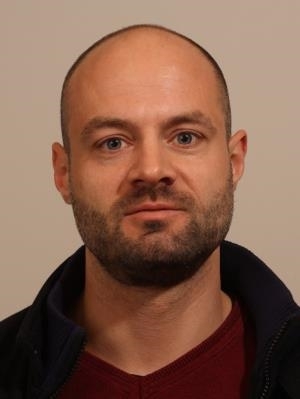
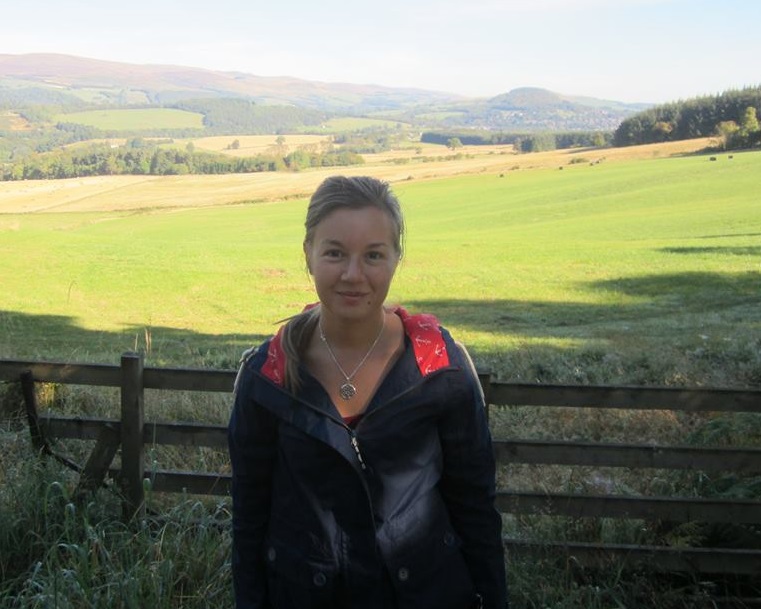
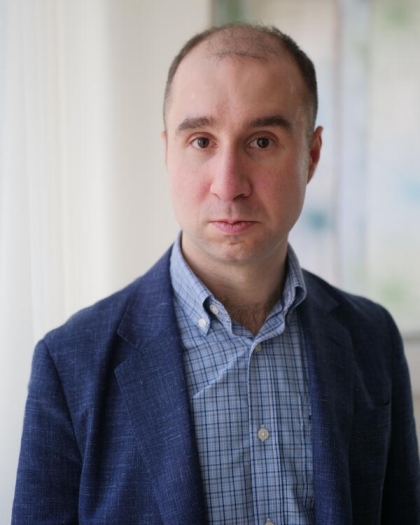
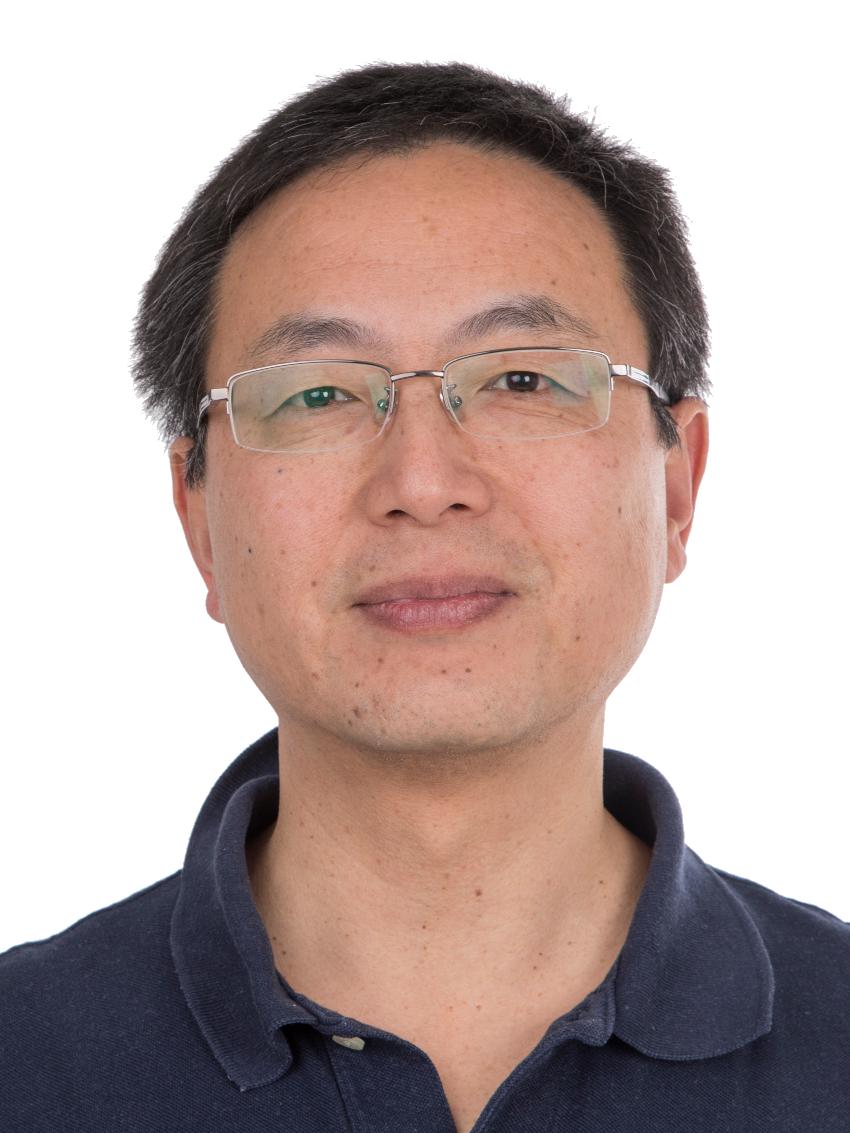
Molly Maleckar is a Research Professor at the Computational Physiology Department of Simula Research Laboratory , Oslo, Norway. Her work bridges computational modeling, cardiac electrophysiology, and biomedical applications, with a focus on arrhythmia mechanisms, fibrosis modeling, and machine learning integration in cardiac risk prediction. Research Interests include: Computational Cardiology Ion Channel Dynamics Machine Learning in Medicine Excitable Tissue Modeling Cardiac Fibrosis Analysis Biomedical Simulation Scientific Contributions span 15+ publications (2018-2024) addressing atrial fibrillation, calcium handling, and AI-driven ECG analysis. Key collaborative projects involve patient-specific ventricular modeling and educational initiatives like the Simula Summer School in Computational Physiology .
Elena Celledoni is a Professor in the Department of Mathematical Sciences at the Norwegian University of Science and Technology (NTNU). She has been employed at NTNU since 2004 and has held the position of professor since 2009. She is a member of the Differential Equations and Numerical Analysis Group at the Department of Mathematical Sciences and serves as its leader. Her educational background includes: Master's degree in Mathematics from the University of Trieste (1993) Ph.D. in Computational Mathematics from the University of Padua, Italy (1997) Elena Celledoni's research focuses on numerical analysis, particularly structure preserving algorithms for differential equations and geometric numerical integration. Her work bridges theoretical mathematics with practical computational methods, developing algorithms that maintain the geometric properties of the systems they approximate. She has made significant contributions to Lie group integrators, energy-preserving methods, and the application of these techniques to mechanical systems and shape analysis. In recent years, her research has expanded to include the intersection of numerical methods with machine learning, exploring how structure-preserving approaches can enhance neural networks and data-driven modeling. Her publications demonstrate a clear trend toward integrating traditional numerical analysis with modern machine learning techniques while maintaining a strong foundation in geometric integration and structure preservation. This interdisciplinary approach has led to innovations in neural ODEs, structure-preserving neural networks, and physics-informed machine learning models that respect the underlying mathematical structures of the systems they model. Elena Celledoni has received recognition for her work through the following honors: Member of the Royal Norwegian Society of Sciences and Letters Member of the European Consortium of Mathematics in Industry Council Member of the board of the International Council of Mathematics in Industry and Applications Editorial board member for SIAM Review, Journal of Computational Dynamics, Journal of Geometric Mechanics, Calcolo, and Networks and Heterogeneous Media As an advisor, she has mentored several students including Torbjørn Ringholm who completed his doctoral dissertation on 'Discrete gradient methods in image processing and partial differential equations on moving meshes.' Her research has been supported by various grants enabling her to lead projects on geometric numerical integration, collaborate internationally, and organize significant academic events such as the special semester at Isaac Newton Institute of MS in 2019 on 'Geometry, compatibility and structure preservation.' She leads the Differential Equations and Numerical Analysis Group at NTNU, which focuses on developing and analyzing numerical methods that preserve the geometric structure of differential equations. The group maintains active collaborations with researchers worldwide and has made substantial contributions to advancing the field of geometric numerical integration and its applications to real-world problems.
Juergen Pfingstner is a Post-doctoral Fellow at the University of Oslo (since 2015) within the Department of Physics. His research focuses on advanced accelerator technologies, particularly at CERN's CLIC Test Facility (ATF2). Key areas include emittance preservation, ground motion mitigation, and free-electron laser (FEL) design. He holds a PhD from the Vienna University of Technology (2013) and a Master's in Electrical Engineering from Graz University of Technology (2008), specializing in control engineering and electromagnetic field computation. His academic journey includes a postdoctoral stint at CERN (2012–2014), where he investigated ground motion effects on CLIC performance. Collaborations span institutions like KEK (ATF2 facility) and the X-band FEL collaboration. Research interests bridge particle accelerator physics, control systems, and high-frequency radiation technologies. Publications emphasize CLIC final focus systems, wakefield suppression, and plasma wakefield acceleration. His work addresses both theoretical and experimental challenges in next-generation collider design, including THz radiation facilities and feedback control methodologies.
Elena Celledoni is a Professor of Mathematics at the Department of Mathematical Sciences, Norwegian University of Science and Technology (NTNU), where she has been employed since 2004. She leads the research group on differential equations and numerical analysis. Her academic background includes a Master’s degree (1993) and Ph.D. (1997) in mathematics from the Universities of Trieste and Padua, Italy, respectively. She has held postdoctoral positions at the University of Cambridge (UK), the Mathematical Sciences Research Institute (MSRI, Berkeley, CA), and NTNU. Her research focuses on numerical analysis, particularly structure-preserving algorithms for differential equations and geometric numerical integration. Recent work includes applications of neural networks in computational mechanics and data-driven modeling. She has co-authored over 100 peer-reviewed articles in journals such as Journal of Computational Physics , SIAM Journal on Scientific Computing , and Physica D . Her research interests span computational methods for dynamical systems, machine learning integration with numerical analysis, and geometric algorithms for shape analysis. She actively collaborates with international researchers, including contributions to conferences like NeurIPS and workshops on theoretical aspects of computational dynamics. Elena is a member of the editorial boards of Journal of Computational Dynamics and has organized workshops on structure-preserving integrators. Her work emphasizes preserving geometric properties in numerical methods, with applications in fluid dynamics, mechanical systems, and image processing.
Jan Bang serves as Professor in the Department of Rhythmic Music at the University of Agder (UiA), Norway, with office K2022 at Universitetsveien 25, Kristiansand. A prominent Norwegian composer, musician, and producer of international standing, he co-founded and directs the Punkt Festival with Erik Honoré since 2005. The festival's live sampling concept has been presented in 25 cities globally including London Jazz Festival, Paris' Banlieues Bleues, and San Sebastian Jazz Festival. His primary research interests focus on Electronic Music, Jazz Studies, Live Sampling, and Music Production. Bang explores real-time remix methodologies, the intersection of silence and sound, and political dimensions of art. His work emphasizes technological innovation in performance contexts while maintaining strong ties to Norwegian and global jazz traditions through collaborative improvisation and cross-genre experimentation. Recent publications (2023-2025) reveal concentrated activity in live electronic performance documentation, festival curation, and artistic responses to global conflicts. Collaborations with Ensemble Modern and Eivind Aarset dominate output, alongside politically engaged commentary like his 2025 La Stampa piece on Gaza. Themes consistently address latency as creative material, cultural memory in sound, and the role of electronic processing in contemporary music ecosystems. Bang conducts international masterclasses (Barcelona, Rome) but no formal graduate students or specific grant projects are documented in the source text. His advising appears practice-based through festival workshops and performance collaborations rather than traditional academic supervision. He co-founded the Punkt Festival as a primary creative platform, operating as both artistic director and research vehicle. Additionally affiliated with UiA's Electronic Music and Songwriting and Production research groups, his work integrates festival operations with academic inquiry through projects like Stillefeldt vs Punkt (with Birmingham City University) and Global Jazz Studies networks.
Nils-Ole Stutzer is a Doctoral Research Fellow at the Institute of Theoretical Astrophysics , University of Oslo, specializing in Cosmology , Line Intensity Mapping , and Cosmic Microwave Background (CMB) data analysis. He contributes to major projects like COMAP COSMOGLOBE BeyondPlanck and develops computational tools in Python/C++ for mitigating systematic errors in radio telescope data. His research interests focus on Galactic and extragalactic CMB analysis Radio interferometry for molecular gas mapping Bayesian methods in cosmological parameter estimation Instrumental signal deconvolution Open science data frameworks His work addresses fundamental questions about cosmic structure formation and early universe physics. Key publication trends include: 2024 studies on 30GHz spinning dust emission in dark clouds Advanced CO power spectrum constraints at z ∼ 3 2023-2024 Bayesian reanalysis of Planck/WMAP missions LiteBIRD mission forecasts for gravitational waves Projects emphasize reproducibility and end-to-end data modeling. He teaches AST2000 project groups and collaborates across institutions on CMB&CO initiatives. Current affiliations include the Faculty of Mathematics and Natural Sciences at the University of Oslo.
Gabriele Lobaccaro is a Professor at the Department of Civil and Environmental Engineering, NTNU, within the Faculty of Engineering. His primary focus is on sustainable urban development, renewable energy integration, and climate-resilient architectural design. He leads research in solar energy planning through initiatives like the IEA SHC Task 51 and COST Action PEARL PV. Education: MSc from Politecnico di Milano (2008), PhD in Structural Engineering (Politecnico di Milano/UNSW Sydney, 2013) Research interests include Smart Cities, urban solar potential analysis, and building-integrated photovoltaics (BIPV). Key projects involve the HELIOS-NFR FRIPRO program and collaborations with French institutions via the Åsgård Program. Publications emphasize solar irradiance modeling, urban energy systems, and legislative frameworks for solar neighborhoods. He co-leads Subtask C of the IEA SHC Task 51, focusing on case studies and action research. Awards: ISSNAF/CNI Scholarship for MIT collaboration, Åsgård Research+ Program (2019-2020)
Mads Lund Pedersen is a Researcher at the University of Oslo (UiO) and Norment, affiliated with the Department of Cognitive and Clinical Neuroscience. His academic background includes a Dr.philos. (PhD) in Cognitive Neuroscience from UiO (2017) and a Master's in Cognitive Neuroscience (2012). He has held postdoctoral positions at UiO (2017–2020) and was a visiting scholar at Brown University’s Laboratory of Neural Computation and Cognition (2017–2019). His research focuses on computational modeling of decision-making processes in psychiatric and neurological disorders, particularly using reinforcement learning and drift-diffusion models. Key interests include understanding reward sensitivity in addiction, cognitive control mechanisms in adolescence, and the neural basis of psychiatric conditions like depression and psychosis. Collaborations include institutions such as Brown University, Washington University in St. Louis, Harvard Medical School, and the Central Institute of Mental Health in Mannheim. His work integrates neuroimaging, computational models, and genetic data to explore mental health biomarkers and comorbidity mechanisms. Recent projects include longitudinal studies of brain structure in psychosis, normative cognitive trajectories in youth, and the impact of interventions like attention bias modification. Pedersen’s contributions span over 30 peer-reviewed articles in journals like Biological Psychiatry , NeuroImage , and Journal of Cognitive Neuroscience .
Anamaria Costache is an Associate Professor at the Norwegian University of Science and Technology (NTNU) in the Department of Information Security and Communication Technology. Previously, she held roles including a postdoc at Royal Holloway, University of London (RHUL), a Research Scientist at Intel AI Research, and a part-time position at Intel. She earned her PhD from the University of Bristol and undergraduate/master's degrees from the University of Warwick, focusing on number theory and algebraic structures like Brauer Groups. Her research interests center on fully homomorphic encryption (FHE), privacy-preserving machine learning, lattice-based cryptography, and post-quantum security protocols. Her work is supported by Intel, addressing challenges in secure computation on encrypted data. She has authored numerous publications in top venues like CRYPTO, PKC, and IEEE conferences, focusing on FHE optimizations, biometric systems, and cryptographic security analyses. Teaching includes courses on applied cryptography, network security, and quantum-safe encryption at NTNU. She co-chairs NIKT 2019 and the WAHC workshops (2022–2024), and serves on editorial boards for journals like IACR Communications in Cryptology. She actively participates in program committees for conferences such as MathCrypt and FHE.org. Professional service includes the Lattigo Advisory Committee and contributions to the Bristol Crypto Blog. Her current projects emphasize verifiable computation over encrypted data and resilient authentication mechanisms in biometric systems.
Jill Walker Rettberg is a Professor of Digital Culture at the University of Bergen, Norway, and Co-Director of the Center for Digital Narrative (CDN), a Norwegian Center of Excellence funded by a €15M grant (2023–2033). She leads the ERC Advanced Grant project AI STORIES (2024–2029) and previously directed the ERC Consolidator project Machine Vision in Everyday Life (2018–2024). Her research focuses on how technologies like AI and machine vision shape narratives and cultural practices. Education and Background: Rettberg holds a PhD in Humanistic Informatics from the University of Bergen and has a background in Comparative Literature. She has been a pioneer in digital culture studies since the late 1990s, winning awards such as the Ted Nelson Newcomer Award (1999) and the John Lovas Memorial Award (2017). Research Interests: Her work spans AI narratives, machine vision ethics, social media storytelling, electronic literature, and the societal impacts of algorithms. Recent projects include analyzing generative AI’s cultural biases and exploring how machine vision influences human perception. Publications: Rettberg authored Machine Vision: How Algorithms Are Changing the Way We See the World (2023), Seeing Ourselves Through Technology (2014), and Blogging (2008). Her articles and datasets investigate topics like AI-generated narratives, facial recognition bias, and digital art interfaces. Grants and Awards: Besides ERC grants, she has been recognized with the Meltzer Foundation Prize (2006) and serves in leadership roles at UiB AI and LEAD AI networks. Teaching and Mentoring: Rettberg supervises PhD students in digital culture, including work on conversational apps for chronic patients and haptic interfaces in digital art. She teaches courses on machine vision, critical digital theory, and AI ethics.
Nikolay Stoyanov Kaleyski is an Associate Professor at the Department of Informatics, University of Bergen. His research focuses on cryptographic Boolean functions, particularly APN (Almost Perfect Nonlinear) functions and their applications in symmetric cryptography. He explores algorithm design for function analysis and hardware architectures for efficient cryptographic implementations. He has taught courses including Advanced Cybersecurity (INF249), Applied Cryptography (INF143A), and Information Theory (INF242) across multiple semesters. His research interests include the construction, classification, and properties of Boolean functions with optimal cryptographic criteria. He investigates hardware-friendly implementations of APN permutations and contributes to understanding equivalence relations among functions (EA/CCZ-equivalence). Notable work includes studies on planar functions in finite fields and low-complexity hardware architectures using TU-decomposition. Publications span topics like APN function generalizations, 0-APN monomials, and partial APN properties. Collaborations with institutions like the Naval Postgraduate School and Sungkyunkwan University highlight his international research network. His doctoral dissertation (2021) deepened insights into longstanding APN-related problems.
Andrea Brambilla is a researcher at the Department of Informatics, University of Bergen, focusing on flow visualization and scientific visualization techniques. Her work emphasizes improving the understanding of complex flow phenomena through innovative visualization methods, including integral surfaces, occlusion management, and comparative visualization strategies. She completed her PhD in 2014, titled 'Visibility-oriented Visualization Design for Flow Illustration.' Her research has been applied to fluid dynamics, molecular visualization, and biomedical data analysis. Key contributions include expressive seeding strategies for stream surfaces, hierarchical splitting schemes for occluded integral surfaces, and fast molecular surface representation techniques. She actively collaborates on projects like the SemSeg initiative, advancing visualization tools for scientific data exploration. Her expertise spans computational fluid dynamics, volume rendering, and interactive visualization methods. Her presentations and lectures, such as 'Video Visualization: An Overview,' highlight her commitment to bridging visualization theory and practical applications. She has contributed to conferences and workshops, including PacificVis, IEEE Visualization, and the EuroGraphics STARs series.
Weihai Yu is an Associate Professor at the Department of Computer Science, UiT The Arctic University of Norway. His research focuses on distributed systems, collaborative editing, conflict-free replicated data types (CRDTs), edge computing, and decentralized service orchestration. He leads the Open Distributed Systems (ODS) research group and contributes to projects like the Conflict-free Replicated Relation (CRR) and Nudge Project. Yu has authored over 50 publications since 2009, with recent work emphasizing replicated data streams, undo mechanisms in collaborative systems, and edge-cloud integration. Key research interests include: distributed database replication, real-time collaborative editing with CRDTs, fault-tolerant service orchestration, and asynchronous systems design. His work bridges theory and practice, addressing challenges in consistency, scalability, and user experience in distributed applications. Publications trends show a strong focus on CRDT advancements (e.g., low-cost set CRDTs, generic undo support) and edge computing applications. He collaborates extensively with industry partners on projects like the Nudge Project, exploring IoT-driven transportation systems. Yu's contributions are published in top venues such as Springer Nature, ACM, and IEEE journals/conferences. Maintains the Open Distributed Systems (ODS) group at UiT, focusing on collaborative systems and distributed computing innovations. Current research includes local-first software architectures and conflict-free replicated relations for multi-synchronous database management.
Kyle Andrew Porter is a Researcher in the Department of Information Security and Communication Technology at the Norwegian University of Science and Technology (NTNU), Gjøvik campus. His work focuses on the intersection of digital forensics, natural language processing, and artificial intelligence applications in law enforcement contexts. Dr. Porter's research interests include: Digital forensics methodologies and techniques Natural language processing for criminal investigations AI regulation compliance in law enforcement Data science approaches to security challenges Human factors in digital evidence analysis Metadata extraction and filesystem analysis His publication history reveals a clear evolution from foundational technical work in digital forensics (2017-2018) toward increasingly applied research addressing real-world investigative challenges (2021-2025). Recent work demonstrates sophisticated integration of NLP and AI techniques to solve practical problems in criminal investigations while navigating regulatory landscapes like the AI Act. His research consistently addresses efficiency improvements, accuracy concerns, and cognitive factors in digital evidence processing. Dr. Porter teaches IMT4133 - Data Science for Security and Forensics, contributing to the development of future professionals in this specialized field. His educational contributions also include an Educational Guide published with John Wiley & Sons in 2022.
Jiaxin Pan is a Professor at the University of Kassel (Germany) and an Associate Professor (førsteamanuensis, part-time) at the Norwegian University of Science and Technology (NTNU). He is affiliated with the Algebra Group at NTNU and has previously worked as a postdoctoral researcher at Karlsruhe Institute of Technology (KIT) and the University of Kassel. Pan earned his PhD from Ruhr-Universität Bochum (Germany) in 2016. Research Interests Tight security proofs in cryptography Lattice-based cryptosystems Identity-based encryption Zero-knowledge proof systems Structure-preserving signatures Fine-grained cryptography Research Trends and Publications His work focuses on enhancing cryptographic security reductions and designing efficient protocols for post-quantum environments. Key areas include key exchange mechanisms, attribute-based encryption, and signature schemes with tight security guarantees. Pan's papers are published in top-tier venues such as Journal of Cryptology, CRYPTO, and Eurocrypt. Grants and Projects NTNU Outstanding Academic Fellows Programme (2022–2026) Young Research Talent project (2021–2025), Research Council of Norway Peder Sather Grant (2021–2023), with Sanjam Garg (UC Berkeley) Professional Activities Pan serves on program committees for IACR Eurocrypt, Asiacrypt, PKC, CT-RSA, and ESORICS. He is a reviewer for journals and conferences like ACM Transactions on Algorithms, Journal of Cryptology, and DFG grants.