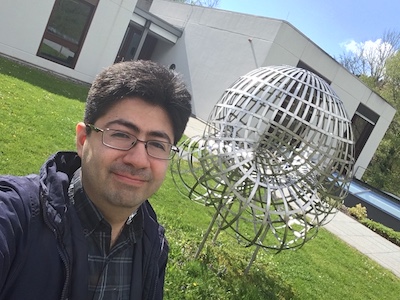
Mingzhou Ding is Distinguished Professor and J. Crayton Pruitt Family Professor in the J. Crayton Pruitt Family Department of Biomedical Engineering at the University of Florida, within the College of Engineering. His research bridges physics, engineering, and neuroscience to investigate brain function through advanced neuroimaging and signal processing techniques. His research interests include cognitive neuroscience , multimodal neuroimaging , signal processing , affective neuroscience , and computational modeling of brain networks . He employs methods such as EEG-fMRI integration, multivariate pattern analysis, and effective connectivity modeling to study how emotional and cognitive processes are represented in the brain. Recent publications highlight a strong trend in decoding emotional content in visual cortex, attentional control mechanisms, and neuromodulation of brain networks. His work frequently involves analyzing neural representations of affective scenes, conflict processing in psychiatric conditions, and the role of reentrant feedback from limbic structures in shaping visual perception. Specialty Chief Editor, Frontiers in Human Neuroscience Guest Associate Editor, Frontiers in Neural Circuits Guest Associate Editor, Cognitive Neuroscience , Frontiers in Human Neuroscience Prof. Ding has contributed to numerous editorial roles and has collaborated widely across neuroscience and biomedical engineering. He advises several researchers and has been involved in studies supported by significant NIH and NSF funding, though specific grants are not detailed here. His lab focuses on brain imaging and stimulation, with a strong emphasis on experimental design and computational analysis of neural data. He leads a research team specializing in brain network dynamics, neuroimaging methodology, and cognitive neuroscience experiments, particularly in the domain of emotion and attention.