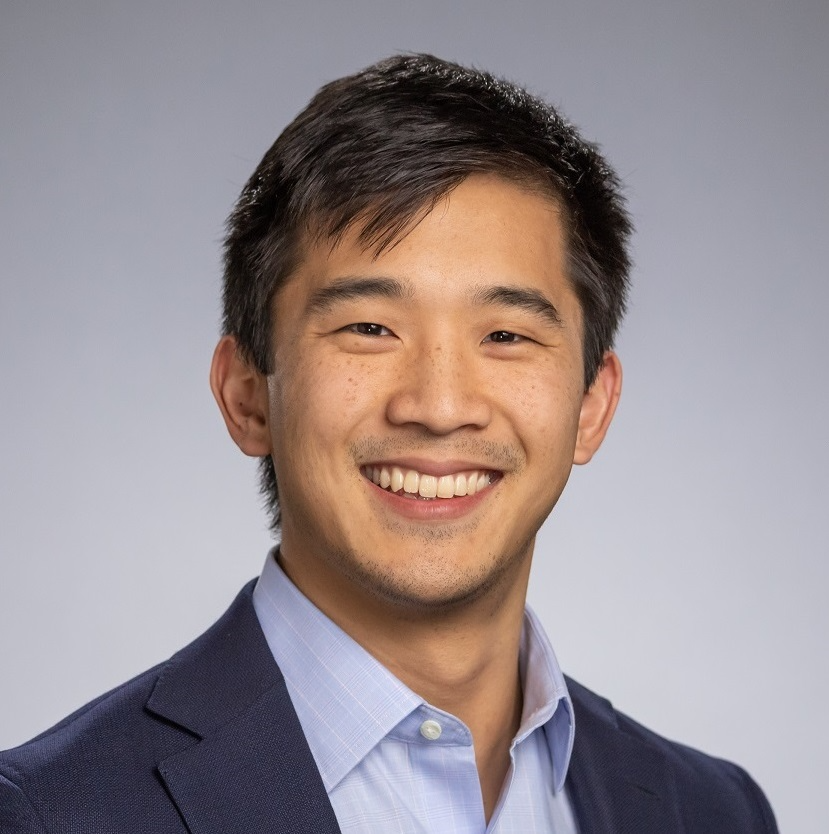
Calvin Tsay is a Lecturer (Assistant Professor) in the Computational Optimisation Group at Imperial College London, holding the BASF/RAEng Senior Research Fellowship in Scale-Bridging Modelling. Education: PhD Chemical Engineering (UT Austin 2020), BS/BA (Rice University 2015). Research develops optimization methods bridging machine learning and process systems engineering. Specializes in mixed-integer programming for neural networks and Bayesian optimization for energy applications. Awards: President's Medal for Early Career Researcher RAEng Senior Research Fellowship CACE Best Paper (2023) COIN-OR Cup (2022) Leads research on AI-driven chemical process optimization. Supervises PhD students in ML optimization and process control. Collaborates with BASF on industrial applications.
Carl Driesener is an Associate Professor and Senior Marketing Scientist at the Ehrenberg-Bass Institute for Marketing Science, where he has worked for over 15 years. He leads the Institute’s in-house tracking capabilities and conducts bespoke market research across industries including packaged goods, financial services, IT, telecommunications, real estate, and the wine market in China. His research focuses on buyer behaviour, market modelling, and internet research, with a strong emphasis on empirical generalisations in marketing. Carl’s research interests centre on buyer behaviour , brand equity , mental availability , and the application of the NBD-Dirichlet model and Duplication of Purchase analysis. He investigates how brands compete, grow, and decline using rigorous empirical methods. His work explores brand image measurement, consumer loyalty, and the impact of media and nostalgia on purchasing decisions. He has made significant contributions to understanding how consumers perceive country-of-origin effects, particularly in the Chinese wine market. His recent publications (2018–2023) reflect a strong trend in cross-cultural consumer behaviour , marketing analytics , and empirical modelling . Themes include mental availability, brand loyalty across categories, ageism in branding, and the use of advanced statistical models like the Poisson log-normal and Dirichlet. His work frequently applies marketing laws to digital and cultural contexts, including music consumption and social media integration. Scientific Awards: Best Paper Award, International Symposium on Marketing (2007) Carl has not publicly listed advisees, but his extensive collaboration with leading marketing scientists such as Byron Sharp, Jenni Romaniuk, and Zorka Anesbury suggests active mentorship and team-based research. He has contributed to major projects on brand loyalty, market structure, and consumer repertoire analysis. While no specific grants are listed, his ongoing publication output and leadership in large-scale research initiatives indicate sustained funding and institutional support. He is a key contributor to the Ehrenberg-Bass Institute’s mission of advancing evidence-based marketing science. Carl is involved in a research team focused on marketing science , brand tracking , and consumer data analytics at the Ehrenberg-Bass Institute. This team applies mathematical models to real-world marketing problems, working with global clients and publishing in top academic journals. Their work is foundational to modern brand management and category growth strategies.
Alessandro Provetti is a Reader in Data Analysis at the School of Computing and Mathematical Sciences , Birkbeck, University of London. He co-leads the AHRC-funded V&A Design Generator project and contributes to editorial boards of Philosophical Transactions of the Royal Society A and Patterns (Cell Press). Research interests: His work spans Computational Social Science , Network Science (particularly centrality metrics), and Artificial Intelligence applications in Finance and Sports. He develops methods for web data extraction, trust modeling, and temporal analysis in social networks. Publications and projects: Recent research includes oversampling techniques for credit scoring, sentiment analysis of market volatility, and centrality measures in network science. His work often bridges algorithmic innovation with real-world data challenges, such as forecasting electricity demand and equity markets using machine learning. Scientific contributions: 2023 Teaching Award at Birkbeck Co-PI of AHRC-funded V&A Design Generator (2022) Editorial board member of two journals Supervision and outreach: He mentors MSc, MRes, and PhD students in web algorithmics, intelligent systems, and data science. In 2020, he participated in a Royal Statistical Society panel on racism and statistics. He also advises Malet Labs Ltd , a Birkbeck alumni startup.
Dr. Edmondo Minisci is a Senior Lecturer in Mechanical and Aerospace Engineering at the University of Strathclyde, part of the Faculty of Engineering. He leads the Intelligent Computational Engineering Laboratory (ICE-Lab) within the Aerospace Centre of Excellence. With over 25 years of experience, his expertise spans model-based analysis and design optimization of complex mechanical/aerospace systems, including aeronautical vehicles, wind turbines, and sustainable energy systems. He actively supervises PhD students in areas like multi-fidelity methods, intelligent control, and sustainable agriculture engineering. Dr. Minisci has received prestigious awards, including the NATO STO “Panel Excellence” Award (2024) and the Sir Arthur C Clarke Award (2015). His research focuses on multidisciplinary design optimization under uncertainties, machine learning applications, and aerospace technologies for sustainable development. Key projects include optimizing high-lift devices, wind turbine performance, and precision agriculture systems. He has contributed to numerous conferences, including organizing the International Conference on Bioinspired Optimisation Methods and serving as an examiner for PhD theses. His work bridges computational intelligence with practical engineering challenges, emphasizing resilience and innovation in aerospace and energy sectors. Research Interests: Multi-Objective Optimization, Nature-Inspired Algorithms, Uncertainty Treatment, Machine Learning, Intelligent Control. Recent Projects: Symbolic Computation for Differential Equation Systems, EPSRC-funded Uncertainty Quantification in Aeroelastic Systems, and Advanced Natural Language Models for Satellite Communications.
Lindsay Rountree serves as Lecturer in Optometry and Programme Lead for the MOptometry Programme at the School of Optometry and Vision Sciences within the Faculty of Life Sciences, University of Bradford, a position she has held since January 2020. Her academic credentials include: BSc(Hons) in Optometry and Vision Sciences from Cardiff University (qualified 2007) PhD from Cardiff University (2018) on Optimisation of Perimetric Stimuli for Mapping Changes in Spatial Summation in Glaucoma Research expertise spans: Glaucoma symptomatology and treatment adherence Structural/functional changes in glaucoma Mental health among optometry professionals Myopia management and contact lens innovations Ophthalmic public health initiatives She actively contributes as Training Lead for Women in Vision UK (WVUK) and organizes conferences for WVUK, British Congress of Optometry and Vision Science (BCOVS), and Imaging and Perimetry Society (IPS). Prospective PhD students are invited to contact her regarding research opportunities in her specialty areas.
Dr. Axelle Viré is an Associate Professor in the Flow Physics and Technology department within the Faculty of Aerospace Engineering at Delft University of Technology. Her research focuses on advanced wind energy systems, particularly floating offshore wind and airborne wind energy technologies. Her research interests span multiple areas of renewable energy systems: Floating offshore wind energy systems Airborne wind energy conversion Fluid-structure interactions in wind turbine systems High-fidelity numerical modeling of complex flow phenomena Turbulence modeling for wind energy applications Dr. Viré's recent publications demonstrate a strong focus on wind turbine wake control, vortex dynamics, and aerodynamic optimization. Her work combines experimental approaches with advanced numerical modeling to address key challenges in wind energy technology. She has made significant contributions to understanding wake recovery processes, active wake control strategies, and the aerodynamic behavior of floating offshore wind turbines under dynamic conditions. Among her notable achievements is the Delft Education Fellowship awarded in 2023, recognizing her contributions to academic education. She has supervised multiple students and is actively involved in research projects advancing wind energy technology. Dr. Viré is currently leading the active research project 'Accelerating Dutch innovations in offshore renewables through data-driven hybrid labs' (2024-2031) and has previously contributed to significant projects including AWESCO (Airborne Wind Energy System Modelling, Control and Optimisation) and NUMIWING (Numerical modelling of inflatable airborne wind energy systems). She maintains an active public engagement profile, with multiple media appearances discussing wind energy innovations and has participated in events such as Aerospace Diversity Day, demonstrating commitment to both research excellence and inclusive academic practices.
Derk H. Bos is a postdoctoral researcher in the Department of the Built Environment at Eindhoven University of Technology (TU/e), specialising in 3D concrete printing and quality control engineering. He completed his MSc cum laude in 2019 and defended his PhD dissertation in October 2024, both at TU/e. Education MSc in Structural Engineering and Design, Eindhoven University of Technology (cum laude, 2019) PhD in Concrete Structures, Eindhoven University of Technology (2024) Research Interests Derk’s research integrates additive manufacturing, materials science, and process engineering to advance 3D concrete printing. He develops parametric mortar design methodologies, rheological models for mixing and pumping, and novel in-line quality-control tests. His work addresses the challenges of ensuring structural integrity and process reliability in large-scale digital construction. Key focus areas include: – Rheology and yield stress optimisation of printable cementitious composites – Real-time monitoring techniques such as dye-tracer and gravity-induced compression tests – Multi-scale quality assessment from material to structural level Scientific Awards Digital Concrete Conference – Best Paper Award (2022) Service & Collaboration Since 2019, Bos chairs the PhD Network Civil Engineering, fostering early-career researcher engagement. He co-organised the Second RILEM International Conference on Concrete and Digital Fabrication in 2020, strengthening international collaboration in digital construction. Labs & Teams He is embedded within the Concrete Structures chair of the Unit Structural Engineering and Design, working closely with the TU/e 3D Concrete Printing research group led by Prof. Theo Salet and Dr. Rob Wolfs.
Prof. Chris Jansen holds the position of Full Professor in Public Contract Law at the Faculty of Law of Vrije Universiteit Amsterdam, affiliated with the Kooijmans Institute. His expertise centers on public procurement, administrative law, and EU contract frameworks. He serves as a part-time judge at Gerechtshof Den Bosch since 2013. Jansen has supervised 6 PhD theses and contributed to 165+ research outputs. Research interests include competitive tendering mechanisms, administrative structures, and proportionality in public procurement. His recent work explores optimizing public interests through tendering innovations and regulatory frameworks. He edited major works like Optimising Public Interests through Competitive Tendering (2025). Notable recognitions include chairmanship of the Commissie van Aanbestedingsexperts (2017–2021) and a visiting chair from the Tijdschrift voor Privaatrecht. He actively engages in expert workshops and media commentary on topics like public bidding integrity and construction contract law. Jansen teaches advanced courses on public procurement and contract law, blending academic rigor with practical legal challenges. His work bridges European legal frameworks with Dutch administrative practices, emphasizing transparency and fairness in public contracting.
Dr. Mike Morgan is a Senior Lecturer in Computing at the University of Chester, affiliated with the Faculty of Science, Business and Enterprise. Previously, he held teaching roles at Coventry University and Glyndwr University. His research focuses on Combinatorial Optimisation, Heuristics, Mathematical Programming, and Naturally Inspired Computing, with notable contributions to automated educational feedback systems, optical network optimization, and wireless network design. He has collaborated with Tata Steel on logistics optimization software through a KTEG-funded project. Teaching interests include Programming, Algorithms and Data Structures, Networking, Computer Architecture, and Theory of Computation. He developed the MSc Computer Science (conversion) and MSc Advanced Computer Science programs at the University of Chester. His publications span automated feedback tools, ant colony optimization for optical networks, and metaheuristics for wireless networks, demonstrating expertise across computational theory and practical applications. Professional activities include consulting for Tata Steel on bin-packing problems in logistics. His work bridges academic research with real-world industry challenges, particularly in optimization and network systems.
Bishnu Lamichhane is an Associate Professor at the University of Newcastle, Australia, within the School of Mathematics and the College of Engineering, Science and Environment. His research focuses on applied and computational mathematics, with interdisciplinary collaborations in engineering, statistics, physics, and environmental science. He holds a PhD in applied mathematics from the University of Stuttgart (Germany) and has a strong track record in cross-disciplinary projects, including coal blending models for BHP and neutron strain tomography for engineers. Education: M.Sc. (Industrial Mathematics) from University of Kaiserslautern (Germany), PhD from University of Stuttgart (Germany). He has taught at all levels, including AMSI Honours courses in 2011, 2014, and 2020. He has supervised 12 completed PhD students and currently supervises 8 more. Research Interests: Numerical methods for PDEs, finite element methods, data science, optimisation, and tomography. Collaborations span institutions in Australia, Germany, UK, USA, and India. He has held leadership roles in the Computational Mathematics Group (CMG), served on the AMSI Board, and organized major conferences like CTAC 2018. His work has been supported by grants from BHP, ACARP, and international bodies. Key Achievements: Gold Medal (Tribhuvan University), DAAD Scholarship, Honorary Professorship at IIT Bombay. His research has led to advancements in coke microstructure analysis, locust foraging models, and ice shelf dynamics under ocean waves.
Agnieszka Stefaniec is a Lecturer in Management Science at the University of Southampton's Department of Decision Analytics and Risk, part of Southampton Business School. She also serves as an Affiliated Lecturer at Södertörn University's School of Social Sciences in Sweden and co-Editor-in-Chief of the Environmental Development journal. Her research focuses on low-carbon transitions, sustainable transportation systems, and shared mobility, using operational research techniques to address climate targets. She holds a PhD in Management Science and Engineering, alongside MA and BA degrees in Architecture and Urban Planning. Her teaching portfolio includes undergraduate/postgraduate modules such as Management Analysis (MANG1047), Foundations of Business Analytics (MANG1019), and Predictive Analytics (MANG1043). Recent publications explore EV subsidy equity, shared mobility hubs, and long-term commuting emission reductions. She actively supervises PhD students and collaborates with international researchers on transport and environmental sustainability projects. Key research contributions include analyzing electric mobility systems, decarbonizing transport sectors, and assessing working-from-home impacts. Her work bridges operational research with societal challenges, emphasizing systemic changes for equitable climate solutions.
Professor Andrea Da Ronch is a faculty member at the University of Southampton's School of Engineering, holding the academic rank of Professor and serving as Director of the Boeing Flight Simulators Laboratory. She maintains active research leadership and teaching responsibilities within the Aeronautics and Astronautics program, with a demonstrated commitment to high-quality education evidenced by two nominations for "Outstanding Lecturer" and Fellowship of the Higher Education Academy. Her research spans Air Vehicle Design (Derivative and Unconventional), Computational Aerodynamics, Aeroelasticity, Weather Modeling, and Multidisciplinary Optimisation. She develops scalable computational methods at the intersection of aerospace engineering, mathematics, and computer science to support next-generation sustainable air transportation, targeting aviation decarbonization, Advanced Air Mobility (AAM) connectivity, and accelerated industry product development through physics-informed machine learning approaches. Recent publications (2024-2025) reveal a pronounced trend toward geometric deep learning and graph neural networks for transonic flow prediction, morphing wing analysis, and propeller-wing interaction. These works emphasize computational efficiency in unsteady aerodynamics while addressing critical challenges in aircraft design validation and dynamic maneuver simulation. Scientific awards include: Rotary International Award (2012) Aerospace Speakers Travel Grant (2010) T.I.M.E. Double Degree Award (2008) AIAA Atmospheric Flight Mechanics Best Paper Award (2019) Fellow of the Higher Education Academy (2014) Senior Member of AIAA (2017) She currently supervises three PhD students (Declan Salazar Clifford, Gabriele Immordino, Giuseppe Morichetti) with funding secured from EPSRC, European Union H2020, US Air Force Office of Scientific Research, and Royal Academy of Engineering projects including IMPACT anti-ice coatings optimization, Sparsified Reduced Modeling, and transonic buffet analysis. As Director of the Boeing Flight Simulators Laboratory, she provides hands-on curriculum enhancement for engineering students. Her active membership in the Aerodynamics and Flight Mechanics Research Group facilitates collaboration on sustainable aviation initiatives while supporting her leadership in major projects like HOMER- with Professor Bharath Ganapathisubramani.
Hannah Mullings is the Dr Dame Kathleen Ollerenshaw Fellow in Civil Engineering and Management at the University of Manchester. Her research focuses on offshore renewable energy, particularly tidal stream and offshore wind systems, alongside fluid mechanics, turbulence, and metocean conditions. She holds a PhD in Mechanical Engineering (2020) and an MEng (2015), both from the University of Manchester. Research Interests: Tidal energy systems and turbine optimisation Turbulence modelling and fluid-structure interaction Sustainable engineering solutions for marine energy Awards: EPSRC EDI+ Fellowship (2024) Dame Kathleen Ollerenshaw Fellowship (2024) Fellow of Advance HE (2022) Chartered Engineer (2021) Grants & Projects: Lead researcher on the TIGER project (2019-2022), focusing on tidal stream energy resource assessment and turbine performance. Collaborates with industry partners to bridge academic-industry gaps in renewable energy innovation.
Momchil Terziev is a Lecturer in the Department of Naval Architecture, Ocean and Marine Engineering at the University of Strathclyde, Faculty of Engineering. He is actively involved in research and teaching, with a strong focus on applied Computational Fluid Dynamics (CFD) for marine applications. He also co-delivers joint teaching activities at Harbin Institute of Technology, Weihai, China, and has held visiting academic positions, including as a Visiting Professor at Universitas Diponegoro under the World Class University Visiting Professor Program. His research expertise lies in the numerical modelling of fluid flow around ships, particularly addressing scale effects that lead to performance differences between model and full-scale vessels, and shallow water hydrodynamics . He also investigates discretisation uncertainty estimation, ship aero-hydrodynamics, and practical turbulence modelling techniques. His work contributes to the UN Sustainable Development Goal of sustainable infrastructure and clean energy through improved marine technology. The most recent publications reflect a strong trend in advancing CFD methodologies for ship performance prediction, with emphasis on scale effects, shallow and confined water dynamics, and hybrid simulation approaches. These works are published in high-impact journals such as Ocean Engineering and Journal of Marine Science and Engineering , showing a consistent focus on validation, uncertainty quantification, and real-world naval applications. Scientific Awards: Outstanding Poster Award (August 1, 2024) Advising and Grants: Dr. Terziev supervises PhD and research students and has led or co-led multiple funded research projects. He serves as Principal Investigator on projects such as Russel's Solitary Wave in the 21st Century and Computational Optimisation of the Vortex Turbine , and as Co-investigator on others including KMOU_Autonomous and a CPD course on seakeeping and manoeuvring. His funding sources include international collaborations and university programs, such as the Collaboration Program for Promoting International Joint Research with Tokyo University of Marine Science and Technology. Labs, Teams, and Professional Roles: He is an active member of the maritime research community, serving as Deputy Editor for Elsevier and Editor for the journal Ocean Engineering . He has performed over 70 professional activities, including peer reviewing, editorial work, conference speaking, and outreach. He collaborates internationally and is part of a strong research network focused on marine hydrodynamics and renewable energy systems.
Mirsad Trobradović is an Associate Professor at the Faculty of Mechanical Engineering , University of Sarajevo , Bosnia and Herzegovina, where he conducts research and teaches in the broad domain of mechanical and automotive engineering. His office is located in room 523, and he welcomes consultations every working day by appointment. Education & Academic Standing: While the page does not detail his prior degrees, his current academic rank of docent (equivalent to Associate Professor) and the title doc. dr. indicate completion of a doctoral degree and fulfilment of all requirements for tenure-track advancement at the University of Sarajevo. Research Interests: Trobradović’s work centres on automotive engineering , electric mobility , additive manufacturing , polymer materials , 3D scanning technologies , and finite element analysis . He explores how electrification of transport affects national energy demands, investigates durability and failure mechanisms of 3D-printed polymer gears, and integrates advanced scanning techniques into furniture manufacturing processes. Additional interests include the biomechanical performance of medical fixation devices, emission reduction in diesel engines, and the mathematical modelling of dynamic systems. Publication Trends: Across more than 15 peer-reviewed articles and book chapters since 2005, Trobradović demonstrates a clear trajectory from foundational vehicle dynamics and alternative fuels toward cutting-edge topics such as electric-vehicle energy regeneration, 3D-printed component reliability, and digital transformation of manufacturing. His most recent 2025 contributions focus on quantifying the electrical-energy impact of vehicle electrification in Bosnia and Herzegovina and on assessing service life of additively manufactured polymer gears. Scientific Awards: No specific awards or distinctions are listed on the University of Sarajevo page. Advising & Projects: Although individual student names are not disclosed, Trobradović collaborates extensively with colleagues such as Adis Muminović, Nedim Pervan, and Vahidin Hadžiabdić, indicating active supervision of graduate researchers and participation in multi-institutional projects. Detailed project listings are absent, yet the breadth of co-authored works suggests ongoing grant activity. Laboratory & Teams: He carries out his investigations within the research environment of the Faculty of Mechanical Engineering, leveraging laboratories for automotive testing, additive manufacturing, and computer-aided engineering simulation.