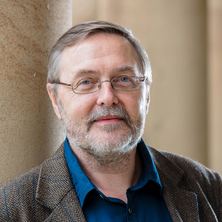
Dr. Davide Lasagna is an Associate Professor in the Department of Aeronautics and Astronautics at the University of Southampton. His primary research focuses on applying dynamical systems theory to fluid turbulence, with specific interests in flow instability, optimization and control, and model order reduction. He has received funding from the UK's Engineering and Physical Research Council (EPSRC) and the USA's Air Force Office of Scientific Research (AFOSR). Current Research Projects: The shadow of turbulence: algorithms and applications; Sensitivity of Turbulence using Recurrent Flows Collaborations: Bharath Ganapathisubramani, Zheng-Tong Xie, Andrea Da Ronch His work spans theoretical and applied fluid mechanics, with recent publications on chaotic systems, wake flows, and urban aerodynamics. He also coordinates Year 1 and 2 of the Aero & Astro Engineering Programme and teaches courses in engineering design, flight mechanics, and data-driven fluid mechanics.
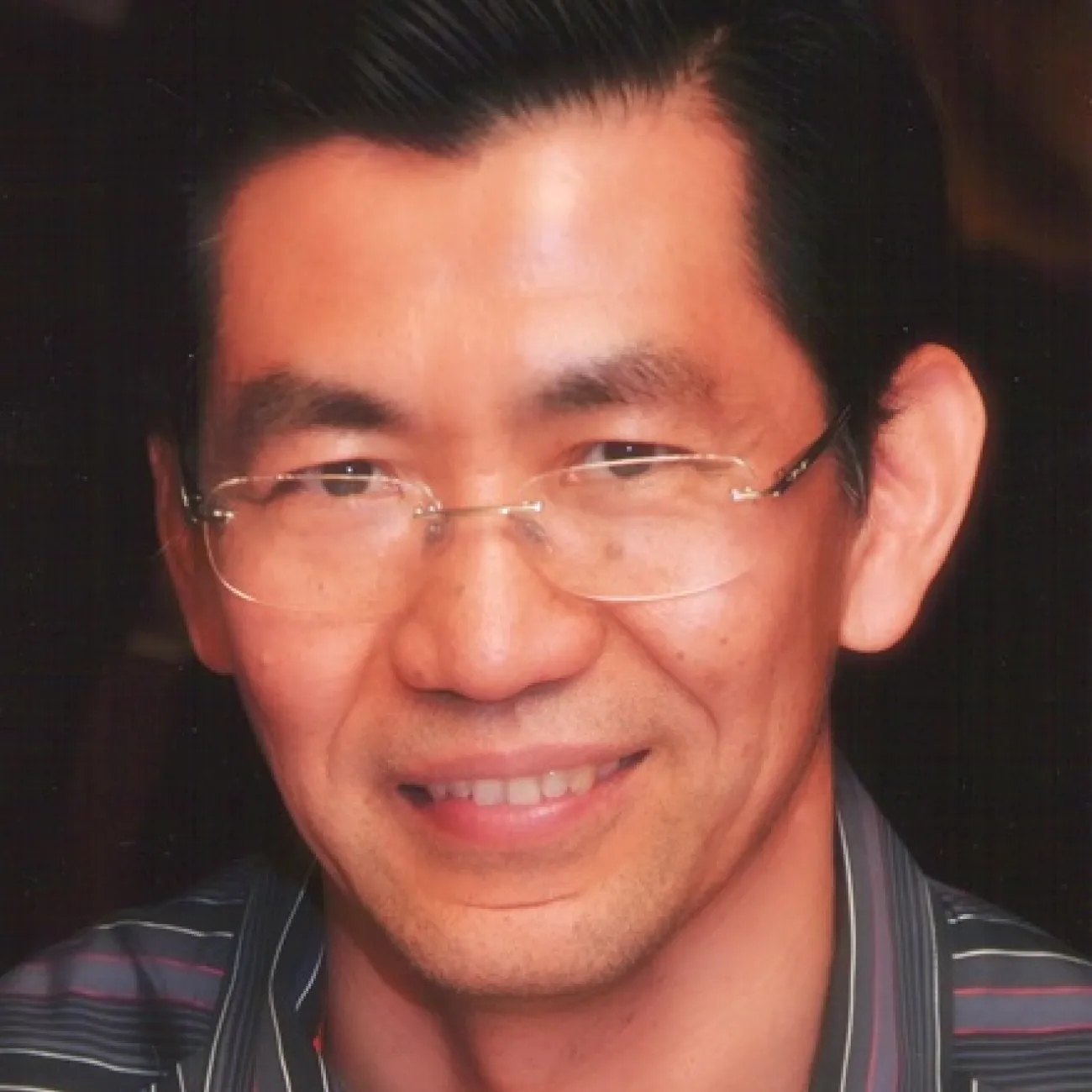
Affiliations & Roles Professor Roger Wepf holds roles as Director of the Centre for Microscopy and Microanalysis and Pro-Vice-Chancellor (Research Infrastructure) at the University of Queensland (UQ). He is affiliated with the Faculty of Science and the Faculty of Health, Medicine and Behavioural Sciences. His academic rank is Professor. Education He earned a Doctoral Diploma of Science (Advanced) from the Swiss Federal Institute of Technology ETH Zürich. Research Interests His research focuses on advanced microscopy techniques, nanostructure characterization, and energy materials. Key areas include cryo-microscopy, electron tomography, and the development of imaging infrastructure. He explores applications in materials science, catalysis, and biomedical imaging. Grants & Funding Current: Structure-guided optimisation of light-driven microalgae cell factories (ARC Discovery Projects, 2024-2027) Advanced Surface Characterisation for Minerals (RTCM Trailblazer, 2024-2025) Microscopy Australia - Australian Microscopy and Microanalysis Research Facility (2023-2028) Labs & Infrastructure He leads the Centre for Microscopy and Microanalysis, overseeing state-of-the-art facilities like the 3DED/MicroED facility and cryo-microscopy suites. His work integrates correlative microscopy and FAIR-compliant data repositories.
Dr. Stanyslav Grosman is a Research Associate in the Computational Structural Mechanics group within the Department of Civil and Environmental Engineering at Imperial College London's Faculty of Engineering. He holds the position of Academic Visitor and has been working at Imperial since December 2019. His educational background includes: PhD in Engineering from Imperial College London (2015-2019) MSc in Structural Engineering from Prydniprovs’ka State Academy of Civil Engineering and Architecture, Dnipro, Ukraine (2012-2013) BSc in Civil Engineering from Pridneprovs’k State Academy of Civil Engineering and Architecture, Dnipro, Ukraine (2008-2012) Dr. Grosman's research focuses on computational structural mechanics, particularly non-linear finite element modeling of structures under extreme loading. His work includes the development of algorithms for assessing structural robustness, topology optimization, parametric design, and meta-modelling techniques. He also applies digital image correlation and programming in his research. His recent publications (2017-2022) demonstrate a strong emphasis on masonry structures, especially arch bridges and floor slabs, under various loading conditions including earthquakes, fatigue, and extreme events. The research employs advanced numerical modeling techniques to address challenges in structural safety and durability. Dr. Grosman is currently involved in a Network Rail funded project titled "Realistic Assessment of Masonry Railway Viaducts", which involves high-fidelity modeling of masonry arch bridges under transient traffic loading. He is part of the Computational Structural Mechanics research group, collaborating with experts such as Professor B. Izzuddin and Dr. L. Macorini.
Dr. Carl Jacquemyn is an Advanced Research Fellow in the Department of Earth Science & Engineering at Imperial College London, affiliated with the NORMS group and Petroleum Geoscience & Engineering. His work focuses on grid-free surface-based reservoir modelling, geothermal systems, and subsurface flow dynamics. He holds a PhD from KU Leuven (2013) and an MSc in Mining & Geotechnical Engineering from the same institution (2007). Research interests include quantifying geological heterogeneity, carbonate sedimentology/diagenesis, and integrating 3D outcrop models with reservoir simulations. His Sketch-Based Reservoir Modelling (RRM) tool enables rapid prototyping of geological scenarios for flow diagnostics. Current projects explore geothermal well design, Arab-D Formation storm scours, and CO2 storage mechanisms. Key contributions include developing dynamically adaptive mesh optimisation for geothermal reservoirs and advancing surface-based methodologies to preserve complex geological features in simulations. His work addresses challenges in grid limitations, well trajectory representation, and multi-scale heterogeneity impact assessment.
Professor Giles Richardson is a leading academic at the University of Southampton , holding the rank of Professor in Applied Mathematics. His research activities are deeply integrated with the Institute for Life Sciences and Applied Mathematics and Theoretical Physics research groups. Education: BSc Mathematics (Bristol), MSc Mathematical Modelling (Oxford), DPhil Applied Mathematics (Oxford) Richardson's research spans renewable energy systems and biomedical applications , with specific focus on: Mathematical modelling of lithium-ion battery performance and degradation Perovskite solar cell physics and stability challenges Photo-electrochemical water splitting for hydrogen fuel Redox flow battery optimisation Magnetically targeted drug delivery mechanisms Alzheimer's disease and cerebral drainage failures His recent publications demonstrate expertise in: Advanced electrochemical modelling techniques Mathematical physics applications to energy systems Materials science diagnostics for photovoltaic technologies Computational methods for battery simulation Scientific achievements include: John Ockendon Prize 2018 John Ockendon Prize 2020 Richardson has developed the IonMonger 2.0 simulation tool and co-founded DandeLiion , a software company providing physics-based battery simulations. His teaching portfolio includes modules in: Numerical Methods (MATH3018/6141) Modelling with Differential Equations (MATH6149) Mathematics for Electronics (MATH2047)
Johan Wesseloo is a Professor at The University of Western Australia, affiliated with the School of Engineering and the Australian Centre for Geomechanics. His academic credentials include a BE, ME, and PhD from the University of Pretoria. His research focuses on critical aspects of mining geomechanics with emphasis on safety and optimization in mining operations. Professor Wesseloo's research interests span mining geotechnical engineering, mining-induced seismicity, rock mechanics, rock engineering, and ground support systems. His work particularly addresses mine-induced seismicity and rockburst behaviour, risk-based geotechnical design, and both open pit and underground geomechanics. His research integrates theoretical modeling with practical applications to solve complex mining challenges. His publication portfolio demonstrates a strong focus on seismic risk assessment, rock failure mechanisms, and optimization of mining operations. Recent work shows increasing attention to probabilistic approaches in geomechanical design and the integration of numerical modeling with field observations to improve mining safety and efficiency. SAIMM Gold Medal (2020) SAIMM Gold Medal (2017) SAIMM Silver Medal (2015) SAIMM Gold Medal (2006) Professor Wesseloo leads an extensive research program with significant industry funding, currently managing multiple active projects through 2028 with major mining companies including Gold Fields, OZ Minerals, Newmont, Agnico Eagle Mines, and Alamos Gold Inc. His research group focuses on mining-induced seismicity and rockburst risk management in hard rock mines. He has also contributed substantially to academic discourse through editorial roles for major conferences including Ground Support 2023, the Second International Conference on Underground Mining Technology, the 1st International Conference on Mining Geomechanical Risk, and the 8th International Conference on Deep and High Stress Mining. The Australian Centre for Geomechanics serves as the primary research hub for Professor Wesseloo's work, where he leads the mXrap development project, Ground Support Systems Optimisation (GSSO), probabilistic stope support design initiatives, and physical and numerical modeling of caving geomechanics. His team collaborates extensively with industry partners to translate research findings into practical mining applications.
Jean-Marc Schwartz is a Senior Lecturer in the Division of Evolution, Infection and Genomics at the Faculty of Biology, Medicine and Health, University of Manchester. He has held this position since 2016, having previously served as Lecturer (2011-2016) and Physical/Life Sciences Interface Independent Research Fellow (2006-2011) at the University of Manchester. He also serves as an External Examiner at the University of Glasgow (2020-2027) and is affiliated with multiple research institutes including the Digital Futures Institute for Data Science and AI, Lydia Becker Institute, and Christabel Pankhurst Institute. His educational background includes: PhD in Computer Engineering from Laval University (Canada), 1999-2003 Research Associate at Max-Planck Institute for Biochemistry (Germany), 1995-1999 Engineering degree from École Centrale Paris (France), 1991-1994 Dr. Schwartz specializes in Systems Biology, with research focusing on constraint-based analysis of metabolic networks, integrative and dynamical modeling of biological systems, and systems pharmacology. His work bridges computational approaches with experimental biology to understand complex cellular processes through chemical and physical models. He develops innovative methodologies for data integration, network analysis, model construction and simulation to advance global understanding of biological functions beyond traditional reductionist approaches. His recent publications demonstrate strong trends in metabolic modeling, biomanufacturing optimization, and computational approaches to cellular dynamics. His work increasingly focuses on applying systems biology to pharmaceutical development and bioproduction challenges, particularly with Chinese Hamster Ovary (CHO) cells for therapeutic protein production, showing significant contributions to biomanufacturing processes and metabolic engineering. Dr. Schwartz is actively involved in research funding and collaboration: Co-Investigator on "Optimisation of CHO for Biotherapeutic Manufacture" (2021-2026) Member of the Digital Futures Institute for Data Science and AI Member of the Lydia Becker Institute Member of the Christabel Pankhurst Institute With 37 supervised students and 124 research outputs including 92 articles, 11 conference contributions, and 6 review articles, Dr. Schwartz maintains an active research program that bridges computational modeling with experimental biology. His work contributes to UN Sustainable Development Goals, particularly in health and well-being areas through systems pharmacology and drug metabolism research.
Marco De Angelis is a Lecturer at the Centre for Intelligent Infrastructure within the Department of Civil and Environmental Engineering at the University of Strathclyde's Faculty of Engineering. His work focuses on computational methods for handling uncertainty in engineering systems, with applications in structural reliability and health monitoring. Education: PhD in Risk and Uncertainty (2015) from University of Liverpool's Institute for Risk and Uncertainty Master of Engineering (cum laude) in Civil and Environmental Engineering from University of Rome, Roma Tre Bachelor of Engineering (cum laude) in Civil and Environmental Engineering from University of Rome, Roma Tre Dr. De Angelis specializes in computing with imprecision, developing methods to propagate uncertainty through models using interval analysis, probability bounds, and other mathematical frameworks. His research enables rigorous inference with scarce empirical data and builds trust in simulation for structural reliability assessment. His work intersects civil engineering, computer science, and statistics, with particular emphasis on practical applications in infrastructure monitoring and risk assessment. His recent publications demonstrate a strong focus on high-dimensional uncertainty analysis, optimization under uncertainty, and verified computational methods for reliability engineering. The research shows increasing sophistication in handling complex uncertainty representations while maintaining computational tractability for real-world engineering problems. Scientific Awards: Best student paper (June 18, 2025) The NASA and DNV Challenge on Optimization under Uncertainty (June 17, 2025) Bronze poster award (July 27, 2021) Teaching and Learning Award (May 17, 2017) ISIPTA-IJAR Young Researcher Award (August 2015) Dr. De Angelis teaches structural engineering theory, computer programming, interval computation, probability theory, and machine learning to undergraduate students. He has developed teaching materials from scratch for advanced dynamics courses. He serves as Co-investigator on the REUN project (Reduction of Uncertainties in risk assessment of structures and infrastructures against Natural hazards) funded by the Royal Society of Edinburgh, running from April 2025 to March 2027. His professional activities include conference participation, journal peer review, and invited talks in his specialty areas. He is actively involved with the Centre for Intelligent Infrastructure, where he contributes to research on digital twins and computational methods for infrastructure monitoring and assessment.
Marthe Bonamy is a CNRS researcher at LaBRI (Laboratoire Bordelais de Recherche en Informatique) in Bordeaux, France, holding a permanent research position since December 1, 2015. She is a member of the CombAlgo team, head of the Graphes et Optimisation research group, and also a member of the AlgoDist group. Her research focuses on combinatorics and graph theory, particularly planar graphs, algorithms, graph decompositions, and reconfiguration problems. Dr. Bonamy is actively involved in the academic community, serving as vice-Editor-in-chief of the European Journal of Combinatorics since January 2021, a member of the Board of Editors of Discrete Mathematics since January 2021, an editor of Innovations in Graph Theory since August 2023, and an associate editor of the SIAM Journal of Discrete Mathematics since January 2024. She is also part of the scientific board of the GT COA and the steering committee of STACS. Her research interests span various aspects of combinatorics and graph theory, with a particular emphasis on structural graph properties, coloring problems, and reconfiguration processes. She has made significant contributions to understanding graph recoloring, Kempe changes, and various decomposition techniques for graphs. Her work often bridges theoretical computer science and pure mathematics, providing both theoretical insights and algorithmic applications. Dr. Bonamy has supervised numerous PhD students, both currently and in the past, demonstrating her commitment to mentoring the next generation of researchers in combinatorics and graph theory. Her students have gone on to academic positions and industry roles, reflecting the breadth of applicability of their research. She has received recognition through prestigious editorial positions and research grants, including her current involvement in the ANR Project ENEDISC (2024-2027) and previous leadership of multiple research projects. Dr. Bonamy maintains an active research agenda with numerous publications in top-tier journals and conferences, reflecting her standing as a leading researcher in combinatorics and graph theory.
Dr. Helen Sanderson is a Senior Research Fellow at the Faculty of Business and Law (University of the West of England). Her work bridges biochemical expertise with supply chain innovation through the Redistributed Manufacturing in Healthcare Network (RiHN) , focusing on transformative healthcare production models. BSc (Hons) Biochemistry, University of Sheffield PhD, University of Manchester Research themes include: Redistributed Manufacturing (RDM) for point-of-care medical products 3D printing applications in food and healthcare supply chains Supply chain resilience during geopolitical disruptions Regulatory frameworks for decentralised manufacturing Biochemical foundations for medical product development Publications reveal a dual focus on technical cell biology research (2006-2012) and applied supply chain studies (2022-present). Key trends demonstrate integration of biomanufacturing with business model innovation in healthcare. Professional expertise spans grant portfolio management, bid writing for multidisciplinary projects, and stakeholder coordination across industry-academic-clinical partnerships. Research outputs frequently examine temporary supply chains in crisis settings and commercialisation pathways for emerging healthcare technologies.
Professor Sheng Chen at the University of Southampton holds a prestigious academic rank in the Electronics and Computer Science department. His research interests span wireless communication systems, machine learning for signal processing, underwater robotics, and digital twin technology. IEEE Fellow Royal Academy of Engineering Fellow Chartered Engineer Research Focus: Professor Chen specializes in advanced wireless communication systems including MIMO technologies, channel estimation techniques, and next-generation 6G protocols. His work extends to industrial cybersecurity applications and underwater stereo matching algorithms. Recent Contributions: His latest publications demonstrate expertise in memristor-based signal processing circuits, label distribution learning using renormalization group theory, and innovative interference mitigation strategies in dynamic TDD systems. Current research projects: Optimising control system integrity (Royal Academy of Engineering), NEWCOM (European Union)
Dr. Yeaw Chu Lee is an Associate Professor in Mechanical Engineering at the School of Engineering, Computing and Mathematics, University of Plymouth. He is an active researcher and lecturer with over 15 years of experience in teaching and research at both undergraduate and postgraduate levels. His work spans computational fluid dynamics, multi-phase flows, and environmental fluid mechanics, with applications in energy systems, marine habitats, and transport technologies. Academic Qualifications: Postgraduate Certificate in Academic Practice, Heriot-Watt University (2011–2012) Ph.D. in Mechanical Engineering, University of Leeds (2000–2004) M.Eng. (Hons.) in Mechanical Engineering, University of Leeds (1996–1999) His research interests focus on thermo-fluids and computational engineering of multi-scale and multi-phase soft matter, especially interfacial flows. Key areas include computational fluid dynamics (CFD), smoothed particle hydrodynamics (SPH), thin films, droplets, rivulets, fluid-structure interaction, and surface tension phenomena. He also integrates machine learning and optimisation techniques into solver development for engineering problems. His recent publications highlight a strong trend in fluid dynamics applied to environmental and energy challenges, including sloshing in cryogenic fuels, thermal jet discharges in coastal waters, wave instabilities, and coral habitat modeling using SPH. These works reflect interdisciplinary engagement across mechanical engineering, oceanography, and environmental science. Scientific Awards: Fellow of the Higher Education Academy (FHEA) Dr. Lee has successfully secured 34 research grants, awards, and studentships. He has supervised over 59 B.Eng. and M.Eng. dissertations, 22 M.Sc. theses, and 16 Ph.D. theses (13 completed). He is currently accepting PhD students and leads several active research projects. He plays a principal or co-investigator role in grants funded by EPSRC, STFC, Interreg, and GW Shift, focusing on wave-structure interaction, sustainable energy storage, and hydrogen sloshing dynamics. He is actively involved in research teams and collaborative networks, particularly in projects related to marine renewable energy and environmental fluid mechanics. His lab work involves computational modeling and simulation of complex fluid systems, often in partnership with environmental scientists and engineers.
Professor Alireza Maheri is a Personal Chair in the School of Engineering at the University of Aberdeen, where he has been a faculty member since 2016. He previously served as a Senior Lecturer at Northumbria University and held a research position at the University of Bristol. His academic journey includes a BSc from Shiraz University, an MSc from Amirkabir University of Technology, and a PhD from UWE Bristol, all in Mechanical Engineering. BSc in Mechanical Engineering, Shiraz University MSc in Mechanical Engineering - Energy Conversion, Amirkabir University of Technology PhD in Mechanical Engineering - Design and Simulation of Adaptive Aero-structures, UWE Bristol His research focuses on renewable and sustainable energy systems, with key interests in wind energy, hybrid renewable energy systems (HRES), multidisciplinary design optimization, offshore wind farm decommissioning, and smart energy systems. He leads several high-impact research projects funded by EU-InterReg, Net Zero Technology Centre, and Innovate UK, among others. His work integrates advanced computational methods with real-world energy challenges, particularly in off-grid and island communities. The 15 most recent publications reflect a strong trend in optimization of hybrid energy systems, decommissioning cost modeling, decision support platforms, and algorithmic development for renewable integration. His research spans both technical innovation—such as ant colony algorithms and metaheuristic assessments—and practical implementation, including hydrogen production and load planning for machinery. Professor Maheri has received recognition through research grants, including a project funded by the Royal Aeronautical Society. He has also secured substantial funding from national and international bodies, demonstrating sustained excellence and impact. Net Zero Technology Centre: 'Data for Net Zero (D4NZ)', £992k, 2022–2025, CoI EU-InterReg: 'DecomTools', £240k, 2018–2023, PI National Decommissioning Centre PhD Studentship: 'DSS for Oil & Gas Decommissioning', £72k, 2019–2022, PI Scottish Funding Council SPRe-Industrial Collaboration: £78k, 2019–2023, PI Carnegie Trust PhD Scholarship: 'Wind Turbine Smart Blades', £60k, 2019–2022, Principal Supervisor He supervises a wide range of PhD students on topics including smart blades, hydrogen systems, energy management, and decommissioning. He is also actively involved in teaching, particularly as Course Coordinator for Energy Systems Integration (EG554T and EG554U). His leadership extends to editorial roles in journals such as Energies and Renewable Energy , and he has chaired multiple international conferences. He serves on research proposal review panels for EPSRC, Royal Society, and DAAD, and has acted as an external examiner for MSc programs at Cranfield University. Professor Maheri leads the Applied Dynamics and Structures Research Group and is affiliated with the Centre for Energy Transition. He collaborates with institutions and industries across the UK, Europe, China, Mauritius, and Jordan, fostering international research partnerships in sustainable energy and engineering design.
Cormac Reale is a Lecturer in the Department of Architecture and Civil Engineering at the University of Bath, where he contributes to the Centre for Sustainable Energy Systems (SES). He joined the university in 2019 after postdoctoral positions at Delft University of Technology and University College Dublin. Education: PhD in Geotechnical Engineering, University College Dublin (2015) Bachelor of Engineering (Civil, First Class Honours), University College Cork (2011) His research focuses on geotechnical risk, infrastructure resilience, and probabilistic assessment of aging systems such as railway slopes and flood embankments. He employs field data, laboratory testing, and stochastic modeling to evaluate degradation and optimize maintenance strategies. His work extends to offshore foundations, particularly for renewable energy applications, and integrates remote sensing techniques like InSAR for infrastructure monitoring. His recent publications reflect a strong trend in applying advanced geotechnical testing (e.g., CPT), probabilistic methods, and remote sensing to assess infrastructure under climate stress. Topics include pile installation modeling, InSAR coherence prediction, and liquefaction risk in flood defences, indicating a focus on predictive modeling and resilience in civil infrastructure. Scientific Contributions: Active editorial board member, Georisk: Assessment and Management of Risk for Engineered Systems and Geohazards (since Dec 2024) He leads and collaborates on multiple research grants, including projects funded by The Royal Society, EPSRC, and The British Academy, focusing on offshore wind, storm wave loading, and coal tip safety. He is open to supervising doctoral students in geotechnical risk, unsaturated soils, and climate resilience. His work aligns with UN Sustainable Development Goals related to sustainable infrastructure and climate action. He is affiliated with research initiatives such as the Centre for Sustainable Energy Systems and contributes to national and international collaborations, particularly in the Netherlands and Croatia. His work integrates field-based monitoring with computational modeling to support evidence-based infrastructure management.
Tina Hamilton is a Senior Lecturer in Health and Wellbeing in Society at De Montfort University, affiliated with the Faculty of Health and Life Sciences and the School of Allied Health Sciences. She holds a PhD in Health Studies from Staffordshire University and brings extensive research leadership experience from her prior role at the Midlands Partnership Foundation Trust. PhD in Health Studies, Staffordshire University PgCert in Higher and Professional Education BSc (Hons) 1st Class in Psychology and Counselling Her research focuses on improving mental healthcare quality through rigorous qualitative methods, particularly constructivist grounded theory. Key areas include patient and carer experiences, adult safeguarding, organizational behavior in policy implementation, medicines optimisation, and access to perinatal mental health services for migrant women. She also investigates acute inpatient care and integrated health and social care services. Her recent publications explore admission processes in acute mental health, national safeguarding practices, workload measurement, and perinatal care. These works reflect a consistent focus on patient-centered care, service improvement, and organizational challenges in mental health systems. Scientific Honors: Fellow of the Higher Education Academy (FHEA) Chartered Member of the British Psychological Society (CPsychol) Tina actively supervises postgraduate research students at MSc, MRes, and PhD levels and has served as second supervisor for multiple part-time doctoral candidates. She has led externally funded research projects, including grants from the Shelton Research Bequest Fund, West Midlands LETC, and DCLG Rough Sleeping Grant. Her collaborative work spans institutions and disciplines, and she contributes as a reviewer for the NIHR and several journals including the Journal of Mental Health and Journal of Psychiatric and Mental Health Nursing. She is currently leading the ADRIFT Study on access to perinatal mental health services among migrant women and has previously led projects on structured interventions in acute care, mental health staffing, and case management for homelessness. Her work bridges academic research and practical service improvement in NHS and community settings.