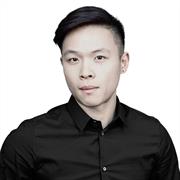
Salvatore Fusco is an Associate Professor and Group Leader in the Department of Biotechnology at the University of Verona. His research focuses on microbial enzymes for biomass and plastic valorization, microbial biotechnology, enzyme immobilization, and bioactive peptide characterization. He is affiliated with the Biochemistry and Industrial Biotechnology (BIB) research group and leads the PRIN 2022 project 'BioCat4BioPol'. Teaching includes modules such as Industrial Enzymology (6 credits), Molecular Biophysics (3 credits), and New Frontiers in Biocatalysis (6 credits) across undergraduate and master's programs. He advises on Protein Engineering for Enzyme Optimisation in the Biotechnology PhD program. Research interests span enzyme discovery, microbial isolation for industrial applications, and viral protein structural-functional studies. His work integrates computational methods for enzyme mining and experimental approaches for biocatalyst optimization. Administrative roles include membership in the PhD Boards of Biotechnology and Molecular Biotechnologies, and the Biotechnology Teaching Committee. He coordinates the 'Communication' role for departmental initiatives.
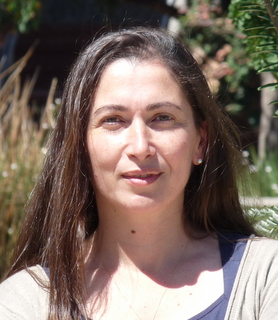
Eleni Tzouramani is a Senior Lecturer in the School of Business and Creative Industries, focusing on transformative educational practices and organizational dynamics. Her work bridges academic research with practical policy implications, particularly in crisis management among women academics and remote work frameworks. She co-led the Digital Maieutic Project, integrating AI and Universal Design for Learning principles, for which her team received the UKAIS Teaching Innovation Grant (2024). Her research interests span spirituality's role in organizational cultures, leadership development, and multimodal learning strategies. She actively contributes to parliamentary policy discussions, submitting evidence on home-based working for the UK House of Lords. Tzouramani has presented at international forums on topics like AI ethics in education and leadership navigation during transitional phases. She currently oversees a Knowledge Transfer Partnership in leadership development and collaborates with institutions to design inclusive educational frameworks.
Dr. Hua Zhong is an Associate Professor at the School of Construction, Property and Surveying, London South Bank University. Her expertise spans sustainable building technologies, energy efficiency, urban sustainability, and fire safety engineering. She leads interdisciplinary research integrating numerical modelling, CFD simulations, and practical applications to address challenges in the built environment. Key areas include urban utility tunnel resilience, solar chimney ventilation, and smoke management in metro stations. Her research is supported by grants such as the NERC-CDE Network (digitalisation and green infrastructure) and EPSRC projects on rehabilitation technologies and diversity initiatives in engineering. She is a Fellow of the UK FST Future Leaders and UUKRI Peer Review College, and actively contributes to professional bodies like CIBSE, ASHRAE, and the British Standards Institution. Dr. Zhong has published over 47 articles, focusing on topics like zero-energy buildings, fire dynamics in tunnels, and IoT-driven energy efficiency. She has supervised multiple PhD students and pioneered teaching innovations using virtual reality and digital platforms for sustainable education. Her work aligns with UN SDGs, emphasizing climate action (SDG13) and sustainable cities (SDG11). Notable initiatives include developing a carbon emission calculation system for construction and promoting STEM equity through Women's Engineering Society ambassadorship. She co-leads the Centre for Civil and Building Services Engineering (CCiBSE) and serves as an editor for key engineering journals.
Dr Ali Bahr Ennil is a Lecturer in Aircraft Propulsion and Gas Turbine Engines at the University of Salford, based within the School of Science, Engineering & Environment . He is a Fellow of the UK Higher Education Academy (FHEA) and has built an international profile in turbomachinery design optimisation for renewable-energy applications. Education & Qualifications PhD in Mechanical Engineering, University of Birmingham (2016) MSc (Hons, First Class) in Mechanical Engineering, Military Technical College, Egypt (2011) BSc in Aeronautical Engineering, Engineering Academy Tajoura, Libya (2003) Research Interests Dr Ennil’s work integrates advanced computational methods with practical propulsion challenges. Core themes include: Turbomachinery Design Optimisation: CFD-driven shape optimisation of axial and radial turbines for enhanced aerodynamic efficiency. Blade Cooling & Aero-thermal Design: Film-cooling studies to manage thermal loads in high-performance gas turbines. Green Propulsion & Energy Storage: Development of small-scale, hydrogen-compatible turbines and hybrid-electric aircraft propulsion concepts. Renewable Power Cycles: ORC and Brayton cycle integration with solar, low-grade heat, and compressed-air energy storage systems. Publication Trends Across 11 outputs (2015–2024), Dr Ennil demonstrates a clear trajectory toward multidisciplinary optimisation of small-scale axial turbines. His 2024 article extends CFD/FEA coupling for blade design, while earlier works systematically explored ORC and Brayton cycle turbines for solar and low-temperature heat sources. Continuous use of evolutionary algorithms and ANSYS CFX underlines a commitment to high-fidelity simulation and experimental validation. Scientific Awards & Recognition Fellow of the UK Higher Education Academy (FHEA) Supervision & Grants Dr Ennil currently welcomes doctoral and master’s candidates in the following areas: Turbomachinery Design Optimisation Aerodynamic Design Optimisation using CFD Modelling Aircraft Hybrid-Electric Propulsion Development Hydrogen Storage Design Optimisation Laboratory & Centre Affiliations He carries out research within the Energy House Labs Innovation Institute and collaborates across the University of Salford’s interdisciplinary centres focusing on future engineering and environmental sustainability.
Maria Garcia De La Banda Garcia is a Professor at Monash University's Faculty of Information Technology with over 25 years of academic experience. She currently serves on the ARC College of Experts and is Co-Chair of the Monash-Woodside FutureLab. Her research spans: Combinatorial optimization techniques Program analysis and transformation Constraint programming languages Bioinformatics applications She has secured over $34M in research funding and serves as Area Editor for the Journal of Theory and Practice of Logic Programming. Awards include: Logan Fellowship (1997) International Constraint Modelling Challenge (2005) Monash Honour Roll (2021)
Maria Garcia de la Banda is a distinguished Professor at Monash University's Faculty of Information Technology, where she serves in the Department of Data Science and Artificial Intelligence (DSAI). With over 25 years of academic experience, she has held significant leadership roles including Deputy Dean (Research) until July 2022, overall Deputy Dean of the Faculty (2013-2016), and Head of the Caulfield School of Information Technology (2009-2011). She is currently a member of the ARC College of Experts and Co-Chair of the Monash-Woodside FutureLab. Her educational background includes a Doctor of Philosophy in Computer Science from the Universidad Politecnica de Madrid (awarded July 7, 1994) and an Ingeniero Informatico degree from the same institution (awarded March 1, 1992). Her PhD received the university's Best PhD Award. Garcia de la Banda's research spans multiple disciplines with a strong focus on constraint programming, combinatorial optimization, program analysis, and bioinformatics. She leads the Optimization research group within DSAI and has made significant contributions to declarative programming languages, parallelism, and automatic parallelization. Her interdisciplinary work bridges computer science with biological applications, particularly in protein structure analysis and computational drug design. Her publication record shows consistent contributions across constraint programming, optimization, and bioinformatics. Recent work demonstrates increasing interdisciplinary collaboration, with a notable expansion into bioinformatics applications alongside her core constraint programming research. She has maintained a strong presence at major conferences like CP (International Conference on Principles and Practice of Constraint Programming) while also building impactful industry collaborations. Her scientific recognition includes: Logan Fellowship (1997) - the first and only prestigious award of its kind in the Faculty of IT International Constraint Modelling Challenge winner (2005, with Peter Stuckey) Universidad Politecnica de Madrid's Best PhD Award (1994) Induction into the Monash Honour Roll (2021) Vice-Chancellor's Diversity and Inclusion Award (2020) As a research leader, Garcia de la Banda has secured over $20M in industry funding and $14M in nationally competitive funding, including $8M as Chief Investigator in 11 ARC grants (5 as lead). She has served as Area Editor of the Journal of Theory and Practice of Logic Programming since 2010 and on the Editorial Board of the Constraints journal since 2019. Her leadership extends to professional organizations, having served on the Executive Committees of both the Association of Logic Programming (2005-2008) and the Association of Constraint Programming (2017-2020), where she was President (2019-2020). She leads the Optimization research group within DSAI and collaborates extensively across Monash University and with industry partners. Her current major projects include HARNESS (Hierarchical Abstractions and Reasoning for Neuro-Symbolic Systems), the ARC Training Centre in Optimisation Technologies, and the Building 4.0 CRC project focused on better buildings through technology. These initiatives demonstrate her commitment to translating theoretical research into practical applications with real-world impact.
Michael E. Cholette is an Associate Professor in the School of Mechanical, Medical & Process Engineering at Queensland University of Technology's Faculty of Engineering. With expertise spanning multiple engineering disciplines related to dynamic systems, reliability, and applied optimization, his work focuses on practical applications across various industries and infrastructure systems. Dr. Cholette earned his B.S. from the University of Michigan in 2007 and completed his Ph.D. at the University of Texas at Austin in 2012, where his research centered on fault detection and diagnosis for complex systems with applications in automotive systems and semiconductor manufacturing. Following his doctoral studies, he worked as a postdoctoral research fellow with the CRC for Infrastructure and Engineering Asset Management in Brisbane, Australia, focusing on reliability modeling and asset management before joining QUT as a Lecturer in 2013. He was promoted to Associate Professor in 2021. His primary research interests include asset management, reliability modeling, Condition-Based Maintenance (CBM), and maintenance optimization. Additional research areas encompass condition monitoring, control systems, autonomous vehicles, and building optimization. Dr. Cholette has successfully secured research funding from various industrial and government bodies including Queensland Rail, Wilmar Sugar, the Australian Research Council, the Australian Renewable Energy Agency, and the US Department of Energy. His recent publications reveal a strong focus on renewable energy systems, particularly concentrated solar power plants, with significant contributions to solar field design, heliostat soiling management, and thermal storage optimization. His transportation-related research shows expertise in railway infrastructure maintenance, track geometry monitoring, and predictive maintenance approaches. The interdisciplinary nature of his work bridges mechanical engineering, control theory, and operations research to solve practical engineering challenges. Fellow of the International Society of Engineering Asset Management Co-chair of the Scientific Committee for the 2017 World Congress on Engineering Asset Management Member of Engineers Australia Dr. Cholette has supervised numerous doctoral students whose research spans solar energy systems, autonomous vehicle control, building energy optimization, and maintenance planning. His teaching includes courses in Engineering Asset Management and Maintenance, Vibration & Control, and Advanced Dynamics. He actively participates in multiple academic and professional societies and maintains strong industry connections that inform both his research and teaching practices.
Davide Barilari is a Full Professor at the Department of Mathematics "Tullio Levi-Civita" of the University of Padua. His research focuses on Sub-Riemannian Geometry, Curvature, Geometric Control Theory, Hypoelliptic PDEs, and Optimal Transport. He has contributed to curvature analysis, geometric measure theory, and spectral theory in non-Euclidean settings. Research Highlights: Unified synthetic curvature bounds for Riemannian/sub-Riemannian structures, Steiner formulae in 3D contact manifolds, stochastic processes on sub-Riemannian surfaces He serves as Associate Editor for ESAIM: Control, Optimisation and Calculus of Variations and Journal of Dynamical and Control Systems . Recent grants include STARS@UNIPD (2021) and PRIN 2022 as project coordinator. Organized Conferences: Dispersion and Geometry in Padova (2024), PaPa sub-Riemannian seminars, Hypoelliptic Operators in Geometry (2023), Final Conference of ANR Project SRGI (2020)
Dr. Sam Hill is a Lecturer in Data Science at York Business School, York St John University. He holds a PhD in Physics from the University of Warwick (2014) and has extensive experience in both academia and industry, including a post-doctoral role at IIT Madras and a position at Tribosonics, a high-tech company specializing in industrial sensing technologies. His research focuses on applying physics-based approaches to non-destructive testing, particularly using ultrasonic waves and array techniques. He teaches modules such as Analysis and Optimisation, Object-Orientated Programming, and Work-Based Project Research on the Data Science Degree Apprenticeship course. Key research interests include ultrasonic array design, signal processing, and data science applications for industrial diagnostics. His work involves developing models to analyze material properties through ultrasonic interactions and converting sensor data into actionable insights. He has contributed to advancements in electromagnetic acoustic transducers (EMATs), Lamb wave generation, and defect localization using pulsed arrays. Publications span topics like EMAT coil geometry optimization, enhanced ultrasonic signal processing, and guided wave defect interaction. His research bridges academic theory and industrial applications, aiming to improve structural integrity assessment and predictive maintenance strategies.
Dr. Ding Wen 'Nic' Bao is a Senior Lecturer in Architecture and Architecture Technology Stream Coordinator at RMIT University's School of Architecture and Urban Design. He concurrently serves as a Visiting Professor in Civil Engineering at Shenzhen University and holds research positions at RMIT's Centre for Innovative Structures and Materials and Post-Carbon Research Centre. His academic affiliations include previous lecturing roles at the University of Melbourne, Monash University, and Tongji University. Education includes: PhD from RMIT University (Centre for Innovative Structures and Materials) Master of Architecture from University of Melbourne Bachelor of Architecture from RMIT University Exchange studies at Chinese University of Hong Kong and Universitat Politècnica de Catalunya Bao's research integrates computational design, structural engineering, and digital fabrication through three primary domains: 1. Biomimetic Optimization : Developing bio-inspired structural systems using evolutionary algorithms 2. Digital Manufacturing : Advancing robotic fabrication and 3D printing for sustainable construction 3. Performance-Driven Design : Creating computational workflows for material-efficient architecture His recent publications (2023-2025) demonstrate strong interdisciplinary focus, with recurring themes of topology optimization (applied in 73% of works), sustainable material innovation (67%), and bio-inspired computational strategies (53%). The research consistently bridges architectural design with structural engineering principles. Significant scientific awards include: 2023: A'Design Award, DigitalFUTURES Young Award, RMIT Research Excellence Award 2022: IAI Design Award 2021: Grand Prix Design Paris Gold, Muse Design Award, Young CAADRIA Award 2019-2020: First prizes in structural optimization competitions Bao supervises multiple research projects including ARC Advance Timber Hub initiatives, 3D-printed concrete systems, and solar-integrated building components. He leads the FormX Research Lab, co-directs B.W Architects and Wonderform Studio, and partners with Ameba Institute of Engineering Structure Optimisation.
Dr. Chi Wu serves as a Lecturer in Mechanical Engineering at the University of Newcastle's School of Engineering. With a PhD from the University of Sydney (2022) and postdoctoral experience there (2023-2024), he has established himself as a rising researcher in computational mechanics and advanced manufacturing. His work bridges engineering principles with biomedical applications, particularly in the development of machine learning-driven approaches for material and structural optimization. Education: Doctor of Philosophy, University of Sydney Dr. Wu's research spans computational mechanics, topology optimization, machine learning, biomechanics, and advanced manufacturing, with particular emphasis on developing novel machine learning-based approaches for design optimization of advanced materials and structures. His work focuses on creating functionally graded tissue scaffolds, optimizing composite structures, and developing phase field models for fracture analysis. His research experience spans academia, industry, and clinical applications, demonstrating strong interdisciplinary connections. Analysis of Dr. Wu's publication record reveals a strong focus on integrating machine learning with additive manufacturing, particularly for biomedical applications. His work shows increasing sophistication in combining computational mechanics with experimental validation, with recent publications emphasizing time-dependent optimization and multi-scale modeling approaches. The trend indicates growing recognition of his work in both computational mechanics and biomedical engineering communities. Scientific Awards: Acta Journal Award (2023) Inaugural Grant Steven Award for Early Career Researchers (2023) Best Paper Award at the 12th International Conference on Structural Integrity and Failure (2021) Wiley Top Cited Article Award for 2020-2021 Best Paper Award at the 4th Australasian Conference on Computational Mechanics (2019) Dr. Wu actively recruits PhD students for research in mechanical, materials, and manufacturing engineering, with particular interest in candidates with computational mechanics and optimization backgrounds. He co-supervises students with Prof. Qing Li (ARC Future Fellow, Highly Cited Researcher) at the University of Sydney and Dr. Jianguang Fang (ARC Future Fellow) at the University of Technology Sydney. The University of Newcastle offers various scholarships, with additional support available for candidates from mainland China applying for the CSC scholarship. Dr. Wu maintains extensive collaborative networks across multiple institutions including Harvard University, Max Planck Institute, University of Exeter, Tohoku University, and several Australian universities and medical institutions including Chris O'Brien Lifehouse cancer hospital and industry partners like Cochlear Australia and Zimmer Biomet Australia.
Dr Alma Rahat is an Associate Professor of Data Science at Swansea University, affiliated with the School of Mathematics and Computer Science. He specializes in Bayesian search and optimization, evolutionary algorithms, and multi-objective optimization. His work focuses on solving computationally expensive problems with applications in engineering, healthcare, and education. Education: BEng (Hons) in Electronic Engineering from the University of Southampton (UK), PhD in Computer Science from the University of Exeter (UK), and a Postgraduate Certificate in Teaching in Higher Education from Swansea University. He is a Fellow of the Higher Education Academy (FHEA). Research Interests: Dr Rahat’s expertise includes data-driven evolutionary optimization, surrogate-assisted methods, and active learning. He has contributed to pandemic response modeling for the Welsh Government and the UK Health Security Agency, leveraging machine learning and parameter optimization. His work on healthcare decision-making systems and educational assessment tools demonstrates a commitment to interdisciplinary applications of optimization. Key Contributions: He leads the Surrogate-Assisted Evolutionary Optimization (SAEOpt) workshop at GECCO and is a member of the IEEE Computational Intelligence Society Task Force on Data-Driven Optimization. His research bridges academic theory and industry needs, with patents and publications in top journals and conferences like IEEE Transactions and ACM. Grants: £750k from Welsh Government (Co-PI/Co-I), £230k EPSRC grant (EP/W01226X/1 as PI). Awards: Best Paper in Real-World Applications Track at GECCO, Patent for industrial fluid separation technology. Supervision: Currently guiding PhD students across AI, healthcare, education, and environmental modeling. His supervision emphasizes Bayesian methods and human-in-the-loop systems. Lab/Teams: Active in Swansea’s Computational Foundry, collaborating on projects like beach change forecasting and clinical decision support systems.
Kajaharan Thirunavukkarasu holds a Doctor of Philosophy from Northumbria University's Mechanical and Construction Engineering Department. His research focuses on structural behavior of steel sections, particularly in the areas of web crippling, flexural analysis, and cold-formed steel design. He collaborates widely with industry and academic partners, contributing to the development of optimized beam sections for modular construction and sustainable building systems. Key research interests include numerical investigations into beam stability under various load cases, material behavior of aluminum and stainless steel sections, and the integration of web openings in structural designs. His work emphasizes practical applications in civil and mechanical engineering, with a focus on enhancing load capacity, stiffness, and sustainability. Thirunavukkarasu’s publications span topics such as finite element modeling of built-up beams, design rules for SupaCee sections, and the environmental impact of cement alternatives like GGBFS. His research has been cited across multiple disciplines, reflecting its relevance to both academic and industrial contexts.
Nikos Nanos is a Senior Lecturer at the University of Portsmouth , affiliated with the School of Civil Engineering and Surveying within the Faculty of Technology. He holds a PhD in Earthquake Engineering and Structural Dynamics, an MSc in New Technologies in Antiseismic Engineering Design, and a BEng (Hons) in Civil Engineering. Research Focus: Structural Engineering, Earthquake Engineering, Soil Structure Interaction, and Optimisation Algorithms Expertise: Structural Dynamics, Seismic Assessment, and Construction Optimization His recent work explores low-cost MEMS sensors for environmental monitoring, modular construction with lean thinking, and post-disaster housing solutions. He supervises PhD students in seismic structural response, concrete behavior, and soil-structure interaction, leveraging advanced facilities like the Seismic Table testing bed and Heavy Structures Lab . Interdisciplinary collaborations span Computing, Business, and Engineering disciplines, emphasizing data agnostic methodologies and cross-disciplinary innovation . Key projects include structural health monitoring, seismic vulnerability assessments, and BIM-based parametric optimization. Students: Supervises research in seismic structural response, concrete behavior, and structural monitoring. Labs & Facilities: Oversees the University of Portsmouth's Seismic Table testing bed, Heavy Structures equipment, and in-house FEA capabilities.
Maria Lessa Belone is a Staff Scientist in the Faculty of Engineering and Natural Sciences with a highly specialized research profile focused on microplastics analysis in wastewater treatment systems. Her work bridges environmental engineering, chemical engineering, and polymer science to address critical pollution challenges. Her research interests include: Microplastics behavior in anaerobic digestion systems Polymer degradation in sewage treatment Advanced analytical techniques for microplastic identification Optimization of sludge treatment processes Analysis of her publication record from 2022-2025 reveals a consistent focus on how different anaerobic digestion conditions affect various plastic polymers in sewage sludge. Her methodological expertise spans Raman spectroscopy, fluorescence microscopy, SEM imaging, and synchrotron X-ray techniques. While primarily focused on environmental applications, she has also contributed to materials science research on composite material characterization. Her scientific impact is evident through citation metrics, with several papers accumulating significant attention in the research community. The paper 'Effects of mesophilic and thermophilic anaerobic digestion...' has garnered 25 Scopus citations, while 'Optimised reduction of total solids...' has received 18 citations, indicating substantial influence in her field. Dr. Belone maintains active research collaborations, particularly with E. Yli-Rantala, E. Sarlin, and M. Kokko, suggesting well-established partnerships. Her work directly contributes to UN Sustainable Development Goals related to clean water and sanitation (SDG 6) and responsible consumption and production (SDG 12), addressing critical environmental challenges through scientific investigation.


/prod01/yorksjacuk/media/content-assets/staff-profile-images/staff_photo_june_2024_-001.jpg)