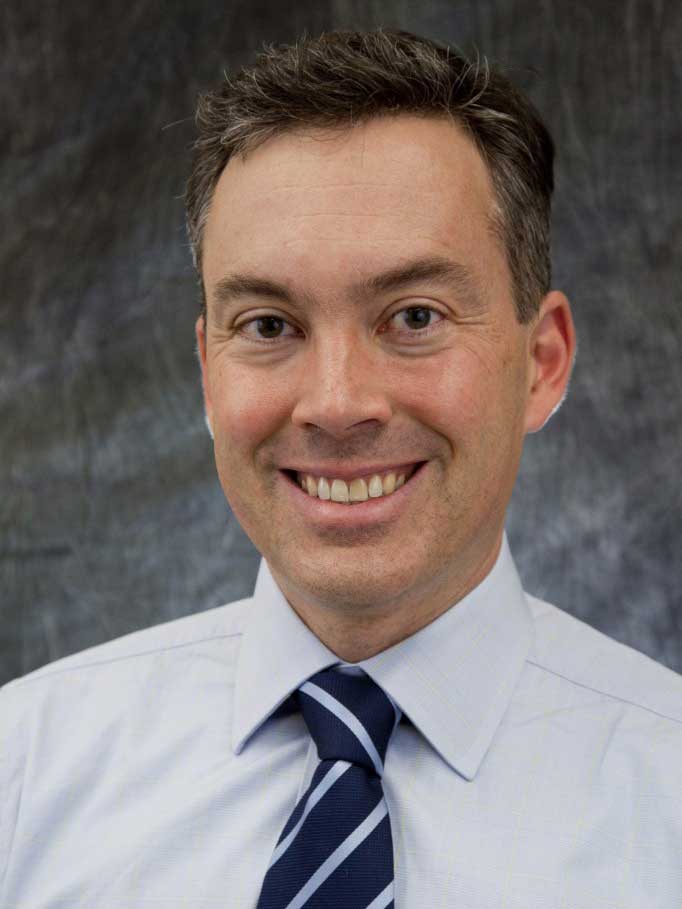
Dr. Lydell Wiebe is a Professor and Acting Chair of Civil Engineering at McMaster University. He specializes in earthquake engineering, structural dynamics, and seismic resilience, focusing on controlled rocking systems and steel structures. His research group combines large-scale experiments and advanced modeling to enhance building resilience in seismic regions. Dr. Wiebe holds a BASc (2005) and PhD (2013) from the University of Toronto, and an MSc in Earthquake Engineering from the ROSE School in Italy (2008). He serves as Chair of CSA S16 Working Group 9 (Seismic Design) and is Vice-President of the Canadian Association for Earthquake Engineering. His teaching awards include the McMaster University Faculty of Engineering Teaching Excellence Award (2017) and the McMaster Students Union Award for Excellence in Teaching (2014, 2017). He teaches courses on structural analysis, seismic design, and civil engineering fundamentals. Research Focus: Seismic resilience, self-centering systems, and masonry innovation Professional Roles: Editorial Boards of the Journal of Earthquake Engineering and Canadian Journal of Civil Engineering His research emphasizes transforming seismic resilience into a routine design outcome, with applications in steel braced frames and masonry systems. Recent work addresses foundation design, energy dissipation mechanisms, and probabilistic risk assessment for critical infrastructure. Awards: GJ Jackson Fellowship, HA Krentz Research Award Key Projects: Controlled rocking braced frames for low-seismicity regions, resilient masonry systems
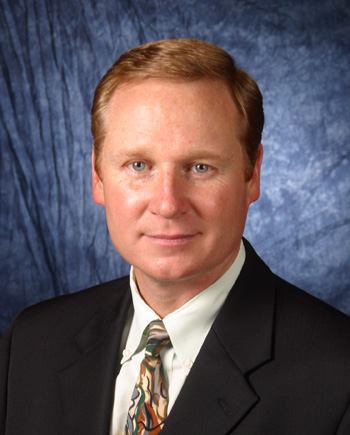
David Horsley is a Professor in the Department of Electrical and Computer Engineering at Northeastern University, based at the Oakland, CA campus. He serves as Deputy Director of the Institute for NanoSystems Innovation, a bicoastal research institute focused on semiconductor and nanotechnology advancements. Horsley earned his PhD in Mechanical Engineering from the University of California, Berkeley in 1998. His research focuses on Micro-Electromechanical Systems (MEMS), including the design and manufacturing of microfabricated sensors/actuators, mechatronics, and control systems. Notable projects include DARPA-funded work on gyroscopes and ultrasonic transducers, as well as NSF and industry collaborations in deep tech innovation. He has received prestigious awards such as the IEEE Fellowship and NSF CAREER Award. His work spans academic-industry partnerships, with contributions to ultrasonic imaging, MEMS-based sensors, and inertial systems. Education: PhD, Mechanical Engineering (UC Berkeley, 1998) Research interests emphasize MEMS applications in biomedical imaging, navigation systems, and consumer electronics. Recent publications highlight advancements in piezoelectric micromachined ultrasonic transducers (PMUTs), including designs for long-range detection, fingerprint sensing, and array-based imaging systems. Horsley leads interdisciplinary teams in developing miniaturized sensors and resonators with enhanced performance metrics. His lab actively explores synchronization phenomena in micromechanical oscillators to improve stability in gyroscopes and other precision instruments. Key Awards: Global Network Accelerator Award (2024), NSF CAREER Award (2009) Grants: $2M DARPA FLASH project, NSF EAGER grant for international tech partnerships As Deputy Director, Horsley oversees the Institute for NanoSystems Innovation’s initiatives in nanoscale semiconductor design, fostering collaboration between Northeastern’s Boston and Oakland campuses. His lab develops MEMS technologies with applications in healthcare, robotics, and smart devices, emphasizing scalable manufacturing processes and cross-disciplinary innovation.
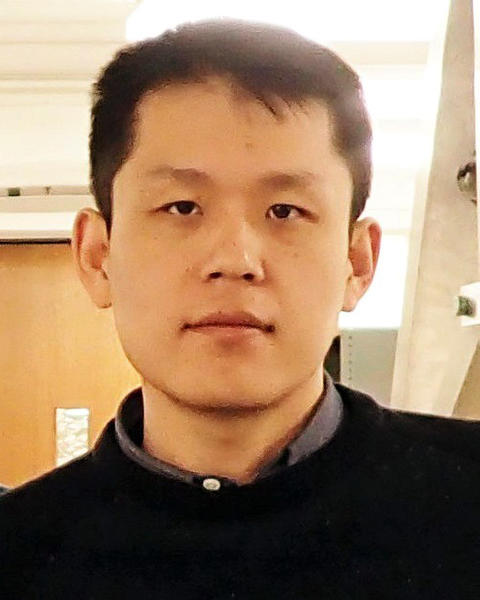
Seher Eken is an Assistant Professor in the Department of Aerospace Engineering at Istanbul Technical University. Her research focuses on structural dynamics and aeroelasticity of aerospace systems, specializing in thin-walled composite beams, spacecraft shielding, and hypervelocity impact mechanics. She has led multiple projects on topics like transonic flutter suppression, ballistic armor optimization, and orbital debris mitigation. Key research areas include: Composite material failure under extreme loads Aeroelastic stability of rotating structures Numerical simulation of hypervelocity impacts Dynamic analysis of aircraft wings and turbine blades Active vibration control techniques Her recent work emphasizes spacecraft protection systems, with studies on orbital debris impact dynamics and advanced composite armor design. She has also contributed to launch vehicle instability analysis and swept wing flutter characteristics. Current projects involve 3D-printed turbine blade repair, transonic flutter prediction for unmanned aircraft, and ballistic impact optimization for high-performance fabrics. Notable projects (2022–2025): AB Yeni Nesil İnsansız Savaş Uçakları Aeroelastik Uyarlama (Transonic Flutter Prediction) 3D-Printed Turbine Blade Repair with Sustainability Focus Ballistic Impact Analysis of Fabric Armors Orbital Debris Impact Simulation for Spacecraft Shields Her research integrates computational modeling (CFD, FEA) with experimental validation, focusing on aerospace structural systems under extreme conditions. Collaborations span international partners in composite material development and space debris mitigation strategies.
Professor Tobin J. Marks is the Vladimir N. Ipatieff Professor of Catalytic Chemistry, Professor of Materials Science and Engineering, Professor of Applied Physics, and Professor of Chemical and Biological Engineering at Northwestern University. He also serves as a Distinguished Adjunct Professor at Texas A&M Qatar University and is a Senior Fellow of the Hong Kong Institute for Advanced Study at City University of Hong Kong. Dr. Marks is a member of the US National Academy of Engineering, the US National Academy of Sciences, and a Fellow of the Royal Society of Chemistry, UK. Dr. Marks received his BSc in Chemistry from the University of Maryland in 1966 and his PhD in Inorganic Chemistry from MIT in 1970. His academic career at Northwestern began as an Assistant Professor of Chemistry in 1970, progressing to Associate Professor in 1974, Professor of Chemistry in 1978, Charles E. & Emma H. Morrison Professor of Chemistry from 1986-1999, Vladimir N. Ipatieff Professor of Catalytic Chemistry since 1999, Professor of Materials Science and Engineering since 1987, Professor of Applied Physics since 2009, and Professor of Chemical and Biological Engineering since 2017. Professor Marks' research spans numerous areas of chemistry and materials science. His work focuses on transition metal and f element organometallic chemistry, catalysis, vibrational spectroscopy, synthetic facsimiles of metalloprotein active sites, carcinostatic metal complexes, solid state chemistry and low-dimensional molecular metals, nonlinear optical materials, polymer chemistry, tetrahydroborate coordination chemistry, macrocycle coordination chemistry, molecular electro-optics, metal-organic chemical vapor deposition, polymerization catalysis, printed flexible electronics, solar energy, and transparent conductors. His research group consists of nearly 40 researchers working across four laboratories. Analysis of Professor Marks' recent publications reveals a strong focus on advanced materials for electronic and energy applications. His work spans organic electronics, flexible and stretchable devices, catalysis for sustainable chemistry, and novel materials characterization techniques. Key trends include the development of organic electrochemical transistors, high-efficiency organic solar cells, advanced catalysts for polymer recycling, and quantum materials for next-generation electronics. Professor Marks has received numerous prestigious awards throughout his career, including: US National Medal of Science American Chemical Society Joseph Priestley Medal Camille and Henry Dreyfus Prize in the Chemical Sciences Principe de Asturias Prize for Technical and Scientific Research US National Academy of Sciences Award in the Chemical Sciences Materials Research Society Von Hippel Award Harvey Prize in Science and Technology Karl Ziegler Prize from the German Chemical Society Professor Marks has mentored numerous students and postdoctoral researchers throughout his career, with his group currently consisting of nearly 40 researchers. He has received substantial research funding from multiple agencies including NSF, DOE, and DoD. His entrepreneurial spirit has led to the founding or co-founding of 15 startups, with technologies generating an estimated USD 100 billion in sales. Professor Marks leads several research teams focused on catalysis and organic electronic materials. His work has significant implications for sustainable chemistry, renewable energy, and next-generation electronic devices. He continues to be highly active in research, with numerous publications in 2025 demonstrating his ongoing scientific leadership.
Matthew A. Franchek is a Professor in the Department of Mechanical and Aerospace Engineering at the University of Houston, where he has served since 2002. His career spans over three decades, including prior roles as Professor and Chair at the University of Houston (2002–2009), Director of the Biomedical Engineering Program (2002–2009), and faculty positions at Purdue University from 1992 to 2002. He earned his Ph.D. (1991), M.S. (1988), and B.S. (1987) in Mechanical Engineering from Texas A&M University and the University of Texas at Arlington, respectively. Dr. Franchek’s research focuses on Dynamic Systems, Measurement and Control , with expertise in linear/nonlinear system identification, multivariable control theory, diagnostics/prognostics, and adaptive control. His engineering applications span internal combustion engines , exhaust after-treatment , noise/vibration control , and health prognostics for cardiovascular/respiratory systems . His recent publications highlight applications in superconductor manufacturing, aeroelastic stability, magnetic actuators, and subsea engineering. 2002 Best Paper Award, ASME Journal of Dynamic Systems, Measurement and Control 2001 ASME Dynamic Systems and Control Division Young Investigator Award 1997 CASA/SME University Lead Award 1997 Feddersen Faculty Fellow, Purdue University Multiple teaching awards at Purdue University (1994–2001) and Texas A&M University (1991) He has served as an Associate Editor for the ASME Journal of Dynamic Systems, Measurement and Control, held leadership roles in ASME and IEEE, and organized symposia on nonlinear control and robust control at international conferences. His professional activities include advisory roles at Cummins Incorporated and reviewing for NSF and numerous journals.
Suyang Xu is an Assistant Professor of Chemistry at Harvard University, affiliated with the Department of Chemistry and Chemical Biology within the Faculty of Arts and Sciences. He is actively accepting graduate students and leading the TopoXu Lab. Education : Bachelor's degree from Peking University, PhD work under Professor Zahid Hasan at Princeton University on Weyl semimetals. Postdoctoral Experience : Massachusetts Institute of Technology (MIT), collaborating with Professors Nuh Gedik and Pablo Jarillo-Herrero on topological materials and 2D material fabrication. Research Interests : Xu specializes in exploring electronic and optical properties of quantum materials, particularly topological and broken symmetry states. His lab employs Angle-Resolved Photoemission Spectroscopy (ARPES), optical/THz spectroscopy, and electronic transport techniques to study nonlinear electronic responses in topological materials, aiming to uncover quantum crystal phenomena through interdisciplinary collaboration. Scientific Recognition : His work on Weyl semimetals was recognized as a PhysicsWorld Top-10 Breakthrough of the Year Labs & Collaborations : The TopoXu Lab at Harvard integrates physics, chemistry, and biology approaches while leveraging global beamline facilities and national labs. Xu emphasizes international collaborations to address challenges in fundamental science and emerging technologies like low-power electronics.
Shulei Zhang is an Assistant Professor in the Department of Physics at Case Western Reserve University's College of Arts and Sciences. He earned his Ph.D. from the University of Arizona in 2014 and specializes in theoretical condensed matter physics. His research investigates spin-charge transport in topological materials, magnetization dynamics, and quantum phenomena in magnetic systems. Research Focus Professor Zhang's group studies: Coupled spin/charge transport in topological quantum materials (e.g., insulators/semimetals) Magnetotransport in hybrid magnetic-organic-oxide structures Skyrmion dynamics and topological Hall effects Chiral magnetoplasmons arising from Berry phase phenomena Magnon transport in ferromagnetic/antiferromagnetic heterostructures This work aims to enable advances in spin-based electronics and quantum computation. Collaborations and Group He maintains active partnerships with the CATS Center (DOE Energy Frontier Research Center), Argonne National Laboratory, National University of Singapore, University of Tokyo, Fudan University, and other global institutions. His laboratory welcomes undergraduate/graduate students and postdoctoral researchers interested in condensed matter theory.
Professor Malcolm John Perry is affiliated with the Department of Applied Mathematics and Theoretical Physics (DAMTP) at the University of Cambridge , where he has held the position of Professor of Theoretical Physics since 2007. His work is centered in the Relativity and Gravitation research group within the Faculty of Mathematics . Email: mjp1@cam.ac.uk Location: Room B1.26, Centre for Mathematical Sciences Research Group: High Energy Physics, Relativity & Gravitation Perry’s research spans key areas of theoretical physics, including quantum gravity , black hole thermodynamics , supersymmetry , and string theory . His work on soft hair and supertranslation charges has advanced understanding of black hole entropy and the information paradox. Recent publications explore Chern-Simons theory on black hole horizons and dual gravitational charges . His publications (2012–2025) reveal a focus on quantum aspects of gravity , cosmological models , and mathematical structures in high-energy physics. Collaborations with prominent physicists like Stephen Hawking and Andrew Strominger highlight his role in foundational studies of gravitational theories and quantum field theory. Perry is part of the DAMTP group that operates the COSMOS supercomputer , a critical resource for theoretical cosmology and gravitational wave research. His work intersects with the Stephen Hawking Centre for Theoretical Cosmology (CTC) , supporting conferences and collaborative research in cosmology and black holes.
Radu Ioan Bot is a Professor and Dean of the Faculty of Mathematics at the University of Vienna, where he also serves as Head of the Department of Mathematics. His primary affiliations include the Department of Mathematics (Oskar-Morgenstern-Platz 1, 1090 Wien) and the Research Network Data Science (Währinger Straße 29, 1090 Wien). Bot's research centers on optimization theory with emphasis on convex/nonconvex optimization, monotone operators, and dynamical systems. He develops fast algorithms for variational inequalities and monotone inclusions by bridging continuous-time dynamics with discrete optimization methods. His work frequently addresses bilevel optimization, Tikhonov regularization, and second-order dynamics, yielding accelerated convergence rates for complex problems. Analysis of his 15 most recent publications (2023-2025) reveals dominant trends in time-scaling techniques, vanishing damping dynamics, and structured splitting methods. Key contributions include unifying Nesterov acceleration with Heavy Ball dynamics, developing reflected forward-backward algorithms for constrained optimization, and establishing strong convergence guarantees for monotone operator flows. These advances demonstrate consistent innovation in accelerating optimization while maintaining theoretical rigor. No scientific awards were mentioned in the provided source material. Details regarding student advising and research grants were not specified in the available information, though his leadership roles as Dean and Department Head indicate significant administrative responsibilities alongside active research. Bot participates in the University of Vienna's Research Network Data Science, suggesting interdisciplinary engagement in data-driven methodologies with potential applications in machine learning and computational mathematics.
Volker Mehrmann is a full professor at the Technical University of Berlin in the Institute of Mathematics , Faculty II - Mathematics and Natural Sciences. He has held academic positions at Chemnitz University of Technology and RWTH Aachen University . His roles include leadership in research centers: Spokesperson for the DFG Research Center Matheon (2008-2016), President of the European Mathematical Society (2017-2022), and committee member of the Cluster of Excellence MATH+. PhD: Bielefeld University (1982) Habilitation: Bielefeld University (1987) His research interests span Numerical Linear Algebra , Differential-Algebraic Equations (DAEs) , Control Theory , and Industrial Mathematics . Recent work focuses on port-Hamiltonian systems and model order reduction for multi-physics applications. Key scientific contributions include: ERC Advanced Grant (2011-2016) on multi-physics systems Hans Schneider Prize (2019) SIAM Fellow (2011) and AMS Fellow (2022) He serves as editor-in-chief of Linear Algebra and Its Applications and contributes to numerous editorial boards. His leadership roles include presidency in the European Mathematical Society and GAMM .
Christian R. Proaño is a Professor of Economics at Otto-Friedrich-Universität Bamberg, specializing in Macroeconomics and International Finance. He previously served as an Assistant Professor at The New School for Social Research (2010–2015) and as a Research Economist at the Institute for Macroeconomics and Economic Research (IMK) in Germany (2008–2010). His academic journey includes a PhD in Economics from Bielefeld University (2008) and studies at the Catholic University of Ecuador (PUCE). Education: PhD in Economics (Bielefeld University, 2008) Current Roles: Professor at Bamberg University, Vice-Chairman of Keynes Gesellschaft, Research Fellow at CAMA Research Focus: Behavioral macroeconomics, income distribution, financial cycles, and macroeconomic stability Proaño’s research integrates behavioral economics into macroeconomic frameworks, analyzing how heterogeneous expectations and psychological factors influence financial markets, monetary policy, and business cycles. His work on non-linear macroeconometrics and climate change economics explores systemic risks and policy design for sustainable growth. His recent publications highlight trends in financial cycle analysis, behavioral political economy, and inequality dynamics. Notable collaborations include studies on income inequality’s macroeconomic effects and agent-based modeling of financial stability. Scientific Awards: Research Fellow, Centre for Applied Macroeconomic Analysis (CAMA) Fellow, Euro Area Business Cycle Network (EABCN) Proaño supervises external doctoral candidates and contributes to academic governance via roles in the German Network for New Economic Dynamics (GENED) and the Computational and Financial Econometrics (CFE) Network.
Chris Danforth is a Professor in the Department of Mathematics & Statistics at the University of Vermont and serves as Director of the Vermont Advanced Computing Center. Co-founder of the Computational Story Lab with Peter Dodds, he applies mathematical principles to analyze complex systems across social media, behavioral health, and cultural dynamics. Education: Not explicitly stated in text Affiliation: University of Vermont His research spans Computational Social Science , Machine Learning , and Behavioral Health Analytics , focusing on quantifying human behavior through social media analysis, wearable device data, and literary structures. Key projects include the Hedonometer (Twitter happiness measurement), Storywrangler (cultural timeline analysis), and LEMURS (longitudinal study on student well-being). Recent publications demonstrate expertise in Nonlinear Dynamics , Data Privacy , and Urban Demographics . Articles explore topics ranging from pandemic attention dynamics to computational paremiology (proverb analysis), with applications in mental health prediction, market efficiency, and social justice metrics. 2022 Kroepsch-Maurice Excellence in Teaching Award NSF, AMD, and MassMutual funding Co-developer of Storywrangler and Hedonometer tools As director of the Vermont Advanced Computing Center, Danforth leads high-performance computing initiatives while maintaining an active research agenda with interdisciplinary collaborations across medicine, computer science, and social sciences.
Peide Ye is the Richard J. and Mary Jo Schwartz Professor of Electrical and Computer Engineering at Purdue University's College of Engineering. His research focuses on semiconductor devices, oxide electronics, and advanced transistor technologies, particularly in 2D materials, ferroelectric semiconductors, and monolithic 3D integration. He leads investigations into thin-film transistors (TFTs), atomic layer deposition (ALD) processes, and device reliability under extreme conditions. His work bridges quantum phenomena with practical applications in nanoelectronics. Research Interests: Dr. Ye specializes in nanoelectronics, including novel semiconductor materials (e.g., In2O3, tellurene), ferroelectric field-effect transistors (Fe-FETs), and low-voltage/high-performance device designs. His group addresses challenges in scaling transistors to atomic dimensions, optimizing contact engineering, and mitigating defects in oxide semiconductors. Articles Trends: His recent publications (2024-2025) emphasize ultrathin oxide transistors with record performance metrics (e.g., 36 GHz fT), BEOL-compatible fabrication, and quantum effects in 2D materials. Key themes include low-power operation, defect-tolerant designs, and integration of logic/memory systems. Labs/Teams: While specific lab names aren't listed here, his work is closely tied to Purdue's nanoelectronics research infrastructure, collaborating with semiconductor industry leaders to advance next-generation transistor technologies.
Keenan Crane is the Michael B. Donohue Associate Professor of Computer Science and Robotics at Carnegie Mellon University , with membership in the Center for Nonlinear Analysis and mentorship in the Geometry Collective . His research bridges differential geometry and computer science to develop fundamental algorithms for geometric data processing. Education : BS from University of Illinois at Urbana-Champaign, PhD from Caltech Fellowships : Google PhD Fellow, NSF Mathematical Sciences Postdoctoral Fellow Research focuses on Discrete Differential Geometry , addressing PDE solutions, mesh processing, and geometric modeling through methods like: Walk on Spheres for PDEs Intrinsic Triangulations for robust geometry Repulsive Energy formulations for collision avoidance Recent publications span 2025–2021 , emphasizing grid-free algorithms , anisotropic mesh generation , and differentiable systems . Scientific accolades include Packard Fellowship and NSF CAREER Award . Students include Nicole Feng , Olga Gutan , and Zoë Marschner . During his 2024 sabbatical at Roblox , he does not accept new researchers. Key software contributions include Penrose (math diagram generation) and I♥Mesh (domain-specific language for mesh algorithms).
Jung-Ho Yu is Assistant Professor of Chemistry at the University of Waterloo, specializing in nanoscale bioanalytical platforms. His research develops nanotechnology for multiplexed molecular monitoring in biological systems, with applications in cancer imaging and diagnostics. Research focuses on: Design of excretable nanoparticle contrast agents Multiplexed tumor imaging using surface-enhanced Raman spectroscopy Advanced microscopy techniques for deep-tissue visualization Professional associations include the American Chemical Society and World Molecular Imaging Society. Teaches courses in Multi-Component Analysis and Analytical Chemistry.