Michael Carbin is the Jamieson Career Development Assistant Professor of Electrical Engineering and Computer Science at the Massachusetts Institute of Technology (MIT) and leads the MIT Programming Systems Group. His research focuses on programming systems that address system uncertainty to enhance performance, energy efficiency, and resilience, particularly in environments involving neural networks , approximate computing , and unreliable hardware . His work spans probabilistic programming , quantum computing , and machine learning systems . Articles highlight contributions in pruning neural networks , quantum data structures , and compiler optimization , reflecting trends in deep learning , formal verification , and language-driven systems . Scientific Awards : MIT Frank E. Perkins Award (2020) Sloan Research Fellowship (2020) Facebook Research Award (2019) NSF CAREER Award (2018) Best Paper Awards at OOPSLA (2013, 2014) He has advised numerous graduate students and postdocs including Eric Atkinson, Cambridge Yang, and Charles Yuan, and served on program committees for conferences like POPL, OOPSLA, and ICLR. His group collaborates with institutions such as MIT CSAIL and explores applications in quantum algorithms and probabilistic inference .
Professor Thomas Bein is affiliated with the Department of Chemistry at Ludwig-Maximilians-Universität München (LMU) , where he leads the Functional Nanosystems research group. His work focuses on synthesizing and characterizing nanostructured materials with applications in energy, catalysis, and biomedical delivery. Mesoporous nanoparticles for drug delivery Semiconductor nano-morphologies for photovoltaics Photoelectrochemical water splitting Metal-organic frameworks (MOFs) Electroactive networks His research emphasizes atomic-scale control of material architectures using self-assembly, hydrogen bonding, and covalent interactions, enabling precise tuning of electronic, optical, and catalytic properties. A review of his recent publications reveals cutting-edge investigations into covalent organic frameworks (COFs), perovskite-inspired solar materials, and functional nanoparticle systems. Key trends include optimizing energy conversion efficiency, enhancing stability in optoelectronic devices, and exploring bio-compatible nanocarriers for targeted therapies. Professor Bein’s group actively contributes to interdisciplinary projects at the intersection of chemistry, physics, and biomedical engineering, with ongoing collaborations in solar energy, sustainable materials, and nanomedicine.
Prof. Stefan Müller is a Professor at the Institute for German Language and Linguistics , part of the Faculty of Languages and Literature at Humboldt University. His research focuses on syntax, formal grammar theories (especially Head-Driven Phrase Structure Grammar), and computational linguistics. He leads the CoreGram Project , developing cross-linguistic grammars using HPSG formalisms. His work includes analyses of German syntax, constituent order, anaphoric binding, and register phenomena. He is also involved in open-access publishing initiatives through Language Science Press . Contact: St.Mueller@hu-berlin.de . Education and academic background details are not explicitly stated in the provided text, but his professional trajectory indicates deep expertise in theoretical linguistics. His research spans multiple languages including German, Mandarin, and Persian, with a focus on grammar implementation and syntax-semantics interfaces. Key contributions include the Head-Driven Phrase Structure Grammar Handbook (2024), analyses of headless nominal structures in German (2022), and exploration of large language models' theoretical implications (2024). He actively engages in interdisciplinary projects bridging formal grammar and computational methods.
Paul Gölz is an Assistant Professor at Cornell University's School of Operations Research and Information Engineering (ORIE), with affiliations in Computer Science. His research focuses on computational social choice, algorithmic fairness, and AI ethics, addressing topics like democratic innovation, fair resource allocation, and AI systems for diverse users. Education: Undergraduate studies at Saarland University (Germany), PhD in Computer Science from Carnegie Mellon University, followed by postdoctoral research at Harvard University, UC Berkeley, and the Simons Laufer Mathematical Sciences Institute. His work has been recognized with awards including the JPMorgan Chase AI Research Fellowship (2021) and honorable mentions for prestigious dissertation awards (Dantzig and ACM SIGecom). Research Highlights : Developed Panelot, a tool for selecting citizens' assemblies using state-of-the-art algorithms. His work on fair refugee resettlement and apportionment methods has been featured in Operations Research and Nature . Recent projects include AI alignment distortion analysis and generative social choice mechanisms. Teaching : Teaches Optimized Democracy (Spring 2025) and Mathematical Programming (Fall 2024). Supervises PhD students in ORIE, focusing on interdisciplinary applications of optimization and social choice. Awards & Grants : Received a $40K Structural Democracy Fellowship (Crankstart) and an OpenAI grant for Democratic Inputs to AI. Active in policy briefs (e.g., mini-public selection strategies). Labs/Tools : Co-developed Panelot.org , a nonprofit platform for fair citizen assembly selection. Active in open-source tool development for social choice applications.
Prof. Laura Leal-Taixé is a Professor at the Technical University of Munich (TUM) in the Department of Informatics, leading the Dynamic Vision and Learning group. She holds the Rudolf Mößbauer Tenure Track Assistant Professorship, promoted to W3 Associate Professorship in 2022. Her research focuses on computer vision and machine learning, particularly video analysis, multi-object tracking, and autonomous driving applications. Education: B.Sc./M.Sc. in Telecommunications Engineering (Technical University of Catalonia, UPC) Ph.D. in Information Processing (Leibniz University of Hannover, Germany) Postdoctoral Research at ETH Zürich (Switzerland) and TUM Research Interests: Laura’s work addresses challenges in video analysis, including motion analysis, semantic segmentation, and integrating social dynamics into urban traffic modeling. Her project socialMaps , funded by the Sofja Kovalevskaja Award, explores decoupling vehicle and pedestrian traffic using dynamic maps. Her research combines optimization techniques, deep learning, and sensor data for real-world applications like autonomous systems. Recent Trends: Her publications highlight advancements in multi-object tracking, 3D LiDAR segmentation, and trajectory forecasting, emphasizing neural networks and geometric approaches. Collaborations with industry and academia underscore her work’s practical impact. Awards: 2017 Sofja Kovalevskaja Award (€1.65M, Humboldt Foundation) 2017 DAAD Australia-German Joint Research Grant Travel grants from Women in CV, CVPR Doctoral Consortium, and Vodafone Foundation Labs & Projects: Leads the Dynamic Vision and Learning group at TUM, focusing on vision-based AI for autonomous systems and environmental monitoring. Active in developing datasets like DynamicEarthNet for semantic change analysis.
Jeffrey F. Brock is the Dean of the School of Engineering & Applied Science and the William S. Massey Professor of Mathematics at Yale University. He holds the Zhao and Ji Chair in Mathematics. His research focuses on low-dimensional geometry and topology, particularly hyperbolic geometry and its applications to data analysis. He completed his undergraduate studies at Yale and earned his Ph.D. from UC Berkeley. He held positions at Stanford, the University of Chicago, and Brown University, where he chaired the Mathematics Department from 2013 to 2017 and founded Brown’s Data Science Initiative in 2016. He joined Yale in 2018, serving as inaugural Dean of Science in the Faculty of Arts and Sciences until assuming his current role in 2022. He is a Guggenheim Fellow and Fellow of the American Mathematical Society. His research spans hyperbolic 3-manifolds, Teichmüller dynamics, and geometric methods in data science. Notable contributions include work on Thurston’s geometrization program, classification of hyperbolic manifolds, and applications of geometric topology to complex datasets. He co-authored foundational papers on ending laminations, Weil-Petersson geometry, and renormalized volume. His recent work bridges pure mathematics with applied challenges, such as algorithmic detection of medical imaging patterns. Awarded the Guggenheim Fellowship (2008) and AMS Fellow (2017), Brock has also led interdisciplinary initiatives at Brown and Yale. His administrative roles include overseeing engineering, natural sciences, and data science programs. Beyond academia, he co-founded the Vijay Iyer Trio, showcasing his passion for music performance and creativity.
Renate Sachse is a Researcher at the Chair of Structural Analysis, Technical University of Munich (TUM), where she has worked since May 2024. Previously, she held postdoctoral positions at Harvard University's Bertoldi Lab (2024) and TUM's Chair of Computational Mechanics (2021-2024), following academic staff roles at the University of Stuttgart (2015-2020). Her interdisciplinary work bridges civil engineering, biomechanics, and computational modeling. Her educational foundation includes a Master's in Civil Engineering from the University of Stuttgart (2014; thesis: 'Isogeometric contact analysis of thin-walled structures') and a Bachelor's from the same institution (2011; thesis: 'A Primary School Pavilion for Magagula in South Africa - Structural Analysis'). She also completed ERASMUS studies at ESTP Paris and internships at Foster + Partners and Werner Sobek AG. Dr. Sachse's research centers on biomechanics and biomimetics, with pioneering work on plant-inspired structures. She investigates snapping mechanisms in carnivorous plants (Venus flytrap, waterwheel plant) to develop bio-inspired adaptive systems, soft robotics, and metamaterials. Her expertise spans motion design for large-deformation structures, isogeometric analysis, and hygroscopic actuation in 4D-printed materials, emphasizing computational modeling of contact mechanics and structural stability. Analysis of her 15 most recent publications reveals a dominant focus on biomechanics (60% of articles), particularly plant movement mechanics translated into engineering solutions. Her work consistently integrates computational structural analysis with biological principles, showing increasing emphasis on motion design (25% of recent output) and additive manufacturing applications (15%). Key trends include translating snap-buckling phenomena into robotics and developing material design spaces for responsive structures. Her distinguished awards include the Bertha Benz Prize (2022), Klaus Tschira Boost Fund Fellowship (2022-2024), and University of Stuttgart Publication Award (2022). Additional recognition comprises GAMM Juniors Fellowship (2020-2022), AVK Innovation Award (2017), and Emil Mörsch Study Prize (2014). She has secured independent funding through the Klaus Tschira Boost Fund for high-risk interdisciplinary projects and participates in collaborative initiatives including CoDA, MistralWind, WINSENT, and FlexWing. While teaching advanced courses at TUM (Advanced Finite Element Methods, Theory of Plates), her mentorship focuses on computational mechanics and biomimetic design principles. Currently based at TUM's Chair of Structural Analysis under Prof. Bletzinger, she maintains active collaboration with Harvard University's Bertoldi Lab in developing next-generation adaptive structures.
Prof. Dr. Björn Corzilius is a University Professor (W2) of Physical Chemistry at the University of Rostock, Germany, leading the Corzilius group. His research focuses on solid-state NMR spectroscopy, dynamic nuclear polarization (DNP), and applications in biomolecules and materials. He holds affiliations with the Leibniz Institute for Catalysis (LIKAT) and serves on multiple academic boards, including the transregional Collaborative Research Center TRR 386 and the journal Magnetic Resonance . Education: 1999: Studies of Chemistry, TU Darmstadt 2005: Diploma in Physical Chemistry (TU Darmstadt) 2008: Ph.D. in Physical Chemistry (TU Darmstadt) Research Interests: Solid-state NMR, DNP for sensitivity enhancement, paramagnetic metal ions, biomolecular dynamics, and method development. His work bridges theoretical and experimental approaches to advance structural and functional studies of complex systems like proteins, nucleic acids, and catalytic materials. Recent Article Trends: Focus on DNP applications in biomolecular interfaces, novel polarizing agents (e.g., Gd(III) complexes), and methodological advancements like serial polarization transfer and electron-decoupled DNP. Contributions span inorganic chemistry, materials science, and biophysical systems. Awards: Emmy Noether Fellowship (2012) Felix Bloch Lecture (2016) Regitze M. Vold Memorial Prize (2017) Best Ph.D. Supervision (2018) Grants & Labs: Principal Investigator of the Emmy Noether Group (2013–2019), now leading the DNP research team at the University of Rostock. Collaborates closely with LIKAT on catalytic and materials projects. His group actively develops open-access publishing platforms like Magnetic Resonance and hosts international conferences. Labs/Teams: The Corzilius group at the Institute of Chemistry (Rostock) specializes in NMR method development and applications. Associated with LIKAT for interdisciplinary catalysis research.
Prof. Dr. Nikolaus A. Adams is a full professor and Chair of Aerodynamics and Fluid Mechanics at the Technical University of Munich (TUM), affiliated with the TUM School of Engineering and Design. Born in 1963, he holds a doctorate from TUM (1993) and habilitation from ETH Zurich (1999). His research focuses on numerical methods, turbulent flows, microfluidics, and multiphase systems. He has held leadership roles, including Dean of the Faculty of Mechanical Engineering since 2023 and Vice Dean (2015–2016). Education: PhD from TUM (1993), habilitation from ETH Zurich (1999) Research interests include aerodynamics, fluid-structure interaction, and numerical techniques for compressible flows. His work spans high-speed aerodynamics and computational fluid dynamics (CFD). Awards include ERC Advanced Grants (GENUFASD 2023, NANOSHOCK 2015), the Gordon Bell Prize (2013), and Fellow of the American Physical Society (2011). Grants and leadership: Spokesperson of DFG SFB/TRR 40 (2008–2020), co-author of 'Large-Eddy Simulation for Compressible Flows' (2009), and editorial roles in J. Comput. Phys.
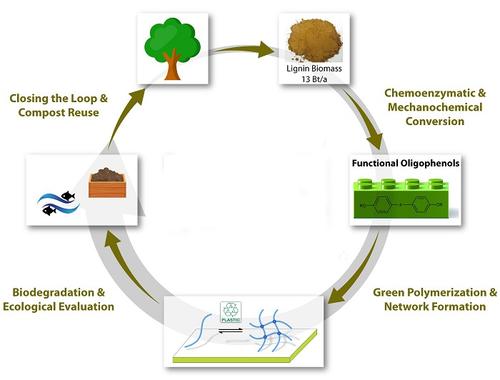
Rainer Haag is a Professor at the Department of Chemistry, Freie Universität Berlin, leading the Haag Group in the Institute of Chemistry and Biochemistry. His research focuses on biodegradable and sustainable materials, dynamic hydrogels, and polymeric nanosystems for biomedical applications. Department of Chemistry, Freie Universität Berlin Member of SFB 1449: Dynamic Hydrogels at Biointerfaces Collaborator in the StemGel startup project Co-founder of CSR|Berlin interdisciplinary research institute Research Interests: Development of stimuli-responsive polymers, multivalent virus inhibitors, and functional biointerfaces. Key projects include: Antiviral coatings using heteromultivalent polymers Thermoresponsive hydrogels for stem cell expansion Graphene derivatives for bacterial capture and disinfection Lignin upcycling for sustainable resin materials Supramolecular nanosystems for drug delivery Publication Trends highlight interdisciplinary work in polymer chemistry, nanotechnology, and biomedical applications. Recent articles focus on: 2D polyglycerols for virus interactions Redox-responsive nanogels Mucus-inspired adhesive hydrogels Tumor-targeting micelles Bacterial disinfection using graphene composites Labs & Collaborations include the Polymeric and Supramolecular Nanosystems subgroup, the Dynamic Hydrogels and Biointerfaces team, and partnerships with MIT in developing bioinspired adhesives. His group contributes to DFG-funded SFB 1449 and CSR|Berlin initiatives.
Prof. Alessandro Golkar is a Professor at the Technical University of Munich (TUM), leading the Chair of Picosatellites, Nanosatellites, and Satellite Constellations. He joined TUM in September 2022 and previously served as one of the founding faculty members at Skoltech, a Moscow-based graduate research university. His research focuses on advanced space mission concepts, systems engineering for picosatellites, and federated satellite systems. Prior to academia, he held roles at Airbus CTO, contributing to technology roadmapping and planning. His academic background includes expertise in aerospace engineering, systems design, and agile development methodologies for space hardware. Key research areas include CubeSat constellations, distributed satellite systems, and the integration of AI tools like Large Language Models (LLMs) into spacecraft design processes. He has pioneered projects such as the FSSCat mission, winner of the ESA Sentinel Small Satellite Challenge, and has explored applications of additive manufacturing for lunar missions. Prof. Golkar’s awards include the 2021 Karman Fellowship and IEEE Senior Membership (2018). His recent work emphasizes optimizing satellite networks, digital twin implementation, and orbital maneuvering for collision avoidance. He actively contributes to technology roadmapping, focusing on future human landing systems and lunar infrastructure development. Education: Ph.D. in Aerospace Engineering (details not explicitly stated). Grants & Funding: Extensive grants for CubeSat projects, federated systems research, and space technology innovation. Labs/Teams: Leads the Chair’s research group at TUM and collaborates with industry partners like Airbus on advanced mission concepts. His publications span over two decades, addressing topics like constellation design, machine learning in space, and agile processes for hardware development. He advocates for hybrid agile methodologies to bridge traditional systems engineering and modern product development.
Nadia Polikarpova is an Associate Professor in the Department of Computer Science and Engineering at the University of California, San Diego . She earned her PhD from ETH Zurich in 2014 under Bertrand Meyer , followed by postdoctoral research at MIT CSAIL with Armando Solar-Lezama . Her academic contributions have been recognized with prestigious awards including the 2020 Sloan Fellowship , 2020 Intel Rising Stars Award , and 2020 NSF CAREER Award . Polikarpova's research focuses on program synthesis , program verification , and type systems . She leads the Programming Systems group at UCSD and contributes to the IFIP Working Group 2.8 on Functional Programming since 2022. Her work spans foundational research and practical tools, including projects like Synquid , SuSLik , and Laurel that combine formal methods with machine learning for code generation. Her recent publications in venues like OOPSLA , NeurIPS , and ICFP reveal trends in AI-assisted programming , live programming environments , and formal verification . She has advised numerous PhD and Master’s students including Shraddha Barke , Zheng Guo , and Tristan Knoth , many of whom have moved to prominent academic and industry positions. Notable artifacts from her lab include tools like ColDeco for spreadsheet inspection and Superfusion for eliminating intermediate data structures. 2020 : Sloan Fellow 2020 : Intel Rising Stars Award 2020 : NSF CAREER Award 2021 : Distinguished Paper at POPL 2023 : Distinguished Artifact at PLDI 2023 : Distinguished Paper at OOPSLA Polikarpova actively contributes to academic service, serving on program committees for PLDI , POPL , and OOPSLA , and co-chairing the OOPSLA Review Committee in 2023. She has delivered keynotes at APLAS'20 and PLDI'24 , emphasizing the integration of large language models with formal methods.
Christopher Morris is a tenure-track Assistant Professor at RWTH Aachen University and a DFG Emmy Noether fellow. He leads the Learning on Graphs (LoG) research group, focusing on machine learning methods for structured data, particularly graph neural networks. His work bridges machine learning, computer science theory, and discrete mathematics, addressing challenges in generalization, expressivity, and algorithmic efficiency. Education: PhD in Computer Science from TU Dortmund University (advised by Petra Mutzel and Kristian Kersting), postdoctoral research at Mila - Quebec AI Institute (Siamak Ravanbakhsh) and McGill University, and Polytechnique Montréal (Andrea Lodi). Research interests emphasize graph machine learning, including generalization theory, combinatorial optimization, and scalable graph embeddings. Notable contributions include analyzing Weisfeiler-Leman algorithms' impact on GNNs' expressivity and generalization (VC dimension connections). Awards: DFG Emmy Noether Fellowship. Supervises six PhD students in Aachen. Active in teaching, offering courses on graph-based machine learning foundations and applications since 2022. Labs/Teams: LoG group at RWTH Aachen, collaborating with institutions like Mila and Polytechnique Montréal. Erdős number 3 through Petra Mutzel’s collaboration network.
Professor Knut Reinert is a leading figure in algorithmic bioinformatics at the Free University of Berlin, where he holds a professorship in the Department of Mathematics and Computer Science. He also maintains a significant affiliation with the Max Planck Institute for Molecular Genetics in Berlin, where he leads the Efficient Algorithms for Omics Data group. His research spans both institutions through the Reinert Lab, which focuses on developing novel computational approaches for biological data analysis. Reinert's educational background includes a Diploma in Computer Science (1994) and a Doctorate (Dr. Ing./Ph.D., 1999, with honors) from the Max-Planck-Institut for Computer Science and Universität des Saarlandes in Saarbrücken. Prior to his professorship, he worked as a computer scientist under Prof. Gene Myers at Celera Genomics in Rockville, USA (1999-2002). His primary research interests center on algorithmic bioinformatics with specific focus on developing novel algorithms and data structures for biomedical mass data analysis. This includes creating mathematical models for genomic sequence analysis and algorithms for mass spectrometry data to detect differential protein expression between normal and diseased samples. His work bridges the gap between computational tool development and practical biological applications, with particular emphasis on NGS and proteomics data. The publications and projects led by Prof. Reinert demonstrate a consistent focus on advancing computational methods in bioinformatics. His research spans genomic sequence analysis, RNA research (particularly long non-coding RNAs), parallel computing applications, and GPU acceleration for biological data processing. The work shows increasing sophistication in handling large-scale biological datasets through innovative algorithmic approaches. Intel® Parallel Computing Center designation for his lab CUDA Research Center status DFG funding of 530 thousand Euros for RNA research de.NBI funding of 2 million Euros BMBF funded projects 'LIVE-DREAM' and 'EssBar' Prof. Reinert leads multiple significant research projects and has established strong collaborations with international partners including Texas A&M, Kings College London, Eberhardt-Karls Universität Tübingen, Robert-Koch-Institute, and various Turkish institutions. His lab receives funding from major organizations including DFG, BMBF, and Intel. The Reinert Lab maintains active teaching responsibilities at FU Berlin, offering courses at BSc, MSc, and PhD levels using both traditional and innovative learning concepts like e-learning and inverted classrooms. The Reinert Lab consists of two interconnected research groups that work closely with experimental biologists and medical researchers to develop practical computational solutions for real-world biological problems. The lab has established itself as a key player in the German and international bioinformatics community through its development of the widely-used SeqAn library and participation in national infrastructure initiatives.
Prof. Dr. Steffen Marburg is a Full Professor at the Chair of Acoustics of Mobile Systems within the TUM School of Engineering and Design at the Technical University of Munich. His research focuses on numerical methods in vibroacoustics, structural optimization, and acoustic modeling for applications in automotive, maritime, and musical instrument domains. Education: PhD from Technical University of Dresden (1998). Academic Career: Junior Professor at TU Dresden (2004), Chair of Technical Dynamics at University of the Federal Armed Forces Munich (2010), Full Professor at TUM (2015–present). Editorial Roles: Co-Editor-in-Chief of Journal of Theoretical and Computational Acoustics, Associate Editor of Journal of the Acoustical Society of America, Editor of Acoustics Australia and Mechanical Systems and Signal Processing. His research integrates computational acoustics, boundary element methods, and machine learning to address noise control and structural optimization challenges. Recent work explores acoustic metamaterials, viscothermal losses, and data-driven modeling. He has co-authored over 150 publications and led advancements in multifrequency solution methods and noise-insulating structures. Scientific awards include the Innovation Award of the Industrieclub Sachsen e.V. (1999). His editorial contributions and leadership in journals highlight his influence in computational acoustics and structural dynamics.