Dr. Stephen Bruneau is a Professor and Director of Industrial Outreach at the Faculty of Engineering and Applied Science, Memorial University of Newfoundland. He holds a PhD in Engineering from Memorial University, alongside B.Eng. and M.E.Sc. degrees from Western University. His research focuses on Arctic engineering, marine structural design, ice mechanics, wind energy, and energy policy. He has contributed to significant projects including ice-structure interaction studies, wind tunnel rehabilitation, and natural gas policy advocacy. Education: B.Eng. (Western), M.E.Sc. (Western), PhD (Memorial University). Research interests include ice loads on structures, wind engineering applications in harsh environments, energy policy for Newfoundland, and industrial outreach initiatives. He has authored numerous peer-reviewed publications and holds patents for innovative technologies like the snare wire tester and iceberg anchor device. His work bridges academic research with industrial applications, particularly in marine and energy sectors.
Dr. Rocky Taylor is an Associate Professor and Interim Associate Dean Research in the Faculty of Engineering and Applied Science at Memorial University of Newfoundland. He holds B.Eng., M.Eng., and PhD degrees in mechanical and ocean/naval architectural engineering, all from Memorial University. He is the CARD Chair in Ice Mechanics, leading research programs on ice failure mechanics, offshore structure design, and Arctic shipping safety. His work focuses on ice load estimation, fracture processes, and probabilistic modeling, supported by industry partnerships like C-CORE and Statoil. Dr. Taylor’s research emphasizes ice dynamics, including high-pressure zone failure, freeze-bond strength, and SAR-based iceberg detection. He has led initiatives funded by RDC IgniteR&D and NSERC, advancing ice engineering practices. His academic contributions include teaching undergraduate/graduate courses and supervising student projects in structural engineering and Arctic systems. His research integrates experimental methods (e.g., medium-scale indentation tests) with computational models (finite element analysis, machine learning algorithms) to address challenges in polar regions. Key areas include ice-structure interactions, risk management for Arctic shipping, and environmental consequence modeling. Dr. Taylor collaborates extensively with industry and international researchers to develop innovative solutions for cold ocean engineering challenges. As Interim Associate Dean Research, he fosters interdisciplinary collaboration and graduate training while maintaining a strong focus on applied research with real-world industry applications. His work bridges academic innovation and practical engineering solutions for harsh marine environments.
Jianming (James) Yang is a Professor in the Faculty of Engineering and Applied Science at Memorial University of Newfoundland. He holds a PhD from Tianjin University and has extensive industry experience as a mechanical design engineer, followed by academic roles at Guilin University of Electronic Technology and University of Shanghai for Science and Technology. His work focuses on mechanical vibration/dynamics, nonlinear random vibration analysis, and fatigue prediction in mechanical systems. Dr. Yang's research emphasizes modeling drillstring dynamics, fatigue control in drilling systems, and random vibration analysis of planetary gear trains in wind turbines. His expertise spans machine design, solid mechanics, and wind turbine simulation. Key contributions include developing empirical models for drilling performance prediction and stochastic linearization techniques for gear dynamics. His academic journey includes post-doctoral studies at Shanghai Jiao Tong University and a career transition from industry to academia in 2003. He has authored numerous publications on mechanical systems, vibration analysis, and renewable energy applications. Notable research trends include advancing predictive models for drilling efficiency, optimizing gear train reliability under random loads, and integrating machine learning for wind turbine performance analysis. Dr. Yang's work bridges theoretical mechanics and practical engineering challenges, contributing to advancements in energy systems and sustainable manufacturing processes.
Antonina Pirrotta is Full Professor at University of Palermo, serving as Director of the PhD School (since 2023) and CIDiS Research Center (since 2021). Her research in structural dynamics includes vibration control systems and probabilistic methods. Honors include the EASD Senior Research Prize (2020), EMI Fellowship (2020), and International Excellence Fellowship at KIT (2021). Innovations include optimized dampers for seismic and wind load mitigation. Research integrates analytical stochastic methods with experimental dynamics. Recent publications advance fractional calculus applications in random vibration theory and control device optimization. Editorial roles include Associate Editor for Meccanica and Journal of Engineering Mechanics .
Yanlin Guo is an Associate Professor in the Department of Civil and Environmental Engineering at Colorado State University and Director of the Center for Sustainable and Intelligent Transportation Systems. Her research focuses on mitigating wind and compound hazards through structural health monitoring, physics-integrated simulations, and remote sensing technologies to enhance infrastructure resilience. Education: B.S. Civil Engineering, Southeast University (2007) M.S. Civil Engineering, Hong Kong Polytechnic University (2010) Ph.D. Civil Engineering, University of Notre Dame (2015) Her work integrates natural hazard engineering with data science to evaluate buildings, transportation, and energy infrastructure. Key innovations include real-time monitoring systems for emergency response and climate adaptation strategies for coastal communities. Recent publications focus on hurricane resilience, autonomous inspection systems, and AI-driven structural assessment. Trends show strong emphasis on machine learning applications in wind engineering and UAV-based monitoring technologies. Awards: NSF CAREER Award (2024) DOE RACER Grant (2023) NSF Wind Hazard Grant (2022) Best Paper Award, Journal of Structural Engineering (2020) Dr. Guo leads multiple DOE and NSF projects on solar tracker resilience and urban wind risks. She advises PhD students in structural monitoring and climate adaptation research, and directs a center developing sustainable transportation solutions. The Guo Research Group specializes in full-scale structural testing and collaborates with national labs on field deployments. Current work includes developing cloud-based risk assessment platforms for engineers.
Trevor Young is an Associate Professor in Aeronautical Engineering at the University of Limerick, affiliated with both the School of Engineering and the Bernal Institute. He holds a PhD from Cranfield University and has over 30 years of combined industry and academic experience. His research focuses on composite materials, wind turbine blade technology, and aviation innovation, with over €15 million in secured grants. He co-founded the Irish Centre for Composites Research (IComp) and serves on the Scientific Committee of the EC's Clean Sky 2 programme. Education: BSc (Eng) from University of the Witwatersrand, MSc and PhD from Cranfield University. Teaching expertise includes aircraft design, flight mechanics, and fleet planning. Research interests span composites, laminar flow technologies, and sustainable aviation. He has published over 100 peer-reviewed papers, authored/co-authored books on aviation performance and technical writing, and led 40+ research projects. Key contributions include advancements in wind turbine blade coatings and thermoplastic composite wingbox designs. Grants and Awards: Principal Investigator for €7M+ in EC and Irish-funded projects. Recognized for contributions to composites research and aviation innovation through EC evaluations and expert roles. Professional Activities: Member of Royal Aeronautical Society, AIAA, and advisory bodies for Clean Sky and Clean Aviation. Active in UN Sustainable Development Goals related to affordable and clean energy.
Gregorio Ferreira is a Researcher at the University of Limerick, specializing in composite materials and structural analysis. His work focuses on advanced computational methods such as the Carrera Unified Formulation and Finite Element Analysis to study composite laminates, damage mechanics, and robotic manufacturing processes. He explores topics including low-velocity impact effects, progressive damage modeling, and structural integrity assessment in composite structures. His research integrates experimental and numerical approaches, addressing challenges in filament winding composites, adhesive bonding, and robotic tape placement. Ferreira’s contributions emphasize the application of advanced modeling techniques to predict stress profiles, optimize material performance, and enhance structural durability under various loading conditions. Key research areas include: Composite material failure mechanisms under tensile, impact, and bending loads Development of unified formulations for structural analysis Integration of robotics in composite manufacturing Dynamic analysis of laminated plates and cylinders His publications highlight advancements in material modeling, damage simulation, and the validation of computational models through experimental data.
Sungmoon Jung is a Professor of Civil & Environmental Engineering at the Florida A&M University-Florida State University College of Engineering. His research focuses on wind effects on structures, hurricane resilience, wind energy, and vehicle safety. He leads the WISE Lab (Wind and Impact on Structures), which employs advanced computational and experimental methods to study structural dynamics under extreme loads. Education: Ph.D., University of Illinois at Urbana-Champaign, 2004 M.S., Seoul National University, 1999 B.S., Seoul National University, 1997 Research Interests: Wind engineering for buildings and infrastructure Hurricane-induced structural damage and community resilience Wind energy systems and optimization Vehicle crashworthiness and occupant safety Advanced materials for energy absorption and structural reinforcement Recent Research Trends: Recent work emphasizes data-driven approaches (e.g., machine learning for wind profile prediction) and experimental validation (e.g., crash simulations, material testing). Key themes include enhancing infrastructure resilience to hurricanes and improving vehicle safety through biomechanical modeling and component-level testing. Labs & Teams: The WISE Lab collaborates with industry and government agencies to develop practical solutions for wind-related challenges in construction and transportation. Current projects include optimizing offshore wind turbine designs and mitigating risks from storm surge and vehicle rollovers.
Bryony DuPont is Associate Professor of Mechanical Engineering at Oregon State University's College of Engineering. Her research develops computational methods for sustainable energy systems design, with joint appointment at the National Renewable Energy Laboratory. Research domains include: Computational design optimization for renewable energy Offshore wind farm configuration Wave energy converter development Environmental impact assessment Sustainable product design methodologies Recent publications focus on wave parameter characterization, community-centered energy transitions, and coupled simulation of floating wind platforms. Article analyses demonstrate strong emphasis on techno-economic modeling and stakeholder engagement frameworks. Professor DuPont teaches engineering design, wind energy systems, and sustainable manufacturing. She leads the Design Engineering Laboratory and manages projects funded by the Department of Energy and National Science Foundation. Her 2019 mentoring award recognizes exceptional graduate student supervision.
Nikolay Dimitrov is a Senior Researcher at the Department of Wind and Energy Systems , Technical University of Denmark (DTU). His work focuses on wind turbine structural integrity, reliability analysis, and data-driven optimization techniques. Active in Wind Energy and Structural Reliability research Developed open-source tools for Mann turbulence modeling and virtual load sensors Supervised multiple PhD students in projects related to floating wind turbines and uncertainty quantification His research spans surrogate modeling , fatigue load analysis , and environmental condition characterization for offshore wind turbines. Key contributions include machine learning-based load monitoring systems and frameworks for probabilistic design . Scientific recognition includes the Best Poster award (2019). Current projects involve reinforcement learning for wind farm control and federated digital twins for offshore wind energy .
Jenni Rinker is an Associate Professor in the Department of Wind and Energy Systems at the Technical University of Denmark (DTU). Her research focuses on wind turbine dynamics, aeroelasticity, and control systems, with particular emphasis on improving turbine reliability and optimizing energy output through advanced measurement techniques like lidar technology. She leads initiatives such as the DigiWind project and actively collaborates on international efforts like the IEA Wind 15 MW Reference Turbine. Dr. Rinker teaches courses including LAC (46320) and PiWE (46120), emphasizing hands-on project management and student supervision. PhD Supervision: Esteban Soto Sagredo (Flow-field estimation), Seyed Mozafari (Fatigue Reliability), Mikkel G. Pedersen (Structural Degradation) Key Projects: DigiWind (2024–2027), PyConTurb (Python-based turbulence tools), Turbulence-Driven Design Optimization Her work contributes to UN Sustainable Development Goals, notably SDG7 (Affordable and Clean Energy). Recent research highlights include wind field reconstruction using lidar data, fatigue reliability analysis, and aeroelastic stability in floating turbines. She has supervised over 15 student projects, emphasizing structured weekly reporting and milestone tracking through DTU’s CampusNet system.
Taeseong Kim is an Associate Professor in the Department of Wind and Energy Systems at the Technical University of Denmark (DTU). His research focuses on wind turbine design, aeroelasticity, hydrodynamics, and control systems, with a particular emphasis on floating offshore wind turbines and icing effects. He leads major projects such as the Horizon Europe-funded NEXTgenT, aiming to develop over 25 MW offshore wind turbine rotors. His work contributes to UN Sustainable Development Goals related to affordable and clean energy. Kim’s expertise includes rotor dynamics, blade structural analysis, and advanced simulation tools. He has pioneered innovations like segmented blade concepts and partial pitch control systems for large turbines. His research integrates computational fluid dynamics (CFD), finite element analysis (FEA), and machine learning for structural health monitoring and damage detection. Key projects include DTWO (federated digital twins for offshore wind) and DigiWind (digital masters training in wind energy systems). He collaborates internationally through initiatives like IEA Wind Task 54 on cold-climate wind energy. His publications span aeroelastic stability, icing simulation, and hydrodynamic control strategies, with over 96 peer-reviewed articles and 19 active/funded projects. Kim’s work addresses challenges in turbine stability, load reduction, and environmental resilience, positioning him as a leader in advancing next-generation wind energy systems.
Alan Wai Hou Lio is an Associate Professor at the Technical University of Denmark's Department of Wind and Energy Systems, specializing in wind turbine control and energy system dynamics. His research develops advanced control strategies to optimize energy capture and reduce structural loads in wind farms. Research Focus: Predictive wind turbine control algorithms LiDAR-assisted flow measurement techniques Offshore floating turbine dynamics Real-time estimation methods for turbulent flows His publications demonstrate consistent focus on experimental validation of control theories, with recent work emphasizing field implementation challenges. Current projects include DigiWind (digital wind energy systems) and PowerKey (wind plant optimization). Education: PhD in Automatic Control (Sheffield, 2017), M.Eng in Electrical Engineering (Imperial College London, 2012).
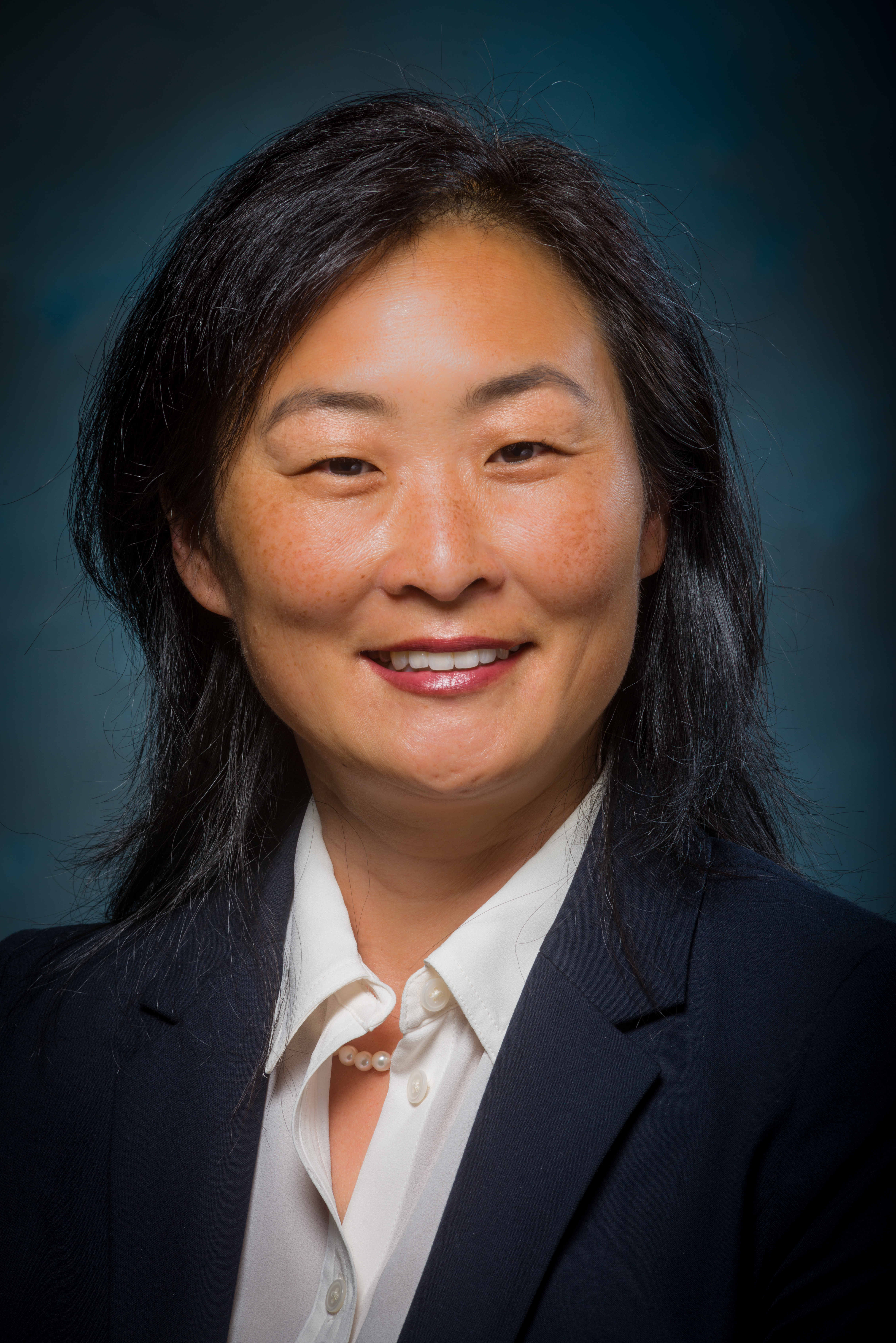
Dr. Jinny Rhee serves as Associate Dean of the Charles W. Davidson College of Engineering at San José State University, overseeing all undergraduate programs since her appointment in June 2014. She is also a full Professor in the Mechanical Engineering Department, having received promotion to this rank in 2013. Her administrative responsibilities include working closely with the Dean, Associate Deans of Graduate Studies and Research, as well as university leadership on academic initiatives and strategic planning. Dr. Rhee earned her academic credentials from Stanford University, receiving her B.S. (1989), M.S. (1990), and Ph.D. (1995), all in mechanical engineering. She joined San José State University in 2002 and has since established herself as a leader in engineering education and thermal systems research. Dr. Rhee's research spans two primary domains: engineering education and thermal management systems. In engineering education, she focuses on multidisciplinary senior capstone projects, sustainability education, student teamwork dynamics, and growth mindset interventions for freshman engineering students. Her thermal management research centers on renewable energy applications, particularly solar thermal systems and thermal stratification in hot water storage. She directs the Renewable Energy and Energy Efficiency Laboratory at SJSU and serves as faculty advisor for the IEEE-CPMT student chapter. Analysis of Dr. Rhee's publication record reveals a strategic evolution in her research trajectory. While maintaining her expertise in thermal engineering and renewable energy systems, she has increasingly focused on engineering education research since approximately 2014. Her recent publications highlight her interest in growth mindset interventions, women in engineering, and career development pathways for engineering students. This shift reflects her dual role as both researcher and academic administrator shaping engineering education practices. $150K National Science Foundation grant for 'Co-instruction Model for Multidisciplinary Senior Projects in Sustainability' (2010) $18.9K Hewlett-Packard Laboratories grant for 'Cogenerating Photovoltaic and Solar Thermal Collector' (2007) $72K Rockwell-Collins grant for 'Overcoming Thermal Spreading Resistance' (2006) Multiple annual grants including $18K/year from Synopsys Outreach Foundation and $10K/year from UC Office of the President for educational programs As Associate Dean, Dr. Rhee has led numerous initiatives including serving as General Chair of the 2018 Frontiers in Education Conference, establishing the EPICS @SJSU program, expanding the Engineering Ambassador Program, and implementing laboratory safety policies. She oversees the Engineering Student Success Center and has led ten engineering programs through ABET reaccreditation.
Afshin Zahraee is an Assistant Professor and Interim Associate Department Chair of Construction Science and Organizational Leadership at Purdue University Northwest's College of Technology. His research focuses on structural health monitoring for critical infrastructure including bridges and wind turbines, employing non-destructive testing and sensor technologies. Additional interests include engineering education pedagogy and sustainable infrastructure development. Recent publications address wireless sensor networks for bridge monitoring, fatigue analysis in renewable energy infrastructure, and innovative teaching methods using virtual reality. Awards and Honors: Teaching Incentive Program Award (2021-22) PNW Lionhearted Leader Award (2021-22) PNW Outstanding Faculty Member (2020-21) ASCE Teaching Assistant Awards (2015-17) As Construction Club faculty supervisor, engages students in community infrastructure projects while promoting diversity, equity and inclusion in STEM education.