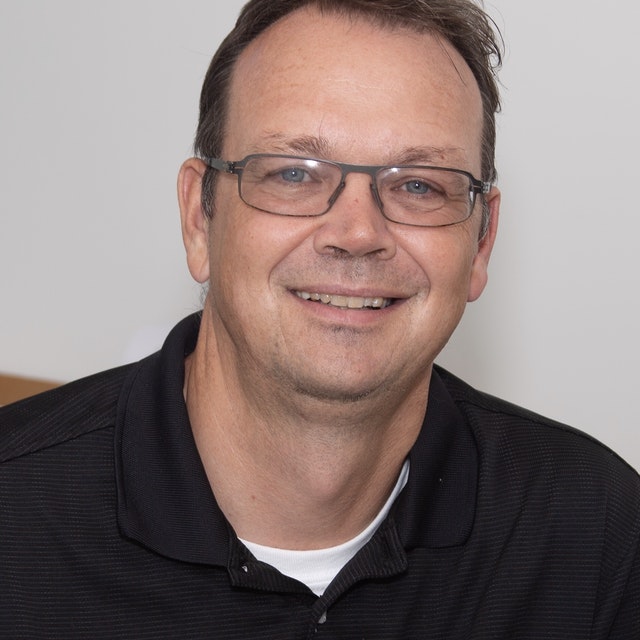
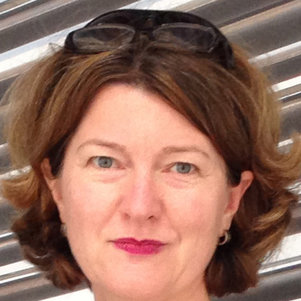
Holger Sieg is the Baird Term Professor of Economics at the University of Pennsylvania's Department of Economics. His research focuses on urban economics, fiscal policy, public finance, education economics, and spatial economics. He has authored a widely adopted textbook, 'Urban Economics and Fiscal Policy,' integrating theoretical and empirical analyses for graduate and advanced undergraduate students. Teaching includes Econ 4470 (undergraduate urban economics) and Econ 8400 (Ph.D. seminar on urban and spatial economics). His work emphasizes policy analysis, particularly in migration controls, fiscal decentralization, and educational equity. Key research themes include electoral accountability, municipal pension funding, and the impact of local policies on human capital accumulation. Recent publications analyze topics such as time allocation models, electoral competition dynamics, and the effects of migration policies in China. His research bridges empirical and theoretical approaches, addressing contemporary issues like urban fiscal policies and access to education.
Thulasi Mylvaganam is a Senior Lecturer in Control Engineering at the Department of Aeronautics, Imperial College London. They specialize in nonlinear control theory, dynamic optimization, and applications to robotics and renewable energy systems. Mylvaganam holds an M.Eng. in Electrical and Electronic Engineering from Imperial College London (2010) and a Ph.D. in Control and Power (2014). They have held roles including Postdoctoral Research Associate (2014–2016), Research Fellow (2016–2017), Lecturer (2017), and Senior Lecturer (2021). Research interests include distributed control, data-driven control, and optimal control strategies for complex systems. They teach courses such as Mechatronics and Computing and Numerical Methods 2 for Aeronautics students. Their work spans robotics, renewable energy systems, and multi-agent systems. Affiliations include the Computational Methods and Mathematical Modelling group and the Robotics Forum. Mylvaganam actively supervises PhD students focusing on advanced nonlinear control topics and emphasizes rigorous academic preparation for prospective candidates.
Dr. Martin Mattsson is an Assistant Professor in the Department of Economics at the National University of Singapore (NUS). He holds a PhD in Economics from Yale University, an MPA/ID from Harvard University, and a BA in Economics and Management from the University of Oxford. His research focuses on improving government institutions, including large-scale field experiments in Bangladesh on performance scorecards and village courts. Current work addresses air pollution reduction in South Asia, aligned with Effective Altruism principles. Teaching includes courses on Effective Altruism (HS2921), Applied Econometrics (EC4305), and Advanced Development Economics (EC6371). His research spans Development Economics, Political Economy, and Public Economics, with notable projects analyzing corruption, public sector governance, and environmental policy. Recent studies investigate reelection incentives and corruption in India, internet shutdowns' economic impacts, and air purifier adoption in Bangladesh. He co-authored works on education's anti-corruption effects in Vietnam and frontline bureaucrats' compensation in India. Mattsson actively advises through NUS's Economics PhD program and collaborates with organizations like JPAL South Asia. His work emphasizes scalable solutions for global welfare improvement.
Dr. Anurug Chakma is a Research Fellow at the Migration Hub within the School of Regulation and Global Governance (RegNet) at The Australian National University (ANU). Previously, he served as a casual sessional academic at ANU's School of Politics and International Relations and held teaching positions at the University of Dhaka, including Lecturer and Assistant Professor in Peace and Conflict Studies. He has also contributed to research and consultancy roles at organizations such as the Bangladesh Legal Aid and Services Trust (BLAST), UNDP-CHTDF, University College London (UCL), and the United States Institute of Peace (USIP). Dr. Chakma's educational background includes: PhD in Politics and International Relations (2023), Australian National University Master's in Economics, Political Science, Law, and Criminal Science (2016), University of Antwerp Master's and Bachelor's in Peace and Conflict Studies (2012-2011), University of Dhaka His research interests span terrorism, civil conflict, peace agreements, human rights, diaspora communities, and computational social science. He focuses on topics such as the implementation of peace accords, diaspora roles in humanitarian efforts, and the impact of political ideology on conflict resolution. Dr. Chakma's recent research explores the role of diasporas in humanitarian assistance, climate change policies for health equity, nation-building in Bangladesh, and the influence of social media on violence. His work bridges theoretical frameworks with real-world case studies, emphasizing policy-relevant outcomes. While no formal students are listed, Dr. Chakma's research is supported by two projects: the ongoing "Biannual Perceptions Survey - International Development Policy" and the completed "Exploring multi-stakeholder perspectives on diaspora humanitarianism". These projects reflect his commitment to interdisciplinary research addressing global challenges. He is affiliated with the ANU South Asian Research Institute (SARI) and holds memberships in the Australia Political Science Association (APSA) and the Australian Society for Quantitative Political Science (ASQPS).
Ed Pickering is a Senior Lecturer in Metallurgy and Materials Engineering at the University of Manchester. He has held roles since 2015, advancing to Reader in 2023. His affiliations include the Henry Royce Institute (Research Area Lead for Advanced Metals Processing), the Advanced Metallics System CDT and Fusion CDT Management Boards, and industrial technical advisory panels. Ed’s work bridges academic and industrial collaboration with Rolls-Royce, UKAEA, Airbus, EDF, and Sheffield Forgemasters. Ed completed his undergraduate studies (2011) and PhD (2014) in Materials Science at the University of Cambridge, followed by a Research Associate role in Cambridge’s Rolls-Royce UTC. His academic trajectory includes: Senior Lecturer (2019–present) Reader (2023–present) Ed’s research focuses on phase transformations, microstructural characterization, and alloy development for nuclear (fission/fusion) and aerospace applications. Key themes include optimizing processing routes to enhance material properties while minimizing waste and environmental impact. His studies frequently address steel, high-entropy alloys, and novel refractory alloys, emphasizing their service performance under extreme conditions. His scientific contributions span structural integrity assessment of welded joints, machine learning applications in metallurgy, and material flow uncertainties in forging. He has also advanced heat treatment optimization for reactor steels and explored cobalt-free hardfacing alloys. Frank Fitzgerald Medal (2017) Grunfeld Memorial Medal (2021) In advising and grants, Ed leads the Materials Performance Centre (MPC) and co-leads the NEWAM project on wire-additive manufacturing. He supervises research across these initiatives and collaborates with over 30 PGR students in interdisciplinary teams. His work also involves managing technical facilities like the Advanced Metal Processing platform. Ed’s laboratory affiliations include the MPC and WAAM-based Engineering and Process Metallurgy groups, where he explores sustainable materials solutions for energy and aerospace industries.
Gregor Kieslich is a Research Professor at the Technical University of Munich's School of Natural Sciences, Department of Chemistry. His laboratory explores molecular and solid-state chemistry at the Catalysis Research Centre. Research focuses on structure-property relationships in functional materials including metal-organic frameworks, molecular perovskites, and hybrid systems. The group develops design principles for advanced materials with tailored electronic, mechanical, and ionic transport properties through crystal engineering approaches. Recent publications emphasize materials for energy applications, with consistent focus on structural dynamics under external stimuli. Articles frequently investigate ion transport mechanisms, framework flexibility, and defect engineering using computational and experimental methods. No specific awards or laboratory details are documented in the provided information.
Prof. Dr.-Ing. Uta Pottgiesser is a Professor of Heritage & Technology at the Department of Architectural Engineering + Technology, Delft University of Technology. Her research focuses on the technical aspects of architectural heritage, emphasizing sustainable reuse of historical buildings through innovative concepts and products. She holds a PhD from TU Dresden and has held leadership roles at institutions like the Detmold School of Architecture and the University of Antwerp. Her work bridges architecture, engineering, and interior design to enhance user well-being and environmental sustainability. Education: PhD in Architecture (2002), TU Dresden Architecture studies, TU Berlin Research Interests: Combining technical and cultural dimensions of architectural heritage, including facade construction, building conservation, energy efficiency, and adaptive reuse of modernist structures. She explores how digital technologies and bio-inspired solutions can address heritage risks and urban sustainability challenges. Professional Activities: Vice-Chair of DOCOMOMO Germany Chair of DOCOMOMO ISC/T (Technology) Editorial roles in journals (e.g., JFDE, JID) Organizer of international conferences and architectural competitions Recent Articles: Focus on occupant satisfaction in office spaces, digital tools for heritage risk management, and green infrastructure's health impacts. Her work often integrates interdisciplinary approaches to urban sustainability and cultural preservation.
Dr. Xinying Liu is a Researcher at the University of Sydney's School of Chemical and Biomolecular Engineering, specializing in Computational Fluid Dynamics (CFD), Fluid-Structure Interaction (FSI), and biomedical engineering applications. She is a member of the University of Sydney Nano Institute and holds a PhD (2023) and bachelor's degree (2017) from the same institution. Education: Bachelor's Degree: The University of Sydney (2017) PhD in Chemical and Biomolecular Engineering: The University of Sydney (2023) Research Focus: Dr. Liu's work addresses biomedical challenges through advanced modeling techniques, including cardiovascular hydrodynamics, gastric flow systems, and bioinspired polymeric heart valve design. She bridges engineering and medicine to develop personalized healthcare solutions and non-thermal plasma technologies for PFAS remediation. Her projects emphasize multiphysics simulation and interdisciplinary collaboration. Current Projects: Polymeric heart valve replacements with growth capability Non-Thermal Plasma applications for PFAS remediation Advising & Collaborations: Dr. Liu advises Parham VATANKHAH on flow dynamics in human aortas. Her collaborations span computational modeling, experimental validation, and industry partnerships for healthcare innovation. Labs & Affiliations: Member of the University of Sydney Nano Institute, actively contributing to bioengineering and materials science research.
Mehdi Asheghi is an Adjunct Professor at Stanford University specializing in advanced thermal management solutions. His research focuses on heat transfer optimization, electronics cooling, and energy-efficient systems using cutting-edge materials science and micro/nanofabrication techniques. His work spans high-heat-flux cooling, phase-change materials, and thermal interface technologies, with applications in power electronics, integrated circuits, and sustainable energy systems. Innovations include microchannel coolers, copper nanowire composites, and porous thermal structures. With publications addressing thermal challenges from chip-scale to industrial systems, his research advances reliability and performance in electronic devices and energy infrastructure.
Dario Valdebenito is an Assistant Professor of Mathematics at Ave Maria University. He holds a B.S. and diploma in Mathematical Engineering from the University of Chile, followed by an M.Sc. and Ph.D. in Mathematics from the University of Minnesota. His postdoctoral research included positions at McMaster University and the University of Tennessee. His research focuses on partial differential equations, spatial dynamics, and boundary layer problems, applying dynamical systems techniques to elliptic equations. He has over 15 years of college-level teaching experience in diverse settings. Beyond academia, he has a passion for music, including piano and choral singing, and interests in opera, history, and transportation. Dr. Valdebenito’s research explores fluid dynamics with low viscosity and ideal fluid comparisons, as well as quasiperiodic solutions in elliptic equations using KAM theory. His work intersects applied mathematics, fluid dynamics, and nonlinear analysis. He contributes to the mathematical community through peer reviews and Mathematical Reviews reporting.
Dr. Anjan Biswas is a Professor in the Department of Math & Physics at the College of Arts & Sciences. His research focuses on analytical and computational approaches to quantum optics and nonlinear wave propagation. Education: Ph.D. in Mathematics from the University of New Mexico. Metrics: Erdos Number 4, Hirsch Index 111. Research interests center on optical solitons in fibers with linear and nonlinear chromatic dispersion, Lie symmetry analysis for quiescent solitons, and stochastic modeling in photonic systems. His work explores fractional temporal evolution, polarization-mode dispersion, and Kudryashov’s power-law structures. Recent publications highlight advancements in cubic-quartic soliton modeling, dispersion triplet systems, and noise-resilient optical communication frameworks. Studies span Boussinesq-type models, magneto-optic waveguides, and metamaterial applications. Key methodologies include Adomian decomposition, Sardar sub-equation techniques, and Lie symmetry analysis. Applications range from quantum fluid dynamics to internet bottleneck suppression via exotic self-phase modulation structures.
David Schlipf is a Professor at the Fachbereich Energy and Life Science, Hochschule Flensburg, leading the Wind Energy Technology Institute. His expertise spans lidar-assisted control systems, floating offshore wind turbines, and aeroelastic modeling. He actively collaborates with international initiatives like IEA Wind Task 32 and contributes to projects such as the 'Lidar Knowledge Europe (LIKE)' network. His research focuses on enhancing wind turbine efficiency through advanced control strategies and sensor technology integration. He has been instrumental in developing the TorqTwin open-source framework for multibody modeling and has published extensively on topics including wind field reconstruction, load mitigation, and floating platform dynamics. His work bridges academic research with industrial applications, emphasizing practical solutions for offshore wind energy challenges. Notable projects include the evaluation of lidar-assisted control performance, optimization of floating turbine designs, and contributions to wind energy education's role in climate resilience. His research outputs span over 200 publications, highlighting his global impact in advancing renewable energy systems.
Dr. Wael El-Dakhakhni is a Professor of Civil Engineering at McMaster University, holding the Martini, Mascarin and George Endowed Chair in Masonry Design. He serves as Director of the INTERFACE Institute and NSERC CaNRisk-CREATE program, focusing on systemic risk and resilience in complex systems. His research spans interdependent networks, data-driven modeling, and infrastructure resilience under climate and disaster scenarios. He leads the INViSiONLab, advancing AI-driven solutions for urban resilience through digital twins. El-Dakhakhni is a Fellow of the American Society of Civil Engineers and a Member of the Royal Society of Canada, with notable awards including the NSERC Discovery Accelerator Supplement (twice), Ontario Early Researcher Award, and John B. Scalzi Research Award. His work bridges academia and industry, contributing to codes, standards, and real-world applications in structural engineering and disaster response. Education: BSc (Ain Shams University, Egypt), MSc and PhD (Drexel University, USA). Research Interests: Complex systems simulation, systemic risk quantification, resilient infrastructure design, AI applications in urban planning, and climate resilience frameworks. His work integrates advanced machine learning, network theory, and physics-informed models to address multi-hazard challenges in energy, transportation, and urban systems. Key Projects: CITYDNA, McMasterDNA, and infrastructure digital twins for pandemic and climate crisis decision-support systems. He collaborates with governments and organizations to enhance infrastructure resilience through predictive analytics and adaptive strategies. Labs/Teams: INViSiONLab, McMaster INTERFACE Institute, NSERC-CaNRisk-CREATE program, and the Centre for Effective Design of Structures. His research has informed policy and standards in North America, emphasizing interdisciplinary solutions for systemic risk mitigation.
Ling Zhao is a distinguished Professor at the School of Management, Huazhong University of Science and Technology, China, with extensive research contributions spanning artificial intelligence, machine learning, information systems, and biomedical applications. With over 150 publications since 2008, Dr. Zhao has established herself as a leading researcher in multiple interdisciplinary domains, particularly in applying computational methods to solve complex real-world problems. Dr. Zhao's research interests encompass a broad spectrum of cutting-edge topics including artificial intelligence, machine learning, data mining, control systems, and information systems. Her work demonstrates exceptional versatility, bridging theoretical computer science with practical applications in healthcare, transportation, cybersecurity, and business management. Notably, she has made significant contributions to sentiment analysis, medical image processing, algorithmic management, and privacy-preserving data analysis. Her research methodology often combines deep learning approaches with domain-specific knowledge to develop innovative solutions. Analysis of Dr. Zhao's recent publications (2023-2025) reveals a strong focus on interdisciplinary applications of AI, with particular emphasis on healthcare informatics (medical image analysis, disease diagnosis), human-computer interaction (algorithmic management effects), and advanced machine learning techniques (graph neural networks, multimodal learning). Her work shows a consistent trend toward increasingly complex and integrated systems that address real-world challenges across multiple domains. Dr. Zhao has made substantial contributions to academic advising and research mentorship, though specific student names aren't detailed in the available publications. Her research has been supported by various grants enabling work in AI applications, biomedical engineering, and information systems. Dr. Zhao maintains active collaborations with researchers across China and internationally, as evidenced by her co-authorship patterns. While specific laboratory information isn't explicitly mentioned in the publication records, Dr. Zhao appears to lead or be significantly involved in research groups focusing on AI applications in management and healthcare. Her work on medical imaging, sentiment analysis, and control systems suggests involvement in multiple specialized research teams addressing different application domains through computational approaches.
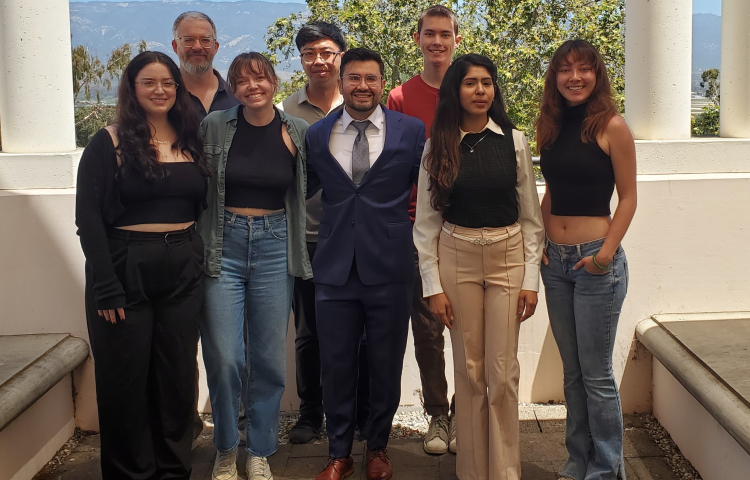
Professor Trevor W. Hayton is a faculty member in the Department of Chemistry and Biochemistry at the University of California, Santa Barbara. He leads the Hayton Research Group, which focuses on solving problems in energy science, nanochemistry, and nuclear fuel clean-up through the synthesis and characterization of transition metal, lanthanide, and actinide complexes, as well as metal nanoclusters. Dr. Hayton's research spans several key areas in inorganic and organometallic chemistry: Actinide chemistry, particularly uranium and thorium complexes Synthesis of transition metal nanoclusters Molecular activation of small molecules Investigation of metal-ligand bonding and covalency Energy-related materials and processes Analysis of Professor Hayton's recent publications (2023-2025) reveals a strong focus on actinide chemistry, particularly uranium and thorium complexes with various ligands. His group has made significant contributions to understanding actinide-ligand bonding, especially through NMR spectroscopy. They also continue to advance the field of transition metal nanoclusters, with recent work on nickel, copper, and iron systems. A notable trend is the increasing use of advanced spectroscopic and computational methods to probe electronic structure. Professor Hayton mentors numerous graduate students and postdoctoral researchers, as evidenced by successful PhD defenses and award-winning research presentations. His group members learn advanced synthetic techniques including air-free procedures, and various spectroscopic and analytical methods. The Hayton Research Group operates state-of-the-art laboratories at UCSB, with dedicated spaces for air-sensitive synthesis and characterization. Group meetings are held weekly to discuss ongoing research and foster collaboration among members.