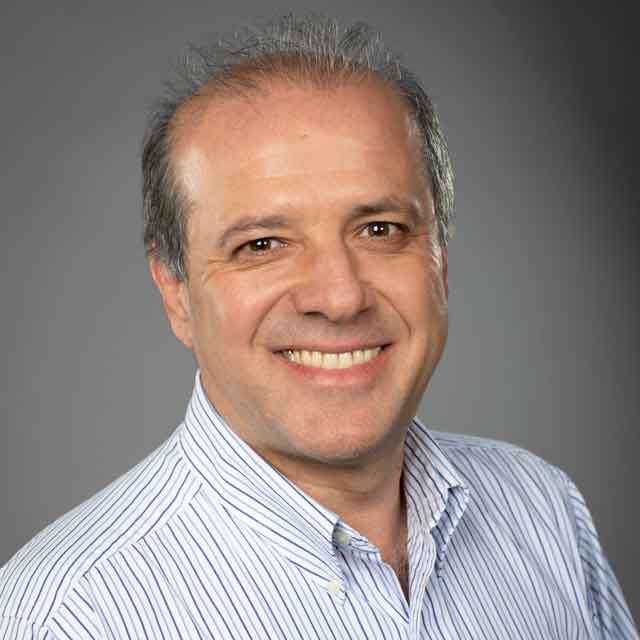
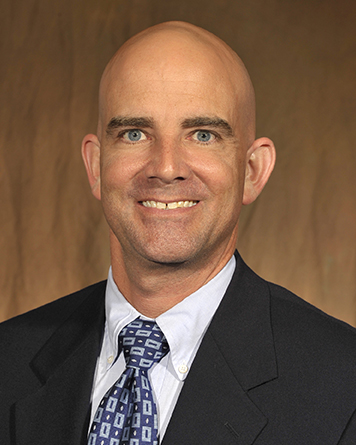
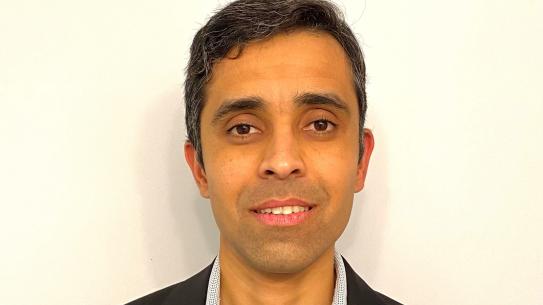
T. Jeff Guh, Ph.D. is an Adjunct Professor at the School of Architecture, University of Southern California. With over 30 years of experience as a licensed structural engineer in the U.S. and internationally, he specializes in seismic behavior of building structures and innovative structural technologies. He has designed commercial, institutional, healthcare, and transportation facilities, combining analytical and experimental methods in his research. Education: Bachelor of Science in Civil Engineering, National Taiwan University Master of Science in Structural Engineering, UCLA Doctor of Philosophy in Structural Engineering, UC Berkeley Teaching & Roles: Teaches courses such as ARCH 213bg Building Structures and Seismic Design , ARCH 313 Design of Building Structures , and others since 1995 Serves as graduate student advisor for thesis projects Course topics include structural systems (arches, trusses, moment frames), material analysis (steel/concrete), and performance-based design Professional Contributions: Former vice president, principal, and managing director of international engineering firms Member of ASCE, SEAOC, and EERI
Professor Tommy Chan is Chair in Civil Engineering at Queensland University of Technology's School of Civil and Environmental Engineering. With over $10M in research funding, his work focuses on structural health monitoring of bridges and infrastructure systems. His research group develops cutting-edge methods for assessing structural integrity using vibration analysis, optical sensors, and machine learning. Professor Chan leads major projects including the ARC-funded 'Next Generation Bridge Monitoring' initiative developing real-time monitoring systems for prestressed concrete bridges. His team's innovations include GNSS-based settlement monitoring and synergic identification methods for prestress force evaluation. Current research explores vehicle-bridge interactions, damage detection algorithms, and novel materials for impact protection. He has received numerous honors including the Vice Chancellors' Leadership Award and Top Supervisor Award. Professor Chan founded the Australian Network of Structural Health Monitoring and serves on editorial boards for multiple journals in structural engineering.
Marco Martino Rosso is a Research Fellow at the Department of Structural, Building and Geotechnical Engineering (DISEG) at the Polytechnic University of Turin, where he also serves as an external lecturer and teaching assistant in both DISEG and the Department of Mathematical Sciences (DISMA). He is affiliated with the Doctoral School (SCDOTT) and completed his PhD under the supervision of Professor Giuseppe Carlo Marano. His academic work bridges civil engineering with advanced computational methods, focusing on structural health monitoring, optimization, and machine learning applications. His research interests center on Structural Health Monitoring , Machine Learning in Civil Engineering , Earthquake Engineering , Structural Optimization , Operational Modal Analysis , and AI-driven diagnostics for infrastructure. He applies deep learning, neural networks, and hybrid modeling techniques to problems such as damage detection, post-earthquake assessment, tunnel and bridge monitoring, and dynamic analysis of timber and concrete structures. His recent publications, spanning from 2023 to 2025, demonstrate a strong trend toward integrating artificial intelligence with structural engineering, particularly in automating modal analysis, optimizing structural forms, and enhancing seismic resilience. These works appear in journals like Mechanical Systems and Signal Processing , Computers & Structures , and Bulletin of Earthquake Engineering , as well as in proceedings of international conferences such as IOMAC and EWSHM. Marco Rosso has not received any explicitly mentioned scientific awards in the provided text. However, his extensive publication record and active role in research projects indicate strong recognition in his field. He has contributed to teaching as a course collaborator in subjects including Dynamic Identification of Structures , Statistics , Construction Techniques , and Safety Assessment and Retrofitting of Structures . He has also been involved in the ARTISTE 2025 Summer School, indicating engagement in advanced training programs. While no formal lab or team name is specified, his frequent collaborations with researchers such as Angelo Aloisio, Giuseppe Carlo Marano, and Jonathan Melchiorre suggest he is part of a vibrant research group focused on intelligent structural systems and data-driven engineering at Politecnico di Torino.
Gokhan Pekcan is a Professor at the University of Nevada, Reno, serving as Graduate Program Director and Associate Chair for Graduate Affairs. His research focuses on earthquake engineering, structural dynamics, seismic hazard mitigation, and structural health monitoring. Key research areas include: Seismic response of bridges and buildings under torsional ground motions Development of active and adaptive control systems for seismic resilience Integration of machine learning and compressive sensing for structural health monitoring Experimental validation of seismic retrofit techniques Analysis of structural and nonstructural systems' vulnerability Design of energy dissipation systems for civil infrastructure Recent publications highlight his work on torsional ground motion effects, hybrid simulation methodologies, and smart material applications in bridge systems. He employs deep learning for damage detection and data compression in monitoring frameworks.
Nikolaus Müllner is a researcher at the Institute of Safety and Risk Sciences at the University of Natural Resources and Life Sciences, Vienna (BOKU). His work centers on nuclear safety, reactor technology, risk assessment, and thermal-hydraulic modeling, particularly for VVER-type reactors. He actively contributes to international nuclear safety discourse through conferences and peer review. His research interests include nuclear reactor safety, severe accident analysis, licensing of small modular reactors, best estimate plus uncertainty (BEPU) methods, and environmental impact assessments in nuclear contexts. He applies simulation tools like RELAP5, MELCOR, and SCDAPSIM to analyze accident scenarios and validate safety systems. His expertise spans both technical and policy aspects of nuclear energy. Müllner has delivered numerous lectures at international conferences such as NURETH, ICONE, and IAEA events, focusing on topics like core damage frequency, station blackout scenarios, and aging management. His recent publications reflect a trend toward integrating technical safety analysis with regulatory and societal considerations, particularly in European contexts. He has served as a reviewer for journals including Energy Strategy Reviews , Progress in Nuclear Energy , and International Journal of Disaster Risk Reduction , contributing to the scientific quality of research in energy and risk domains. Supervision and Community Engagement: Supervised master’s theses on topics such as small modular reactor safety, RELAP5 modeling, and environmental aspects of nuclear licensing. Active in international research networks like INRAG (International Nuclear Risk Assessment Group). Engaged in public knowledge transfer through lectures and media contributions on nuclear policy and safety. Laboratories and Research Groups: While not explicitly tied to a specific lab, his work is closely associated with nuclear simulation and risk assessment frameworks, likely involving collaboration with experimental facilities such as the PSB-VVER test facility. His research is conducted within the interdisciplinary environment of BOKU’s Safety and Risk Sciences department.
Dr. Wai Kiong Oswald Chong is an Associate Professor at Arizona State University's School of Sustainable Engineering and the Built Environment, with a dual affiliation as Senior Global Futures Scientist at the Global Futures Scientists and Scholars program. He holds a PhD in Civil Engineering from the University of Texas-Austin, MSc and BSc in Building from the National University of Singapore, and focuses on integrating artificial intelligence with sustainable engineering systems. PhD (2005): Civil Engineering, University of Texas-Austin MSc (1999) & BSc (1997): National University of Singapore His research bridges lunar construction with Earth-bound sustainable systems, covering topics like: Space habitat modularization Resource circularity systems AI-enhanced building codes Climate-resilient infrastructure Advanced energy modeling Construction supply chain optimization Publications demonstrate consistent focus on: Semiconductor facility HVAC optimization Building energy consumption anomalies Life cycle assessment frameworks Construction risk management Deconstruction and material reuse AI-driven system modeling Current research projects include: Lunar MVI (Moon Village Initiative) Semiconductor fab design optimization Human-AI knowledge interfaces Thermal insulation systems for extreme environments Smart grid energy modeling
Osman Kaya is a Professor in the Department of Civil Engineering at Muğla Sıtkı Koçman University's Faculty of Engineering, Turkey. He has extensive experience in structural engineering, earthquake engineering, and composite materials for retrofitting applications. His educational background includes a PhD in Civil Engineering from Boğaziçi University (2010), with prior degrees from Boğaziçi University (MS, 2003) and Pamukkale University (BS, 1998). Education : PhD (Boğaziçi University, 2010), MS (Boğaziçi University, 2003), BS (Pamukkale University, 1998). Dr. Kaya's research focuses on seismic retrofitting of concrete structures using composite materials (CFRP), torsion analysis of reinforced concrete members, structural rehabilitation techniques, and earthquake resilience. His work includes analytical and experimental studies on beam-column joints, full-scale testing of concrete beams, and FRP-based reinforcement systems. His recent publications (2003-2025) emphasize composite retrofitting solutions, epoxy repair methodologies, torsion behavior in concrete beams, and seismic upgrading of existing structures. Key trends include CFRP sheets for shear-deficient joints and columns, chemical epoxy for joint rehabilitation, and full-scale experimental testing. Scientific Awards : Not explicitly mentioned. Dr. Kaya has supervised 6 graduate theses on topics like base isolation systems, torsion testing, and steel fiber applications in concrete. He has led 2 research projects funded by higher education institutions and participated in TÜBİTAK and other initiatives. He teaches advanced courses in structural analysis, reinforced concrete, and composite systems.
Bahattin Kimençe is a Lecturer in the Civil Engineering Department at Istanbul Technical University (ITU). He holds a PhD in Civil Engineering from ITU (1993–1997), an MSc in Structural Engineering (1985–1989), and a BSc in Civil Engineering (1982–1986). His research focuses on Solid Body Mechanics, Structural Dynamics, and Numerical Modeling with applications to masonry structures, seismic performance, and anisotropic material behavior. He has been a member of the Chamber of Civil Engineers from 1987 to 2018. Education: PhD in Civil Engineering, Istanbul Technical University (1993–1997) MSc in Structural Engineering, Istanbul Technical University (1985–1989) BSc in Civil Engineering, Istanbul Technical University (1982–1986) His research interests emphasize the analysis of masonry structures, mortar thickness effects, seismic performance of multi-story steel buildings, and tunnel-structure interactions. His work combines numerical methods like the Boundary Element Method with anisotropic modeling to assess structural integrity and dynamic behavior. He has published extensively on topics such as historical building preservation, load distribution irregularities in multi-story systems, and soil-structure interaction for foundations. His articles consistently explore structural dynamics, material behavior under stress, and innovative numerical techniques. Recent trends focus on earthquake-resistant design and historical masonry preservation through advanced modeling. He has contributed to understanding geometric and load asymmetries in buildings and optimizing container structures over variable soil conditions. Notable Activities: Doctorate Lecturer in Disaster Management (Master’s Program) at ITU since 2024 Academic duties spanning over three decades at ITU No scientific awards were explicitly mentioned in the provided information. His work involves advising students in structural engineering and disaster management, though specific grants or lab affiliations were not detailed.
Professor Antony Darby holds a faculty position in the Department of Architecture & Civil Engineering at the University of Bath , where he serves as Director of Research and Knowledge Exchange . His research focuses on structural dynamics and concrete structure assessment, supported by facilities like the world-unique VSimulators (a collaboration with the University of Exeter). He works with interdisciplinary teams to address motion serviceability criteria and develops passive vibration control methods using impact dampers. Expert in structural strengthening with advanced composites (e.g., carbon fiber) Lead author of Concrete Society’s TR55 design guidance UK principal expert on Eurocode 2 committee for FRP guidelines His work aligns with UN Sustainable Development Goals (SDGs) related to sustainable cities and climate action. Recent publications span topics like structural stone scaling, offshore wind foundations, and occupant comfort in tall buildings. He actively supervises doctoral students and engages in industry knowledge exchange activities.
Joel Lanning is an Associate Professor in the Department of Civil and Environmental Engineering at the Samueli School of Engineering, University of California, Irvine. Education: Ph.D. in Structural Engineering from UC San Diego (2014), M.S. in Structural Engineering from UC San Diego (2008), B.S. in Civil Engineering from The Ohio State University (2006) His research focuses on engineering education, seismic design of civil structures, large-scale testing methodologies, and alternative building materials. He integrates constructivist learning principles with active learning components like group problem-solving and interactive technology. Awarded the 2023 Distinguished Early-Career Faculty Award for Teaching, 2022 SSoE Early Career Innovation in Teaching Award, 2020 Dean’s Honoree for DTEI’s Celebration of Teaching, and the 2019 CEE Faculty of the Year Award, Joel has demonstrated excellence in pedagogical innovation and student engagement. He serves as Director of the MEng CEE Concentration and is a licensed Professional Engineer (Civil Engineering, California #80946). Joel actively mentors the UCI Steel Bridge Team, guiding hands-on structural design competitions.
Bassem O Andrawes is a Professor in the Department of Civil and Environmental Engineering at the University of Illinois, affiliated with the National Center for Supercomputing Applications (NCSA). His research focuses on innovative materials like shape memory alloys (SMAs) and their applications in civil infrastructure, including reinforced concrete, bridge engineering, and structural rehabilitation. He has been recognized with prestigious awards including the ASCE Fellow (2024) and NSF CAREER Award (2011). Key research interests include: Active confinement and prestressing systems using SMAs Structural health monitoring and data-driven performance evaluation Bridge deck and girder analysis under dynamic and static loads Sustainable solutions for mass timber and concrete structures Recent work highlights include developing adaptive prestressing systems for concrete crossties, SMA-based crack healing for concrete structures, and digital twin models for bridge monitoring. His studies bridge materials science with civil engineering applications, emphasizing durability and resilience in infrastructure systems. Notable achievements include over 100 peer-reviewed publications and leadership in projects addressing seismic retrofitting, FRP composites, and material testing integrated (MTI) simulation paradigms. Collaborations span academia and industry, focusing on practical solutions for infrastructure challenges.
Rui Silva is an Associate Professor with Tenure at the Nova School of Business and Economics (Universidade Nova de Lisboa), holding the Haddad Chair in Entrepreneurship. He previously served as an Assistant Professor of Finance at the London Business School. His academic affiliations include a Research Affiliate role at the Centre for Economic Policy Research (CEPR). **Education:** PhD in Economics, University of Chicago (2012) MA in Economics, University of Chicago (2008) Bachelor's in Economics, Nova University of Lisbon (2004) **Research Focus:** Rui’s work bridges corporate finance, labor economics, and organizational economics. Key themes include corporate governance, innovation dynamics, and the interplay between financial distress and labor markets. His recent studies explore mergers’ mental health impacts on employees, bankruptcy’s legal-economic implications, and institutional drivers of innovation. **Awards & Grants:** No explicit awards are mentioned, though his Haddad Chair indicates recognition in entrepreneurship. His research has been supported by institutions like CEPR and through collaborative projects. **Advising & Teams:** While no advisees are listed, his work involves interdisciplinary collaborations with scholars like Ramin Baghai (University of Chicago) and Viktor Thell (Lund University). **Labs & Platforms:** He contributes to the Finance Knowledge Center at Nova School, focusing on entrepreneurial finance and policy-relevant research. His work integrates methodologies from decision science and simulation modeling to address industrial and organizational challenges.
Robert E. Bond is a Senior Lecturer in the Mechanical, Aerospace and Biomedical Engineering Department at the University of Tennessee, Knoxville (2013–present). Previously held roles include Lecturer (2008–2013), Adjunct Professor (2005–2008), and Assistant Professor (2001–2005) at the same institution. Before joining UT Knoxville, he served as Visiting Assistant Professor (2000–2001) and Research Assistant Professor (1998–2000) at West Virginia University’s Mechanical and Aerospace Engineering Department. Education: PhD in Mechanical Engineering (1997), MSME (1995), and BSAE (1991) from West Virginia University. Professional memberships include Tau Beta Pi, Sigma Gamma Tau, and AIAA. Research focuses on aerodynamics, fluid dynamics, heat transfer, and airplane performance optimization. His work includes studies on combustion systems, dual-fuel aircraft engines, and hypersonic configuration design. Notable contributions address fuel efficiency, emissions reduction, and aerodynamic performance in aviation systems. Received the Pi Tau Sigma Outstanding Teacher Award (2019) for educational excellence. Active in peer-reviewed research, with publications in combustion science, aircraft engine technology, and hypersonic aerodynamics.
Dr. Thalia Anagnos is a former Professor of Civil Engineering and Vice Provost for Undergraduate Education at San José State University (retired 2023). She specializes in earthquake engineering, structural analysis, and engineering education. Her research focuses on seismic hazard assessment, infrastructure resilience, and loss estimation methodologies. Education: Ph.D. in Civil Engineering from Stanford University. Key roles include Past-President of EERI, former editor of Earthquake Spectra, and leader of NEES Education/Outreach programs. Awards include SJSU Outstanding Professor (2012) and EERI Honorary Membership (2018). Research highlights include developing substation equipment fragility databases and leading regional building inventory projects for seismic risk analysis. She has contributed to national initiatives like HAZUS loss estimation frameworks and educational programs such as the Engineering Leadership Pathway Scholars (ELPS). Awards: 1991 Distinguished Alumnus (Stanford), 2000 McCoy Family Award, 2013 Applied Materials Teaching Award. Grants and projects include NSF-funded initiatives on earthquake engineering education, leadership development for engineering students, and public outreach through partnerships like the Golden Gate Bridge educational project.
Dr. Dharik Mallapragada is an Assistant Professor in the Department of Chemical and Biomolecular Engineering at NYU Tandon School of Engineering, affiliated with the Center for Advanced Technology in Telecommunications (CATT). His research focuses on mathematical modeling to analyze low-carbon technologies and their integration into energy systems, emphasizing decarbonization pathways for developed and developing economies. He holds a B.Tech from IIT Madras and a Ph.D. in Chemical Engineering from Purdue University. Key research areas include optimizing energy infrastructure planning, electricity market designs for decarbonization, and techno-economic assessments of hydrogen production and storage. Recent work explores repurposing coal plants into thermal storage, evaluating rate structures for renewables-dominant grids, and analyzing India’s energy transition challenges. Mallapragada’s work bridges computational techniques like optimization modeling and data analytics with real-world policy and geographical contexts. Publications highlight infrastructure synergies between power and gas systems, hydrogen production pathways, and electrification barriers in heavy industries. His research underscores the importance of flexible energy systems and equitable policy frameworks, particularly for emerging economies. The Sustainable Energy Transitions (SET) group he leads collaborates globally to address climate mitigation challenges through analytical tools and cross-sectoral solutions.