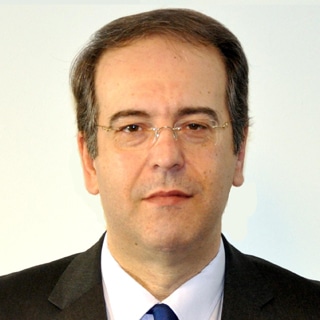
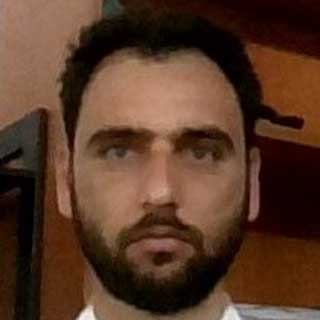
Kristis Alexandrou is a Researcher at the Science and Technology in Archaeology and Culture Research Center (STARC) of The Cyprus Institute. He holds a Master’s degree in Architecture (MA) and a Ph.D. in Architectural Engineering from the University of Cyprus, focusing on hybrid bending-active structural systems. His research emphasizes Structural Design, Computational Methods, and BIM applications in heritage conservation. He contributes to projects like ENI-CBC-MED BEEP, RIF-UrbanPeriscope, and Horizon Infra, advancing BIM interoperability for cultural heritage data management. His professional experience includes architectural design and heritage retrofitting in Cyprus. At STARC’s Virtual Environments Lab (VElab), he develops BIM-based workflows to address data interoperability challenges in arts and humanities. Key projects include 'BIM to BPS interoperability' leadership in the BEEP Project and semantic data integration for Mediterranean heritage sites. His work bridges computational innovation with sustainable heritage preservation.
Dr. Iosif Kapellakis is a Lecturer in Environmental Fluid Mechanics at Neapolis University Pafos' Department of Civil Engineering. He holds multiple engineering degrees and a PhD in Wastewater Management. His research focuses on water resources management, wastewater treatment methods, and environmental impacts of agro-industrial waste. Over 20 years, he has contributed to EU and international projects, publishing extensively in peer-reviewed journals. BSc Civil Engineering BSc(Hons) Environmental Civil Engineering BEng Structural Engineering MSc Energy & Environmental Management MSc Structural Engineering PhD in Wastewater Management His work spans olive mill wastewater management, soil carbon sequestration, and sustainable building retrofits. He also runs a technical firm designing structures, performing energy audits, and managing real estate projects. Recent research highlights include circular economy applications and historical analyses of olive oil production's water dependency. Scientific contributions include over 13 publications since 2002, addressing topics like constructed wetlands, solidification processes, and regional wastewater management strategies. His applied research bridges environmental engineering with practical solutions for agriculture and urban sustainability.
Prof. Mahmood Hosseini is a Faculty Member in the Department of Civil Engineering at Eastern Mediterranean University (EMU). His research focuses on structural engineering, earthquake resilience, seismic retrofitting, and sustainable materials. He holds a PhD from Islamic Azad University and an MS from the University of Tehran. He has supervised numerous theses, including ongoing PhD work on building encasement techniques and master’s projects on topics like seismic behavior of RC buildings and sustainable construction materials. His research interests include advanced damper systems, structural dynamics, and disaster-resilient infrastructure. Notable contributions include studies on multi-stage yielding dampers, steel tube-based energy dissipation systems, and innovative structural systems for low-rise buildings. He has also explored the use of lightweight materials like hair-reinforced clay for sustainable construction. Prof. Hosseini’s work spans experimental, numerical, and analytical assessments, addressing challenges in both theoretical and applied aspects of civil engineering. His recent publications highlight advancements in seismic isolation strategies, progressive collapse analysis of tall buildings, and machine learning applications for building transparency requirements.
Marios Kyriakides is an Assistant Professor at the University of Nicosia , affiliated with the School of Sciences and Engineering and the Department of Engineering . His work bridges structural engineering, sustainable materials, and seismic resilience. Education: PhD from Stanford (2011), MSc in Structural Engineering, and a five-year degree with honors from NTUA (2004). Research focuses on seismic retrofit techniques , innovative materials (HPFRC, ECC, FRP), nonlinear finite element analysis , and sustainable structural systems . Recent projects examine non-stabilized compressed earth blocks (CEB) for climate resilience and seismic performance of tiny houses. 2023 publications highlight advancements in CEB durability and offshore safety protocols. His work aligns with UN Sustainable Development Goals (SDGs) in sustainable infrastructure. Scientific Awards : Fire-Bearing of Prometheus medal (NTUA) Stanford fellowship TU Delft visiting fellowship As Technical Manager of the EU FP7 SmartEN Marie-Curie ITN, he led multi-institutional collaborations. Current projects involve offshore safety regimes for Cyprus' oil and gas sector.
Assoc. Prof. Dr. Mehmet Cemal Genesh is a faculty member in the Department of Civil Engineering at Eastern Mediterranean University (EMU), Cyprus. His academic focus includes structural engineering, seismic performance evaluation, and energy dissipation systems. He holds a PhD in Civil Engineering from Çukurova University (2001), an MS (1996), and a BS from Gaziantep University (1994). His research emphasizes seismic retrofitting of buildings, base isolation systems, and blast-resistant design. He has supervised numerous Master’s and PhD theses, including ongoing studies on mixed frame structures and soil-structure interaction. His work addresses critical challenges in earthquake-resistant construction and innovative materials like rubber waste composites for retrofitting. Prof. Genesh is actively involved in academic administration, serving as a thesis committee member, associate editor, and session chair. His contributions include advancing methodologies for structural assessment and promoting sustainable engineering practices. Contact him via cemal.genes@emu.edu.tr or visit his website for further details.
Assoc. Prof. Dr. Murat Ozdenefe is an Associate Professor in the Department of Mechanical Engineering at Eastern Mediterranean University (EMU), North Cyprus. He holds a PhD from The University of Manchester (2013), an MSc from EMU (2008), and a BSc from Çukurova University (2006). His research focuses on building heat transfer, phase change materials, energy auditing, and passive building systems. He has served as Chair of the EMU Mechanical Engineering Department since 2022 and previously as Vice Chair (2020–2022). He teaches courses in solar energy, thermodynamics, and HVAC systems. Education: PhD, Mechanical Engineering, University of Manchester (2013) MSc, Mechanical Engineering, Eastern Mediterranean University (2008) BSc, Mechanical Engineering, Çukurova University (2006) Research Interests: Dr. Ozdenefe’s work emphasizes sustainable building technologies, including thermal performance simulation, phase change materials, and energy-efficient retrofitting. He has published extensively on Trombe walls, solar air heaters, and energy auditing methodologies. His research integrates simulation tools like EnergyPlus with experimental validation to improve building energy efficiency. Publications Trends: Recent work includes optimizing solar air heater designs, calibrating energy models for residential buildings, and evaluating Trombe wall viability. His studies often address Cyprus-specific climate challenges and practical implementation of passive systems. Awards & Grants: No awards explicitly listed, though his roles in academic committees and professional organizations indicate recognition. He has led projects on energy efficiency and thermal performance funded by institutional grants. Advising & Committees: Supervised 8 MSc theses and 1 PhD thesis on topics like hybrid photovoltaic systems and geothermal integration. Managed ABET accreditation and summer practice programs at EMU. Labs & Teams: Active in the Energy Research Centre at EMU, focusing on building simulation and renewable energy integration.
Dr. Antonia Lemonari – Sophocleous is an Assistant Professor in the Department of Architecture at the University of Cyprus, affiliated with the School of Humanities and Social Sciences. She holds a Civil Engineering degree from the National Technical University of Athens and a Ph.D. in 'Adaptable Dual Control Systems' from the National University. Her professional qualifications include memberships in CSTC, CyACE, and CCEAA. Dr. Sophocleous has been actively involved in research since 1994, focusing on structural analysis, earthquake-resistant design, and adaptable systems. She coordinates master's programs and integrates research-based teaching methods with technology tools. Her research interests span structural engineering, seismic design, parametric analysis, and architectural adaptability. Notable contributions include studies on cable bracing systems, dual control frameworks, and kinetic structures. She has presented at over 15 international conferences and published in refereed journals across Europe and Asia. Her work bridges academic research with professional practice as a structural consultant. Dr. Sophocleous' publications emphasize earthquake-resistant innovations, such as damper systems in MR frames and adaptive dual control mechanisms. Her recent work (2022–2024) explores cutting-edge applications like the Sydney Opera House case study and salt lake ecosystem management. She advocates for urban sustainability through structural systems integration and participatory design approaches. Her professional service includes roles as a consultant for organizations and a coordinator for academic programs. While no specific grants or labs are detailed, her contributions highlight interdisciplinary collaboration between architecture, engineering, and urban planning.
Dr. Marios Mavros serves as an Assistant Professor in the Department of Civil and Environmental Engineering at the University of Cyprus since January 2020. Prior to academia, he gained industry experience as a design engineer at Simpson Gumpertz & Heger Inc., contributing to analysis, design, and failure investigations of concrete and steel structures. His academic credentials include a Diploma in Civil Engineering from the National Technical University of Athens (NTUA), followed by MSc and PhD in Structural Engineering from the University of California, San Diego, supported by the Englekirk Fellowship and A.G. Leventis Foundation. Dr. Mavros' research centers on sustainable and resilient structural systems with emphasis on earthquake engineering. Key focus areas include: Advanced Finite Element Modeling for simulating complex structural behavior Seismic response improvement through innovative design strategies Reinforced concrete/masonry structures with novel strengthening techniques Material aging effects on structural performance Heritage structure restoration using 3D printing technology His publication trend reveals deep specialization in BTM-shell methodology for core wall buildings and blind prediction competitions, with recent work (2022-2025) increasingly integrating 3D printing solutions for historic masonry. The UCLouvain Blind Prediction Competition victory (2022) demonstrates exceptional modeling accuracy. Award highlights include: Englekirk Fellowship during postgraduate studies A.G. Leventis Foundation Fellowship First place in both categories of the UCLouvain Blind Prediction Competition (2022) Dr. Mavros actively mentors researchers through competition teams and collaborative projects. His professional qualifications include California Professional Civil Engineer (PE) certification and memberships in the Cyprus Society of Civil Engineers and Scientific and Technical Chamber of Cyprus. Current work focuses on computational modeling advancements and 3D-printed reinforcement techniques for heritage structures.
Nicolas Hadjipantelis serves as an Assistant Professor in Structural Engineering at the Department of Civil and Environmental Engineering, University of Cyprus, where he conducts research in steel structures and teaches courses on steel structures and structural stability at undergraduate and postgraduate levels. He founded and leads the Metal Structures Laboratory at UCY, which houses an advanced Wire Arc Additive Manufacturing (WAAM) system for producing complex metal structures. Dr. Hadjipantelis holds a PhD in Steel Structures from Imperial College London, where he was awarded a full President's Scholarship. His undergraduate studies at the University of Bristol yielded an MEng in Civil Engineering with Study Abroad (first class honors), including a research year at UC Berkeley. Prior to joining UCY in August 2020, he worked as a Research Fellow at Imperial College London in collaboration with the Alan Turing Institute. His research focuses on cutting-edge metal fabrication technologies, particularly WAAM for structural applications, alongside traditional steel structure domains including cold-formed steel, prestressed systems, and structural stability. His laboratory has produced over one ton of WAAM test specimens for material, member, and system-level testing. His methodology combines experimental testing across multiple scales with advanced finite element simulations (GMNIA) and energy-based analytical approaches. Dr. Hadjipantelis's publication record demonstrates consistent output in top structural engineering journals including Journal of Structural Engineering (ASCE), Engineering Structures, Thin-Walled Structures, and Journal of Constructional Steel Research. His research trajectory shows evolving focus from fundamental studies on prestressed cold-formed steel to pioneering work on WAAM technology development, with recent publications addressing environmental impacts, polar temperature performance, and ductile fracture mechanisms of additively manufactured steel. Imperial College President's Scholarship (PhD funding) Prize-winning conference presentation (2018 Young Researchers' Conference of the Institution of Structural Engineers) As founder of UCY's Metal Structures Laboratory, Dr. Hadjipantelis has established a significant research infrastructure for WAAM technology in structural engineering. His professional affiliations include Associate Membership in the American Society of Civil Engineers (ASCE), Graduate Membership in the Institution of Structural Engineers (IStructE), and full membership in the Scientific and Technical Chamber of Cyprus (ETEK) and the Society of Civil Engineers of Cyprus (SPOLMIK). His work bridges computational modeling, experimental validation, and practical design code development for next-generation steel structures.
Dr. Salomi Papamichael is a Lecturer in Structural Mechanics at the Department of Civil Engineering, Neapolis University Pafos. She holds a Bachelor’s in Civil and Environmental Engineering (University of Cyprus, 2013) and a Master’s in Petroleum Engineering (2014). A recipient of the 2015 scholarship from the Stiftung zur Förderung in Germany, she pursued doctoral research at the Technical University of Kaiserslautern, completing her PhD in 2019. Her research focuses on soil-tool interaction, terramechanics, extraterrestrial soil mechanics, and finite element analysis. Dr. Papamichael contributed to the ROBEX German National Project on extraterrestrial soils and collaborated with Fraunhofer ITWM. Her work includes seminal studies on soil testing techniques and retrofitting strategies. Notably, her 2018–2019 Journal Geotechnik paper was awarded as the top downloaded by Wiley. She has published extensively in peer-reviewed journals and conference proceedings. Her career includes leadership as president of the Cyprus Society of Petroleum Engineers’ student chapter (2014–2015). Awards include the Top Downloaded Paper Award and scholarships from TU Kaiserslautern and the Rheinland-Pfalz Foundation. Current research emphasizes planetary soil mechanics and structural resilience.
Prof. Dr. Özgür Eren is a Professor in the Department of Civil Engineering at the Faculty of Engineering, Eastern Mediterranean University. His research focuses on sustainable construction materials, structural engineering, and the integration of recycled materials into concrete technology. He has organized prominent events like the 15th International Congress on Advances in Civil Engineering (ACE2023) and authored influential papers on seismic retrofitting, recycled aggregates, and fiber-reinforced composites. His work emphasizes environmental sustainability through the use of waste materials and advanced concrete formulations. He teaches courses such as CIVL284 (Materials of Construction) and has contributed to infrastructure projects in Cyprus, including the Tevfik Tarımcıoğlu Hydraulics Lab. Prof. Eren holds editorial roles in academic journals and actively participates in international conferences, advocating for innovation in civil engineering practices.
Asst. Prof. Dr. Umut Yıldırım is an Assistant Professor in the Department of Civil Engineering at Eastern Mediterranean University. His research focuses on structural engineering, earthquake engineering, and the application of machine learning in civil infrastructure. He teaches courses such as CIVL343, INSA473, and CE 477, and has contributed to advancements in base-isolation systems, rubberized concrete properties, and structural health monitoring. He serves as an Associate Editor and Reviewer for academic journals, and has published extensively in high-impact journals and conferences. His work spans experimental testing (e.g., Arduino-based shake tables) and computational modeling (e.g., physics-informed neural networks). Education details are not explicitly stated in the provided text. His research interests include optimizing seismic isolation systems through machine learning, enhancing material performance (e.g., rubberized concrete), and improving infrastructure resilience against earthquakes. Recent articles highlight innovative methods for earthquake record selection, nonlinear response analysis, and cost-effective testing frameworks. Awards and grants are not mentioned in the provided data. He has supervised Master’s and PhD theses, contributing to next-generation structural engineering solutions. His lab work involves experimental setups for bridge dynamics and material characterization.
Dr. Loizos Papaloizou is an Assistant Professor at the Department of Engineering, University of Nicosia, affiliated with the School of Sciences and Engineering. He is a member of the University Senate and serves as a full-time academic staff member. His expertise lies in earthquake engineering, computer-aided engineering, energy-efficient building design, and innovative civil engineering technologies. Dr. Papaloizou holds a BSc in Civil Engineering from Aristotle University of Thessaloniki (2003), an MSc in Earthquake Resistant Design (2004), and a PhD from the University of Cyprus (2009). His doctoral research focused on computer-aided engineering applications. Prior to his current role, he worked as a Visiting Lecturer and Special Scientist at the Cyprus University of Technology, teaching multiple courses, and as a postdoctoral researcher at the University of Cyprus. His research emphasizes the seismic response of ancient structures, earthquake-induced pounding in modern buildings, and material science applications in drilling fluids. He has contributed to over 40 peer-reviewed publications since 2006, focusing on structural dynamics, geomechanics, and computational modeling. Dr. Papaloizou’s work bridges historical engineering studies and modern challenges in energy efficiency and sustainable construction. His research often involves interdisciplinary collaborations, combining experimental testing, numerical simulations, and material science innovations.
Dr. John Bellos is an Associate Professor of Structural Design and Construction Technology at Neapolis University Pafos (since 2018), serving as Head of the Department of Civil Engineering and Coordinator of the BSc in Civil Engineering Programme. He holds a Ph.D. in Structural Dynamics from SUNY Buffalo (1989), an MSc in Mechanical Engineering from SUNY Buffalo (1986), and a BSc in Naval Architecture & Mechanical Engineering from National Technical University of Athens (1984). His expertise spans structural design of reinforced concrete buildings, seismic analysis, progressive collapse resistance, and non-conservative dynamic systems. His research integrates machine learning for structural behavior analysis and aesthetic-form integration. He previously served as Director of Information and Learning Services (2009–2013), contributing to the university's technological infrastructure. Key research areas include reinforced concrete mechanics, seismic retrofitting, steel frame dynamics, and soil-structure interaction. He has published extensively on structural safety, vibration control, and computational methods in construction engineering. His work bridges theoretical analysis with practical applications in resilient infrastructure design. Bellos has advised on structural design projects for industrial and civil infrastructure, contributing to Eurocode compliance and advanced simulation techniques. His collaborations include the PROINDUSTRY project on seismic isolators and the Hellenic Navy's vibration studies on offshore vessels.
Dr. Anthos I. Ioannou is a Lecturer in Reinforced Concrete Structures at the Department of Civil Engineering, Neapolis University Pafos since September 2022. He holds a BSc from Aristotle University of Thessaloniki (2012), an MSc from the University of Cyprus (2014), and a PhD in Structural Engineering from the University of Cyprus (2022), focusing on seismic response and retrofitting of reinforced concrete structures using Engineered Cementitious Composites (ECC). His research interests include artificial intelligence, materials modeling, finite elements, and earthquake engineering. He has co-authored two refereed academic papers in high-impact journals and presented findings at international conferences. Prior to academia, he worked as a consultant for structural engineering firms, contributing to design, supervision, and retrofit projects of steel and reinforced concrete structures.