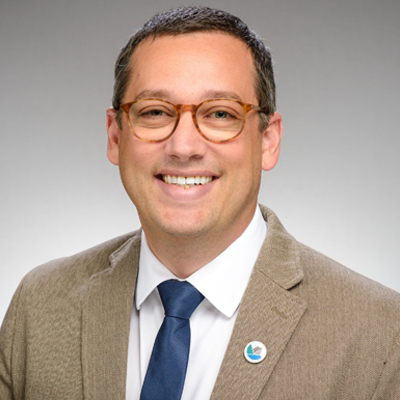
R. Daniel Kelemen is McCourt Chair Professor at Georgetown University's McCourt School of Public Policy, with courtesy appointment at Georgetown Law. His research examines EU law transformation, comparative federalism, and democratic backsliding mechanisms. He received the European Union Studies Association Best Book Award for Eurolegalism: The Transformation of Law and Regulation in the European Union . Publications analyze constitutional crises, EU enforcement deficits, and autocracy dynamics. Recent works investigate funding conditionality for Hungary, judicial guardianship erosion, and geopolitical impacts of Russia's invasion of Ukraine. Article themes show consistent focus on institutional resilience and legal enforcement challenges. He serves on the Council of Foreign Relations and chairs EU policy consultations for risk analysis firms. Previously chaired Rutgers Political Science Department and directed its Center for European Studies.
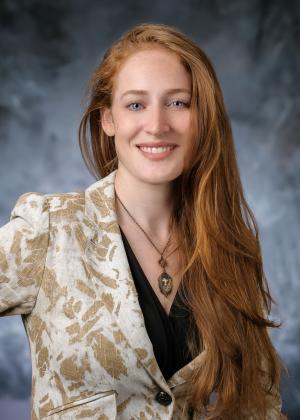
Dr. Andrea S. Carlini is an Assistant Professor of Materials in the Department of Chemistry & Biochemistry at the University of California, Santa Barbara (UCSB). Her research focuses on structurally dynamic biomaterials and devices, aiming to bridge biochemical signals with soft materials for smart biomedical applications. She holds a PhD from UC San Diego and completed a postdoc at Northwestern University’s Querrey Simpson Institute for Bioelectronics. B.S. in Chemistry & Biological Sciences (Virginia Tech, 2012) M.S. in Chemistry & Biochemistry (UC San Diego, 2014) Ph.D. in Chemistry & Biochemistry (UC San Diego, 2018) Her research is organized into three core areas: (1) stimuli-responsive materials for disease monitoring, (2) 4D shape-changing peptides/polymers, and (3) soft wearable devices for quantitative health feedback. Recent work includes thermal sensors for vascular access and enzyme-responsive biomaterials for tissue engineering. Published articles span bio-electrochemical systems, wearable sensors, and smart hydrogels. Her NSF GRFP Fellowship supported early work on myocardial tissue engineering. The Carlini Group collaborates broadly across UCSB’s interdisciplinary environment. Labs/Teams: Carlini Group (UCSB) Focus: Bioelectronics, biomedical devices, and dynamic materials
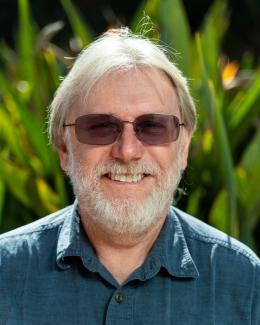
Dar Roberts is a Professor in the Department of Geography at the University of California, Santa Barbara, where he directs the Visualization & Image Processing for Environmental Research (VIPER) Lab. His research focuses on advanced remote sensing applications including: Imaging spectrometry for ecosystem analysis Wildfire fuel mapping and fire emissions modeling Drought impact assessment on vegetation Land use/land cover change detection Integration of remote sensing with climate modeling Roberts leads the Southern California Wildfire Hazard Center and has pioneered techniques for mapping wildfire fuels using remote sensing technologies. His work combines field measurements with satellite, airborne, and drone-based sensors to monitor environmental changes.
Dr. Nicola Allison is a Reader at the University of St Andrews, School of Earth & Environmental Sciences, where she leads research on biomineralisation. Her work focuses on how marine organisms form calcium carbonate structures, the impact of environmental changes on these processes, and the role of these biominerals in reconstructing past climates. Her research integrates experimental studies using controlled aquaria systems to culture corals and other organisms, alongside geochemical analyses of fossil carbonates. Key areas include the effects of ocean acidification, rising temperatures, and organic matrices on biomineral formation. She collaborates internationally, including through the International Ocean Discovery Program (IODP). Publications highlight advancements in understanding coral skeletal chemistry, aragonite precipitation mechanisms, and the development of climate proxies. She holds grants from NERC, MASTS, and the Leverhulme Trust, supporting projects on coral calcification, biomolecule influences, and climate change impacts. Dr. Allison actively engages in public outreach through workshops and conferences, contributing to climate science communication and policy-relevant research on marine ecosystems.
Dr. Rishita Nandagiri is a feminist researcher and academic currently serving as a Lecturer (Assistant Professor) in the Department of Global Health & Social Medicine at King's College London. She previously held research and teaching positions at the London School of Economics (LSE), including an ESRC Postdoctoral Fellowship and an LSE Fellow in Health and International Development. Her work is deeply rooted in reproductive justice, gender, and global health, with a focus on the Global South. PhD in Social Policy, London School of Economics (2019) ESRC Postdoctoral Fellow, LSE Department of Methodology (2020-2021) LSE Fellow in Health and International Development (2019-2020) Research Assistant, LSE Department of Media and Communications (2018-2019) Dr. Nandagiri’s research centers on reproductive (in)justices, interrogating how power and politics shape abortion access, self-managed abortion, care trajectories, and reproductive governance. Her work is interdisciplinary, drawing on feminist theory, qualitative and participatory methods, policy analysis, and co-production with communities and organizations. She has extended her research to examine the impact of the COVID-19 pandemic on abortion and the role of lay health providers in care delivery. Her methodological interests include multi-method designs that integrate interviews, archival research, and community engagement. The 15 most recent articles reflect a strong trajectory in reproductive justice, with increasing engagement with feminist economics, carceral systems, and global policy. Themes include structural violence, legal pluralism, care ethics, and transnational advocacy. Her publications span high-impact journals in public health, social policy, gender studies, and media, indicating a broad interdisciplinary reach. Scientific awards and recognitions include: ESRC Postdoctoral Fellowship (2020-2021) LSE Class Teacher Award (2020) LSE Research Investment and Infrastructure Funds (2020) Best PhD Poster Prize, British Society for Population Studies (2018) LSE PhD Studentship (2015-2019) Dr. Nandagiri has advised on and contributed to numerous research grants, particularly those related to reproductive health, digital privacy, and pandemic response. She has collaborated with major institutions such as UNFPA, the Women’s Global Network for Reproductive Rights, and FRIDA. She co-founded the Abortion Book Club and serves on editorial and advisory boards, including BMJ Sexual & Reproductive Health and the International Union for the Scientific Study of Population’s Abortion Research panel. She also co-convenes the Development Studies Association’s Women and Development Study Group, demonstrating strong leadership in academic and advocacy networks. She is actively involved in public engagement, contributing to LSE blogs, media outlets like Women's Health Magazine UK, and platforms such as the Oxford Human Rights Hub and Harvard’s Bill of Health. Her lab and team affiliations are not explicitly named, but her collaborative projects suggest strong ties to interdisciplinary research groups focused on global health, reproductive justice, and digital rights.
Dr. Andrew Best is an Assistant Professor of Biology at Massachusetts College of Liberal Arts (MCLA), specializing in biological anthropology with a focus on human physiological evolution. His primary research examines the role of sweating in human evolution, contemporary human sweat characteristics, and the metabolic limits of endurance performance. He holds a Ph.D. from the University of Massachusetts (2021), an M.A. from the University of Massachusetts (2016), an M.A. from Quinnipiac University (2006), and a B.A. from Saint Michael’s College (2004). Dr. Best teaches courses including BIOL 101: Biology Seminar for Majors , BIOL 342/343: Anatomy and Physiology , BIOL 440: Exercise Physiology , and BIOL 484: Biomechanics . His research integrates evolutionary biology, thermal physiology, and exercise science to explore how human metabolic and thermoregulatory systems have evolved to support extreme endurance activities. Key projects include studying sweat gland density variation across populations and the physiological constraints of ultra-endurance events. His publications span topics such as ultramarathon energy expenditure, strength training’s impact on endurance, and primate sweat gland evolution. He actively participates in academic conferences and collaborates with researchers globally. No scientific awards are explicitly noted in the provided materials. Dr. Best’s work reflects interdisciplinary approaches to understanding human biological adaptation, with ongoing projects likely extending into nutritional strategies for endurance athletes and comparative analyses of primate thermoregulation systems.
Daniel Webster is Bloomberg Professor of American Health in the Department of Health Policy and Management at the Johns Hopkins Bloomberg School of Public Health. He is also affiliated with the Urban Health Institute, the Johns Hopkins Center for Gun Violence Solutions, the Johns Hopkins Center for Injury Research and Policy, and the Center for Mental Health and Addiction Policy Research. Dr. Webster is one of the nation’s leading experts on firearm policy and the prevention of gun violence. His research interests include violence and violence prevention, firearm injuries, gun policy, policy evaluation, domestic violence, youth violence, and opioid abuse. He has led extensive research on the effects of firearm and alcohol policies, policing strategies, street outreach, conflict mediation, and school-based curricula. His recent publications focus on public health approaches to gun violence, the impact of purchaser licensing and background check laws, firearm injury hospitalizations, police shootings, and the deregulation of civilian gun carrying. These works reveal a strong trend in evaluating state-level firearm policies using longitudinal data and mixed-methods designs to inform public health and criminal justice policy. Inaugural Bloomberg Professor of American Health, 2018 Johns Hopkins University Distinguished Alumni Award, 2017 Baltimore City Health Equity Leadership Award, 2016 David Rall Award for Science-Based Advocacy, American Public Health Association, 2015 Finalist, Marylander of the Year, The Baltimore Sun, 2013 Delta Omega Honorary Society in Public Health – Alpha Chapter, Faculty induction, 2005 Educator of the Year, Maryland Network Against Domestic Violence, 2004 Dr. Webster has led numerous federally and foundation-funded research projects, including evaluations of city-level gun violence prevention initiatives, the Lethality Assessment Program, California’s domestic violence firearm intervention, and Baltimore policing strategies. He has advised on national and state-level policy and is a sought-after expert in public health advocacy. He teaches Understanding and Preventing Violence and Crafting Effective Solutions to Gun Violence: A Problem-Solving Seminar. He is a Distinguished Scholar at the Johns Hopkins Center for Gun Violence Solutions, where he continues to lead research and policy engagement efforts. His work is supported by interdisciplinary teams and collaborations across public health, criminology, law, and social work.
William W. Burke-White is Professor of Law at the University of Pennsylvania Carey Law School , where he is a leading scholar at the intersection of international law and international relations. He also serves as Non-Resident Senior Fellow at the Brookings Institution and Senior Advisor to White & Case LLP , bridging academic research with policy and legal practice. He previously held leadership roles as Inaugural Director of Perry World House (2014–2019) and Deputy Dean of Penn Law (2011–2014). Harvard University – A.B., J.D. University of Cambridge – Ph.D. in International Relations (Fulbright Scholar) Burke-White’s research focuses on global governance, multilateral institutions, U.S. foreign policy, human rights, and international economic law . His work examines how shifting power dynamics affect international legal structures and how sub-state actors influence global norms. He has significant regional expertise in Russia, Eastern Europe, and Latin America . His current book project explores the new geography of global governance . His recent scholarly output reveals a consistent trend toward analyzing institutional reform, legal pluralism, and the interplay between domestic and international law . He frequently publishes in top journals on topics such as investor-state arbitration, complementarity in international criminal law, and the legitimacy of global legal regimes. His work often combines doctrinal legal analysis with political science theory. A. Leo Levin Award (2008) Robert A. Gorman Award for Excellence in Teaching (2007) Burke-White has advised governments, law firms, and investment funds on sanctions, sovereign debt, and international litigation. He has served as an expert witness in international arbitrations and currently advises sovereign states on cases before the International Court of Justice . He is also active in media commentary, contributing to The Hill, CNN, The Atlantic , and others. He has taught as a visiting professor at institutions including Harvard Law, Hebrew University, and Moscow State Institute of International Relations .
Trudo Lemmens is Professor and Scholl Chair in Health Law and Policy at the University of Toronto Faculty of Law. He holds cross-appointments at the Dalla Lana School of Public Health, the Temerty Faculty of Medicine, and the Joint Centre for Bioethics, reflecting his interdisciplinary expertise in health law, ethics, and policy. He has also held visiting positions at KU Leuven, Pontificia Universidad Javeriana, University of Otago, and Oxford, and was a member of the Institute for Advanced Study in Princeton. His research focuses on the legal, ethical, and governance challenges in healthcare and biomedical research. Key areas include medical assistance in dying, clinical trial transparency, pharmaceutical regulation, genetic data privacy, and conflict of interest. He has extensively analyzed how legal frameworks interact with ethical norms in contexts such as assisted human reproduction, end-of-life decisions, and public health emergencies. His work emphasizes human rights, equity, and the protection of vulnerable populations. His recent publications reveal a strong focus on the ethical and legal dimensions of medical assistance in dying, particularly regarding mental illness and advance requests. He has also published on vaccine mandates, pandemic triage ethics, and transparency in pharmaceutical data. His scholarship combines doctrinal legal analysis with empirical and policy insights, often addressing urgent public health debates. Fellowship, Royal Flemish Academy of Belgium for Science and the Arts (2006-2007) Membership, School of Social Science, Institute for Advanced Study, Princeton (2003-2004) Law Commission of Canada, Legal Dimensions Initiative Award (with Duff R. Waring) (2003) Graduate Student Paper Award, Association for Politics and the Life Sciences (1996) Doctoral Fellowship, Social Sciences and Humanities Research Council of Canada (1995-1997) Doctoral Fellowship, Fonds pour la formation de chercheurs et l'aide à la recherche du Québec (deferred) (1995-1998) Student Paper Award, Society for Health and Human Values (1995) Chief Justice R.A.E. Greenshields Memorial Scholarship for Graduate Studies in Law (1994) Trudo Lemmens has advised numerous national and international organizations, including the Pan American Health Organization (as a member of its Advisory Committee on Health Research), the World Health Organization, and the Council of Canadian Academies. He has served on expert panels examining access to health data and medical assistance in dying. His policy submissions to Canadian parliamentary committees have shaped national debates on end-of-life legislation. He has also contributed to inquiries into research ethics and institutional governance, including an independent inquiry into the University of Ottawa and its affiliated hospitals. He is actively engaged in public discourse, publishing op-eds in major media outlets and maintaining a presence on social media. His work bridges academia, policy, and public engagement, advocating for transparency, accountability, and ethical integrity in health systems and research.
Professor Cameron Tonkinwise is a leading international expert in Design Studies and Transition Design, currently serving as Research Director at the Design Innovation Research Centre at the University of Technology Sydney (UTS). With a career spanning institutions like Carnegie Mellon University, Parsons The New School for Design, and UNSW Australia, he has significantly influenced global design education and practice through his advocacy for systemic sustainability and social responsibility. PhD in Philosophy, Art History and Theory from the University of Sydney (1999) His research focuses on the role of design in enabling structural transformations for sustainable futures, blending Transition Design, ethical considerations, and speculative practices. Recent work examines systemic change through everyday habits, ontological design, and service systems in sharing economies. Key trends in his publications include: Transition Design frameworks for climate futures and circularity Critical analysis of sustainable practices and design ethics Systems theory applications in sociotechnical change Projects currently led by Cameron involve: Transitioning Australian banks toward inclusive financial services Designing equitable distributed energy systems Developing cool public spaces to combat urban heat
Tiago Loncan is a Senior Lecturer in Finance at King's Business School, King's College London, where he is affiliated with the Department of Accounting & Financial Management. He holds a PhD in Finance from the University of Strathclyde, an MSc in Economics from the University of Bologna, and a BSc in Economics from the Federal University of Rio Grande do Sul (Brazil), with additional leadership training from Georgetown University. PhD in Finance, University of Strathclyde (UK) MSc in Economics, University of Bologna (Italy) BSc in Economics, Federal University of Rio Grande do Sul (Brazil) Global Competitiveness Leadership, Georgetown University (USA) Tiago's research centers on the intersection of corporate finance and international economics, with a strong emphasis on emerging markets. His work explores corporate investment and financing decisions, foreign direct investment (FDI), cross-border capital flows, political risk, corruption, expropriation, ownership structure, and the cost of equity capital. He investigates how institutional environments and political uncertainty shape firm behavior, particularly in developing economies. His recent publications analyze topics such as the role of cash holdings in mitigating expropriation risk, the impact of homicides on corporate investment in Brazil, and the effects of political uncertainty on stock returns. His research spans high-impact journals including Journal of Corporate Finance , Journal of Financial and Quantitative Analysis , European Financial Management , and Pacific-Basin Finance Journal . A recurring theme is the interaction between macro-level institutional risks and micro-level corporate financial decisions. Tiago has collaborated with researchers across institutions and has contributed to discussions on research integrity, as seen in his co-authored piece on responsible science and pre-registration in finance research. While no specific scientific awards are listed, his work has gained recognition through citations and inclusion in academic databases. He previously served as a Lecturer in Finance at the University of Strathclyde and has industry experience in the corporate sector in Brazil. He advises on corporate risk, investment, and governance, particularly in politically volatile environments. Though no formal advisees are listed, his research output and academic engagement suggest an active supervisory and mentoring role. Tiago is based at the Strand Campus (Bush House) of King's College London. His work contributes to UN Sustainable Development Goals related to decent work, economic growth, and strong institutions, reflecting the real-world relevance of his research in finance and development.
Lisa Heldke is a Professor in the Department of Philosophy at Gustavus Adolphus College and an affiliated faculty member in Gender, Women and Sexuality Studies. She has been a longstanding contributor to the academic community, teaching courses such as Modern Philosophy, American Philosophy, Feminist Philosophy, Critical Race Theory, and specialized seminars on food and eating. Her interdisciplinary work bridges philosophy with social justice, education, and culinary ethics. B.A. in Music and Philosophy from Gustavus Adolphus College M.A. and Ph.D. in Philosophy from Northwestern University Her research centers on American Philosophy , Feminist Philosophy , Critical Race Theory , and most notably, the Philosophy of Food . She critically examines food adventuring, colonialist attitudes in cuisine, and the ethical dimensions of eating. Her work explores how food shapes identity, community, and moral responsibility. Her recent and forthcoming publications reveal a deepening inquiry into biological interdependence—particularly parasitism and mutualism—suggesting a novel ontological framework rooted in eating relationships. This innovative direction reflects her ability to connect everyday practices with profound philosophical questions. Lisa Heldke’s scholarly contributions include influential books such as Exotic Appetites: Ruminations of a Food Adventurer and Philosophers at Table: On Food and Being Human , as well as co-editing Oppression, Privilege and Resistance . She is also on the editorial board of The Encyclopedia of Food and Agriculture Ethics (Springer). While specific details about student advising are not listed, her long-standing teaching career and mentorship through seminars suggest active engagement with students. She has no listed scientific awards in the provided texts, but her sustained publication record and editorial roles indicate significant recognition in her field. She is deeply involved in experiential learning, combining her philosophical inquiries with hands-on activities like baking bread in a backyard mud oven and studying sustainable agriculture. Her current research promises to expand the boundaries of philosophical thought by integrating ecological and biological realities into metaphysical and ethical frameworks.
Nathan G. Swenson is a Professor in the Department of Biological Sciences at the University of Notre Dame and serves as the Gillen Director of the Environmental Research Center (UNDERC). He has held prior academic positions at the University of Maryland and Michigan State University, advancing from Assistant to full Professor. His research integrates genomics, ecology, and evolutionary biology to understand forest biodiversity and dynamics. Research Interests: Ecology and Environmental Biology Evolutionary Biology Genetics and Genomics Global Change Biology Forest Ecology Functional and Phylogenetic Ecology Tree Physiology and Demography His research focuses on leveraging intra- and interspecific variation in tree performance to predict forest biodiversity patterns. He employs integrative approaches from genomes to forest canopies and utilizes large-scale global datasets. Recent publications emphasize intraspecific trait variation, transcriptomic responses to drought, ecological forecasting, and functional group dynamics in tropical and temperate forests. Scientific Awards: Winner of 2017 British Ecological Society John Harper Prize (awarded to J. Zambrano; Swenson was senior author) Advising and Grants: Dr. Swenson has mentored numerous researchers, including M.N. Umana, S.J. Worthy, and J. Yang, who frequently co-author high-impact papers. His lab receives substantial research funding, evident from large collaborative projects and participation in global networks like ForestGEO and the TRY plant trait database. He has secured support for long-term ecological research, genomic studies, and international fieldwork. Labs and Teams: He leads the Swenson Lab, which conducts research on woody plant ecology in dynamic environments. The lab emphasizes community transcriptomics, functional trait analysis, and large-scale ecological modeling. It collaborates widely across institutions and is involved in major initiatives such as ForestGEO and NEON.
Carol Marquardt is a Professor at the Zicklin School of Business , Baruch College (CUNY), where she has taught since 1997. Her academic expertise focuses on corporate financial reporting strategy and its implications for stakeholders. PhD in Accounting, Cornell University MAcc in Accounting, University of Arizona BA in English, University of Wisconsin-Madison As a leading scholar in accounting, her research examines earnings management , non-GAAP reporting , and corporate governance issues. She has published extensively in top journals like Review of Accounting Studies and Management Science, with recent work on revenue-expense matching and performance measure choice. Her scholarly contributions have been recognized through multiple awards, including the American Accounting Association Best Paper Award (2007) and Baruch College Teaching Excellence Awards in both 2012 and 2022. She has advised numerous doctoral students and served on various university and professional committees.
Prof. Dr. Urs Fischbacher is a full-time Professor at the Department of Economics at the University of Konstanz, holding the Chair of Behavioral Economics. He is also affiliated with the Thurgau Institute of Economics in Switzerland. Research Focus: Behavioral Economics, Experimental Economics, Game Theory, Social Preferences, Public Goods, Trust and Cooperation, Decision-Making under Stress, and Neuroeconomics. Key Projects: Evaluation of educational interventions in Colombia, analysis of leadership selection in inequality perception, and studies on social pension targeting in Bangladesh. Academic Contributions: His recent articles focus on super-additive cooperation mechanisms, responsibility attribution in decision chains, stress-induced prosociality, and diversity policy impacts. Work spans interdisciplinary collaborations with psychologists and neuroscientists. Contact: Based at the University of Konstanz (Room F315) and Thurgau Institute of Economics. Office hours require appointment via email.