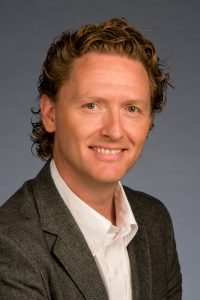
John Dalsgaard Sørensen is a Professor and Head of Research Group at the Department of the Built Environment, Aalborg University, within the Faculty of Engineering and Science. He leads the Risk, Resilience, Safety, and Sustainability of Systems Research Group and is affiliated with the Danish Centre for Risk and Safety Management. His research focuses on structural safety, wind turbine reliability, probabilistic design, and risk assessment of infrastructure systems. He has supervised 13 PhD students and contributed to over 600 publications. Key research areas include wind turbine structural integrity, fatigue analysis of offshore and onshore structures, probabilistic design standards (e.g., Eurocodes), and risk-based decision-making for infrastructure. He leads projects like Windscanner (remote sensing for wind measurements) and MANTIS (cyber-physical maintenance systems). Collaborations span academia and industry, addressing challenges in energy systems, civil infrastructure, and safety engineering. His work emphasizes practical applications of advanced modeling techniques, such as Bayesian networks and stochastic simulations, to enhance reliability and reduce operational costs. He is actively involved in standardization efforts for structural design and serves on boards like Energi- og MiljøData Fonden. Recent activities include presenting at international conferences and advising on media debates related to structural safety.
Gaetano Miraglia is a Fixed-term Assistant Professor in the Department of Structural, Building and Geotechnical Engineering (DISEG) at Politecnico di Torino, where he conducts research in structural health monitoring, seismic analysis, and computational modeling. He is a member of the Interdepartmental Center R3C – Responsible Risk Resilience Centre, contributing to interdisciplinary efforts in risk mitigation and infrastructure resilience. His work spans both theoretical and applied domains, with strong emphasis on heritage preservation and sustainable urban development. His research interests include Bayesian calibration of nonlinear models, hybrid simulation, peridynamics, masonry structures, and the integration of satellite interferometric (InSAR) data with in-situ measurements for structural monitoring. He applies advanced computational and machine learning techniques to improve the accuracy and reliability of structural assessments, particularly in historical and monumental buildings. His work supports UN Sustainable Development Goals 9, 11, and 13. His recent publications demonstrate a consistent focus on data fusion, digital twinning, domain adaptation, and real-time damage detection. He frequently collaborates with researchers such as Rosario Ceravolo and Erica Lenticchia, publishing in high-impact journals like Computer-Aided Civil and Infrastructure Engineering , Structures , and Scientific Reports , as well as at major conferences including EWSHM, SAHC, and EVACES. His research is applied in projects such as the monitoring of the Vicoforte Sanctuary and the development of the CAMELOT and HY-LEARN toolboxes. Research Projects: MONITORAGGIO VICOFORTE (2024–2026) – Member of Research Group CAMELOT – PoC Transition (2023–2024) – Member of Research Group HY-LEARN – Model Calibration via Hybrid Simulation and ML (2022–2024) – Scientific Manager (PNRR Mission 4) He teaches in various programs, including as a course collaborator in PhD, Master’s, and Bachelor’s level courses such as Earthquake Engineering , Structural Consolidation , and Seismic Risk of Cultural Heritage . He is also an inventor on national and international patents and software related to the CAMELOT toolbox, highlighting the translational impact of his research. He has no listed scientific awards or formal advisees in the provided text.
Dr. Terje Haukaas is a Professor of Structural & Earthquake Engineering at the University of British Columbia (UBC), Department of Civil Engineering, Faculty of Applied Science. He holds a PhD and Master's from UC Berkeley (2003, 1999) and a bachelor's from the Norwegian University of Science and Technology (1996). His research focuses on probabilistic modeling, structural reliability, and earthquake engineering, with contributions to software development (e.g., FERUM, OpenSees). He teaches courses like Structural Analysis, Nonlinear Analysis, and Reliability & Safety. Education: PhD in Civil Engineering, UC Berkeley, 2003 Master's in Civil Engineering, UC Berkeley, 1999 Bachelor's in Civil Engineering, NTNU, Trondheim, 1996 Engineering Degree (Stavanger University College, 1994) and Technician Degree (Stavanger Technical College, 1992) Research Interests: Probabilistic mechanics and reliability analysis Seismic vulnerability and risk assessment Software tools for finite element analysis (FERUM, OpenSees) Timber engineering and structural optimization Awards & Recognition: UBC Killam Teaching Prize (2016) President of CERRA (2015–2019) Keynote/Semi-plenary speaker at major conferences (ICASP12, COMPDYN 2017) Student Appreciation Awards (Top Professor rankings) Grants & Labs: Recipient of grants supporting seismic risk research Developed computational frameworks for structural analysis
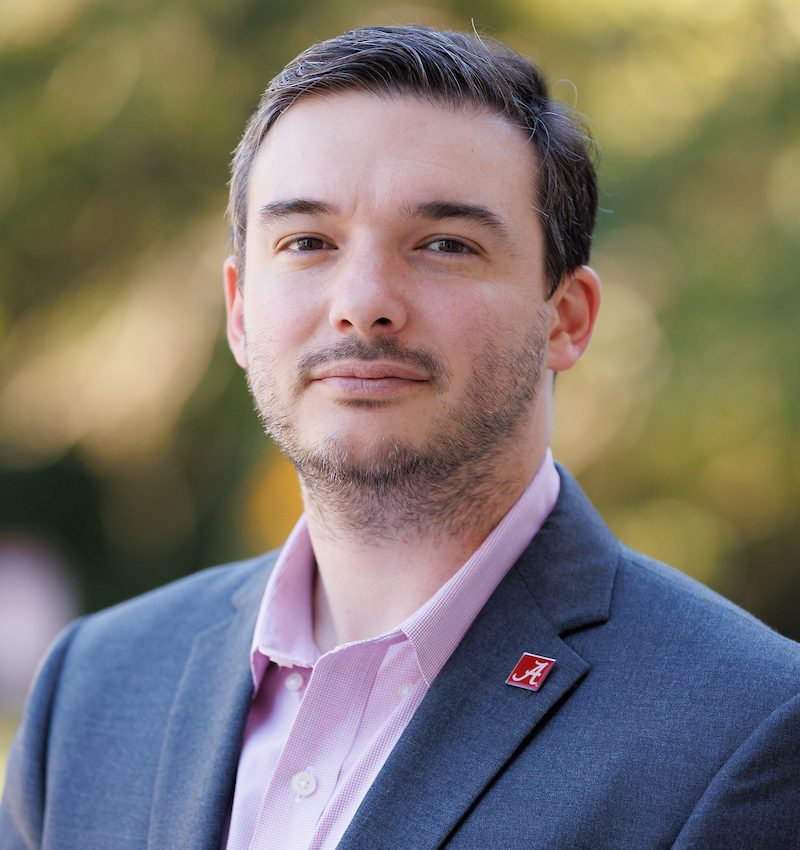
Dr. Patrick Shane Crawford serves as Assistant Professor in the Department of Civil, Construction and Environmental Engineering at the University of Alabama's College of Engineering. Affiliated with the Center for Sustainable Infrastructure and Alabama Water Institute, his research focuses on enhancing community resilience to tornadoes, floods, and hurricanes through interdisciplinary engineering approaches integrating social science and policy perspectives. His educational background includes: B.S. in Civil Engineering (2012, University of Alabama) M.S. in Civil Engineering (2014, University of Alabama) Ph.D. in Civil Engineering (2018, University of Alabama) Dr. Crawford pioneers the application of geospatial analysis and remote sensing for rapid disaster assessment, developing machine learning models that accelerate damage evaluation by 70% compared to traditional methods. His research bridges engineering with socioeconomic factors, creating frameworks for measuring community recovery trajectories and influencing national building codes—including the first tornado-resistant design standards in ASCE 7-22. Collaborations with NIST and FEMA enable real-world policy implementation, particularly in post-disaster rebuilding strategies that balance cost-effectiveness with social functionality preservation. Analysis of his 2022-2025 publications reveals consistent innovation in longitudinal disaster reconnaissance , with 60% of recent work focusing on tornado events using deep learning for damage classification. Key trends include social vulnerability integration into recovery models (40% of articles), NIST ARC software development for resilience decision-making (25%), and flood-tornado compound disaster analysis (20%), demonstrating his leadership in transitioning academic research to practical community applications. Active in federal partnerships, Dr. Crawford's 2025 feature Confident but Exposed: How Prepared Are U.S. Homeowners for Extreme Weather? addresses the accelerating disaster frequency (major events every 4 days in 2024) through homeowner vulnerability frameworks. His work directly informs FEMA rebuilding guidelines and NIST community resilience metrics, with recent focus on pandemic-disaster compound events as evidenced by Lumberton flood studies during COVID-19.
Roger Flage is a Professor of Risk Management at the University of Stavanger, affiliated with the Faculty of Science and Technology and the Department of Security, Economics and Planning. His research focuses on foundational and applied aspects of risk analysis, uncertainty quantification, and decision-making under uncertainty, with applications in critical infrastructure, environmental systems, and offshore energy. Roger Flage's research interests lie at the intersection of risk science, safety engineering, and decision theory. He investigates how uncertainty—especially epistemic uncertainty and assumptions—affects risk assessments, and advocates for more transparent and robust frameworks. His work spans theoretical advances, such as the treatment of 'black swan' events and the concept of 'real risk', as well as practical applications in offshore safety, power systems, and geohazards. He emphasizes the integration of data-driven methods, AI, and digital twins while critically assessing their limitations and associated security risks. His recent publications show a strong trend toward integrating dynamic, data-rich, and interdisciplinary approaches to risk analysis. Themes include the role of time in risk, AI applications, infrastructure interdependencies, and environmental risk in the oil and gas sector. He frequently publishes in top-tier journals like Risk Analysis , Reliability Engineering & System Safety , and Safety Science , often in collaboration with leading scholars such as Terje Aven and Seth Guikema. No scientific awards are mentioned in the provided text. Roger Flage has supervised or collaborated with several researchers, though no formal list of advisees is provided. His work is supported through academic collaborations and institutional affiliations rather than explicit grant mentions. He is actively involved in advancing risk science methodology, particularly in the treatment of assumptions and uncertainty, and contributes to both theoretical foundations and real-world applications in safety-critical domains. He is associated with research groups and collaborative networks at the University of Stavanger, particularly within the Department of Security, Economics and Planning. His work often involves interdisciplinary teams focusing on risk in complex engineered systems, including energy, transportation, and environmental systems.
Elizabeth Ooi is a Senior Lecturer of Finance at the UWA Business School, University of Western Australia. She holds a PhD from Monash University and has extensive experience in financial literacy and personal finance research, including consulting for the OECD. Her research focuses on superannuation governance, financial education, and corporate governance, with notable contributions to policy reports and peer-reviewed journals. She has secured over $140,000 in research grants and co-founded the UnderstandingSuper initiative to enhance financial literacy. Education: BA, BCom, PGradDipEc&Com (Monash University), PhD (Monash University). Research interests include financial literacy measurement, gender disparities in financial knowledge, superannuation fund governance, and socially responsible investing. Her work aligns with UN Sustainable Development Goals related to economic empowerment and financial inclusion. Grants and funding include projects with CPA Australia, Industry Superannuation Australia, and the NSW TechVoucher grant. She has supervised multiple PhD and honours students, contributing to academic and policy discussions on financial systems reform. Professional roles include Deputy Director of External Engagement (2018-2022), seminar series coordinator, and board memberships. She has presented globally at institutions like the OECD and the United Nations, and her media engagements include contributions to The Conversation, The Australian, and Sydney Morning Herald.
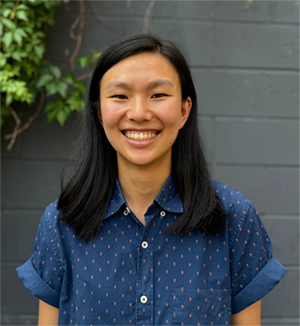
Angelina Wang is an incoming Assistant Professor at Cornell Tech and the Department of Information Science at Cornell University, starting Fall 2025. Her research focuses on responsible AI, particularly machine learning fairness and algorithmic bias. She holds a Ph.D. in Computer Science from Princeton University and a B.S. in Electrical Engineering and Computer Science from UC Berkeley. Current postdoctoral work at Stanford’s HAI and RegLab explores sociotechnical challenges in AI deployment. Her research addresses fairness evaluation in generative AI, societal impacts of AI systems, and ethical trade-offs in algorithm design. Notable awards include the NSF GRFP, Siebel Scholarship, and Microsoft AI & Society Fellowship. Her work bridges technical and social dimensions of AI, emphasizing human-centered evaluation and interdisciplinary collaboration. Recent publications span medical AI applications (e.g., Alzheimer’s subphenotypes, corticosteroid treatment efficacy) and foundational fairness research. She advocates for proactive ethical considerations in technical work, citing examples like surveillance risks in facial recognition and dataset biases in computer vision. Angelina advises prospective PhD students in Cornell’s Information Science program and collaborates on projects like SciDaSynth for scientific knowledge synthesis. Her advocacy includes challenging fairness impossibility theorems and promoting algorithmic pluralism in auditing practices.
Dr. Huadong Mo is a Senior Lecturer at the School of Systems and Computing, University of New South Wales (UNSW) Canberra, Australia. He holds a B.E. degree in automation from the University of Science and Technology of China (2012) and a Ph.D. in systems engineering and engineering management from the City University of Hong Kong (2016). Prior to his current position, he was a research associate at ETH Zurich's Reliability and Risk Engineering Lab (2016-2019) and a Lecturer at UNSW Canberra (2019-2021). Dr. Mo's educational background includes a strong foundation in systems engineering with international experience across China, Switzerland, and Australia. His career trajectory demonstrates a progression from academic research to faculty positions with increasing responsibilities in teaching and research leadership. His research focuses on enhancing the resilience, performance, and security of complex systems using learning-based algorithms, primarily in power and energy systems, cyber-physical systems, and manufacturing systems. He applies data analytics to understand system evolution under uncertainties, with particular emphasis on prognostics and health management, sustainable transportation, robust operation of power systems under extreme events, and reinforcement learning-based asset management. His work bridges theoretical advances with practical applications in critical infrastructure. Analysis of Dr. Mo's recent publications reveals a strong focus on energy systems, particularly in the integration of machine learning with power grid management, battery storage systems, and resilience against cyber threats. His research shows a clear trajectory toward increasingly complex system integration, with growing emphasis on multi-vector energy communities, cross-domain prediction, and uncertainty-aware energy management. The interdisciplinary nature of his work spans electrical engineering, computer science, and operations research. 2024 IEEE SMC Early Career Award 2023 Visiting Research Fellowship (Jean d'Alembert Pour Fellowship) Gold Medal in 2024 China International College Student Innovation Competition (as supervisor) Arc PGC Supervisor Award (2021) IEEE SMC Outstanding Chapter Award (2021) Alumni Achievement Award from City University of Hong Kong (2019) Dr. Mo actively supervises numerous HDR students working on cutting-edge research topics including battery health monitoring, quantum control, reinforcement learning for power systems, and explainable AI for energy management. He leads multiple significant research grants totaling over 3 million AUD, including projects funded by ARC, Energy Innovation Fund, and international collaborations with institutions like ETH Zurich, Cambridge, and Tsinghua University. His research group maintains strong international connections, facilitating student exchanges and collaborative research. As Postgraduate Course Coordinator of Systems Engineering and Chair of IEEE SMC ACT Chapter, Dr. Mo plays a significant role in academic leadership and professional community building. His research team collaborates with industry partners on practical implementations of their theoretical work, particularly in the energy sector.
Dr. Partha Narayan Mishra is a Senior Lecturer at the School of Civil Engineering, The University of Queensland, with expertise in geotechnical engineering and electromagnetic soil characterization. He holds a PhD in Geotechnical Engineering (2020) and dual master's/bachelor's degrees (2015) from National Institute of Technology Rourkela, India. PhD Thesis: Soft soil characterization and improvement for reclaimed land application (2020) Dual Degree: B.Tech. Hons. in Civil Engineering and M.Tech. in Geotechnical Engineering His research focuses on soft soil improvement, unsaturated soil mechanics, electromagnetic characterization of geomaterials, biomediated geotechnical engineering, and clay barrier systems for waste disposal. He has published 30+ articles in top-tier journals and conferences, with recent work on mine waste utilization, MSE wall stability, and electromagnetic dewatering techniques. He co-supervises 2 PhD and 5 Master's students at UQ, having previously guided 1 PhD, 1 Master's, 2 Bachelor's, and 3 summer research theses. He initiated the global AGERP lecture series (2020), reaching 125+ countries, and holds teaching certifications from the Higher Education Academy (UK). Professional affiliations include the Australian Geomechanics Society, ISSMGE, IGS, and ASCE. He has reviewed 50+ journal articles and held leadership roles in UQ committees.
Dr Donya Hajializadeh is an Associate Professor of Structural Engineering at the University of Surrey's School of Sustainability, Civil and Environmental Engineering. She holds multiple professional qualifications including Chartered Engineer (CEng) and European Engineer (EUR ING), and is a Fellow of the Higher Education Academy (FHEA). Her roles include Director of Employability (since 2020), Deputy Coordinator of the Surrey/ICE Scholarship (since 2019), and IStructE Liaison Officer (since 2021). She is also affiliated with the Surrey Institute for People-Centred Artificial Intelligence (PAI). Her education includes a BEng (Hons), MEng, and PhD in relevant fields. Research focuses on structural health monitoring (SHM), machine learning applications in asset management, and deep learning for damage identification. Key areas include railway bridge dynamics, vibration analysis, and resilience assessment under seismic and environmental hazards. Current PhD students include Chia Sadik (Transport Infrastructure Failure Assessment) and Michael Millgate (Dynamic Characterisation of Tall RC Buildings). Teaching responsibilities include ENG1073 Fluid Mechanics and ENGM054 Earthquake Engineering. Research aligns with sustainable development goals, emphasizing infrastructure sustainability and carbon reduction strategies. Notable projects include rail bridge innovation recognized by the Chief Scientific Adviser Award and presentations on damage identification techniques to government officials. She contributes actively to interdisciplinary initiatives, integrating AI with civil engineering for smarter infrastructure solutions.
Ian Gilby is an Associate Professor at the School of Human Evolution and Social Change, Arizona State University. His research focuses on the social behavior, ecology, and cognition of wild chimpanzees, particularly within the context of long-term studies at Gombe National Park, Tanzania. Gilby investigates topics such as cooperative hunting, dominance hierarchies, social bonding, and the influence of ecological factors on primate behavior. His work bridges primatology, evolutionary biology, and conservation science, with a strong emphasis on understanding the adaptive strategies of chimpanzees in complex social environments. Key themes in Gilby’s research include the evolution of cooperation, reproductive strategies, and the ecological drivers of social behavior. He has contributed significantly to studies on chimpanzee aggression, hunting tactics, and the role of vocal communication in group coordination. His findings highlight the intricate relationship between social structure, ecological conditions, and individual success in primate communities. Notably, Gilby is involved in the Gombe Chimpanzee Project, analyzing long-term datasets to address questions about data sharing in conservation science and the impacts of environmental changes on wildlife. While no formal awards or grants are explicitly mentioned in the provided texts, his extensive publication record underscores his expertise in primate behavior and ecology.
Scott Walbridge is the Chair of the Department of Civil and Environmental Engineering at the University of Waterloo, where he has been actively teaching and researching since 2006. He holds a Doctorate in Civil Engineering from the Swiss Federal Institute of Technology (EPFL), a Master's from the University of Alberta, and a Bachelor's in Civil Engineering from the same institution. His research focuses on enhancing structural safety and durability through fatigue assessment, retrofitting of welded metal structures, modular construction, and life-cycle cost analysis. He chairs the CSA aluminum structures technical subcommittee for bridge design codes (S6) and actively contributes to code development for structural welding and aluminum design. Walbridge has been Program Director for Waterloo’s Architectural Engineering program (2018–2022) and serves on editorial boards for journals like Structural Engineering International and ASCE Journal of Bridge Engineering . Education: PhD, Civil Engineering (Steel Structures), EPFL, Switzerland (2005) MSc, Structural Engineering, University of Alberta (1998) BSc, Civil Engineering, University of Alberta (1996) Research Interests: Fatigue assessment, welded metal structures, modular construction, structural reliability, fracture mechanics, and life-cycle cost analysis. His work bridges theoretical frameworks with practical applications, such as improving fatigue life prediction for aluminum bridge decks and optimizing material selection for corrosion resistance. Professional Engagement: Chair of CSA S6 Aluminum Structures Subcommittee, active member of welding code committees (W59, W59.2), and contributor to national bridge design standards. His leadership in code development ensures alignment with modern material technologies and sustainability goals. Teaching & Advising: Recently taught courses like CIVE 512 (Rehabilitation of Structures) and CIVE 704 (Bridge Design). He is currently accepting graduate students in structural engineering and bridge design.
Yuyu Zhou is a Professor in the Department of Geography at The University of Hong Kong. With an extensive publication record of 301 papers and over 18,000 citations, Dr. Zhou is a leading researcher in urban environmental studies, climate change, and sustainability science. Dr. Zhou received their PhD in Environmental Science from the University of Rhode Island (2004-2008) and previously worked as a Research Scientist at Pacific Northwest National Laboratory's Joint Global Change Research Institute (2010-2015). They currently serve as Chief Editor for Earth System Science Data (Copernicus Publications), Associate Editor for Ecological Processes, and Section Editor for All Earth. Dr. Zhou's research focuses on the intersection of urbanization, climate change, and environmental sustainability. Their work spans several key areas including urban heat island effects, vegetation phenology in urban environments, energy modeling, and sustainable urban development. Through innovative remote sensing approaches and spatial analysis, Dr. Zhou investigates how urban environments respond to and influence global environmental change. Analysis of Dr. Zhou's recent publications reveals a strong emphasis on urban environmental challenges, with particular attention to urban heat islands, vegetation dynamics, and climate change impacts in cities. Their work combines remote sensing data with ground observations to develop high-resolution models of urban environmental processes. Recent research has focused on urban greening effects, building energy use under climate change, and environmental justice issues related to urban heat exposure. Dr. Zhou has received significant recognition for their work, as evidenced by the high citation count of their publications. Their research has important implications for urban planning, climate adaptation strategies, and sustainable development policies worldwide. As an educator and mentor, Dr. Zhou advises numerous graduate students and collaborates with researchers globally. Their work with international teams has resulted in significant contributions to understanding urban environmental systems across different geographical contexts.
Prof. Dr. Matthias Weidlich is a faculty member at Humboldt University of Berlin within the Institute of Computer Science under the Faculty of Mathematics and Natural Sciences . His research focuses on Process Mining , Complex Event Processing , and Data Privacy with applications in Business Process Management and Scientific Workflows . Research Interests: Business Process Management and Process Mining Complex Event Processing and Stream Data Analysis Data Privacy and Security in Process Systems Scientific Workflow Systems and User Behavior Heterogeneous Network Embeddings Algorithm Design and Optimization Recent Publications (2023-2025) demonstrate expertise in: Efficient stream processing techniques Privacy-preserving process mining frameworks Scientific workflow analysis tools Graph neural network applications Multi-modal data integration Adaptive querying systems Contact: Office: Unter den Linden 6, 10099 Berlin Phone: 030 2093-41277 Email: matthias.weidlich@hu-berlin.de Web: hu.berlin/data
Dr. Rameeza Moideen is a Researcher at the University of Edinburgh's School of Engineering, affiliated with the Energy Systems Research Institute. Her work focuses on offshore renewable energy infrastructure, coastal structural resilience, and fluid-structure interaction dynamics. Research Interests Her research spans vortex-induced vibrations in marine power cables, extreme wave impacts on coastal decks, and climate change adaptation for port infrastructure. She applies advanced numerical simulations to analyze hydrodynamic forces, structural stresses, and material degradation mechanisms. Key Research Trends Recent work emphasizes lazy wave dynamic cables under varying currents (2025), focused wave impacts on bridge decks (2023-2021), and marine growth effects on tubular structures (2021). These studies combine computational modeling with real-world climate scenarios to improve offshore energy systems and coastal infrastructure durability. Awards & Grants No specific awards or grants mentioned in available texts. Research is likely funded through institutional and collaborative projects within the Energy Systems Institute. Labs & Teams Active within the Energy Systems Research Institute at Edinburgh, collaborating on offshore renewable energy projects and coastal engineering initiatives.