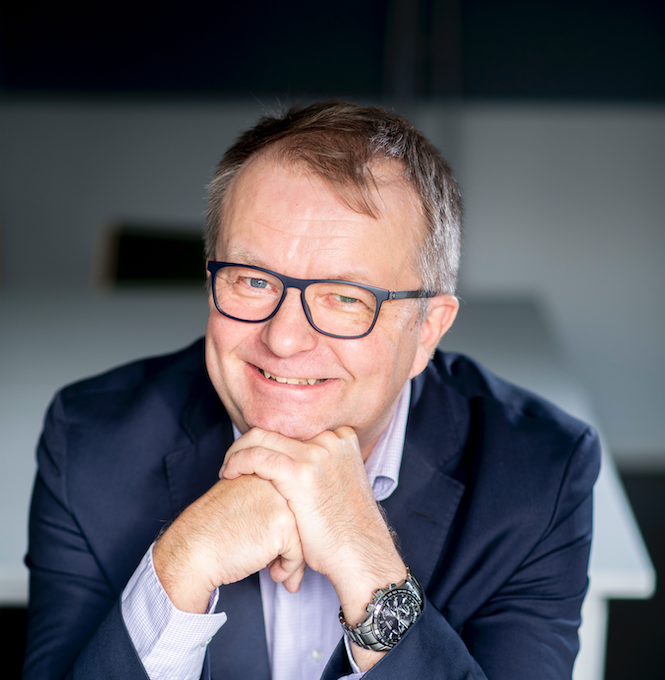
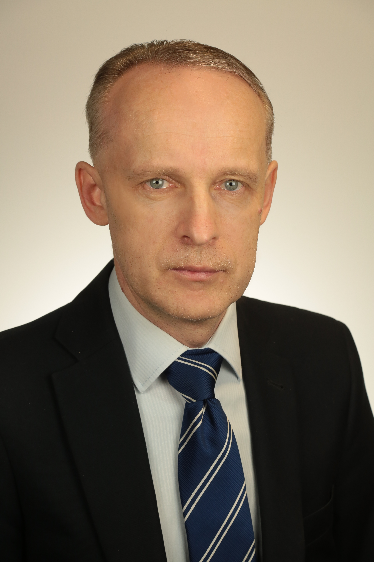
Professor Kewen Wang is a faculty member in the School of Information and Communication Technology at Griffith University , where he has been actively working in computational logic, knowledge representation, and their applications in artificial intelligence for over 30 years. His research has led to the development of novel logics, computer languages, and systems for knowledge representation and reasoning. Broad research areas: Computational Logic, Knowledge Representation, Artificial Intelligence, Programming, Knowledge Graphs, Explainable AI, Ontology Reasoning, Rule Learning Key contributions: RLvLR (scalable rule learner for KGs), TyRuLe (typed rule learning), Drewer (Datalog+- query engine), ALBERT+CCR (CommonsenseQA model), auction design algorithms His research has been widely cited in top venues like Artificial Intelligence , JAIR , ACM Transactions on Computational Logic , and conferences AAAI (Area Chair 2022-2025), IJCAI , KR . He has secured six ARC Grants (five Discovery, one Linkage) and smaller grants from NICTA, CSIRO, and Griffith University. Editorial roles: Area Chair for AAAI (2022-2025), Associate Editor for Journal of Web Semantics , TGDK Supervision: Has supervised over 15 PhD students including Hong Wu, Peng Xiao, and Pouya Omran Teaching: Courses in Intelligent Systems, Data Structures, Discrete Mathematics, and Robotics
Renata Borovica-Gajic is an Associate Professor in Data Analytics and an ARC DECRA Fellow at the School of Computing and Information Systems (CIS), University of Melbourne. She also serves as Associate Dean (Diversity and Inclusion) for the Faculty of Engineering and IT, demonstrating leadership in both research and academic community development. Her research lies at the intersection of database systems, machine learning, and artificial intelligence, with a vision of creating adaptive, self-driving database engines that optimize query execution in real-time. Her work spans learned indexes, query optimization, data quality, and data-driven traffic optimization, aiming to reduce costs and improve performance in data analytics. The recent publications reflect a strong trend toward integrating machine learning into core database operations—particularly through learned indexes, bandit-based tuning, and reinforcement learning for traffic systems. These works emphasize automation, provable guarantees, and real-time adaptation, showcasing a cohesive research agenda focused on intelligent, self-optimizing data systems. Her scientific excellence is recognized by numerous awards, including: L'Oréal-UNESCO for Women in Science Fellowship (2023) Victorian Young Tall Poppy (2024) Test of Time Award at SIGMOD 2022 Multiple Research and Teaching Excellence Awards from the University of Melbourne Google Research Inclusion Award (2021) She actively mentors PhD students and leads significant research projects funded by the Australian Research Council, Google, and Telstra. Her service includes roles as Associate Editor for SIGMOD Record, conference organization (e.g., aiDM, ADC, VLDB), and leadership in diversity and inclusion initiatives. She has also contributed to influential publications such as a chapter in the 7th edition of Database System Concepts . Her research lab focuses on AI-powered databases, traffic optimization via reinforcement learning, and self-healing data systems, positioning her at the forefront of next-generation data management.
Dr. Aliakbar Gholampour is a Senior Lecturer in Civil and Structural Engineering at the College of Science and Engineering, Flinders University. He earned his PhD in Structural Engineering from the University of Adelaide in 2019 and served as a Postdoctoral Research Fellow at the University of Melbourne until July 2020. He currently serves as Sustainable Construction Materials and Technologies Lead at Flinders University. Dr. Gholampour's educational background includes: PhD in Structural Engineering, University of Adelaide (2019) MSc in Structural Engineering BSc in Civil Engineering (Honours) His research focuses on sustainable infrastructure development through innovative materials and technologies. Dr. Gholampour specializes in recycling waste materials, industrial by-products, and fibers to develop sustainable construction materials. His work encompasses cementitious composites containing nanomaterials, smart multifunctional construction materials, 3D printable concrete, and advanced modeling of fiber-reinforced concrete. In structural engineering, he investigates the behavior, performance, and design of civil infrastructure with emphasis on resilience, sustainability, and management of deteriorating assets. Analysis of his recent publications reveals a strong focus on sustainable construction materials, particularly in recycling waste streams (foundry sand, plastic, glass, lead slag) for concrete production. His work integrates advanced computational methods including machine learning for material property prediction. The research trends show increasing emphasis on life cycle assessment, carbon reduction technologies, and the development of high-performance sustainable concrete alternatives using industrial by-products and recycled materials. Dr. Gholampour's scientific recognition includes: World's top 2% scientist by Stanford University and Elsevier (2021-2023) Emerging Research Leader Award, Flinders University (2023) Vice-Chancellor's Award for Early Career Researchers, Flinders University (2022) Finalist, SA Climate Leaders Awards (2024) Dean's Commendation for Doctoral Thesis Excellence, University of Adelaide (2019) His research is supported by significant grants including the International Clean Innovation Researcher Networks for Decarbonising the Building Industry (2023-2027), multiple Research Investment Funds from Flinders University, and the CRC-P grant for Recycling Waste Plastics. Dr. Gholampour serves as Special Issue Editor for multiple journals including Materials, Fibers, and Frontiers in Built Environment, and as Associate Editor for Frontiers in Built Environment Journal. He is a Steering Committee Member of the International Researcher Network for Decarbonising the Building Industry and a member of the Concrete Institute of Australia.
Paolo Ruggeri is an Associate Professor at the Department of SIMAU, Università Politecnica delle Marche (UNIVPM), Ancona, Italy. His research focuses on Geotechnical Engineering , Slope Stability , Seismic Risk Assessment , and Soil-Structure Interaction , with particular emphasis on landslide dynamics, port infrastructure resilience, and tunnel construction impacts. Selected trends from his 15 most recent publications include: Analysis of coastal and harbor structures (quay walls, dykes) Investigations into seismic and rainfall-induced slope failures Advancements in soil-structure interaction modeling Environmental sustainability of geotechnical works Comparative studies on tunnel design approaches (Eurocodes)
Dr. Katalin KOPECSKÓ is Associate Professor in the Department of Engineering Geology and Geotechnics , Faculty of Civil Engineering, Budapest University of Technology and Economics (BME) . She lectures on construction-materials chemistry, durability and advanced concrete technologies, and maintains an active research portfolio spanning radioactive-waste solidification, geopolymer binders, supplementary cementitious materials and fibre-reinforced cementitious composites. Education & Academic Career Long-standing faculty member at BME Faculty of Civil Engineering (exact degrees not specified in text). Regular instructor for master-level courses: Alkali Activated Materials in Civil Engineering , Chemistry of Construction Materials , Durability of Construction Materials , Structure–Property Relations of Concrete . Holds weekly consultation hours on Thursdays 12–14 in building K, basement level, room 10/5. Research Focus Her research integrates materials science , geotechnical engineering and nuclear-waste management . Recent investigations include: Development of alkali-activated recipes for borate-rich liquid radioactive waste using limestone-portland blends. Application of semi-adiabatic calorimetry to identify optimal cement types for radioactive waste cementation. Enhancement of 3D-printing performance of concrete via metakaolin and silica fume. Long-term geotechnical and hydraulic impacts of municipal solid-waste leachate on soils. Durability of natural-fibre and nanocellulose-reinforced geopolymer mortars. Corrosion behaviour of vitrified high-level waste glass under simulated repository conditions. Across 2022-2025 she has published more than 40 peer-reviewed articles, reflecting a clear shift toward sustainable construction materials , nuclear environmental safety and advanced testing methodologies . Laboratory & Collaborative Environment Dr. KOPECSKÓ operates within BME’s well-equipped Engineering Geology and Geotechnics laboratories, where calorimetry facilities, geopolymer synthesis rigs and microstructural analysis tools support her projects. Close collaboration exists with the Vásárhelyi Pál Doctoral School and the national nuclear-waste management programme at Paks NPP, evidenced by joint publications on cemented-waste testing laboratories. Grants & Awards While specific grant numbers are not listed, her sustained output in high-impact journals and participation in national projects (e.g., NVKP_16-1-2016-0019 “Increasing the Chemical Resistance of Concrete”) indicate continuous external funding. Contact Office: Building K, basement, room 10/5, Budapest University of Technology and Economics. E-mail: kopecsko.katalin@emk.bme.hu Phone: +36 1 463 2238
Dr. Adèle Carradò is a Full Professor in Solid State Physics at the University of Strasbourg (UNISTRA), affiliated with the Institute of Physics and Chemistry of Materials (IPCMS). Her research focuses on bioactive coatings, surface characterization of metallic and multi-layer systems, and mechanical properties of hybrid materials. PhD in Mechanics and Material Science (University of Reims, 2001) HDR (University of Strasbourg, 2004) Research Assistant (University of Ancona, 1997-1998) Post-doc (CEA Saclay, 2002) Her work includes over 70 original articles, two patents, and 50+ invited lectures. She specializes in: Residual stress analysis via neutron and synchrotron radiation Functional thin films for biomedical applications Mechanical behavior of metal/polymer/metal systems 3-layered sandwich structures for lightweight design Zn-Mg alloys for orthopedic implants Surface grafting techniques for biomaterials Recent publications highlight advancements in: Biodegradable Zn-Mg alloys with PMMA coatings ATUM-SEM for bone microstructure analysis Forming mechanics of steel-glass fiber-reinforced composites Residual stress optimization in extruded and drawn materials She actively participates in international conferences and serves on executive committees for biomedical materials symposia.
Bodil Holst is a Professor at the University of Bergen's Department of Physics and Technology , specializing in surface science and scientific instrumentation development . Her research spans 2D materials , helium atom scattering , and archaeometry applications. She leads projects like Nanometer-Resolution Matter-Wave Lithography (FET-Open), 2D Material Properties (NFR FRIPRO), and Wind Turbine Erosion Prevention (Equinor). Her Nanophysics Group has produced groundbreaking work on graphene's temperature-dependent rigidity and icephobic surfaces . First neutral helium microscope images (2008) Recorded bending rigidity of 2D materials (2018-2021) Developed solid-state conversion techniques for sapphire (2017-2021) Her teaching innovations in classical mechanics explore retrieval practice and digital learning structure , documented in Physics Education and Physical Review Physics Education Research .
Matthias Becker is a Professor at the Institute for Practical Computer Science within the Faculty of Electrical Engineering and Computer Science at Leibniz University Hannover, where he has been a core member of the Human-Computer Interaction group since 2019. He serves as Internship Coordinator for Computer Science and Computer Engineering and holds key roles in the Computer Science Examination Board and Selection Committee, actively shaping academic governance and student development. His academic journey began with PhD studies at the University of Bremen (1996-2000) supported by a DFG grant, followed by a postdoctoral permanent position at Leibniz University Hannover (2000-2019), an Associated Assistant Professor role at École des Mines de Nantes (2000), and a Habilitation in Computer Science in 2013. This foundation enabled his transition to a full professorship in 2019. Becker's research spans Human-Computer Interaction, Simulation and Modeling, and Bio-inspired Computing, with applications in agriculture, renewable energy, and manufacturing. His work integrates distributed systems, optimization algorithms, and wireless sensor networks to solve complex real-world problems, such as greenhouse monitoring, wind farm logistics, and tire noise reduction. Recent publications reveal a strategic focus on practical validation of simulation models and cross-domain applications of nature-inspired algorithms. His 15 most recent publications (2018-2024) demonstrate consistent innovation in applying simulation techniques to offshore wind farm installation, agricultural pest management, and sports science. These works emphasize real-world validation, collaborative problem-solving, and the development of domain-specific optimization frameworks that bridge theoretical algorithms and industrial implementation. As Internship Coordinator, Becker facilitates critical industry-academia connections for students, while his examination board responsibilities ensure rigorous academic standards. His leadership in the Human-Computer Interaction group drives research on interactive systems for agriculture, energy, and health, with particular emphasis on user-centered design in complex operational environments like wind farm logistics and greenhouse automation.
Syon Bhanot is an Associate Professor of Economics at Swarthmore College , with additional appointments as an Adjunct Associate Professor at the Wharton School (University of Pennsylvania). He specializes in behavioral economics , public economics , and experimental economics , focusing on pro-social behavior , decision-making , and development economics . Academic Affiliate, Office of Evaluation Sciences Board Member, Busara Center for Behavioral Economics Senior Researcher, MIT Applied Cooperation Initiative Co-Founder, Philadelphia Behavioral Science Initiative Member, American Economic Association His research emphasizes field experiments using behavioral science concepts to influence decision-making, with applications in public policy , poverty reduction , and environmental sustainability . Recent publications explore topics like political messaging effects , administrative burden reduction , and social norm influences on conservation behavior. His work has appeared in journals like The New England Journal of Medicine , Journal of Development Economics , and Organizational Behavior and Human Decision Processes . He is a frequent media commentator in outlets including the New York Times , NPR , and The Philadelphia Inquirer , with notable contributions on quarantine compliance and vaccine hesitancy . His interdisciplinary approach bridges economics with environmental studies and public health .
Cameron Murray is an Associate Professor in the Department of Civil Engineering at the University of Arkansas. He specializes in concrete research with a focus on alternative cement technologies, particularly belitic calcium sulfoaluminate (BCSA) cement, and prestressed concrete structures. Dr. Murray directs a research group that investigates rapid-setting concrete materials for infrastructure repair and bridge engineering applications. His work bridges fundamental material science with practical engineering solutions for transportation infrastructure. Dr. Murray's educational background includes: Ph.D. in Civil Engineering from the University of Oklahoma (2017) M.S. in Civil Engineering from the University of Arkansas (2014) B.S. in Civil Engineering from the University of Arkansas (2012) Dr. Murray's research focuses on innovative concrete technologies with particular emphasis on alternative cementitious materials that offer environmental benefits and rapid-setting properties. His work explores the structural applications of belitic calcium sulfoaluminate (BCSA) cement for infrastructure repair, prestressed concrete systems, and bridge engineering. He investigates material properties, durability mechanisms, and structural performance to develop practical solutions for transportation infrastructure challenges. His research addresses critical issues such as early-age concrete behavior, corrosion resistance, and sustainable construction practices that reduce carbon emissions in the concrete industry. Analysis of Dr. Murray's recent publications reveals a strong focus on alternative cement technologies, particularly belitic calcium sulfoaluminate (BCSA) cement and its structural applications. His work spans material characterization, structural performance testing, and practical implementation in transportation infrastructure. Key research themes include rapid-setting concrete for infrastructure repair, prestressed concrete behavior, and sustainable concrete technologies with reduced carbon footprints. His publications demonstrate a progression from fundamental material studies to applied research addressing real-world infrastructure challenges, particularly in bridge engineering and rapid repair applications. Dr. Murray has received significant recognition for his teaching and research contributions: Department's outstanding teacher award (three times) College of Engineering Rising Teacher Award (2022-23) ACI Walter P Moore, Jr. Faculty Achievement Award (2022) Dr. Murray has successfully mentored numerous graduate students through their research projects, with a particular focus on concrete technology and structural engineering applications. His research group has secured substantial external funding totaling $6.2 million as PI or Co-PI, with additional $650,000 in equipment donations. Current funding sources include state DOTs, concrete industry groups, private industry, and federal agencies such as the US Army Corps of Engineers. His projects address critical infrastructure needs including rapid bridge deployment systems, alternative cement technologies, and concrete durability solutions. Dr. Murray directs the Concrete Research Laboratory at the University of Arkansas, located at the Grady Harvell Civil Engineering Research and Education Center (CEREC). The laboratory features a 20,000 sq. ft. high-bay testing area with a 100 ft. by 40 ft. strong floor, capable of handling large-scale structural testing. The facility includes specialized equipment for concrete material characterization, structural testing of reinforced and prestressed concrete members, and environmental monitoring systems. His research team collaborates with industry partners including Coreslab Structures and government agencies to address practical infrastructure challenges.
Juha Lipponen is a Professor at Aalto University's Department of Bioproducts and Biosystems. His work focuses on developing sustainable materials using bio-based components and circular economy principles. Affiliation: Aalto University Department: Bioproducts and Biosystems Research Interests His research spans Materials Science , Biotechnology , and Sustainable Engineering , emphasizing: Composite materials from renewable resources Waste valorization for high-performance applications Green polymer synthesis techniques Thermal energy storage systems Circular economy in forest industry Recent Publications demonstrate expertise in lignin-based composites, cellulose nanomaterials, and eco-friendly packaging solutions. Collaborative work includes biomedical hydrogels and carbon fiber recycling.
Sesilja Aranko is an Assistant Professor at Aalto University , affiliated with the Department of Bioproducts and Biosystems. Her research focuses on protein engineering, biomolecular condensates, and sustainable materials derived from biological macromolecules. Research Groups : Cellular Engineering Email : sesilja.aranko@aalto.fi Her work explores protein self-assembly mechanisms, particularly in spider silk and collagen systems, leveraging liquid-liquid phase separation for advanced biomaterial design. Recent studies investigate how polymer length and modular protein architecture control condensate properties, alongside developing bio-inspired adhesives from recombinant proteins and nanocellulose. She has pioneered the use of Catcher/Tag click-reaction tools for protein engineering and developed sustainable methods for spider silk production with inherent functionalization potential. Collaborative projects span marine biology (sea cucumbers) and keratin waste upcycling for textile applications. Key methodologies include intein-mediated protein splicing, segmental isotopic labeling, and structural characterization of protein ligation systems. Her research bridges fundamental biophysics with industrial applications in sustainable chemistry and biomimetic composites.
Daniel Robertz is a University Professor of Algebra and Number Theory at RWTH Aachen University, Germany, with his office located at Pontdriesch 14/16, Room 102 in Aachen. He actively participates in several academic seminars including the Joint Algebra Seminar at RWTH Aachen University, the Kolchin Seminar in Differential Algebra (online/New York), and the Diff.-Equations and Singularities Seminar (online). Professor Robertz's research spans multiple mathematical disciplines with primary focus on Differential Algebra , Difference Algebra , Computer Algebra , Discrete Geometry , Simplicial Surfaces , Group Theory , Invariant Theory , and Algebraic Systems Theory . He has developed several influential Maple packages including Janet , Involutive , JanetOre , LDA , and OreModules that have advanced computational methods in algebraic analysis of differential systems. His scholarly output demonstrates a consistent focus on algorithmic approaches to differential equations with increasing interdisciplinary applications, particularly in structural engineering through discrete geometry and origami-inspired designs for carbon-reinforced concrete structures. This research trajectory shows how abstract mathematical concepts can solve practical engineering problems, especially in sustainable construction materials development. Editorial Board of Mathematics in Computer Science Special Issue in Honor of Vladimir Gerdt (2022) Applications of Computer Algebra (ACA 2017, Jerusalem) (2019) Professor Robertz has organized numerous international workshops on computational differential and difference algebra and maintains active research collaborations across mathematics, engineering, and materials science disciplines. His work on algebraic methods for structural design involves partnerships with researchers in civil engineering, architectural design, and materials science. He leads research activities in the Chair of Algebra and Number Theory at RWTH Aachen, where his team develops computational methods for algebraic analysis of differential systems. His group maintains strong international connections with research communities in computer algebra, differential algebra, and mathematical engineering applications.
Debabrota Basu is a tenured faculty member (Inria Starting Faculty Position - ISFP) at the Scool team (previously called SequeL) of Inria Centre at University of Lille in France. He teaches postgraduate-level courses on privacy, responsible machine learning, and research methods in AI at École normale supérieure-PSL University, Université de Lille, and Centrale Lille. He is also a member of the ELLIS Society (European Laboratory for Learning and Intelligent Systems) and the Paris unit of ELLIS. Dr. Basu earned his PhD in Computer Science from the Department of Computer Science, School of Computing, National University of Singapore, advised by Stéphane Bressan and Pierre Senellart. Prior to that, he obtained a B.E. degree with Honours in Electronics and Telecommunication Engineering from Jadavpur University. Before joining Inria, he was a postdoctoral researcher at Chalmers University of Technology's Data Science and AI Division. Dr. Basu's research focuses on constructing algorithms for developing efficient, robust, private, and ethical learning machines that solve real-world problems. His methodological approach blends statistics, machine learning, and optimization. His application interests span sustainable agro-ecology, medical and pharmaceutical applications, energy-efficient autonomous systems, and algorithmic audits. Recent collaborations include the Inria-Indian Statistical Institute associate team SeRAI for developing Sequential Testing and Learning Algorithms for Verifiably Robust and Responsible AI, and the Inria-INRAE collaboration on Resilient Agricultural Decision Making under Environmental Risks. His publication record demonstrates expertise in bandit algorithms, reinforcement learning, and privacy-preserving machine learning. Recent work shows a strong theoretical foundation with practical applications, particularly in pure exploration bandits, differential privacy mechanisms, constrained optimization, and fairness verification. His research bridges the gap between theoretical guarantees and real-world deployment challenges across multiple domains. Dr. Basu has received notable recognition for his contributions: Best Student Paper Award at ACM EAAMO 2022 for 'On Meritocracy in Optimal Set Selection' Young researcher (JCJC) grant from the French National Research Agency (ANR) in 2022 in 'Artificial Intelligence and Data Science' He leads the project 'RL under Real-life Constraints: Regrets and Algorithms' and supervises PhD students and postdoctoral researchers. His research is supported by multiple projects including REPUBLIC ('Vers l'IA responsable avec l'apprentissage par renforcement sous contraintes') and 'Foundations of robustness and reliability in artificial intelligence.' Dr. Basu actively collaborates with institutions worldwide, including establishing the RELIANT associate team with Kyoto University for investigating structured multi-armed bandit problems.
Professor Sławomir Borysiak is a distinguished academic at Poznań University of Technology, where he serves as Head of the Polymer Department within the Faculty of Chemical Technology. With a career spanning over two decades, he earned his Master of Science in Engineering in 1996, PhD in Chemical Sciences in 2000, completed his habilitation in 2013, and achieved the rank of university professor in 2020. His work bridges academic research and industry applications, serving as Faculty Coordinator for Cooperation with Industry and as a member of the University Team for Cooperation with the Economy. Current Position: Professor, Head of Polymer Department Institution: Poznań University of Technology, Faculty of Chemical Technology Scientific Disciplines: Chemical Sciences (75%), Materials Engineering (25%) ORCID: 0000-0003-3485-4787 Professor Borysiak's research focuses on the physicochemistry of polymers, plastics processing and recycling, and polymer composites containing renewable fillers of plant origin. His work extends to structural studies of low molecular weight compounds, minerals, polymers and nanomaterials, with particular emphasis on the functional properties of plastics and composite materials. His laboratory investigates innovative approaches to wood-polymer composites, nanocellulose applications, and sustainable material development. Analysis of Professor Borysiak's publication record reveals a strong focus on sustainable polymer composites, with particular emphasis on lignocellulosic materials, nanocellulose applications, and renewable fillers. His recent work shows increasing integration of nanotechnology with traditional polymer science, particularly in developing antimicrobial properties, enhanced mechanical characteristics, and improved sustainability profiles for polymer composites. The research spans fundamental material science to practical applications in construction, packaging, and biomedical fields. Professor Borysiak has received recognition through his appointment as Vice-Chairman of the University Disciplinary Committee for Doctoral Students and as a member of the Board of the Polish Chemical Society, Poznań Branch. He also serves on the Polish Society of Calorimetry and Thermal Analysis and the Awards Committee of the Polish Chemical Society. As an educator, Professor Borysiak has supervised multiple doctoral dissertations, including those of Majka Odalanowska (2023) and Aleksandra Grząbka-Zasadzińska (2017). His teaching portfolio includes courses on physicochemistry of polymers, composites, nanomaterials, polymer materials technology, and chemical technology. He maintains active scientific collaborations with institutions including University of Edinburgh, Institute of Molecular Physics of the Polish Academy of Sciences, Casimir the Great University in Bydgoszcz, and several other Polish universities. His laboratory focuses on polymer research with particular expertise in wood-plastic composites, nanocellulose applications, and sustainable material development. Current projects involve developing antimicrobial polymer composites, enhancing material properties through novel hybrid fillers, and investigating the effects of various treatments on lignocellulosic materials.