Christopher Walters is a Professor at the Kenneth C. Griffin Department of Economics, University of Chicago, and previously served as an Assistant Professor at UC Berkeley (2013-2025). He is a Research Associate at the National Bureau of Economic Research, Research Fellow at IZA, and Faculty Affiliate at MIT's School Effectiveness and Inequality Initiative (SEII). PhD in Economics, MIT (2013) B.A. in Economics and Philosophy, University of Virginia (2008) Walters specializes in Labor Economics and the Economics of Education , focusing on school choice, early childhood interventions, and program evaluation. His work combines applied econometric methods with discrete choice modeling to analyze educational investments and labor market outcomes. Walters' recent publications examine class size effects, teacher quality impacts, and school finance policies, reflecting his interest in improving educational equity through rigorous empirical analysis. Research Fellow at IZA He collaborates with institutions like J-PAL North America and MIT Blueprint Labs, contributing to evidence-based policy design in education and labor economics.
Iris D. Tommelein serves as the Roy W. Carlson Distinguished Professor in the Civil and Environmental Engineering Department at the University of California, Berkeley's College of Engineering, where she directs the Project Production Systems Laboratory (P2SL). A globally recognized pioneer in Lean Construction, she has revolutionized architecture-engineering-construction (AEC) practices through research, industry workshops, and leadership since co-founding the Lean Construction Institute in 1997. Her educational foundation spans multiple disciplines: Ph.D. in Civil Engineering (Construction Engineering and Management), Stanford University, 1989 M.S. in Computer Science (Artificial Intelligence), Stanford University, 1989 M.S. in Civil Engineering (Construction Engineering and Management), Stanford University, 1985 B.S. (5-year degree) in Civil Engineer-Architect, Vrije Universiteit Brussel, Belgium, 1984 Professor Tommelein's research centers on transforming construction processes through Lean principles and digital innovation . Her work pioneers takt planning for workflow reliability, industrialized construction for labor and sustainability challenges, and mistakeproofing to eliminate errors. She integrates digital twins , AI , and optimization to develop practical decision-support systems for supply chains, logistics, and production management. Recent focus includes modular offsite construction and Industry 4.0 applications. Analysis of her 2023-2025 publications reveals intensifying research on takt planning maturity models and industrialized construction feasibility , with growing emphasis on mass timber automation and visual management systems. Her work consistently bridges lean theory with practical implementation across megaprojects, subcontracting networks, and heavy civil engineering. Her exceptional contributions have earned: Lean Pioneer Award (Lean Construction Institute, 2015) National Academy of Construction induction (2019) PPI Technical Achievement Award (2022) Robert B. Harris Award (University of Michigan, 2024) ASCE Construction Management Award (2024) - first woman recipient in 51 years Through the P2SL, she leads industry-collaborative research on production system design, mistakeproofing frameworks, and digital transformation. Her grant-funded projects develop assessment tools for industrialized construction adoption and takt planning methods adaptable to diverse project types. She actively mentors graduate students and drives knowledge transfer via workshops and the annual Construction Innovation Day. The Project Production Systems Laboratory (P2SL) operates as a global hub for construction innovation, partnering with owners, contractors, and suppliers to implement lean production systems. Current initiatives include developing serious games for mistakeproofing training, optimizing work density methods for heavy civil projects, and creating digital twins for real-time construction management.
Maartje Bastings is an Associate Professor at the École Polytechnique Fédérale de Lausanne (EPFL) , leading the Programmable Biomaterials Laboratory (PBL) within the School of Engineering (STI) . She holds additional affiliations with the Institute of Materials (IMX) , IBI-STI (Bioengineering), and supervises doctoral programs in Biotechnology and Biological Engineering ( EDBB-GE ) and Materials Science and Engineering ( EDMX-GE ). Her research focuses on DNA-based supramolecular materials engineered to achieve dynamic reciprocity —a two-way interaction between synthetic materials and biological systems. By leveraging DNA as a programmable scaffold, she investigates structural mechanics, valency control, and geometric constraints governing self-assembly and cell communication at bio-interfaces. Key applications include immune system modulation, diagnostics , and vaccine development . Analysis of her 15 most recent publications reveals a focus on multivalent interactions for T-cell activation, spatial patterning in immune signaling, and engineered coatings for DNA origami stability. Subfields span T cell receptor engineering , nanoscale protein dynamics , stimuli-responsive biomaterials , and bio-inspired therapeutic design . PhD Students: Chen Yuduo Hendrickx Pauline Bart M. Kononenko Artem Li Shujie Lou Yameng Meyer Pitt Narita Minako Rousseau Benjamin Bila Hale Caroprese Vincenzo Comberlato Alice Kurisinkal Eva Eugene Paloja Kaltrina Rodríguez Franco Hugo José Tekin Cem Wong Siu Ho Contact: maartje.bastings@epfl.ch
Prof. Tobias Müller is a Professor at the Bernoulli Institute for Mathematics, Computer Science and Artificial Intelligence at the University of Groningen. His academic journey includes previous positions at Utrecht University, CWI (Centrum Wiskunde & Informatica), Tel Aviv University, and Eindhoven University of Technology, with a doctorate from the University of Oxford under Colin McDiarmid. His research focuses on combinatorics, probability theory, random graphs, percolation, discrete and stochastic geometry, and combinatorial game theory. He has contributed extensively to understanding complex networks, hyperbolic models, and geometric random structures. Research Interests: Random Graphs and Percolation Theory Discrete and Stochastic Geometry Hyperbolic Network Models Probabilistic Combinatorics Geometric Probability Graph Algorithms and Connectivity Notable Contributions: Analysis of Voronoi and Poisson-Voronoi percolation in hyperbolic planes. Studies on Mallows random permutations and their cycle structures. Research on component games and logical limit laws in graph theory. Investigations into the geometry and properties of random geometric graphs. Grants & Collaborations: Active in organizing workshops and conferences on random graphs and geometric networks, including the BIRS Workshop on Random Geometric Graphs and the STAR Workshops series. Labs/Teams: Member of the Bernoulli Institute’s research groups, focusing on stochastic studies, combinatorics, and algorithmic methods.
Christopher Honey is an Associate Professor in the Department of Psychological & Brain Sciences at Johns Hopkins University, affiliated with the Krieger School of Arts & Sciences. His research focuses on computational cognitive neuroscience, exploring how the brain processes sequential information such as language and memory. He holds a PhD from Indiana University and has held positions at Princeton University and the University of Toronto before joining JHU in 2016. Education: PhD in Psychological and Brain Sciences, Indiana University Postdoctoral Fellowship at Princeton University with Uri Hasson Bachelor’s in Applied Mathematics and English Literature, University of Cape Town Research Interests: Neural dynamics of memory and perception Temporal processing in the brain Cognitive modeling using computational methods Neuroimaging data standards (e.g., BIDS) Publications highlight his work on brain state fluctuations, neuroimaging data structures, and memory enhancement. His lab develops tools for analyzing fMRI and EEG data, emphasizing real-world applications like smartphone-based cognitive interventions. Lab and Collaborations: Active projects on narrative processing and hippocampal replay Development of open-source neuroscience tools like iELVis Focus on translational research for aging populations
Stephen L. Bearne is a Professor in the Departments of Biochemistry and Molecular Biology and Chemistry at Dalhousie University, affiliated with the Faculty of Medicine. He has been a department member since 1996 and served as Department Head from 2012 to 2022. His research focuses on enzymology, enzyme catalysis, and protein engineering, with a particular emphasis on transition state analogues, enzyme inhibition mechanisms, and the chemical basis of disease-associated enzymes. His work integrates organic synthesis, biophysical techniques, and computational modeling to explore enzyme function and design inhibitors for therapeutic applications. Dr. Bearne holds a PhD from the University of Toronto and an MDCM from McGill University. His lab is part of the Protein Assembly Research Team and the BioActives CREATE Training Program. Current research themes include understanding carbon acid substrate catalysis in mandelate racemase, developing inhibitors for CTP synthase and racemases involved in diseases like cancer and neglected tropical infections, and proteomic tools for enzymatic activity profiling. His research leverages advanced techniques such as site-directed mutagenesis, isothermal titration calorimetry, NMR spectroscopy, and macroion mobility spectrometry. His lab supports equity, diversity, and inclusivity and has been funded by NSERC, CIHR, and other agencies. Recent publications highlight advancements in enzyme inhibition strategies, allosteric regulation mechanisms, and enzyme filamentation roles in metabolic pathways.
Dr. Xiaoran Hu is Assistant Professor in the Department of Management at LSE, specializing in organizational power structures, leadership effectiveness, and cross-cultural team dynamics. His research applies behavioral science to enhance workplace creativity and employee well-being. He holds a PhD in Organizational Behavior from London Business School and utilizes quantitative methodologies to analyze emotion-regulation patterns and hierarchical relationships in multinational organizations.
Jesse J. Helton, Ph.D., is an Associate Professor in the School of Social Work at Saint Louis University, where he has been since 2014. His research focuses on child maltreatment, adverse childhood experiences (ACEs), food insecurity, and disability, with notable work published in JAMA Pediatrics , Child Maltreatment , and Preventative Medicine . He holds editorial roles at the Child Maltreatment journal and serves on the Prevention Committee of the American Professional Society on the Abuse of Children. Dr. Helton’s community partnerships address child abuse prevention, food security, and family violence mitigation in collaboration with statewide and local organizations. Education: Ph.D. in Social Work, University of Illinois; M.A. in Social Work, University of New Hampshire. Research Interests: Dr. Helton’s work explores intersections between childhood trauma, socioeconomic factors, and health outcomes. Key themes include the impact of food insecurity on caregiver-child dynamics, disparities in ACEs among marginalized groups, and policy interventions to reduce maltreatment. His studies often employ mixed-methods approaches, combining quantitative data analysis with qualitative insights from affected communities. Awards: Recipient of the 2020 Association of Jesuit Colleges Leadership Institute award, 2018 Outstanding Young Alumni from Eureka College, and a 2014 Innovative Teaching Fellowship from SLU’s Reinert Center. Teaching: Courses include Principles of Statistics and Data Analysis , Research Methods for Diverse Societies , and Science of Helping . He emphasizes evidence-based practices and culturally responsive pedagogy. Labs/Teams: Collaborates with multidisciplinary teams across universities and NGOs, focusing on translational research to inform child welfare policies and community programs.
Gerald Voorhees is an Associate Professor and Chair of Communication Arts at the University of Waterloo. He holds a Ph.D. from The University of Iowa (2008) and a B.S. in Speech Communication from the University of Texas at Austin, where he was a Senior Fellow in the Honors Program of the College of Communication. His research explores games and new media as platforms for identity and cultural construction, with a focus on public discourse around gaming and rhetorics of race and ethnicity. Dr. Voorhees has held significant academic roles, including Vice-President of the Canadian Game Studies Association and former membership on the Executive Board of the Digital Games Research Association. He previously taught at Oregon State University and developed the Game and Interactive Media Design track at High Point University. His teaching spans communication theory, media studies, and game design, with courses such as DAC 204 (Game Design) and COMMST 430 (Communication and Social Justice). His research integrates critical theory with digital media analysis, examining topics like gender representation in games, neoliberal masculinity in esports, and racial dynamics in gaming cultures. He has co-edited influential volumes such as Masculinities in Play (2018) and Feminisms in Play (2018), contributing to foundational discussions in game studies. His recent work addresses intersectional feminism in gaming and the cultural implications of shooter game genres. Dr. Voorhees actively engages with professional organizations and academic publishing, serving as co-editor of the Approaches to Game Studies book series (Bloomsbury) and managing editor of the Gender in Play trilogy (Palgrave Macmillan). His scholarship bridges theoretical frameworks with empirical analysis, shaping interdisciplinary dialogue on digital media's societal impact.
Dr. Hyung Jin Chang is an Associate Professor at the School of Computer Science, University of Birmingham, and a Turing Fellow at the Alan Turing Institute. He holds a Ph.D. and B.S. from Seoul National University. His research focuses on human-centered visual learning, particularly in human-robot interaction, with expertise in computer vision, machine learning, and deep learning. He has been involved in organizing conferences like ECCV and ICCV workshops (e.g., VOTS Challenge, HANDS Workshop) and serves on program committees including AAAI and CVPR. His work spans areas like gaze estimation, domain adaptation, 3D pose estimation, and robotic perception for assistive technologies. Key achievements include receiving the Royal Society Research Grant (2019–2020) and Wellcome Trust funding. Notable contributions include frameworks for unsupervised domain adaptation, gaze estimation models (e.g., RT-Gene), and collaborative learning methods for hand-object reconstruction. He has led projects in medical robotics, personalized dressing assistance, and safety-critical systems like driver attention prediction. His 15 most recent articles (2024–2025) emphasize advancements in diffusion models, domain adaptation, 3D reconstruction, gaze-controllable systems, and generative AI for motion and interaction modeling. These reflect a trend toward integrating multimodal data (vision + language) and bridging theoretical foundations with applied robotics. Awards: Royal Society Grant, Wellcome Trust, Turing Fellowship Grants: Active in securing funding for robotics, vision, and healthcare applications He leads the Personal Robotics Lab and collaborates on projects like the VOTS Challenge for visual object tracking. His research bridges academia and real-world applications in healthcare robotics and human-technology interaction.
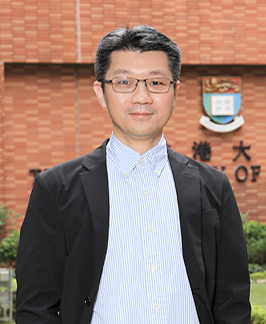
Professor Benjamin C.M. Kao is a faculty member in the Department of Computer Science at The University of Hong Kong (HKU), affiliated with the School of Computing and Data Science. He holds a BSc from HKU (1989) and a PhD from Princeton University (1995). His career includes roles as a teaching/research assistant at Princeton (1989-1991) and a research fellow at Stanford University (1992-1995). His research focuses on Database Management Systems, Data Mining, Real-time Systems, and Information Retrieval Systems. Notable contributions include S-OLAP for sequence data analysis, collaborative resource discovery in social tagging systems, and algorithms for mining periodic patterns in sequences. He has led research grants such as the GRF-funded 'Online Analytical Processing on Sequence Data' (2008) and computational studies in uncertain data mining (2006). Professor Kao has served on program committees for major computer science conferences and reviewed for leading journals. His work bridges theoretical foundations with practical applications in data systems and information retrieval.
Wenjing Zhang is a Professor and Head of the Section for Water Technology and Processes at the Department of Environmental and Resource Engineering, Technical University of Denmark (DTU). She is also affiliated with the DTU Microbes Initiative, contributing to interdisciplinary research in sustainable water technologies and environmental nanomaterials. Professor, DTU Head of Section, Water Technology & Processes Member, DTU Microbes Initiative Her research spans nanofiber technology, electrospinning, membrane processes, and catalytic materials for environmental applications. She focuses on innovative solutions for water purification, plastic waste recycling, CO2 photoreduction, and green hydrogen production, aligning with UN Sustainable Development Goals. The recent publications highlight a strong trend in advanced materials for environmental sustainability, particularly electrospun nanofibers, heterojunction photocatalysts, and ceramic membranes. These works emphasize applications in microplastic degradation, solid oxide cells, and chemical recycling of plastics, reflecting a multidisciplinary approach combining materials science, electrochemistry, and environmental engineering. Researcher at DTU Energy becomes honorary professor in China Wenjing Zhang actively supervises PhD students and leads multiple research projects, including EU and nationally funded initiatives on decentralized wastewater treatment and biocatalytic membrane systems. She collaborates with leading researchers and institutions, securing funding for high-impact environmental technologies. Her lab focuses on nanostructured membrane design and advanced fabrication of porous ceramics for industrial and municipal applications.
Fabian Pfrengle is a full Professor of Organic Chemistry at the Institute of Organic Chemistry , Department of Natural Sciences and Sustainable Resources , University of Natural Resources and Life Sciences Vienna (BOKU). He previously led research groups at the Max Planck Institute of Colloids and Interfaces (2013-2020) and worked at The Scripps Research Institute (2010-2013). Research Focus: His work bridges carbohydrate chemistry and plant biology , specializing in plant cell wall glycans and glycosyltransferases . He develops synthetic glycan arrays for enzyme characterization and investigates immune response triggering mechanisms in plants through oligosaccharide fragments . His projects include automated polysaccharide synthesis and liposome-based immune tolerance applications. Publication Trends: His 15 most recent articles emphasize chemical synthesis of sugar nucleotides , plant glycan arrays , and enzyme specificity analysis , reflecting his focus on carbohydrate engineering and plant immunity . Key subfields include UDP-sugar derivatization , Xylan structure-function relationships , and Glycosyltransferase profiling . Grants & Projects: Currently leads 5 major projects including Automated Algal Polysaccharide Synthesis (EU-funded, 2023-2028) and Synthetic Glycan Ligands for Plant Immune Receptors (FWF-funded, 2022-2026). His research also explores thrombocyte biology and Rhamnogalacturonan-II fragments with support from FWF and City of Vienna . Community Service: Serves on editorial boards ( Monatshefte für Chemie , 2021-present) and as reviewer for 12 journals including JACS Au , Nature Communications , and Angewandte Chemie . Member of professional societies: Gesellschaft Österreichischer Chemiker (2020), Deutscher Hochschulverband (2019), and Gesellschaft Deutscher Chemiker (2008).
Stefanie Jegelka is an Associate Professor (currently on leave) at the Massachusetts Institute of Technology's Department of Electrical Engineering and Computer Science, and a Humboldt Professor at Technical University of Munich. At MIT, she is a member of CSAIL (Computer Science and Artificial Intelligence Laboratory), IDSS (Institute for Data, Systems, and Society), the Center for Statistics and Machine Learning, and is affiliated with the Operations Research Center. Her educational background includes a PhD from ETH Zurich and the Max Planck Institute for Intelligent Systems, followed by postdoctoral research at UC Berkeley's AMPlab and computer vision group. Her research program focuses on algorithmic machine learning, with particular emphasis on exploiting mathematical structure for discrete and combinatorial machine learning problems, robustness in learning systems, and developing methods for scaling machine learning algorithms to large datasets. She has made significant theoretical contributions to submodular optimization and its applications in machine learning. Jegelka's publication record demonstrates a consistent focus on the intersection of discrete mathematics and machine learning. Her work spans theoretical foundations of optimization with discrete structures, applications in computer vision, and practical algorithms for submodular function optimization. Her research has evolved from foundational work on submodular functions to broader applications in deep learning and robust machine learning systems, showing increasing impact through numerous workshop best paper awards and high-impact conference publications. NSF CAREER Award Google Research Award German Pattern Recognition Award (Mustererkennngspreis) ICML Best Paper Award Sloan Research Fellowship DARPA Young Faculty Award NSF BIGDATA Award ONR MURI NSF AI Institute for Optimization Professor Jegelka has advised several successful students including Keyulu (recipient of MIT's George M. Sprowls Ph.D. Thesis Award), Derek (NSF Fellowship recipient), Ching-Yao (IBM Fellowship recipient), and Nisha (now Assistant Professor at Georgia Tech). Her research has been generously supported by multiple NSF grants, DARPA awards, and industry funding from Google, Two Sigma, and Adobe. She has also organized multiple workshops and tutorials on discrete optimization and submodularity in machine learning. At MIT, Jegelka is affiliated with the Center for Statistics and Machine Learning and collaborates with researchers across CSAIL. Her work bridges theoretical computer science, optimization, and practical machine learning applications, with recent focus on high-dimensional learning dynamics and in-context learning as evidenced by her group's multiple papers at leading conferences like ICLR.
Barry Martin Trost is the Tamaki Professor of Humanities and Sciences in the Department of Chemistry at Stanford University. Previously, he served as a professor at the University of Wisconsin, where he held several distinguished positions including Evan P. and Marion Helfaer Professor of Chemistry and Vilas Research Professor of Chemistry. His academic career spans over five decades with significant contributions to the field of organic chemistry. Dr. Trost received his B.A. from the University of Pennsylvania in 1962, where he was awarded the Philadelphia Board of Education Scholarship (1959-62). He earned his Ph.D. from the Massachusetts Institute of Technology in 1965 under the supervision of H.O. House, with a dissertation titled "The Structure and Reactivity of Enolate Anions." During his graduate studies, he was a National Science Foundation Predoctoral Fellow (1963-65). Professor Trost's research focuses on synthetic organic chemistry with particular emphasis on transition metal catalysis, asymmetric synthesis, and green chemistry principles. His work has pioneered numerous catalytic methods, especially in palladium chemistry, with a strong focus on atom economy - a concept he developed that has become fundamental to sustainable chemistry practices. His laboratory has made significant contributions to the development of catalytic asymmetric allylic alkylation and other carbon-carbon bond forming reactions that enable the efficient synthesis of complex molecules. An analysis of his recent publications reveals a continued emphasis on innovative catalytic methodologies. His work prominently features palladium-catalyzed asymmetric reactions, particularly allylic alkylations and cycloadditions, which have become powerful tools for constructing challenging stereocenters. He has also expanded into vanadium catalysis and developed the Zn-ProPhenol catalyst system for various asymmetric transformations. His research consistently bridges fundamental methodology development with applications to natural product synthesis, demonstrating the practical utility of his catalytic systems. Professor Trost's exceptional contributions to chemistry have been recognized with numerous prestigious awards, including: Election to the National Academy of Sciences (1980) ACS Award in Pure Chemistry (1977) ACS Award for Creative Work in Synthetic Organic Chemistry (1981) Arthur C. Cope Award (2004) Presidential Green Chemistry Challenge Award (1998) Nobel Laureate Signature Award for Graduate Education (2002) As an educator and mentor, Professor Trost has supervised numerous graduate students and postdoctoral researchers who have gone on to successful careers in academia and industry. His group has been consistently supported by significant research grants, including a MERIT Award from the National Institutes of General Medical Sciences of NIH (1988), which provides long-term support for exceptionally productive investigators. He has served on numerous editorial boards, including as Associate Editor of the Journal of the American Chemical Society (1974-80) and Editor of CHEMTRACTS-Organic Chemistry (1993-present), helping to shape the direction of chemical research publication. The Trost Research Group at Stanford University continues to be a leading center for innovative research in synthetic organic chemistry. The group maintains strong collaborations with pharmaceutical and chemical industries, including longstanding relationships with Merck Research Laboratories and other major companies. Professor Trost's laboratory is particularly known for developing practical catalytic methods that emphasize efficiency, selectivity, and environmental sustainability - principles that have influenced an entire generation of synthetic chemists.