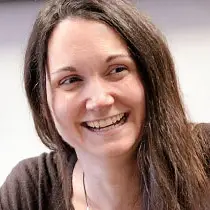
Melissa Fortner is a Professor of Psychology at Transylvania University, where she has taught since 2004. Her research focuses on social justice pedagogy, critical feminist psychology, and systems of privilege and oppression. She earned her Ph.D. in Human Development and Family Studies from Penn State University (2004), an M.S. from the same program (2000), and a B.A. in Psychology and Philosophy from Transylvania University (1996). Fortner emphasizes critical thinking, introspection, and ethical engagement in her teaching. Her courses include Lifespan Development, Family Development, and First-Year Seminars addressing identity and social systems. She has received the Bingham Award for Excellence in Teaching three times (2008, 2014, 2018) and contributed to peer-reviewed journals like Journal of Family Theory & Review and Journal of Marriage and Family . Her research explores how gender, race, and class intersect with family dynamics and societal structures. Recent work includes analyzing stereotype content in education and critiquing pop psychology narratives. Fortner has held editorial roles for the Encyclopedia of Family Studies and Journal of Family Theory and Review . Professionally, she is affiliated with the National Council on Family Relations, American Association of University Professors, and American Psychological Association. Her grants include a Kenan Fund award, supporting initiatives to integrate social justice into academic curricula.
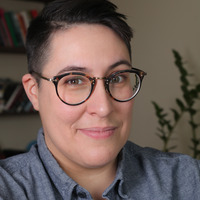
Michelle Sunkel is an Associate Professor of Social Work and Director of the Master of Social Work Program at Colorado Mesa University. She holds a Doctor of Social Work (DSW) from Capella University and is a licensed clinical social worker and licensed addiction counselor in Colorado, as well as a licensed independent clinical social worker in Minnesota. Her academic and clinical work is centered in the Department of Social Work, where she leads graduate education and curriculum development. DSW, Doctor of Social Work – Capella University MSW, Master of Social Work – San Diego State University MBE, Master of Bioethics – Consortium of European Universities (KU Leuven, Radboud University, University of Padua) BS, Psychology – Lincoln University Dr. Sunkel’s research and practice focus on forensic social work, human trafficking, ethical decision-making, anti-oppressive pedagogy, and international social work. She has extensive clinical experience working with the severely and persistently mentally ill in emergency departments, psychiatric hospitals, correctional facilities, and outpatient settings. Her international work includes service in Uganda, where she provided crisis intervention, psychoeducation, and school-based support for vulnerable populations. Her recent publications reflect a strong commitment to social justice, ethics, and inclusive education. Themes across her work include trauma-informed care for marginalized populations, integration of anti-oppressive frameworks in social work training, ethical considerations in digital learning, and the intersection of law, ethics, and human rights in social work practice. Her scholarship spans peer-reviewed articles, book chapters, book reviews, and invited conference presentations. Dr. Sunkel actively contributes to the academic community as a journal reviewer for Advances in Social Work and Critical Social Work . She has presented at national and international conferences, including the Council on Social Work Education and the International Social Work Association. Her leadership in curriculum development and ethical practice underscores her role as an educator and advocate. Journal Reviewer, Advances in Social Work (2020–present) Journal Reviewer, Critical Social Work (2019–present) She mentors students through her role as MSW Program Director and integrates experiential learning, including international service-learning trips. Though no specific advisees are named, her leadership in graduate education implies significant advising responsibilities. She has not received any named scientific awards, but her sustained scholarly and clinical contributions reflect professional excellence. Dr. Sunkel is involved in interdisciplinary collaborations, particularly in forensic ethics and emergency mental health. Her work bridges clinical practice, policy advocacy, and academic training, positioning her as a key figure in advancing ethical, equitable social work practice.
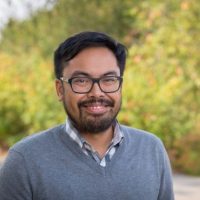
Fares J. Karam is an Associate Professor of TESOL at the College of Education and Human Development, University of Nevada, Reno. He holds a Ph.D. in Education (English Education) from the University of Virginia, along with an MA and BA in English Language and Literature from the Lebanese University. His work spans teaching, research, and leadership roles in multilingual education contexts across Lebanon, the UAE, and the U.S. Specializes in immigrant/refugee multilingual learners' literacy development Focuses on critical dialogic pedagogy and raciolinguistic ideologies Active in policy advocacy through TESOL International Association Editorial board member of TESOL Quarterly and Journal of Language, Identity & Education Karam’s research appears in top journals like Research in the Teaching of English and TESOL Journal , with recent work exploring transliterate practices, social-emotional learning, and refugee education. His accolades include the AERA Distinguished Dissertation Award and TESOL’s NNEST Paper Award. 2022 NAEd/Spencer Postdoctoral Fellowship Semifinalist 2018 UNR College of Education Outstanding Research Award 2017 Bruce Gansneder Outstanding Dissertation Award 2016 TESOL NNEST Issues Award He previously served as a Senior English Consultant in the UAE, supporting EFL programming across public schools, and has contributed to curriculum design and teacher education frameworks emphasizing equity and identity-centered approaches.
Pavithra Vasudevan is an Assistant Professor at the University of Texas at Austin, affiliated with the Department of African & African Diaspora Studies and the Center for Women’s & Gender Studies. She is also a member of the University of Texas Feminist Geography Research Collective. Education: Ph.D. in Geography (2018) from the University of North Carolina, Chapel Hill. Research: Focuses on racial capitalism, environmental justice, and feminist geography through the lens of industrial toxicity and community resistance. Her work bridges critical theory with grassroots organizing, emphasizing arts-based methods like Bharata Natyam and Aikido. She has received prestigious fellowships from the National Science Foundation and the Society of Women Geographers. Scientific Awards: National Science Foundation Dissertation Fellowship Society of Women Geographers Dissertation Fellowship Center for the Study of the American South Dissertation Fellowship Graduate Education Advancement Board’s Impact Award Vasudevan’s publications examine occupational health disparities, biopolitics, and the racialized burden of industrial environments. She teaches courses on feminist geopolitics, Black studies methods, and environmental justice storytelling.
Joëlle Rouleau is an Associate Professor at Université de Montréal's Faculty of Arts and Sciences, Department of Art History, Cinema and Audiovisual Media. Her academic career spans queer theory, gender studies, film studies, and research-creation methodologies. Department: Art History, Cinema and Audiovisual Media Research Focus: Intersectional Representation in Quebec Cinema, Queer TV Studies, Feminist Approaches Her research explores queer and trans media representation , intersectional film analysis , and gender-sensitive health studies . Recent projects include queer television conferences and disability representation studies in cinema. Notable trends in her 2014-2022 publications include: analysis of Queer TV seriality , gender metrics in health research , and intersectional feminist film pedagogy . She has secured multiple Canadian federal grants (SSHRC, CIHR, FRQSC) for her queer media studies. 3 SSHRC-funded research projects 1 CIHR/IRSC medical gender study 1 FRQSC research-creation grant Rouleau supervises master's students on topics including: queer cinema pedagogy, neuroqueer emancipation, and cinematic power dynamics. She leads Labo Télé UdeM and contributes to disability art research initiatives.
Jens Lerche is a Professor in Agrarian & Labour Studies at the Department of Development Studies, SOAS University of London. With over 50 publications spanning from the 1990s through 2025, his academic career demonstrates sustained engagement with the political economy of labor, caste, and agrarian change in India. His work bridges theoretical frameworks with empirical research on contemporary Indian society, particularly focusing on marginalized communities including Dalits, Adivasis, and agricultural laborers. Lerche's research interests center on the complex intersections of labor, caste, race, and class within contemporary capitalism, with particular attention to how these systems of oppression operate in the Indian context. His work explores the bypassing of traditional agrarian transitions in neoliberal India, the dynamics of social movements like the farm laws protests, and the structural discrimination faced by migrant workers. Through concepts like 'conjugated oppression,' he develops theoretical frameworks that account for how multiple forms of social hierarchy interact within capitalist development. Analysis of his recent publications reveals a consistent scholarly trajectory examining how traditional caste hierarchies intersect with emerging class formations in India's political economy. His work has increasingly focused on contemporary social movements, including the farmers' protests and responses to the migrant labor crisis during the pandemic, while maintaining theoretical connections to broader debates about capitalism, inequality, and social change. The 2025 publication on Uttar Pradesh elections demonstrates his ongoing engagement with current political developments in India. Lerche frequently collaborates with fellow scholars, most notably Alpa Shah, with whom he has co-authored multiple publications examining the intersections of caste, class, and social movements. His work appears across diverse publication formats including academic journals, book chapters, reports, and digital commentaries, demonstrating his commitment to engaging both academic and public audiences on critical issues of social justice and political economy in India.
Professor Iman Attia is a distinguished academic at Alice Salomon Hochschule Berlin (ASH Berlin), where she serves as Professor for Racism research, anti-racist education and remembrance work. Her academic career spans several decades with significant contributions to critical race theory, postcolonial studies, and decolonial approaches to understanding racism, particularly anti-Muslim racism in German and European contexts. Her research interests focus on interdisciplinary, comparative and relational racism research and theories; Orientalism, postcolonialism and decoloniality; anti-colonial, anti-racist and diasporic voices and movements; and culture and politics of remembrance. She has developed module responsibilities for Positionings and Relationalities (MA Social Work KriDiCo), theory-practice specialization in racism and migration (BA Social Work), and Diversity Studies / Racism and Migration (BA Social Work). Professor Attia's scholarly work demonstrates consistent engagement with the interdependencies, interrelations, and intersections of social power relations, particularly examining how racism operates in complex ways across different social categories. Her research trajectory shows increasing focus on decolonial approaches and entangled histories, as evidenced by her leadership in the 'Verwobene Geschichten' project. Principal investigator for 'Das Bedrohungsszenario des 'islamistischen Terrorismus'' (BMBF 2018-2021) Lead researcher for 'Rassismuserfahrungen von Rom*nja und Sinti*zze' (UKAZ beim BMI 2019-2020) Coordinator of 'Verwobene Geschichten' (IFAF 2014-2016 and 2017-2019) Researcher on 'Markierungs- und Diskriminierungserfahrungen von Muslim*innen' (2012) As a dedicated academic mentor, Professor Attia supervises numerous doctoral candidates across various German universities, focusing on topics related to racism, migration, and social justice. Her academic journey began with a Diplom and Promotion in Educational Science from the Universities of Lüneburg and Oldenburg, followed by positions at the Technical University of Berlin before her appointment as Professor at ASH Berlin in 2009.
Ruth Wilson Gilmore is Professor of Earth and Environmental Sciences, Africana Studies, and American Studies at the City University of New York (CUNY) Graduate Center, where she serves as Faculty Director of the Center for Place, Culture and Politics and sits on the Executive Committee of the Institute for Research on the African Diaspora in the Americas and the Caribbean. She earned her Ph.D. from Rutgers University, establishing the foundation for her interdisciplinary scholarship bridging geography, race, and social justice. Her research pioneers the field of abolition geography, critically examining racial capitalism through lenses of prison systems, urban-rural dynamics, infrastructure, and spatial justice. She investigates how state violence manifests in environments and movements, emphasizing revolutionary alternatives to carceral logics. Her work consistently centers the African diaspora and transnational labor-capital flows. Recent publications reveal a cohesive trajectory analyzing policing, prisons, and racialized spatial control through abolitionist frameworks. She synthesizes geography, political economy, and Black radical thought to challenge systemic oppression while envisioning liberatory futures. Her scientific accolades include: American Studies Association Angela Y. Davis Award for Public Scholarship (2012) Association of American Geographers Harold Rose Award for Anti-Racist Research and Practice (2014) SUNY-Purchase College Eugene V. Grant Distinguished Scholar Prize (2015-16) American Studies Association Richard A Yarborough Mentorship Award (2017) Association of American Geographers Lifetime Achievement Award (2020) Lannan Foundation Lifetime Cultural Freedom Prize (2020) Freedom Scholar (2022) Election to the American Academy of Arts and Sciences (2021) As a transformative mentor, she cultivates scholar-activists like Allison Guess (class of '21, now Endowed Assistant Professor at Bowdoin College), Lizet Garcia (2023 NSF Graduate Research Fellow studying school-to-prison pipelines), and Jawanza James Williams (Ph.D. candidate in Political Science). Her guidance extends through formal advising and movement-building, evidenced by her Yarborough Mentorship Award. She co-founded pivotal organizations including Critical Resistance, California Prison Moratorium Project, and Central California Environmental Justice Network. Through the Center for Place, Culture and Politics, she fosters collaborative research on spatial justice, diaspora studies, and abolitionist praxis across academic and activist spheres.
Ilyan Ferrer is an Associate Professor at the School of Social Work , Carleton University . With a PhD in Social Work and MSW from McGill University , their work focuses on aging within racialized immigrant communities, digital storytelling methodologies, and transformative education. They are currently on sabbatical from July 2025 to June 2026. Education : MSW, McGill University PhD in Social Work, McGill University Their research integrates intersectional life course perspectives to examine how immigration, precarious labor, and systemic racism shape aging experiences. They have pioneered podcasting as a pedagogical tool for community engagement and social justice, including the Critical Issues in Social Work Podcast and Filipino Canadian Social and Community Workers Network . Recent research trends include digital storytelling , financial inequality among older immigrants , and anti-oppressive practices in gerontological social work. Their publications span journals like Journal of Gerontological Social Work , Journal of Aging Studies , and Canadian Ethnic Studies . Selected projects include SSHRC-funded initiatives such as Kwentuhan (storytelling) with Filipino/a/x Canadian social work practitioners (2022-2023) and Multidirectional (im)migration, aging and care (2020-2022). They have also received teaching grants like the UCalgary Scholarship of Teaching and Learning Grant (2017-2019).
John Horgan is a Teaching Assistant Professor in the School of Humanities, Arts and Social Sciences at Stevens Institute of Technology, where he also serves as Director and Chair of the Stevens Center for Science Writings. He teaches courses in science writing, freshman communication, and the relationship between science and war, while maintaining an active career as a science writer and commentator. His educational background includes a BA in English and an MS in Journalism, both from Columbia University. These foundations have shaped his interdisciplinary approach to analyzing science, technology, and their societal implications. Horgan's research and writing focus on the limits of scientific knowledge, consciousness, the philosophy of mind, science and spirituality, and the roots of war and peace. He critically examines whether science can answer all fundamental questions, especially regarding subjective experience and existential meaning. His work bridges journalism, philosophy, and cognitive science, often challenging mainstream assumptions in neuroscience, physics, and artificial intelligence. His recent publications reflect a consistent thematic thread: the boundaries of rationality and empiricism. From quantum mechanics to mysticism, from war to mortality, Horgan explores topics where data meets doubt. His books and articles reveal a deep skepticism toward scientism while affirming the value of inquiry, narrative, and ethical reflection. Included in Best American Science Writing (2009) Included in The Best American Science and Nature Writing (2007, 2006, 2005) Templeton-Cambridge Journalism Fellowship in Science and Religion (2005) American Psychiatric Association Certificate of Commendation (1997) American Association for the Advancement of Science Journalism Award (2007, 1992) National Association of Science Writers Science-in-Society Award (1993) Forbes Media Guide 'Excellent' rating (1994) National Magazine Award (1986) Society of National Association Publications Award (1985) Horgan has mentored students through senior theses and seminars in science writing, and has played a key role in shaping Stevens’ academic initiatives, including serving on faculty search committees and developing a new undergraduate course in quantum technology. He continues to direct the Center for Science Writings, hosting public lectures by prominent science authors. His influence extends beyond the classroom through his widely read columns and books, which have reached millions of readers globally. The Stevens Center for Science Writings, under Horgan’s leadership, functions as a hub for dialogue between science, humanities, and public audiences. It organizes lectures, supports student writers, and fosters interdisciplinary engagement with science communication. Horgan’s own website, johnhorgan.org, serves as a platform for independent commentary, further amplifying his role as a public intellectual.
Jan-Magnus Enelo serves as a Senior Lecturer in Sociology at Örebro University's School of Humanities, Education and Social Sciences. His academic work spans sociological theory, quantitative methodology, and interdisciplinary research on social stratification and cultural dynamics. His research focuses on social class structures , political sociology , and culture's influence on values and political behavior , with particular emphasis on honour-based violence and culture of honour phenomena. Enelo examines how socioeconomic conditions shape fundamental values that subsequently influence political opinions and party affiliations, while his violence studies explore how honour cultures emerge, manifest, and persist in Swedish society. As principal investigator for the HVS: Honour, Violence and Society project (2017-2020), he led quantitative studies on honour-related violence across Sweden's major metropolitan areas. His publications reveal critical intersections between gender, migration background, and social isolation in violence vulnerability. Senior Lecturer in Sociology since 2012 (following doctoral completion) Active researcher in CVS - Centre for Violence Studies Member of HeVoS (Honor, Violence and Society) research group Contributor to Work, Family and Intimate Relations research collective Enelo's teaching portfolio centers on sociological theory and quantitative methods, with additional instruction in social work and media/communication studies. His methodological expertise informs both his empirical research on political consumption fields and his analyses of honour-based oppression mechanisms.
Hazem Kandil serves as Professor of Historical and Political Sociology at the University of Cambridge and Head of the Department of Sociology. He is the Holden Fellow of St Catharine's College and Director of Studies in Human, Social & Political Sciences (Sociology). His research examines power dynamics in war, revolution, and culture across America, Europe, and the Middle East. Education: PhD in Sociology, UCLA MA in Political Theory MA in International Relations Research Focus: Kandil investigates revolutionary processes , military-political relations , and ideological formations through comparative historical and institutional lenses. His work bridges military sociology , state theory , and sociology of intellectuals , with regional expertise in the Middle East. Current projects analyze US military campaigns since 1960 and the interplay between militarism and political transformation. Publication Trends: His scholarship consistently explores power structures in authoritarian contexts, particularly Egypt and the broader Middle East, while increasingly incorporating American military history. Recent works emphasize the military-security-politics nexus in regime change and the sociological dimensions of revolutionary movements. Scientific Recognition: Philip Leverhulme Prize (2014) ProFutura Scientia Fellowship (2016) Academic Leadership: Kandil supervises five doctoral candidates and has secured major research funding including the Philip Leverhulme Prize (£100,000), Cambridge Humanities Research Grant (£12,000), and Swedish Collegium Pro Futura Fellowship (£198,797) for The Military Origins of Freedom and Oppression . His administrative roles include Department Head and College Director of Studies. Collaborative Framework: His work engages with Cambridge's Faculty of Human, Social and Political Science and international networks including the Swedish Collegium for Advanced Study, fostering interdisciplinary research on political transformation.
Patrick Prax is an Assistant Professor at the Department of Game Design, Uppsala University, specializing in participatory media and critical game studies. His research explores co-creation in digital games as alternative media, focusing on systemic sustainability, cultural heritage preservation, and social justice frameworks within gaming ecosystems. PhD in Media Studies (Uppsala University, 2016) Co-chair, Game Studies Working Group at NordMedia Board member, Cultural Heritage Incubator (Swedish National Heritage Board) Key research areas include: Political economy critiques through game mechanisms (e.g., loot boxes) Reflexive approaches to digital game preservation Esports culture and leadership dynamics Media literacy and civic engagement through gaming Recent publications examine sustainability integration in game education, systemic issues in game monetization, and community-driven adaptations of Warhammer 40k. He actively engages with public discourse through TEDx talks, national media appearances (TV4, UNT24), and policy advisory roles.
Jon D. Hanson is the Alan A. Stone Professor of Law at Harvard Law School and Director of the Systemic Justice Project. He holds a J.D. from Yale Law School (1990) and a B.A. in Economics and Public Policy from Rice University (1986). Before joining Harvard in 1992, he clerked for Judge José A. Cabranes and was a Post-Doctoral Fellow at Yale. His research integrates history, psychology, economics, and law, focusing on systemic justice, legal theory, and discrimination. He has pioneered frameworks like the 'Injustice Framework' and 'Blame Frame,' analyzing systemic oppression and cognitive biases in legal systems. His teaching excellence is recognized through multiple awards, including the Sacks-Freund Award (four-time) and Shatter the Ceiling Award (three-time). Hanson leads Harvard's 1L Section Six and founded the Systemic Justice Project, the Project on Law and Mind Sciences, and the Justice Initiative. His scholarship spans over 30 publications, including seminal works on law and behavioral sciences, systemic justice, and racial inequality. Key areas of interest include: American Indian Law, Antitrust, Civil Rights, Corporate Law, Disability Law, Election Law, Environmental Law, Gender and the Law, Law and Political Economy, Legal Education, Poverty Law, Race and the Law, and Technology Law. He actively contributes to legal education through courses like Advanced Systemic Justice Lawyering and Systemic Justice Lawyering , blending theoretical insights with practical legal strategies.
Juan Ramos is a Lecturer of Spanish in the Department of Languages, Literatures & Cultures at the University of South Carolina, affiliated with the College of Arts and Sciences. He has taught Spanish for over two years and holds a TESOL degree. Currently pursuing a PhD in Spanish, his research examines race, racism, and anti-racism in Latin America, focusing on the intersection of racism with environmental, gendered, class-based, and ableist systems of oppression. Education: Associate Degree in Arts, Miami Dade College Bachelor’s in Business Administration, Florida International University TESOL Certification Current PhD Candidate, University of South Carolina Research Interests: Dr. Ramos explores historical and contemporary manifestations of racism in Latin America, emphasizing its structural impacts on society. His work integrates interdisciplinary approaches to analyze how race intersects with environmental justice, gender, class, and disability. He aims to contextualize these issues within broader systems of oppression. Additional Information: No specific grants or awards are noted. His doctoral dissertation is directed by Prof. Jorge Camacho. Beyond academia, he is a fan of the USC Gamecocks and enjoys learning languages, science fiction films, and travel.