Sunday Oyadiji is an Associate Professor in the Department of Mechanical and Aerospace Engineering at The University of Manchester. He holds a BSc (First Class) and PhD in Mechanical Engineering from the same institution (1979 and 1983). Before joining the University of Manchester in 1991, he served as a Lecturer at Obafemi Awolowo University, Nigeria, and conducted postdoctoral research at Heriot-Watt University and the University of Manchester. His research focuses on viscoelasticity, smart materials for vibration isolation, structural fault identification, and composite materials. Key areas include fracture mechanics, multibody dynamics, and biomechanics. He contributes to the Aerospace Research Institute and Digital Futures platforms, advancing aerospace engineering and structural fire safety. Recent work involves stress-intensity factor analysis using 3D-DIC and finite element methods, constitutive modeling of elastomeric foams, and graphene-based energy storage systems. His publications span high-impact journals like Engineering Fracture Mechanics and Polymer .
Lindsey Gallo is the Coopers and Lybrand, Norman E. Auerbach Assistant Professor of Accounting at the Ross School of Business, University of Michigan. Her research focuses on the intersection of firm-level information with macroeconomic trends, corporate governance, and financial reporting practices. She holds a Ph.D. from the University of Maryland's Smith School of Business and dual degrees (BBA and MAcc) from the University of Michigan’s Ross School of Business. A former NCAA champion in track and field, her academic excellence is complemented by teaching awards. Education: Ph.D. in Accounting, University of Maryland (2014) MAcc, University of Michigan (2005) BBA, University of Michigan (2004) Her research explores how corporate disclosures and governance structures influence macroeconomic uncertainty, with publications in top journals like Journal of Accounting Research and Review of Accounting Studies . She serves on the editorial board of The Accounting Review and is recognized for teaching excellence, receiving the Neary Teaching Excellence Award in 2021 and 2023. Her recent work addresses topics such as government-appointed corporate monitors, inflation news processing, and supply chain transparency, reflecting her expertise in bridging accounting practices with broader economic and governance frameworks. She actively contributes to academic discourse through editorial roles and peer reviews. Awards: Neary Teaching Excellence Award (2021, 2023) Gallo advises on curriculum development for the MBA and Master of Accounting programs at Ross, emphasizing practical applications of accounting principles. Her research frequently intersects with real-world policy implications, particularly in regulatory oversight and investor behavior analysis.
Kevin Baum is a computer scientist currently serving as the deputy head of the Neuro-Mechanistic Modelling (NMM) department at the German Research Center for Artificial Intelligence (DFKI) since January 2023, and head of the Centre for European Research in Trusted AI (CERTAIN) at DFKI since December 2023. Based at the Saarland Informatics Campus in Saarbrücken, Germany, he completed his doctorate in philosophy in March 2024, combining technical expertise with philosophical depth. His work bridges computer science with ethics, focusing on making AI systems transparent and accountable to human users. Dr. Baum's research program centers on interdisciplinary questions concerning the explainability and transparency of AI systems. His work spans multiple significant projects including the Explainable Intelligent System (EIS) initiative and project E7 of the Transregional Collaborative Research Centre 248 "Foundations of Perspicuous Software Systems" (CPEC). He has developed frameworks for understanding stakeholder perspectives on explainable AI and investigated how different information types about automated systems affect user perceptions of fairness and justice. His approach consistently combines theoretical foundations with practical implementations across diverse contexts. Analysis of his publication trends reveals a clear trajectory from theoretical foundations in machine ethics toward practical implementations of explainability requirements in real-world contexts. His work demonstrates increasing focus on human oversight effectiveness, fairness monitoring, and ethical considerations across various AI applications. He has made significant contributions to both academic discourse and practical AI development guidelines, with publications spanning computer science, philosophy, psychology, and human-computer interaction venues. Award for Ethics for Nerds lecture series As a research leader, Dr. Baum contributes to shaping AI development practices through his departmental leadership and interdisciplinary collaborations. His current work with CERTAIN focuses on establishing European research standards for trusted AI development and deployment, emphasizing the practical implementation of ethical requirements in AI systems. He maintains active collaborations across multiple institutions and disciplines, reflecting his commitment to bridging technical and philosophical considerations in AI development. At DFKI, he leads research that combines neuroscientific insights with AI development to create more interpretable systems. The NMM department focuses on both theoretical research on explainable AI foundations and practical applications in various domains, with particular attention to how different stakeholders understand and require explanations from AI systems.
Prof. René Geißler is a Professor of Public Administration at the Technical University of Wildau (TH Wildau). He holds a PhD in public law and local government from the University of Potsdam, where his doctoral thesis focused on municipal budget consolidation. Previously, he worked at the Bertelsmann Foundation for eight years, leading national and international fiscal policy research projects. His academic career includes roles as a research associate at the Hertie School in Berlin (2006-2012). Research interests center on municipal finance monitoring, federal fiscal relations, property tax reform, and addressing skilled labor shortages in public administrations. Key works include analyses of Germany's fiscal equalization mechanisms and case studies on infrastructure investment programs for childcare facilities. He frequently publishes in journals like Zeitschrift für Kommunalfinanzen and Verwaltung und Management . Recent media engagements include commentary on municipal fiscal crises for RBB Brandenburg, Der Tagesspiegel, and Die Welt. His applied research often informs policy debates through Bertelsmann Stiftung studies on topics like municipal debt management and workforce planning. Collaborative projects include co-editing Local Public Finance: An International Comparative Regulatory Perspective (Springer, 2021). Teaching focuses on public finance fundamentals, municipal budgeting systems, and cameralistic accounting practices. Active in academic networks, he contributes to EGPA conference panels on decentralized governance and financial supervision. Current research emphasizes sustainable fiscal strategies for municipalities facing demographic and economic challenges.
Danielle C. Zacherl is a Professor in the Department of Biological Sciences at California State University, Fullerton. She holds a PhD from the University of California, Santa Barbara and a BA from Brown University. Her research focuses on marine ecology, particularly larval behavior, population connectivity, restoration ecology, and marine invertebrates, with a strong emphasis on the Olympia oyster (Ostrea lurida). The Zacherl Lab has conducted long-term restoration projects since 2010 and population monitoring since 2005, addressing ecological challenges in coastal ecosystems. Her work integrates molecular, ecological, and oceanographic approaches to understand larval dispersal and species conservation. Key contributions include studies on larval vertical migration in gastropods and genetic mechanisms influencing population structure. Current projects prioritize science-based restoration strategies for native oyster populations and intertidal habitat recovery. Advising includes mentoring student researchers (listed above) on projects ranging from larval settlement dynamics to molecular taxonomy. The lab’s interdisciplinary approach bridges fieldwork and laboratory analysis, contributing to both academic and applied ecological outcomes.
Nan Marie Jokerst is the J. A. Jones Distinguished Professor of Electrical and Computer Engineering at Duke University's Pratt School of Engineering and Executive Director of the Duke Shared Materials Instrumentation Facility. She previously served as Chair of the Duke Academic Council (2014-2015) and Associate Dean for six years. B.S. in Physics, Creighton University (1982) M.S.E.E., University of Southern California (1984) Ph.D. in Electrical Engineering, University of Southern California (1989) Her research spans chip-scale photonic sensing systems , III-V thin-film lasers on silicon , metamaterials , and heterogeneous integration . She develops optical systems for medical diagnostics, environmental monitoring, and security applications through the Jokerst Laboratory, which combines optical system design, optoelectronic device development, and semiconductor fabrication expertise. Her recent publications show strong focus on terahertz strain mapping using metamaterials, multi-pixel tissue characterization for cancer margin detection, and microfluidic sensing platforms with embedded photodetectors. Key trends include advancing non-destructive structural monitoring and miniaturized biomedical diagnostics through novel photonic integration techniques. IEEE Fellow (2003) Optica Fellow (2001) NSF Presidential Young Investigator Award IEEE Third Millennium Medal IEEE/HP Harriet B. Rigas Medal USC Viterbi School Alumni Award She has advised numerous graduate students in photonic device research and secured major grants including the NSF National Nanotechnology Coordinated Infrastructure ($6M, 2015-2021) and NNCI: North Carolina Research Triangle Nanotechnology Network ($20M, 2020-2026). Her leadership extends to co-founding Triangle Women in STEM and serving on the National Academies Board on Global Science and Technology. The Duke Shared Materials Instrumentation Facility under her direction provides critical cleanroom and characterization resources for interdisciplinary research.
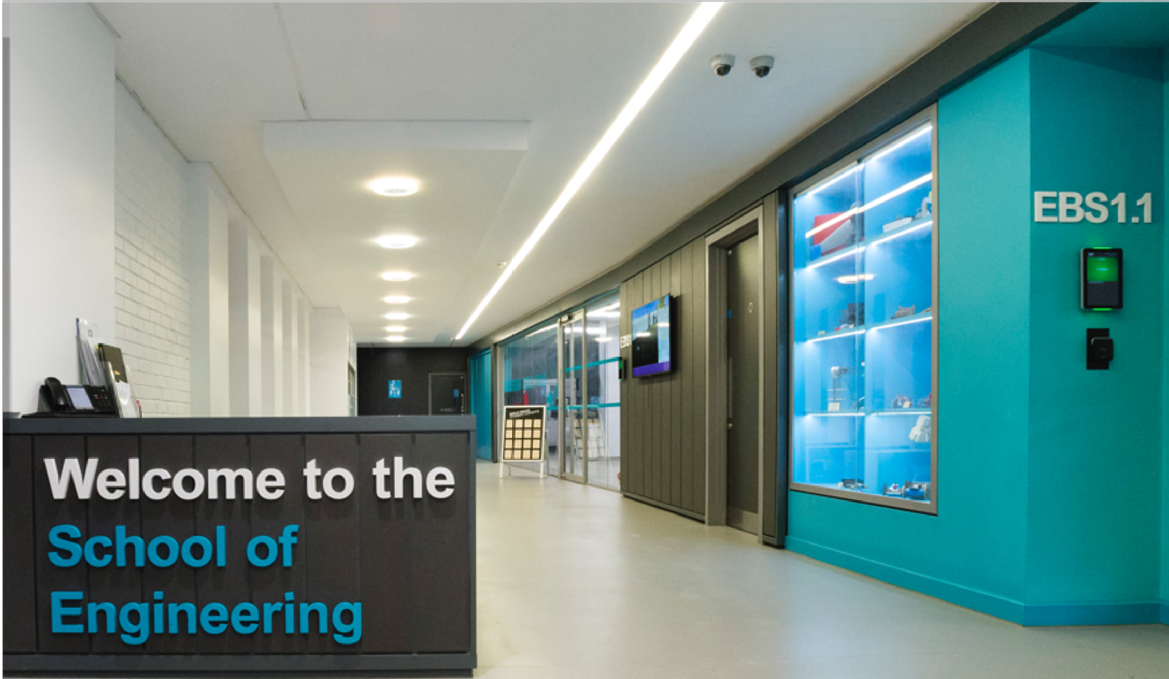
Dr. Tianhua Xu is a Reader in the School of Engineering at the University of Warwick and an Honorary Lecturer in the Department of Electronic and Electrical Engineering at University College London (UCL). He holds a Ph.D. in Optical Communications and Intelligent Signal Processing from KTH Royal Institute of Technology in Sweden, followed by postdoctoral and research roles at KTH, RISE Acreo, DTU, and UCL. His research focuses on optical communication systems, intelligent signal processing, machine learning, optical sensing, and advanced energy systems. He has secured major grants, including a €1.8M EU Horizon Europe project (SPAR) and a £285K UK National Grid initiative. Dr. Xu serves as an Associate Editor for IEEE Transactions on Communications and the Journal of the European Optical Society-RP, and chairs technical groups in the Optical Society of America. He has authored over 200 publications, including invited book chapters, with a Google Scholar h-index of 32. Current projects involve smart photonic sensing, energy storage systems, and deep learning in optical networks. His lab oversees six PhD students and multiple postdoctoral researchers. He actively recruits students through global scholarships and oversees vibrant research teams in optical communications, sensing, and energy systems.
Karel Keesman is an Associate Professor at Wageningen University & Research, specializing in mathematical and statistical methods applied to environmental engineering and biotechnology. He leads research in aquaponics, wastewater treatment, and sustainable energy systems, focusing on optimizing resource use and environmental impact. His work integrates advanced modelling techniques with real-world applications, such as bioreactor stability, nutrient cycling in aquaculture, and renewable energy storage. His research interests span aquaponics system design, desulfurization processes, and sensor-based monitoring in water networks. He actively contributes to interdisciplinary projects, including the development of off-river pumped hydro energy storage and nutrient recovery from biofloc systems. Keesman supervises multiple PhD candidates exploring topics like aquaponics sustainability, anaerobic digestion, and energy mixes in Indonesia. He has authored over 300 publications and datasets, emphasizing open-access research. His work bridges theoretical models with practical solutions for environmental challenges.
Hubert Zangl is a Professor at the University of Klagenfurt and Head of the Institute for Intelligent System Technologies . He serves as Chairman of the Information Technology Curricular Commission and participates in the Faculty Conference of the Faculty of Technical Sciences. Key research areas include: Sensor technology Electrical measurement technology Robotics Signal processing Electronics Recent research trends focus on: High-fidelity FMCW radar simulation frameworks Energy-efficient sensor systems Printed electronics for structural health monitoring Uncertainty propagation in measurement science Modular robotics with secure transducer identification Capacitive tactile sensing for robotic grasping Contact: Hubert.Zangl@aau.at
Dr. Young-Jin Cha is a tenured full Professor in the Department of Civil Engineering at the University of Manitoba, affiliated with the Price Faculty of Engineering. He holds a PhD from Texas A&M University and has postdoctoral experience at MIT. His research focuses on deep learning-based structural health monitoring (SHM), autonomous UAVs for infrastructure inspection, and smart transportation systems, with over 100 peer-reviewed publications and $1.2M in grants. He is a Fellow of ASCE and has received notable awards including the 2021 Merit Award and 2022 International Association of Advanced Materials Scientist Award. His work has been cited over 9,200 times globally. Research interests include automated SHM with UAVs, nonlinear system identification, unsupervised deep learning for damage detection, and sustainable infrastructure design. He serves as an editor for journals like Structural Control & Health Monitoring and Engineering Reports . His lab, the Laboratory for Infrastructure Science and Technology (LIST), develops advanced technologies for infrastructure resilience. Key achievements include pioneering deep learning-based SHM with UAVs, top-cited papers in civil engineering journals, and leadership in organizing international conferences. He actively seeks graduate students for research in AI-driven infrastructure solutions.
Fabrício Benevenuto is an Associate Professor in the Computer Science Department at Federal University of Minas Gerais (UFMG), where he conducts interdisciplinary research at the intersection of social media analysis, data science, and computational journalism. His work spans complex networks, machine learning, and natural language processing with strong societal impact. His research focuses on social media dynamics, particularly in Brazilian contexts, with major contributions to hate speech detection, fake news analysis, and political discourse monitoring. He leads large-scale projects against misinformation, including development of systems like WhatsApp Monitor, Media Bias Monitor, and Purple Feed. His work combines technical innovation with real-world applications for election transparency and public discourse integrity. Benevenuto's recent publications demonstrate strong trends in multilingual NLP for social media analysis, with emphasis on Brazilian Portuguese contexts. His team produces both theoretical contributions and practical systems addressing hate speech, misinformation, and media bias. Notable methodological approaches include combining network analysis with linguistic features, developing culturally-aware detection systems, and creating large annotated datasets for understudied languages. CAPES award for best Brazilian computer science thesis (2010) Humboldt Foundation scholarship recipient (2017-2018) Member of TikTok Safety Advisory Council WWW'20 Best Paper Nominee & CNIL-INRIA Privacy Protection Prize winner Multiple best paper awards at CEAS, WBC, and ICWSM conferences Test-of-Time Award at ICWSM'20 Benevenuto actively mentors PhD and MSc students, with numerous advisees securing academic positions at Brazilian universities and research roles at institutions like Max Planck Institute. His projects often receive funding supporting interdisciplinary collaborations across computer science and social sciences. Current work includes large-scale analysis of Telegram political groups, real-time election monitoring systems, and developing culturally-aware NLP tools for Portuguese. He leads research teams working on social media analysis systems with societal impact, particularly focused on Brazilian digital ecosystems. Projects involve cross-institutional collaborations with researchers from MPI-SWS, Max Planck Institute, and various Brazilian universities, emphasizing practical applications for public discourse integrity.
Jie Xu is a Scientist at Argonne National Laboratory and a CASE Affiliated Scientist at the University of Chicago, Pritzker School of Molecular Engineering . Her research focuses on engineering durable, scalable, and sustainable polymer semiconductors for skin-like electronics and autonomous material discovery. Education : PhD in Chemistry (Nanjing University), Postdoctoral Fellow (Stanford University) Her research bridges polymer physics , self-driving laboratories , and AI-guided material synthesis to address challenges in stretchable electronics, recyclable polymers, and energy-efficient manufacturing. She pioneered polymer circuits that remain conductive under extreme deformation and developed the first roll-to-roll mass-production method for stretchable semiconductors. Her 15 most recent articles highlight advancements in AI-driven polymer discovery , biodegradable electronics , and multi-modal energy dissipation . Key themes include autonomous experimentation , hydrogen-bonded polymer systems , and machine learning for conjugated polymers , with applications in wearable medical sensors , soft robotics , and human-computer interfaces . Scientific accolades include the Materials Research Society Postdoctoral Award , MIT Technology Review’s Innovators Under 35 , and recognition as a Scialog Fellow . She serves on editorial boards for APL Machine Learning and Flexible Electronics , and her team at Argonne includes postdocs and students working on self-driving labs and degradable polymers .
Pedro Schilling De Carvalho is a Lecturer in Law at University College London's Faculty of Laws, specializing in Financial and Environmental Law. He holds a PhD in Law and Finance from the University of Cambridge, where he received a Cambridge International Scholarship, as well as an LLM in Commercial Law from Cambridge (supported by a Chevening Scholarship) and a LLB from the University of São Paulo, Brazil. His academic journey includes positions at: University of Cambridge (Research Affiliate, Judge Business School and Lauterpacht Centre for International Law) London School of Economics (Guest Lecturer) University of Edinburgh (Early Career Fellow in Financial Law and Regulation) Max Planck Institute for Comparative and International Private Law (Visiting Fellow) Harvard Law School (Visiting Fellow) Pedro's research focuses on financial regulation, corporate finance, environmental law, international economic law, and sustainable finance. His work explores regulatory diffusion in sustainable finance, international financial governance in multipolar contexts, and the intersection of corporate governance with environmental and social concerns. He has published in peer-reviewed journals such as the Journal of Financial Regulation and has been cited by institutions including the International Monetary Fund. His recent publications demonstrate a strong focus on sustainable finance frameworks, regulatory coordination across jurisdictions, and the evolving landscape of financial technology regulation globally. His work spans theoretical analysis of corporate governance models alongside practical regulatory frameworks for emerging financial technologies and sustainable investment. Pedro has received several prestigious awards and recognitions: Cambridge International Scholarship Chevening Scholarship Max Planck Institute & Cambridge Scholarship Certified peer-reviewer by the Equitable Growth, Finance and Institutions Global Practice He has actively contributed to policy development through written evidence to the UK Parliament Committee on the Future Relationship with the European Union, consultancy work for the World Bank Group's Legal Vice Presidency, the Green Climate Fund, and the Bill & Melinda Gates Foundation. His professional activities include being Co-Director of the UCL Centre of Law and the Environment, academic member of the European Corporate Governance Network, and member of the Leadership of the Commission on Arbitration and ADR at the International Chamber of Commerce. Pedro has extensive experience as both a transactional and dispute resolution lawyer, having worked with prominent law firms and served as Chief of Staff at the Commercial Law Chamber of the São Paulo Supreme Court.
Cristina Torres-Machi is an Assistant Professor of Civil, Environmental and Architectural Engineering at the University of Colorado Boulder, holding the Beavers Professorship of Construction Engineering. She earned her PhD in Civil Engineering from Universitat Politècnica de Valencia and Universidad Católica de Chile (2015), a MSc in Planning and Management in Civil Engineering (2012) and BSc in Civil Engineering (2008) from Universitat Politècnica de Valencia. Her research focuses on infrastructure asset management, sustainability/resilience in transportation, and decision-making optimization systems. She leads the Innovation for Resilient Infrastructure (IRI) research group, advancing methodologies for long-term infrastructure management. Recognized with awards including the Abertis International Award (2016) and excellence in PhD dissertation (2015/2017), she serves as Chair of ASCE’s Construction Research Council and Vice-Chair of TRB’s Transportation Asset Management committee. Her work integrates machine learning, predictive analytics, and data science to improve pavement performance and lifecycle cost analyses. Professional affiliations include the American Society of Civil Engineers (ASCE) and active roles in TRB committees. Research emphasizes pavement rehabilitation strategies, flood impact modeling, and equitable infrastructure adoption trends. Over 60 publications (60+ citations) span journal articles, conference proceedings, and book chapters, with projects funded by public/private agencies. Current projects explore satellite-based monitoring, EV infrastructure impacts, and disaster-resilient traffic systems. Her recent work addresses procurement fallacies in design-build projects and integrates social vulnerability assessments in natural hazard planning.
Professor Brian Surgenor is a faculty member at Queen's University's Department of Mechanical and Materials Engineering, part of the Smith Engineering faculty. He holds a B.Sc. (1977), M.Eng. (AECL/Whiteshell), and Ph.D. (1983) in Mechanical Engineering from Queen's University. His research focuses on machine vision systems for automation, autonomous vehicle navigation, and mechatronic system design education. He has held key administrative roles including Department Head (1993-2002), Associate Dean (2008-2013), and Vice-Dean (2013-2016). His work emphasizes interdisciplinary innovation, such as the Mitchell Hall design project and contributions to Ingenuity Labs. Education: B.Sc. Mechanical Engineering, Queen's University (1977) M.Eng. Engineering Physics, McMaster University (AECL/Whiteshell) Ph.D. Mechanical Engineering, Queen's University (1983) Research interests include: - Pneumatic servosystems - Intelligent algorithms for machine vision - Off-road autonomous vehicle systems - Mechatronics education methodologies - Hybrid powertrain systems for vehicles His recent publications (2017–2024) explore autonomous systems, machine vision applications, and fuel cell hybrid technologies. Notable trends include advancements in UAV-based infrastructure inspection, terrain-adaptive autonomous driving, and low-cost machine vision solutions for small part sorting. His work bridges theoretical control systems with practical industrial automation challenges. He has contributed to laboratory design for CDIO curricula and pioneered mechatronics education through problem-based learning. His administrative leadership has shaped Queen's engineering graduate programs and research infrastructure. Currently involved in Ingenuity Labs, fostering cross-disciplinary innovation.