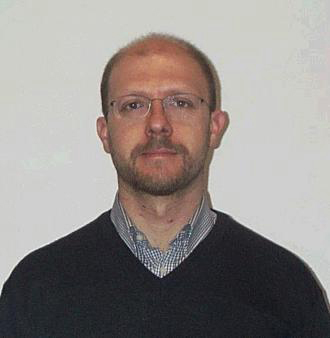
Stefano Invernizzi is an Associate Professor at the Department of Structural, Geotechnical and Building Engineering (DISEG) of Politecnico di Torino. His expertise spans civil and structural engineering, focusing on fracture mechanics, finite element analysis, and numerical modeling of historical masonry and concrete structures. Teaches Statics and structural analysis courses at the Faculty of Architecture. Supervised numerous PhD and degree theses on masonry, concrete, and computational mechanics. Research emphasizes scale effects on material strength, fractal properties of structural materials, contact mechanics, and seismic vulnerability of historical buildings. He co-developed the sequentially linear saw-tooth softening model for robust analysis of reinforced concrete structures. Collaborated with Prof. Jan Rots on computational mechanics and contributed to projects like TOMORROW (additive manufacturing for building walls) and DURA_LAM (nano-materials for timber durability). His work aligns with SDGs 9 (Industry Innovation) and 11 (Sustainable Cities). He leads the Laboratorio di Meccanica della Frattura and has authored over 30 publications in journals like Engineering Fracture Mechanics and International Journal of Fracture . His research integrates statistical theories of strength with nonlinear numerical simulations for disordered materials.
Giuseppe Giorgi is a fixed-term researcher at the Department of Mechanical and Aerospace Engineering (DIMEAS), Politecnico di Torino. He serves as Scientific Coordinator for multiple EU-funded projects including MERMAIDS, BLUE-X, and AIMS, and leads commercial research contracts for offshore wind microclimate studies. Research focuses on hybrid offshore platforms integrating Floating Offshore Wind Turbines (FOWTs) with Wave Energy Converters (WECs) Expertise in nonlinear hydrodynamics , fluid-structure interaction , and experimental validation through lab tests and sea trials Research Interests : Marine Renewable Energy Systems Nonlinear Dynamic Modeling Mechanical and Techno-Economic Optimization Hybrid Wind-Wave Energy Platforms Parametric Resonance Energy Harvesters Scientific Achievements : 2022: IFAC CAMS Best Paper Award 2022: Institution of Civil Engineers - Baker Medal 2022: AIMETA Junior Mechanics of Machines Award 2023: IFToMM Bronze Best Student Paper Award Academic Leadership includes supervising 6 PhD students and teaching Numerical Modeling of Marine Energy Converters (PhD level). His 15 most recent publications focus on wave energy converter optimization, floating wind turbine dynamics, and hybrid offshore energy systems with applications in the Mediterranean Sea and North Sea.
Marco Milazzo is a Full Professor in the Department of Earth and Marine Sciences at the University of Palermo (Unipa), Italy. His research focuses on marine ecosystems, particularly in the Mediterranean Sea, with expertise in ocean acidification, climate change impacts, and marine conservation. He maintains regular office hours on Tuesdays from 10:00 to 11:00 at Via Archirafi 20, 4th floor. Professor Milazzo's research interests center on marine ecology and the impacts of climate change on Mediterranean ecosystems. His work extensively examines ocean acidification through natural analogues like volcanic CO2 seeps, which serve as laboratories for understanding future ocean conditions. He investigates how changing environmental conditions affect marine biodiversity, community structure, and ecosystem functioning. His research spans across multiple disciplines including marine protected areas effectiveness, fisheries management, invasive species dynamics, and biogenic habitat conservation. Notably, he has conducted significant research on vermetid reefs, which are threatened biogenic formations in the Mediterranean Sea. Analysis of Professor Milazzo's recent publications reveals a strong focus on climate change impacts, particularly ocean acidification and warming effects on marine organisms and ecosystems. His work increasingly incorporates interdisciplinary approaches, combining ecological studies with social science perspectives, especially regarding small-scale fisheries and marine protected area governance. A significant portion of his research utilizes natural CO2 seeps as experimental sites to study long-term effects of acidification. His publication record shows consistent productivity with over 100 publications spanning two decades, demonstrating sustained research activity and evolving interests that now include technological approaches for marine monitoring and conservation planning. Professor Milazzo has contributed to numerous research projects examining Mediterranean marine ecosystems under changing environmental conditions. His work on marine protected areas has provided valuable insights into their effectiveness for conservation and fisheries management. He has been involved in international collaborations studying natural analogues of future ocean conditions, particularly through volcanic CO2 seeps which serve as natural laboratories for climate change research. His research has important implications for marine conservation policy and management strategies in the face of global environmental change.
Paolo Ruggeri is an Associate Professor at the Department of SIMAU, Università Politecnica delle Marche (UNIVPM), Ancona, Italy. His research focuses on Geotechnical Engineering , Slope Stability , Seismic Risk Assessment , and Soil-Structure Interaction , with particular emphasis on landslide dynamics, port infrastructure resilience, and tunnel construction impacts. Selected trends from his 15 most recent publications include: Analysis of coastal and harbor structures (quay walls, dykes) Investigations into seismic and rainfall-induced slope failures Advancements in soil-structure interaction modeling Environmental sustainability of geotechnical works Comparative studies on tunnel design approaches (Eurocodes)
Maria Letizia Marchegiani is an Assistant Professor at the University of Parma , affiliated with the Department of Engineering and Architecture . Previously, she held academic positions at Aalborg University (2019) and Oxford Robotics Institute (2014-2018). Education: PhD in Computer Science and Engineering from Sapienza - University of Rome , MSc/BEng in Computer Engineering Her research interests span signal processing , machine learning , and their applications to robotics , autonomous systems , intelligent transportation , and intelligent healthcare . She explores intersections between auditory perception , cognitive modeling , and energy-efficient wearable systems . Recent publications demonstrate expertise in acoustic event localization , ML-SDWSN architectures , thermal camera integration for vehicles, and privacy-preserving wearable systems . Her work addresses challenges in network reliability , urban soundscapes , and human-robot collaboration .
Andrea Nardini is a Full Professor at the University of Trieste , Department of Environmental Biology, specializing in Plant Physiology and ecophysiological responses to environmental stressors. He serves as Coordinator for the Environmental Biology Board of Studies and member of multiple doctoral college boards (XXIX–XXXIX cycles). His research group focuses on Plant Physiological Ecology , investigating hydraulic strategies, drought tolerance, and xylem functionality across diverse species. University of Trieste, Department of Environmental Biology Full Professor of Plant Physiology Coordinator, SM56 - Environmental Biology Board of Studies Research areas: Plant Hydraulics, Drought Adaptation, Ecophysiology His recent work analyzes climate extremes' impacts on grasslands, xylem embolism reversal mechanisms, and green roof plant water relations. Collaborative projects include the H2020 Graphene Flagship and national grants on drought-resistant crops. Students in his group (Agnese Cometto, Giada Caorsi, et al.) explore topics from lichen symbiosis to biomonitoring applications. While no explicit awards are listed, his 15+ recent publications highlight leadership in plant stress physiology and environmental adaptation.
Fulvio Rinaudo is a Full Professor in the Department of Architecture and Design (DAD) at Politecnico di Torino, Italy, specializing in geomatics and cultural heritage documentation. With decades of experience in the field, he leads research in Geographic Information Systems (GIS), Historical Building Information Modeling (HBIM), photogrammetry, and the documentation of cultural heritage through advanced metric surveying techniques. His research interests span across multiple domains of cultural heritage preservation, including: Georeferenced databases (GIS) for cultural heritage management HBIM applications for architectural documentation and conservation Automatic digital photogrammetry for objects and contexts of varying scales Metric survey techniques for documenting historical buildings and urban contexts Digital documentation methodologies for cultural heritage preservation Rinaudo's recent scholarly output demonstrates a clear focus on advancing technological approaches to cultural heritage documentation, particularly through HBIM systems, environmental risk assessment for heritage sites, and innovative surveying methodologies. His work increasingly integrates emerging technologies like SLAM systems, 360° imaging, and cloud-based platforms to create more efficient and accurate documentation workflows. A significant portion of his recent research addresses the challenges of documenting and preserving heritage in Central Asia, particularly through the ERAMCA project focused on environmental risk assessment. Among his notable recognitions is the Best Poster Award at the CIPA Symposium awarded by ICOMOS CIPA-HD in France (2013). His leadership in the field is further evidenced by his current role as President of CIPA Heritage Documentation (2024-2027) and previous position as Secretary of ICOMOS Italy (2020-2022). Professor Rinaudo actively supervises PhD students across multiple institutions including Politecnico di Torino and Sapienza University of Rome. He has secured significant research funding through competitive grants including the ERAMCA project (Environmental Risk Assessment and Mitigation on Cultural Heritage assets in Central Asia), the RURITAGE project, and the GAMHER project (Geomatics data Acquisition and Management for landscape and built Heritage in an European Perspective). He serves on editorial boards for journals including VIRTUAL ARCHAEOLOGY REVIEW and APPLIED GEOMATICS, and participates in major international conferences as a scientific committee member for CIPA and ISPRS events. His external teaching engagements include positions at Katholieke Universiteit Leuven (Belgium) and Turin Polytechnic University in Tashkent.
Alberto Tiraferri is a Full Professor at the Department of Environment, Land and Infrastructure Engineering (DIATI) at Politecnico di Torino , Italy. His research focuses on membrane technology for water desalination , wastewater treatment , and resource recovery , with expertise in advanced oxidation processes and environmental chemistry . He leads the en.sur.e water lab , which bridges separation technology , materials science , and colloid/surface science . Member, Interdepartmental Center CWC - CleanWaterCenter@PoliTo Full Member, ANDIS (2019–present), GITISA (2015–present) Associate Editor, Frontiers in Environmental Science (2018–2025) His research projects include MEloDIZER (EU-funded, 2022–2026) for sustainable membrane distillation and FLOWING (2017–2019) for produced water reuse in oil & gas. He has received prestigious awards such as the ACS Environmental Chemistry Graduate Student Award (2010), Membrane X-Prize (2010), and Marie Curie Intra European Fellowship (2012). His work aligns with UN SDG 6 (Clean Water), SDG 9 (Innovation), and SDG 11 (Sustainable Cities). Professor Tiraferri supervises 10 PhD students and has authored 15+ recent publications on membrane processes , chemical water treatment , and microfiber pollution . He holds multiple international patents , including Biomimetic membranes with water channels and Living water filtration membranes .
Professor Maria Paola Canevini holds the position of Full Professor of Child Neuropsychiatry and directs the Developmental Neurology - Regional Epilepsy Center at ASST Santi Paolo e Carlo in Milan. Her academic work focuses on epilepsy, neurodevelopmental disorders, and genetic studies in neurological conditions. She graduated in Medicine and Surgery from the University of Milan and specialized in Neurology, with over 300 scientific publications to her name. Her research spans epilepsy therapy optimization (e.g., brivaracetam, cannabidiol), neurogenetic syndromes (Rett syndrome, Tuberous Sclerosis Complex), and sleep neuroscience in neurologic populations. She leads projects on inclusion of people with disabilities and adolescent mental health , addressing transitions to adulthood for patients with ADHD or epilepsy. Collaborative efforts include the BRIVAFIRST epilepsy drug study and CRISIS AFAR pandemic impact analysis. Her work integrates machine learning (e.g., predicting perinatal depression) and innovative wearable technologies for chronic disease monitoring. She has contributed to multinational studies on epilepsy genetics and participates in EU-funded sustainability initiatives (MUSA project).
Andrea Pitacco is an Associate Professor in the Department of Agronomy, Food, Natural Environment and Energy (DAFNAE) at the University of Padova, Italy. His academic field is AGR/03 (Arboriculture and Tree Cultivation), with research focused on viticulture and precision agriculture. Based at the Agripolis campus in Legnaro (Padova), he maintains an active research profile in plant-environment interactions. Dr. Pitacco's research spans multiple dimensions of modern viticulture, with particular emphasis on carbon and water flux dynamics in vineyard ecosystems. His work integrates micrometeorological techniques, remote sensing, and physiological approaches to address climate change impacts on grapevine production. Key research areas include: Carbon footprint analysis and carbon farming potential in vineyards Effects of climate extremes on grapevine physiology Microclimate modification through protective netting systems Soil management impacts on erosion and greenhouse gas emissions Plant-pathogen interactions under abiotic stress conditions His publication record demonstrates strong methodological expertise in eddy covariance measurements and turbulent flow characterization within vineyard canopies. The research output shows consistent focus on Mediterranean agricultural systems with practical applications for sustainable viticulture. Dr. Pitacco actively contributes to understanding how vineyards function as carbon sinks/sources and how management practices can optimize environmental performance while maintaining productivity. His work connects fundamental plant physiology with practical agricultural applications in changing climatic conditions.
Professor Paolo Casoli is a Full Professor at the Department of Industrial Systems and Technologies Engineering within the University of Parma . With over 30 years of academic experience since 1990, he specializes in fluid power systems, combustion modeling, and energy efficiency improvements in mobile machinery. Research Interests : Development of advanced combustion models for ICE optimization Hydraulic component simulation and experimental testing Hybrid systems and energy recovery technologies Condition monitoring of fluid power machinery Teaching : Active in second-cycle Mechanical Engineering programs (2013–2026), teaching courses on Fluid Machinery , Oleodynamics Systems , and Advanced Heat Engines . Also involved in first-cycle Management Engineering as a tutor. Scientific Contributions : Co-author of 120+ publications with ORCID 0000-0002-0433-6279, focusing on gear pump optimization, vibration analysis, and CFD applications. Currently active in experimental studies on pumps and motors. Contact : Office hours available by appointment via email at paolo.casoli@unipr.it. Located at Campus Scienze e Tecnologie - Padiglione 10 - Parco Area delle Scienze, 181/A, Parma, Italy.
Riccardo Augello is a Research Fellow in the Department of Mechanical and Aerospace Engineering at Politecnico di Torino, Italy. He is actively involved in both research and teaching, serving as a course collaborator in aerospace engineering programs focusing on structural mechanics and spacecraft design. His academic work is centered on advanced computational modeling of complex structures using the Carrera Unified Formulation (CUF). His research interests include computational structural mechanics, finite element analysis, composite materials, aerospace structures, multilayered systems, and nonlinear structural behavior. He specializes in high-fidelity modeling of deployable space structures, sandwich panels, and reinforced concrete systems, with a strong emphasis on accuracy and computational efficiency. His recent publications (2023–2025) reveal a consistent focus on applying CUF to diverse structural problems, including damage analysis in concrete, folding of tape springs, global/local modeling of composites, and dynamic behavior of metamaterials. The work demonstrates a strong trend toward high-order, refined modeling techniques for both terrestrial and space applications, often validated against experiments. Scientific Responsible, NOVITAS project (2023–2026), EU-funded MSCA grant on nonlinear analysis of deployable composite booms. He is a core member of the MUL2 (Multilayered structures and Multifield analyses) research group, collaborating closely with Prof. Erasmo Carrera and other researchers. His teaching contributions include modules in Spacecraft Structures, Aeronautical Structures, and Additive Manufacturing for Aerospace Applications. No formal advisees or scientific awards are mentioned in the available texts.
Prof. Paola Russo is a Researcher at the University of Ancona (Università Politecnica delle Marche), affiliated with the Department of Information Engineering (Dipartimento di Ingegneria dell'Informazione) under the Engineering School. Her work focuses on electromagnetic fields, antenna design, and biomedical engineering applications. Key research areas include reverberation chamber analysis, microwave engineering, and sensor technologies for healthcare and accessibility. She has contributed to advancements in electromagnetic compatibility testing, non-invasive medical sensing, and antenna systems for visually impaired navigation. Her research integrates theoretical modeling with experimental validation, addressing challenges in 5G channel emulation, radar cross-section prediction, and bioimpedance measurements for medical diagnostics. Projects include developing contactless respiratory monitoring systems and guiding devices for visually impaired athletes. Prof. Russo collaborates on interdisciplinary initiatives combining electrical engineering with biomedical applications, such as tissue inflammation detection and astronaut health monitoring.
Rosario Ceravolo is a Full Professor in the Department of Structural, Building and Geotechnical Engineering (DISEG) at the Polytechnic University of Turin , where he conducts cutting-edge research in structural dynamics, earthquake engineering, and structural health monitoring with a focus on architectural heritage. He is a member of the Interdepartmental Center R3C (Responsible Risk Resilience Center) and the University Quality Assurance Committee, reflecting his leadership in academic and research governance. His research interests include: Dynamic identification of structures Seismic assessment and protection of cultural heritage Structural health monitoring (SHM) Natech (natural-technological) risk Earthquake engineering and structural control His recent publications demonstrate a strong trend toward integrating advanced computational techniques, satellite data, and experimental monitoring for assessing historical and modern structures. Key themes include modal tracking, digital twinning, ferrocement durability, and data fusion for heritage conservation. His work bridges civil engineering and heritage science, often involving interdisciplinary collaborations. Scientific Awards and Recognitions: Keeping it Modern Implementation Grant, Getty Foundation (2019) Fellow, ICOMOS (2024–) Fellow, ISCARSAH (2014–) Fellow, American Society of Civil Engineers (1999–) Evaluator, Rita Levi Montalcini Program (2018) Advising and Grants: He supervises multiple PhD students in architectural and civil engineering programs and leads several major research initiatives, including EU-funded and national projects such as REcube (Erasmus+), OPTIMISE, SAT4SHM, and CAMELOT. He serves as Scientific Director for numerous research contracts with public and private institutions, including long-term monitoring projects at the Vicoforte Sanctuary and Torino Esposizioni. Research Labs and Teams: He leads activities in the Dynamics and Seismic Laboratory (DISEG) and is involved in research networks such as ICOMOS-ISCARSAH and IASS-WG17, fostering international collaboration in structural analysis and heritage conservation.
Luigino Manca is an Associate Professor of International Law at the Department of Political Science, Sapienza University of Rome, where he teaches International Law and International Human Rights Law. He has been a researcher in International Law at the same institution from 2004 to 2022 and is actively involved in academic leadership and editorial roles. He earned his degree in Political Sciences (international track) from Sapienza University of Rome in 1995 and completed his PhD in International Order and Human Rights in 2002. He has served as a Visiting Professor at the University of Applied Sciences in Würzburg–Schweinfurt (2016) and has taught in various academic and training programs. His research centers on human rights, with a focus on migrants, refugees, children, persons with disabilities, prisoners, and anti-corruption frameworks. His work spans international, regional (especially African and Inter-American), and European human rights systems. He examines the role of national institutions, treaty bodies, and special rapporteurs in enforcing human rights protections. The 15 most recent publications highlight a consistent trend in analyzing monitoring mechanisms, treaty implementation, and the intersection of corruption with human rights. His articles frequently engage with UN and regional human rights bodies, emphasizing practical applications and legal developments in asylum, migration, child protection, and disability rights. Member of the editorial board of Ordine internazionale e diritti umani (since 2014) Member of the editorial board of Nomos - Le attualità nel diritto (since 2018) Former member of the editorial board of AWR Bulletin (2011–2013) Director of the Training Course on Refugees and Migrants at Sapienza (since 2019) Member of the Scientific Council of the Master in International Human Rights Protection “Maria Rita Saulle” Member of the PhD Faculty Board in Public, Comparative, and International Law Luigino Manca has supervised numerous students through his involvement in master’s and doctoral programs, though specific names are not listed. He has contributed to academic training and policy development, particularly in refugee and migrant rights. While no direct grants are mentioned, his leadership in structured academic programs indicates active grant-supported and institutional research initiatives. He has also served as an assistant to the Constitutional Court (2005–2011) under Judge Maria Rita Saulle and was President of the Italian Section of AWR (2005–2009). He is associated with research projects on national institutions for human rights protection and contributes to interdisciplinary initiatives involving law, political science, and social policy.