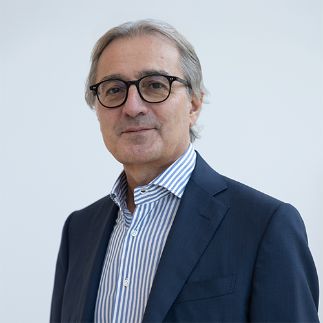
Marco Pirola is a Full Professor at the Department of Electronics and Telecommunications (DET) of the Polytechnic University of Turin, Italy. He is a member of the Interdepartmental Center 'CleanWaterCenter@PoliTo' and actively contributes to research in high-frequency electronics and microwave engineering. His work focuses on power amplifiers, device characterization, and advanced microwave circuit design. Research Interests: Microwave power devices, GaN technology, 5G/mm-Wave applications, space communications, and smart pipeline monitoring systems. Awards: IEEE Fellow (since 2019), IEEE Senior Member. Recent Publications address topics like Ka-band MMIC amplifiers for SAR systems, broadband Doherty amplifiers using GaN, and harmonic analysis of current-mode power stages. His projects include STARGATE (European GaAs power architectures) and Millimetre-Wave GaN Radar for UAV detection. Teaching: He leads courses on 'Radio Frequency Integrated Circuits' and 'Advanced Devices for High Frequency Applications' at the Polytechnic University of Turin. Supervised PhD students include Wenjun Zhang and Abbas Nasri, who worked on III-V HEMT circuits and GaN power amplifiers.
Montorfano Matteo is an Associate Professor of Cardiovascular Diseases at the Vita-Salute San Raffaele University in Milan since March 2023. He serves as Director of the Second-Level Master's Degree in Interventional Cardiology and has been Head of the Interventional Cardiology Unit and Hemodynamics at San Raffaele Hospital since 2018. His academic career spans roles as Director of the Percutaneous Cardiac Treatment Unit and Head of the Interventional Cardiology Laboratory. He holds an H-index of 59 with over 450 publications and 15,000 citations, focusing on structural heart disease and percutaneous valve interventions . Education: Specialization in Cardiology, La Sapienza University of Rome (2000) Degree in Medicine and Surgery, University of Milan (1991) Research Interests: Pioneering transcatheter structural heart interventions including TAVI , MitraClip , and left atrial appendage closure . Developed the LIRA sizing method for bicuspid aortic valve interventions and founded start-ups like Cephea Valve Technologies and Viv-Heart . Major contributions to valvular heart device innovation , with numerous international patents. Publications: Over 450 works in Circulation , JAMA , and JACC Cardiovascular Intervention , emphasizing transcatheter valve therapies , complex coronary interventions , and device development . Industry Collaborations: Faculty member at major conferences: TCT , PCR , GISE Consultant/Advisory Board member for Edwards Lifesciences , Medtronic , and Boston Scientific
Marco Toffolon is a Full Professor at the University of Trento's Department of Civil, Environmental and Mechanical Engineering, where he leads the Physical Limnology Laboratory. He serves as Deputy Director for International Relations and previously directed the Environmental Engineering programs. His research spans ecohydraulics, sediment transport, lake hydrodynamics, and environmental modeling. He investigates physical limnology, tidal morphodynamics, and stratified flows using analytical and numerical approaches. His work integrates field measurements with machine learning for water quality prediction and climate impact assessment. His publications focus on lake dynamics, river morphodynamics, and sustainable water management, with recent emphasis on climate-driven changes in alpine systems. Research demonstrates strong interdisciplinary linkages between hydraulics, ecology, and climate science. Awards: 2016 Coastal Engineering Journal Award 2013 Enrico Marchi Lecture invitation He leads international collaborations with institutions like EPFL and Sun Yat-sen University, and organizes conferences including the Physical Processes in Natural Waters workshop series.
Lorena REBECCHI is a Full Professor in the Department of Life Sciences at the University of Modena and Reggio Emilia. Her research focuses on tardigrade biology, particularly their survival mechanisms under extreme conditions such as desiccation, temperature extremes, and radiation. She explores phylogenetic relationships, symbiotic microbiota, and evolutionary adaptations of these organisms. REBECCHI's work integrates morphological, molecular, and physiological approaches, contributing to understanding anhydrobiosis, stress responses, and tardigrade ecology. Key research areas include tardigrade phylogeny (e.g., resolving their position within Panarthropoda), environmental adaptations (e.g., thermal tolerance and acid resistance), and astrobiology applications (e.g., space flight experiments). She has described multiple new species and revised taxonomic classifications within Tardigrada. REBECCHI collaborates internationally, evidenced by conferences like the 2024 IADCI meeting hosted at her institution. Publications emphasize comparative transcriptomics, symbiont evolution, and the structural basis of tardigrade feeding mechanisms. Her lab's work on Antarctic tardigrades highlights climate change impacts and genetic diversity. REBECCHI's research has practical applications in biotechnology (e.g., space food systems) and environmental monitoring.
Antonia Teresa Spano is a Full Professor at the Department of Architecture and Design (DAD) of Politecnico di Torino, Italy. She serves as Vice Coordinator of the PhD Program in Architectural Heritage and is a member of the Future Urban Legacy Lab (FULL). Her research focuses on geomatics, 3D modeling, and digital documentation for cultural heritage preservation. University: Politecnico di Torino Department: Department of Architecture and Design (DAD) Spano's work integrates advanced geomatic techniques like LiDAR, UAV photogrammetry, and SLAM-based modeling to address challenges in architectural and archaeological heritage documentation. Her expertise spans GIS, digital photogrammetry, and machine learning applications in conservation processes. Her recent publications emphasize multi-sensor 3D surveys for Pier Luigi Nervi's structures, AI-driven decay detection, and semantic classification of LiDAR data. These works align with SDG goals for sustainable cities and quality education. Scientific Awards: Premio Giovani CNR (2005) Miglior Poster at GISTAM (2016) and GEORES (2019) Fellow of CIPA Heritage Documentation (2023-2033), CIRAAS ETS (2020-2030), and ISPRS (2017-2024) Spano supervises PhD students in architectural heritage programs and leads numerous research projects, including collaborations with institutions like the Pompeii Archaeological Park, CRAST, and international universities. She has contributed to editorial boards and program committees of journals and conferences such as Virtual Archaeology Review and ISPRS symposiums.
Paolo Riva is a Full Professor of Structural Engineering at the Department of Design and Technologies of the Faculty of Engineering, University of Bergamo. He has served as Dean of the Faculty of Engineering (2009-2012) and Director of the Department of Engineering at the same university since 2012. His expertise lies in seismic engineering and structural analysis of reinforced concrete structures. Professor Riva graduated in Civil Engineering from Politecnico di Milano in 1984 and earned his Ph.D. in Civil Engineering from the University of Waterloo, Canada in 1987. He began his academic career as a researcher at the University of Brescia (1991-2001), became Associate Professor there in 2001, and joined the University of Bergamo as Full Professor in 2005. His primary research interests focus on the seismic behavior of reinforced concrete structures, particularly structural walls and prefabricated structures. He also specializes in seismic retrofitting of historic buildings, nonlinear analysis of reinforced concrete structures, and fire behavior of reinforced concrete structures. His work bridges theoretical analysis with practical applications for enhancing structural safety in earthquake-prone regions. Professor Riva's recent publications demonstrate a strong focus on seismic damage assessment, structural retrofitting solutions, and sustainability in structural engineering. His research often addresses practical challenges in post-earthquake scenarios, including damage identification through advanced monitoring techniques and development of innovative retrofit strategies for existing structures. A notable trend is his increasing emphasis on integrating sustainability principles into seismic retrofitting practices. Seismic Reliability of Structures (WP3 - Reluis), 2022, 24 months Structural vulnerability models for natural hazards and industrial cascading effects, 2024, 33 months Sustainable Approaches For Earthquake Resistant_REhabilitation solutions for the BUILT environment, 2024, 15 months Professor Riva has directed all these research projects as Scientific Director. His expertise has been recognized through appointments to post-seismic emergency commissions following major earthquakes in Italy, where he provided critical guidance on intervention methods for seismic repairs and improvements for public and monumental buildings.
Andrea Appolloni is an Associate Professor at the Department of Management and Law, University of Rome Tor Vergata. His academic career focuses on Management with emphasis on Sustainable Supply Chain Management , Digital Transformation , and Circular Economy . His research explores the intersection of technological innovation and sustainability, particularly through topics like AI in Logistics , Green Procurement , and Policy Optimization . Publications span both theoretical frameworks and empirical studies in China, Italy, and Malaysia, with a strong focus on environmental impact and organizational performance. Recent work includes digital twin applications for human-AI collaboration, blockchain integration in sustainable supply chains, and analyzing barriers to circular economy adoption. His 15 most recent articles (2025-2022) demonstrate a trend toward combining Artificial Intelligence , Operations Management , and Environmental Governance .
Marco Martino Rosso is a Research Fellow at the Department of Structural, Building and Geotechnical Engineering (DISEG) at the Polytechnic University of Turin, where he also serves as an external lecturer and teaching assistant in both DISEG and the Department of Mathematical Sciences (DISMA). He is affiliated with the Doctoral School (SCDOTT) and completed his PhD under the supervision of Professor Giuseppe Carlo Marano. His academic work bridges civil engineering with advanced computational methods, focusing on structural health monitoring, optimization, and machine learning applications. His research interests center on Structural Health Monitoring , Machine Learning in Civil Engineering , Earthquake Engineering , Structural Optimization , Operational Modal Analysis , and AI-driven diagnostics for infrastructure. He applies deep learning, neural networks, and hybrid modeling techniques to problems such as damage detection, post-earthquake assessment, tunnel and bridge monitoring, and dynamic analysis of timber and concrete structures. His recent publications, spanning from 2023 to 2025, demonstrate a strong trend toward integrating artificial intelligence with structural engineering, particularly in automating modal analysis, optimizing structural forms, and enhancing seismic resilience. These works appear in journals like Mechanical Systems and Signal Processing , Computers & Structures , and Bulletin of Earthquake Engineering , as well as in proceedings of international conferences such as IOMAC and EWSHM. Marco Rosso has not received any explicitly mentioned scientific awards in the provided text. However, his extensive publication record and active role in research projects indicate strong recognition in his field. He has contributed to teaching as a course collaborator in subjects including Dynamic Identification of Structures , Statistics , Construction Techniques , and Safety Assessment and Retrofitting of Structures . He has also been involved in the ARTISTE 2025 Summer School, indicating engagement in advanced training programs. While no formal lab or team name is specified, his frequent collaborations with researchers such as Angelo Aloisio, Giuseppe Carlo Marano, and Jonathan Melchiorre suggest he is part of a vibrant research group focused on intelligent structural systems and data-driven engineering at Politecnico di Torino.
Prof.ssa Elda Favari is a Full-Time Associate Professor of Pharmacology at the Department of Food and Drug, University of Parma, Italy . Her research focuses on atherosclerosis physiology , cholesterol metabolism , and cellular cholesterol efflux processes . She has collaborated with international institutions in the USA , Australia , and Switzerland . PhD in Pharmacology and Toxicology (University of Parma, 2005) Academic Editor for the journal Medicine Member of Italian Society of Pharmacology , European Lipoprotein Club , and International Atherosclerosis Society Her scientific contributions include over 50 peer-reviewed publications , an H-index of 23 , and 16 Q1-journal publications from the last 15 years. Key research areas cover reverse cholesterol transport , PCSK9 mechanisms , and HDL functionality in diseases like familial hypercholesterolemia , cancer , and autoimmune disorders . Recent Google Scholar publications (2023-2025) examine: HDL modulation through nutraceuticals and 3D-printed devices Immune checkpoint inhibitors in relation to lipid profiles PCSK9-lomitapide interactions in genetic lipid disorders Anti-ApoA-1 IgGs as atherogenic factors 2000: AstraZeneca Grant at SISA Congress 2011: National Research Grant for Lupus Study She has held institutional roles including Student Orientation Delegate and serves on scientific committees for international congresses. Teaching spans Toxicology , Anticancer Chemotherapy , and Pharmacovigilance across Pharmacy , Food Safety , and Drug Sciences programs.
Davide Cassi serves as Associate Professor of Physics of Matter at the University of Parma's Department of Mathematical, Physical and Computer Sciences since 2001, following his appointment as Researcher in Theoretical Physics (1995-2001). With over 30 years of academic service, he teaches Condensed Matter Physics, Soft Matter Physics, and Physics Applied to Gastronomy across undergraduate and graduate programs in Physics and Gastronomic Science. His educational background includes: Ph.D. in Physics, University of Parma (1988-1992) Master’s degree in Materials Science and Technology, University of Parma (1986-1988) Degree in Physics, University of Parma (1982-1986) Cassi's research integrates statistical mechanics with real-world applications through two primary lenses: complex network theory for ecological and social systems, and soft matter physics applied to culinary processes. His work on biodiversity loss prediction in agricultural networks and food preservation technologies demonstrates exceptional interdisciplinary reach. Recent publications reveal a strategic pivot toward AI-driven biodiversity conservation and network robustness modeling. Analysis of his 15 most recent publications (2023-2025) shows dominant themes in network vulnerability analysis (68% of works) and food-physics applications (27%), with emerging focus on machine learning integration for ecological modeling. His research bridges theoretical physics with practical solutions in food safety and ecosystem management. Key recognitions include: Grand Prix de la Science de l'Alimentation from Académie Internationale de la Gastronomie (2012-2013) Dual National Scientific Qualifications for Full Professorship (2022) in Theoretical Physics of Fundamental Interactions and Matter Cassi's academic contributions extend beyond publications to two international patents in food preservation technology and editorial leadership since 2007 for World Scientific's Series on Advances in Statistical Mechanics . His research program demonstrates consistent translation of theoretical physics into practical applications across gastronomy and ecology, with growing emphasis on AI-enhanced network analysis for sustainability challenges.
Fabio Pranovi is a Full Professor at the Department of Environmental Sciences, Computer Science and Statistics (DAIS) at Ca' Foscari University of Venice , and Laboratory Supervisor at the Responsible for Teaching and Research Activities in the Laboratory (RDRL) . He contributes to the Bauhaus of the Seas Sails (BoSS) and ClimeFish projects. Research Interests: Ecosystem approach to marine renewable resources, Climate change effects on coastal ecosystems, Ecosystem indicators, Spatial-temporal fishing analysis, Adriatic Sea biological communities Key Projects: H2020 BoSS (2023-2026), Interreg ECOSS (2019-2022), FP7 FORCE (2011-2014), PRIN projects on transitional ecosystems Scientific Awards: Editor, Marine Ecology Progress Series (2014) Review Editor, Frontiers in Marine Science Member, Journal of Sustainability & Environmental Management Member, ISRN Ecology Teaching: Offers courses on 'Fundamentals of Restoration Ecology' and 'Fishery Ecology' at bachelor's and master's levels. Chairs the Doctorate of Excellence in Science and Management of Climate Change advisory board.
Armando Ricciardi is an Associate Professor at the Department of Engineering (DING) , Università degli Studi del Sannio , focusing on Photonics , Optical Engineering , and Nanotechnology . His work bridges Photonic Materials and Lab-on-Fiber Technology , with a strong emphasis on Biosensing and Sensor Technology . University: Università degli Studi del Sannio Department: Department of Engineering (DING) Academic Rank: Associate Professor Research Interests include: Photonics and Plasmonics for advanced sensor design Microgel-based optical systems and tunable filters Lab-on-Fiber platforms for biomedical and environmental monitoring Hybrid Metallo-Dielectric Quasicrystals for resonance engineering Near-Infrared (NIR) optical devices and sub-wavelength structures Recent Publications highlight his contributions to Microgel Photonics , Thermo-plasmonic Probes , and Cavity-Enhanced Biosensors , with a focus on tunable photonic systems and ultrasensitive detection. His collaborations span institutions in Italy , UK , and International Networks . Lab-on-Fiber Technology is a recurring theme, addressing applications in Ultra-high Dose Monitoring , Ultrasound Detection , and Thin Film Solar Cells . While no formal scientific awards are listed, his prolific publication record (112+ items) underscores sustained impact in Optical Materials and Nanophotonic Devices .
Marilena Cardu is an Associate Professor in the Department of Environmental, Land, and Infrastructure Engineering (DIATI) at the Polytechnic University of Turin. She is actively involved in teaching, research, and supervision within the fields of excavation engineering, rock blasting, tunneling, and sustainable mining. She serves as a course instructor for key programs including Civil and Environmental Engineering and Georesources and Geoenergy Engineering. Academic Rank: Associate Professor Institution: Polytechnic University of Turin Department: DIATI (Environmental, Land, and Infrastructure Engineering) Email: marilena.cardu@polito.it Her research interests center on excavation engineering and safety, with strong interdisciplinary engagement in geotechnics, environmental engineering, and mineral resource management. She specializes in rock blasting, demolition techniques, TBM (Tunnel Boring Machine) performance, and mining safety. Her work aligns with UN SDGs such as Industry and Innovation, Sustainable Cities, and Responsible Production. The recent publications reflect a strong trend in tunneling technology, rock fragmentation, blast safety, and sustainable resource development. Her work combines experimental, numerical, and field-based approaches, often applied to real-world industrial and infrastructure challenges. Scientific Projects and Responsibilities: Scientific Director for collaborative research in excavation engineering (2023–2026) Scientific Manager for gas network compliance testing (2022–2025) Lead on multiple commercial consultancy projects in rock characterization, blast design, and vibration monitoring She supervises PhD students such as Nestor David Mejia Almeida and Oveis Farzay, focusing on TBM modeling and geomechanics. She is a key member of the Geomechanics and Geotechnologies Laboratory at DIATI, contributing to both academic and applied research in underground construction and mining safety.
Bernardo Tellini is a Full Professor of Electrical and Electronic Measurements at the Department of Energy, Systems, Land, and Construction Engineering (DESTEC) at the University of Pisa, where he also serves as Vice-Rector for Doctoral Research. He has held this institutional role since 2020, overseeing doctoral program planning, accreditation, and admission procedures. Previously, he chaired the doctoral program in Energy, Electrical, and Thermal Engineering from 2012 to 2016 and served on the Leonardo da Vinci Doctoral School in Engineering from 2008 to 2016. Education: PhD in Electrical Engineering, University of Pisa (1999) Degree in Electrical Engineering, University of Pisa (1993) Postdoctoral research at Karlsruhe Research Center for Technology and Environment Industry experience at ABB Tellini's research focuses on electrical and magnetic measurement methodologies for high-power pulsed applications, characterization of electrical and magnetic properties of materials, aging processes in battery cells, and electromagnetic emissions from power circuits. His work spans from fundamental measurement theory to practical industrial applications, particularly in railway technologies where he represents the University on the Steering Committee of the District for Railway Technologies, High-Speed, and Network Safety in Tuscany. He has served as president of the European Pulsed Power Laboratories agreement and chaired major IEEE conferences including I2MTC 2015 and MELECON 2020. His recent publications reveal a strong emphasis on RFID-based localization systems , nanoparticle-enhanced optical sensors , and advanced battery characterization techniques . The research trajectory shows increasing integration of measurement science with emerging technologies like plasmonic sensing, microwire-based transducers, and smart systems for industrial monitoring. His team has developed innovative approaches for battery health monitoring under vibration stress, temperature sensing using magnetic materials, and precise localization methods using phase-based RFID systems. Professional Service: President of Italian Section of IEEE (2019-2021) Scientific director of Pisa research unit in Association of Electrical and Electronic Measurements (GMEE) Member of Certification Committee of Italcertifer SpA (since 2019) Representative on District for Railway Technologies Steering Committee (since 2013) Tellini has authored approximately 200 publications in international journals and conference proceedings. His leadership extends to academic governance through roles on the DESTEC Department Human Resources Committee and various university committees overseeing scientific qualifications and doctoral programs. His research bridges theoretical measurement principles with practical engineering solutions for energy systems, transportation infrastructure, and industrial monitoring applications.
Alessandra Pesce is an Associate Professor at the Department of Physics (DIFI) of the University of Genoa, Italy. Her research focuses on structural biology of globins, protein aggregation, and cold-adapted enzymes, with applications in life sciences, environmental monitoring, and cultural heritage preservation. She teaches Applied Physics and Biophysics at both undergraduate and graduate levels in Physics and Biological Sciences. Her work spans from atomic-level characterization of protein crystals using Atomic Force Microscopy to large-scale ecological projects like the LIFE+ WHALESAFE initiative for sperm whale conservation through acoustic monitoring. Email: alessandra.pesce@unige.it Phone: +39 010 33 56243 Research Interests: Structural characterization of hexa-coordinated globins in marine organisms Thermodynamic and kinetic analysis of truncated hemoglobins in pathogenic bacteria Quaternary structure adaptations in Antarctic enzymes Development of acoustic monitoring systems for marine mammal conservation Protein aggregation mechanisms in amyloid-related diseases Publication Trends: Over 15 years, her research demonstrates expertise in combining X-ray crystallography with biophysical techniques to study globin family proteins across diverse species (from nematodes to whales). Key themes include heme reactivity modulation, ligand diffusion pathways, and structure-function relationships in extremophile proteins, with recent emphasis on marine conservation technology.