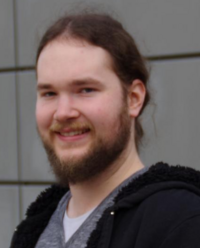
Dr. Daniel Schlör is a researcher at the Chair of Data Science (Informatics X) at the University of Würzburg, with additional affiliations to the CLiGS (Computational Literary Genre Stylistics) research group in Digital Humanities. His work focuses on machine learning for cybersecurity, fraud detection, and explainable AI, with recent projects exploring synthetic data generation, knowledge graph integration, and deep learning for imbalanced datasets. Research interests include Explainable AI (XAI) for anomaly detection Deep learning architectures for domain-specific relationships Multi-agent simulations for fraud scenario modeling Computational stylistics in digital humanities Article trends show expertise in Developing novel neural units (e.g., ModeConv) for structural anomaly differentiation Advancing XAI methods with generative inpainting techniques Creating open ERP datasets for occupational fraud research Applying graph neural networks to water distribution leakage detection Labs & collaborations include the Data Science Chair’s AI Institute at Hubland Nord campus and CLiGS research group for computational literary analysis.
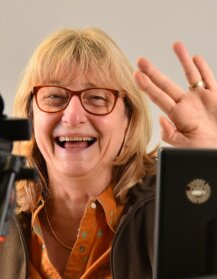
Christiane Schmullius is a Professor at the Department for Earth Observation within the Faculty of Chemistry and Earth Sciences at Friedrich Schiller University Jena. Her research focuses on Earth observation using optical, thermal, and microwave (radar) sensors for geoscientific applications, particularly climate change monitoring and biomass mapping. She has led major projects like the ALOS Kyoto & Carbon Initiative and Global Forest Observations Initiative (GFOI) , and contributed to international collaborations such as the Climate Change Initiative (CCI) Forest . Education: PhD in Earth Sciences from Free University of Berlin (1991), MA in Remote Sensing from UC Santa Barbara (1986). Key Research Areas: Satellite radar for land cover analysis, climate change mitigation, big data handling from Sentinel satellites, and savanna/forest ecosystem monitoring in Africa and Siberia. Her recent publications analyze land cover seasonality, woody cover dynamics in savannas, and SAR data fusion for biomass estimation. She has supervised over 130 theses, including 50+ PhDs, and received accolades like the German Federal Cross of Merit (2010) and leadership roles in the International Astronautical Congress .
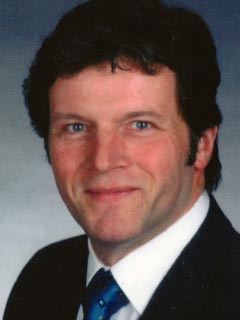
Prof. Dr.-Ing. Frank Ulrich Rückert is a Professor of Fluid Energy Machines at the University of Applied Sciences Saarland (HTW Saar), where he teaches Thermodynamics, Fluid Dynamics, and Computational Fluid Dynamics. He serves as Spokesperson for the Institute for Physical Process Technology, Study Director for the Master's program in Safety Management, and Deputy Study Director for the Bachelor's program in Industrial Engineering. His work spans multiple research projects including WiPaKü, ELTROSOL, and H2-Schmiede. Dr. Rückert earned his degree in Environmental Engineering and Process Engineering with a focus on Process and Plant Engineering at BTU Cottbus, followed by a doctorate at the University of Stuttgart on technical combustion. His professional experience includes significant work at Robert Bosch GmbH at various international locations, where he developed nozzle and valve systems for liquid fuels and gases, and contributed to the pre-development of micro-steam turbines for waste heat recovery for over four years. His research focuses on modeling and simulation of physical and chemical processes, with particular expertise in Computational Fluid Dynamics (CFD), Computer Aided Engineering (CAE), digital twins, and programming mathematical models. He investigates renewable energy systems, heat transport, thermodynamics, energy storage, waste heat recovery, and high performance computing applications. His work bridges theoretical knowledge with practical engineering applications across power plant technology and grate firing systems. Dr. Rückert's recent publications demonstrate a strong trend toward digital twin technology across multiple engineering domains including hydraulic, pneumatic, electric, and mechanical systems. His work increasingly integrates artificial intelligence with simulation techniques, as evidenced by publications on AI-based positioning systems and metaverse applications for education. The research spans both fundamental engineering principles and cutting-edge applications in renewable energy systems. Honorary Golden Spike Award 2002 from the High Performance Computing Center Stuttgart (HLRS) Saarland Higher Education Teaching Award 2021 Dr. Rückert has secured funding for numerous research projects including WiPaKü (development of gearless wind energy generators), ELTROSOL (electrofilters for aerosol capture), H2-Schmiede (CO2 reduction in forging processes), and RePowerFish (renewable power supply for fish farming). He serves on the Scientific Committee for the SYMKOM conference and is actively involved with the Commercial Vehicle Cluster CVC Südwest. His external engagements include membership on the Landstuhl City Council and the Saarland Energy Innovation Initiative (LIESA). As Spokesperson for the Institute for Physical Process Technology and member of the wi-institute, Dr. Rückert leads several research teams focused on simulation and measurement technology. His work with the Wind Energy Lab demonstrates practical application of theoretical knowledge, while his involvement in the eClose project shows commitment to innovative educational approaches. The Competence Center for Fluid Machinery, Simulation and Measurement Technology serves as the hub for his interdisciplinary research activities.
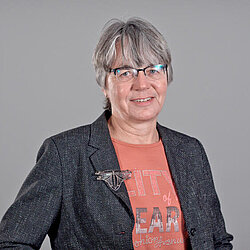
Dr. Jens Floeter is a Researcher at the University of Hamburg, Faculty of Mathematics, Computer Science and Natural Sciences, Department of Biology, Institute of Marine Ecosystem and Fisheries Sciences (IMF). He has been working as a Scientific Staff Member in the Fisheries Science research group under Prof. Dr. Christian Möllmann since November 2008. His research focuses on marine ecosystem dynamics, particularly examining the interactions between fisheries, offshore wind farms, and marine ecological processes in the North Sea and Baltic Sea regions. Dr. Floeter earned his doctorate (Promotion) in 2005 from the University of Hamburg with a dissertation titled "An investigation of key processes affecting trophic interactions in the North Sea fish assemblage and their significance for multi species fisheries assessment" at the Institut für Hydrobiologie & Fischereiwissenschaft. He completed his Diplom der Biologie in 1998 with a thesis on "Analyse und Modellierung der Nahrungsselektion von Nordseefischen" (Analysis and modeling of food selection by North Sea fish), and began his biology studies at the University of Hamburg in 1991. Dr. Floeter's research spans several interconnected areas within marine ecology and fisheries science. His primary focus is on understanding how offshore wind farms impact marine ecosystems, particularly examining pelagic effects, trophic interactions, and habitat changes. He investigates coupling of spatio-temporal scales in marine ecosystems, higher trophic level food web dynamics, and develops methods for multi-species fisheries assessment. His work often combines field observations with modeling approaches to address complex ecosystem questions. A significant portion of his research examines plankton habitats, predator-prey relationships, and the impacts of anthropogenic structures on marine communities. Analysis of Dr. Floeter's recent publications reveals a strong focus on the ecological impacts of offshore renewable energy infrastructure, particularly wind farms. His research spans physical oceanography (examining wind-wake effects and upwelling/downwelling), biological responses (plankton habitat identification, copepod behavior), and fisheries implications. He has increasingly incorporated advanced analytical methods including machine learning for plankton image classification and tensor decomposition for community ecology analysis. His work demonstrates a consistent trajectory of examining how human activities intersect with marine ecosystem dynamics, with growing emphasis on renewable energy infrastructure impacts. synKoFiMo (2015-2017): "Darstellung von Synergien im Kolk- und Fischmonitoring in Offshore-Windparks" (Demonstrating synergies in scour and fish monitoring in offshore wind farms) UNCOVER (2007): "UNderstanding the Mechanisms of Stock ReCOVERy" BECAUSE (2004-2007): "Critical Interactions BEtween Species and their Implications for a PreCAUtionary FiSheries Management in a variable Environment" LIFECO (2001-2004): "Linking hydrographic Frontal activity and ECOsystem dynamics in the North Sea & Skagerrak" SYCON (1999-2000): "Synthesis of North Sea research and development of a new research strategy" Dr. Floeter has extensive experience with field research methods, including work with high-speed towed multi-sensor vehicles (TRIAXUS, SCANFISH) for ecosystem monitoring. His research group collaborates with multiple institutions including the Helmholtz-Zentrum Geesthacht (HZG), Thünen Institute, and various international partners. His laboratory work focuses on analyzing marine ecosystem dynamics using a combination of field observations, remote sensing data, and computational modeling approaches to understand complex marine systems and inform sustainable management practices.
Prof. Dr. Volker Beckmann is Professor and Chairholder of General Economics and Landscape Economics at the Faculty of Law and Economics, Ernst Moritz Arndt University of Greifswald. His research focuses on sustainable land use, environmental and resource economics, paludiculture, and climate change mitigation, with extensive involvement in national and EU-funded projects such as Paludi4All, Moor-PV, and PaludiZentrale. His research interests lie at the intersection of economics and environmental sustainability, particularly in the economic valuation of ecosystem services, policy design for land use transitions, and socio-economic aspects of peatland restoration. He emphasizes interdisciplinary approaches, stakeholder engagement, and real-world policy impact. His work spans agricultural economics, bioeconomy, and climate policy, with a strong focus on transforming degraded landscapes into productive, climate-friendly systems. The recent publications reflect a consistent trend in sustainability transitions, with emphasis on paludiculture, renewable energy integration on peatlands, grassland restoration, and climate adaptation in vulnerable regions. Methodologically, his work combines economic modeling, policy analysis, and qualitative assessments, often within transdisciplinary frameworks. Key themes include value chain development, incentive structures, and the socioeconomics of nature-based solutions. Scientific Awards: No specific awards mentioned in the provided text. Advising and Grants: Prof. Beckmann supervises a research group and has mentored junior scientists and students. He leads multiple funded research projects, including EU’s Paludi4All (2025–2029), BMBF’s Moor-PV (2024–), and the long-term PaludiZentrale (2023–2033), demonstrating sustained success in securing competitive research funding. His team collaborates with institutions like the Thünen Institute, Michael Succow Foundation, and international partners in Central Asia and Europe. Labs and Teams: He leads the Landscape Economics research group (AG Landschaftsökonomie) at the University of Greifswald, which is actively involved in coordinating national paludiculture initiatives, conducting socioeconomic analyses, and supporting policy development. The team participates in regular workshops and field activities, such as the 2023 team-building event on Hiddensee, reflecting a collaborative and interdisciplinary research culture.
Prof. Dr. Ursula Bilitewski is a Research Group Leader at the Helmholtz Centre for Infection Research (HZI) in Braunschweig, Germany, where she has been working since 1988. She is also an Adjunct Professor of Biochemistry at the Technical University of Braunschweig since 2002. Since 2016, she has headed the "Compound Profiling and Screening (COPS)" working group, focusing on drug discovery and molecular mechanisms of action. Her educational background includes: Chemistry studies at the University of Münster Doctorate from the Institute of Physical Chemistry Habilitation in Biochemistry at the Technical University of Braunschweig (1994) Prof. Bilitewski's research spans multiple disciplines in biochemistry and infectious disease. Her primary focus areas include antimicrobial drug discovery, biosensor development, and molecular mechanism elucidation. She has made significant contributions to understanding pathogen-host interactions, particularly with Staphylococcus aureus and Helicobacter pylori . Her work bridges fundamental biochemistry with practical applications in diagnostics and therapeutics, with a strong emphasis on developing innovative screening methodologies for compound profiling. Analysis of her recent publications (2022-2025) reveals a strong focus on antimicrobial research, particularly targeting bacterial pathogens through novel compound discovery and mechanism elucidation. Her work spans multiple approaches including synthetic chemistry, biosensor development, and molecular pharmacology. Key themes include Staphylococcus aureus virulence factors, Helicobacter pylori pathogenesis, and innovative screening methodologies for drug discovery. While specific awards aren't detailed in the provided information, her sustained research leadership and extensive publication record spanning over two decades indicate significant recognition in her field. Prof. Bilitewski has mentored numerous researchers through her leadership of the COPS working group at HZI. Her research has been supported by various funding mechanisms enabling her innovative work in antimicrobial discovery and biosensor development. She has contributed significantly to collaborative research initiatives, including the EU-OPENSCREEN project which facilitates chemical biology research across Europe. She leads the "Compound Profiling and Screening (COPS)" working group at HZI, which focuses on establishing micro-scale bioanalytical systems and advancing drug discovery research. The group employs interdisciplinary approaches combining biochemistry, microbiology, and analytical chemistry to identify novel drug targets and develop innovative screening methodologies.
Priv.-Doz. Dr. Michael Riemer is a Senior Lecturer and group leader in the Dynamic Meteorology group at the Institute for Atmospheric Physics , Johannes Gutenberg-University Mainz. His research focuses on atmospheric dynamics, tropical cyclone evolution, weather predictability, and high-impact weather phenomena. University: Johannes Gutenberg-University Mainz Role: Senior Lecturer and group leader Research Interests: Atmospheric dynamics and Rossby wave behavior Tropical cyclone extratropical transition processes High-impact weather system predictability Midlatitude flow interactions with cyclones Potential vorticity dynamics Climate change impacts on extreme weather Publication Trends: Recent work examines convective spread impacts on jet dynamics, objective identification of African easterly waves, Rossby wave packet predictability, and Greenland blocking dynamics. His research frequently employs potential vorticity frameworks and ensemble forecasting techniques. Collaborations: Dr. Riemer collaborates with institutions across Europe and North America, including the European Centre for Medium-Range Weather Forecasts (ECMWF), Alfred Wegener Institute, and various international weather prediction projects.
Dr. Oliver Griesbeck is a Research Group Leader heading the 'Tools for Bio-Imaging' department at the Max Planck Institute for Biological Intelligence (formerly Max Planck Institute of Neurobiology) since 2005. As a regular member of the MCN and full member of GSN, his work focuses on developing innovative protein-based tools for neuroscience research, particularly fluorescent protein biosensors for monitoring neuronal activity and biochemistry. His research group combines biophysical and structural studies with molecular biology techniques to create advanced imaging probes used in physiological settings. PhD in Neurobiology, Max Planck Institute for Psychiatry (1997) Research Associate, Howard Hughes Medical Institute, UC San Diego (1997-2001) Assistant, Max Planck Institute of Neurobiology (2001-2005) W2 Research Group Leader, Max Planck Institute (2005-present) Dr. Griesbeck's research centers on protein engineering for neuroscience applications, with particular expertise in calcium imaging, GFP variants, and biosensor development. His work bridges biophysics, molecular engineering, and neurobiology to create tools that enable precise monitoring of neuronal activity across space and time. The group's research has significantly contributed to the development of genetically encoded calcium indicators (GECIs) and other fluorescent protein-based sensors that have become standard tools in neuroscience laboratories worldwide. Analysis of Dr. Griesbeck's publication record reveals a consistent focus on developing and refining protein-based imaging tools, with recent work expanding into optoacoustic imaging platforms, interstitial calcium sensors, and applications in diverse biological systems from Drosophila vision to human microglia. His research demonstrates a progression from fundamental protein engineering to increasingly sophisticated applications in complex physiological systems, reflecting the growing capabilities of bio-imaging technologies in neuroscience. Dr. Griesbeck mentors graduate students and postdoctoral researchers in protein engineering, CRISPR technology, molecular biology, and neuroscience tool development. His lab actively collaborates with other neuroscience researchers who utilize the biosensors developed in his group, which are available through Addgene for broader scientific use. The Tools for Bio-Imaging group maintains a state-of-the-art research environment focused on protein engineering and biosensor development, with expertise spanning molecular biology, protein design, high-throughput screening, and physiological validation of imaging tools. The group's work supports the broader neuroscience community by providing critical tools for understanding brain function at cellular and circuit levels.
Prof. Dr. Oliver Ritter is a Professor of Geophysics at Freie Universität Berlin and heads the Geo-Electromagnetic Working Group at GFZ German Research Centre for Geosciences. His responsibilities include leading the magnetotelluric component of the Geophysical Instrument Pool Potsdam. With affiliations spanning over 25 years at GFZ Potsdam, he maintains active research and teaching roles. Education: 2015: Appointed professor at Freie Universität Berlin 2005: Habilitation in Geophysics, Freie Universität Berlin 1991-1995: PhD in Geophysics, University of Edinburgh 1982-1989: Diploma in Geophysics, Freie Universität Berlin Research Focus: Ritter's work centers on advancing electromagnetic methods (MT/CSEM) for Earth imaging. Key themes include: Developing instrumentation and processing techniques for natural/controlled-source EM Time-lapse monitoring of subsurface processes across scales Integrating EM data with multidisciplinary geophysical studies Applications in resource exploration (geothermal, minerals) and tectonic analysis He emphasizes method validation through large-scale field campaigns in diverse tectonic settings. Publication Trends: His recent works (2020-2025) show strong focus on: 3D/4D inversion algorithms for MT/CSEM data Antarctic and Andean crustal imaging projects Instrumentation advancements (e.g., ELMAR recorder) Georesource applications in Germany, Chile, Venezuela Leadership: Ritter directs the Geo-Electromagnetic group at GFZ, overseeing instrument development and international collaborations. He teaches at Freie Universität Berlin and serves as Deputy Editor-in-Chief of Geophysical Prospecting .
Prof. Dr. Paulo Drews-Jr is a Visiting Professor at the Department of Computer Science, Faculty of Engineering, University of Freiburg, Germany. His research focuses on Robotics, Computer Vision, and Deep Learning, particularly for autonomous systems operating in underwater and aerial environments. He holds a D.Sc. and M.Sc. in Computer Science with minors in Robotics and Computer Vision from the Federal University of Minas Gerais, Brazil, and a B.Sc. in Computer Engineering from the Federal University of Rio Grande, Brazil. Education: D.Sc. in Computer Science (Minor: Robotics and Computer Vision), Federal University of Minas Gerais, Brazil M.Sc. in Computer Science (Minor: Robotics and Computer Vision), Federal University of Minas Gerais, Brazil B.Sc. in Computer Engineering, Federal University of Rio Grande, Brazil Research Interests: Paulo Drews-Jr specializes in Robot Perception, Robotics, and Computer Vision. His work addresses challenges in Underwater Robotics, Aerial Robotics, and Industrial Automation, including Active Perception to Account for Uncertainty in Deep Learning Applied to Robotics. His recent publications emphasize Deep Reinforcement Learning, Image Processing, and Trans-Media Navigation for Hybrid Unmanned Vehicles.
Dr. Urs Kalbitzer is a behavioral ecologist affiliated with the Max Planck Institute of Animal Behavior and the University of Konstanz . His research integrates quantitative methods with long-term datasets to explore primate responses to environmental change, nutritional landscapes, and behavioral evolution. Based in Kibale National Park, Uganda, he combines behavioral, physiological, and genetic data with climate and forest ecology to address conservation challenges. Key Research Areas: Primate-environment interactions under climate change Nutritional landscape modeling via drone imagery and 3D tree reconstructions Behavioral evolution across primate species (baboons, capuchins, colobus) Recent Publications focus on pathogen-carrying fly movement, forest regeneration via primate dung, and social behavior-fitness linkages. Methodological Expertise includes computational approaches, statistical validation, and simulation modeling.
Prof. Dr. Iris Lewandowski is a leading academic at the University of Hohenheim, serving as Professor and Head of the Renewable Resources in the Bioeconomy Department within the Faculty of Agricultural Sciences and the Institute of Crop Science. She also holds the strategic position of Chief Bioeconomy Officer (CBO) at the university and is the spokesperson for the European Bioeconomy University (EBU). Her extensive leadership extends to national and regional policy, where she co-chairs the Bioeconomy Council of the German Federal Government and the Advisory Board for Sustainable Bioeconomy of the Baden-Württemberg State Government. Her research is centered on the sustainable development of the bioeconomy, with a primary focus on perennial bioenergy crops, particularly miscanthus . Her work investigates crop performance on marginal lands, optimal agronomic practices, and the environmental impacts of large-scale cultivation. She is a pioneer in the field of agrophotovoltaics , studying the integration of solar energy production with crop cultivation. Her research interests also encompass nutrient cycling and the development of recycled fertilizers, perennial cropping systems for biodiversity and soil health, and the socio-economic assessment of bio-based value chains. Her approach is highly interdisciplinary, combining field trials, modeling, and life cycle assessments. The analysis of her recent publications reveals a strong trend towards creating holistic, sustainable solutions for the future bioeconomy. Her work consistently addresses the challenges of climate change adaptation, land-use competition, and resource efficiency. Key themes include the valorization of marginal lands, the integration of food and energy production systems, and the closing of nutrient loops through circular economy principles. She frequently collaborates on large, multi-institutional projects across Europe. Co-Chair, Bioeconomy Council of the German Federal Government (2021–2023) Co-Chair, Advisory Board 'Sustainable Bioeconomy' of the Baden-Württemberg State Government (since 2020) Spokesperson, European Bioeconomy University (EBU) (since 2018) Chief Bioeconomy Officer, University of Hohenheim (since 2018) Member, Bavarian Bioeconomy Advisory Council (SVB) (2015–2020) Prof. Lewandowski has been a key advisor and mentor, leading the International Master's Program in 'Bioeconomy' and the Master's program in 'Renewable Resources and Bioenergy'. She has been instrumental in securing and managing numerous high-profile research projects such as GRACE, MAGIC, Miscomar, and ABBEE. Her research is conducted within a large, collaborative team at the Institute of Crop Science, focusing on biobased resources in the bioeconomy, and she has established strong international partnerships.
Jun Shen is a Professor at Southeast University's School of Computer Science and Engineering in Nanjing, China. With over 100 publications spanning from 1991 to 2025, Professor Shen has established a prolific research career across multiple disciplines including biomedical engineering, computer security, artificial intelligence, and wireless communications. Professor Shen's research interests focus on the intersection of computer science and practical applications, particularly in medical imaging, cybersecurity, and AI-driven solutions for healthcare and engineering problems. His recent work demonstrates significant contributions to breast cancer diagnosis through advanced medical imaging techniques, automotive cybersecurity, and novel approaches to drug discovery using deep learning. Analysis of Professor Shen's recent publications reveals a strong trend toward interdisciplinary research that combines computer vision, machine learning, and domain-specific knowledge to solve complex problems in healthcare and engineering. His work often involves collaborations across institutions and disciplines, indicating an extensive professional network. Professor Shen has made notable contributions to medical image analysis for cancer diagnosis, particularly in breast cancer metastasis detection using multi-parametric MRI and dual-energy CT. His cybersecurity research focuses on automotive systems and cyber-physical systems security. In AI applications, he has developed innovative approaches for drug-target binding prediction and vision-language models for medical applications. Professor Shen's publication record demonstrates consistent productivity with 13 papers in 2024 and 9 papers already published or accepted in 2025, indicating active and ongoing research programs across multiple domains.
Dr. Boris Novikov is a prominent Russian computer scientist affiliated with St Petersburg University and the Higher School of Economics . His research focuses on distributed stream processing, temporal databases, and XML query optimization. Key collaborators include Artem Trofimov , Elena Mikhailova , and Anna Yarygina . Research Areas : Distributed Systems (stream processing, substream management) Database Optimization (vertical partitioning, XML caching) Temporal Data Management Machine Learning (concept drift detection) His recent work on distributed stream processing (2023-2022) explores substream bounding, deterministic models, and resource allocation strategies. Earlier contributions (2012-2008) focused on XML query performance, similarity indexing, and access control frameworks. Technical Trends : Event time alignment in distributed architectures Dynamic residual projection for cybersecurity Bi-objective optimization in database systems Speculative execution with conflict resolution Incremental Lagrangian dual solutions Matrix clustering for partitioning problems
Prof. Dr. Alvaro Garcia Hernandez is a distinguished academic and current Head of Institute of Highway Engineering at RWTH Aachen University (Germany). He previously served as Associate Professor (2020-2022) and Assistant Professor (2013-2020) at the Department of Civil Engineering , University of Nottingham . His career includes research fellowships at EMPA (Switzerland), TU Delft (Netherlands), and University of Cantabria (Spain). Education: PhD in Civil Engineering (2008) from University of Cantabria, Spain Current Role: Chair and Institute of Highway Engineering, RWTH Aachen University Research Focus: Self-healing asphalt, thermal properties of pavements, induction heating applications, and sustainable road materials His research explores advanced pavement technologies, including asphalt mixture optimization and energy harvesting systems . Recent work (2025) includes thermal traffic sensor development and road marking visibility for automated vehicles, while earlier studies (2016-2017) focused on induction healing, microcapsule technology, and climate-resilient asphalt. Alvaro's publications reveal a strong emphasis on transportation infrastructure and materials innovation , with recurring subfields like: Asphalt self-healing mechanisms Thermal and electromagnetic repair techniques Microstructural optimization Climate-adaptive road design Rejuvenator delivery systems Urban temperature mitigation