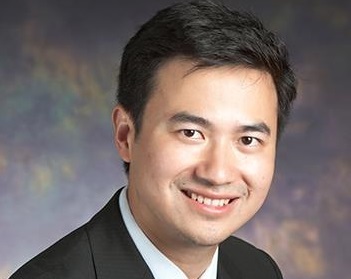
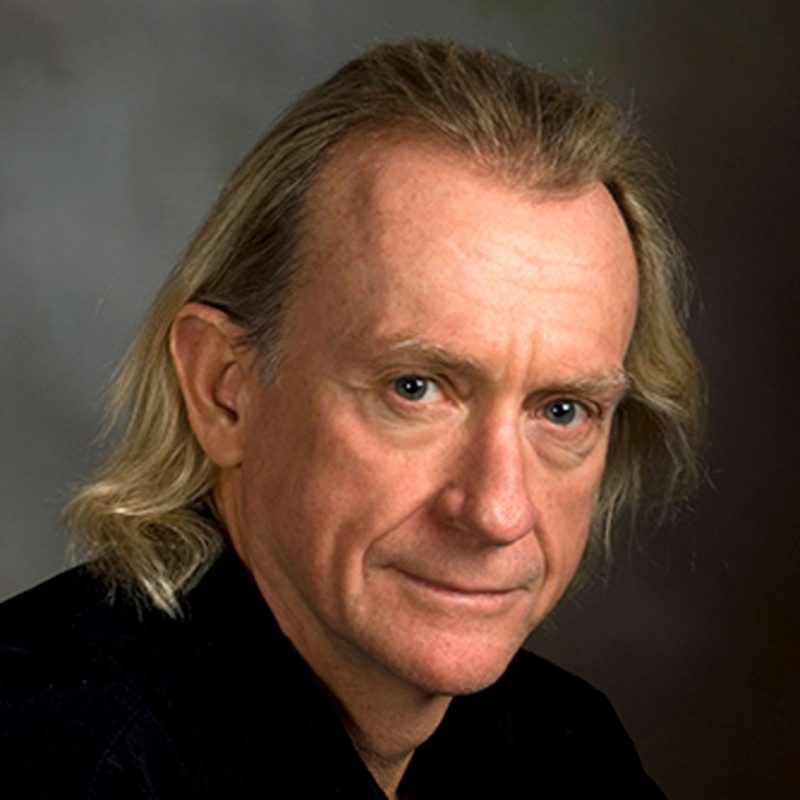
Mike Rosulek is a Professor at Oregon State University's School of Electrical Engineering and Computer Science. He is a leading expert in cryptographic protocols for secure computation, with a focus on practical applications of garbled circuits, oblivious transfer, and private set intersection. His work bridges theoretical and applied cryptography, and he has authored the textbook The Joy of Cryptography , set for a revised print edition by MIT Press in December 2025. Research Interests Secure Multi-Party Computation Garbled Circuit Optimization Private Set Intersection Malicious Adversary Resistance Cryptographic Primitives Post-Quantum Security Rosulek has mentored numerous PhD and Master's students, including Ni Trieu , Lawrence Roy , and Jaspal Singh . His research is supported by grants from the NSF, Google, and Visa Research. Notable achievements include best paper honorable mentions at Crypto 2021 and the development of the first practical garbled neural networks. Scientific Awards NSF CAREER Award Google Faculty Research Award Visa Research Faculty Award Rosulek actively contributes to the cryptographic community through program committee roles at top conferences and co-organizing workshops like CFAIL. He also maintains an annotated bibliography of secure computation research and provides mentorship materials for graduate students.
Asst. Prof. Zehra Evrim Kanat serves as an Assistant Professor in the Textile and Fashion Design Department at Canakkale Onsekiz Mart University's Faculty of Fine Arts since 2020, following research assistant roles at Tekirdağ Namik Kemal University (2014-2020) and Ege University (2009-2014). Her expertise bridges academic research and industry applications in textile engineering. Her educational foundation includes: Doctorate in Textile Engineering from Ege University (2008-2013) Postgraduate in Textile Engineering from Ege University (2005-2007) Undergraduate in Textile Engineering from Ege University (1997-2002) Dr. Kanat's research centers on textile engineering and design, with specialized focus on thermal and moisture management properties of fabrics. She investigates yarn technology, cloth construction, and smart textile applications to enhance comfort in sportswear and technical garments. Her methodological approach integrates artificial neural networks and statistical modeling for predictive analysis of fabric behavior under varying humidity conditions, contributing significantly to thermophysiological comfort research. Publication trends reveal consistent advancement in thermal resistance modeling of knitted and woven fabrics, with recent expansion into smart textiles for sports applications and biomimetic design principles. Her work demonstrates strong interdisciplinary connections between textile science, materials engineering, and functional apparel design. Her research leadership includes: EU-supported project on Textile Insights and Future Aspects (2023-2024) Study on Hatay Silk's fiber properties versus Chinese-Japanese hybrid silk (2022-2023) TUBITAK-funded expert system for woven fabric defect diagnosis (2017-2018) Multiple projects on moisture management properties of technical textiles Dr. Kanat actively contributes to academic discourse through peer review for leading textile journals and participates in interdisciplinary art exhibitions that explore cultural and historical textile narratives.
Professor Shervin Farridnejad is a faculty member at the Asia-Africa Institute of the University of Hamburg, where he holds the Professorship of Iranian Studies since September 2022. He also serves as the Head of the MA program 'Manuscript Cultures' at the Centre for the Study of Manuscript Cultures (CSMC) within the Cluster of Excellence 'Understanding Written Artefacts'. PhD in Ancient and Middle Iranian Philology and Zoroastrian Studies (2014) - Georg-August University Göttingen MA in Ancient Iranian Studies (2007-2009) - Georg-August University Göttingen MA in Fine Arts and Art History (2003-2006) - Tarbiat Modares University Tehran BA in Fine Arts (Painting) (1998-2002) - Tehran University His research focuses on Zoroastrianism , particularly examining its cultural and religious history from antiquity to the early Islamic period. He investigates the dynamics between Zoroastrians and non-Zoroastrians, Zoroastrian art and iconography, and manuscript cultures. His work also extends to Judeo-Persian literature , Ancient Iranian philology , and Persian calligraphy . Recent publications highlight ritual practices in Zoroastrianism, including sacrificial food traditions and gift-exchange theology. The 2024 article on canine roles in Zoroastrian meat ethics and 2023 works on Safavid manuscript iconography demonstrate his interdisciplinary approach combining textual analysis with visual culture studies. 2022-2024: Editorial board member for Sasanian Studies series 2020-2023: Book Review Editor of the journal Iranian Studies 2016-2022: Co-editor of Ancient Iran Series 2015-2024: Contributor to Bibliographia Iranica and DABIR journals As an active academic leader, he serves as Sustainability Officer of the Asia-Africa Institute, member of the CSMC Steering Committee, and deputy member of the Faculty Council of Humanities at University of Hamburg. His teaching spans from introductory courses on Iranian history to specialized seminars on Zoroastrian rituals and Persian manuscript cultures.
Michael E. McHenry is a Professor of Materials Science and Engineering at Carnegie Mellon University's College of Engineering. He holds appointments with multiple research centers including the Data Storage Systems Center, Engineering Research Accelerator, Materials Research Science and Engineering Center, and Wilton E. Scott Institute for Energy Innovation. Dr. McHenry received his BS in Metallurgical Engineering and Materials Science from Case Western Reserve University in 1980, his PhD in Materials Science and Engineering from MIT in 1988, and completed a postdoctoral fellowship at Los Alamos National Laboratory. His research focuses on soft magnetic nano-composites for power and energy applications, with particular expertise in metal amorphous nanocomposites (MANCs) for high-efficiency electric motors and power systems. His work spans advanced materials processing, magnetic properties under various conditions, and rare earth materials criticality. His research portfolio demonstrates a clear progression toward practical applications of magnetic materials, particularly in high-power density, high-efficiency motors that can operate at high rotational speeds with minimal energy loss. His publications reveal a strong focus on translating fundamental materials science into engineering solutions for energy conversion, with significant emphasis on rare earth-free alternatives and high-frequency applications. IEEE Distinguished Lecturer (2013) TMS Awardee for Research Excellence (2014) Subject of TMS Symposium in Honor of M. E. McHenry (2016) NATO Series Lecturer on Rare Earth Criticality (2016/17) Dr. McHenry has co-founded CorePower Magnetics Inc. with Paul Ohodnicki and Samuel Kernion, commercializing soft magnetic technologies with applications in grid modernization and electric vehicles. His extensive publication record and leadership in major research initiatives including a MURI on high-temperature magnetic materials and an ARPA-E program demonstrate significant impact in both academic and industrial contexts. He has served in various leadership roles for Magnetism and Magnetic Materials and Intermag Conferences, and continues to advise on rare earth scarcity issues for organizations like NATO.
Dr. Yusuf AYAN is a Lecturer in the Department of Mechatronics Engineering at Karabük University's Faculty of Technology, Turkey, since 2022. He holds a PhD (2022) and Master's degree (2017) in Manufacturing Engineering from Karabük University, alongside a BSc (2012) in Mechanical Engineering from Kocaeli University. Education: PhD, Manufacturing Engineering, Karabük University (2022) MSc, Manufacturing Engineering, Karabük University (2017) BSc, Mechanical Engineering, Kocaeli University (2012) His research focuses on Welding Technologies , Metallic Materials , and Additive Manufacturing , with over 103 citations and an h-index of 5. Notable projects include TÜBA/TÜBİTAK-funded research on wire arc additive manufacturing (2023-2025) and functionally graded material development (2020-2024). His publications span journals like Materials Chemistry and Physics , Journal of Materials Engineering and Performance , and Materials Today Communications , emphasizing WAAM process optimization, fatigue properties, and multi-material fabrication. Collaborators include Nizamettin Kahraman (24 joint works, 2018-2024) and researchers such as Kenan Kaan Yetil and Ercan Çağlar.
Tao Hou is an Assistant Professor in the Department of Computer Science at the University of Oregon, where he conducts research at the intersection of computational topology and machine learning. His academic journey includes a Ph.D. in Computer Science from Purdue University, a M.E. in Software Engineering from Tsinghua University, and a B.E. in Software Engineering from Beijing Institute of Technology. His research focuses on improving computational methods for topological data analysis, particularly through efficient algorithms for zigzag persistence and its applications across domains like neuroscience and materials science. Interdisciplinary applications in neuroscience (MICCAI 2024) and computational materials science (Comp. Mat. Sci. 2022) Developed open-source Python software packages for persistent cycle computation Contributed to advancements in zigzag persistence computational complexity Current research explores topological machine learning through projects like FastZigzag and LvlsetPersCyc . He teaches graduate courses on topological data analysis and algorithms theory, and actively seeks PhD students interested in combining mathematics with computer science.
Professor Heiko Beyer holds a chair position at the Department of Sociology IV within the Faculty of Arts and Humanities and Social Sciences at Heinrich Heine University Düsseldorf. His academic work spans multiple domains of contemporary sociological inquiry with particular emphasis on prejudice studies, political sociology, and the sociology of religion. Beyer maintains an active research profile with numerous publications in leading sociological journals and serves as principal investigator for several major research projects funded by prestigious German research institutions. Professor Beyer's research interests form a cohesive body of work examining various dimensions of social prejudice and political attitudes. His scholarship demonstrates particular expertise in antisemitism studies, where he has developed innovative methodological approaches to measuring contemporary manifestations of anti-Jewish sentiment. His work also explores anti-Americanism as a comparative framework for understanding prejudice, examining the "elective affinities" between different forms of resentment. Additional research areas include the sociology of social movements, the intersection of religion and politics in Europe, and human rights implementation in diverse social contexts. Beyer's methodological approach combines quantitative survey research with qualitative analysis, often employing experimental designs to uncover the social context dependence of prejudicial attitudes. An analysis of Professor Beyer's recent publications reveals a clear trajectory toward increasingly sophisticated examinations of antisemitism in contemporary Germany. His work has evolved from theoretical examinations of antisemitism's historical development to nuanced empirical studies capturing its current manifestations across different social milieus. A distinctive feature of his recent scholarship is the examination of how global events, particularly conflicts in the Middle East, create "spaces of opportunity" for antisemitic expressions. He has also pioneered research on the relationship between political Islam and Jewish experiences in Germany, producing some of the first systematic studies on how radical Islamic ideologies impact Jewish life. His methodological contributions include developing new antisemitism scales and employing factorial survey experiments to measure latent attitudes. Professor Beyer currently leads three major research projects: "Antisemitism in the General Population of North Rhine-Westphalia" (funded by the State of North Rhine-Westphalia, 2022-2024), "Social Contexts of Equality Practices" (a Heisenberg project funded by the German Research Foundation, 2019-2024), and "The Impact of Radical Islam on Jewish Life in Germany" (funded by the Federal Ministry of Education and Research, 2020-2024). These projects collectively represent significant contributions to understanding prejudice, human rights implementation, and minority experiences in contemporary German society. His research often involves collaboration with interdisciplinary teams and has practical implications for educational programs combating antisemitism and promoting social equality.
Gordon Hughes is an Associate Professor of Art History in the Department of Art History at Rice University, specializing in early 20th-century European modernism with concentrated expertise in French painting and abstract art. His research significantly reinterprets foundational narratives of abstraction while extending into contemporary art and photographic history. His academic credentials include: Ph.D. in Art History from Princeton University (2004) M.A. from the University of Western Ontario (1996) M.F.A. in Studio Art from the University of Illinois at Chicago (1992) B.F.A. from the Nova Scotia College of Art and Design (1989) Professor Hughes' scholarship centers on re-examining abstract painting's origins through meticulous visual analysis, particularly focusing on Robert Delaunay's contributions to modernist vision. His work bridges pre-war European art with American conceptual practices from the 1960s-1980s, evidenced by influential publications on Fernand Léger, Georges Braque, Douglas Huebler, and Jenny Holzer. His theoretical approach integrates continental philosophy while prioritizing phenomenological engagement with artworks, reflected in his current book project Seeing Red: Murder, Abstraction, Machines which investigates intersections of art, technology, and violence. Analysis of his recent publications (2006-2022) reveals consistent scholarly engagement with French modernism's theoretical underpinnings while progressively incorporating contemporary critical frameworks. His work demonstrates evolving methodological sophistication through examinations of visual perception, medium specificity, and post-structuralist theory across diverse artistic movements from Cubism to Conceptual Art. His distinguished recognitions include: Getty Research Institute Scholar-in-Residence (2012-2013) Barr Ferree Foundation Publication Grant (2011) Terra Foundation for American Art support (2010) Professor Hughes mentors graduate students in Rice's Art History program with emphasis on close visual analysis and theoretical rigor. His research has received significant institutional support including Getty Research Institute residencies and major publication grants that facilitated his influential monograph Resisting Abstraction and editorial projects like October Files: Richard Serra .
Songbin Gong is an Associate Professor in the Department of Electrical and Computer Engineering at the University of Illinois at Urbana Champaign, where he has been a faculty member since August 2013. He was promoted from Assistant Professor to Associate Professor in August 2019 and holds the Intel Alumni Fellowship. His research is centered at the Micro and Nanotechnology Lab, where he leads the Integrated RF Microsystems research group. Professor Gong's research focuses on RF and microwave photonics, microwave acoustics, and Micro-Electro-Mechanical Systems, with particular expertise in lithium niobate-based devices. His work spans the development of acoustic resonators, filters, and transducers operating from VHF to Sub-THz frequencies. Recent publications demonstrate significant advances in high-frequency acoustic devices, including GHz resonators with high electromechanical coupling and low loss characteristics. His research has direct applications in 5G communications, wireless sensing, and imaging systems. Gong has established himself as a leader in the field of RF MEMS and acoustic devices, with numerous high-impact publications in top journals including IEEE Transactions on Microwave Theory and Techniques, Journal of Microelectromechanical Systems, and Optics Express. His work shows a clear progression toward higher frequency operation, improved device performance, and novel integration approaches for next-generation communication systems. Among his notable achievements is the development of thin-film lithium niobate devices that overcome traditional frequency limitations of MEMS resonators, enabling operation beyond 10 GHz. This work addresses critical challenges in 5G and future wireless technologies where conventional approaches face scaling limitations. IEEE Ultrasonics Early Career Investigator Award DARPA Young Faculty Award 2014 NASA Early Career Faculty Award 2017 Intel Alumni Fellow 2017-present Multiple Best Paper Awards at major conferences including International Ultrasonic Symposium and International Microwave Symposium Professor Gong actively mentors graduate and undergraduate students, with several of his PhD students achieving notable success, including Ruochen Lu who joined UT Austin as a tenure-track assistant professor. His research group has secured significant funding from agencies including DARPA and NASA, supporting cutting-edge work in RF microsystems. The group maintains strong industry connections, particularly with Intel, reflecting the practical relevance of their research to commercial communication technologies. The Gong Research Group leverages micro/nano electro mechanical systems (N/MEMS), integrated photonic, and compound semiconductor technologies to develop chip-scale hybrid microsystems for RF communication, sensing, and imaging applications. Their current work focuses on pushing the boundaries of acoustic device performance while maintaining compatibility with standard semiconductor manufacturing processes.
Professor Patrick Steel is a faculty member at Durham University in the Department of Chemistry . His work spans Synthetic Organic Chemistry , Organosilicon Chemistry , and Chemical Biology , with applications in pharmaceuticals, agrochemicals, and parasitic disease treatment. Research Highlights: Developing C-H borylation methods for pharmaceutical intermediates Exploring silene cycloadditions for alkene functionalization Designing small molecule probes for plant and parasite biology Collaborating with Todd Marder (Würzburg) and others in synthetic biology Key Collaborations: Partnerships with pharmaceutical companies (GSK, Pfizer) and academic teams focus on novel antileishmanial compounds and herbicide resistance mechanisms . His group's organosilicon work intersects with collaborations on stereoselective synthesis and natural product analogs . Recent Publications (2025-2021) demonstrate expertise in transition metal catalysis , chemical probe development , and neglected disease research . The 2023 Leishmania proteomics and 2022 miltefosine studies show translational impact.
Hua Ge is a Professor in the Department of Building, Civil and Environmental Engineering at Concordia University's Faculty of Engineering and Computer Science. She holds a Tier II Concordia University Research Chair in High Performance Building Envelope for Climate Resilient Buildings and leads extensive research in building science and climate adaptation. Her research focuses on wind-driven rain analysis , hygrothermal performance of building envelopes , advanced building facades , innovative wood-frame construction , and low-energy buildings . Current work examines climate change impacts on wind-driven rain loads, urban micro-climate effects, climate-resilient building envelopes, dynamic facades, and low-carbon healthy buildings. Her methodology combines large-scale laboratory testing, field monitoring, and computational modeling. Her 15 most recent publications demonstrate strong trends in nature-based climate resilience solutions , overheating risk mitigation in educational buildings , advanced hygrothermal modeling of wood-frame systems , and carbon sequestration strategies for buildings. The work spans multiple sub-disciplines including computational fluid dynamics, life cycle assessment, stochastic modeling, and field validation studies across Canadian climates. Tier II Concordia University Research Chair (CURC) in High Performance Building Envelope for Climate Resilient Buildings Professional Engineers of Ontario American Society of Heating, Refrigerating and Air-conditioning Engineers ASHRAE TC4.4 Building materials and building envelope performance (Subcommittee Chair) Professor Ge has supervised 42 graduate students (26 PhD, 16 MASc), including current advisees working on nature-based solutions, climate-resilient envelopes, and building integrated photovoltaics. Her research is supported by Concordia University Research Chair funding and collaborative projects with institutions like BCIT. She directs activities at Concordia's Building Envelope Test Facility and contributes to national standards through ASHRAE.
Chris Fuller, Ph.D., is the Samuel Langley Distinguished Professor of Engineering at the College of Engineering , Virginia Tech. He leads the Vibrations and Acoustics Laboratory (VAL) , focusing on active/passive noise control systems, metamaterials, and their application to aerospace, medical devices, and industrial machinery. Education: Ph.D. (1979) and B.E. (1974) from the University of Adelaide, Australia. Research Interests: Structural acoustics, adaptive materials, machine learning in noise prediction, and biomedical acoustics (e.g., neonatal incubators). Awards: ASME Rayleigh Award (2017), NASA Team Achievement Award (1996), and Fellow of the Acoustical Society of America. Recent Publications: Highlight advancements in drone noise reduction using neural networks, metamaterials for HVAC systems, and poro-elastic materials for low-frequency noise control.
Derek H. Kiernan-Johnson is a Teaching Professor at the University of Colorado Law School, specializing in Legal Writing , Appellate Advocacy , and Judicial Opinion Writing . He has taught courses on legal reasoning, document design, and narrative techniques in legal argumentation since joining the faculty in 2007. JD, University of Michigan Law School BA, Princeton University (Religion, Dramatic Performance, Music) His research explores intersections of narrative theory , visual rhetoric , and legal persuasion , with a focus on typography, historical legal contexts, and the performative aspects of law. Publications examine Bluebook overlaps, narrativity in legal writing, and rhetorical influence on judicial decisions. Notable scholarly contributions include analyses of Supreme Court indifference , craft whiskey regulation , and typographic storytelling in legal briefs. He has no listed scientific awards or student advisees in the provided materials. Professional background includes clerking for Justice Michael L. Bender of the Colorado Supreme Court and six years of legal practice at Caplan and Earnest, LLC, representing public-school clients in diverse legal settings.
Juan-Pablo Correa-Baena is an Associate Professor at the Georgia Institute of Technology , holding the Goizueta Early Career Faculty Chair in the School of Materials Science and Engineering. He leads the Materials for Solar Energy Harvesting and Conversion research initiative at the Institute for Materials (IMat) and Strategic Energy Institute, aiming to consolidate Georgia Tech's expertise in photovoltaics and interdisciplinary energy research. Education: PhD in Environmental Engineering, University of Connecticut (2014) MS in Environmental Engineering, University of Connecticut (2011) BS in Management and Engineering for Manufacturing, University of Connecticut (2008) His research focuses on the chemistry-structure-property relationships of low-cost semiconductors for optoelectronic applications. Key areas include halide perovskites , nanoscale control , and advanced deposition/characterization techniques . He develops atomic layer deposition and synchrotron-based imaging to address metastable material behavior. Recent publications highlight innovations in dimensional control , machine learning for thermal stability , and flexible photovoltaic devices . His work integrates materials synthesis , quantum phenomena , and industrial scalability . Scientific recognition: Highly Cited Researcher (Web of Science, 2019–2021) Nature Index Leading Early Career Researcher in Materials Science (2019) NSF, DoE, and industry-funded projects Students and team: He advises 14 graduate students and postdocs, including Sanggyun Kim, Diana LaFollette, and Leonardo Josué Lugo Salas, fostering interdisciplinary collaboration through workshops and symposia.
Alexey Vorobiev is a Researcher at Uppsala University's Materials Physics department, focusing on neutron reflectometry and magnetic materials. His work spans thin films, superlattices, and nanoparticle interfaces. Education : Not explicitly mentioned in the text. Research Interests Vorobiev's research explores magnetic properties of materials, surface interactions, and neutron optics. Key areas include spintronics, nanoscale assembly, and thin film characterization. His work often integrates experimental methods like neutron scattering with materials engineering. Article Trends Recent publications emphasize neutron-based techniques for studying magnetic multilayers, graphene oxide behavior, and nanoparticle self-assembly, reflecting a strong focus on interfacial physics and advanced material synthesis.