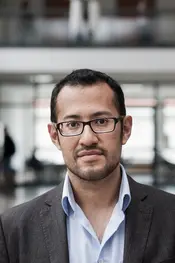
Christian Wolf is an Assistant Professor at the Massachusetts Institute of Technology (MIT) Department of Economics and a Faculty Research Fellow at the National Bureau of Economic Research (NBER). His work bridges macroeconomics, monetary economics, and econometric methodology. Research Interests: Wolf specializes in macroeconomics and monetary policy , with a focus on econometric techniques like structural vector autoregressions (VARs) and local projections . His research explores policy counterfactuals, heterogeneous-agent models, and fiscal-monetary interactions. Recent Publications: His work spans topics such as equivalence between fiscal and monetary tools in HANK models, robust identification in VARs, and the interplay between inequality and macroeconomic dynamics. Articles appear in journals like Econometrica , Journal of Political Economy , and American Economic Review . Awards: Faculty Research Fellow, NBER Contact: ckwolf@mit.edu | Office: E52-554, MIT
Jordi Galí is a Professor at the Department of Economics and Business at Universitat Pompeu Fabra (UPF), a Senior Researcher at the Center for Research in International Economics (CREI), and a Research Professor at the Barcelona School of Economics (BSE). He holds a PhD from MIT and has played a central role in shaping modern macroeconomic theory, particularly the New Keynesian framework used by central banks worldwide. Education: PhD in Economics, Massachusetts Institute of Technology (MIT), 1989 Master in International Management, ESADE, 1985 Bachelor in Economics, Universitat Pompeu Fabra, 1994 His research focuses on macroeconomic theory, monetary economics, and macroeconometrics. He is best known for his work on the New Keynesian Phillips Curve, optimal monetary policy rules, and the role of technology and expectations in business cycles. His influential book, Monetary Policy, Inflation and the Business Cycle , is a standard reference in graduate programs globally. The most recent articles highlight a continued focus on critical issues in modern macroeconomics: the implications of a low natural rate of interest (r*), the effectiveness of monetary policy at the zero lower bound, the role of wage and price flexibility, and the interaction between fiscal and monetary policy. His work increasingly integrates heterogeneity, financial frictions, and experimental methods, reflecting the evolving frontiers of the field. Scientific Awards: BBVA Foundation Frontiers of Knowledge Award (2025) Yrjo Jahnsson Award (2005) Premi Rei Jaume I d'Economia (2004) Premio Nacional de Investigación “Pascual Madoz” (2022) Three ERC Advanced Grants Foreign Honorary Member, American Economic Association (2020) Galí has advised numerous central banks, including the ECB, Federal Reserve, and Banque de France. He has held leadership roles as President of the European Economic Association (2012), co-editor of the Journal of the European Economic Association , and co-director of the CEPR International Macroeconomics Programme. He is a Research Fellow at CEPR, a Research Associate at NBER, and a Fellow of the Econometric Society. He has also been actively involved in public policy debates in Spain and Europe, particularly on issues of productivity, labor market reform, and fiscal policy. His research program continues to explore the design of stabilization policies in open and currency union economies.
Dr. Michele Piffer is a Senior Lecturer in Economics at King’s Business School, King’s College London, and a Senior Researcher in the Modelling Team at the Bank of England. He holds a PhD in Economics from the London School of Economics (2014), an MSc in Economics (distinction) from LSE (2008), and a Laurea Triennale + Specialistica in Economics (cum laude) from Università Cattolica, Milano (2007). His research focuses on Bayesian Econometrics, Time Series Analysis, Macroeconomics, and Monetary Policy. Key areas include uncertainty shocks, structural VAR models, and unconventional monetary policy impacts on fiscal balances. He has organized academic events such as the 'QuickTalks: Macroeconometrics and Applied Macro' (2022) and the 'Workshop in Structural VAR Models' (2020). Recent work emphasizes methodological advancements in Bayesian estimation and applied macroeconomic analysis, with contributions to journals like Quantitative Economics , The Econometrics Journal , and Journal of the European Economic Association . His research aids central banks and statistical agencies in understanding market trends through quantitative analysis.
Isaac Gross is a Senior Lecturer in the Department of Economics at Monash University, Faculty of Business and Economics. He holds a PhD and is actively involved in research, teaching, and policy advisory roles. His work bridges academic theory and real-world economic policy, particularly in macroeconomic and monetary domains. His research interests center on macroeconomics , monetary policy , DSGE modeling , and commodity price dynamics . He employs advanced quantitative methods to analyze policy effectiveness and economic stability, with a regional focus on Australia and global commodity markets. The recent articles highlight a consistent focus on nonlinear modeling of macroeconomic systems, optimal policy design , and structural analysis of monetary and resource sectors . His work combines theoretical rigor with empirical validation, often using large-scale models like MARTIN for policy simulation. Scientific Awards: Best Paper at the Melbourne Institute Macroeconomic Policy Meeting (2018) Dean's Citations for Outstanding Contribution to Student Learning (2021) Advising and Grants: Isaac Gross served as the Primary Chief Investigator on the 2022 research project Estimating Optimal Policy Rules for Australian Monetary Policy with MARTIN . While formal student advising is not listed, his Dean’s Citation underscores significant contributions to student learning. He has also contributed to educational initiatives such as continuing education in macroeconometrics. Labs, Teams, and Collaborations: He collaborates with prominent economists including Andrew Leigh and J. Hansen. His work involves external engagement with key institutions such as the Reserve Bank of Australia and the Standing Committee on Economics, indicating integration into national policy networks.
José António Ferreira Machado is a Full Professor at the Nova School of Business and Economics, Universidade Nova de Lisboa. He currently serves as Vice-Rector of the university and previously held director roles at the Nova School of Business and Economics (2005-2015) and Angola Business School (2010-2015). His academic career includes consultancy at the Bank of Portugal (1992-2015) and teaching Econometrics, Statistics, and Macroeconomics. Research Interests: Machado's work focuses on Econometrics, Quantile Regression, Wage Distributions, Firm Size Analysis, and Macroeconomic Modeling. His most cited paper (2005) introduced counterfactual decomposition methods for wage distribution analysis. Recent publications examine quantile regression extensions, trade margins, and moment-based statistical inference. His research spans both theoretical and applied economics, with collaborations including J. M.C. Santos Silva and Roger Koenker.
Cecilio Tamarit is a Professor of Applied Economics at the University of Valencia, where he holds a Jean Monnet Chair and coordinates the Research Group on Economic Integration (INTECO). He is also Vice President of the Free Association of Economics (ALDE) and President of the Economics Committee of the National Commission for the Evaluation of Research Activity (CNEAI). Master's in Economics, College of Europe (Bruges) Extraordinary Doctorate Award, University of Valencia (1992) Schuman Scholar, European Parliament (1988) Visiting Scholar, University of Nottingham (1992) Senior Fellow, Wharton School, University of Pennsylvania (1996) His research focuses on applied economics, macroeconomics, and European economic integration, with strong emphasis on modeling and policy analysis. He has contributed extensively to understanding economic convergence, fiscal policy, and international trade dynamics within the EU framework. The 15 most recent publications reflect a consistent focus on empirical and policy-oriented economics, spanning macroeconomic modeling, international trade, public policy, and financial economics. His work frequently appears in high-impact journals, demonstrating sustained scholarly engagement in applied economic research. Scientific Awards: Extraordinary Doctorate Award in 1992 from the University of Valencia He has advised numerous research projects and led major evaluation initiatives in economic research. While specific grants are not listed, his leadership roles in national evaluation bodies and research groups suggest significant involvement in funded research and policy advising. He has directed the European Documentation Center at the University of Valencia and served as an advisor to the Spanish government. He leads the INTECO research group, focusing on economic integration and policy modeling, contributing to both academic and policy debates in European economics.
Norman R. Swanson is a Distinguished Professor and James Cullen Chair in Economics at Rutgers University. He holds a PhD from the University of California, San Diego, and a degree from the University of Waterloo. Primary Affiliations: Department of Economics, Rutgers University Previous Positions: Pennsylvania State University, Texas A&M University, Purdue University, IBM Canada His research focuses on financial econometrics , forecasting , machine learning and big data , and time series analysis . He has published over 100 peer-reviewed articles and served as editor for journals like the Journal of Econometrics and Journal of Business and Economic Statistics . His work often bridges theoretical econometrics with practical applications in finance and macroeconomics, emphasizing robustness and predictive accuracy. The articles listed reflect his expertise in volatility modeling , jump detection , data reduction , and forecasting methodology . Key trends include the use of shrinkage methods, factor models, and simulation-based testing in high-frequency financial and macroeconomic contexts. Scientific Awards: Fellow of the Journal of Econometrics Fellow of the International Association of Applied Econometrics He has acted as a visiting scholar at institutions like the University of Maryland and the Federal Reserve Bank of Philadelphia. His consulting work spans firms such as Union Bank of Switzerland and DFA Capital Management, with expertise as a legal expert witness in financial services cases.
Hyungsik Roger Moon is Professor of Economics in the Department of Economics at the University of Southern California's Dornsife College of Letters, Arts and Sciences, where he has served since 2000 after beginning his career at UC Santa Barbara. His academic trajectory progressed from Assistant Professor (2000) to Associate Professor (2004) and full Professor (2008), reflecting sustained contributions to econometric methodology. His educational foundation includes: Ph.D. in Economics, Yale University, 1998 M.A. in Economics, Yale University, 1995 B.A. in Economics, Seoul National University, 1989 Moon's research centers on econometric theory development and applied methodology, with particular expertise in panel data analysis, dynamic modeling, and high-dimensional estimation. His theoretical innovations address complex challenges in interactive fixed effects, unit root testing, and heterogeneity modeling, while applied work spans labor economics (income dynamics), health economics (pancreatic cancer trials), and macroeconomics (Covid-19 forecasting). This dual focus bridges rigorous mathematical frameworks with real-world policy applications across multiple economic subfields. Analysis of recent publications reveals an intensifying focus on robust estimation techniques for dyadic data, Bayesian approaches to sparse heterogeneity, and methodological innovations in forecasting with censored panel data. His work increasingly integrates machine learning concepts with traditional econometrics, particularly in high-dimensional seemingly unrelated regression systems and network-based peer effect modeling. His distinguished scientific contributions have been recognized through: Fellow of the Econometric Society (2023) Fellow of the Journal of Econometrics (2019) RK Cho Economics Award (2018) Maekyung/KAEA Economist Award (2012) Econometric Theory Multa Scripsit Award (2006-2007) Korea-America Economic Association Young Scholar Award (2005) Moon has secured significant research funding including an NSF grant of $180,675 for 'Forecasting with Dynamic Panel Data Models' (2016-2020) and $68,000 for 'Asymptotic Analysis of Panel Regression Models' (2009-2010). His academic leadership extends to editorial roles at the Journal of Business and Economic Statistics, Econometric Theory, and Journal of Econometrics, plus administrative service as Director of Graduate Studies for USC's Economics Ph.D. program (2018-2021) and Associate Director of USC Dornsife INET (2015-2017). Through his position at USC Dornsife INET and graduate program leadership, Moon actively shapes research directions in new economic thinking while mentoring future econometricians through advanced courses like Big Data Econometrics.
Professor Adrian Pagan holds the position of Professor of Economics at the University of Sydney's School of Economics. His research focuses on macro-econometric modeling, policy analysis, and business cycle theories. He has held visiting appointments at prestigious institutions including Oxford University and Princeton University. Key achievements include: Fellowships with the Academy of Social Sciences, Econometric Society, and Journal of Econometrics Medallist Fellow of the Modelling and Simulation Society of Australia and New Zealand Distinguished Fellow of the Economic Society of Australia Centenary Medal recipient (2001) His work emphasizes structural macroeconomic modeling, particularly in analyzing recurrent economic events and policy impacts. Recent research explores business cycle synchronization, financial frictions, and shock decomposition in macroeconomic systems. Publications span over four decades, with notable contributions to journals like Journal of Econometrics , Macroeconomic Dynamics , and European Economic Review . He has authored the influential 2016 book The Econometric Analysis of Recurrent Events in Macroeconomics and Finance .
Christian R. Proaño is a Professor of Economics at Otto-Friedrich-Universität Bamberg, specializing in Macroeconomics and International Finance. He previously served as an Assistant Professor at The New School for Social Research (2010–2015) and as a Research Economist at the Institute for Macroeconomics and Economic Research (IMK) in Germany (2008–2010). His academic journey includes a PhD in Economics from Bielefeld University (2008) and studies at the Catholic University of Ecuador (PUCE). Education: PhD in Economics (Bielefeld University, 2008) Current Roles: Professor at Bamberg University, Vice-Chairman of Keynes Gesellschaft, Research Fellow at CAMA Research Focus: Behavioral macroeconomics, income distribution, financial cycles, and macroeconomic stability Proaño’s research integrates behavioral economics into macroeconomic frameworks, analyzing how heterogeneous expectations and psychological factors influence financial markets, monetary policy, and business cycles. His work on non-linear macroeconometrics and climate change economics explores systemic risks and policy design for sustainable growth. His recent publications highlight trends in financial cycle analysis, behavioral political economy, and inequality dynamics. Notable collaborations include studies on income inequality’s macroeconomic effects and agent-based modeling of financial stability. Scientific Awards: Research Fellow, Centre for Applied Macroeconomic Analysis (CAMA) Fellow, Euro Area Business Cycle Network (EABCN) Proaño supervises external doctoral candidates and contributes to academic governance via roles in the German Network for New Economic Dynamics (GENED) and the Computational and Financial Econometrics (CFE) Network.
Serena Ng is the Edwin W. Rickert Professor of Economics at Columbia University and an Affiliated Faculty member in the Department of Statistics. Her research spans econometrics, empirical macroeconomics, time series analysis, and big data methods, with a focus on factor models, missing data, and macroeconomic forecasting. She has developed influential datasets such as FRED-MD and FRED-QD, widely used in macroeconomic research. Her research interests include: High-dimensional econometric modeling Factor analysis and principal components Missing data and matrix completion Dynamic modeling of disasters and climate shocks Macroeconomic forecasting and nowcasting Structural vector autoregressions and DSGE identification Her recent publications (2021–2025) reflect a strong trend toward integrating machine learning and computational methods into econometric modeling, particularly in handling large datasets, imputing missing values, and analyzing the macroeconomic impact of climate and disaster shocks. She has also contributed to foundational work in uncertainty measurement and time-varying parameter models. Her scientific contributions are recognized through extensive publication in leading journals. While no specific awards are listed, her editorial and collaborative roles (e.g., with the Journal of Econometrics) indicate high standing in the profession. She advises doctoral students in economics and statistics, though no names are publicly listed. She has received funding from major institutions including the National Science Foundation and NIH for interdisciplinary research. Her work bridges econometrics with environmental and health economics, particularly in projects related to climate adaptation and disaster impacts. She maintains a laboratory-like research group focused on macroeconometric modeling and big data analysis, contributing to the development of tools for real-time economic monitoring and policy analysis.
Francesca Monti serves as Professor of Economics at UCLouvain (Belgium) and Visiting Senior Lecturer at King's Business School (UK), with appointments commencing in 2021 and November 2019 respectively. Her academic trajectory follows a decade-long tenure at the Bank of England focused on macroeconomic modeling and monetary policy strategy. Her educational background includes a PhD in Economics and Statistics from Université Libre de Bruxelles, establishing the foundation for her specialized research profile. Research interests concentrate on macroeconometrics and empirical monetary economics , with particular emphasis on inflation dynamics , expectations formation , and central bank credibility . Methodologically, her work integrates Bayesian vector autoregressions , heterogeneous agent modeling , and high-frequency data analysis to address contemporary monetary policy challenges. Publication trends reveal consistent contributions to central banking literature since 2021, with increasing focus on behavioral aspects of monetary policy transmission and sectoral inflation analysis. Recent work demonstrates methodological sophistication in handling heterogeneous expectations data and real-time economic monitoring. Professional engagement includes active participation in CEPR's Monetary Economics and Fluctuations program, though no formal awards or fellowships are documented in the source material. Her advisory capacity remains unspecified in available records, though her Bank of England experience suggests substantial contribution to policy formulation. Current institutional affiliations provide platforms for advancing research in monetary economics through academic channels.
Luis REYES-ORTIZ is a Professor at Kedge Business School specializing in macroeconomic modeling and policy analysis. Currently on sabbatical from July 2025 to July 2026, he develops empirical Stock-Flow Consistent (SFC) models for France, Vietnam, Algeria, and China. His research centers on international monetary systems , financialization , globalization dynamics , and energy transition economics . Using SFC frameworks, he investigates Eurozone imbalances, monetary policy effectiveness, and climate finance mechanisms. Recent work analyzes France's climate investment programs and inflation dynamics through empirical modeling. His publications reveal strong focus on applied policy modeling (78% of recent articles), with significant contributions to climate economics (27%) and monetary system analysis (21%). The SFC-FR model for France serves as his primary analytical tool across multiple policy domains. Teaching encompasses micro/macro-economics, international finance, econometrics, and social entrepreneurship finance in English, French, and Spanish. His methodological expertise bridges theoretical post-Keynesian frameworks with empirical econometric validation.
James A. Duffy is an Associate Professor of Economics at the University of Oxford and the Andrew Glyn Tutorial Fellow at Corpus Christi College. He joined Corpus in 2016 after a postdoctoral fellowship at Nuffield College, Oxford, and holds dual appointments in the Department of Economics and his college. His educational background includes: PhD in Economics from Yale University (2014) Undergraduate studies in Economics and Mathematics at the University of Sydney Duffy's research centers on econometrics, with emphasis on macroeconometrics and time series analysis. He develops statistical methods for economic models involving nonlinear or highly persistent time series data, common in macroeconomics and finance. His work spans econometric theory , mathematical statistics , cointegration , and structural macroeconomic models , addressing inference challenges in strongly dependent processes. His 2016-2024 publications in premier journals reveal consistent innovation in time series methodology, particularly in unit root processes, fractional integration, and nonlinear cointegration. Key contributions include Tobit modeling for dynamic systems, robust inference for weakly nonstationary data, and discrete choice estimation techniques, bridging theoretical rigor with empirical applications. At Oxford, Duffy serves as course convenor for Quantitative Economics and lectures for the MPhil programme on instrumental variables, generalized method of moments, and maximum likelihood estimation. He also provides undergraduate tutorials in Microeconomics and Quantitative Economics at Corpus Christi College, integrating research insights into teaching.
Grigory Gelmutovich Kantorovich is a distinguished Research Professor at the National Research University Higher School of Economics (HSE), where he has been working since 1993. He serves as Head of the Scientific and Educational Laboratory of Macrostructural Modeling of the Russian Economy within the Faculty of Economic Sciences. He holds a tenured professorship since 2018 and has been recognized as a Distinguished Professor by HSE. With 54 years of scientific and teaching experience, Kantorovich has made significant contributions to the field of econometrics and economic modeling. His educational background includes a Candidate of Physical and Mathematical Sciences degree (1974) from Moscow Institute of Physics and Technology, where he specialized in Automatic Regulation and Control Theory. He graduated with honors from the same institution in 1971 with a degree in Flight Dynamics and Motion Control of Aircraft. His extensive professional development includes numerous international programs at Erasmus University Rotterdam, University of Paris 1 - Sorbonne, Harvard University, and the London School of Economics. Kantorovich's research spans multiple areas of econometrics, including macroeconometrics, microeconometrics, financial econometrics, and time series modeling. His work focuses on dynamic modeling of economic development, macrostructural modeling of the economy, and econometric modeling of socio-economic processes. His publications demonstrate a consistent focus on applying rigorous statistical methods to economic problems, with particular attention to risk evaluation in financial markets, structural shifts in time series, and the impact of investments on economic efficiency. Throughout his career, Kantorovich has received numerous prestigious awards including the Medal of the Order "For Merits to the Fatherland" (both I and II degrees), multiple Honorary Certificates from HSE, and recognition as Best Teacher in multiple academic years. He was awarded the "Golden HSE" Award twice for his contributions to teaching and school development. As an academic advisor, Kantorovich has supervised doctoral research and mentored students including Lana Zakharova (on economic crises determinants), Nikolai Shugal (on gross value added modeling), and Elena Nazrullaeva (on capital investments impact). He has also participated in numerous international research projects, including a World Bank project on energy price impacts and grants from the MacArthur Foundation. He leads the Scientific and Educational Laboratory of Macrostructural Modeling of the Russian Economy, where he conducts research on economic modeling and advises on policy-related economic issues. His work bridges theoretical econometrics with practical applications in Russian economic policy and education.