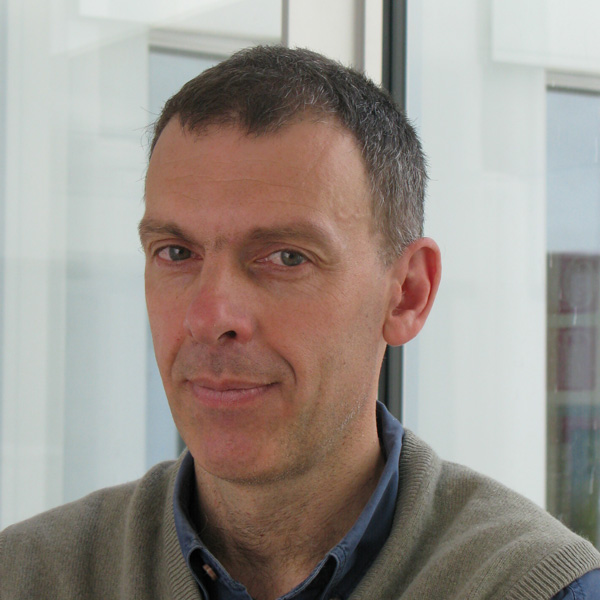
Jean-Jacques Forneron is an Assistant Professor of Economics at Boston University, specializing in econometrics and computational methods. He holds a PhD from Columbia University (2018), an MA in Economics and Statistics from ENSAE Paris (2012), and an MSc in Management from HEC Paris (2012). His research focuses on advancing econometric theory, particularly in dynamic models, moment condition estimation, and stochastic optimization techniques. He explores topics like model misspecification, optimal transportation approaches, and robust estimation under noisy conditions. His recent work emphasizes methodological innovations in simulation-based estimation, including sieve estimators, scrambled methods of moments, and likelihood-free sampling. These contributions aim to address challenges in parameter identification, computational efficiency, and statistical inference under non-standard conditions. Forneron teaches advanced econometrics courses at both MA and PhD levels, including Advanced Econometrics 2 and Advanced Topics in Econometrics , often co-instructing these courses. His office is located in SSW 415D on Boston University's campus.
Zhongjun Qu is a Professor and Director of Graduate Studies at Boston University. His research focuses on theoretical and applied econometrics, with expertise in dynamic stochastic general equilibrium (DSGE) models, regime switching, structural change analysis, and quantile regression. He holds a PhD from Boston University and has contributed extensively to econometric methodology, financial economics, and macroeconomic modeling. Education: PhD in Economics from Boston University. Research Interests: Econometric theory and applications DSGE model identification and estimation Regime switching and structural change analysis Quantile regression methodologies Financial econometrics Recent work emphasizes quantile treatment effects, option-implied state price density estimation, and high-dimensional regime switching models. His contributions include developing R packages for regression discontinuity designs and advancing sieve estimation techniques. No scientific awards explicitly listed in the provided materials. Advising and grants sections remain underdeveloped in the current data. Active in journal editing for Journal of Econometric Methods .
Dr. Michael Hatcher is an Associate Professor in the Department of Economics at the University of Southampton. His research focuses on computational economics, monetary policy, and social macroeconomics, with particular attention to asset pricing dynamics and network effects. He holds a PhD in Economics from Cardiff University and has held academic positions at the University of Glasgow and the University of Oxford. Currently, he teaches macroeconomics modules ECON1021 and ECON3008, receiving multiple teaching awards including the Vice Chancellor's Teaching Award (2016) and Excellence in VLE Awards (2016, 2018). His funded research includes the ESRC-supported project 'Endogenous extrapolation and boom-bust cycles'. He supervises PhD students in economics and has published widely in top journals like the Journal of Economic Dynamics and Control and Economics Letters. Research Interests: Computational Economics, Monetary Policy, Finance, Social Macroeconomics, Asset Pricing, Economic Growth. Recent Projects: ESRC Rebuilding Macroeconomics initiative-funded project on boom-bust cycles Studies on heterogeneous beliefs and asset pricing models Analysis of education's role in economic growth under credit market constraints Teaching: Known for innovative pedagogy, Dr. Hatcher's teaching excellence has been recognized with multiple awards. He contributes to both undergraduate and postgraduate modules in macroeconomics.
Dr. Christos Christodoulou-Volos is an Associate Professor of Economics and Finance and Head of the Department of Economics and Business at Neapolis University Paphos (NUP). He holds an MA, MPhil, and PhD in Economics from the City University of New York (CUNY). His research focuses on macroeconometrics, financial economics, and econometric modeling with particular emphasis on financial asset pricing, risk management, and unobserved components models. His academic contributions include over 20 peer-reviewed articles examining topics such as non-performing loans in Cyprus, cryptocurrency tail risk, and stock market dynamics during crises. He has held senior roles in U.S. financial institutions specializing in litigation economics and trade association analysis. His teaching spans macroeconomics, financial economics, econometrics, and statistics across multiple global universities. Key methodological specializations include GARCH/FIGARCH models, unobserved components analysis, and empirical macroeconomic modeling. His recent work addresses pandemic impacts on financial markets and structural shifts affecting asset pricing frameworks.
Fabio Gómez-Rodríguez serves as Assistant Professor of Economics at Lehigh University's College of Business, where he teaches graduate-level econometrics in the Master of Applied Economics and PhD programs. His research bridges macroeconometrics with real-world policy applications, focusing on small open economies like Costa Rica. His primary research examines how monetary and fiscal policy shocks influence exchange rate dynamics, inflation expectations, and yield curve movements. Specializing in structural VAR models and functional time series analysis, he investigates exchange rate pass-through mechanisms and price dollarization phenomena. His work actively integrates advanced Bayesian econometric methods for large-dimensional systems while maintaining strong policy relevance through central bank collaborations. Fabio collaborates extensively with the Central Bank of Costa Rica on policy transmission mechanisms and foreign exchange market research. He supervises graduate theses in macroeconometrics and monetary policy, with current projects exploring regime-switching models for exchange rate pass-through and reconstructing inflation expectations during data gaps using functional time series methods.
Kevin D. Hoover is a Professor at Duke University, jointly appointed in the Departments of Economics and Philosophy. His work bridges econometrics, macroeconomics, and the philosophy of science, focusing on causal inference, model building, and the historical evolution of economic thought. Main Affiliation: Duke University Key Themes: Causality, econometric methodology, microfoundations, and the interplay between economics and philosophy Hoover employs graph-theoretic methods and the semantic approach to analyze structural vector autoregressions (SVARs) and cointegrated models (CVARs). His research interrogates the ontological status of shocks, trends, and latent variables, emphasizing empirical identification and robust specification search. He has collaborated extensively with scholars like Selva Demiralp, Stephen J. Perez, and Mauro Boianovsky, contributing to debates on monetary policy (e.g., the price puzzle), growth theory, and the legacy of institutions like the Cowles Commission and the London School of Economics (LSE). Hoover’s work also critically examines rational expectations, the Lucas critique, and the philosophical underpinnings of models through the lens of perspectival realism and pragmatism.
Tatsuyoshi Okimoto is a Professor of Economics and Finance at the Faculty of Economics, Keio University (since 2022). He also serves as a principal at Economics Design Inc., an economic advisory at HorizonX, and a research associate at Research Institute of Economy, Trade and Industry (RIETI). His academic journey includes positions at Hitotsubashi University, Yokohama National University, and the Australian National University (ANU) as an Associate Professor and Visiting Fellow. Okimoto holds a PhD in Economics from the University of California, San Diego (2005), alongside earlier degrees from the University of Tokyo and UC San Diego. His research focuses on Financial Econometrics , Macroeconometrics , and Energy Economics , with emphasis on analyzing macroeconomic-financial market linkages, monetary policy effects, and oil price dynamics. Notable contributions include studies on credit default swaps, sustainability in finance, and the impact of unconventional monetary policies. His work employs advanced time-series techniques like regime-switching models and global vector autoregression (GVAR). Okimoto has been recognized with prestigious awards such as the 1st GPIF Finance Award (2017), Junko Maru Prize (2015), and Securities Analysts Journal Prize (2014). His recent publications explore topics ranging from carbon emissions and credit spreads to the interplay between mobility and pandemic spread. He actively contributes to policy discussions through RIETI, advising on Japan’s economic strategies, including ETF purchases by the Bank of Japan and ESG investment trends. His research also addresses macroeconomic uncertainties and their implications for corporate capital structures.
Dr. Alfonso Valdesogo Robles serves as a Permanent Professor at the Department of Applied Economics at the University of the Balearic Islands (UIB). Holding a PhD in Economics from Université Catholique de Louvain, he has strengthened his academic profile through visiting and postdoctoral positions at the University of Luxembourg, Universidad Carlos III de Madrid, Universidade Federal Fluminense, and Université de Cergy-Pontoise. His educational background includes: PhD in Economics from Université Catholique de Louvain Professor Valdesogo Robles specializes in econometric methodologies with particular expertise in financial econometrics and dependency models. His research has been published in leading international journals including the Journal of Financial Econometrics, Journal of Multivariate Analysis, and Scandinavian Journal of Statistics, alongside contributions to academic books. His teaching portfolio spans econometrics, financial econometrics, time series analysis, and applied economics across undergraduate and master's programs. He actively contributes to the academic community as a member of the Econometrics and Data Science (ECD) research group, a consolidated R&D&I structure at UIB. His current teaching responsibilities for the 2025-26 academic year include Econometrics for Business Administration, Macroeconometrics for Economics and dual degree programs, and specialized courses in the Master's program in Tourism Economics: Monitoring and Evaluation. Professional activities: Member of Econometrics and Data Science (ECD) research group Consistent teaching across multiple programs for over five years Office located in room DB201 at UIB Requires appointment scheduling for tutoring sessions
Dr. Gregor Böhl is a Principal Investigator at the Institute for Macroeconomics and Econometrics within the Department of Economics at the University of Bonn. His research is fully funded by the German Research Foundation (DFG) under project 441540692, focusing on dynamic macroeconomics, econometrics, and public economics. He is also affiliated with the CRC TR 224 EPoS and contributes to the OSE initiative for teaching and research infrastructure. His research interests lie at the intersection of Dynamic Macroeconomics , Heterogeneous Agent Models (HANK) , DSGE modeling , and computational economics . He investigates how household heterogeneity shapes macroeconomic outcomes, particularly in the context of inequality , climate policy , monetary financing , and financial frictions . His methodological expertise includes nonlinear solution techniques, Bayesian estimation under occasionally binding constraints, and high-performance computational tools. The recent trend in his publications reveals a strong focus on the empirical and structural analysis of monetary policy , especially at the zero lower bound, the macroeconomic implications of climate policies , and the development of robust computational methods for solving complex economic models. His work combines theoretical modeling with advanced numerical techniques and open-source software development. 2017 Student Prize of the Society for Computational Economics Dr. Böhl has secured competitive research funding from the DFG and the OSE initiative. He actively mentors researchers and collaborates with leading economists such as Cars Hommes, Felix Strobel, and Gavin Goy. His academic contributions extend beyond publications to the development of widely used open-source software packages like pydsge , econpizza , and dime_sampler , which support estimation, simulation, and inference in macroeconomic models. He previously held a postdoctoral position at IMFS, Goethe University Frankfurt, with collaborations at the Hoover Institution, Stanford University. He leads a research group focused on computational macroeconomics and maintains a strong commitment to open science, reproducibility, and the use of free and open-source software (FOSS) in economic research. His team develops and maintains several GitHub repositories that provide tools for nonlinear filtering, Bayesian inference, and HANK model solutions.
Marco Brianti is an Assistant Professor (Tenure Track) at the Department of Economics, University of Bologna. He holds a Ph.D. in Economics from Boston College (2021) and previously served as Assistant Professor at the University of Alberta (2021-present, currently on leave). His research focuses on macroeconomics, monetary economics, macroeconometrics, and macro-finance with notable contributions published in top journals like Journal of Monetary Economics and The Economic Journal . Education: Ph.D. in Economics, Boston College (2021) M.Sc. in Economics and Public Policies, University of Modena and Reggio Emilia (2014) B.A. in Economics and Finance, University of Parma (2012) Research Highlights: His work examines expectation-driven business cycles, pandemic impacts on credit markets, ICT effects on medium-term fluctuations, and populism's economic consequences. He has received the Carlo Giannini Prize (2021) and Young Scientist Award (2020) for his macroeconometric research. Teaching & Service: Teaches graduate macroeconomic policy analysis at Bologna and previously taught econometrics and macro-finance at Alberta. Served as seminar organizer at Alberta (2022-2024) and macro reading group leader at Boston College (2018-2021). Funding & Grants: Secured multiple research grants including a $15k startup grant at Alberta (2021) and a Bank of Italy fellowship (2016). His current projects explore monetary policy transmission, inventory roles, and firm pricing strategies in Italy.
Declan Dineen is an Assistant Professor in the Department of Economics at the University of Limerick. His research focuses on Labour Market Economics, Macroeconometrics, and the economics of the tourism industry, with a particular emphasis on technical efficiency, econometric modeling, and the economic impact of infrastructure and events in Ireland. Bachelor of Arts, University College Cork (1993) Higher Diploma, University College Cork (1994) Master of Arts, University College Cork (1996) Advanced Econometrics, London School of Economics and Political Science His work spans econometric modeling of tourism demand, technical efficiency analysis in healthcare (public hospitals and nursing homes), and SME performance. He employs stochastic frontier analysis, bootstrap DEA, and multivariate approaches to address questions of returns to scale, ownership impacts, and public policy relevance. Recent publications include analyses of technical efficiency in Irish public hospitals (2024), scheduling in sports leagues (2022), and SME performance drivers (2017). Collaborations with researchers like Ni Luasa and Zieba highlight interdisciplinary and international focus. Member, Data Analysis Laboratory Committee (External Organisation) Member, Irish Economic Association
Sanjay Moorjani is a Visiting Assistant Professor of Economics at Hamilton College, specializing in macroeconomics, monetary economics, and econometrics. His research focuses on structural identification of business cycle drivers, DSGE model calibration, and network economics. Educational Background Ph.D. in Economics, Boston College (2025) M.S. in Quantitative Economics, Indian Statistical Institute, Delhi (2017) B.Tech in Civil Engineering, National Institute of Technology, Trichy (2013) Moorjani's work advances macroeconometric methods to improve DSGE model credibility for policy analysis. His recent publications analyze business cycle decomposition, investment volatility discrepancies, and strategic network formation in hierarchical societies. Key trends in his research include: (1) refining DSGE models to address empirical inconsistencies, (2) developing novel frameworks for structural identification of shocks, and (3) applying game theory to network valuation dynamics.
Carlo Favero serves as Full Professor in the Department of Finance at Bocconi University, where he specializes in Financial Markets and contributes to academic discourse through high-impact publications in finance and economics. His scholarly profile centers on the intersection of monetary policy, financial markets, and macroeconomic stability with significant policy implications for European financial architecture. Professor Favero's research spans computational finance methodologies, sovereign debt management, and monetary policy transmission mechanisms. He actively explores applications of artificial intelligence (ChatGPT) and R programming in financial modeling, with particular focus on bond pricing dynamics under drifting equilibrium rates and European sovereign debt risk frameworks. His work addresses critical challenges in financial stability through innovative proposals like enhanced Transmission Protection Instruments and European Debt Agency models. Recent publications reveal a consistent trajectory toward policy-relevant scholarship addressing European financial integration challenges. Key research themes include computational approaches to modern finance, monetary policy effects on bond markets, sovereign debt management solutions for the Eurozone, and macroeconometric modeling for policy simulation. This body of work demonstrates strong interdisciplinary collaboration with leading economists and direct engagement with contemporary European financial policy dilemmas.
Christian K. Wolf is an Assistant Professor in the Department of Economics at the Massachusetts Institute of Technology (MIT), where he also serves as a Faculty Research Fellow. He is affiliated with the National Bureau of Economic Research (NBER), participating in both the Economic Fluctuations and Growth Program and the Monetary Economics Program. His research bridges macroeconomics and econometrics, with a particular focus on methodological approaches for policy analysis. Wolf's research interests span macroeconomics, econometrics, monetary policy, fiscal policy, time series analysis, and structural modeling. He has made significant contributions to understanding the relationship between local projection methods and vector autoregressions, fiscal deficit financing mechanisms, and the evaluation of monetary policy counterfactuals. His work often explores the connections between micro-founded models and empirical evidence, particularly examining how household heterogeneity affects macroeconomic dynamics. His recent publications reveal a strong focus on methodological questions in macroeconometrics and substantive questions about fiscal-monetary policy interactions. Wolf frequently collaborates with leading macroeconomists including George-Marios Angeletos, Mikkel Plagborg-Møller, and Alisdair McKay. His work appears in top economics journals and NBER working papers, demonstrating both theoretical rigor and practical relevance for policy analysis. Wolf maintains an active research profile with numerous publications in the past few years, covering diverse topics from the equivalence between interest rate cuts and stimulus payments to how demand composition affects economic recoveries. His personal website at christiankwolf.com serves as a hub for his academic work and publications.