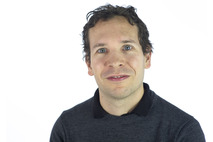
Dr. Mike Tehranchi is a faculty member at the University of Cambridge, affiliated with the Statistical Laboratory within the Department of Pure Mathematics and Mathematical Statistics (DPMMS) . His research focuses on mathematical finance, stochastic processes, and probability theory. He holds a Lecturer position and is actively involved in academic research, with notable contributions to financial models, term structure analysis, and stochastic calculus. His work bridges theoretical probability and applied finance, addressing topics such as interest rate modeling, implied volatility, and optimal investment strategies. Tehranchi’s research often intersects with optimization, statistical methods, and interdisciplinary applications in astrophysics and fluid dynamics. He maintains an active publication record and contributes to the academic community through his role in the Statistical Laboratory. Key research trends in his articles include the analysis of financial derivatives, stochastic processes in market dynamics, and the application of advanced mathematical techniques to real-world financial problems. His work emphasizes rigorous theoretical foundations while addressing practical challenges in quantitative finance. Dr. Tehranchi has no listed students or academic awards in the provided texts. He can be reached via email and is based in Room D1.04 at the Statistical Laboratory.
Abdulkadir C. Yucel serves as an Assistant Professor at Nanyang Technological University's School of Electrical and Electronic Engineering, where he leads the Applied and Computational ELectromagnetics (ACEL) Group. His research spans applied electromagnetics, radar imaging, and AI-driven electromagnetic analysis with applications in smart cities, neurotechnology, and quantum systems. Education: Ph.D. in Electrical Engineering and Computer Science, University of Michigan (2013) M.S. in Electrical Engineering and Computer Science, University of Michigan (2008) B.S. in Electronics Engineering, Gebze Institute of Technology (2005, Summa Cum Laude) Yucel's research focuses on developing advanced computational techniques for electromagnetic analysis, particularly through machine learning applications in radar detection, uncertainty quantification, and integral equation solvers. His team pioneers innovations in tree radar systems for root imaging, through-wall sensing, and bio-electromagnetic analysis for MRI/TMS applications. Recent work integrates deep learning with tensor decomposition to accelerate EM simulations. Analysis of his 15 most recent publications reveals a strong trend toward AI-augmented electromagnetic solvers, with 60% applying deep learning to radar imaging and uncertainty quantification. Key domains include tree defect detection (24%), bio-electromagnetic dosimetry (16%), and accelerated computational methods (28%), demonstrating cross-cutting applications from forest health monitoring to medical safety. Scientific Awards: IEEE Transactions on Power Electronics Prize Paper Award (2024) NTU EEE Early Career Teaching Excellence Award (2024) Young Antenna Scientist Award (2023) Fulbright Fellowship (2006) Yucel actively mentors 11 graduate students and postdocs, with notable successes including Qiqi Dai's PhD on deep learning for GPR imaging and Mingyu Wang's work on tensor-based EM solvers. His research is supported by Singapore's National Research Foundation and industry partnerships, with recent grants focusing on standoff tree radar systems and neural network-accelerated EM analysis. The ACEL Group maintains collaborations with MIT, KAUST, and National Supercomputing Center Singapore. The ACEL Group operates advanced radar testbeds including custom tree radar systems and MRI safety validation platforms, with recent deployments highlighted in NTU's social media and National Supercomputing Center newsletters. Current projects focus on real-time tree health monitoring and AI-driven electromagnetic compatibility analysis for next-generation wireless systems.
Daniele Loiacono is an Associate Professor at Politecnico di Milano's Department of Electronics, Information, and Bioengineering (DEIB), affiliated with the Artificial Intelligence and Robotics Lab (AIRLab). His research focuses on interdisciplinary applications of Artificial Intelligence, Machine Learning, and Deep Learning in medical imaging, radiation therapy, and procedural content generation for games. He leads projects in synthetic image generation for radiotherapy quality assurance, automated treatment planning, and bias analysis in medical AI systems. Key research areas include medical image synthesis using GANs, radiation therapy optimization, and algorithmic game design. His contributions span clinical applications such as total marrow irradiation (TMI) planning and lymph-node segmentation, alongside innovations in shader generation and interactive evolutionary tools for game development. Loiacono collaborates on multi-center studies to validate AI-driven workflows in healthcare and has pioneered methods combining lean Six Sigma with machine learning for treatment process improvement. His work bridges clinical medicine and computer science, addressing challenges in radiation oncology, anatomical imaging, and procedural content automation. The AIRLab serves as a hub for his research, integrating AI advancements into real-world medical and engineering solutions.
Amy Vaughan Van Hecke serves as Assistant Chair and Professor in Marquette University's Department of Psychology, leading research on autism spectrum disorder (ASD) and social development across the lifespan using neuroimaging and psychophysiological methods. She directs community initiatives to improve autism services access for underserved Milwaukee populations through the Next Step Clinic. Her academic foundation includes: B.A. in Psychology from Smith College Ph.D. in Developmental Psychology from the University of Miami Dr. Van Hecke's research centers on brain activity, heart rate regulation, and social behavior in individuals with and without ASD, utilizing high-density EEG and MRI to examine neural responses to interventions like PEERS ® . Current projects investigate pandemic impacts on social interaction in autistic adults and neural mechanisms of social isolation remediation. Her work bridges laboratory neuroscience with community-based clinical applications. Publication analysis reveals consistent focus on intervention efficacy (particularly PEERS ® ), neural plasticity measurement, and comorbid conditions across developmental stages. Recent work emphasizes gender-specific outcomes, family impacts, and pandemic-related mental health, demonstrating methodological diversity from EEG asymmetry to community-based participatory research. Her distinguished scientific recognition includes: Kirschstein National Research Service Award (NRSA) from the National Institute of Mental Health Dr. Van Hecke mentors students through her Marquette Autism Project lab and the Next Step Clinic training program while securing major grants from Marquette University, Johnson Controls Foundation, and the Greater Milwaukee Funders’ Collaborative. She teaches undergraduate/graduate courses in developmental psychology and statistics. Advising: Clinical psychology graduate mentorship (excluding 2025 intake); undergraduate research supervision Grants: $500k+ secured for Next Step Clinic serving underserved Milwaukee children She co-directs the Marquette Interdisciplinary Autism Initiative and the Next Step Clinic, which employs a Family Navigation model in Milwaukee's Metcalfe Park neighborhood to provide autism screening, diagnosis, and therapy for children aged 15 months-10 years facing systemic barriers to care.
Anne-Sophie Chauvin is a Senior Lecturer and Researcher at École Polytechnique Fédérale de Lausanne (EPFL), School of Basic Sciences, within the Institute of Chemical Sciences and Engineering and the Supramolecular Chemistry Laboratory. She actively engages in supramolecular and inorganic chemistry, focusing on f-element (lanthanides and actinides) coordination polymers and luminescent bioprobes for biological and technological applications, including invisible inks and dye-sensitized solar cells. PhD in Bioinorganic Chemistry from University Paris V-René Descartes (thesis on Nitrile Hydratase mimetics) Postdoctoral work at University of Geneva on chiral alcohol configuration analysis Habilitation à Diriger des Recherches (HDR) from University René Descartes (2006) Her research spans Lanthanide and Actinide Chemistry , Luminescence , Coordination Polymers , Metallacages , and Photovoltaic Materials . Recent publications emphasize catalytic spiro stereocenter formation, actinide coordination polymers, and photoredox-enabled biomolecule functionalization. She has supervised PhD students including Andrei Andreichenko , Julien Andrès , Steve Comby , and Aurélien Willauer . Recognitions include Fellowship of the Royal Society of Chemistry (FRSC) and membership in the Swiss Chemical Society (SCS). Current roles include teaching General and Analytical Chemistry to first-year Pharmacy and Biology students at the University of Lausanne (UNIL), overseeing practical sessions, and serving on the EPFL School of Basic Sciences Faculty Council.
Sean Andersson is a Professor in Mechanical Engineering and Systems Engineering at the College of Engineering, Boston University, and serves as Director of the BU Robotics Lab. His research bridges systems and control theory with applications in nanotechnology , atomic force microscopy , and robotics . His work in nanobioscience focuses on single molecule tracking and high-speed imaging in atomic force and fluorescence microscopy, leveraging control theory to enhance imaging capabilities. In robotics, he develops stochastic control methods for autonomous systems operating in complex environments, emphasizing multi-agent systems , sparsely sampled data , and symbolic control frameworks . Recent publications highlight trends in receding horizon control , persistent monitoring , neural style transfer for imaging , and stochastic policy optimization . The Andersson Lab also explores compressive sensing and optimal control for sensor networks and nanoscale fluid dynamics.
Kyle W. Klarich is Professor of Medicine and consultant in both the Division of Structural Heart Disease and Division of Echocardiography at Mayo Clinic. His clinical practice and research focus on structural heart disease, cardiac tumors, hypertrophic cardiomyopathies, and valvular heart disease. Dr. Klarich investigates complications prevention and quality-of-life improvement for patients with rare cardiac conditions. As Cardiovascular Disease Fellowship program director since 2010, he is extensively involved in medical education and has received multiple teaching awards including the ACGME's Parker J. Palmer Courage to Teach Award finalist recognition.
Inna Fishman, Ph.D., is a Research Associate Professor at San Diego State University's Department of Psychology within the College of Sciences. Her research investigates brain network organization in autism spectrum disorder (ASD) using multimodal MRI techniques, focusing on developmental trajectories from toddlerhood to adulthood. She directs studies on sensory processing, socioeconomic influences, and neural connectivity patterns in ASD. Research Focus: Dr. Fishman's work bridges social neuroscience and clinical neuropsychology, examining: Early biomarkers of ASD via functional/diffusion MRI Impact of bilingualism and socioeconomic factors on neurodevelopment Sleep disorders and sensory sensitivities in autistic children Aging-related neural changes in adults with ASD Publication Trends: Her recent articles (2021-2025) emphasize: 1) Advanced neuroimaging of ASD across lifespan stages, 2) Machine learning applications for diagnostics, 3) Socioeconomic and environmental modulators of brain development, and 4) Sleep/auditory processing comorbidities. Student Advising & Grants: She mentors doctoral candidates (Lindsay Olson, Jiwandeep Kohli, Bosi Chen) and leads NIH-funded projects including a clinical psychology fellowship for autism evaluation across ages. Laboratory Affiliation: Dr. Fishman co-directs the Brain Development Imaging Laboratories (BDIL), which investigates ASD manifestations through behavioral and neuroimaging approaches.
Saud Alhusaini MD PhD is an Assistant Professor of Neurology at the Warren Alpert Medical School of Brown University and serves as a Neurologist/Movement Disorders Specialist at Rhode Island Hospital. His research integrates imaging genomics and multimodal brain imaging approaches to investigate neurological disorders including Parkinson's disease, essential tremor, and epilepsy. He is affiliated with the Carney Institute for Brain Science and collaborates extensively with clinicians, geneticists, electrophysiologists, MRI specialists, neuropsychologists, and data scientists. Education: PhD from the Royal College of Surgeons in Ireland (RCSI) MSc in Neuroscience from Trinity College Dublin MD from University of Dublin, School of Medicine Adult neurology residency at McGill University/Montreal Neurological Institute Clinical research fellowship at Yale School of Medicine Clinical fellowship at Stanford University Medical Center Dr. Alhusaini's research focuses on identifying key endophenotypes and subclinical biomarkers to elucidate the underlying mechanisms of complex neurological conditions. His work spans multiple areas including movement disorders, epilepsy, and brain structure genetics. He has made significant contributions to understanding the genetic architecture of brain structures through his involvement with the ENIGMA consortium, which conducts large-scale collaborative analyses of neuroimaging and genetic data across institutions worldwide. An analysis of his publication record reveals a consistent pattern of high-impact research at the intersection of neurology, genetics, and advanced imaging techniques. His recent work demonstrates particular expertise in Parkinson's disease genetics, epilepsy network analysis, and movement disorder diagnostics. The breadth of his research, spanning from basic genetic mechanisms to clinical applications, highlights his comprehensive approach to understanding neurological disorders. Dr. Alhusaini has received funding from the Rhode Island Research Foundation, Brown Physicians, Inc., and Advance RI-CTR to support his research initiatives. His collaborative approach is evident through his numerous multi-institutional projects and extensive co-author network across Brown University departments including Neurology, Neurosurgery, and Pathology and Laboratory Medicine.
Professor Daniel Catchpoole serves as Deputy Head of School (Research) at the School of Computer Science, University of Technology Sydney (UTS), holding dual appointments at UTS and The Children's Hospital at Westmead. With over 20 years of research experience, he bridges computational sciences and pediatric cancer research through the Biomedical Data Science Lab in the Australian Artificial Intelligence Institute. His work integrates data analytics, artificial intelligence, and software development with molecular cancer biology to transform pediatric cancer treatment pathways. PhD in Cancer Cell Biology, University of New South Wales (1991-1995) Founding Fellow, Royal College of Pathologists Australasia (2010-present) Head, Children's Hospital at Westmead Tumour Bank (2001-present) Professor Catchpoole's research focuses on translational applications of genomics in childhood cancers, particularly acute lymphoblastic leukemia and neuroblastoma. His work combines high-throughput genomic technologies with advanced computational analysis to develop systems biology approaches for cancer patient assessment. Recent projects explore virtual reality applications for complex genomic data visualization and copper chelation therapies to enhance neuroblastoma immunotherapy. His research has received significant funding from Cancer Institute NSW, Sony Foundation, ARC, and NHMRC. His publication record spans biomedical data science, cancer genomics, and virtual reality applications in oncology. Recent work demonstrates leadership in 3D latent diffusion models for tumor segmentation, biobank economics, and innovative immunotherapies. His research consistently addresses the critical need for actionable knowledge from complex multidimensional biomedical data. Editorial Board Member, Cancers (2023) Associate Editor, Innovations in Digital Health, Diagnostics and Biomarkers (2019) Founding member and first President, Australasian Biospecimens Network Association Professor Catchpoole has supervised 17 Honours students (including 6 First Class Honours), 3 MSc students, and 12 PhD candidates across multiple institutions, with 6 current PhD students. His collaborative research bridges UTS's Faculty of Engineering and IT with The Children's Cancer Research Unit at The Children's Hospital at Westmead. Significant research funding includes Cancer Institute NSW grants, Sony Foundation VR projects, and ARC Discovery Projects focused on genomic data analysis and clinical decision support systems. His leadership extends to building frameworks for translational research, managing biobanks and clinical data linkages, and navigating governance requirements for cancer research. The Tumour Bank at Kids Research, CCRU, represents his long-standing commitment to pediatric cancer infrastructure development.
Hugh Churchill is a Professor in the Department of Physics at the University of Arkansas, College of Arts & Sciences. His research focuses on quantum materials and devices, particularly condensed matter physics with applications in 2D systems and quantum transport. Education: PhD in Physics from Harvard University, BA in Physics and BM in Music Performance from Oberlin College Recent research trends include studies on 2D materials like transition metal dichalcogenides and black phosphorus, investigating quantum transport phenomena, supercurrent tuning, strain engineering for exciton control, and applications of machine learning in quantum material discovery. His work also explores THz emission mechanisms and quantum noise mitigation strategies. Arkansas Research Alliance Fellow Presidential Early Career Award for Scientists and Engineers NSF CAREER Award ORAU Powe Junior Faculty Award AFOSR Young Investigator Connor Faculty Fellowship Hugh teaches graduate and undergraduate courses in quantum mechanics, modern physics, and 2D materials, including PHYS 5413 Quantum Mechanics I and PHYS 6713 Condensed Matter Physics II.
James S. Duncan is the Ebenezer K. Hunt Professor of Biomedical Engineering at Yale University, with additional appointments in Electrical & Computer Engineering and Radiology & Biomedical Imaging. His research focuses on biomedical image processing, quantitative image analysis using geometrical models, and applications in cardiac function and neuro-structure analysis. He has pioneered image-guided interventions and developed computational frameworks for medical imaging challenges. He holds a Ph.D. from the University of Southern California. His work integrates AI, deep learning, and statistical decision-making to advance medical imaging technologies. Notable contributions include advancements in 3D image segmentation, deformable models, and MRI-based tumor response assessment. Dr. Duncan has received prestigious awards, including IEEE Fellow (2001) and induction into the American Institute for Medical and Biological Engineering (2000). His recent research spans AI-driven hemodynamics modeling, trustworthy healthcare AI guidelines, and molecular MRI innovations in immunotherapy monitoring. He collaborates across disciplines to address challenges in cardiovascular, neuroimaging, and oncological applications.
Teresa Cheung is an Adjunct Professor in the Department of Engineering Science at Simon Fraser University’s Faculty of Applied Sciences. Her research focuses on neuroimaging techniques, particularly magnetoencephalography (MEG), and their applications to understanding brain networks in health and disease. She holds a Ph.D. in Physics from SFU (2012) and completed a postdoctoral fellowship at the University of Cambridge (2012–2013). Research interests include: MEG instrumentation and optically pumped magnetometers (OPM) Cortical-cerebellar networks and cerebellar activity localization Neuroimaging of neurological disorders like major depressive disorder and epilepsy Functional and structural connectome analysis across the human lifespan Multimodal integration of MEG, MRI, fMRI, and DTI data Recent work emphasizes the relationship between cardiovascular health, brain aging, and cognitive resilience. Her studies span clinical applications (e.g., depression biomarkers) and technical advancements in neuroimaging systems. Collaborations include multi-site studies on depression and aging cohorts like the Cam-CAN project. Publications highlight innovative methods in MEG system design, neural network dysfunction analysis, and lifespan brain dynamics. Her work bridges engineering, neuroscience, and clinical research to advance non-invasive brain imaging and neurophysiological understanding.
Dr. Gary Glover is a Professor of Radiology (Radiological Sciences Lab) at Stanford University , with courtesy appointments in Psychology and Electrical Engineering. His work focuses on the physics and mathematics of MRI, particularly rapid scanning methods using spiral k-space trajectories for functional brain imaging and multimodal neuroimaging (fMRI/EEG/fPET/fNIRS) combined with neuromodulation techniques like TMS and transcranial ultrasound. Academic Appointments: Radiology, Psychology, Electrical Engineering Professional Affiliations: Bio-X, Stanford Cancer Institute, Wu Tsai Neurosciences Institute Research Interests include: Development of blood oxygen level-dependent (BOLD) and viscoelastic contrast in MRI Functional MR Elastography for brain activation mapping Optimization of MR-ARFI for transcranial ultrasound guidance Automated spinal cord segmentation (EPISeg) using machine learning Scientific Awards : National Academy of Engineering (2013) Gold Medal, ISMRM (2000) Steinmetz Award, General Electric (1985) Lauterbur Lecture, ISMRM (2018) Recent Publications analyze: Fast fMRI sampling and spurious signal correction Dissociated patterns in default mode network anti-correlations Neural correlates of collaborative behavior in triadic fMRI Salience network contributions to depression pathophysiology
Dr. Daniel Keeser is a Research Fellow and Research Group Leader at the Department of Psychiatry and Psychotherapy of the University of Munich (LMU) and affiliated with the NeuroImaging Core Unit Munich (NICUM). His work focuses on clinical deep phenotyping and multimodal neuroimaging, integrating advanced MRI, EEG, and non-invasive brain stimulation methods to study severe mental and neurological disorders. Research Interests: Elucidating neurobiological mechanisms of schizophrenia, major depressive disorder, and Alzheimer's disease through multimodal neuroimaging and neuromodulation. His recent publications highlight methodologies like resting-state fMRI, diffusion tensor imaging, and transcranial magnetic stimulation combined with MRI, emphasizing personalized treatment strategies. Collaborative affiliations include the University Hospital of LMU Munich and the Clinical Deep Phenotyping (CDP) Working Group. Affiliations: NeuroImaging Core Unit Munich (NICUM) Department of Psychiatry and Psychotherapy, University of Munich (LMU)