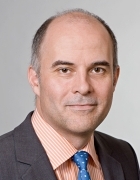
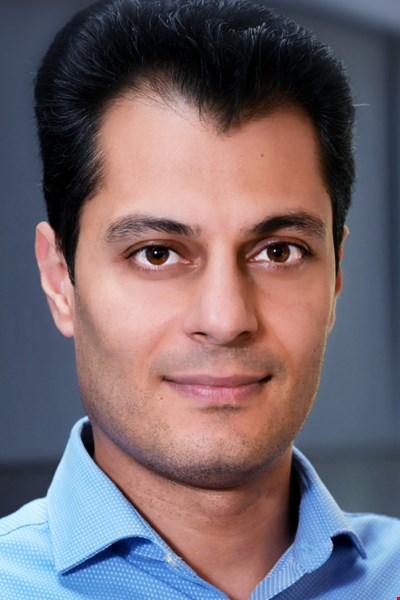
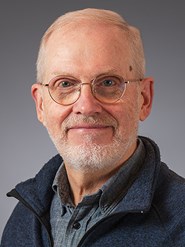
Professor Mohammad FARD is a faculty member at RMIT University's School of Engineering, specializing in Mechanical Engineering and Intelligent Systems. He leads research in autonomous vehicles, crash safety, and driver monitoring using AI. His industry experience includes six years at Nissan Technical Centre, focusing on vehicle body design. He holds a PhD from Tohoku University and has collaborated across Engineering, Health, and Science disciplines, achieving international media coverage for work on driver drowsiness and road safety. Research Interests: Autonomous Vehicles Advanced Crash Safety Driver State Monitoring AI in Noise/Vibration Human Factors/Ergonomics Teaching & Projects: Teaches Advanced CAE, Vehicle NVH, and research supervision in areas like crash simulation and vibration control. Current projects include Formula One safety barriers and driver education for autonomous vehicles. Awards & Labs: No awards listed. Active in cross-disciplinary teams and labs addressing automotive innovation and safety.
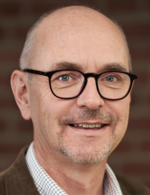
Dr. Edyta Chlebowska is an Assistant Professor at the Cyprian Norwid Research Center, John Paul II Catholic University of Lublin. Specializing in the visual art and literary legacy of Cyprian Norwid, she explores intersections between Polish Romanticism, art history, and cultural studies. Her work extends to album art analysis and interdisciplinary connections with music (e.g., Pink Floyd, Czesław Niemen). Her research focuses on Norwid's self-portraits, eschatological themes in his drawings, and comparative studies with 19th-century Warsaw painting. She reconstructs lost artworks, documents private collections (e.g., Konstancja Górska, Victor Gomulicki), and examines Norwid's reception in Florence and Odessa. Key projects include translating Studia Norwidiana and critical editing of Norwid's complete works. As editor-in-chief of multiple On Cyprian Norwid. Studies and Essays volumes and organizer of conferences like Niemen Non Stop and Colloquia Norwidiana , she bridges academic rigor with public engagement. Her publications span peer-reviewed books, journal articles, and popular science pieces, emphasizing Norwid's unpublished works and symbolic programs.
Stefano NASINI is an Associate Professor at the University of Lille 3, specializing in Quantitative Methods within the Economics and Mathematics Sciences. He holds a HDR (Habilitation à Diriger des Recherches) from the University of Lille 3 (2021), a Ph.D. in Statistics and Operations Research from the Polytechnic University of Catalonia (2015), and a Master in Statistics (2011). His research focuses on optimization, complex networks, statistical inference, and microeconomic applications. He has held academic positions including a post-doctoral role at IESE Business School (2014–2016) and a visiting researcher role at the University of Lisbon (2014). His work spans scheduling optimization, network analysis, financial contagion modeling, and energy system planning. Key contributions include specialized algorithms for large-scale optimization problems and frameworks for decentralized portfolio management. He is a member of the LEM research group and teaches courses in optimization, econometrics, and social network analysis at the Grande École and MSc levels. Publications highlight interdisciplinary applications, including network-based diffusion models, multi-market financial strategies, and dynamic choice analysis. His research bridges theoretical advancements in operations research with practical challenges in economics, energy, and transportation systems. No scientific awards are explicitly listed in the provided materials. His advising roles and grants are not detailed here, but his extensive publication record reflects active collaboration within academic and applied domains.
Prof. Dr. Michael Ulbrich is a full professor and Chair of Mathematical Optimization at the Technical University of Munich (TUM), within the School of Computation, Information and Technology. He has held this position since 2006 and previously served as Dean of Studies (2007–2010) and Vice Dean of the Faculty of Mathematics (2012–2015). His research focuses on nonlinear optimization, optimal control, and numerical analysis, with applications in fluid dynamics, shape optimization, and PDE-constrained systems. He leads projects in the DFG SPP 1962 and IGDK 1754, and has received prestigious awards including the Howard Rosenbrock Prize (2015) and the Doctoral Award from the TUM Association of Friends (1996). Ulbrich is Editor-in-Chief of Optimization and Engineering and contributes to multiple journals. His work bridges theoretical foundations and practical applications, including CO2 sequestration, fluid-structure interaction, and distributed optimization algorithms. Education: PhD (1996), Habilitation (2002) in Mathematics at TUM. Research stays at Rice University (USA) under DFG funding. Research Areas: Semismooth Newton methods, PDE-constrained optimization, optimal control of Navier-Stokes equations, and distributed parameter systems. Awards: Rosenbrock Prize, Teaching Excellence Awards, and recognition for doctoral work. Leadership Roles: Department Head of Mathematics (2022–), Member of TUM Senate (2019–2022), and Co-Chair of GAMM 2018. Ulbrich has authored influential textbooks like Semismooth Newton Methods for Variational Inequalities and Nichtlineare Optimierung . His recent projects include OptiGeoS (2024–2026) and collaborations on nonsmooth optimization and stochastic algorithms. His academic contributions span over 100 publications, emphasizing both algorithmic innovation and rigorous mathematical analysis.
Anders Rantzer is a Professor of Automatic Control at the Department of Control Engineering, Faculty of Engineering, Lund University, Sweden. He has held visiting positions at Caltech (2004–2005) and the University of Minnesota (2015–2016) as the Taylor Family Distinguished Visiting Professor. His academic journey began with a PhD from KTH Stockholm in 1991, followed by a postdoc at the Institute for Mathematics and its Applications (IMA), University of Minnesota. His research interests center on modeling, analysis, and synthesis of control systems , with a strong focus on scalability, adaptation, and applications in energy networks . He is particularly known for foundational work in positive systems and integral quadratic constraints (IQCs) . These theoretical frameworks are critical in analyzing stability and robustness of large-scale interconnected systems. His work bridges mathematical rigor with practical engineering applications, especially in sustainable energy and networked systems. The recent publications and lecture materials reflect a consistent trajectory in scalable and robust control, optimization, and distributed systems. Themes such as large-scale convex optimization , nonlinear and stochastic control , and network dynamics dominate his scholarly output, indicating a sustained commitment to advancing control theory for complex, real-world systems. Scientific honors include: Fellow of IEEE Member of the Royal Swedish Academy of Engineering Sciences (IVA) Chairman of the Swedish Scientific Council for Natural and Engineering Sciences Chairman of the Royal Physiographic Society of Lund Rantzer has supervised numerous students and contributed extensively to academic leadership and education. He has been involved in major national and international research initiatives such as WASP (Wallenberg AI, Autonomous Systems and Software Program) and ELLIIT. His work includes developing educational tools and courses in control, optimization, and machine learning. He leads and contributes to research projects on autonomous systems, cloud control, and smart energy networks. He is affiliated with the Control Lab at LTH and participates in collaborative efforts such as the Nordic University Hub on Industrial Internet of Things (HI2OT). His work integrates theoretical advances with practical implementations in robotics, biomedical systems, and industrial automation.
Assoc. Prof. Dr. Sema Alaçam Doğan has been affiliated with Istanbul Technical University since 2014, serving as an Associate Professor in the Department of Architecture . She has held administrative roles including Deputy Head of Department and Erasmus Coordinator. Education : PhD in Informatics in Architectural Design (2008-2014), MS in Informatics in Architectural Design (2005-2008), and BS in Architecture (1999-2005) from Istanbul Technical University. Her research explores Computational Design , Artificial Intelligence in Architecture , and Sustainable Material Innovation . She investigates digital tools for heritage preservation, daylight optimization in BIM, and cognitive development in architecture students. Recent publications analyze AI-assisted design literacy , machine learning for Sinan mosques , and environmental comfort in Harran houses . Her work integrates algorithmic frameworks with sustainable practices. Scientific awards include multiple ITU Publication and Performance Awards (2021-2024), FABFEST Prizes , and the 2024 Artemis Educator Award from NASA. Active projects like "Physical Computation in Architectural Drawing" and "Robotic Fabrication with Recycled Wind Turbine Blades" demonstrate her leadership in computational and sustainable research.
Alexander Summers is an Associate Professor at the Department of Computer Science , University of British Columbia . He joined UBC in March 2020 after serving as a Senior Researcher (Oberassistent) at ETH Zurich from 2014-2020. His research bridges Programming Languages , Formal Methods , and Software Engineering , with a focus on automated verification tools for heap-based and concurrent programs. MSc Joint Mathematics and Computer Science, Imperial College London (2004) PhD Computer Science, Imperial College London (2009) Postdoc, ETH Zurich (2009-2014) Summers leads the Prusti Project , developing deductive verification tools for Rust, and contributes to the Viper Project for intermediate verification languages. His work addresses challenges in: Memory safety and concurrency verification Ownership models and aliasing control Automated reasoning with SMT solvers Resource-oriented programming specifications Debugging verification condition quantifiers Formal validation of verification infrastructure His research has been recognized with a Amazon Research Award and ACM SIGPLAN Distinguished Paper Awards . He teaches courses like Advanced Software Engineering and Program Verifiers and Program Verification , and supervises graduate students in formal verification and Rust-related research.
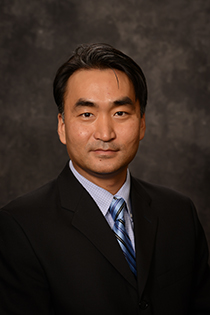
Dr. Kim Yong-Joe is an Associate Professor in the J. Mike Walker ’66 Department of Mechanical Engineering at Texas A&M University. He serves as the Director of the Acoustics and Signal Processing Laboratory (ASPL), founded in 2009. His research focuses on acoustics, applied signal processing, nonlinear acoustics, biomedical acoustics, noise and vibration control, and structural dynamics. He has received notable awards including the 2014 Department of Mechanical Engineering Graduate Teaching Award and the 2014 Pioneer Natural Resources Faculty Fellow II. His lab specializes in wave propagation analysis, ultrasonic structural health monitoring, and acoustophoresis in microfluidic systems. He has collaborated with sponsors like the National Science Foundation, Qatar National Research Fund, and Samsung Techwin. His research has led to advancements in noise reduction technologies, biomedical diagnostics, and nondestructive evaluation methods.
Prof. Dr. Johan Robertsson is a Full Professor of Applied Geophysics and Head of the Exploration and Environmental Geophysics (EEG) Group at ETH Zürich's Department of Earth and Planetary Sciences. He holds a MSc from Uppsala University (1991) and a PhD in Geophysics from Rice University (1994). Before joining ETH in 2012, he spent 15 years at Schlumberger in R&D roles, leading projects that revolutionized marine seismic data acquisition. His research focuses on wave propagation physics, seismic data inversion, and applications in exploration and environmental geophysics. He pioneered the use of Distributed Acoustic Sensing (DAS) for landslide monitoring and contributed to Mars seismology via the InSight mission. Education: MSc in Engineering Physics, Uppsala University (1991) PhD in Geophysics, Rice University (1994) Research Interests: Seismic wavefield modeling and inversion Planetary seismology (Mars, Moon) Acoustic metamaterials and wave control Environmental geohazard monitoring Marine seismic acquisition techniques His work on the Martian soil properties using InSight data and lunar exploration instrumentation (ALGEP) reflects his cross-disciplinary approach. He holds 90+ patents and has secured prestigious grants like the ERC Advanced Grant. Awards: EAGE Guido Bonarelli Award (2020) ERC Advanced Grant MATRIX (2017) EAGE Conrad Schlumberger Award (2018) Grants & Advising: Led the MATRIX ERC project advancing seismic imaging algorithms Advised over 20 PhD/MS students (names not listed) Secured Schlumberger's largest R&D project in marine seismic sampling His EEG Group operates cutting-edge labs for immersive wave experimentation and planetary geophysical instrumentation. Current initiatives include lunar subsurface exploration and acoustic invisibility experiments.
Dr. Emily Cuming is a Senior Lecturer in the Humanities and Social Science school at Liverpool John Moores University , specializing in British literature, culture, and social history from the 19th century to the present. Her research focuses on maritime relations, working-class girlhood, life writing, and representations of domestic spaces including council estates, slums, and bedsits. PhD, MA, BA in English & Russian from University of Manchester (2006, 2002, 2001) Editor of Key Words: A Journal of Cultural Materialism Co-leader of the Home and Domestic Cultures research network Committee member of the Research Institute for Literature and Cultural History Board member of the Centre for Port and Maritime History Her research combines literary analysis with historical and cultural studies, emphasizing material culture, port cities, and marginalized voices. Recent publications include Maritime Relations: Life, Labour and Literature at the Water’s Edge, 1830-1914 (Cambridge University Press, forthcoming 2025) and Housing, Class and Gender in Modern British Writing, 1880-2012 (CUP, 2016). She has received multiple research grants including AHRC Connected Communities funding and Liverpool John Moores University QR awards. Dr. Cuming teaches undergraduate modules on Life Stories , Representing Domestic Space , and Waterscapes , as well as MA courses on Place: Imagining Place in Modern Times . She supervises three PhD projects and welcomes new supervisees in her research areas. 2025: Enhancing Research Cultures funding for 'The Sinking of the Lancastria' 2024: Editorial board member of Journal of Victorian Culture 2023: NCCPE Engage Prize for 'Around the Toilet' project 2022: Caird Short-term Research Fellowship 2016: NCCPE Engage Prize winner
Professor David Thompson is a globally recognized expert in railway noise and vibration reduction at the University of Southampton's Institute of Sound and Vibration Research (ISVR). He holds a part-time role in ISVR Consulting while continuing full-time research. His research focuses on low-noise railway design, ground vibration control, and aerodynamic noise from high-speed trains. He leads collaborative EU projects and advises industry partners. David earned his MA and PhD from the University of Cambridge and the ISVR, respectively. His career includes roles at British Rail Research and TNO in the Netherlands, where he developed the influential TWINS rolling noise model. He has authored over 250 papers and a seminal textbook translated into Chinese, with a second edition in 2024. Awards include the 2018 Rayleigh Medal for outstanding contributions to acoustics. Research Highlights: Modelling noise sources (rolling, aerodynamic, curve squeal), vehicle interior noise transmission, and ground-borne vibration. Collaborations: Partnerships with EU initiatives, Korean Railroad Research Institute, and Chinese universities. Teaching: Courses on noise control engineering, railway systems, and acoustic design. His work bridges theoretical models with practical solutions, aiming to reduce railway noise through innovative designs and mitigation strategies.
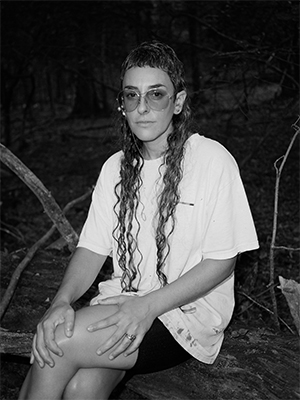
Katherine Hubbard is an Associate Professor of Art and Director of the MFA Program at Carnegie Mellon University School of Art. Her practice integrates photography, writing, and performance to explore the intersection of social politics, history, and narrative through a lens of bodily engagement. Hubbard's work emphasizes analog photography as a medium that mimics and interrogates the body's relationship to visual processes, often staging performances where participants' physical positioning becomes integral to the artwork's temporal experience. Education: MFA from the Milton Avery Graduate School of the Arts at Bard College (2010). Research focuses on the politics of looking, the malleability of vision, and bridging the imaginary with the familiar through interdisciplinary projects. Notable collaborations include the Poetry Parade series (2012–ongoing), a migratory feminist reading action performed in institutions like the Whitney Museum, and cyclops & slashes (2015), a participatory performance addressing social dynamics through photography and text. Awards: 2020 Guggenheim Fellowship in Photography. Hubbard has exhibited widely, including solo shows at Higher Pictures (New York) and Company Gallery (NY), with works featured in Frieze Magazine . Her projects often involve site-specific installations, such as Four shoulders and thirty five percent everything else (2014), which interrogates landscape and perception in Utah's desert.
Dr. Esmaeel Esmaeeli is a Senior Lecturer in Civil and Environmental Engineering at Brunel University London, serving as Course Director for the MSc in Structural Engineering. His work focuses on sustainable structural retrofitting solutions, safety, and resilience of concrete and masonry structures. Brunel University London (Current: Senior Lecturer) Queen’s University Belfast (Postdoctoral Fellow, Horizon 2020 MSC Fellowship) University of Minho (PhD research on Hybrid Composite Plate) K. N. Toosi University (MSc research on seismic strengthening) His research spans advanced materials like Strain-Hardening Cementitious Composite (SHCC) and Carbon Fibre Reinforced Polymer (CFRP) for seismic retrofitting, computational modeling of FRP-concrete interfaces, and dynamic response under extreme loads. Recent work includes the SMArtPlate and Hybrid Composite Plate (HCP) systems. Scientific recognition includes the Horizon 2020 Marie Skłodowska-Curie Individual Fellowship and a Portuguese Foundation for Science and Technology (FCT) scholarship. He has advised on structural vulnerability assessments and leads teams in consultancy projects.
Martin Berggren is a Professor at the Department of Computing Science , Umeå University , Sweden. His work focuses on Computational Design Optimization , combining computer simulations and numerical optimization to enhance engineering designs for devices like antennas, microwave components, and loudspeakers. Berggren is also active in mathematical modeling of physical phenomena, particularly wave propagation and fluid mechanics, with a strong emphasis on finite-element methods . His research addresses large-scale conceptual design problems using thousands to millions of design variables, relying on gradient-based algorithms and adjoint-based computations of design sensitivities—similar to back-propagation in deep learning. Key application areas include acoustic and electromagnetic devices, where he investigates damping mechanisms, boundary conditions, and material distribution. Other interests, though less active, involve flow control and unsteady fluid–structure interaction . Berggren collaborates extensively on projects such as Structured Regularization , Topology Optimization of Acoustic Black Holes , and Design of Microstrip-to-Waveguide Transitions . His publications span journals like Journal of Computational Physics , Pattern Analysis and Applications , and IEEE Transactions on Antennas and Propagation , often co-authored with researchers like Linus Hägg , Eddie Wadbro , and Disi Lin .
Daniel Dadush is a part-time Professor at Utrecht University and a senior researcher at Centrum Wiskunde & Informatica (CWI) , where he leads the Networks & Optimization group. His research spans lattice algorithms, integer programming, convex optimization, and discrepancy theory, with a focus on theoretical and algorithmic advancements. PhD in Algorithms, Combinatorics, and Optimization (ACO) from Georgia Tech (2012) Simons Postdoctoral Fellow at Courant Institute, NYU (2012-2014) His work bridges discrete and continuous optimization, exemplified by breakthroughs like Strongly Polynomial Algorithms for Linear Programming (STOC 2024) and Interior Point Methods Are Not Worse Than Simplex (FOCS 2022). Recent publications emphasize randomized algorithms, integrality gaps, and high-dimensional geometry. Scientific Awards : ERC Starting Grant (2019-2024) NWO Veni Grant (2015-2018) Van Dantzig Prize (2020) A.W. Tucker Prize for Best Thesis (2015) INFORMS Optimization Society Student Paper Prize (2011) He mentors PhD students and postdocs, including Ben Bals , Samarth Tiwari , and Sophie Huiberts , and co-organizes major conferences like ISMP 2027 and Dutch Day on Optimization . His teaching includes courses on Interior Point Methods and Learning-Augmented Algorithms.