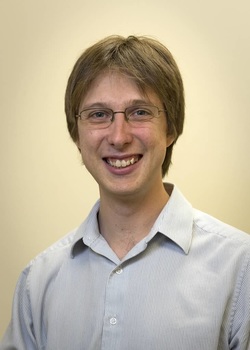
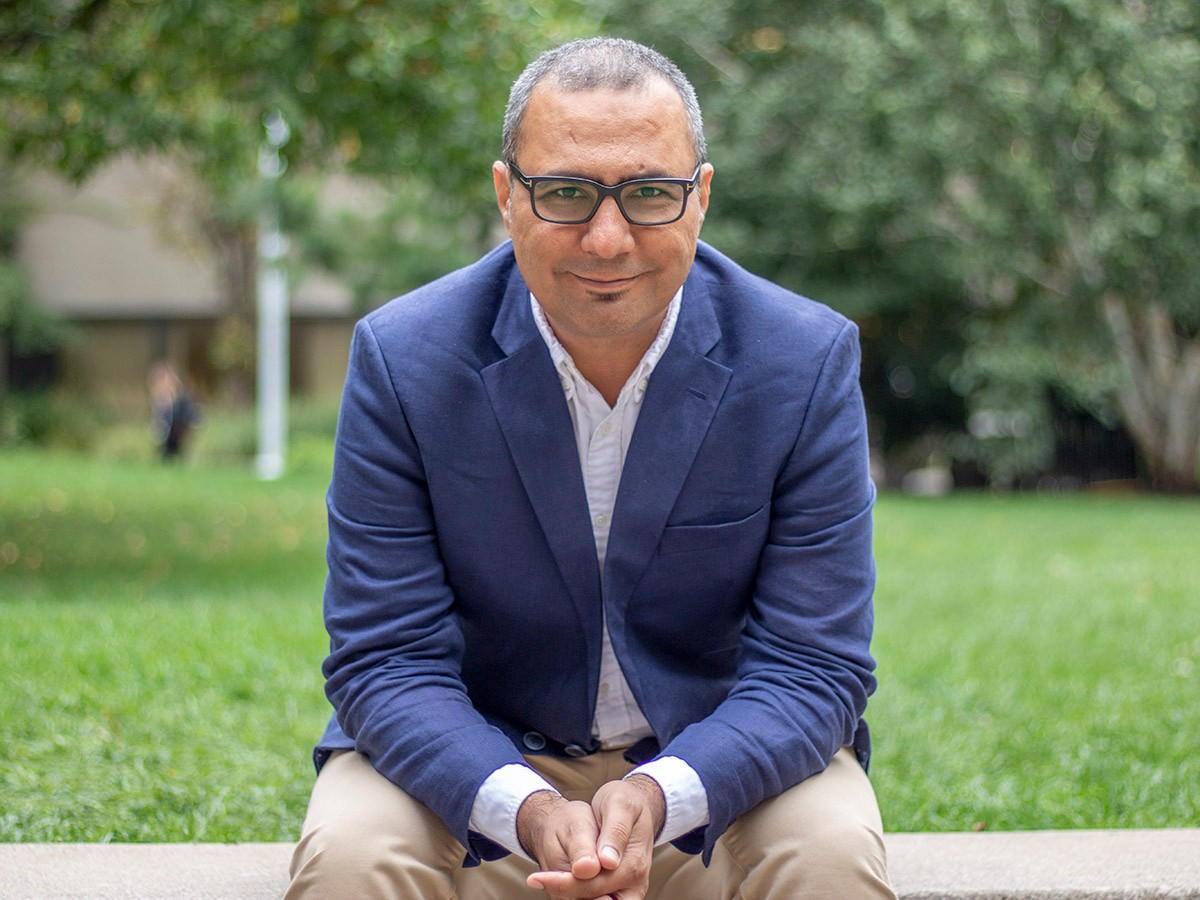
Dr. Ruzan Sokhoyan is a Nanophotonics Research Scientist specializing in plasmonics and active metasurfaces. Her work focuses on advancing optical imaging, communication, and computation through tunable photonic structures. Core research in metasurface design for beam steering and polarization control Collaborative contributions with Harry A. Atwater and other leading researchers Publications in high-impact journals like ACS Nano and Advanced Optical Materials Her research explores electro-optic modulation , high-power laser beam manipulation , and dynamic photonic devices , with applications in optical communication and imaging. Recent work emphasizes inverse design approaches and liquid crystal-based tunable metasurfaces , reflecting trends toward reconfigurable and multifunctional photonic systems.
Keval Vora is an Associate Professor at the School of Computing Science, Simon Fraser University. His research focuses on scalable solutions for modern data analytics systems, particularly in graph processing and distributed computing. He leads the Parallel Data and Computing Lab (PDCL), developing systems like Peregrine , GraphBolt , and GraphBolt . Contact: TASC1 9419, keval@sfu.ca. Education: PhD in Computer Science from the University of California, Riverside (2017). Previously worked at Morgan Stanley on low-latency trading software. Teaching: Courses include Distributed Systems (CMPT 431) and Special Topics in Networks and Systems (CMPT 982). Advises graduate and undergraduate students on projects involving distributed systems and graph analytics. Research Interests: Parallel/Distributed Computing, Irregular Big Data Processing, High-Performance Computing. His work emphasizes efficient techniques with provable guarantees for large-scale systems. Software Contributions: Peregrine (pattern-based analytics), GraphBolt (dynamic graph processing), and Lumos (disk-based graph processing). These systems address challenges in scalability, efficiency, and real-time data handling.
Chris Chipot is a Researcher and former Research Director at the CNRS, affiliated with the University of Lorraine. He holds adjunct faculty positions at the University of Illinois (Department of Physics) and the University of Chicago (Department of Biochemistry and Molecular Biology). He directs an Associate International Laboratory between CNRS and the University of Illinois at Urbana-Champaign. His expertise spans theoretical chemistry, molecular dynamics simulations, and membrane protein studies. Education: PhD in Theoretical Chemistry (1994, Henri Poincaré University, France) with a fellowship from Roussel Uclaf Institute. Habilitation (2000, University of Lorraine). Research Interests: Focuses on protein-ligand binding free energies, membrane protein dynamics, computational methods for molecular simulations, and biophysical techniques. His work integrates theoretical approaches with experimental validations, particularly in drug design and membrane biology. Publications: Recent articles highlight advancements in free-energy calculations, membrane protein dynamics, and scalable molecular dynamics software (NAMD). His research bridges computational and experimental biophysics, addressing challenges in structural biology and drug discovery. Awards: Fellowship from the Roussel Uclaf Institute during PhD studies. Advising & Grants: Leads collaborative projects via the CNRS-UIUC lab, fostering international research partnerships. His work has been supported by institutional and international grants, though specific funding details are not detailed here. Labs/Teams: Directs the CNRS-UIUC Associate International Laboratory, promoting interdisciplinary research in computational biophysics and membrane protein studies.
Josh Atkinson is an Assistant Professor in the Department of Civil and Environmental Engineering and the Omenn-Darling Bioengineering Institute at Princeton University. His research focuses on using synthetic biology and protein engineering to control electron transport in microbes for environmental applications, such as bioelectronic sensors and bioremediation. The Atkinson Lab investigates microbial energy processing, biofilm-electronic interfaces, and sustainable biotechnologies. Affiliations: Princeton University, Omenn-Darling Bioengineering Institute Research Interests: Microbial electron transport, bioelectronic systems, environmental monitoring, sustainable catalysis His work bridges disciplines like electrochemistry, bioengineering, and environmental science to engineer living materials for real-world challenges. The lab recruits students across levels, emphasizing diversity and interdisciplinary collaboration. Recent projects include real-time contaminant sensors and light-controlled biofilm patterning. Articles highlight innovations in bioelectronics and microbial systems engineering. The lab’s future directions involve scaling-up bioelectronic devices and enhancing microbial community understanding.
Graham Dobereiner is an Associate Professor and Robert L. Smith Early Career Professor in the Department of Chemistry at Temple University's College of Science and Technology. He received his Ph.D. from Yale University (2011) and completed postdoctoral research at MIT (2012-2014) after earning his B.S. from Brandeis University (2007). His research group develops novel homogeneous transition metal catalysts for synthetic chemistry applications spanning fine chemicals manufacturing, petrochemical processing, and drug discovery. The work integrates organometallic chemistry principles, combining organic molecular diversity with inorganic compound reactivity. Research areas include catalytic isomerization, oxidative synthesis, ligand design, and mechanistic studies of transition metal complexes. Analysis of his recent publications demonstrates strong emphasis on reaction mechanism elucidation, catalyst design for stereoselective transformations (particularly Z-selective isomerizations), and development of novel catalytic systems for sustainable synthesis. His group employs computational and experimental approaches to advance synthetic methodology.
Ruth Keogh is a Professor of Biostatistics and Epidemiology at the London School of Hygiene & Tropical Medicine (LSHTM), affiliated with the Medical Statistics Department within the Faculty of Epidemiology and Population Health. She is Co-Director of the Centre for Data and Statistical Science for Health (DASH) and serves as Departmental Research Degrees Coordinator. Her academic career has spanned roles from Lecturer (2012–2015) to Associate Professor (2015–2019) before attaining her current rank in 2019. Keogh holds advanced degrees including a DPhil in Medical Statistics/Epidemiology (University of Oxford, 2007), MSc in Applied Statistics (Oxford, 2003), and BSc in Mathematics and Statistics (University of Edinburgh, 2002). Her research focuses on causal inference, clinical trial emulation using real-world data, and applications in cystic fibrosis, infectious diseases, and public health. She leads projects on lung function trajectories, vaccine efficacy, and healthcare policy analysis. Her work integrates biostatistical methods with epidemiological studies, emphasizing rigorous analysis of observational data to inform clinical decisions. Notable areas include evaluating antibiotic treatments for cystic fibrosis patients, assessing diagnostic test accuracy for dengue and leptospirosis, and modeling vaccine effectiveness during the COVID-19 pandemic. She teaches courses in survival analysis, electronic health records, and health data science at LSHTM. Keogh has held leadership roles in the International Biometric Society and the STRATOS Initiative, and she has delivered keynote addresses at international conferences on trial emulation and biostatistical methods. Her contributions bridge methodological innovation and practical health challenges, with over 190 publications and active engagement in global health research networks.
Nancy E. Levine is a Professor in the Department of Anthropology at the University of California, Los Angeles (UCLA), where she has conducted extensive research on culturally Tibetan societies across Nepal and China. Her work examines how state-sponsored modernization projects impact family structures, community dynamics, and cultural values in highland Asian contexts. Education: Ph.D. in Anthropology, University of Rochester (1978) Research Focus: Professor Levine specializes in socio-cultural anthropology with emphasis on kinship systems, pastoral economies, and gender dynamics. Her fieldwork spans three and a half years in northwestern Nepal studying household economies, followed by investigations into government reform impacts on Western Tibetan agriculturalists and sedentarization effects on nomadic pastoralists in Sichuan and Qinghai Provinces. Current research analyzes resettlement consequences for Tibetan communities adapting to urban life, including shifts in family relationships, cultural values, and health outcomes. Her methodological approach combines demographic analysis with political economy frameworks to document responses to economic scarcity and mortality patterns in pre-modern contexts. Publication Trends: Her 15-year publication trajectory reveals consistent focus on kinship adaptation under political change, with increasing attention to multi-species anthropology and sedentarization impacts. Early work established foundational analyses of polyandry and child care systems, while recent scholarship examines taxation traditions and sibling centrality in pastoralist survival strategies, demonstrating longitudinal engagement with Tibetan societies through periods of dramatic socioeconomic transformation. Advising and Research: Professor Levine mentors graduate students at UCLA with expertise in Himalayan and Central Asian fieldwork. Her research has been supported by grants enabling sustained ethnographic engagement across multiple Tibetan regions, though specific funding sources aren't detailed in available materials. She maintains active scholarly contributions through journal publications and book chapters addressing contemporary challenges in pastoralist communities.
Antonio Bobet is the Edgar B. and Hedwig M. Olson Professor in Civil Engineering at Purdue University's College of Engineering, affiliated with the Civil and Construction Engineering department. His research focuses on geomechanics, rock mechanics, seismic engineering, and lunar in-situ resource utilization. He leads studies on tunnel stability under seismic loads, fracture mechanics, and geophysical monitoring of rock systems. His work integrates experimental and numerical methods to address challenges in both terrestrial and extraterrestrial construction. Research interests include: Seismic response of underground structures Rock joint behavior and fracture propagation Lunar habitat construction using ISRU materials Geomechanical characterization of layered rocks Recent studies emphasize the interplay between geology, material properties, and structural stability. His publications analyze seismic precursors to rock failure, fracture roughness, and tunnel design under complex loading conditions. Awards and recognitions are listed under external faculty accolades. Advising and grants focus on geohazard mitigation and space infrastructure resilience. Lab affiliations include Purdue's geomechanics and geotechnical laboratories.
Bilal Farooq is an Associate Professor and Program Director for the Master of Engineering in Interdisciplinary Engineering (MEIE) at Toronto Metropolitan University, holding the Canada Research Chair in Disruptive Transportation Technologies and Services within the Department of Civil Engineering. His educational background includes a PhD from the University of Toronto (2011), MASc from Lahore University of Management Sciences (2004), and BSc from the University of Engineering and Technology (2001). Dr. Farooq's research pioneers disruptive transportation solutions through cyber-physical systems, AI/machine learning applications, behavioral modeling, and optimization techniques. His work specifically targets on-demand multimodal systems, sustainable urban transportation, urban air mobility, automated vehicles, and extended reality applications, addressing critical urban mobility challenges with human-centered approaches. Analysis of his recent publications reveals a strong trend toward quantum-enhanced computational methods, privacy-preserving federated learning frameworks, and sustainability-focused decarbonization strategies across transportation domains, with increasing emphasis on human factors and real-world implementation. Notable scientific awards include: Ontario Early Researcher Award (2018) Canada Research Chair (2017) MassMotion Academic Pedestrian Modelling Project of the Year (2016) Québec Early Researcher Award (2014) Dr. Farooq actively supervises graduate students and secures significant research funding through his Canada Research Chair position and Early Researcher Awards. He directs the Laboratory of Innovations in Transportation (LiTrans), which develops interdisciplinary solutions integrating mathematics, engineering, computer science, and economics to address emerging transportation challenges. LiTrans focuses on disruptive transportation technologies, complete streets design, cyber-physical systems, pedestrian dynamics, resilience, and climate change impacts, collaborating with industry and government partners to translate research into practical urban mobility innovations for smart cities worldwide.
Kevin A. Shinpaugh is Collegiate Professor in the Department of Aerospace and Ocean Engineering at Virginia Tech’s College of Engineering. Since 2019 he has led instruction and research in spacecraft design and propulsion, leveraging decades of experience in high-performance computing and space-systems engineering. Education Ph.D., Aerospace Engineering, Virginia Tech (1994) M.S., Aerospace Engineering, Virginia Tech (1989) B.S., Aerospace Engineering, Virginia Tech (1986) Research Focus Dr. Shinpaugh’s scholarship centers on the intersection of high-performance computing (HPC) and space systems engineering . He develops and applies advanced computational techniques to spacecraft design, propulsion analysis, and mission planning. His work spans numerical simulation of complex aerospace systems, optimization of propulsion architectures, and creation of scalable HPC frameworks that enable rapid design iteration for spacecraft and launch vehicles. Publication Trends Across more than thirty refereed papers and design-competition reports, a clear trajectory emerges: early contributions in experimental fluid-mechanics instrumentation (laser-Doppler velocimetry, fiber-optic sensors) evolved into large-scale computational studies of space systems, and most recently into student-led mission-concept designs for CubeSats, lunar exploration, and interplanetary missions. Keywords consistently include spacecraft design, propulsion, deployable structures, and mission architecture. Service & Committees Chair, Virginia Tech HPC User Committee (2004–2011) Member, VT HPC Advisory Board (2007–present) NSF TeraGrid/XSEDE Campus Champion for Virginia Tech (2006–2013) IBM HPC/AI Customer Advisory Council DC (2019–present) Member, VT AOE Seminar Committee (2019–present) Laboratory & Computing Resources Dr. Shinpaugh has long stewarded Virginia Tech’s high-performance computing ecosystem. He directs students and collaborators in leveraging the university’s Advanced Research Computing (ARC) clusters, as well as national facilities through XSEDE and DoD HPCMP, to execute spacecraft-design simulations and propulsion analyses at scale.
Justin Jansen is a Professor of Corporate Entrepreneurship at Rotterdam School of Management (RSM) within Erasmus University Rotterdam. Affiliated since 2001, his academic career spans over two decades. He holds a PhD in Management (2005) from Erasmus University. His research focuses on organizational growth, strategic renewal, and leadership dynamics in fast-growing firms. He co-founded the Erasmus Centre for Entrepreneurship (ECE) and pioneered the European ScaleUp Institute, fostering scale-up ecosystems across Europe. His work bridges academia and practice, addressing how organizations navigate paradoxes between exploration and exploitation. He has advised companies and governments on innovation strategies and entrepreneurial ecosystems. Editorships include Journal of Management Studies , and he’s an editorial board member of leading journals like Academy of Management Journal . Notable awards include the ERIM Best Paper Award and being named one of the world’s top entrepreneurship scholars. Research highlights include frameworks for scale-up DNA, leadership roles in ambidextrous organizations, and the role of social networks in corporate-startup collaborations. He co-developed BuildtoGrow, a venture applying research-based game-based learning tools for scaling organizations. Key collaborations include work with the European ScaleUp Institute and advisory roles for governmental agencies on entrepreneurial climate improvement. His 50+ publications span topics like absorptive capacity, strategic agility, and middle management roles in strategy implementation.
Dr. Winnie Lem is a Professor in the Department of International Development Studies and Gender and Social Justice program at Trent University. Her research focuses on migration, transnationalism, citizenship, and political economy with a regional emphasis on Europe and Asia. She holds a Ph.D. from the University of Toronto. Her academic work spans migration studies, urbanization, gender, and rural politics. Notable contributions include analyses of Chinese migrant entrepreneurs in France, militant populism in contemporary France, and the dialectics of migration. Lem has co-edited several volumes on migration and capitalism, including Migration Temporalities and Capitalism (2018) and Confronting Capital (2012). Lem teaches courses on global inequality, migration, and development studies. She actively contributes to interdisciplinary research through collaborations with institutions like the Canadian Anthropology Society. Her work often bridges anthropological theory with critical political economy frameworks, examining how global capitalism shapes migrant experiences and social structures. Her recent scholarship (2020) contextualizes the Gilets Jaunes movement within broader populist trends in France, while earlier work (2001–2009) explored labor dynamics in rural France and transnational migrant economies. Lem’s research emphasizes the intersection of class, gender, and ethnicity in migration narratives.
Amitav Acharya is UNESCO Chair in Transnational Challenges and Governance and Distinguished Professor at American University's School of International Service. He holds honorary positions at Rhodes University, University of Pretoria, and Nankai University, with previous appointments at Harvard, Oxford, and Tsinghua University. Research focuses on: Global international relations and world order transitions US-China relations and Asian regionalism Non-Western international relations theory United Nations and global governance Publications demonstrate extensive contributions to IR theory with works translated into multiple languages. Honors include: Three-time ISA Distinguished Scholar Award recipient American University Scholar-Teacher of the Year (2020) First non-Western President of International Studies Association (2014-2015)
Prof. Veronika Somoza is a leading academic in Nutritional Systems Biology, currently affiliated with the University of Vienna and Technical University of Munich (TUM). She holds a professorship in Molecular Food Science and has led key research groups such as the Institute of Physiological Chemistry and the Christian Doppler Laboratory for Bioactive Aromatics. Her career includes roles at institutions like the German Research Institute for Food Chemistry (Garching) and the University of Wisconsin-Madison. Education: Diplom (Justus Liebig University Giessen, 1991), PhD (University of Vienna, 1995), Habilitation (Kiel University, 2002) Research Focus: Bioactive food compounds, flavor chemistry, taste receptor signaling, and gastrointestinal physiology Her work bridges food science and human health, particularly in understanding how food ingredients influence digestion, inflammation, and disease. Notable contributions include discoveries on bitter peptide effects on gastric acid secretion and flavor perception modulation. Awards: FEMA Excellence in Flavor Science (2016), ACS AGFD Fellow (2020), Hans Adolf Krebs Prize (2004) Prof. Somoza has pioneered methodologies in atomic force microscopy for foodborne virus detection and developed bitterness-masking compounds for pharmaceuticals. Her interdisciplinary approach integrates nanobiophysics with nutrition to advance functional food design and clinical applications.
Mike Kirby is a Professor at the Kahlert School of Computing, University of Utah. He also holds adjunct professorships in the Department of Bioengineering and the Department of Mathematics. His current roles include leadership in scientific computing and informatics initiatives, including former directorships of the Utah Informatics Initiative (2019-2023) and the Multi-Scale Multidisciplinary Modeling of Electronic Materials (MSME) Collaborative Research Alliance (2016-2022). He has extensive experience in strategic research initiatives, including serving as Assistant Vice President for Research (2024-2025). Education: Dr. Kirby earned a PhD in Applied Mathematics (2002) and MS in Computer Science (2001) from Brown University, and a BS in Applied Mathematics and Computer Science from Florida State University (1997). Research Interests: Focus on large-scale scientific computing, physics-informed machine learning, computational science and engineering, high-order numerical methods, and visualization. His work bridges applied mathematics and computer science to address real-world engineering challenges. Publications: Over 150 peer-reviewed articles, including high-impact contributions in journals like Journal of Computational Physics and SIAM Journal on Scientific Computing . Recent work emphasizes machine learning for differential equations, topology optimization under uncertainty, and multi-fidelity modeling. Awards: Recognized for leadership in computational science and informatics, including contributions to University of Utah’s Clery Compliance Program. Advising & Grants: Supervised over 50 graduate students and postdocs. Secured funding from NSF, DOE, and industry partnerships, totaling millions in research grants. Active in interdisciplinary collaborations across engineering, materials science, and medicine. Labs/Teams: Scientific Computing and Imaging (SCI) Institute, Utah Informatics Initiative, and the Center for Multiscale Modeling of Electronic Materials (MSME).