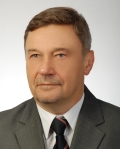
Prof. Jan Bień is a Professor at Wrocław University of Science and Technology's Faculty of Civil Engineering, specializing in bridge engineering within the Department of Roads, Bridges, Railways and Airports. His office is located in Building H-3, Room 2.20. Research expertise includes computer modeling of bridge structures with defects, structural diagnostics and monitoring systems, and AI-enhanced bridge management frameworks. Recent projects validate numerical models through load testing and develop sensor networks for real-time infrastructure assessment. Prof. Bień's publications span structural health monitoring methodologies, dynamic response analysis, and sustainable bridge management. He contributes to international standards through fib (Fédération internationale du béton) committees and maintains active laboratory and field testing programs.
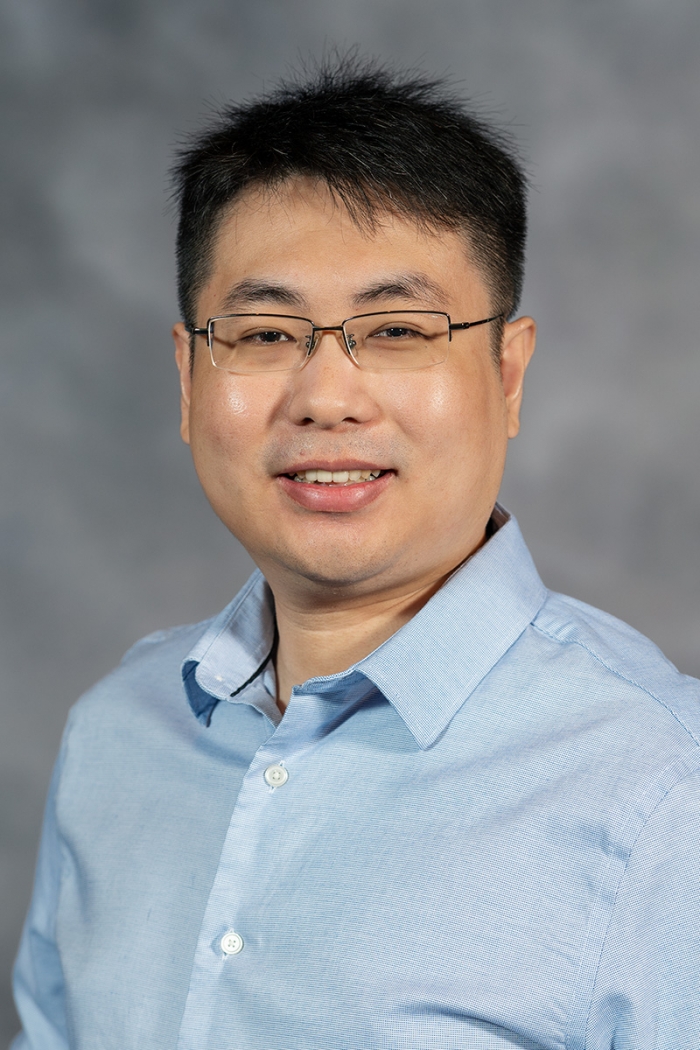
Dr. Ning Wang is an Assistant Professor at the Department of Concrete and Construction Management within the School of Concrete and Construction Management at Middle Tennessee State University (MTSU). He holds a Ph.D. in Design, Construction, and Planning from the University of Florida (2022), an M.S. in Civil Engineering from the University of Illinois at Urbana-Champaign (2014), and a B.S. in Construction Management from Hebei University of Technology (2013). His research focuses on Building Information Modeling (BIM) , Artificial Intelligence (AI) , Machine Learning , Natural Language Processing (NLP) , and their applications in construction technology. Notable areas include Construction Robotics , Geographic Information Systems (GIS) , and Ontology-Based Integration of BIM and GIS . Recent work emphasizes AI-driven solutions for infrastructure maintenance, such as pavement structural analysis using object detection models and nondestructive testing. Dr. Wang has published extensively in journals like Automation in Construction and Journal of Computing in Civil Engineering , and his work spans BIM-based conversational AI systems, NLP for construction information extraction, and smart materials testing using advanced sensors. He serves as a reviewer for journals including ASCE Journal of Computing in Civil Engineering and conferences like the International Conference on Construction Engineering and Project Management. He teaches courses in architectural CAD, software applications for virtual design, and construction management at MTSU. His professional affiliations include the American Society of Civil Engineers (ASCE).
Seokyon Hwang, Ph.D., is an Associate Professor at Lamar University, specializing in Construction Project Management. He holds a Ph.D. in Civil Engineering from the University of Illinois at Urbana-Champaign and has over six years of construction field experience as a project engineer/superintendent. His research focuses on probabilistic modeling, BIM integration, sensor technologies, and organizational sustainability, with over 20 publications and a book in these areas. Education: Ph.D. in Civil Engineering, University of Illinois at Urbana-Champaign Research Interests: Statistical modeling of longitudinal data Computer simulation for process dynamics BIM and sensor technologies in construction Resilience engineering for infrastructure systems His work bridges engineering and technology, emphasizing practical applications in construction safety, cost analysis, and sustainable practices. Teaching Contributions: Teaches courses like Construction Planning and Scheduling and Construction Project Management in Lamar’s MBA program. Emphasizes career development and collaborative learning, fostering student resilience through real-world projects. Advising & Grants: While no advisees are listed, his research has received attention for innovations in infrastructure resilience and automated inspection techniques. Active in grant proposals for BIM integration and drone-based monitoring systems. Labs/Teams: Engaged in interdisciplinary projects involving UAV technology, AI, and smart infrastructure systems, collaborating with industry partners to advance practical solutions.
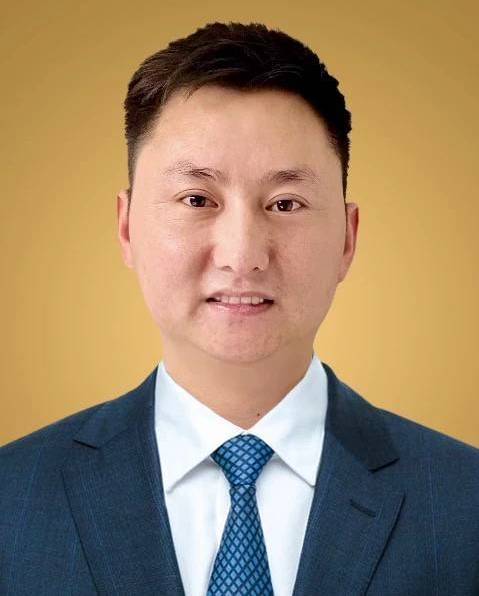
Dr. Da Hu is an Assistant Professor in the Department of Civil and Environmental Engineering at Kennesaw State University (KSU), joining in Spring 2023. His research focuses on smart infrastructure systems, leveraging AI, robotics, and data analytics for disaster response, infrastructure inspection, and facility management. He holds a Ph.D. from the University of Tennessee, Knoxville, and has extensive postdoctoral and industry experience. His work spans robotic systems, geotechnical engineering, and building information modeling, with over 20 publications in top journals. Education: Ph.D. in Civil Engineering, University of Tennessee, Knoxville (2022) M.S. in Civil Engineering, Texas Tech University (2018) M.S. in Civil Engineering, University of the Chinese Academy of Sciences (2017) B.S. in Safety Engineering, Zhengzhou University (2014) B.B.A. in Business Administration, Zhengzhou University (2014) Research Interests: Robotics and Sensing, Infrastructure Inspection, Human-Robot Collaboration, VR/AR, Disaster Management, and AI-driven solutions for sustainable infrastructure. His lab develops technologies like drone-based damage assessment, GPR for subsurface mapping, and robotic disinfection systems for hospitals. Grants & Awards: NSF ERI Award ($199,642) as PI (2024–2026) SPCEET Outstanding Early Career Faculty Award (2025) Best Paper Award, Building and Environment (2020) Advising & Labs: Supervises PhD and master’s students in smart infrastructure and robotics. Active in the Geotechnical Lab, developing affordable learning resources like CE3708 lab videos. Former lab members include Tracy Le and Frank-Cedric Kadjo. Teaching: Teaches courses like CE 2003, ENGR 2214, and CE 3708 Geotechnical Engineering Lab.
Dr. Dinesh Babu Duraibabu is a Research Professor in the Department of Mechatronic Engineering at Athlone Institute of Technology (ATU). He serves as Principal Investigator for two research centers: Mathematical Modelling and Intelligent Systems for Health and Environment (MISHE), and Precision Engineering Materials and Manufacturing Research Centre (PEM). His work focuses on fiber optic sensor technologies, robotics, and biomedical applications. He leads research in underwater sensing systems, thermal management, and material science, with applications in marine environments and medical devices. Research Interests: Fiber Optic Sensors: Development of FBG and EFPI-based sensors for pressure, temperature, and salinity measurement Robotics: Underwater inspection and repair systems for ship hulls using advanced welding techniques Biomedical Engineering: Application of optical sensors in cancer therapy and urodynamic monitoring Marine Technology: Design of sensors for freshwater/marine environmental monitoring He has published widely in sensors technology and collaborates internationally on projects involving renewable energy systems and sensor integration. Currently accepting PhD students in mechatronic engineering and sensor technologies.
Dr. Fahim Ullah is a Senior Lecturer and Program Director for Construction Programs at the School of Surveying and Built Environment, University of Southern Queensland (Australia). He holds a PhD in Built Environment from UNSW Sydney and has over 8 years of tertiary teaching experience in Construction Management, Project Management, and Digital Technologies. Recognized as a top 2% global researcher in Construction (Elsevier/Stanford 2024), he specializes in Smart Cities, Industry 4.0/5.0 technologies, and disaster management. His achievements include Editor's Choice Awards in journals like Drones and Sustainability , and leadership roles as Associate Editor for Management, Procurement and Law and Frontiers in Built Environment . Education : Bachelor of Civil Engineering (NUST, 2013) Master of Science (NUST, 2015) Doctor of Philosophy (UNSW Sydney, 2021) Research Interests : Dr. Ullah's work focuses on Construction Innovation , Smart Technologies , and Sustainable Development . He explores applications of AI, drones, BIM, and IoT in construction, disaster management, and urban planning. Recent studies include modular construction for climate mitigation, UAV-based flood detection, and blockchain frameworks for real estate transactions. Awards : Top 2% Global Scientist (Elsevier/Stanford, 2024) Editor's Choice Award (Drones Journal, 2022) Best Conference Paper (Curtin University Singapore/AUBEA, 2018) Grants & Supervision : He leads grants like the UNISQ Intra Faculty Collaboration Grant (2021) and supervises doctoral research on topics like Automation in Construction Recycling and AI in Flood Modeling . His supervision record spans 10+ PhD candidates since 2021. Professional Roles : Serves as HDR Coordinator at UniSQ, and chairs international conferences (CAHEM 2024, CONVR2024). Active in editorial roles for multiple Q1 journals.
Dr. Susan Edgar is the Academic Partnership Engagement Lead at the School of Education, University of Sunderland, with over 35 years of experience in education. She began her career in 1986 after earning a PGCE Primary from Newcastle University, progressing to senior leadership roles in primary schools, including Headteacher and Deputy Headteacher, and later transitioning to higher education in 2005. Career timeline: PGCE (1986) → Primary School Headteacher (1996-2005) → Higher Education (2005-present) Leadership achievements: Ranked 2nd in UK Guardian University League Tables (2020), largest ITT provider in the North East, and Outstanding Ofsted inspection outcomes Her research focuses on Initial Teacher Training (ITT) programme design , mentor-trainee collaboration, and cross-sector partnerships. She investigates how alignment between higher education, schools, and external providers enhances trainee teacher outcomes, with a parallel focus on student retention in HE entry years. Susan champions interdisciplinary teaching methods , museum-school collaborations, and inclusive educational practices. Her work emphasizes systemic alignment between university curricula and school-based training, particularly in Primary and Secondary education. Key research areas: Pedagogy, Qualitative Research Methods, School-HE integration Partnership initiatives: Founder Member of a local Multi Academy Trust (MAT), designed Sunderland's Partnership Committee Structure She has received accolades such as the Investors in People Award and Quality Mark , alongside institutional recognition for Ofsted compliance and teacher training excellence.
Mohammed Aljuboori is an Adjunct Associate Professor at Widener University's Civil Engineering department. He holds a PhD in Civil (Structural) Engineering from the University of Wisconsin-Milwaukee (2019), an MSc from the same institution (2014), and a BSc in Civil Engineering from the University of Baghdad (2005). His research focuses on seismic connectors for precast shear walls in high seismic zones and sensor systems for infrastructure assessment. Notable publications include work on ice/water detection sensors (2017) and intelligent sensor systems for roadway/bridge condition evaluation (2014). Aljuboori has professional engineering (PE) licensure and industry experience in structural design. No scientific awards or grants are explicitly listed in the provided text.
Santiago Martinez de la Casa Diaz is an Associate Professor in the Systems Engineering and Automation Department at the University Carlos III of Madrid , affiliated with the Robotics Lab . He specializes in robotics, with a focus on humanoid robots, control systems, and sensor integration. His work spans areas like soft robotics, reinforcement learning, and autonomous systems for tunnel inspection and service applications. His research interests include the design and control of humanoid robots (e.g., TEO and BADGER), sensor fusion, and applications in healthcare and industrial automation. He has published extensively on topics like actuator control, bimanual manipulation, and fractional-order systems. He leads projects such as SIROCO (robotic orthosis) and ROBOSUB (subsurface robotics), and collaborates on initiatives like iRoboCity2030 for smart city robotics. His work integrates AI, mechatronics, and biomechanics to advance humanoid robotics capabilities and real-world applications.
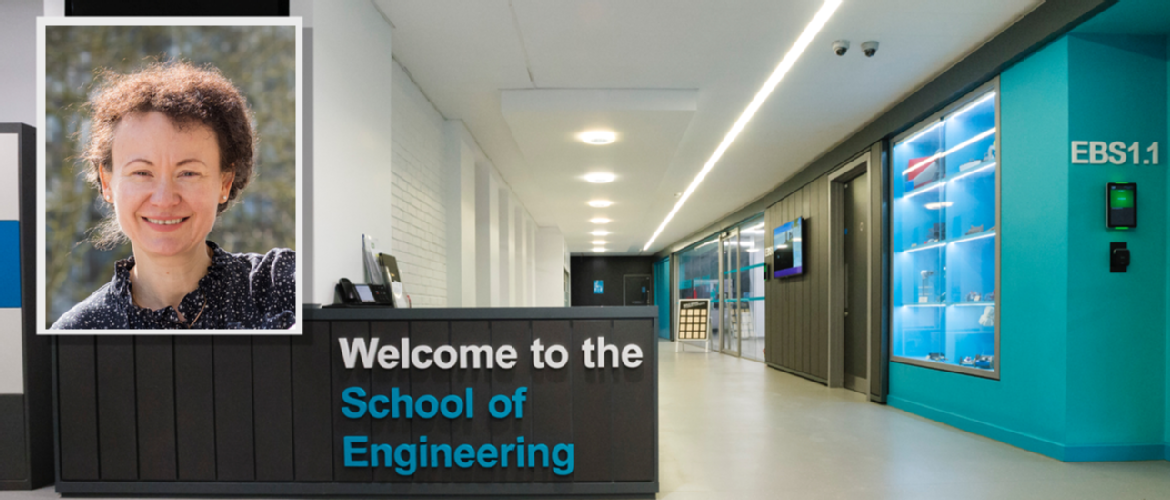
Oksana Trushkevych is an Assistant Professor at the School of Engineering, University of Warwick, and a fellow of the Warwick Institute of Engagement. She leads the Science of Music interdisciplinary module at Warwick Institute for Advanced Teaching and Learning (IATL). Her research focuses on ultrasonics, materials characterization, and soft matter-based sensors for non-destructive testing (NDT). She previously held roles at the University of Cambridge and joined Warwick's Department of Physics Ultrasonics Group in 2022. Education: PhD in Engineering from the University of Cambridge. Research expertise includes photonics, liquid crystal nanocomposites, and ultrasonic methods for material analysis. She develops novel sensors like thermochromic liquid crystal coatings and acoustic transducers for industrial applications. Her recent work emphasizes robotic NDT systems using guided waves and miniaturized electromagnetic acoustic transducers (EMATs), with applications in steel plate inspection and structural health monitoring. Projects include collaborative industry initiatives and spin-off company involvement through Sonemat . Key contributions include calibration-free guided wave analysis, occupancy grid mapping for robotic inspection, and theoretical-experimental studies of polymer-dispersed liquid crystal sensors. Her research bridges fundamental physics with industrial NDT challenges, advancing technologies for material visualization and defect detection.
Prof. Jean-Baptiste Suquet is a Professor of Work and Organizational Studies at Neoma Business School, teaching across undergraduate to executive programs. His research focuses on service work transformations, customer deviance, and organizational ethics. He coordinates EU-funded projects like VISTA-AR and collaborates with organizations such as RATP and NQT. His work bridges theory and practice through action research, addressing challenges in service industries. Education: Holds a Doctorate in Management Sciences. Research Highlights: Specializes in service encounters, customer sovereignty, and deviant behavior management. Notable contributions include studies on spatial tactics in train stations and ethical care in healthcare. He participates in interdisciplinary projects analyzing public policy impacts on service work dynamics. Publications span journals like Journal of Business Ethics , Work, Employment and Society , and Human Relations , emphasizing service work sociology and organizational behavior. His recent work explores digitalization in cultural heritage tourism and workforce planning ambiguity. Collaborations include the Grand Reims development project and academic partnerships on service innovation. He advocates for balanced customer-centric strategies and has engaged in policy debates on social mobility and public service governance.
Bappaditya Mandal is a Senior Lecturer in Computer Science at Keele University's School of Computer Science and Mathematics, Faculty of Natural Sciences. He holds positions as an Academic Conduct Officer and actively contributes to both teaching and research. His academic journey includes a B.Tech in Electrical Engineering from IIT Roorkee, a Ph.D. in Electrical and Electronic Engineering from Nanyang Technological University, Singapore, and an MA in Higher Education Practice from Keele University. Dr. Mandal's research spans computer vision and machine learning with specific applications in biomedical image analysis, civil infrastructure inspection, human behavior analysis, and marine life detection. His work focuses on attention mechanisms, deep learning architectures, and subspace modeling, with recent publications demonstrating applications in medical diagnostics, structural engineering, and traffic prediction systems. His research demonstrates a consistent trajectory from foundational computer vision work to increasingly applied, interdisciplinary projects addressing real-world problems. His scholarly contributions include numerous publications in top-tier journals and conferences, with recent work focusing on attention-based deep learning models for concrete defect recognition, macular disease classification, and traffic flow prediction. The publications reveal a strong emphasis on developing interpretable attention mechanisms that can be applied across diverse domains while maintaining high accuracy. Award for Leading, Educating and Nurturing Talent (TALENT) from A*STAR Singapore Best Student Paper Award 2016: Honourable Mention Award from IAPR in Singapore Long service award from the Institute in 2014 Best Biometric Student Paper Award at the 19th International Conference on Pattern Recognition, Florida, USA, 2008 Research Scholarship Award from Nanyang Technological University (2004-2008) Dr. Mandal supervises PhD students including Asad Inamdar, Jenni Watson, and Kody Mistry, with research spanning medical applications, structural analysis, and AI systems. His work demonstrates strong industry connections, having collaborated with SMEs in both Singapore and the UK to develop practical solutions for research and development challenges. He is actively involved in grant-funded research, particularly in healthcare technology and infrastructure monitoring applications, and maintains affiliations with professional organizations including IEEE (Senior Member), British Computer Society (Fellow), and Higher Education Academy (Fellow).
Dr. Yan Wang is a Principal Lecturer at the University of Brighton's School of Arch, Tech and Eng Communication, specializing in remanufacturing and sustainable manufacturing. His research focuses on intelligent manufacturing systems, circular economy strategies, and carbon accounting methodologies. He chairs BSI committee TPR1/7/3 and contributes to national standards like BS8887. Dr. Wang holds a PhD in Advanced Manufacturing Engineering from the University of Nottingham and has organized high-level UK-China collaborations in remanufacturing policy. Education: PhD in Advanced Manufacturing Engineering, University of Nottingham (2005) Master's in Computer Integrated Manufacturing System, Guangdong University of Technology (2000) Bachelor's in Mechanical and Manufacturing Engineering, Wuhan Textile University (1996) Research Interests: Dr. Wang's work bridges academia and industry, emphasizing remanufacturing processes, lifecycle data modelling, and net-zero manufacturing. His projects include optimizing energy-efficient machining strategies, developing predictive battery health models, and standardizing end-of-life product strategies. He leads initiatives like the BRIIM project promoting intelligent manufacturing education under China's Belt and Road Initiative. Grants & Projects: REMP: Digital Supply Chain Feasibility Study (2021-2021) BRIIM: China-UK Education Partnership (2019-2024) Parafix KTP: Manufacturing Efficiency (2019-2022)
Araz Agha is an Assistant Professor (Academic) at the CEES School of The Environment and a Doctorate Student at the Centre for Global Learning. His research focuses on construction industry challenges, sustainable housing solutions, waste management, and innovative building technologies. He has contributed to projects like the LIDER Fellowship Programme, addressing educational leadership and management. Key research interests include optimizing housing design in the UK, modular construction, drone applications in site management, and the feasibility of passive housing systems. His work often intersects urban planning and sustainability, emphasizing practical solutions for high-density cities and environmental efficiency. Recent publications explore topics such as BREEAM certification impacts, Six Sigma implementation challenges, and barriers to women in construction. Agha’s academic contributions span peer-reviewed articles, conference proceedings, and collaborative projects, reflecting his commitment to advancing sustainable construction practices and industry innovation.
Dyaa Hassan is an Assistant Lecturer in Engineering Project Management at the CEES School of Engineering. His research focuses on sustainable construction practices, environmental impact mitigation, and innovative solutions for the construction industry aligned with UN Sustainable Development Goals. He specializes in addressing challenges such as waste management, financial risk in construction projects, and the adoption of modern materials and technologies like passive housing systems and geofoam composites. Research Interests: - Sustainable construction materials and practices - Waste management strategies in construction - Financial risk analysis in engineering projects - Policy implementation for sustainable development - Cross-country comparisons of construction industry challenges - Digital technologies in construction inspection and BIM adoption His recent work highlights trends in UK construction innovation, including feasibility studies for passive housing, analysis of migrant labor impacts, and barriers to modular construction adoption. Articles emphasize practical solutions for environmental and economic sustainability across diverse regions like India, Lebanon, and Canada. Advising and grants details are not explicitly documented in the provided texts. Collaborations span international teams focusing on geotechnical engineering, policy analysis, and technology integration in construction sectors.