Roy Johnsen is a Professor in the Department of Mechanical and Industrial Engineering at the Norwegian University of Science and Technology (NTNU), specializing in corrosion and surface technology. With a Dr.ing. degree from NTH (1984), he has extensive industry experience from Statoil Research Centre (1985-1991) and CorrOcean (1991-2004), where he expanded the company globally. His current research focuses on hydrogen embrittlement, corrosion protection, and integrity management in offshore systems, with collaborations across Europe, Asia, and the Americas.
Pablo Durango-Cohen is an Associate Professor of Civil and Environmental Engineering at Northwestern University, located in Evanston, IL. He holds a Ph.D. in Industrial Engineering and Operations Research from UC Berkeley, following an M.S. from the same program and a B.S. in Industrial and Systems Engineering from the University of Southern California. His research focuses on developing and analyzing optimization and econometric models for transportation infrastructure systems, integrating environmental design, life-cycle assessment, and policy analysis to address decarbonization challenges in freight systems. He also explores dynamic segmentation models for nonprofit fundraising strategies. Education: Ph.D. Industrial Engineering and Operations Research, University of California, Berkeley (2006) M.S. Industrial Engineering and Operations Research, University of California, Berkeley B.S. Industrial and Systems Engineering, University of Southern California Research Interests: Prof. Durango-Cohen’s work bridges transportation engineering, environmental science, and operations research. He emphasizes infrastructure management through data-driven frameworks, including statistical process control for condition monitoring and predictive maintenance. His recent projects address decarbonization of freight rail systems, electric vehicle impacts on road infrastructure, and optimal auction designs for road concessions. He also applies mathematical models to analyze donor behavior and fundraising efficiency in universities, aiming to improve nonprofit resource allocation strategies. Awards: NSF Faculty Early CAREER Development Award (2006) Young Author Prize, 2007 World Congress on Transport Research Matthew G. Karlaftis Best Paper Awards (2020–2025) Advising & Grants: He advises current PhD candidates including Jing Yu, Adrian Hernandez, and Callahan Skiles, while mentoring former students across sustainability, infrastructure, and fundraising analytics. His research is supported by agencies like the National Science Foundation, Department of Energy (through ARPA-E), and Department of Transportation. He co-leads the LOCOMOTIVES project with ANL researchers, focusing on decarbonizing rail networks, and founded the Virtual Inter-university Symposium on Infrastructure Management (VISIM) to foster academic collaboration. Labs & Teams: As Principal Investigator (PI) on major initiatives like LOCOMOTIVES and VISIM, he collaborates with multidisciplinary teams at Northwestern and Argonne National Laboratory. His group develops tools such as the Locomotives interactive dashboard and a computational framework for input-output lifecycle assessments, accessible via repositories like CivEnv304 .
Inigo Flores Ituarte is a Research Professor at Tampere University's Faculty of Engineering and Natural Sciences, affiliated with the Automation Technology and Mechanical Engineering department. He leads the Digital Design and Manufacturing (D2M) research lab, focusing on sustainable manufacturing and twin-transition strategies integrating digital and green technologies. His work emphasizes optimization-driven design, additive manufacturing innovations, and AI-driven expert systems to enhance energy efficiency and reduce environmental impacts. Key research pillars include: Pillar 1: Twin-transition in Engineering Design and Manufacturing Processes, addressing sustainable manufacturing and intelligent systems Pillar 2: Development of open D2M systems and Process-Structure-Property-Performance (PSPP) linkages in advanced materials His research explores multi-disciplinary optimization combining model-based simulations and data-driven techniques. Notable contributions include generative AI integration in CAD systems, cognitive manufacturing systems, and cost-effective process monitoring using CNN-based methods. Inigo's work emphasizes environmental sustainability, with a focus on reducing manufacturing's energy consumption (54% of global use) and CO2 emissions. He advocates for interconnected material systems, smart manufacturing processes, and AI-assisted decision-making to achieve cognitive intelligence in industrial operations. His D2M lab's overarching goal is to maximize product/process performance while improving cost-effectiveness and minimizing environmental footprints. Recent projects include railway bogie demonstrators via multi-material deposition and sensor systems leveraging IoT and ChatGPT integration.
Guo Ping is an Associate Professor of Mechanical Engineering at Northwestern University, leading the Advanced Intelligent Manufacturing Laboratory (AIM). His research focuses on precision manufacturing, intelligent metrology via deep learning, and advanced manufacturing applications. He holds a Ph.D. from Northwestern University and a B.S. in Automotive Engineering from Tsinghua University. Education: Ph.D. in Mechanical Engineering, Northwestern University, Evanston, IL B.S. in Automotive Engineering, Tsinghua University, Beijing, China Research Interests: Dr. Guo’s work emphasizes innovations in precision engineering, including ductile-regime machining, smart metrology systems, and robotics-driven manufacturing. Key areas include structural coloration, additive manufacturing, and human-robot collaboration in industrial settings. His lab explores cutting-edge techniques like ultrasonic vibration machining and machine learning for defect detection and process optimization. Publications Trends: Recent work spans AI-driven quality control (e.g., photometric stereo networks), robotic swarm patterning, and wearable fatigue monitoring systems. His research bridges machine learning, robotics, and traditional manufacturing to address scalability and precision challenges. Awards: F.W. Taylor Medal (CIRP, 2023) ASME Kornel F. Ehman Manufacturing Medal (2021) SME Outstanding Young Manufacturing Engineer Award (2020) Professional Service: Associate Editor of the Journal of Manufacturing Processes (2017–present). Active in organizing conferences and reviewing for top journals. Labs & Teams: Directs the AIM Lab, which integrates robotics, AI, and advanced materials to solve problems in precision fabrication and smart manufacturing. Current projects include structural coloration for anti-counterfeiting and fatigue prediction in industrial workers.
Joshua D. Bard is an Associate Professor and Associate Head for Design Research at Carnegie Mellon University's School of Architecture. His work bridges traditional craft and cutting-edge robotics, focusing on human-machine collaboration in construction domains. He leads Archolab, an award-winning research group exploring digital fabrication methods like 'Morphfaux' (robotic plaster techniques) and 'Spring Back' (parametric steam bending). Education: M.Arch (Distinction) from University of Michigan; B.A. in Literature & Philosophy from Wheaton College. Professional affiliations include the Manufacturing Futures Institute and rob|arch. Research emphasizes reviving historical crafts through digital tools, such as augmented reality interfaces for architectural education and thermal-tuned concrete panels via robotic processes. His teaching includes generative modeling and architectural robotics labs. Awards: Architect Magazine R+D Award, Canadian Wood Council Merit Award Key Projects: Plaster ReCast AR app, Thermally Informed Robotic Concrete Panels Collaborators: Dana Cupkova, Garth Zeglin, Steven Mankouche Current courses include 62-225 Generative Modeling and 48-555 Introduction to Architectural Robotics. His work is featured in venues like the Carnegie Museum of Art and academic journals like International Journal of Architectural Computing .
Jianjun (Jan) Shi is the Carolyn J. Stewart Chair and Professor at the H. Milton Stewart School of Industrial and Systems Engineering (ISyE) and holds a joint appointment with the George W. Woodruff School of Mechanical Engineering at Georgia Institute of Technology. He previously served as the G. Lawton and Louise G. Johnson Chair Professor of Engineering at the University of Michigan. His research focuses on system informatics and control for manufacturing and service systems, with notable contributions to quality improvement, cyber-physical systems, and data-driven methodologies. B.S. & M.S. in Electrical Engineering, Beijing Institute of Technology (1984–1987) Ph.D. in Mechanical Engineering, University of Michigan (1992) Dr. Shi’s research interests include process modeling, control systems, and quality engineering. He pioneered methodologies for in-process quality improvement and developed advanced frameworks for high-dimensional data analysis in manufacturing. His work integrates statistical methods, machine learning, and system informatics to enhance operational efficiency and product quality. He has published over 150 peer-reviewed papers and secured $19 million+ in research grants from NSF, DOE, and industry partners. His lab, the System Informatics and Control Group, collaborates with automotive, aerospace, and pharmaceutical sectors. Shi leads initiatives such as the Quality Science Center at the Chinese Academy of Sciences and serves on editorial boards of journals like IIE Transactions and ASME Transactions . Recipient of the IIE Albert G. Holzman Distinguished Educator Award (2011) Fellow of INFORMS, ASME, and IIE Academician of the International Academy for Quality Shi advises 26 Ph.D. graduates, many of whom hold faculty positions or leadership roles in industry. His research group’s innovations have been implemented in global manufacturing systems, yielding significant economic impacts. Current work includes 4D printing, cyber-physical system resilience, and federated learning for industrial data.
Dr. Joseph Ndogmo is a Senior Academic Councillor in civil service for life at the Chair of Metal Construction at the Technical University of Munich (TUM), working under Prof. Martin Mensinger. He has been with the Chair since December 2005, initially as a Research Assistant, then as an Academic Councillor on probationary civil service status from November 2007 to June 2009, and as an Academic Councillor in civil service for life from July 2009 to June 2014, before being promoted to his current position as Senior Academic Councillor in July 2014. Dr. Ndogmo's educational background includes: Primary school in Yaoundé, Cameroon (1972-1978) High school in Batouri and Mbouda, Cameroon (1978-1985) Studies in Mathematics/Computer Science at the University of Yaoundé, Cameroon (1985-1986) Language course at the Herder Institute in Leipzig (1986-1987) Diploma in Engineering (Dipl.-Ing.) from the Friedrich List University of Transport in Dresden, majoring in road construction with specialization in bridge construction (1987-1992) Doctorate (Dr.-Ing.) from Technical University of Munich with thesis on "On the safety and economic reinforcement of bulging web plates of solid-wall girder bridges taking fatigue into account" (awarded November 27, 1997) Training as an international welding engineer at SLV Munich (January-April 2008) Dr. Ndogmo's research focuses on structural engineering with particular expertise in steel and composite bridge construction. His primary research interests include: Overall stability of steel composite bridges Plate and shell buckling phenomena External reinforcement elements for composite bridges Buckling verification according to Eurocode 3 standards Welding technology applications in structural engineering His work bridges theoretical structural mechanics with practical engineering applications, particularly in the context of bridge construction and maintenance. Dr. Ndogmo has made significant contributions to the understanding of buckling behavior in stiffened plates under various loading conditions, with numerous publications addressing both theoretical aspects and practical implementation of Eurocode standards. Dr. Ndogmo's recent publications (2016-2024) demonstrate a consistent focus on buckling analysis of steel structures, particularly in bridge applications. His work shows increasing sophistication in analyzing complex loading scenarios including biaxial stresses and eccentric load introduction. He has made notable contributions to the implementation of Eurocode 3 standards, particularly Part 1-5 on plate buckling. His research combines experimental testing with numerical analysis, providing practical insights for structural engineers. Professional memberships include: VSVI (Association of Road Construction and Traffic Engineers in Bavaria) DVS (The Connection Specialists) Technical Working Group 8.3 (Plate buckling) Working Group EN 1993-1-5 Working Group EN 1993-1-14 CEN / TC 250 / SC 3 / WG22 Dr. Ndogmo is actively involved in teaching at TUM, with courses including Assessment and preservation of historic steel structures, Welding Technology, Composite building and bridge construction, and Plate buckling and steel bridge construction. He also serves as a municipal councilor in Erdweg since 2014 and previously ran as a mayoral candidate in 2017 (finishing second with 32.4% of the vote).
Houtan Jebelli is an Assistant Professor in Civil and Environmental Engineering at the University of Illinois. His research focuses on construction robotics, human-robot collaboration, and wearable sensing technologies for worker health and safety monitoring. He directs research on exoskeleton applications, fall risk detection, and AI-enabled monitoring systems for construction environments. Research interests include: Human-robot collaboration in construction sites Physiological monitoring using wearable sensors Exoskeleton technology and ergonomic assessment AI-enabled safety management systems Robotic inspection and defect detection Jebelli's recent work demonstrates strong interest in bridging robotics with occupational health, particularly studying cognitive and physiological impacts of wearable robotics. His publications frequently address real-time monitoring systems and human factors in construction technology adoption.
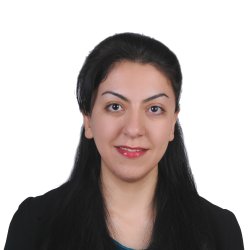
Roya Nasimi, Ph.D., is an Assistant Professor in the Department of Engineering at California State University, East Bay, where she joined in Fall 2023. Her expertise spans structural engineering, computer vision, and artificial intelligence, with a focus on developing innovative solutions for infrastructure monitoring and safety. Dr. Nasimi's educational background includes: Ph.D. with distinction in Structural Engineering from the University of New Mexico Master’s degree in Structural Engineering from the University of Tabriz Bachelor’s degree in Civil Engineering from the University of Tabriz Her research focuses on structural health monitoring using advanced technologies. She integrates computer vision , artificial intelligence , and machine learning to develop systems for monitoring aging infrastructure, particularly bridges. Her work includes designing low-cost and high-end sensor systems, conducting full-scale bridge experiments, and collaborating on interdisciplinary projects to enhance infrastructure safety and resilience. Her recent publications (2021-2025) demonstrate a strong emphasis on non-contact monitoring techniques using drones, lasers, and computer vision. Key trends include the application of deep learning for displacement measurement, digital twinning for infrastructure, and rockfall prevention through machine learning. Her work bridges civil engineering with cutting-edge technology to address critical infrastructure challenges. Dr. Nasimi's research is supported by multiple grants: U.S. Army Corps of Engineers Transportation Research Board (TRB) Transportation Consortium of South-Central States (Tran-SET) New Mexico Consortium She serves on two TRB standing committees and mentors students in structural health monitoring and infrastructure technology. Dr. Nasimi leads interdisciplinary research teams focused on infrastructure monitoring, utilizing drones, lasers, and computer vision systems. Her work involves field experiments on bridges and rail systems, often in collaboration with government agencies and research consortia.
John Dalsgaard Sørensen is a Professor and Head of Research Group at the Department of the Built Environment, Aalborg University, within the Faculty of Engineering and Science. He leads the Risk, Resilience, Safety, and Sustainability of Systems Research Group and is affiliated with the Danish Centre for Risk and Safety Management. His research focuses on structural safety, wind turbine reliability, probabilistic design, and risk assessment of infrastructure systems. He has supervised 13 PhD students and contributed to over 600 publications. Key research areas include wind turbine structural integrity, fatigue analysis of offshore and onshore structures, probabilistic design standards (e.g., Eurocodes), and risk-based decision-making for infrastructure. He leads projects like Windscanner (remote sensing for wind measurements) and MANTIS (cyber-physical maintenance systems). Collaborations span academia and industry, addressing challenges in energy systems, civil infrastructure, and safety engineering. His work emphasizes practical applications of advanced modeling techniques, such as Bayesian networks and stochastic simulations, to enhance reliability and reduce operational costs. He is actively involved in standardization efforts for structural design and serves on boards like Energi- og MiljøData Fonden. Recent activities include presenting at international conferences and advising on media debates related to structural safety.
Erin Bell is a Professor in the Department of Civil and Environmental Engineering at the University of New Hampshire . She holds a Ph.D. in Structural Engineering from Tufts University and has extensive experience in structural health monitoring, finite element modeling, and infrastructure sustainability. B.C.E., Georgia Institute of Technology M.S., Civil Engineering, Tufts University Ph.D., Structural Engineering, Tufts University Her research focuses on structural health monitoring, bridge condition assessment, and integrating AI techniques like artificial neural networks and deep reinforcement learning for infrastructure asset management. Recent work includes equitable maintenance strategies for aging bridges in flood-prone zones and tidal energy conversion for sustainable bridge monitoring systems. Key trends in her publications include the application of machine learning to structural analysis, finite element model calibration, and climate change adaptation in transportation infrastructure. She has led projects on deep reinforcement learning for bridge scour maintenance, modal-based uncertainty quantification, and multi-scale modeling of steel bridges. Grants and Collaborations : Erin Bell has secured funding from the National Science Foundation (NSF) , US Department of Energy (DOE) , and New Hampshire Department of Transportation . Notable projects include the Living Bridge initiative for tidal energy-powered smart infrastructure and statewide data exchange systems for bridge condition assessment.
Markus König is a Professor of Informatics in Civil Engineering at Ruhr University Bochum, where he has been researching and teaching since October 2009. His work focuses on Building Information Modeling (BIM), digital construction technologies, and civil engineering informatics, with significant contributions to the development and implementation of digital methods in German construction industry. Dr. König earned his degree in civil engineering with a focus on applied computer science at Leibniz University Hannover, where he also completed his doctorate on cooperative building planning at the Institute for Building Informatics. He subsequently held a junior professorship for Theoretical Methods of Project Management at Bauhaus University Weimar before joining Ruhr University Bochum. His research spans multiple cutting-edge areas including Building Information Modeling (BIM), construction process simulation, tunneling informatics, infrastructure asset management, and the application of artificial intelligence and computer vision in civil engineering. As chair of the Building Informatics Working Group from 2012-2016, he played a key role in developing the first national BIM curriculum for German universities and serves as editor of the book 'Building Information Modeling: Technological Foundations and Industrial Practice.' Analysis of his recent publications reveals a strong trend toward semantic technologies, digital twins, automated compliance checking, and the integration of AI in construction processes. His work increasingly focuses on information containers, ontology development, and the application of large language models to infrastructure data, reflecting the evolving landscape of digital construction. Dr. König's significant contributions to digital construction have been recognized with prestigious awards: Lower Saxony-Bremen Construction Industry Award (2017) for 'services in the development and introduction of digital construction in Germany' Konrad Zuse Medal (2020) While specific details about his advising and grant activities aren't explicitly mentioned in the provided text, his extensive publication record with numerous co-authors suggests active supervision of doctoral students and research staff. His involvement in multiple collaborative research projects is evident from his publication history. At Ruhr University Bochum, Professor König leads a research group focused on civil engineering informatics, with particular emphasis on BIM, digital construction technologies, and their application across the building lifecycle. His team appears to work at the intersection of computer science and civil engineering, developing innovative solutions for construction process optimization, infrastructure management, and digital transformation of the AEC industry.
Devin K. Harris is a Professor and Chair of the Department of Civil and Environmental Engineering at the University of Virginia . His work focuses on large-scale infrastructure systems , combining image-based measurement techniques, simulation , visualization , and data analytics to advance structural health monitoring , smart cities , and digital twins . He also investigates reinforced/prestressed concrete behavior and innovative materials in civil infrastructure. Education : Ph.D., M.S., and B.S. in Civil Engineering from Virginia Tech (2007), Virginia Tech (2004), and University of Florida (1999). Research Interests Structures and Mechanics - Sustainable Infrastructure Systems Infrastructure Condition Assessment Structural Health Monitoring Smart Cities Digital Twins Applied Machine Learning Scientific Awards Delmar L. Bloem Distinguished Service Award (2021) IAspire Leadership Academy Fellow (2020–2022) ASCE Journal of Bridge Engineering Outstanding Reviewer (2013) UVA Teaching Resource Center Excellence in Diversity Fellowship (2012–2013) ACI Young Member Award for Professional Achievement (2011) Grants Principal Investigator for EAGER: Adaptive Digital Twinning: An Immersive Visualization Framework for Structural Cyber-Physical Systems (NSF #2136724) and Performance Characteristics of In-Service Bridges (Virginia Transportation Research Council, 2018–2020). Co-led NCHRP 23-16 on Machine Learning applications in transportation agencies. Labs & Teams Leads the Infrastructure Simulation, Sensing and Evaluation Lab (I-S2EE) , equipped with DIC systems , mobile GPR , thermal imaging , and cyber-physical simulation tools. Collaborates with the Omni-Reality & Cognition Lab for AR/VR integration in infrastructure evaluation.
Elliot Hawkes is an Associate Professor in the Department of Mechanical Engineering at the University of California, Santa Barbara (UCSB). His research bridges design, mechanics, and non-traditional materials to develop robust, adaptable, human-safe robots for uncertain environments. He leads the Hawkes Lab, focusing on bio-inspired microstructured adhesives, nonlinear compliant mechanisms, soft actuators, exoskeletons, and growing robots. PhD from Stanford University, 2015 Postdoctoral Scholar at Stanford's CHARM Lab, 2015-2016 Assistant Professor at UCSB since 2016 Current projects include: Material-like robotic collectives with spatiotemporal control Variable friction shoe for locomotor therapy High-force soft actuators for industrial applications Vine-inspired robots for search and rescue Growing robots for biomedical and environmental use Recent publications in Science and Nature highlight breakthroughs in soft robotics and human-safe actuation. His team has received multiple NSF GRFP awards and a UCSB Regents Fellowship. The lab holds patents in adhesive gripping, soft actuation, and reconfigurable robotics.
Dr Donya Hajializadeh is an Associate Professor of Structural Engineering at the University of Surrey's School of Sustainability, Civil and Environmental Engineering. She holds multiple professional qualifications including Chartered Engineer (CEng) and European Engineer (EUR ING), and is a Fellow of the Higher Education Academy (FHEA). Her roles include Director of Employability (since 2020), Deputy Coordinator of the Surrey/ICE Scholarship (since 2019), and IStructE Liaison Officer (since 2021). She is also affiliated with the Surrey Institute for People-Centred Artificial Intelligence (PAI). Her education includes a BEng (Hons), MEng, and PhD in relevant fields. Research focuses on structural health monitoring (SHM), machine learning applications in asset management, and deep learning for damage identification. Key areas include railway bridge dynamics, vibration analysis, and resilience assessment under seismic and environmental hazards. Current PhD students include Chia Sadik (Transport Infrastructure Failure Assessment) and Michael Millgate (Dynamic Characterisation of Tall RC Buildings). Teaching responsibilities include ENG1073 Fluid Mechanics and ENGM054 Earthquake Engineering. Research aligns with sustainable development goals, emphasizing infrastructure sustainability and carbon reduction strategies. Notable projects include rail bridge innovation recognized by the Chief Scientific Adviser Award and presentations on damage identification techniques to government officials. She contributes actively to interdisciplinary initiatives, integrating AI with civil engineering for smarter infrastructure solutions.