Dr. Muhammad Gulzari is an Assistant Professor at the School of Civil Engineering, University College Dublin (UCD). Previously, he held positions as Lecturer/Assistant Professor at the University of Galway (2023–2024), Adjunct Assistant Professor at Trinity College Dublin (2022–2023), and a Research Fellow at Trinity College Dublin (2021–2023). He earned his Ph.D. in Civil Structural Engineering from City University of Hong Kong (2021) and a B.Sc. in Civil Engineering from the University of Engineering and Technology Lahore (2017). Education: Bachelor of Engineering, Civil Engineering, University of Engineering and Technology Lahore Ph.D., Civil Structural Engineering, City University of Hong Kong Research Interests: His work focuses on structured materials and dynamics, including finite element modeling, phononic crystals, acoustic and mechanical metamaterials, vibration and noise control, and applications in structural health monitoring. He leads the Structured Materials and Dynamics Lab at UCD, exploring nonlinear and nonreciprocal metamaterials. Teaching and Awards: He has taught courses in Fluid Mechanics, Thermodynamics, and Combustion Engineering. Notable recognitions include the Seal of Excellence Award from the EU-Horizon MSCA Postdoctoral Fellowship (2021) and nominations for teaching excellence awards at Trinity College Dublin and University of Galway. Grants: TimberFlow: Enhancing Efficiency in Mass Timber Construction (Enterprise Ireland, 2025) Indoor Acoustic Quality via Acoustic Metamaterials (Enterprise Ireland, 2025) RUBBERPAVE: ELT Integration in Pavement Construction (Enterprise Ireland, 2024–2026) Deep Learning for Metamaterial Design (Irish Research Council, 2021–2023) Labs and Collaborations: His research group collaborates with industry partners like Amplitude Acoustics and G-frame Structures Ltd. Key projects include developing metamaterials for noise/vibration control and sustainable construction materials.
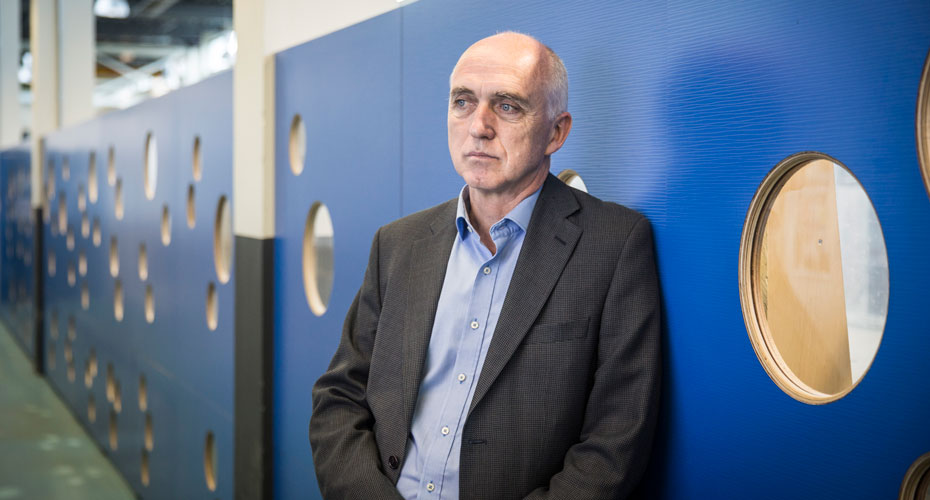
Professor Eugene O'Brien serves as Professor of Civil Engineering within the School of Civil Engineering at University College Dublin's College of Engineering and Architecture. His research focuses on critical structural assessment methodologies for long-span bridges, with particular expertise in traffic load modeling and bridge safety evaluation. His research interests center on structural engineering challenges related to bridge infrastructure, specifically traffic load assessment for long-span bridges , structural health monitoring systems , and sustainable infrastructure management . Professor O'Brien pioneered camera-based monitoring techniques to overcome limitations of traditional Weigh-in-Motion sensors during congested traffic conditions, enabling more accurate safety assessments of aging bridge infrastructure. His work addresses the critical gap in quantifying traffic loading on bridges with spans up to 2 kilometers, where conventional methods fail during stop-and-go traffic scenarios. Analysis of his 15 most recent publications reveals a consistent research trajectory focused on probabilistic modeling of traffic loads, with increasing sophistication in handling extreme events and long-term infrastructure performance. His work spans fundamental statistical methods for load effect prediction, practical applications in real-world bridge assessments, and environmental considerations regarding infrastructure carbon footprints. The research demonstrates strong methodological evolution from basic traffic modeling to comprehensive lifetime assessment frameworks incorporating sustainability metrics. As co-founder and director of Roughan O'Donovan's subsidiary Innovative Solutions (ROD-IS), Professor O'Brien has translated research into practice through significant projects including the Malahide Railway Viaduct assessment (2009), EU-funded bridge lifespan simulation tools (2011), vibration reduction systems for bridge cables, and structural assessments for major international projects including the Ting Kau Bridge in Hong Kong, the Forth Road Bridge in Scotland, and the Chacao Channel Bridge in Chile. His consultancy work demonstrates direct application of academic research to critical infrastructure challenges worldwide. Professor O'Brien's research group operates at the intersection of structural engineering and sustainable infrastructure management, with particular emphasis on extending bridge service life through accurate safety assessment. Their work on the Chacao Channel Bridge demonstrates practical implementation of traffic monitoring systems using toll data to manage truck loads, while their environmental impact analysis shows how accurate safety assessments reduce unnecessary bridge replacements, thereby lowering the carbon footprint of transportation infrastructure through extended service life of carbon-intensive materials like concrete and steel.
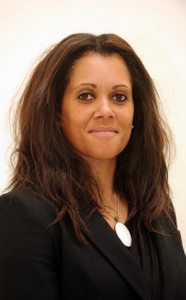
Professor Annette Byrne is a leading academic at RCSI University of Medicine and Health Sciences , where she serves as Professor of Physiology and Head of the Precision Cancer Medicine (PCM) Group. She has held this position since 2019 after progressing through roles as Lecturer (2008), Senior Lecturer (2013), and Associate Professor (2017). Her research focuses on precision medicine approaches for colorectal and brain cancers , integrating multi-modality molecular imaging , Next Generation Sequencing , and patient-derived xenograft models . PhD in Cell Biology (University of York, 1999) John Kerner Fellowship in Gynaecologic Oncology (UCSF, 1999-2001) Scientist at Pharmacyclics Inc. (2001-2003) Senior Scientist at Angion Biomedica Corp. (2003-2005) Principal Investigator at UCD Conway Institute (2005-2008) Her research interest lies in precision cancer medicine , particularly elucidating predictive biomarkers (genomic, transcriptomic, proteomic) and identifying novel therapeutic targets . Key methodologies include radiomics , fluorescence-guided surgery , and systems modeling of apoptosis pathways. She has pioneered Ireland's first Tumour Xenograft Facility and Translational In Vivo Imaging Centre . Recent publications highlight her work on cross-species radiomics , cell-free DNA analysis , and glioblastoma microenvironment subtyping . Her Marie Curie networks (Gliotrain, Glioresolve) and COLOSSUS project have trained 25+ PhD researchers in brain cancer therapeutics. Over €45M in national/international grants Member of Royal Irish Academy (2025) Highly cited in Cancer Discovery , Annals of Oncology , and Nature journals She supervises multiple PhD candidates and leads the RCSI Precision Cancer Medicine Group , which utilizes computational approaches and molecular imaging to improve cancer treatment outcomes. Her GLIORESOLVE and EDIReX projects focus on tumor microenvironment manipulation and distributed PDX infrastructure.
Philip Cardiff is a Professor in Computational Mechanics at the School of Mechanical and Materials Engineering, University College Dublin. He holds a BE (2008) and PhD (2012) in Mechanical Engineering from UCD. His research focuses on computational mechanics, machine learning, and their integration, with expertise in finite volume methods, fluid-solid interaction, and biomechanics. He leads the Bekaert University Technology Centre and contributes to editorial roles in the Journal of Open Source Software and OpenFOAM Journal . Cardiff has secured grants from ERC, I-Form, and the UCD Energy Institute, addressing challenges in offshore energy, advanced manufacturing, and cardiac xenotransplantation. Education: BE in Mechanical Engineering, University College Dublin (2008) PhD in Development of the Finite Volume Method for Hip Joint Analysis, University College Dublin (2012) Professional Diploma in University Teaching & Learning, University College Dublin Research Interests: Computational mechanics, finite volume methods, and machine learning integration Fluid-solid interaction, biomechanics, and materials science Applications in additive manufacturing, energy systems, and biomedical engineering Grants & Awards: ERC Consolidator Grant (2020–2025) Funded Investigator in I-Form and UCD Energy Institute Principal Investigator in UCD Centre for Biomedical Engineering Teaching & Leadership: Programme Director for MEngSc in Materials Science and Engineering (2018–2023) Coordinates modules in computational mechanics and advanced materials processing Advocates constructivist teaching approaches with active learning strategies Labs & Collaborations: UCD Centre for Mechanics Bekaert University Technology Centre MaREI and I-Form Research Centres
Colm O'Donnell is a Full Professor at the School of Biosystems and Food Engineering, University College Dublin (UCD). He leads the Food Quality and Processing Pillar at UCD's Institute of Food & Health and has held roles including Head of the School and Vice-Principal for Teaching & Learning in the College of Engineering & Architecture. His research focuses on Process Analytical Technology (PAT), bioprocessing, and dairy technology, with emphasis on spectroscopy, bioactive compound extraction, and food safety. He coordinates EU-funded projects like DiTECT and FreshProof, and leads the UCD team in the Dairy Processing Technology Centre (DPTC). O'Donnell is a Fellow of the Irish Academy of Engineering and has been recognized as a Thomson Reuters Highly Cited Researcher. Education: BE and PhD from University College Dublin, Chartered Engineer (CEng). Research Interests: PAT for food/bioproducts, dairy processing innovations, and bioactive extraction from seaweeds. His group develops non-destructive technologies like NIR-HSI and acoustic sensors for real-time quality monitoring in food production. Grants: Over 40 grants including EU Horizon 2020, Marie Sklodowska-Curie, and industry partnerships. Recent projects include acoustic sensor development for milk protein concentrate (2020-2022) and seaweed biorefinery processes (2018-2023). Awards: Irish Academy of Engineering Fellowship (2022), EU Comett Fellowship, and editorial roles at International Journal of Food Properties and Food Engineering Reviews . Labs/Teams: Leads the PAT-focused research group at UCD's Institute of Food & Health, collaborating with industry partners like DPTC and global academic networks.
Denis Dowling is a Full Professor at University College Dublin (UCD), leading the School of Mechanical and Materials Engineering. He directs the I-Form Advanced Manufacturing Research Centre, a 40M Euro initiative focusing on additive manufacturing and digital integration in manufacturing environments. His research spans surface engineering, plasma treatments, and advanced materials processing, with a focus on composites and additive manufacturing innovations. Dr. Dowling holds a PhD from UCD and has supervised 20 PhD and 5 MSc students. He is actively involved in the European Institute of Innovation and Technology (EIT) in manufacturing and previously led UCD's participation in the SFI Precision Cluster. His awards include the UCD Innovation Award (2012) and the Institute of Materials Finishing Gold Medal (2013). His work bridges academia and industry, with collaborations in solar energy, medical devices, and manufacturing SME sustainability. Key research themes include functional coatings for biomedical applications, microwave-assisted synthesis of nanostructures, and in-situ process monitoring for additive manufacturing quality control. Teaching includes modules on nanomaterials and manufacturing, reflecting his research-led approach. Professional roles include chairing the Irish branch of the Institute of Metal Finishing.
Prof. Donal O'Shea is a Professor in the Department of Chemistry at the Royal College of Surgeons in Ireland (RCSI). Previously, he held roles including Head of Pharmaceutical & Medicinal Chemistry at RCSI and Associate Professor/Senior Lecturer at University College Dublin (UCD). He earned a PhD (1993) and BSc (1990) in Chemistry from University College Galway. His research focuses on synthesizing complex molecules for applications in fluorescence-guided surgery , light-activated anti-cancer agents , and nanomedicine . Key areas include near-infrared fluorophores , drug delivery systems , and collaborations with medical imaging. He has led initiatives like the Centre for Synthesis & Chemical Biology at UCD and contributed to projects on exosome imaging and anti-microbial agents. Recent publications highlight innovations in fluorescence imaging probes , vaping health risk modeling , and bioorthogonal reactions . His work aligns with UN Sustainable Development Goal 3 (Good Health). Awards include the 2012 North/South Ireland Lectureship , Teacher of the Year (2008, 2011), and multiple visiting professorships. He has secured grants totaling millions, including SFI-funded projects on super-resolution imaging and colorectal cancer diagnostics . Prof. O'Shea oversees RCSI's Chemistry Department and collaborates internationally. His lab develops tools for real-time cellular imaging and targeted drug delivery , with applications in surgery and oncology.
Dr. Minh Phuoc Huynh is an Assistant Lecturer in the Department of Built Environment at the Faculty of Engineering and Built Environment, South East Technological University (SETU) Carlow, Ireland. He holds a PhD from University College Dublin and has extensive academic and professional experience in structural engineering and computational modeling. Bachelor of Engineering in Civil/Structural Engineering, Ho Chi Minh City University of Technology (2003) MSc in Mechanics of Construction, University of Liège (2007) PhD in Modelling of Crack Propagation in Concrete, University College Dublin (2013) His research focuses on computational modeling with experimental validation in areas such as fracture mechanics, finite element analysis (FEM/X-FEM), development of novel low-carbon and geopolymer concretes, and the mechanical characterization of materials. He investigates the non-linear behavior of brittle materials in the fracture process zone and specializes in intermeshed steel connections and surface contact optimization. The recent publications reflect a strong trend in digital and advanced manufacturing for structural applications, particularly in steel construction and additive manufacturing. His work bridges computational simulation with physical testing, focusing on innovative connection systems and smart material integration. Scientific Awards: Marie Skłodowska-Curie Individual Fellowship Seal of Excellence (91.6%, 2020) Dr. Huynh has been involved in significant research projects related to structural steel assembly and sensor-embedded 3D printed components. He is actively accepting PhD students and contributes to advancing sustainable and efficient construction technologies. His collaborations span institutions in Ireland and internationally, particularly in the domain of structural innovation and digital fabrication. His research group and network focus on advanced manufacturing for construction, including work on the intermeshed steel connection system and sensor integration in metal 3D printing, contributing to smarter and more resilient infrastructure.
James O'Donnell is an Associate Professor in the School of Mechanical and Materials Engineering at University College Dublin (UCD). He joined UCD in 2013 after working at Lawrence Berkeley National Laboratory. His research focuses on multi-scale energy modeling, interoperable BIM solutions, and sustainable building design. He contributes to buildingSMART’s Energy Modelling Expert Panel and teaches modules on building physics and energy analysis. Education: B.E. Civil and Environmental Engineering, University College Cork Ph.D. in Holistic Building Performance Analysis, University College Cork Professional Diploma in University Teaching & Learning, University College Dublin Research Interests: James specializes in energy informatics, building energy simulation, and semantic web technologies for the built environment. His work bridges BIM integration with energy modeling to optimize urban-scale performance. Grants & Funding: PROBONO (2022–2026): Integrator-centric approach for energy-efficient buildings NexSys (2022–2026): Next-Generation Energy Systems ALIVE (2020–2024): Indoor Environmental Quality in Energy-Efficient Buildings Teaching & Editorial Roles: James coordinates courses like Energy Systems in Buildings and serves as an Associate Editor for Journal of Building Engineering and editorial board member of Advanced Engineering Informatics . Professional Affiliations: Member of Engineers Ireland, International Building Performance Simulation Association (IBPSA), and European Council on Computing in Construction.
Dr. Ciarán Hanley is a Lecturer in Structural Engineering at University College Cork (UCC), specialized in bridge and infrastructure systems. He holds a PhD in Civil Engineering from UCC (2017), following a BEng (Ord) and BE (Hons) in Civil Engineering (2010–2012). His research focuses on performance-based design, structural safety, and sustainable infrastructure, with contributions to bridge management systems and life-cycle assessment. He serves as a technical reviewer for journals like Structure and Infrastructure Engineering and ICE - Bridge Engineering , and is a board member of the Civil Engineering Research Association of Ireland. Education: BEng (Ord) Civil Engineering, UCC, 2010 BE (Hons) Civil Engineering, UCC, 2012 PhD Civil Engineering, UCC, 2017 Professional Memberships: Institution of Structural Engineers (IStructE) International Association of Bridge and Structural Engineering (IABSE) Fédération Internationale du Béton (FIB) International Association of Shell and Spatial Structures (IASS) His research interests emphasize probabilistic design, structural reliability, and resilience of infrastructure. Key themes include multivariate analysis of bridge networks and the integration of sustainability into infrastructure management. He has contributed to EU projects like TU1406 and serves as Rapporteur for EuroStruct. His publications span over a dozen peer-reviewed articles in journals like Journal of Structural Integrity and Maintenance and Proceedings of the ICE . Dr. Hanley’s teaching includes courses on structural mechanics, prestressed concrete, and design studios. He was a finalist for Engineers Ireland Chartered Engineer of the Year (2019) and actively engages in consultancy for bridge and marine structure design.
Professor Mick Lennon is a distinguished academic at University College Dublin, where he serves as Professor in the School of Architecture, Planning and Environmental Policy. With a career spanning both academic and professional planning practice, Professor Lennon brings extensive experience to his role. His academic journey at UCD has progressed from Research Fellow (2013-2014) to Lecturer (2015-2021), Associate Professor (2021-2025), and currently Professor (since July 2025). Prior to UCD, he was a Lecturer in Spatial Planning at Cardiff University. His professional background includes significant experience as a town planner in both public and private sectors across Ireland, the UK, and New Zealand. Professor Lennon's academic foundation is robust and interdisciplinary: BA in Geography from University College Cork MA in Geography from University College Cork MSc in City & Regional Planning from University of Wales Cardiff PhD in Planning & Environmental Policy from University of Wales Cardiff Prof Cert in University Teaching & Learning from University College Dublin Professor Lennon's research sits at the dynamic intersection of planning theory, environmental policy, and socio-ecological systems. His work spans a spectrum from practical applications to philosophical inquiry, with current focus on four interrelated areas: Socio-Ecological Relationships, The Politics and Policy of Change, Planning Sustainable Environments, and Planning Theory & Practice. His scholarship demonstrates particular expertise in green infrastructure planning, environmental justice, and climate change adaptation strategies. A distinctive feature of his approach is the integration of theoretical frameworks from thinkers like Paul Ricoeur, Alasdair MacIntyre, and Charles Taylor into planning practice, offering novel perspectives on the concept of the "common good" in planning contexts. Analysis of Professor Lennon's recent publications reveals a strong thematic focus on the challenges of planning in the face of climate change and environmental degradation. His work consistently examines the tensions between theoretical planning frameworks and their practical implementation, with particular attention to issues of justice, equity, and community participation. A notable trend is his exploration of "managed retreat" as a climate adaptation strategy, examining its environmental justice implications across multiple contexts. His scholarship also demonstrates growing engagement with multispecies perspectives and the role of green infrastructure in addressing urban inequalities, particularly in marginalized communities and informal settlements. While specific awards are not prominently featured in the available information, Professor Lennon's professional standing is evidenced by: Corporate (Full) Membership in the Irish Planning Institute Chartered (Full) Membership in the Royal Town Planning Institute Though specific details of Professor Lennon's advising activities and grant funding are not extensively documented in the available materials, his research output suggests significant involvement in collaborative research projects focused on climate adaptation, environmental justice, and planning theory. His publications frequently appear with co-authors from multiple institutions, indicating active participation in research networks. His work on green infrastructure planning, managed retreat, and environmental assessment appears to be supported by research funding that enables international comparative studies, as evidenced by projects examining cases in Ireland, Germany, and Iran. His role as editor for special issues in prominent planning journals further suggests leadership in directing research agendas within his field. Professor Lennon appears to be actively engaged with multiple research networks and collaborative initiatives, though specific laboratory structures are not detailed in the available information. His work on the Citizens' Assembly on Biodiversity Loss suggests involvement with policy-focused research groups at UCD. The international scope of his collaborations, particularly with researchers in Germany examining coastal management, indicates participation in transnational research consortia. His focus on participatory approaches to planning and environmental assessment suggests alignment with community-engaged research frameworks that prioritize co-production of knowledge with stakeholders.
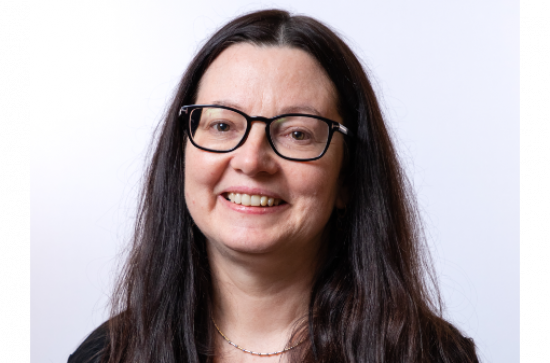
Siobhán Clarke is a Professor at the School of Computer Science and Statistics, Trinity College Dublin, specializing in software systems for smart urban environments . Her work addresses dynamic software adaptation in large-scale, mobile IoT ecosystems , with a focus on QoS optimization and collaborative agent models . Director, Enable : National SFI IoT Research Programme Director, Future Cities Centre for Smart & Sustainable Cities Co-Lead, ADVANCE : SFI Centre for Advanced Networks Co-PI, CONNECT (Future Networks) and Lero (Software Research) Her research spans smart city infrastructure , edge computing , and multi-agent coordination , informed by 15+ years of publications on service-oriented architectures , QoS prediction , and self-adaptive systems . Key project contributions include DIVERSIFY (2016) and TRANSFoRm (2015). Scientific awards include election to the Royal Irish Academy (2023) and a Best Student Paper at IEEE ICWS 2011. She has supervised 20+ PhD/MSc students, including Fan Li (2020: SLA Negotiation Systems), Gary White (2020: IoT QoS Forecasting), and Andrei Palade (2019: Stigmergic Optimization).
Professor Paul Fanning is a Full Professor at University College Dublin (UCD), holding dual roles as UCD International Dean for China and Provost of UCD’s three joint international colleges in China: Beijing-Dublin International College (BDIC), Chang’an Dublin International College of Transportation (CDIC), and Guangzhou-Dublin International College of Life Sciences & Technology (GDIC). He previously served as UCD Deputy Vice President for Global Engagement (2017–2019), overseeing global academic strategies and governance. As a Chartered Engineer and Fellow of the Institution of Engineers of Ireland, Fanning’s expertise spans structural engineering, with a focus on masonry arch bridges, structural health monitoring, and vibration serviceability. His research integrates advanced numerical modeling, field testing, and material science to address challenges in infrastructure sustainability and safety. Education: B.E. in Civil Engineering from UCD, PhD in Structural Engineering from the University of Surrey (UK). Post-PhD, he worked as a consultant engineer before returning to UCD in 1996. His academic leadership roles include Research Group Director, Head of Teaching & Learning, and Deputy Vice-Principal for Internationalization in the College of Engineering and Architecture. Research interests center on structural assessment techniques, including nonlinear finite element modeling of masonry arches, vibration response analysis of buildings and bridges, and the impact of non-structural elements on dynamic performance. He has led projects funded by the Irish government, including the 2017–2018 International Mobility Programme. Key achievements include pioneering methodologies for masonry arch bridge assessment and advancing understanding of pedestrian-induced vibrations in footbridges. His work on composite timber beams with welded-through dowels has redefined sustainable construction practices. Awards include Chartered Engineer status and Fellowship from the Institution of Engineers of Ireland. UCD’s joint colleges under his provostship exemplify international academic collaboration, blending Irish and Chinese educational frameworks. His grants and professional activities reflect a commitment to globalizing engineering education and infrastructure research.
Dr. David McKeown is an Assistant Professor in the School of Mechanical and Materials Engineering at University College Dublin (UCD). His research focuses on dynamics and control of space structures, nanosatellite hardware design, and attitude determination and control systems (ADCS). He leads the EIRSAT-1 project, Ireland's first satellite, launched in 2023, and manages the National Space Subsystems and Payloads Initiative (NSSPI), securing €7.9 million in funding. As an investigator for the European Space Agency’s DEAR project, he develops robotic systems to mitigate lunar dust effects. He collaborates with UCD’s School of Physics on ADCS projects and founded Dublin Maker and Science Hack Day Dublin. Education: Bachelor of Engineering (BE), University College Dublin Doctor of Philosophy (PhD), University College Dublin Research Themes: Spacecraft dynamics control, nanosatellite ADCS, space mission design, and space hardware testing. His work bridges academia and industry, with a focus on advancing Ireland’s space capabilities through projects like EIRSAT-1 and NSSPI. Grants & Funding: Principal Investigator for the €7.9M NSSPI project under DTIF and SFI grants supporting ADCS testbed development and lunar dust mitigation research. Advising & Leadership: Leads the Space Structure Dynamics and Control Theme at UCD’s Centre for Space Research (C-Space). Chair of SMME PhD transfer panels and member of various university committees. Public engagement includes roles in RTE’s Big Life Fix and Kildare Libraries’ Space Week. Labs & Teams: UCD Centre for Space Research, DEAR project collaborations, and partnerships with industry through NSSPI.
Carmel B. Breslin is a Professor of Chemistry at Maynooth University's Faculty of Science & Engineering, affiliated with the Department of Chemistry and the Human Health Institute. She holds editorial roles in journals such as Materials , Corrosion and Materials Degradation , and OPMR , and is an Associate Editor for Journal of Functional Materials and Chemical Engineering . Her research focuses on ElectroMaterials and Energy, encompassing conducting polymers, nanomaterials, and their applications in sensors, environmental remediation, and renewable energy systems. Education: PhD in Physical Chemistry from NUI Galway, with postdoctoral research at Penn State University and the University of Southern California. Her work is funded by Science Foundation Ireland (SFI), Sustainable Energy Authority of Ireland (SEAI), and EU Horizon programs. Research Interests: Development of electrocatalysts for energy storage, corrosion-resistant coatings, and sensors for biomedical/environmental applications. Current projects involve layered double hydroxides, graphene, and MXenes. Grants & Collaborations: Active in SFI Frontiers for the Future, SEAI projects, and industry partnerships. Supervises a dynamic research group including postdocs Dr. Karthik Raj, Dr. Daniele Alves, and PhD students like Tara Barwa and Yiran Luo. Teaching: Coordinates modules in Electrochemistry, Analytical Chemistry, and Materials Science. Innovates problem-solving approaches in undergraduate labs, including a CSI-themed practical exercise.