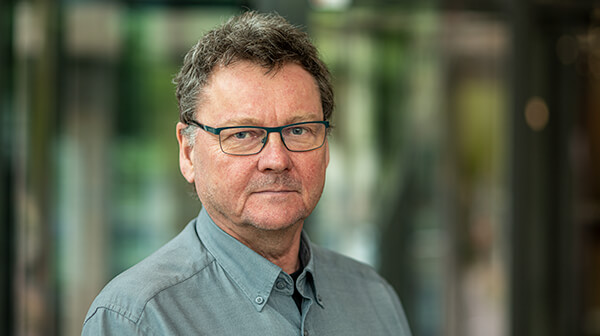
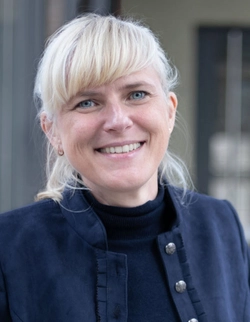
Prof. Dr. Matthias Weidlich is a faculty member at Humboldt University of Berlin within the Institute of Computer Science under the Faculty of Mathematics and Natural Sciences . His research focuses on Process Mining , Complex Event Processing , and Data Privacy with applications in Business Process Management and Scientific Workflows . Research Interests: Business Process Management and Process Mining Complex Event Processing and Stream Data Analysis Data Privacy and Security in Process Systems Scientific Workflow Systems and User Behavior Heterogeneous Network Embeddings Algorithm Design and Optimization Recent Publications (2023-2025) demonstrate expertise in: Efficient stream processing techniques Privacy-preserving process mining frameworks Scientific workflow analysis tools Graph neural network applications Multi-modal data integration Adaptive querying systems Contact: Office: Unter den Linden 6, 10099 Berlin Phone: 030 2093-41277 Email: matthias.weidlich@hu-berlin.de Web: hu.berlin/data
Pekka Martikainen is a leading researcher in population health and demography, affiliated with the Population Research Unit at the Faculty of Social Sciences, University of Helsinki . He is also actively involved with the MaxHel Center and the Laboratory of Population Health , contributing to major research initiatives such as the Monitoring Mortality Inequalities Consortium and studies on immigrant-native health disparities. His research focuses on social and economic determinants of health and mortality over the life course, using extensive Finnish register data. Key interests include fertility and family dynamics , health inequalities , migration and health , early-life determinants of health, and behavioral factors influencing mortality. His work often explores intergenerational linkages and the role of socioeconomic status in shaping health outcomes. The most recent publications reflect a strong emphasis on mental health , genetic and social interactions , educational and occupational influences on health , and disparities in cancer and reproductive health . Studies frequently employ longitudinal, register-based designs across Nordic and European populations, highlighting cross-national comparative insights. Behavioral Determinants of Health and Mortality Costs and Gains of Postponing Parenthood Immigrant-Native Health Disparities Over the Life Course Linked Lives: Family and Socioeconomic Attainment Medically Assisted Reproduction Mortality Disparities at Subnational Level His research has been published in top journals including The Lancet , Demography , Social Science and Medicine , and European Journal of Epidemiology . He collaborates extensively with researchers at the Max Planck Institute for Demographic Research and leads or contributes to multiple large-scale projects analyzing health and demographic trends in Finland and beyond. Martikainen’s work informs public health policy and contributes to understanding how social structures and individual behaviors interact to shape population health and longevity. He plays a central role in advancing register-based demographic research in Europe.
Holger Dette is a Professor and Chair Holder of Stochastics (specializing in Statistics) at the Faculty of Mathematics, Ruhr University Bochum. He leads the prominent Group Dette within the Institute of Statistics, overseeing a team of researchers, doctoral students, and administrative staff including Birgit Tormöhlen as team assistant. His research group is deeply integrated within the university's mathematical ecosystem, collaborating with other research groups across algebra, analysis, numerics, and topology. Dette's research spans mathematical statistics with strong applications in real-world problems. His primary interests include optimal experimental design, time series analysis, functional data, change point problems, nonparametric regression, biostatistics, special functions, goodness-of-fit tests, and random matrices . His work bridges theoretical statistics with practical applications, particularly evident in his collaborations with pharmaceutical giants Novartis and Bayer AG in biostatistics, as well as Quasol, a spin-off company from his statistics institute. His recent publications (2024-2025) reveal a research program increasingly focused on high-dimensional and functional data analysis, privacy-preserving statistics, and novel methodological approaches to longstanding statistical problems. Dette's work shows strong interdisciplinary connections, particularly with biomechanics (analyzing joint angles during fatigue phases) and data science (addressing challenges in the era of big data). His research group is actively involved in multiple DFG-funded projects including the newly established 'Small Data' collaborative research center (Sonderforschungsbereich 1597) and the Spatio-temporal Statistics for the Transition of Energy and Transport (Transregio 391). Dette has received significant recognition including the prestigious Humboldt Research Award . His paper 'With Great Power Come Great Side Channels: Statistical Timing Side-Channel Analyses with Bounded Type-1 Errors' achieved second place at the CSAW'24 Applied Research Competition MENA. His research group has also secured multiple significant funding awards from the German Research Foundation (DFG). As an advisor, Dette supervises numerous doctoral and master's students including Pascal Quanz, Marius Kroll, and Carina Graw. His group offers statistical consulting services for scientists and students across bachelor's, master's, and doctoral phases. The group maintains strong industrial partnerships, particularly in biostatistics applications, demonstrating Dette's commitment to translating theoretical statistics into practical solutions for real-world challenges.
Prof. Farzad Saidi is a Professor in the Department of Economics at the University of Bonn. He is affiliated with the Institute for Macroeconomics and Econometrics, ECONtribute, and the CRC TR 224 EPoS research centers. His work focuses on financial intermediation, monetary policy, corporate finance, and labor markets. He has contributed extensively to understanding bank behavior under negative interest rates, the effects of financial regulation, and the interplay between social preferences and economic outcomes during crises. Research highlights include analyzing strategic communication among banks, the impact of regulatory changes on insurance industries, and the role of social preferences in pandemic responses. His awards include the Jensen Prize for outstanding corporate finance research. Current projects explore credit supply dynamics, data-driven business cycles, and the macroeconomic implications of financial sanctions. Prof. Saidi's work spans theoretical and empirical domains, addressing topics such as banking structure, liquidity management, and the transmission of monetary policy. His affiliations with interdisciplinary centers reflect a commitment to collaborative, policy-relevant research.
Prof. Dr. Hannah Schildberg-Hörisch is a Professor of Economics at the Faculty of Business and Economics, Heinrich Heine University Düsseldorf, specializing in Behavioral Economics and Empirical Economic Research. She serves as Senior Research Fellow at the Max Planck Institute for Research on Collective Goods and leads the Düsseldorf Institute for Competition Economics (DICE). Her research spans self-control, socio-emotional skills, economic preferences, affirmative action, and behavioral interventions, often using experimental methods and longitudinal data. Education: PhD in Economics (University of Munich, 2008), MSc in Economics (University of Mannheim, 2004), Studies in Economics, Political Sciences, and Environmental Science (University of Heidelberg, 2001). Positions: Professor (DICE, HHU Düsseldorf, 2016–present), Senior Research Fellow (Max Planck Institute, 2021–present), Postdoctoral Researcher (University of Bonn, 2009–2016), Federal Ministry of Economics and Technology (Berlin, 2008–2009), Research Assistant (University of Munich, 2004–2008). Her research combines behavioral economics, psychology, and public policy, focusing on self-control stability, socio-economic disparities in child development, and the effectiveness of affirmative action. Recent work examines spatial patterns in preference formation, parenting impacts on skills, and behavioral interventions during public health crises like the COVID-19 pandemic. Key contributions include: Identifying sensitive periods for socio-emotional skill development. Analyzing self-control’s predictive power for life outcomes. Evaluating the interplay between surveillance and behavioral compliance. Investigating fairness perceptions of affirmative action policies.
Prof. Dr. Hans-Jörg Vogel is the Head of the Department of Soil System Science at the Helmholtz Centre for Environmental Research (UFZ) in Halle, Germany. His research focuses on understanding soils as complex systems, emphasizing their porous structure and its role in facilitating water, gas, and matter fluxes, as well as biological processes. He leads interdisciplinary projects integrating experimental and computational approaches to model soil functions under climate and land-use changes. He holds the Emil-Ramann-Medaille 2022 and the Don and Betty Kirkham Soil Physics Award 2022 for contributions to soil science. His work spans soil structure dynamics, denitrification processes, nanoparticle transport, and systemic modeling of soil functions via frameworks like BODIUM. Collaborations include TERENO observatories and the Soil Structure Library (open-access CT data repository). Key affiliations include the UFZ’s Ecosystems of the Future research community and the Soil System Science Team. His research addresses sustainable agriculture, environmental monitoring, and climate change impacts, with over 150 peer-reviewed publications since 2000.
Dr. Martin Lange is part of the Project Group Ecological Epidemiology within the Department of Ecological Modelling at the Helmholtz Centre for Environmental Research (UFZ). His research focuses on computational epidemiology, particularly in wildlife and livestock systems. Key areas include disease transmission dynamics, surveillance strategies, and the development of predictive models for infectious diseases like African Swine Fever (ASF) and Bovine Viral Diarrhea Virus (BVDV). Affiliations: UFZ, Department of Ecological Modelling; EcoEpi research group. Education: PhD in Veterinary Epidemiology (2013, TU Bergakademie Freiberg). Research interests span ecological epidemiology, wildlife disease control, and the application of agent-based and individual-based models to understand pathogen spread. Notable contributions include modeling ASF in wild boar populations and BVDV eradication strategies in Ireland. Awards: Received the 2018 UFZ-Wissenstransferpreis (shared with H.H. Thulke) and the Konrad-Bögel-Nachwuchsförderpreis for his doctoral work on eco-epidemiology of wild boar diseases. Also recognized at the DACh Epidemiologietagung 2011. Publications: Over 50 peer-reviewed articles since 2006, emphasizing interdisciplinary approaches to disease modeling and environmental systems. Recent work includes digital twin frameworks for biodiversity monitoring and Python-based model coupling tools like FINAM. Labs/Teams: Active in the EcoEpi group and contributes to projects like BioDT (Biodiversity Digital Twin) and CauSES (Causation in Social-Ecological Systems).
Dr. Marion Schrumpf is a Group Leader in the Soil Biogeochemistry research group at the Max Planck Institute for Biogeochemistry, affiliated with the Department of Biogeochemical Processes. Her work focuses on soil carbon dynamics, mineral-organic matter interactions, and climate change impacts on soil systems. Research areas: Soil biogeochemistry, carbon cycling, mineral-soil interactions, nutrient stoichiometry, microbial ecology, and climate modeling. Email: mschrumpf@... Phone: +49 3641 57-6182 Office: B2.015 Her recent publications address themes like mineral control over soil carbon stabilization, drought effects on soil processes, microbial stoichiometric adaptation, and the Jena Soil Model's role in simulating carbon-nutrient interactions. She leads efforts to disentangle the complex relationships between land use, mineralogy, and soil organic matter turnover across diverse ecosystems.
Rainald Loehner is a Distinguished Professor of Fluid Dynamics at George Mason University's Center for Computational Fluid Dynamics. Since 2003, he has led the Center for Computational Fluid Dynamics at George Mason University. He is currently a Hans Fischer Senior Fellow at the Technical University of Munich's Institute for Advanced Study (TUM-IAS) for 2023, hosted by Professors Kai-Uwe Bletzinger and Roland Wüchner in the 'Adjoint-Based System Identification of Large-Scale Structures' Focus Group. Loehner received his Diplom Ingenieur (Maschinenbau) degree from the Technical University of Braunschweig, and his PhD and a DSc in civil engineering from the University College of Swansea, Wales. After teaching at Swansea for a year, he worked at the Naval Research Laboratory in Washington, DC, followed by a research professorship at George Washington University. He joined George Mason University as an associate professor and was promoted to full professor in 1995 and distinguished professor in 2004. With over 35 years of experience, Professor Loehner's research spans the complete pipeline of numerical solvers and simulation tools. His expertise includes pre-processing, grid generation, numerical methods, field solvers, parallel computing, adaptive mesh refinement, fluid-structure interaction, shape optimization, system identification, and computational crowd dynamics. His current work focuses on developing advanced field solvers for compressible and incompressible flows, acoustics, electromagnetic wave propagation, heat and mass transfer, structural mechanics, and fluid-structure interaction. Key application areas include blast mitigation, ship hydrodynamics, blood flow, contaminant transport, and pedestrian safety. Loehner's recent research output (2020-2024) shows a strong trend toward digital twin technology and adjoint-based methods for structural analysis and optimization. His publications focus on high-fidelity digital twins for detecting structural weaknesses, risk assessment in engineering systems, and optimization of sensor placement. His work bridges computational mechanics with machine learning approaches, particularly in system identification and inverse problems, demonstrating how computational methods can solve complex real-world engineering challenges. 2020: Ranked #15119 in the Stanford List of Most Influential Scientists of the World; #8 in Aerospace and Aeronautics 2010: Distinguished International Career Award, Argentine Association of Computational Mechanics 2008: Fellow, International Association for Computational Mechanics 2006: Associate Fellow, AIAA 2005: Honorary Professor, University of Wales Swansea 2005: Advisory Professor, Shanghai Jiao Tong University 2004: Distinguished Professor of Fluid Dynamics, George Mason University 1999: Computational Mechanics Achievements Award, Japan Society of Mechanical Engineering 1993: Doctor of Science in Civil Engineering, University College of Swansea 1979-1983: Studienstiftung des Deutschen Volkes (Top 1% of German Students) Professor Loehner has mentored numerous students through his work at George Mason University and has supervised research in computational fluid dynamics, structural mechanics, and related fields. His research has been supported by various grants from government agencies and industry partners, enabling the development of advanced simulation tools applied in aerodynamics, hydrodynamics, shock-structure interaction, and medical applications. His codes and methods have been widely adopted in industry and academia for applications ranging from aircraft and ship design to medical simulations and urban pathogen transmission modeling. Loehner leads the Center for Computational Fluid Dynamics at George Mason University, which focuses on developing cutting-edge computational methods for fluid dynamics and related multiphysics problems. The center works on strategic application areas including blast mitigation, ship hydrodynamics, blood flow simulation, and pedestrian movement modeling. As a TUM-IAS Fellow, he collaborates with the Chair of Computational Modeling and Simulation at TUM on adjoint-based system identification of large-scale structures, bringing together expertise in computational mechanics and digital twin technology to address complex engineering challenges.
Prof. Dr.-Ing. Jana Bochert is a faculty member at the Faculty of Sustainable Infrastructure at Technische Hochschule Ingolstadt , specializing in Construction Informatics , Construction Mechanics , and Foundations of Civil Engineering . She focuses on seismic analysis, soil-structure interaction, and structural dynamics, particularly for critical infrastructure like nuclear power plants. Email: Jana.Bochert@thi.de Phone: +49 841 9348-2393 Office: Room CN115 Research Interests Her research centers on: Seismic soil-structure interaction Wave propagation in soil under dynamic loads Development of computational methods for structural analysis Dynamic response of nuclear power plant foundations Impact of transportation and demolition on soil vibrations Finite element modeling of civil structures Publications & Research Trends Her work spans 2008–2021 , with a focus on: Seismic safety protocols for nuclear infrastructure Time-domain modeling of soil dynamics Comparison of simulation methods (2D vs 3D) Acoustic and vibration analysis in urban environments Integration of soil nonlinearities into structural design Dynamic load effects from trains and demolition
Insa Feinkohl is a Professor at the Chair of Medical Biometry and Epidemiology within the Faculty of Health at the University of Witten/Herdecke . Her research focuses on risk factors for cognitive dysfunction and mental health in older adults, particularly post-surgery, with emphasis on metabolic and cognitive risk factors. Bachelor of Science (BSc) in Psychology (1 st class honors) – University of Dundee (2006-2009) Master of Science (MSc) in Psychology of Individual Differences (with distinction) – University of Edinburgh (2009-2010) PhD in Community Health Sciences – University of Edinburgh (2010-2014) Post Doc in Knowledge Construction Group – Leibniz Institute for Knowledge Media, Tübingen (2014-2015) Postdoc in Molecular Epidemiology Group – Max Delbrück Center, Berlin (2015-2022) Habilitation in Molecular Epidemiology – Charité Universitätsmedizin Berlin (2021) Her research integrates medical biometry and epidemiology to study postoperative cognitive dysfunction (POCD), delirium, and aging-related cognitive decline. Key areas include biomarker validation (e.g., leptin, interleukins), brain connectivity (dopaminergic networks, thalamus), and metabolic risk factors (diabetes, obesity). She contributed to the BioCog project , an EU-funded initiative for personalized risk prediction of postoperative cognitive impairment. Her recent publications highlight trends in perioperative neuroscience, including brain mineralization, cytokine associations with neurocognitive disorders, and structural/functional imaging in delirium. Articles also explore metabolic syndrome, cognitive reserve, and delirium prediction models using machine learning. Insa Feinkohl is affiliated with major academic societies, including the German Society for Epidemiology , German Society for Medical Informatics, Biometry and Epidemiology , and the German University Association .
Prof. Dr. Kirsten Jung is a faculty member at the Department of Microbiology , Faculty of Biology , Ludwig Maximilian University of Munich . Her research focuses on bacterial signal transduction, stress response mechanisms, and systems biology approaches to understand microbial regulatory networks. Key research areas include stress-dependent gene expression in bacterial populations Structural and functional analysis of membrane-integrated receptors Metabolism-based chemical communication in bacteria Integration of experimental and computational systems biology Recent publications highlight her lab's work on Escherichia coli epitranscriptomic modifications under heat stress, m 5 C rRNA dynamics, and the role of RNA methylation in host-pathogen interactions. Collaborative studies address bacterial acid stress responses and their implications for antibiotic tolerance. Her interdisciplinary work bridges microbiology with ecological studies, as evidenced by research on biodiversity conservation in forest and urban ecosystems. Publications also demonstrate expertise in advanced imaging techniques (e.g., arterial spin labeling for glioma analysis) and bioinformatics approaches. Current advisees include Gloria Gessinger and Tania P. Gonzalez-Terrazas . She can be contacted at jung@lmu.de .
Christoph Gehlen is Professor and Chair of Materials and Materials Testing in Civil Engineering at the Technical University of Munich (TUM), based at Franz-Langinger-Str. 10 in Munich. His research group focuses on advanced concrete technologies, materials science, and digital construction methods, with significant contributions to additive manufacturing in civil engineering through the Collaborative Research Center TRR 277. His research spans concrete technology, durability assessment, and sustainable construction practices. Key interests include corrosion mechanisms in reinforced concrete, non-destructive testing methodologies, and additive manufacturing techniques like Selective Paste Intrusion (SPI). Recent work emphasizes 3D concrete printing for structural applications, life cycle assessment of printed elements, and fundamental studies on material behavior under environmental stressors including carbonation, chloride exposure, and freeze-thaw cycles. Analysis of his 15 most recent publications (2024-2025) reveals dominant research trajectories in digital fabrication of concrete structures, particularly SPI-based additive manufacturing. His work integrates materials science with structural engineering to develop functionally graded components, assess sustainability metrics, and solve reinforcement integration challenges. Significant interdisciplinary efforts address durability issues through electrochemical monitoring, coda wave interferometry, and advanced imaging techniques for concrete microstructure characterization. Gehlen leads the Chair of Materials and Materials Testing in Civil Engineering at TUM, which operates advanced laboratories for concrete characterization including confocal laser scanning microscopy and virtual testing environments. His team actively participates in TRR 277 (Additive Manufacturing in Construction), developing fabrication-aware design methods and experimental validation protocols for novel construction technologies.
Prof. Dr. Philipp Staab is a full professor of Sociology of the Future of Work at Humboldt-Universität zu Berlin, affiliated with the Einstein Center Digital Future (ECDF). His research lies at the intersection of digital capitalism, labor sociology, and the political economy of technology and artificial intelligence. He holds a PhD from the University of Kassel and has held research and teaching positions at institutions including the Hamburg Institute for Social Research, WZB Berlin, and the University of St. Gallen. Staab is a leading voice in analyzing how digital transformation reshapes labor, power, and governance. His research focuses on: Theoretical foundations of digital capitalism Power structures in platform economies and industrial digitalization The role of venture capital and financialization in shaping work The political economy of artificial intelligence and digital sovereignty The transformation of the public sphere in the digital age The social implications of green and digital transitions Staab’s recent publications explore the geopolitical dimensions of technology, sustainable digital market design, and the crisis of legitimacy in green capitalism. His work reveals patterns of increasing control, inequality, and state intervention in digital economies. He leads a collaborative research environment with multiple assistants and contributes to public discourse through books, policy papers, and media engagement. Notable recognitions include: Hans Matthöfer Prize for Business Journalism (2021) Named one of 'Germany’s 30 by 2030' by WirtschaftsWoche (2024) Staab advises on digital and labor policy and is involved in interdisciplinary research networks. He supervises a team of researchers and contributes to academic and public debates on the future of work, digital sovereignty, and ecological transformation.
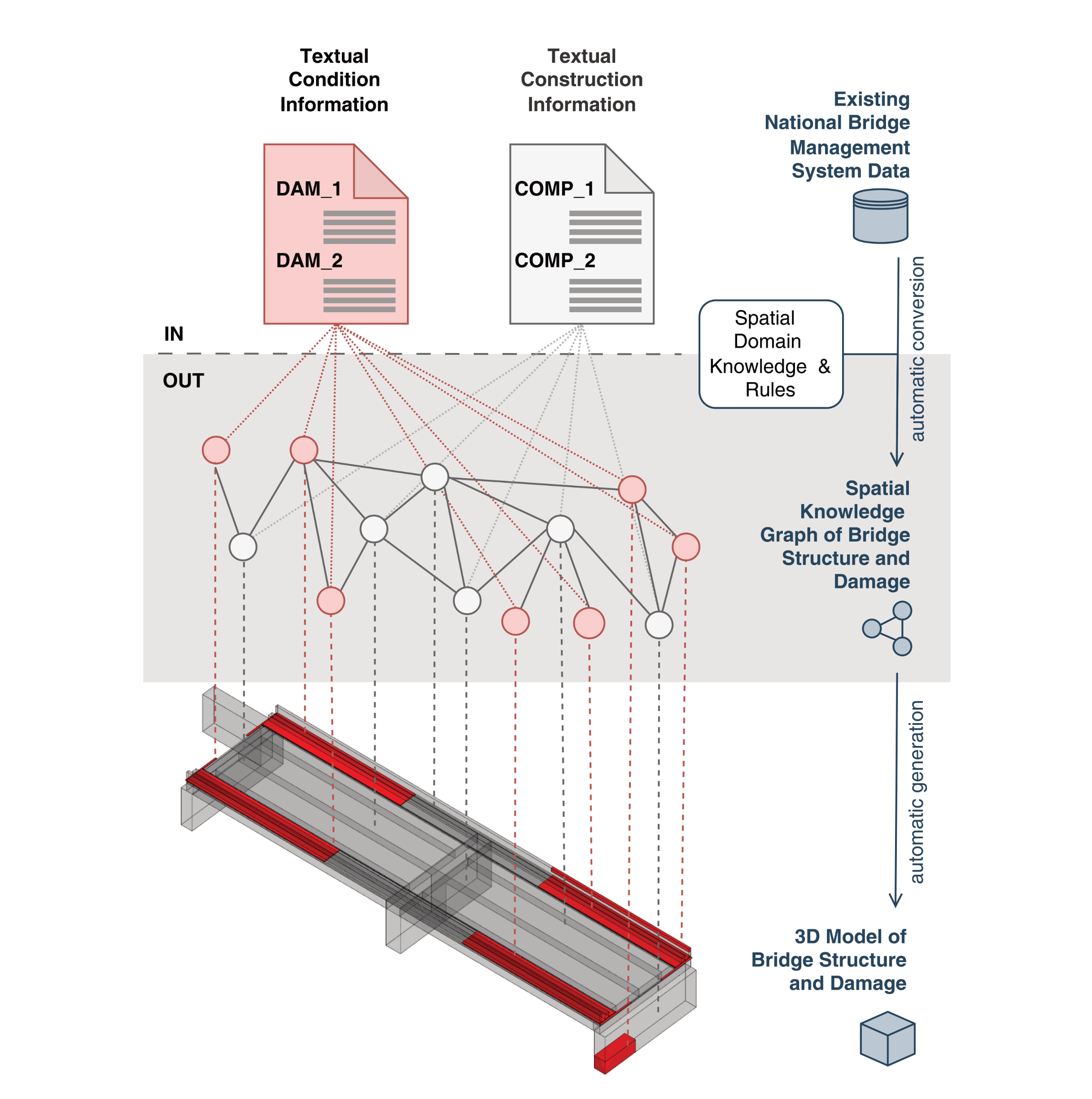
Prof. Dr. Jakob Beetz serves as a University Professor at RWTH Aachen University's Faculty of Architecture, leading the Design Computation (DC) research group. His work addresses critical challenges in sustainable built environments through digital innovation, focusing on integrating knowledge, information, and data across disciplines to reduce the sector's energy and material consumption—which accounts for over one-third of global totals—while advancing climate goals under the European Green Deal. His research spans Building Information Modeling (BIM), digital twins, and artificial intelligence, with emphasis on graph-based data federation, semantic web technologies, and large language models in construction. Key interests include evidence-based planning, parametric design optimization, building physics simulation, and networked knowledge modeling. Recent projects explore federated digital twin ecosystems for infrastructure management, intelligent damage assessment systems, and AI-driven solutions for wood structure preservation, directly contributing to sustainable development targets. Analysis of his 2024-2025 publications reveals a cohesive trajectory toward decentralized data environments and AI integration in Architecture, Engineering, and Construction (AEC). His work bridges theoretical foundations in knowledge representation with practical applications in bridge maintenance, road infrastructure, and timber construction, demonstrating consistent innovation in spatial data querying, federated issue management, and ontology-based process modeling. Prof. Beetz actively supervises PhD candidates, as evidenced by DC.Promotions 2024, and drives international collaboration through events like the Forum Construction Informatics 2025 and CIB W78 conferences. His research group engages with industry standards including Industry Foundation Classes (IFC) and Common Data Environments (CDEs), emphasizing open data principles and interoperability to transform construction workflows.