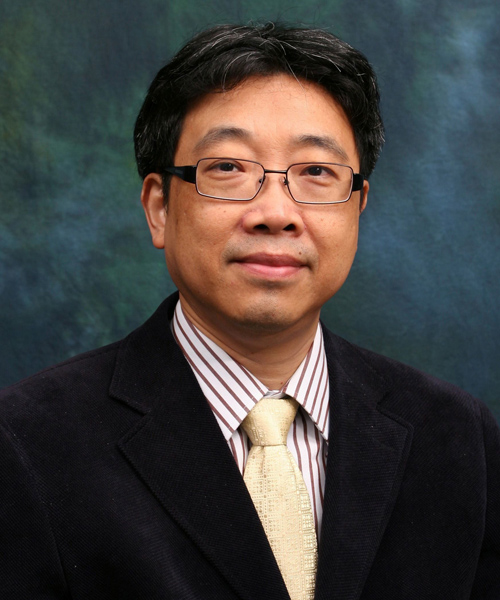
Cao Jiannong is currently a Chair Professor and Director of the University Research Facility in Big Data Analytics at Hong Kong Polytechnic University . He has held academic roles including Assistant Professor at City University of Hong Kong and University Lecturer at the University of Adelaide and James Cook University. His research spans Cloud and Edge Computing , Parallel and Distributed Systems , Big Data Analytics , and Wireless Sensing . Ph.D. in Computer Science, Washington State University (1990) MSc in Computer Science, Washington State University (1986) BSc in Computer Science, Nanjing University, China (1982) His work focuses on solving theoretical and practical challenges in distributed computing , mobile cloud systems , and wireless sensor networks . Recent projects include coupled network embedding models for heterogeneous networks and SDN architectures for vehicular communication. His research also pioneers WiFi-based non-invasive health monitoring and fault-tolerant sensor deployment for structural health applications. Dr. Cao's publications highlight advancements in network embedding , edge computing , and WSN optimization . Key papers address multi-user computation partitioning , energy-efficient SHM systems , and consensus protocols for mobile networks. These works have been cited over 15,000 times, with an h-index of 60. Ministry of Education (China) Natural Science Award (2018) Distinguished Member, ACM (2017) Fellow, IEEE (2014) Best Paper Awards at IEEE DSAA, SMARTCOMP, and WCNC Dr. Cao has advised multiple PhD students, including Linchuan Xu and Weigang Wu , whose research on WSN-based SHM and coupled network embedding has practical impact. His leadership includes directing Hong Kong Polytechnic University's Big Data Research Facility and serving on technical committees for IEEE INFOCOM and ACM/IEEE conferences.
Univ.-Prof. Torsten Möller, PhD is a Professor at the University of Vienna and serves as Head of the Research Group Visualization and Data Analysis and Head of the Research Network Data Science. His work spans data visualization, visual analytics, and human-computer interaction, with a focus on biomedical, environmental, and societal data applications. Academic rank: Professor Research group: Visualization and Data Analysis Network: Data Science Email: torsten.moeller@univie.ac.at Research interests include: Visual data analysis for complex systems Interdisciplinary applications in climate science and medicine Human-computer interaction in data exploration Image processing and computer graphics Recent publication trends show expertise in: Visualizing climate change and pandemic data Multi-volumetric and network analysis Algorithmic transparency and user-centered design Interdisciplinary collaborations (e.g., astrophysics, medical imaging) Statistical and uncertainty visualization Design frameworks for visualization recommendation Teaching includes courses in: Computer graphics and visualization Image processing and analysis Human-computer interaction Data analysis projects Doctoral research seminars
Jiannong Cao is a Chair Professor and Director of the University Research Facility in Big Data Analytics at the Department of Computing, Hong Kong Polytechnic University. He has held various academic roles since 1990, including Assistant Professor at City University of Hong Kong and Lecturer at Australian universities. PhD in Computer Science, Washington State University (1990) MSc in Computer Science, Washington State University (1986) BSc in Computer Science, Nanjing University (1982) His research focuses on cloud and edge computing , parallel and distributed computing , and mobile computing , with significant contributions to wireless sensor networks (WSN) for structural health monitoring (SHM) and software-defined networking (SDN) for vehicular communications. Recent work includes WiFi-based non-invasive health monitoring systems and multi-user computation partitioning in mobile cloud environments. Dr. Cao’s publications demonstrate trends in WSN optimization , SDN architectures , and cognitive modeling for network embedding , with applications in smart healthcare , transportation systems , and industrial IoT . Ministry of Education Natural Science Award (2018) ACM Distinguished Member (2017) IEEE Fellow (2014) Best Paper Awards at IEEE DSAA, SMARTCOMP, WCNC He has mentored numerous researchers, including Linchuan Xu , Xuefeng Liu , and Weigang Wu , who have authored key publications in top venues like ACM WSDM and IEEE INFOCOM . His professional roles include chairing IEEE committees and serving on grant panels for the Hong Kong Research Grant Council.
Hans Irschik is a Full Professor and Head of the Institute of Technical Mechanics at Johannes Kepler University of Linz, Austria. He has held key academic roles, including Vice-Rector for Research (1995-2001) and Chair of the Senate (2009-2013) at JKU, and serves as Editor-in-Chief of Acta Mechanica . His work bridges structural mechanics, mechatronics, and control systems. Education: Studied Civil Engineering at Vienna University of Technology, earned Doctor of Technical Sciences (1981) and Habilitation in Mechanics (1986). Research interests include structural control, continuum mechanics, and smart materials. His contributions span theoretical developments and applied control strategies for aging structures. Recent articles focus on Lagrangian formulations, piezoelectric sensors, and beam theories, reflecting his expertise in mechanics and structural health monitoring. Scientific Awards & Memberships: Full Member, Austrian Academy of Sciences (since 2011) Honorary Doctorate, St. Petersburg Polytechnical University (2009) President, European Association of Structural Control and Health Monitoring (2008-2012) Fellow, Japanese Society for the Promotion of Science (2006) City of Vienna Award (1988) Kardinal Innitzer-Award (1988) Grants & Projects: Led Austrian Science Fund (FWF) research since 1993. Key researcher in the K2-Austrian Center of Competence in Mechatronics (since 2001). Participated in EUROMECH committees and European Science Foundation programs.
Thomas Reinthaler is a researcher at the Faculty of Life Sciences, Department of Functional and Evolutionary Ecology, specializing in microbial oceanography and biogeochemical processes. His work investigates the role of prokaryotic organisms in marine carbon cycling, the influence of environmental factors like temperature and UV irradiation on microbial activity, and metabolic adaptations in deep-sea environments under in situ pressure conditions. Research Interests Reinthaler's research spans microbial ecology, biogeochemistry, and oceanography. Key areas include dark ocean carbon cycling, anaplerotic carbon fixation, hydrostatic pressure effects on microbial communities, and the interplay between prokaryotic gene expression and environmental stressors like UV radiation. His work also addresses microbial contributions to the biological pump and nutrient recycling in mesopelagic zones. Publication Trends Recent publications highlight metaproteomic analyses of dark ocean trophic interactions, sulfur cycling dynamics, and antibiotic-resistant bacteria in coastal systems. He has advanced methodologies for in situ pressure experiments and contributed to resolving paradoxes in carbon budget calculations through studies on heterotrophic autotrophy and microbial substrate utilization patterns. Projects and Activities BASS Project : Biochemical processes and air-sea exchange in the sea surface microlayer (active 2022–2025). Prokaryoten Project : Funded research on prokaryotic activity in the North Atlantic (2011–2016). Organized the 2024 Symposium on Microbial Oceanography and presented at the ECOTIP Photoexhibit (2024).
Hubert Zangl is a Professor at the University of Klagenfurt and Head of the Institute for Intelligent System Technologies . He serves as Chairman of the Information Technology Curricular Commission and participates in the Faculty Conference of the Faculty of Technical Sciences. Key research areas include: Sensor technology Electrical measurement technology Robotics Signal processing Electronics Recent research trends focus on: High-fidelity FMCW radar simulation frameworks Energy-efficient sensor systems Printed electronics for structural health monitoring Uncertainty propagation in measurement science Modular robotics with secure transducer identification Capacitive tactile sensing for robotic grasping Contact: Hubert.Zangl@aau.at
Hojjat Adeli is an Academy Professor at The Ohio State University (OSU) with courtesy appointments in the Departments of Neurology, Neuroscience, and Biomedical Informatics. He has held the Abba G. Lichtenstein Professorship in Infrastructure Engineering (2003-2013) and served as Editor-in-Chief of Computer-Aided Civil and Infrastructure Engineering for 25 years. Academy Professor, OSU (2018–present) Professor of Neurology, Neuroscience, and Biomedical Informatics (by courtesy, since 2015-2002) His research interests span interdisciplinary domains at the intersection of engineering and neuroscience, focusing on: Computational neuroscience and neurocomputing Biomedical signal processing (particularly EEG-based diagnostics) Machine learning and computational intelligence applications Smart infrastructure systems and structural engineering Optimization algorithms in civil and biomedical contexts His research trends demonstrate a synergy between: Neural network development for medical diagnostics Wavelet and chaos theory in epilepsy detection Computational intelligence for structural engineering Hybrid models integrating fuzzy logic and genetic algorithms Scientific awards and honors include: Multiple IEEE Fellowships and AAAS Fellow Thomson Reuters Highly Cited Researcher in Engineering and Computer Science Hojjat Adeli Awards for Neural Systems and Innovation in Computing Elections to international academies in Poland, Lithuania, and Spain Scott Award for Engineering Education and Distinguished Member ASCE
Privatdozent Dr. Marcela Suarez-Rubio is a Senior Scientist at the Institute of Zoology, University of Natural Resources and Life Sciences Vienna (BOKU) , specializing in urban ecology, biodiversity research, and wildlife monitoring . Her work integrates landscape ecology, remote sensing, and conservation biology to study how land-use changes affect birds and bats in temperate and tropical regions. She has led projects in Austria, Myanmar, and Bhutan, focusing on habitat connectivity, urban green spaces, and endangered species conservation . Education: PhD in Ecology, University of Maryland, USA (2011) MSc in Biology, University of Puerto Rico (2005) BSc in Biology, Universidad del Valle, Colombia (2000) Research Themes: Urbanization gradients and their nonlinear effects on avian and bat communities Biodiversity assessment in remote areas like Hkakabo Razi National Park Telemetric and acoustic methods for wildlife monitoring Conservation strategies for critically endangered species (e.g., White-bellied Heron) Ecosystem management in agricultural and forested landscapes Scientific Awards: ERASMUS+ Teaching Mobility (2022, 2018, 2017) National Parks Austria Research Award (2022) BOKU Teaching Award (2016) NASA-MSU Professional Enhancement Award (2011) Golden Key International Honour Society (2008) Advising and Grants: Supervised 14 theses and secured funding from National Parks Austria, Austrian Academy of Sciences, and international organizations . Active in scientific peer-review (Philosophical Transactions of the Royal Society B, Journal of Urban Ecology) and conservation policy for UNESCO World Heritage nominations.
Paola Ayala is a Professor at the Faculty of Physics of the University of Vienna, specializing in the Electronic Properties of Materials . Her research focuses on nanomaterials, particularly carbon nanotubes, graphene, and carbyne, exploring their electronic, magnetic, and optical properties. She leads the Doctoral College Advanced Functional Materials (DCAFM) (2020–2025), fostering interdisciplinary training in nanotechnology. Key research areas include nitrogen doping of carbon nanotubes, magnetic coupling in nanoclusters, and sensor applications of nanocomposites. She has pioneered studies on confined carbyne synthesis and the environmental stability of 1D nanocarbons. Ayala’s work bridges theoretical modeling (e.g., DFT simulations) and experimental techniques like Raman spectroscopy and XPS analysis. Her 2017 Matilde Hidalgo Prize recognizes contributions to nanomaterials science. She actively promotes STEM equity, co-authoring reports on women in physics in Austria and Ecuador. Ayala has supervised over 97 publications since 2007, with recent emphasis on functional nanomaterials for energy, sensing, and biomedical applications. Notable projects include developing flexible formaldehyde sensors and investigating magnetic properties of iron nanoclusters. She collaborates globally, presenting at conferences like the 2024 UNIVIE NanoteC Symposium and the 2023 International Nanotechnology Congress.
Tobias Ofner-Graff is a researcher at the Institute of Forest Growth within the Department of Ecosystem Management, Climate and Biodiversity at the University of Natural Resources and Life Sciences, Vienna (BOKU). Based at Peter-Jordan-Straße 82, 1190 Wien, his work focuses on advanced forest monitoring technologies. His research interests include: LiDAR and remote sensing applications in forestry Automated forest inventory systems Forest regeneration quantification Airborne Laser Scanning (ALS) data analysis Sustainable forest harvesting planning Recent project contributions include: Leading lidar-based forest monitoring systems development Developing spatial forest growth models Implementing digital inventory workflows His publications demonstrate expertise in: Quantifying forest resources through 3D point clouds Advanced timber stack measurement techniques ALS data integration for forest modeling Mobile laser scanning applications Forest climate adaptation strategies
Univ.-Prof. Katja Corcoran serves as Professor of Psychology and Vice Dean for Research at the University of Graz's Faculty of Natural Sciences, leading the Institute of Psychology. She directs the university's 'Smart Regulation' profile area and participates in the 'Brain and behavior' research network, with leadership roles including former Head of Psychology Institute (2017-2019) and Deputy Head of Doctoral School of Psychology (2021-2023). Her research centers on social psychological mechanisms in sustainability transitions, particularly: Energy citizenship frameworks and prosumer behavior Goal contagion dynamics in social networks Intergroup contact interventions in educational settings Regulatory psychology for sustainable systems Recent publications (2023-2025) demonstrate interdisciplinary integration of psychological, legal, and economic perspectives, featuring field experiments across Austria and multi-lab European collaborations examining energy citizenship scales, behavioral nudges for appliance usage, and prejudice reduction in schools. Honors include: Feodor Lynen Research Fellowship (Alexander von Humboldt Foundation, 2004) She currently directs major funded initiatives: EU: 'Energy Citizenship and Energy Communities for Clean-Energy Transition' (2021-2024) FFG: 'FIWARE Driven Energy Communities for the Future' (2023-2026) International: 'Active User Participation for Smart Energy Services' (2020-2023) Corcoran serves on editorial boards of Social Psychology (since 2016) and Social Cognition (since 2013), and her work operates within the 'Brain and behavior' network fostering neuroscience-psychology-economics collaborations for complex decision-making research.
Andreas Fink serves as a University Professor at the Institute of Psychology within the Faculty of Natural Sciences at Karl-Franzens-University Graz, Austria. His research bridges cognitive neuroscience, psychology, and sports science with a particular emphasis on understanding the neurobiological foundations of creative thinking and emotional processing. As a leading figure in creativity neuroscience, Professor Fink employs advanced methodologies including EEG, fMRI, and ambulatory monitoring to investigate how physical activity influences brain function and cognitive performance. His work has significant implications for mental health interventions and cognitive enhancement strategies across various populations. Professor Fink's research interests center on three interconnected domains: biological mechanisms of cognitive and affective functions, creativity neuroscience, and the relationship between physical activity and brain health. His laboratory investigates how physical exercise influences neural processes related to creativity, emotion regulation, and cognitive performance through both basic neuroscience research and applied interventions. A hallmark of his approach is examining EEG alpha power during creative ideation tasks while simultaneously exploring how running, dance, and other physical activities can improve mental health outcomes and cognitive functioning. His work spans from laboratory-based experimental designs to real-world interventions with ecological validity. Analysis of Professor Fink's recent publication trajectory reveals a sophisticated evolution in his research focus, with increasing emphasis on the intersection of physical movement, brain function, and creative cognition. His work has progressively incorporated more ecologically valid approaches using ambulatory monitoring to study creativity in natural contexts, while maintaining rigorous neuroscience methodology. A consistent theme across his publications is neuroplasticity, particularly how physical exercise interventions induce structural and functional brain changes, with special attention to hippocampal volume and white matter integrity. His research has expanded to explore specialized forms of creativity including malevolent creativity and the nuanced relationship between everyday movement patterns and creative cognition. 2009 Psychology Prize for innovative scientific or practical work for his habilitation thesis 'The neuroscientific study of creative thinking' from the Professional Association of Austrian Psychologists (BÖP) and the Austrian Psychological Society (ÖGP) Professor Fink currently leads multiple significant research initiatives funded by the Austrian Science Fund (FWF), including 'Neuronal mechanisms underlying the generation of creative solutions in complex environments' (2016-2018), 'Running Away From Depression with Your Brain and Your Heart' (2022-2025), and 'Dance and Brain' (2024-2026). These projects demonstrate his commitment to translating basic neuroscience findings into practical interventions for mental health. While specific doctoral students aren't listed in the provided materials, his position as a full professor and principal investigator on multiple grants indicates active mentorship of junior researchers and graduate students. His collaborative approach is evident through interdisciplinary partnerships spanning psychology, neuroscience, sports science, and clinical practice. Professor Fink is an active member of the 'Complexity of Life' profile area at the University of Graz and participates in the 'Brain and Behavior' research network. His laboratory environment fosters interdisciplinary collaboration, bringing together researchers from diverse backgrounds to tackle complex questions about the brain-mind-body connection. Current projects suggest his team employs a multimodal approach combining neuroimaging, physiological monitoring, behavioral assessments, and intervention studies to comprehensively investigate how physical activity influences brain function and creative cognition. His 'Running Away From Depression' project exemplifies his translational research focus, directly connecting basic neuroscience findings to clinical applications for mental health improvement.
Karin Ingold is a Full Professor at the University of Bern’s Institute of Political Science and leads the Policy Analysis and Environmental Governance (PEGO) research group, affiliated with EAWAG’s Social Science Department. She holds concurrent roles as Vice-President of the Oeschger Centre for Climate Change Research and President of Proclim (Swiss Climate Science Forum). Her expertise spans public policy, climate resilience, and environmental governance, with a focus on policy process theories like the Advocacy Coalition Framework and social network analysis. She has held academic positions since 2011, advancing from Assistant to Full Professor, and previously worked at ETH Zurich and UC Davis. Ingold’s research emphasizes policy design, climate policy instruments, and interdisciplinary collaboration. She co-leads the FarmCoSwiss health cohort and serves on editorial boards for journals like Policy Studies Journal and Journal of Public Policy . Her honors include the 2018 Theodore Lowi Award and the 2013 Swiss Academies Award for transdisciplinary research. Ingold’s work bridges academia and policy, addressing climate change adaptation, energy transitions, and water governance. She collaborates internationally on projects like the Mountland CCES initiative and contributes to Swiss federal climate policy through Proclim.
Martin Aigner is Associate Professor and Private Lecturer at the Karl Landsteiner Private University of Health Sciences, where he heads the Clinical Department of Psychiatry and Psychotherapeutic Medicine at Tulln University Hospital. He also teaches at the Medical University of Vienna and the University for Continuing Education Krems. A board member and president (2022–2025) of the Austrian Society for Psychiatry, Psychotherapy, and Psychosomatics (ÖGPP), he is also involved in the Austrian Pain Society and Austrian Balint Society. His research interests center on the integration of biological, psychological, and social factors in psychiatry, with key areas including transitional psychiatry, obsessive-compulsive and mood disorders, the gut-brain axis, and the impact of environmental toxins like mycotoxins on mental health. He leads the PhD program in 'Mental Health and Neuroscience' and supervises doctoral research. His recent publications reflect a strong trend in interdisciplinary mental health research, combining clinical psychiatry with neuroscience, nutrition, and digital health. Themes include neurofeedback for addiction, microbiome influences on depression, and psychosomatic manifestations in chronic conditions. His work often involves neuroimaging and clinical trials. Three scientific prizes from the Austrian Pain Society Scientific prize from the Vienna Association for Neurology and Psychiatry Contributor to WFSBP guidelines on pharmacological treatment of eating disorders Co-author of guidelines for post-viral conditions He serves as principal investigator in multiple funded projects, including studies on depression and the microbiome, probiotics, and psychosis triggers. He is also co-investigator in follow-up care and community mental health initiatives. Aigner is editor-in-chief of psychopraxis. neuropraxis and advocates for digital health literacy and sustainable mental health structures, particularly in youth care. He leads the Research Center for Transitions Psychiatry, emphasizing early intervention, resilience, and patient empowerment through recovery companions. His team includes habilitated senior physicians, fostering innovation in clinical and research settings.
Matthias Bertsch is a faculty member with expertise spanning musical acoustics, medical acoustics, and ethnomusicology. His work bridges musicology, biomedical engineering, and clinical applications. Academic leadership in structured doctoral programs Research on brass instrument mechanics and NICU sound environments Interdisciplinary focus on music-physiology and psychoacoustics Research Interests: Specializing in the acoustic properties of musical instruments, therapeutic sound applications for premature infants, and physiological analysis of brass players. His work combines empirical measurement with clinical and cultural implications. Article Trends: Publications emphasize brass instrument biomechanics , incubator sound optimization , and music's physiological effects , with recurring themes in virtual acoustics and interdisciplinary methodologies.