- Molecular Mechanisms of Cellular Lipids
- Lipid Droplet Biogenesis
- Lipid Trafficking and Sorting
- +۶ مورد دیگر
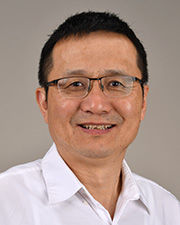
Hongyuan Yang, PhD is a Professor at The University of Texas Health Science Center at Houston (UTHealth Houston), where he leads a research laboratory focused on cellular lipid biology. His work bridges fundamental cell biology with clinical implications for metabolic and degenerative diseases. Education: Bachelor of Medicine from Peking University Health Science Center Ph.D. from Columbia University, New York Dr. Yang's research primarily investigates the molecular mechanisms governing cellular lipid sorting, trafficking, and storage. His laboratory has made seminal contributions to understanding lipid droplet biogenesis, identifying key proteins including seipin, AGPAT2, ORP5, and DFCP1 that regulate lipid droplet formation. His work has demonstrated how lipid droplet biogenesis is intimately linked to adipogenesis and adipose tissue maintenance, with null mutations in seipin or AGPAT2 causing severe congenital generalized lipodystrophy in humans. Additionally, his research explores how lipids are sorted and transported in mammalian cells, with discoveries including ORP2 as a key cholesterol transporter to the plasma membrane and TMEM41B/VMP1 as novel ER scramblases. An analysis of Dr. Yang's recent publications reveals a consistent focus on lipid droplet biogenesis, membrane contact sites, and lipid transport mechanisms. His work spans multiple model systems and connects fundamental cellular processes to human diseases including obesity, diabetes, cardiovascular disease, and neurodegenerative disorders. Notably, several publications demonstrate translational potential, with discoveries leading to the development of new compounds for treating cancer and neurodegenerative disorders. Dr. Yang's laboratory has established itself as a leader in cellular lipid biology, with publications appearing in top-tier journals including Nature Communications, Proceedings of the National Academy of Sciences, Journal of Cell Biology, and Cell. His research program integrates biochemical, cell biological, and genetic approaches to unravel complex lipid-related processes. While specific advising information isn't detailed in the provided text, Dr. Yang's extensive publication record with numerous co-authors suggests an active mentoring program for graduate students and postdoctoral researchers. His laboratory appears well-funded based on the consistent output of high-impact research across multiple years. The Yang laboratory maintains a strong research program investigating the fundamental mechanisms of cellular lipid biology, with particular emphasis on lipid droplet formation and membrane lipid distribution. This work has significant implications for understanding and treating metabolic diseases, with connections to obesity, diabetes, cardiovascular disease, and neurodegeneration.