- Dynamical systems and gradient flows
- Analysis of partial differential equations
- Stochastic analysis
- +۲ مورد دیگر
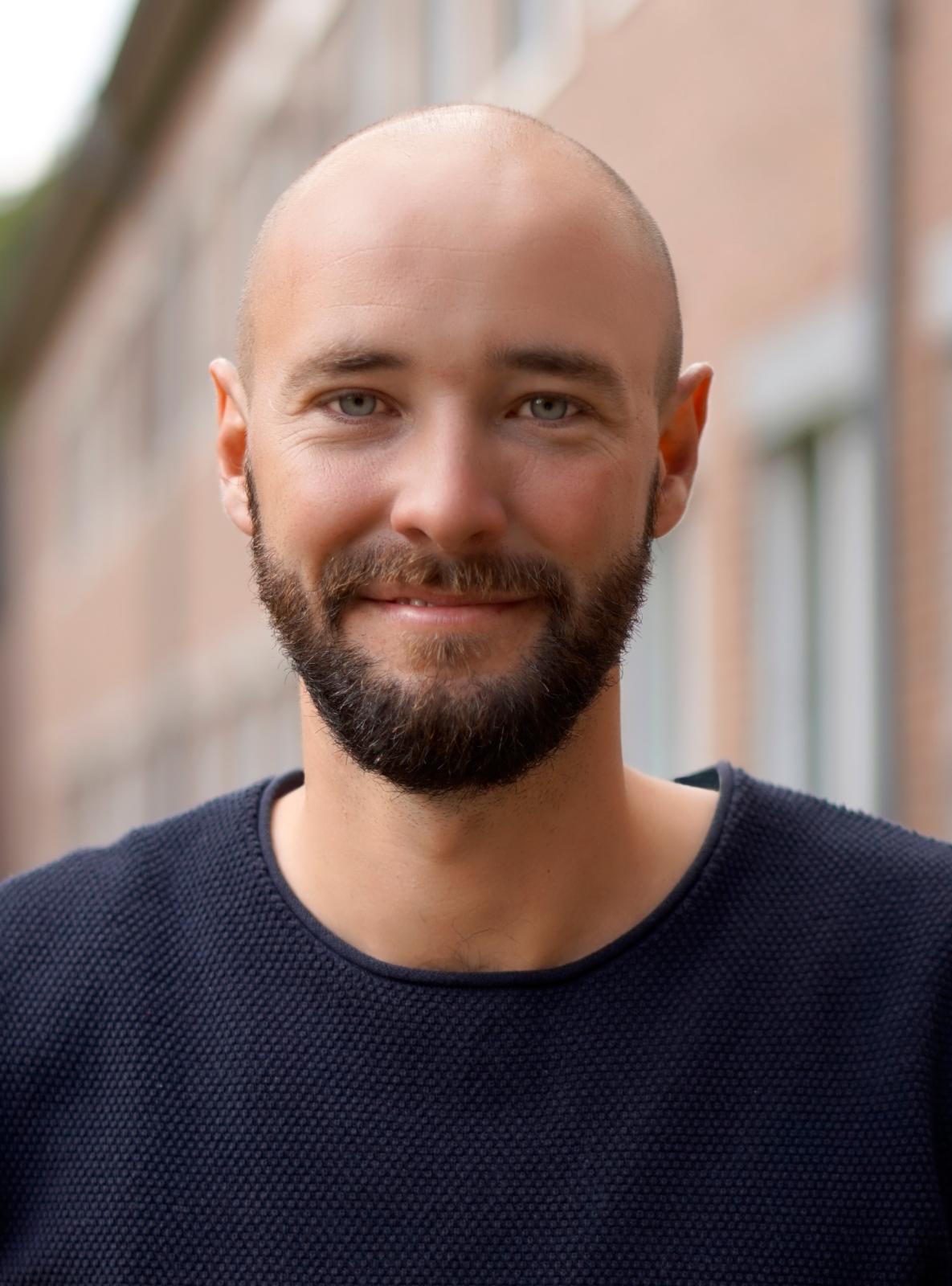
Arnulf Jentzen is a distinguished mathematician holding dual positions as Presidential Chair Professor at the School of Data Science and Shenzhen Research Institute of Big Data at The Chinese University of Hong Kong, Shenzhen, and as Full Professor at the Faculty of Mathematics and Computer Science at the University of Münster, Germany. His research spans multiple institutions with significant contributions across mathematical disciplines. His primary research interests include dynamical systems and gradient flows (particularly geometric properties, domains of attractions, blow-up phenomena), analysis of partial differential equations, stochastic analysis (including stochastic calculus and well-posedness analysis), machine learning (with focus on mathematics for deep learning and stochastic gradient descent methods), and numerical analysis (particularly computational stochastics and computational finance). His work demonstrates a strong interdisciplinary approach bridging pure mathematics with practical computational applications. Jentzen's publication record shows a clear trend toward machine learning applications in solving complex mathematical problems, particularly in overcoming the curse of dimensionality in high-dimensional PDEs through deep neural networks. His research group actively publishes on optimization methods like Adam, convergence analysis, and applications of deep learning to partial differential equations and optimal control problems. ICBS Frontier of Science Award in Mathematics (2024) Fellow, Lamarr Institute (2023) ERC Consolidator Grant (2022) Joseph F. Traub Prize for Achievement in Information-Based Complexity (2022) Felix Klein Prize, European Mathematical Society (EMS) (2020) Professor Jentzen advises numerous PhD students across both institutions and serves on multiple editorial boards including SIAM Journal on Numerical Analysis, Journal of Complexity, and Communications in Computational Physics. His research group at Münster and CUHK-Shenzhen focuses on developing mathematical foundations for machine learning with applications to scientific computing problems. He has received significant research funding including an ERC Consolidator Grant, supporting his interdisciplinary work at the intersection of mathematics and artificial intelligence.