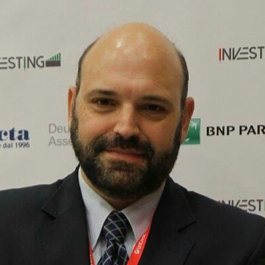
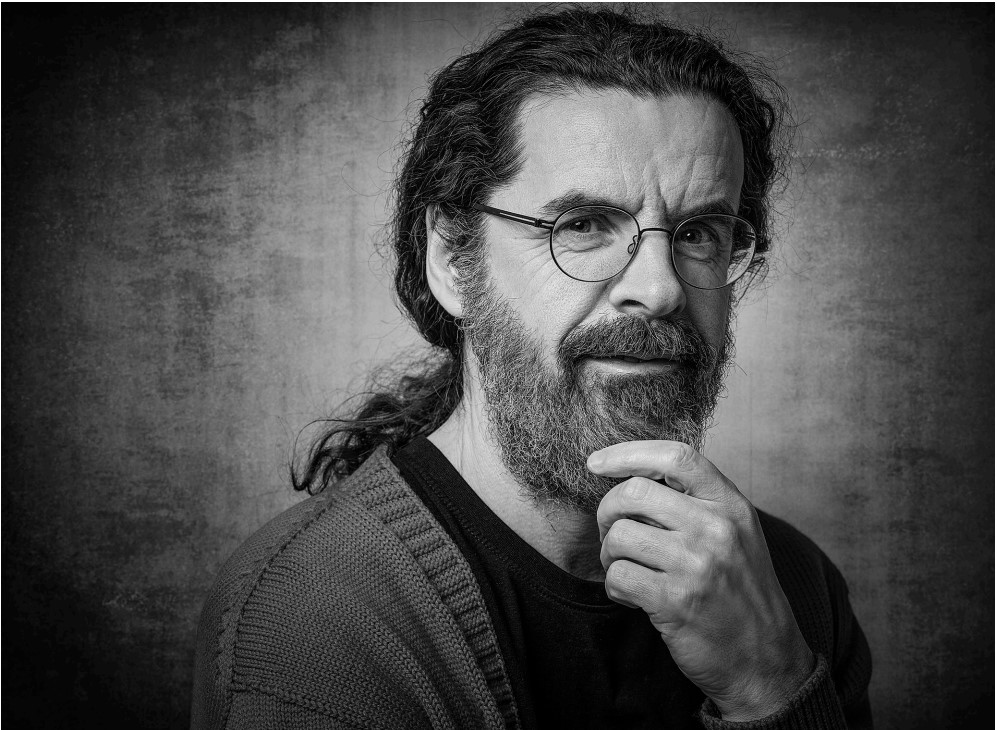
Svenja Damberg is an Associate Professor in Sustainability & Circularity at Aalborg University (AAU), Denmark. She holds a doctoral degree from Hamburg University of Technology (TUHH), Germany (2022) and was previously a postdoctoral researcher in a German sustainable regional development project. Before joining AAU in 2025, she served as an Assistant Professor at the University of Twente and remains a research fellow at Twente's DesignLab and a habilitand at TUHH. Her research focuses on sustainable innovation management, entrepreneurship, and structural equation modeling applications in environmental contexts. She contributes to UN Sustainable Development Goals addressing poverty eradication, environmental protection, and economic prosperity. Svenja is an editorial board member at the Journal of Co-operative Organization and Management and a Faculty Innovation Fellow at Stanford’s d.school. No specific articles or grants are listed in the provided text. Her professional roles emphasize interdisciplinary collaboration across academia and policy-making spheres.
Iben Nørup is an Associate Professor at Aalborg University's Department of Sociology and Social Work, within The Faculty of Social Sciences and Humanities. She is affiliated with SOSA (Social Work in Psychiatry and Disability) and the Children and Youth Research Network. Her research focuses on social work with vulnerable children, youth, and families, emphasizing inequality, marginalization, professional practices, and social policy. She teaches in Master’s and Bachelor’s programs, including Vulnerable Children and Youth, Professional Leadership, and Sociology. Her research explores how socioeconomic factors affect well-being, particularly child poverty, and examines professional practices in social work and education. She investigates social policies like early retirement pension and flexible jobs, contributing to UN Sustainable Development Goals related to poverty reduction and social inclusion. Notable achievements include the Lærebogsprisen, Særpris (2016), and leadership in projects such as 'Disabling Exclusion: Negotiated Practices of Social Welfare Targeting Families with Children with Disabilities' (2024–2028) and 'Mental Illbeing Among Adolescents: Performance Structures and Social Pathologies' (2024–2026). She has authored over 70 publications and frequently engages in public lectures and media discussions on child poverty and social policy. Her work bridges academic research, policy, and practice, advocating for systemic solutions to address social exclusion and promote equitable outcomes for marginalized groups.
Asbjørn Mohr Drewes is a Clinical Professor at Aalborg University's Department of Gastroenterology and Hepatology, affiliated with the Faculty of Medicine. He leads the Center for Sensory-Motor Interaction and chairs multiple pancreatic disease initiatives. His work integrates clinical practice with research in chronic pancreatitis, gastrointestinal pain, and brain-gut interactions. He has authored over 1,067 publications and holds an H-index of 85. Drewes has secured €16.5 million in grants and received prestigious awards like the Hagedorn Prize and Dannebrog Order. He oversees 20+ researchers, including 8 PhD students, and has supervised 57 doctoral candidates. His leadership spans roles in international societies and multi-center studies. Education: MD, Aarhus University (1983) Specialist in Internal Medicine/Gastroenterology (1997) PhD, Aalborg University (1998) DMSc, Aarhus University (1999) Research interests focus on chronic pancreatitis, gastrointestinal pain mechanisms, and technology-driven diagnostics. He co-founded Mech-Sense, a multidisciplinary center advancing sensory and motor research. His studies span analgesic pharmacology, imaging innovations, and clinical trial design. Drewes has pioneered cross-cultural validation of pain assessment tools and AI-driven radiomics for pancreatic disease staging. His grants include major funding from the Novo Nordisk Foundation and EU programs. Awards reflect his contributions to gastroenterology and pain management. Drewes actively engages in media and policy discussions, advocating for healthcare research investment and ethical clinical practices. Key Roles: Director, Mech-Sense Research Center Leader, Centre for Pancreatic Diseases President, Scandinavian Association for Neurogastroenterology and Motility Editorial Board Member, multiple journals Collaborations span 50+ clinical trials and international networks, including the International Pancreatic Pain Consortium. His work bridges basic science, clinical care, and technological innovation to address unmet needs in gastrointestinal and pancreatic disorders.
Sergio Bianchi is Professor of Quantitative Finance at Sapienza University of Rome and International Associate Professor in the Department of Finance and Risk Engineering at the Tandon School of Engineering, New York University. He previously held professorial positions at the University of Sassari, the University of Cassino, and the Pontifical Gregorian University, and has served as a visiting professor at New York University and Szent István University in Hungary. His research focuses on the stochastic modeling of financial markets, particularly through fractional and multifractional models, risk assessment, liquidity, and stochastic volatility. These areas are central to understanding market inefficiencies, volatility clustering, and long-memory behavior in financial time series. His work bridges econophysics, mathematical finance, and statistical modeling, contributing to both theoretical and applied finance. The 15 most recent publications reflect a consistent trajectory in modeling financial dynamics using advanced mathematical tools, especially fractional calculus and multifractal analysis. They span topics such as VIX option pricing, liquidity risk, Hurst exponent estimation, and market inefficiency, demonstrating a deep engagement with both empirical data and theoretical frameworks. The keywords highlight intersections with machine learning, risk management, and econophysics, showing interdisciplinary reach. Editorial and Professional Contributions: Guest Editor for journals on fractal models in economics and finance Associate Editor, Frontiers in Applied Mathematics and Statistics Associate Editor, Risk and Decision Analysis Associate Editor, Mathematical Methods in Economics and Finance Permanent member, Scientific Board, Mathematical and Statistical Methods for Actuarial Sciences and Finance (biennial conference) Sergio Bianchi has advised numerous graduate students and researchers in quantitative finance, though specific names are not listed. His editorial roles and extensive publication record suggest active mentorship and collaboration. He has been involved in research projects related to econophysics and complexity science, including participation in the Econophysics Colloquium 2024 hosted by the Complexity Science Hub. While specific grants are not mentioned, his sustained output and international collaborations indicate significant research support. He is associated with research groups working on complexity in financial systems, particularly through his involvement in events like the CSH Workshop on Complexity Science. His work continues to influence the application of fractal and stochastic models in finance, with future research likely to explore machine learning integration, high-frequency data analysis, and systemic risk modeling.
David Glavind Skovmand is an Associate Professor in Financial Mathematics at the Department of Mathematical Sciences, University of Copenhagen. He specializes in interest rate modeling, pricing of derivatives, and risk management. Education: PhD (2008) and MSc in Economics (2004) from Aarhus University His research focuses on mathematical modeling of benchmark interest rates like LIBOR, SOFR, and ESTER. Key areas include transition risk, multicurve term structures, and backward-looking benchmarks. He applies stochastic processes and numerical analysis to derivative pricing and risk assessment. Recent publications analyze LIBOR transition complexities, SOFR term structure dynamics, and multicurve frameworks. His work emphasizes practical implications for financial markets and regulatory compliance. Skovmand also teaches and supervises in mathematical finance, financial econometrics, and numerical analysis. He serves as Head of Studies at his department and contributes externally as a lecturer at Copenhagen Business School and Reykjavík University.
Eric Y Ling is a Postdoctoral Researcher at the Department of Mathematical Sciences , University of Copenhagen. He is affiliated with research groups AG and GeoTop. Institution: University of Copenhagen Department: Mathematical Sciences Role: Researcher (Postdoc) Ling’s research focuses on Mathematical Physics , General Relativity , and Differential Geometry , particularly spacetime analysis and singularity theorems. His recent work explores causality, geometric rigidity, and quantum field theory in curved spacetime. His publications include studies on time separation functions in C0 spacetimes (2025), Dirac spectra for relativistic ions (2025), and Penrose’s singularity theorem (2025). These contributions span geometric analysis, cosmological models, and quantum gravity applications. Collaborations and trends in his work emphasize international partnerships in Mathematical Physics and General Relativity , with implications for theoretical cosmology and quantum field theory.
Ole Balling is a Professor at the Department of Mechanical and Production Engineering, Aarhus University, Denmark, specializing in multibody dynamics and vibration analysis. His work bridges theoretical mechanics with practical applications in renewable energy and agricultural systems, leveraging advanced computational modeling for industrial-scale engineering challenges. His primary research interests include Multibody Dynamics for structural simulation, Operational Modal Analysis in rotating machinery, Wind Turbine Engineering (focusing on gearboxes and blades), and Soil-Vehicle Interaction for agricultural/military applications. He also develops Digital Twin frameworks for agricultural vehicles and investigates Vibration Control in robotic systems, with strong emphasis on experimental validation and energy-efficient design. Recent publications (2020-2023) reveal concentrated expertise in offshore wind turbine reliability (gear microgeometry, tower vibrations), soil mechanics modeling (aggregate fracture, drawbar pull testing), and autonomous vehicle mobility frameworks. A recurring theme is the application of operational modal analysis to diverse systems—from parallel manipulators to wind turbine hubs—demonstrating cross-domain adaptability of his core methodologies in dynamics and control. Scientific Awards: No awards documented in source materials. Grants and project leadership highlight sustained NATO collaboration, including the ongoing Next Generation NATO Reference Mobility Model (NG-NRMM) (extending to August 2025) and Mobility Assessment Methods for Autonomous Military Ground Systems . Past projects include INNOMILL (2015-2018) for large-component machining, BioXtek (2014-2017) for agricultural technology, and Low Bottom Soft Soil Modeling (2013-2017) for terrain damage reduction. He operates within the Mechatronics and Dynamics section of the department, utilizing laboratories for vibration testing, soil mechanics experiments, and multibody simulation. Current work focuses on autonomous military vehicle assessment and wind turbine gearbox optimization, with future projects targeting energy-efficient accelerator magnets and large-scale machining cell development.
Vitor Cardoso is a Professor at the Niels Bohr Institute , University of Copenhagen, leading the Strong team under the Niels Bohr International Academy. His research focuses on strong-field gravity , black hole physics , and fundamental interactions , with significant contributions to gravitational wave astronomy and dark matter studies. PhD from Técnico Lisbon (2003) Previously affiliated with CERN, Perimeter Institute, and Waseda University Co-author of over 200 peer-reviewed publications and 1 book Recent research trends reveal expertise in gravitational wave analysis , Kerr spacetime modeling , and dark matter-black hole interactions . Key themes include: Probing fifth forces at the Galactic Center Testing General Relativity's foundational principles Gravitational lensing tomography Quantum field dynamics in black hole environments Black hole formation mechanisms Scientific honors include: Three ERC Grants (Advanced and standard) Villum Investigator and DNRF Chair awards Ordem de Sant'Iago da Espada (2015) from Portugal
Theo Juncker von Buchwald is a Researcher at the Department of Chemistry, Technical University of Denmark. His work focuses on quantum chemistry and computational methods. Current PhD Student in Computational Chemistry Active in cluster perturbation theory and electronic structure calculations His research includes: Coupled cluster singles and doubles theory Excitation energy calculations Perturbation theory applications Quantum linear response and density matrix formulations Core excited states and ionization potentials Recent publications highlight advancements in: Parallel implementations for large-scale quantum computations Variational excitation energy series Core-valence separation techniques Density matrix approaches for quantum response Hybrid quantum chemistry methods
Anne Helby Petersen is an Assistant Professor in the Department of Public Health at the University of Copenhagen. Her research focuses on causal inference using observational data, with a particular emphasis on causal discovery and its applications in life course studies and epidemiology. PhD in Biostatistics (2022), University of Copenhagen M.Sc. in Statistics (2016), University of Copenhagen B.Sc. in Mathematics (2014), University of Copenhagen Her research interests include: Developing causal discovery algorithms for observational data Sibling comparison designs to control for confounding factors Handling missing information in register-based studies Advancing R software packages for data quality and causal analysis (dataReporter, PCADSC, causalDisco, geeasy) Recent research trends highlight her work on: Integrating temporal background information into causal discovery Comparative studies of data-driven vs. theory-driven life course models Validation frameworks using negative controls in algorithm evaluation Applications in health disparities and work-environment epidemiology
Manuella Lech Cantuaria is an Assistant Professor at the Department of Clinical Research (Karolinska Institute/Odense University Hospital) and the SDU Climate Cluster . Her research focuses on the intersection of environmental health, noise pollution, and chronic disease epidemiology. Education : PhD in Clinical Research Research Interests : Environmental health impacts of transportation noise Hearing impairment and neurodegenerative diseases Epidemiological modeling of public health risks Multi-stressor exposure assessment Article Trends : Her recent work examines noise pollution's role in dementia progression, tinnitus, and respiratory diseases. She employs advanced statistical methods in prostate cancer trajectory analysis and develops epidemiological tools like the HESD database. Teaching Activities : Supervised bachelor students (2016-2021) Co-taught courses in Preventive Audiology and Advanced Audiometric Methods Instructor in Statistics for undergraduate students
Jan Vang is a Professor at the Department of Technology and Innovation, University of Southern Denmark, specializing in Global Sustainable Production. His research focuses on sustainable supply chains, occupational health, and regional economic dynamics. Active in projects related to sustainable leather tanning in Bangladesh and climate action narratives Collaborates with international researchers on environmental risk assessment and data-driven decision-making Research outputs emphasize sustainable futures, blockchain applications, and agglomeration effects Recent publications explore structural equation modeling in smart home adoption, blockchain for construction supply chains, and risk mitigation in green hydrogen logistics. His work connects sustainable technologies with organizational culture and emerging economies.
Andreas Hald is a Public Health Sociologist and Research Fellow at Aarhus University's Department of Health Services Research within the School of Public Health. His work focuses on healthcare organization dynamics, interprofessional collaboration, and digital health interventions across multiple international contexts including Denmark, Malawi, Canada, and Australia. His research employs mixed-methods approaches to analyze how healthcare professionals collaborate, how organizational structures shape practice, and how digital solutions impact care delivery. Key interests include institutional theory, implementation science, and welfare system analysis with emphasis on home care, rehabilitation pathways, and primary care integration. His work bridges sociology and public health to address health inequalities and system sustainability. Research Trends: Recent publications (2021-2025) demonstrate consistent focus on Danish home care systems using case studies and structural equation modeling, with expanding international collaborations examining Global South perspectives. Methodological Approach: Combines qualitative institutional analysis with quantitative team dynamics assessment to uncover mechanisms for sustainable healthcare delivery. Scientific Awards: Knud Højgaards Fond travel grant (2022) supporting international research collaboration As an educator, Hald teaches organizational change in public health programs and previously instructed health behavior courses across medicine and dentistry disciplines. His external collaborations include guest researcher positions at the University of Copenhagen (2025-2027) and University of Toronto (2022-2023), with active projects spanning integrated care for vulnerable populations and Global South learning initiatives.
Martin Stolpe Andersen serves as a Visiting associate professor and External Lecturer on the Study board of Psychology at the University of Copenhagen, and is also a Guest Researcher at the Department of Public Health, Copenhagen Health Complexity Center. His work focuses on the measurement of psychological constructs in higher education, particularly related to cognitive load theory and psychometric validation. His primary research interests include: Advanced psychometric methods (item response theory, Rasch models, Structural Equation Modeling) Measurement invariance across gender, academic discipline, and cultural contexts Cognitive load assessment in virtual and physical learning environments Development and validation of psychological measurement scales Applications of educational technology in science instruction Dr. Andersen's research program examines whether psychological measurement scales maintain validity across different demographic variables and time in Danish higher education contexts. His interdisciplinary work bridges educational psychology with clinical assessment, as evidenced by publications spanning cognitive load theory, psychiatric recovery measurement, and child mental health assessment tools. His scientific contributions demonstrate significant impact across multiple domains: Development of validated cognitive load measurement instruments for diverse educational settings Applications of immersive technologies (like head-mounted displays) for enhancing science education Adaptation of clinical assessment tools for cross-cultural and developmental contexts Methodological advancements in scale validation and measurement invariance testing