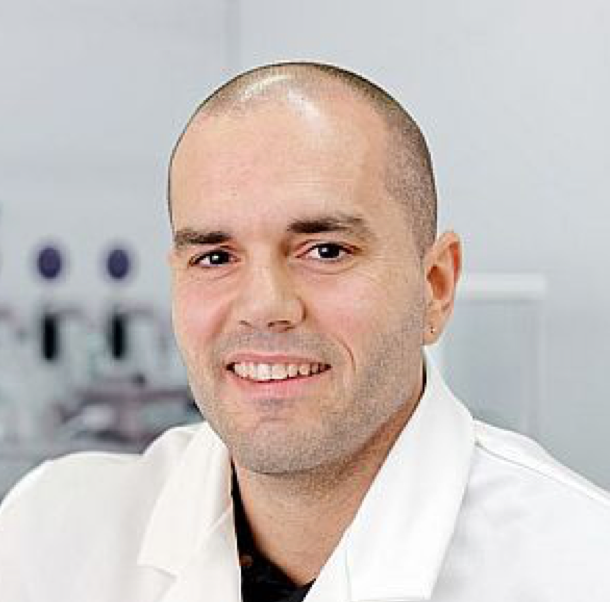
Sergio Bermudo Navarrete is a Professor at the Department of Economics, Quantitative Methods and Economic History, Universidad Pablo de Olavide. His research spans combinatorics, graph theory, and operator theory. Education: PhD in Mathematics (2003, University of Seville) with thesis on functional models of operators in Hilbert spaces. Research Interests: Focus on graph theory, domination problems, topological indices, and operator theory. Publication Trends: Recent work includes vertex-degree-based indices for oriented graphs, domination parameters in product graphs, and differential analysis of line graphs. Keywords span Computer Science , Mathematical Chemistry , and Operations Research . Collaborations: Frequent co-authors: José María Sigarreta Almira, José Manuel Rodríguez García, Juan Alberto Rodríguez-Velazquez. Contact: Email sbernav@upo.es .
Dr. Rajesh Bera is a Research Fellow at ICFO's Functional Optoelectronic Nanomaterials group specializing in quantum-confined nanostructures. His research examines ultrafast carrier dynamics, excitonic properties, and optoelectronic applications of nanomaterials including quantum dots, nanoplatelets, and hybrid nanostructures. Current investigations focus on intraband transitions in doped nanocrystals, orientation-dependent excitonic behavior in 2D materials, and charge transfer mechanisms in heterostructure devices. Work bridges fundamental photophysics with applications in photodetection, sensing, and energy conversion. Recent publications demonstrate expertise in time-resolved spectroscopy of quantum materials, nanomaterial synthesis via colloidal chemistry, and rational design of optoelectronic devices. Continually develops novel characterization methods to probe ultrafast processes at nanoscale interfaces.
Prof. Gustau Catalán is an ICREA Research Professor and Group Leader of the Oxide Nanophysics Group at the Catalan Institute of Nanoscience and Nanotechnology (ICN2). He earned his PhD in Physics from Queen’s University of Belfast (2001) and held postdoctoral positions at IMEDEA (2002–2004), University of Groningen (2004–2005), and University of Cambridge (2005–2009). Since 2009, he has led pioneering research in flexoelectricity, domain wall physics, and strain-engineered oxide materials, supported by an ERC Grant. Education: PhD in Physics, Queen’s University of Belfast (2001) BSc in Physics, Universitat de Barcelona (1997) Research Interests: Gustau Catalán's work focuses on the interplay between ferroelectricity, flexoelectricity, and metal-insulator transitions in oxide materials. His research explores how these properties manifest at reduced dimensions, with applications in nanoelectronics, photovoltaics, and smart mechanical systems. Key areas include polarization dynamics, domain wall engineering, and strain-gradient effects. Recent Publications (2024–2025): The 15 most recent articles highlight advancements in flexoelectricity (e.g., water ice and halide perovskites), domain wall dynamics (e.g., tungsten trioxide), and strain-gradient-induced photovoltaic effects. These studies span materials like PbZrO3, BaTiO3, and BiFeO3, with implications for energy harvesting, memory devices, and nanoscale actuators. Scientific Awards: ERC Grant for flexoelectricity laboratory establishment Advising and Collaborations: While specific students are not listed, Catalán collaborates extensively with researchers across Europe. His group develops novel oxide-based systems and investigates their electromechanical and optoelectronic properties. Laboratory & Team: At ICN2, he established one of the world's first flexoelectricity laboratories, leading a team that explores oxide nanophysics through advanced characterization techniques like AFM, X-ray diffraction, and electrocaloric imaging.
Antonio González is a full Professor at the Barcelona School of Informatics (FIB), Universitat Politècnica de Catalunya (UPC), where he is affiliated with the Department of Computer Architecture. He leads the Microarchitecture and Compilers (ARCO) research group, focusing on robust and energy-efficient computing systems, including general-purpose processors, GPUs, and cognitive computing architectures. His research spans computer architecture, microarchitecture, compilers, GPU design, and deep learning acceleration, with a strong emphasis on energy efficiency and memory optimization. His work integrates hardware and compiler techniques to enhance performance in modern computing systems. The recent publications highlight a strong trend in energy-efficient DNN acceleration, GPU microarchitecture, memory systems, and near-data processing. His team explores novel quantization methods, adaptive caching, and architectural extensions for vision and AI workloads, published in top-tier venues such as MICRO, ISCA, and IEEE/ACM journals. ACM Fellow (2020) ICREA Academia Award (2014, 2019, 2024) UPC Duran Farell Award (2008) HiPEAC 2024 Paper Award (twice) González has supervised several PhD students and leads competitive R&D+i projects, including those funded by ICREA and the European Research Council. His research group collaborates extensively within UPC and with international institutions. He is actively involved in advancing computer architecture through innovation in simulation, hardware design, and AI acceleration. He is a member of IEEE and ACM, and his work continues to influence both academic and industrial developments in high-performance and energy-efficient computing.
Prof. Maciej Lewenstein is a Group Leader and ICREA Professor at the Institute of Photonic Sciences (ICFO), Spain. He leads the Quantum Optics Theory group, focusing on theoretical and computational studies of quantum many-body systems, topological phases, and nonlinear optics. He holds a Dr.rer.nat. in Physics from the University of Essen, Germany. His research interests include quantum simulations, high-harmonic generation, Bose-Einstein condensation, and quantum information processing. He has pioneered work on topological quantum thermometry and ultrafast phase transitions in materials like vanadium dioxide. His group actively explores the intersection of quantum optics with condensed matter physics and quantum computing. Recent articles highlight advancements in tensor network approaches for topological phases, quantum algorithms for many-body systems, and the application of sonification to quantum entanglement dynamics. He has received a prestigious ERC Advanced Grant and the ICREA Professorship, recognizing his contributions to quantum science. Prof. Lewenstein advises over a dozen PhD students and postdoctoral researchers, fostering a dynamic research environment at ICFO. His grants include ERC and ICREA funding, supporting projects on quantum simulations and nonlinear optical phenomena. The Quantum Optics Theory group collaborates internationally, with expertise in light-matter interactions, quantum resource theory, and quantum many-body localization. Their lab develops novel methods for probing quantum systems using high-harmonic spectroscopy and quantum trajectory simulations.
John Kilner is a Senior Research Investigator at Imperial College London, formerly holding the BCH Steele Professorship of Energy Materials and serving as Head of the Department of Materials and Dean of the Royal School of Mines. His research focuses on ionic and mixed-conducting ceramics, particularly for applications in fuel cells, oxygen separators, and sensors. He pioneered isotopic exchange SIMS techniques to study oxygen exchange and diffusion in oxide ceramics, with recent work centered on intermediate-temperature fuel cells and interfacial phenomena in solid electrolytes. Prof. Kilner's academic background includes over 30 years of research in materials science, leading to over 250 publications and multiple patents in fuel cell and gas separation technologies. He co-founded CeresPower Ltd, a successful spinout company. His work bridges fundamental materials science with applied energy technologies, emphasizing solid-state ionics and ceramic electrolyte development. Publications span advancements in garnet solid electrolytes, lithium-ion conductivity enhancement strategies, and in-operando microscopy analysis of battery materials. His contributions to the Journal of Solid State Ionics as European Editor highlight his role in shaping the field's academic discourse. Notably, Kilner advises doctoral research such as William Manalastas Wang’s thesis on ceramic lithium-ion electrolytes. His research team actively explores next-generation battery materials with a focus on improving energy density and stability through advanced ceramic engineering and surface analysis techniques.
Carles Padro Laimon is a Professor at the Universitat Politècnica de Catalunya (UPC), affiliated with the Department of Mathematics and the School of Telecommunications Engineering. He is a leading researcher in cryptography and information security, focusing on secret sharing schemes, combinatorial structures, and cryptographic protocols. His work integrates discrete mathematics, coding theory, and algorithmic design to address security challenges in digital systems. Padro leads the MAK Research Group (Mathematics Applied to Cryptography) and the ISG-MAK Information Security Group. He has been involved in numerous competitive research projects, including initiatives on post-quantum cryptography and secure multi-user systems. His contributions span over 211 documented activities, including articles, theses, and conference participations. His research interests include the theoretical foundations of cryptography, with a focus on optimizing secret sharing schemes, analyzing matroid-based structures, and developing secure communication protocols. He has collaborated extensively with institutions like the UPC and European research networks, contributing to both academic and practical advancements in cybersecurity. Padro holds a PhD in Mathematics from UPC and has supervised doctoral theses and mentored researchers in his field. His work frequently appears in top journals like IEEE Transactions on Information Theory, Designs, Codes and Cryptography, and SIAM Journal on Discrete Mathematics.
Danel Ahman is an Associate Professor at the Institute of Computer Science , University of Tartu , Estonia, specializing in programming language theory . His research focuses on dependent/refinement types , computational effects , and verified software . Education PhD in Theoretical Computer Science (University of Edinburgh, 2017) MPhil in Advanced Computer Science (University of Cambridge, 2012) BSc in Informatics (Tallinn University of Technology, 2010) Research Interests : Danel investigates programming languages with algebraic effects and effect handlers for verified software, exploring denotational/operational semantics and fibrational approaches to effects. His work bridges theoretical computer science with practical formal verification. Scientific Awards : Estonian Research Council grant (2025) Marie Skłodowska-Curie Fellowship (2019) PhD dissertation prize (2018) Google/Citrix dissertation awards (2012) Teaching & Supervision : He teaches courses like Logic in Computer Science and Functional Programming at the University of Tartu, and supervised BSc/MSc theses on topics including asynchronous effects and formal verification. Danel also organizes research seminars and guest lectures on F*.
Yolanda Vidal Segui is an Associate Professor in the Department of Mathematics at the Universitat Politècnica de Catalunya (UPC), affiliated with the Escola d'Enginyeria de Barcelona Est (EEBE). Her research focuses on wind energy systems, predictive maintenance, and structural health monitoring of wind turbines. She leads projects in the CoDAlab and WinTurCoM research groups, specializing in data-driven models, condition monitoring, and failure prognosis. Her work integrates machine learning, mathematical modeling, and sensor technology to enhance turbine reliability and energy efficiency. Dr. Vidal holds a PhD in Applied Mathematics and has authored over 350 publications. Her contributions include advancements in SCADA data analysis, vibration-based diagnostics, and AI-driven condition monitoring systems. She has received several accolades, including the WindEurope Technology Workshop recognition and the IFIT Distinction in Mechanism and Machine Science. Her research bridges academia and industry, addressing challenges in offshore wind turbine integrity and maintenance strategies. Active in professional service, she serves on conference committees and editorial boards (e.g., Mechanical Systems and Signal Processing, Wind Energy). Her work emphasizes sustainable energy solutions and has been applied in real-world scenarios like the Alpha Ventus wind farm. She also contributes to educational initiatives, developing innovative teaching materials for engineering students.
Andrea Ianiro is a Full Professor in the Aerospace Engineering Department at Universidad Carlos III de Madrid (UC3M), where he leads research in fluid dynamics, turbulence, and heat transfer. His work bridges experimental techniques and machine learning applications for flow analysis and control. He serves as Associate Editor of the International Journal of Heat and Mass Transfer (2025-2028) and directs the EFM Lab (Experimental Fluid Mechanics Laboratory) at UC3M. Professor Ianiro's research focuses on turbulence characterization, boundary layer flows, and the application of machine learning to fluid mechanics problems. His work spans experimental techniques including Particle Image Velocimetry (PIV), infrared thermography, and advanced data processing methods. Recent research emphasizes data-driven approaches for flow field reconstruction, turbulence control, and heat transfer optimization in wall-bounded flows. His projects often combine theoretical, experimental, and computational approaches to address complex fluid mechanics challenges. The analysis of his recent publications reveals a strong trend toward integrating machine learning with traditional fluid mechanics. His work increasingly focuses on using deep learning techniques (particularly CNNs and GANs) for flow field prediction from limited measurements, developing meshless computational methods for flow analysis, and applying optimization techniques (including genetic algorithms) to heat transfer enhancement. His research maintains a strong experimental foundation while embracing data-driven approaches to tackle turbulence modeling challenges. Associate Editor of the International Journal of Heat and Mass Transfer (2025-2028) Professor Ianiro leads multiple significant research projects including SPANDRELS (SParse AND paRsimonious Event-based fLow Sensing, 2025-2030), HumanIC (Human-Centric Indoor Climate for Healthcare Facilities, 2024-2027), and EXCALIBUR (Extraction of machine learning strategies for turbulent flow control, 2023-2026). His work has attracted funding from the European Commission, Spanish National Research Agency, and industry partners including Airbus. He has supervised numerous theses on topics including AI-based sensing of turbulent flows, convective heat transfer control, and turbulent boundary layers. At UC3M, Professor Ianiro directs the Experimental Fluid Mechanics Laboratory (EFM Lab), which focuses on advanced measurement techniques for fluid flow and heat transfer characterization. The lab specializes in PIV/PTV techniques, infrared thermography, and the development of novel experimental approaches for turbulence research. Current research directions include machine learning applications for flow field reconstruction, plasma-based flow control, and heat transfer optimization in complex flow configurations.
Marco Raiola is an Associate Professor at the Department of Aerospace Engineering , Universidad Carlos III de Madrid (UC3M). His research focuses on fluid dynamics, turbulence, and aerodynamics, with applications in flow diagnostics, heat transfer, and control systems. Research Interests: Turbulent flows, data-driven modeling, particle image velocimetry (PIV), convective heat transfer, and bio-inspired aerodynamics. Projects: Principal researcher in INFLUENTIA-CM-UC3M (2024-2026) and Diagnóstico del ruido de chorro (2022-2025). Collaborator in EU-funded initiatives like HumanIC and ODE4HERA . Contact: Email mraiola@ing.uc3m.es | ORCID: 0000-0003-2744-6347
Elsa Prada Nuñez is a Senior Researcher at the Institute of Materials Science of Madrid (ICMM) under the Spanish National Research Council (CSIC) . She leads the Quantum Dynamics of Materials (QUDYMA) group and currently serves as Head of the Theory Department. Her academic career spans multiple institutions, including the Universidad Autónoma de Madrid (UAM), Karlsruhe University, and Lancaster University, with a focus on condensed matter theory and quantum materials. PhD in Physics from UAM (2006) Tenured Scientist at ICMM-CSIC (2020-2025) Senior Researcher at ICMM-CSIC (2025-present) Her research explores quantum phenomena in low-dimensional materials and nanostructures, particularly topological insulators, Majorana zero modes in hybrid nanowires, graphene and 2D crystals, disorder effects, magnetotransport, spintronics, quantum pumping, straintronics, and exciton dynamics. She has directed over 20 students across PhD, Master's, and undergraduate levels, including notable projects on full-shell hybrid nanowires and twisted bilayer graphene. Recent publications highlight advancements in Josephson junctions, Majorana detection, and topological superconductivity in full-shell nanowires. Awards include the Young Female Scientist 2021 from the Royal Academy of Sciences of Spain and Mastercard, and the 2022 Certamen Universitario 'Arquímedes' First Award as a tutor. She has secured significant grants from the Spanish government and European collaborations for projects on quantum materials and topological superconductivity. Principal Investigator for €139,150 Spanish government grant (PID2021-125343NB-I00) Lead on €5,000 ICMM-CSIC grant (2020-2021) Participant in €3.48M EU AndQC project (2019-2023)
Yuan Zhong is an Associate Professor of Operations Management at the University of Chicago Booth School of Business . He previously held positions as an Assistant Professor at Columbia University’s Department of Industrial Engineering and Operations Research and was a Postdoctoral Scholar at UC Berkeley’s Computer Science Department. Education: PhD in Operations Research, MIT (2012) MA in Mathematics, Caltech (2008) BA in Mathematics, University of Cambridge (2006) His research focuses on applied probability and stochastic system design , with applications in cloud computing , supply chain management , and e-commerce logistics . Recent work explores multi-period production systems and dynamic resource allocation in data centers and healthcare operations . Recent publications analyze cloud value chains , sparse graph design for delivery networks, and process flexibility in manufacturing. He has contributed to journals like Operations Research , Annals of Applied Probability , and Stochastic Systems . Scientific Awards: 2012 Kenneth C. Sevcik Outstanding Student Paper Award Best Student Paper Award at ACM Sigmetrics (2012) He teaches courses in business process fundamentals and queueing theory , with a future schedule including Operations Management: Business Process Fundamentals (2025–2026). No explicit student advising list was provided.
Paolo Mastropietro is a Research Professor at the Institute for Research in Technology (IIT) of Comillas Pontifical University in Madrid. He holds a Master's degree from the University of Rome Tor Vergata (2009) and a PhD from Comillas University (2016), focusing on capacity remuneration mechanisms. His career includes private sector work in Italy and Spain, a UNV Project Officer role in Ethiopia (2011), and joining IIT in 2012 under the SETS Erasmus Mundus PhD program. Affiliations: IIT, School of Engineering (ICAI), Comillas Pontifical University Research Interests: Power sector regulation, security of supply, capacity remuneration mechanisms, regional markets, tariff design, and energy sustainability His research emphasizes regulatory frameworks for energy transition and decarbonization, with contributions on hydrogen markets, electricity storage, and demand response integration. Recent work includes analysis of EU market reforms, pandemic-related energy poverty measures, and capacity mechanisms in Latin America. Key projects include the EU-funded ONESYSTEM (2023–2028) and DEFINER (2022–2025) initiatives, focusing on energy system integration and demand flexibility. He advises on regulatory modernization in Peru, Colombia, and Panama, and has authored over 40 journal articles, books, and technical reports. Awards: 2015 ICER Distinguished Scholar Award, Iberdrola Scholarship (2020) Grants: Projects funded by MICIU, World Bank, European Commission, and others He supervises doctoral research, including P. Brito Pereira’s work on future-proof capacity mechanisms. His expertise spans international energy policy, with engagements at ACER and MIT, and contributions to energy transition strategies globally.
Prof. Josep Puigmartí-Luis is a Research Professor at the University of Barcelona (UB) since 2020, following an ERC Starting Grant in 2015 and an ICREA Research Professorship in 2019. He holds a master’s in Chemistry and Food Engineering from IQS (2003) and a PhD in Materials Science from ICMAB. His research focuses on functional materials synthesis, microfluidic technologies, and self-assembly processes, with applications in nanotechnology and biomedical engineering. Key awards include the Premi Antoni de Martí (2009), St. Jordi Award (2006), and ETH Fellowship (2008). His group, ChemInFlow, develops magnetic microrobots and piezoelectric catalytic systems for targeted therapies and environmental remediation. Educations: PhD in Materials Science, Institut de Ciència de Materials de Barcelona (ICMAB) Master in Chemistry and Food Engineering, Institut Químic de Sarrià (IQS), 2003 Research Interests: Synthesis of functional materials in solution/surfaces, microfluidic technologies, non-equilibrium assemblies, magnetic microrobotics, and piezoelectric catalysis. Articles Trends: Recent work emphasizes microfluidics-driven material synthesis, magnetic microrobot navigation, and piezoelectric catalysis for biomedical and environmental applications. Key themes include nanoreactors, targeted drug delivery, and functional MOF/COF materials. Awards: Premi Antoni de Martí i Franquès de Ciències Químiques (2009) ERC Starting Grant (2015) Rising Star Award (IEEE 3M-NANO 2023) Grants & Labs: ERC Starting Grant (2015), ICREA Professorship (2019). The ChemInFlow Group pioneers interdisciplinary approaches in materials synthesis and robotics, with collaborations spanning Europe and Asia. Labs/Teams: Leads the ChemInFlow Group at UB, focusing on microfluidic technologies and biomedical microrobotics.