

Michel Versluis is a Full Professor at the University of Twente, Netherlands, specializing in Physical and Medical Acoustics within the Physics of Fluids group. His work focuses on microbubbles and microdroplets for medical imaging and therapy, as well as microfluidic applications in medicine and nanotechnology. University of Twente, Physics of Fluids group His research bridges physics and biomedical engineering, with publications in high-impact journals like PNAS and IEEE Transactions. Recent work emphasizes ultrasound-driven microbubble dynamics, additive manufacturing of flow phantoms, and deep learning for super-resolution imaging. 2025 publications: vascular phantoms, PROTEUS simulator, acoustic microbubble control 2024 innovations: 3D-printed medical devices, immunogenic cell death optimization Contact: m.versluis@utwente.nl
جستجوی استاد راهنمای دانشگاهی
برای مسیر پژوهشیتان، استاد راهنما، استاد دانشگاه و پژوهشگر مناسب را پیدا کنید و با آنها ارتباط بگیرید.
نمایش ۱۶-۳۰ از ۱٬۸۸۵ استاد راهنما
اطلاعات پروفایلها از صفحات عمومی دانشگاهها گرفته شده و ممکن است بهروز نباشد.
Mathieu Odijk is a Full Professor at the University of Twente's Faculty of Science and Technology, leading the Integrated Devices and Systems department. His research focuses on microfluidic systems, catalysis, and organ-on-chip platforms, with contributions to UN Sustainable Development Goals through advanced material characterization and biomedical engineering. He has authored over 120 publications and holds an h-index of 27 with 1,820 citations. Expertise: Microfluidics, catalyst particle diagnostics, SERS substrates, organ-on-chip systems, and spectroscopic techniques. Collaborations include Weckhuysen (catalysis), van den Berg (microfluidics), and Meirer (materials science). Key projects: Modular organ-on-chip platforms (STARTER), droplet-based catalyst screening, and real-time reaction monitoring via ATR-IR systems. His research combines nanotechnology and chemical engineering to develop tools for sustainable energy, environmental remediation, and biomedical applications. Recent work includes microreactors for catalyst particle analysis, light-driven urea oxidation for wearable kidney devices, and standardized platforms for organ-on-chip research.
Martin van Hecke is a Professor at Leiden University, affiliated with the Leiden Institute of Physics (LION) in the Biological, Soft and Complex Systems department. He leads the Van Hecke Lab, focusing on the organisation of disordered matter and the development of 'machine materials' for prostheses and wearable technology. Research Interests: Extreme phenomena in soft materials Mechanical metamaterials Disordered systems Computational physics Biophysics His work has pioneered methods to design 3D structures using simple building blocks, with notable projects like 'Computing with rubber' and 'A computer made of floppy rubber' showcasing interdisciplinary applications in engineering and biotechnology. Students & Collaborations: Current PhD students: Lennard Kwakernaak, Colin Meulblok, Margot Teunisse, Bernat Durà Faulí, Parisa Omidvar Former group members: Lennard Jurian Kwakernaak, Amitesh Singh, Jiangnan Ding, Anne Meeussen, Nitin Singh Collaborations with AMOLF and industry partners Scientific Recognition: Elected as an American Physical Society (APS) Fellow (2021) Teaching: Instructs the MSc course 'Mechanical Metamaterials' and the BSc course 'Experimentele Natuurkunde' (Experimental Physics).
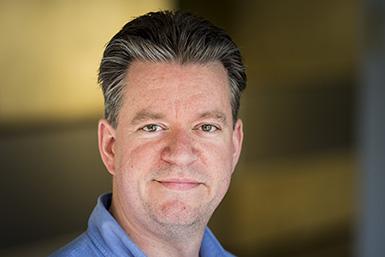
Prof. Casper Hoogenraad is a full professor in Molecular Neuroscience at the Department of Cell Biology, Faculty of Science, Utrecht University. His research focuses on understanding how intracellular protein trafficking underlies neuronal development and function, with particular emphasis on the microtubule cytoskeleton, synaptic cargo trafficking, and synaptic plasticity. He leads an active research group within Utrecht University's Cell Biology department and collaborates extensively with other neuroscience research groups. Education: PhD, Erasmus University Rotterdam (1996-2001) Postdoc, Massachusetts Institute of Technology (2002-2005) Hoogenraad's research spans three main themes: cytoskeleton dynamics during neurodevelopment and synaptic plasticity, motor proteins and adaptors as regulators of synaptic transport, and psychiatric and neurologic disease disorders linked to intracellular transport. His work combines genetics, biochemistry, molecular, and cellular biology methods in in vitro (neuron cultures), ex vivo (brain slices), and in vivo (mice) systems, along with advanced microscopy techniques including immunofluorescent confocal microscopy, high-resolution live cell imaging, and photo-activated localization microscopy (PALM). Analysis of Hoogenraad's recent publications reveals a strong focus on microtubule organization, neuronal polarity, and the molecular mechanisms underlying synaptic function and dysfunction. His work frequently explores how disruptions in intracellular transport contribute to neurological disorders including Alzheimer's disease, schizophrenia, and autism spectrum disorders, with particular attention to the relationship between cytoskeletal organization and cargo transport in neuronal compartments. Scientific Awards and Memberships: ZonMW-VIDI (2004) European Young Investigators (EURYI) award (2005) NWO-ALW VICI (2011) ERC Consolidator grants (2013) FENS-Kavli Network of Excellence (2014) European Molecular Biology Organization (EMBO) (2015) Young Academy of Europe (YAE) (2015) IBRO Kemali Prize (2016) Hoogenraad leads a research group studying neuronal development and function, with a particular focus on how intracellular transport mechanisms contribute to both normal brain function and neurological disorders. His laboratory employs a multidisciplinary approach combining molecular, cellular, and systems neuroscience techniques to investigate the molecular basis of neuronal polarity, synaptic plasticity, and the pathogenesis of neurological disorders. He has secured significant research funding through prestigious grants including ERC Consolidator grants. The Hoogenraad lab operates within the Cell Biology department at Utrecht University, collaborating with other research groups focusing on cellular dynamics, biophysics, and neurobiology. The lab utilizes advanced microscopy techniques including immunofluorescent confocal microscopy, high-resolution live cell imaging (spinning disc microscopy and total internal reflection fluorescence microscopy), and quantitative analysis using advanced high-resolution microscopy (photo-activated localization microscopy). Current lab technicians include Phebe Wulf and Bart de Haan.

Alberto G. Curtoمشاهده پروفایل
استادیار
Alberto G. Curto is an Assistant Professor at Eindhoven University of Technology, specializing in nanophotonics and semiconductor optoelectronics. He leads research on light-matter interactions at the nanoscale, focusing on atomically thin semiconductors and chiral nanophotonics applications. His work spans sensing, imaging, and spectroscopy, with contributions to directional light emission and chiral detection technologies. Education BSc in Physics, Universidad de Salamanca (2002–2007) MSc and PhD in Photonics, ICFO – The Institute of Photonic Sciences (2008–2013) Postdoctoral Fellow at Stanford University (2013–2016) Research Interests Curto’s research explores semiconductor nanophotonics for sensing and imaging, leveraging atomically thin materials and chiral optics. Key areas include: Enhanced light-matter interactions using nano-optical structures Chiral detection via dielectric resonators and metasurfaces Exciton dynamics in 2D semiconductors Publications His work emphasizes practical applications of nanophotonics, with recent studies on chiral sensing enhancement, silicon metasurfaces, and exciton manipulation. Over 47 peer-reviewed articles highlight his contributions to light confinement and directional emission. Awards ERC Starting Grant (2020) NWO START-UP Grant (2018) OSA Senior Member (2021) ICFO PhD Thesis Award (2014) Grants & Projects He leads the Zwaartekracht PSN Research Centre for Integrated Nanophotonics (2014–2025), focusing on nanowires, photonic crystals, and photonics applications. Labs & Teams His research group at TU Eindhoven develops novel nanophotonic devices and chiral sensing platforms, collaborating on projects like the ERC CHANSON grant.
Sonja Pullenمشاهده پروفایل
استاد مهمان
Dr. Sonja Pullen is a Visiting Professor at the University of Amsterdam's Faculty of Science, affiliated with the Van 't Hoff Institute for Molecular Sciences. Her research focuses on photocatalysis, coordination chemistry, and supramolecular systems, with particular emphasis on developing sustainable energy conversion technologies. Key areas include molecular catalyst design, confined-space catalysis, and light-driven chemical transformations. Her work integrates advanced spectroscopic techniques (e.g., ultrafast spectroscopy) to study catalytic mechanisms, particularly in systems like diiron complexes and metal-organic frameworks (MOFs). Recent projects explore oxygen-tolerant catalysts, substrate-binding effects in photocatalytic dehalogenation, and the role of hydrogen bonding in catalytic activity. She also investigates functional materials such as coordination cages for artificial photosynthesis. Dr. Pullen’s publications highlight breakthroughs in catalyst stability, reaction selectivity, and energy-efficient processes. Her interdisciplinary approach bridges organic/inorganic chemistry, materials science, and renewable energy applications. Current trends in her work emphasize environmental sustainability and scalable photocatalytic systems for hydrogen production and CO2 conversion. Her lab at the Van 't Hoff Institute collaborates widely on topics like molecular encapsulation, MOF functionalization, and bioinspired catalysts. Ongoing projects aim to enhance photocatalytic efficiency through structural design and confinement strategies.

Wiebe M. de Vos is a Full Professor at the MESA+ Institute, University of Twente, where he leads research in advanced membrane technologies. His work bridges fundamental polymer chemistry and practical applications in water treatment and sustainability. Full Professor, MESA+ Institute, University of Twente His research focuses on membrane science, particularly polyelectrolyte multilayer systems, nanofiltration, and sustainable material design. He investigates how surface chemistry, phase separation, and polymer interactions influence membrane performance in complex aqueous environments. His work addresses critical challenges such as nanoplastics removal, salinity management, and micropollutant degradation. The recent publications highlight a strong trend in developing next-generation membranes with enhanced stability, selectivity, and environmental compatibility. His team explores pH-responsive systems, biocatalytic membranes, and scalable fabrication methods, contributing significantly to both academic knowledge and industrial applications in water purification. No scientific awards were mentioned in the provided text. Dr. de Vos has supervised 22 academic works, indicating active mentorship of Master’s and PhD students. While specific grants are not detailed, his extensive research output and dataset publications suggest sustained funding and collaborative projects. His research integrates experimental design, material characterization, and process engineering. His work is conducted within the MESA+ Institute, a leading nanotechnology research center, fostering interdisciplinary collaboration in materials science and engineering.

Katrin Schollbachمشاهده پروفایل
استادیار
Katrin Schollbach is an Assistant Professor in the Building Materials department at Eindhoven University of Technology's School of Built Environment . Her research focuses on sustainable utilization of industrial by-products in construction materials, particularly steel slags from fossil-free steelmaking processes. Expertise: BOF slag activation, carbonation resistance, heavy metal immobilization, eco-friendly binders Projects: Leading the SLAK project (2023-2029) on future slags from fossil-free steelmaking Collaborations: Active international collaborations in construction materials research Schollbach's work explores the chemical and mineralogical properties of industrial waste materials, optimizing their performance in building applications. Key research themes include chemical activation techniques, carbonation processes, and material characterization using scanning electron microscopy and X-ray diffraction. Recent publications highlight her innovative approaches to BOF slag activation, sewage sludge-based sealing materials, and marine infrastructure applications. Her research output demonstrates consistent growth with 89 total publications and collaborations across multiple disciplines. She contributes to education through courses like Climate-responsive Building Design and Masterproject BPS Research , and maintains active research partnerships with institutions worldwide.

- Combinatorics
- Probability Theory
- Random Graphs
- +۵ مورد دیگر
Prof. Tobias Müller is a Professor at the Bernoulli Institute for Mathematics, Computer Science and Artificial Intelligence at the University of Groningen. His academic journey includes previous positions at Utrecht University, CWI (Centrum Wiskunde & Informatica), Tel Aviv University, and Eindhoven University of Technology, with a doctorate from the University of Oxford under Colin McDiarmid. His research focuses on combinatorics, probability theory, random graphs, percolation, discrete and stochastic geometry, and combinatorial game theory. He has contributed extensively to understanding complex networks, hyperbolic models, and geometric random structures. Research Interests: Random Graphs and Percolation Theory Discrete and Stochastic Geometry Hyperbolic Network Models Probabilistic Combinatorics Geometric Probability Graph Algorithms and Connectivity Notable Contributions: Analysis of Voronoi and Poisson-Voronoi percolation in hyperbolic planes. Studies on Mallows random permutations and their cycle structures. Research on component games and logical limit laws in graph theory. Investigations into the geometry and properties of random geometric graphs. Grants & Collaborations: Active in organizing workshops and conferences on random graphs and geometric networks, including the BIRS Workshop on Random Geometric Graphs and the STAR Workshops series. Labs/Teams: Member of the Bernoulli Institute’s research groups, focusing on stochastic studies, combinatorics, and algorithmic methods.

- Dynamic Technical and Economic Efficiency
- Productivity Analysis
- Sustainable Food Supply Chains
- +۷ مورد دیگر
Alfons Oude Lansink is a Professor and Chairholder in Business Economics at Wageningen University, Netherlands. He holds adjunct professorships at Universitas Padjadjaran (Indonesia) and the University of Florida (USA), and serves on the Dutch Ministry of Agriculture's CDM committee and Rabobank's scientific advisory board. His academic career spans roles as director of Wageningen School of Social Sciences (WASS) and Secretary-General of the European Association of Agricultural Economists. Education: MSc and PhD in Agricultural Economics from Wageningen University Leadership: Head of Business Economics group since 2003 His research focuses on dynamic technical and economic efficiency , sustainable performance of food supply chains , and economics of plant health . Recent work examines climate adaptation strategies, circular economy applications, and cross-border agri-food innovation dynamics using advanced econometric models. Key projects include MINDSTEP (modeling farm decisions), Closing the Loop (insect-based agriculture), and Food Pro-tec-ts (transboundary food technologies). Publications address topics like: Technical efficiency in dairy and arable farming Economic impacts of climate change on agriculture Corporate social responsibility in food manufacturing Policy evaluation for biogas and organic farming He serves as: Secretary/Treasurer of agricultural economics journal foundation Advisor to Universitas Padjadjaran (Indonesia) on policy and PhD supervision Editorial board member of Agronomy Journal and European Review of Agricultural Economics

Francesca Grisoniمشاهده پروفایل
استادیار
Francesca Grisoni serves as an Assistant Professor in the Department of Biomedical Engineering at Eindhoven University of Technology (TU/e), where she currently leads the Molecular Machine Learning team. She additionally holds appointments as an ICMS Core member and Associate Professor at EAISI (Eindhoven Artificial Intelligence Systems Institute), reflecting her cross-disciplinary role at the intersection of computational science and biomedical applications. Academic Background : Grisoni completed her Environmental Sciences degree and earned a Ph.D. in 2016 from the University of Milano-Bicocca, where her dissertation focused on interpretable machine learning for molecular property prediction. During doctoral studies, she conducted research at ETH Zurich's Department of Chemistry and Applied Biosciences and the U.S. EPA's National Center for Computational Toxicology. Ph.D., University of Milano-Bicocca, 2016 (Dissertation: Interpretable machine learning for molecular property prediction) Environmental Sciences, University of Milano-Bicocca Her research integrates artificial intelligence, chemistry, and biology to develop computational methods for drug discovery, emphasizing wet-lab experimental validation alongside algorithmic innovation. Key focus areas include overcoming activity cliffs in molecular machine learning, generative modeling for scaffold hopping, and AI-augmented decision-making in therapeutic development, with the ultimate goal of achieving 'better decisions faster' in drug discovery pipelines. Analysis of her recent 2025 publications reveals a concentrated trend toward chemical language models and generative deep learning frameworks, specifically addressing low-data drug discovery challenges through active learning and neural network architectures. These works bridge computer science with pharmacology, targeting bioactivity prediction, molecular representation, and enzyme design while maintaining strong ties to experimental validation. Scientific Awards : Lush Young Researcher Prize Early Career Award 2022 from the Dutch Royal Netherlands Academy of Arts and Sciences (KNAW) ERC Starting Grant (2022) Grants and Supervision : Dr. Grisoni secured the prestigious ERC Starting Grant in 2022 to advance her molecular machine learning research. Institutional records indicate she has supervised 7 students (as shown in TU/e's 'Supervised Work (7)' repository section), though specific names aren't provided in the source material. Her group maintains active industry collaborations, including past engagement with Bracco Pharmaceuticals. Laboratory and Team : The Molecular Machine Learning team operates under the ICMS and EAISI frameworks, merging computational AI development with experimental wet-lab validation. This collaborative unit focuses on fragment-based molecular design, chirality representation (evidenced by fragSMILES work), and high-throughput nanoparticle identification using machine learning, as highlighted in recent press coverage and datasets.
Daniel Vanmaekelbergh is a Professor in the Department of Chemistry at Utrecht University, where he leads research in the Condensed Matter and Interfaces group within the Debye Institute for Nanomaterials Science. His academic career spans over two decades with continuous contributions to nanomaterials science and semiconductor physics. Professor Vanmaekelbergh's research focuses on the fundamental properties of semiconductor nanocrystals, quantum dots, and artificial electronic lattices. His work bridges theoretical and experimental approaches to investigate electron transport, quantum confinement effects, and the optical properties of nanoscale materials. He has made significant contributions to understanding the formation mechanisms of nanocrystal superlattices, the electronic structure of artificial honeycomb lattices, and the dynamics of excitons in confined systems. His research group, known as the Vanmaekelbergh Lab, employs advanced techniques including scanning tunneling spectroscopy, electron microscopy, and optical spectroscopy to probe nanoscale phenomena. Analysis of his recent publications reveals a strong emphasis on the physics of quantum-confined systems, particularly in lead chalcogenide and cadmium selenide nanocrystals. His work explores the relationship between nanocrystal structure and electronic properties, with applications in optoelectronics and quantum technologies. Recent research has focused on oriented attachment processes, artificial quantum systems with fractal geometries, and the fundamental limits of light-matter interactions in nanoscale materials. Professor Vanmaekelbergh has established a productive research program with numerous collaborations across the Netherlands and internationally. His work has been published consistently in high-impact journals including Nature Physics, Nano Letters, and ACS Nano, demonstrating the significance of his contributions to the field of nanomaterials science.
Professor Roland J. Pieters is a distinguished academic at Utrecht University's Faculty of Science, where he serves as a full Professor in the Department of Chemical Biology and Drug Discovery. With over two decades of experience at the institution, he has progressed from Assistant Professor (1998) to Associate Professor (2005) and ultimately to Full Professor (2010-present). His research group is internationally recognized for groundbreaking work at the intersection of carbohydrate chemistry, chemical biology, and drug discovery, with particular emphasis on developing novel therapeutic approaches against bacterial infections and pathogenic mechanisms. Full Professor, Utrecht University (2010-present) Associate Professor, Utrecht University (2005-2010) Assistant Professor, Utrecht University (1998-2005) NWO Talent Post-doctoral Fellow, ETH-Zürich (1995-1996) Postdoctoral Researcher, University of Groningen (1996-1998) Professor Pieters earned his M.Sc. in Organic Chemistry from the University of Groningen in 1990, where he worked with Professor Ben Feringa, and completed his Ph.D. at MIT in 1995 under the supervision of Professor Julius Rebek Jr. His doctoral research focused on molecular recognition and template effects in bisubstrate systems, establishing the foundation for his lifelong interest in molecular interactions. Professor Pieters' research primarily centers on glycodrugs and the strategic interference with protein-carbohydrate interactions using multivalent systems of varying architectures. His laboratory has made significant contributions to understanding how rigid spacers in multivalent ligands can dramatically enhance binding affinity to target proteins, with applications against viral and bacterial adhesion proteins, toxins, galectins, and glycosidases. A particular focus has been on developing inhibitors for Pseudomonas aeruginosa lectin LecA, cholera toxin, influenza virus hemagglutinin, and more recently, SARS-CoV-2 spike protein interactions with host cell receptors. His group also pioneered the use of glyco- and peptide-microarrays for high-throughput screening of carbohydrate-protein interactions and drug discovery, particularly in the area of O-GlcNAcylation research. The publication record of Professor Pieters demonstrates consistent innovation in the field of multivalent carbohydrate-based therapeutics. His recent work (2020-2024) shows a strategic expansion into viral pathogenesis (particularly influenza and SARS-CoV-2), immune modulation through glycan recognition, and novel approaches to vaccine development. A notable trend is the increasing sophistication of multivalent architectures, moving from simple divalent systems to tetra- and hexavalent ligands with precisely engineered spatial arrangements. His research bridges fundamental chemical principles with practical therapeutic applications, maintaining strong connections to pharmaceutical development while advancing basic science understanding of carbohydrate-mediated biological processes. Professor Pieters' scientific achievements have been recognized with prestigious awards including a Fellowship from the Royal Netherlands Academy of Arts and Sciences (KNAW) in 1999 and a VICI personal grant from the Netherlands Organisation for Scientific Research (NWO) in 2008. These competitive awards reflect the significance and innovation of his research program. He has also served on editorial advisory boards, notably as Section Editor-in-Chief for Chemical Biology in the journal Molecules (2018-2022), contributing to the scholarly community through peer review and academic leadership. Fellowship of Royal Netherlands Academy of Sciences (KNAW), 1999 VICI, personal grant, NWO, 2008 Section Editor-in-Chief Chemical Biology for Molecules (2018-2022) Throughout his career, Professor Pieters has coordinated significant research projects including the EU project POLYCARB and secured competitive funding that has sustained his innovative research program. His laboratory has fostered numerous collaborations across Europe and internationally, creating a vibrant research environment that has trained many scientists now working in academia and industry. His research on multivalent carbohydrate systems represents a sustained intellectual contribution to chemical biology with direct relevance to developing new anti-infective strategies and therapeutic approaches. Professor Pieters leads an active research group within Utrecht University's Department of Chemical Biology and Drug Discovery, situated in the David de Wied Building. His laboratory maintains strong connections with other research groups both within Utrecht University and internationally, particularly in the fields of glycobiology, infectious diseases, and drug discovery. The research environment he has cultivated emphasizes interdisciplinary approaches, combining synthetic chemistry, biophysical analysis, and biological testing to address fundamental questions in carbohydrate-mediated biological processes with therapeutic applications.
Konrad Kollnigمشاهده پروفایل
استادیار
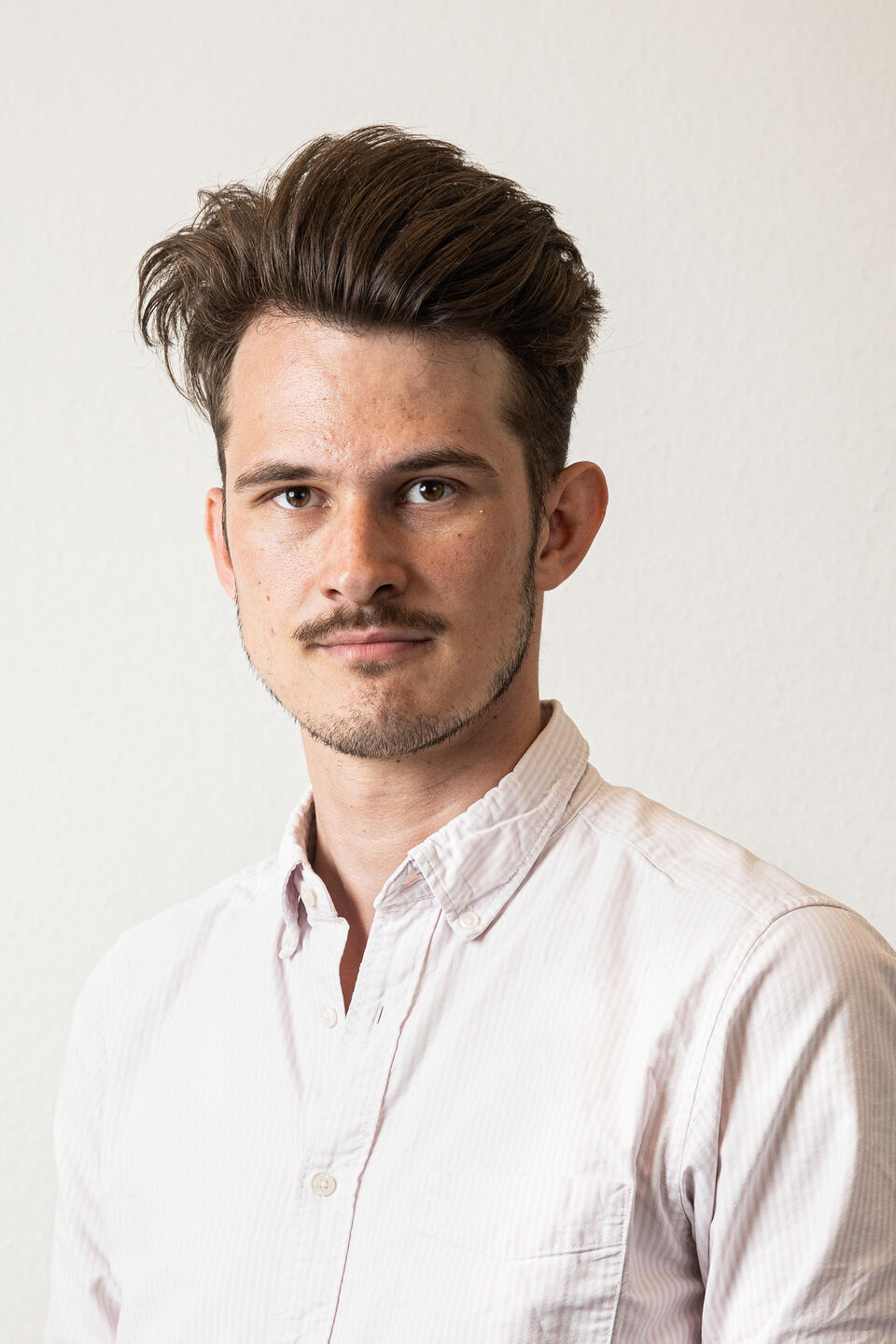
Konrad Kollnig is an Assistant Professor at Maastricht University’s Faculty of Law, specializing in the intersection of law and technology. He leads the RegTech4AI project, which combines legal and technical methods to address challenges in the AI and digital platforms sector. His academic background includes a PhD and MSc from the University of Oxford and a BSc from RWTH Aachen, with his PhD thesis winning the prestigious Stefano Rodotà Award 2024. Research focuses on market power analysis in digital platforms, ethical AI governance, and privacy-preserving technologies. He developed the TrackerControl app (200,000+ downloads) to expose app tracking practices. His work has influenced EU, OECD, US FTC, and other regulatory bodies, and been featured in Forbes, Wired, and New Scientist. Key achievements include winning the United Nations Privacy Competition 2022 and the Best Student Privacy Paper Award 2022. He holds a five-year RegTech4AI project grant (€2.1M) funding six researchers. Talks and collaborations span institutions like Georgetown University, CNIL, and the Council of Europe. His interdisciplinary approach bridges computer science, law, and policy to address systemic risks in digital ecosystems.
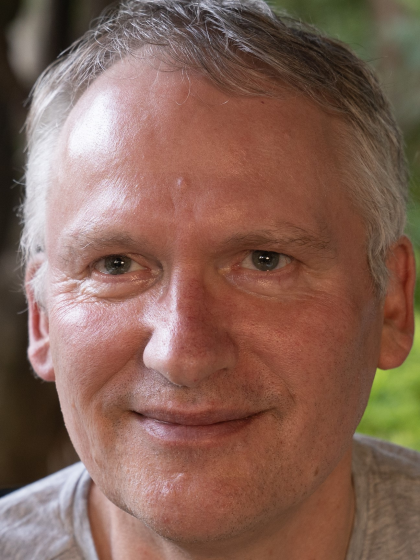
Prof. Han Olff is a Professor of Community and Conservation Ecology at the University of Groningen's Faculty of Science and Engineering, within the Groningen Institute for Evolutionary Life Sciences. He leads research on ecosystem structure, species interactions, and theoretical ecology, with fieldwork in savannas, salt marshes, and coastal systems. His work bridges theory and conservation, advising organizations like WWF and ARK Nature. Education: PhD (Cum Laude) in Biology from the University of Groningen (1992), MSc in Biology (1988). Research Interests: Focuses on plant-herbivore-predator interactions, ecosystem engineering, and the impact of human activities on biodiversity. Key themes include savanna ecology, food web dynamics, and restoration ecology. Awards: Gold Medal from Teyler Museum (2006) and PIONIER Award (2002). Active in grants like the EU Horizon 2020 AfricanBioServices project. Teaching: Coordinates courses in Conservation Biology, Ecological Research Skills, and Advanced Population Ecology. Leadership: Directed the Centre for Ecological and Evolutionary Studies (2011–2015) and chairs the National Research Agenda's 'Green Route'. Fieldwork: Organizes expeditions to the Serengeti-Mara, Banc d'Arguin, and Bijagos Archipelago to study human-wildlife interactions and ecosystem dynamics.
نمایش نتایج تا ۷۵۰ مورد اول. برای یافتن نتایج دقیقتر، جستجوی خود را با فیلترها محدود کنید.