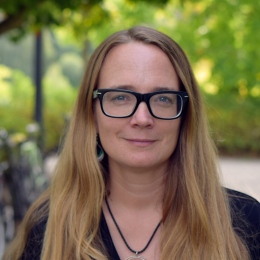
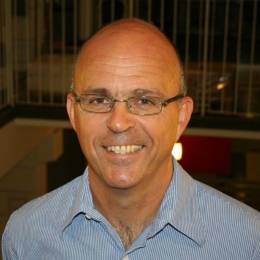
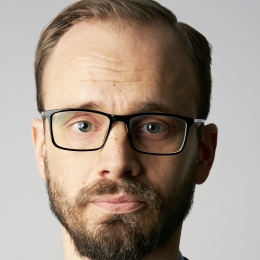
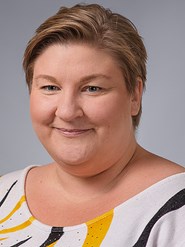
Andrea Voyer is a Professor of Sociology at Stockholm University , focusing on social norms, boundaries, and their role in shaping social inequality , particularly in the context of immigrant integration , class disparities, and ethnic inequality. She employs both qualitative and computational methods , including large-scale text analysis and cultural theory, to explore these themes. Her research has received funding from Riksbankens Jubileumsfond , the Swedish Research Council , the National Science Foundation (USA) , and the Russell Sage Foundation . Voyer serves as a program coordinator for master's programs in sociology and applied social research, and leads the department's research groups in qualitative methods , computational sociology , and cultural sociology . She is also an editorial board member for Sociological Theory and American Journal of Cultural Sociology , and contributes to public discourse on immigration, segregation, and social norms. Her recent publications highlight the use of computational techniques to analyze immigrant incorporation through shifts in mainstream discourse, the cultural processes of inequality during the COVID-19 pandemic , and the evolving role of class distinction-making in etiquette literature. These works bridge cultural theory with empirical analysis, offering actionable insights for addressing social inequality.
Per Krusell is Professor of Economics at Stockholm University and holds the Torsten and Ragnar Söderberg Chair at the Institute for International Economic Studies (IIES). He is a Fellow of the Econometric Society and served as President of the European Economic Association in 2020. He is currently the Secretary of the Prize Committee for the Sveriges Riksbank Prize in Economic Sciences in Memory of Alfred Nobel. Education: PhD in Economics, University of Minnesota Research Interests: Per Krusell’s research spans macroeconomics , inequality , climate economics , labor markets , and political economy . He has made foundational contributions to understanding incomplete markets, wealth distribution, optimal taxation, and the macroeconomic effects of climate change. His work often integrates dynamic stochastic general equilibrium (DSGE) models with heterogeneous agents to study long-run outcomes and policy impacts. Publications Trend: His recent publications (2022–2025) reflect a strong focus on climate policy , integrated assessment modeling , and macro-labor dynamics . Key themes include carbon taxation, labor supply responses to productivity growth, fiscal multipliers in heterogeneous-agent settings, and the macroeconomic consequences of vaccination and epidemic control. Awards & Honors: Fellow of the Econometric Society Torsten and Ragnar Söderberg Chair in Economics President, European Economic Association (2020) Secretary, Nobel Prize Committee in Economic Sciences Advising & Grants: While specific student names are not listed, his leadership roles in global economic associations and policy committees indicate extensive academic advising and grant involvement in macroeconomic policy and climate economics. Labs & Teams: He is affiliated with the Institute for International Economic Studies (IIES) at Stockholm University, a leading research institute in macroeconomics and international economics.
Karl Gustafsson is a Professor at Stockholm University within the Department of Economic History and International Relations. His work bridges security studies , collective memory , and digital research methods in international relations. Current Role: Professor of International Relations, Stockholm University Previous Positions: Post-Doc at Lund University, Researcher at Swedish Institute of International Affairs Visiting Appointments: University of Tokyo, Osaka University, Keio University, Academia Sinica, Nordic Institute of Asian Studies Research Focus: Karl specializes in memory politics , ontological security , and anxiety-driven international dynamics , particularly in Sino-Japanese relations and digital platforms . His studies explore how historical narratives and online memory construction influence state identity and policy. Awards & Grants: Recipient of the Wang Gungwu Prize (2014) and Stockholm University Association’s award (2011). Holds Swedish Research Council and Marianne & Marcus Wallenberg Foundation grants for projects on apologies in international politics and digital memory in East Asia . Publications: His work appears in journals such as International Studies Quarterly , European Journal of International Relations , and Memory Studies , addressing topics like narrative power in East Asia, anxiety’s role in policy change , and digital humanities applications in IR.
Therese Nordin is an Assistant Professor at Umeå University's Department of Community Medicine and Rehabilitation, specializing in occupational therapy. Her research focuses on social participation and togetherness among older adults within home care contexts, particularly through the STAY-IN-TOUCH project. Research Themes Gerontological perspectives on loneliness Co-creative methods in home care interventions Relational and transactional models of human activity Power dynamics in health services research Qualitative approaches to social participation Recent Publications Her work explores the interplay between structural care provision and subjective experiences of social connectedness in aging populations, with specific attention to: Gender norms and loneliness in men Home care professionals' conceptualization of social needs Design of participatory care models Quantitative-qualitative integration in aging research Methodological Expertise Therese employs a range of qualitative approaches, including: Scoping reviews Creative co-design methodologies Narrative analysis Transactional perspective frameworks
Lisbeth Aggestam is an associate professor at the Department of Political Science and an associate researcher at the Center for European Research (CERGU) at the University of Gothenburg. She serves as the editor-in-chief of the international journal Foreign Policy Analysis , published by the International Studies Association (ISA) and Oxford University Press. Aggestam's research focuses on several interconnected areas: Political leadership and foreign policy Diaspora and foreign policy Foreign policy role theory The European Union as a global actor Her scholarly work demonstrates a consistent focus on leadership dynamics within European foreign policy, particularly examining how the EU navigates its role as a global actor amid shifting geopolitical landscapes. She has developed significant theoretical contributions to role theory in foreign policy analysis, creating frameworks for understanding how states and international organizations perform specific roles on the global stage. Aggestam's publication record reveals several important trends in contemporary foreign policy studies. Her work increasingly examines the intersection of domestic politics and international relations, particularly how diaspora communities influence state foreign policies. Her recent research addresses European strategic autonomy in the context of US foreign policy shifts and the implications of Sweden's NATO membership decision, reflecting her ability to connect theoretical frameworks with pressing real-world issues. As an educator, Aggestam serves as course manager and instructor for several key programs: EU2215: Europe in the World (MA, 15 hec) SK1136: Foreign Policy Analysis (BA, 7.5 hec) EU1145: The European Union in International Affairs (BA, 7.5 hec) Through her leadership of the Swedish Research Council project 'Transnational civil society and foreign policy' (2022-2025) and her editorial role at Foreign Policy Analysis , Aggestam plays a significant role in shaping contemporary discourse on international relations and European foreign policy.
Heather Congdon Fors is a Senior Lecturer at the Department of Economics, University of Gothenburg. She holds a Ph.D. in Economics from the University of Gothenburg (2006), an M.A. in Economics from the University of Waterloo (1999), and a B.A. (Honours) in Economics from the University of Manitoba (1997). Her research focuses on development economics, education, child labor, and political economy. She has led the research project 'Child labor and school attendance in India' (2014–2018) and serves as a reviewer for journals such as the European Journal of Political Economy and Economic Inquiry. Her teaching expertise includes macroeconomics, statistics, institutional economics, and international economics. She has completed pedagogical training programs including HPE201 to HPE103. Her work explores topics such as the impact of globalization on education, land certification on schooling in Ethiopia, and the persistence of harmful cultural norms like female genital cutting in Africa. She has published extensively in peer-reviewed journals and authored reports on child labor policies, institutional change in post-colonial states, and gender biases in education. Fors has contributed to interdisciplinary projects, including analyses of bureaucrats' use of cost-benefit analysis in environmental policy and the long-term impacts of colonial missions on cultural practices. Her research bridges theoretical frameworks with empirical studies, addressing global challenges such as sustainable development goals and educational inequalities. She is based at Vasagatan 1, Gothenburg, and can be reached at heather.fors@economics.gu.se.
Tony Mickelsson Blomqvist is a Lecturer at the Department of Police Work , Södertörn University. He holds a PhD in Social Work (2023) and serves as a research coordinator for the Institute for Policing. Additionally, he is the coordinator of the European Policing Research and Education Network (EPREN) and will become associate editor of the Nordic Journal of Studies in Policing in 2025. PhD in Social Work (2023) Lecturer in Policing Research coordinator and network leader His research focuses on police collaboration with civil society and social services , local crime prevention , and organized crime dynamics , with a unique interest in the intersection between internal security and hybrid warfare . He also explores the role of sports clubs in social inclusion and community development. Tony leads an EU-funded project on Strategic Enforcement for Undermining Criminal Networks (2024–2027) and contributes to initiatives like ‘Martial Arts as a Crime Prevention Tool’ (2024–2026). His recent publications analyze Ukrainian refugee experiences, martial arts’ socialization effects, and sports clubs’ role in vulnerable areas. He has no listed scientific awards but holds editorial and coordination roles in policing research.
Lars Ulander is a Professor at Chalmers University of Technology specializing in radar remote sensing. His research focuses on synthetic aperture radar (SAR) signal processing, particularly for applications in forest biomass mapping and ground imaging using VHF/UHF-band systems. He is a key proposer for ESA's BIOMASS satellite mission (launching 2025) and leads the BorealScat project, utilizing a 50-meter tower-based tomographic radar to study boreal forest dynamics. His work spans radar system development, SAR tomography techniques, and environmental monitoring of forests and sea surface currents. Current research areas include vegetation water content estimation, bistatic radar configurations, and optimization of SAR data processing algorithms for multi-temporal analysis. Recent publications demonstrate expertise in P-band/L-band SAR for biomass retrieval, passive radar systems, and interferometric techniques. His articles investigate radar backscatter sensitivity to forest structure, moisture parameters, and seasonal changes, while contributing to mission design frameworks like SLAINTE and SESAME.
Peter Nilsson is a Professor of Economics at the Institute for International Economic Studies (IIES) , Stockholm University. He also holds a guest professorship at Linnaeus University and serves as a research fellow at IFAU , Uppsala Center for Labor Studies , CESifo , and CEPR . Previously, he was a postdoctoral fellow at Stanford University and obtained his PhD from Uppsala University (2010). Research Focus: His work bridges Labor Economics , Health Economics , and Environmental Economics , analyzing how early-life exposures (alcohol, lead), workplace dynamics, and policy interventions (unemployment insurance, congestion pricing) shape long-term socioeconomic outcomes. Key themes include Environmental Health Impacts on Cognition and Crime Labor Market Responses to Insurance Policies Peer Effects in Workplace Behavior Policy Design for Social Equity Scientific Awards: Nilsson has been recognized through research fellowships at leading institutions and editorial roles, including Associate Editor at The Economic Journal since 2021. His work has been featured in American Economic Review , Journal of Political Economy , and NBER platforms. Key Contributions: He provided testimony for Connecticut’s HB-5045 to reduce childhood lead exposure and contributed to Sweden’s Corona Commission report on pandemic responses. His empirical methods combine natural experiments with administrative datasets to identify causal relationships in health, labor, and environmental economics.
Linda P. Franzoni serves as Professor of Practice and Associate Dean for Student Programs at Duke University, holding dual roles in academic leadership and research. Her research expertise spans: Acoustics of enclosures including rooms and vehicle interiors Underwater acoustics focused on submarine radiation and scattering Structural dynamics and vibration analysis Development of computationally efficient prediction methods for high-frequency sound fields Professor Franzoni's work targets practical Navy applications through novel homogenization techniques using local/global decomposition, significantly reducing computational demands while maintaining accuracy in acoustic modeling of complex submerged structures.
Anna Delin is a Full Professor at KTH Royal Institute of Technology since 2011, leading research on magnetic and quantum phenomena in materials. She heads the WISE research school (wise-materials.org) and served as Deputy Head of the School of Engineering Sciences (SCI) from 2018–2022. Her expertise spans condensed matter physics, with a focus on nanomagnetism, skyrmions, spin-lattice couplings, and topological materials. Education: PhD in Condensed Matter Physics from Uppsala University (1998). Key awards include Naturvetarpriset (1998), Royal Swedish Academy of Sciences Research Fellowship (2007), Thuréus Prize (2018), and Edlundska Prize (2024). She has held visiting roles at ICTP, Los Alamos National Lab, and the Fritz Haber Institute. Research interests include magnetic skyrmions, magnonics, spintronics, and ultrafast demagnetization. Recent publications focus on spin-lattice dynamics, topological materials, and quantum analogs of classical magnetic models. Her work bridges theory and experiment, with contributions to tools like SpinView for computational magnetism analysis. Teaching includes roles as examiner for the Degree Project in Applied Physics and teacher for Sustainable Development in Engineering Physics. She actively participates in materials design initiatives and semantic data processing for big research data. Lab affiliations include her own research group at KTH and collaborations through WISE. Current projects explore skyrmion stabilization, magnon entanglement, and quantum spin systems, with implications for next-generation spintronic devices.
Lars Eriksson is a researcher at the Department of Chemistry, Stockholm University, affiliated with the Faculty of Science. He is part of Gunnar Svensson's group, which focuses on solid-state inorganic chemistry, including the synthesis of energy-related compounds and their crystal structure analysis. Research interests span inorganic chemistry, solid-state chemistry, crystallography, energy applications, organic synthesis, catalysis, and chemical education. His work bridges experimental and computational approaches, with recent publications exploring molecular design for energy storage, asymmetric synthesis, triplet-to-singlet energy transfer, and pedagogical strategies in chemistry education. Trends in his research highlight applications in materials science, environmental chemistry, and educational methodologies. While no formal scientific awards are mentioned in the provided texts, his contributions include collaborative studies on catalysis, molecular structure, and student learning processes. He has no listed grants or students, but his publications emphasize tutor-student interactions and practical epistemology analysis. The research group he belongs to investigates fundamental properties of synthesized compounds, often with energy-related applications, and maintains strong ties to the broader chemistry community through peer-reviewed publications and educational studies.
Xiaoming Hu is a Professor at the Division of Numerical Analysis, Optimization and Systems Theory within the Department of Mathematics at KTH Royal Institute of Technology (Kungliga Tekniska Högskolan) in Stockholm, Sweden. Born in Chengdu, China, he received his B.S. degree from University of Science and Technology of China in 1983, followed by M.S. and Ph.D. degrees from Arizona State University in 1986 and 1989 respectively. After serving as a research assistant at the Institute of Automation, Chinese Academy of Sciences (1983-1984), he was a Gustafsson Postdoctoral Fellow at KTH (1989-1990) before becoming a faculty member. His educational background includes: B.S. in Engineering, University of Science and Technology of China, 1983 M.S. in Engineering, Arizona State University, 1986 Ph.D. in Engineering, Arizona State University, 1989 Xiaoming Hu's research primarily focuses on multi-agent systems, nonlinear feedback stabilization, nonlinear observer design, and sensing and active perception. His work bridges theoretical control theory with practical applications in robotics and autonomous systems. He has made significant contributions to geometric control theory, mathematical systems theory, and nonlinear systems analysis and control. His research often involves developing theoretical frameworks for distributed control, formation control, and cooperative behavior in multi-robot systems. Professor Hu's publication record shows a consistent research trajectory with numerous high-impact publications in top-tier journals like Automatica, IEEE Transactions on Automatic Control, and Systems & Control Letters. His research has evolved from fundamental control theory to more applied problems in robotics and multi-agent systems, while maintaining strong mathematical foundations. Recent work shows increasing focus on safety-critical control, inverse problems in estimation, and networked systems. His scientific contributions include: Development of theoretical frameworks for multi-agent coordination and formation control Advances in nonlinear observer design for robotic systems Contributions to geometric control theory and systems theory Research on distributed estimation and control algorithms Applications of control theory to robotics and autonomous systems Professor Hu teaches several advanced courses including Mathematical Systems Theory, Geometric Control Theory, and Nonlinear Systems: Analysis and Control. He has supervised numerous degree projects at both undergraduate and graduate levels in mathematics, optimization, systems theory, and scientific computing. His teaching reflects his research expertise, providing students with both theoretical foundations and practical applications of control theory.
Sara Zahedi is a Professor of Numerical Analysis at the Department of Mathematics, KTH Royal Institute of Technology, working within the Division of Numerical Analysis, Optimization and Systems Theory. She serves as an Associate Editor for the SIAM Journal on Numerical Analysis and contributes to the SCI Faculty Board to enhance collaboration and transparency in academic decision-making. Her educational background includes a doctorate from KTH on numerical methods for fluid interface problems followed by a postdoctoral position at Uppsala University. Doctorate: KTH Royal Institute of Technology Postdoctoral Position: Uppsala University Zahedi's research bridges mathematical theory and practical applications, focusing on computational methods for partial differential equations in evolving domains. She pioneers Cut Finite Element Methods (CutFEM) to eliminate re-meshing requirements in multiphase flow simulations, ensuring accuracy and robustness when interfaces separate immiscible fluids. Her work specifically targets challenges in large deformations and time-dependent geometries. Analysis of her recent publications reveals a concentrated research trajectory in advancing CutFEM for diverse applications including Stokes flow, Darcy flow, Maxwell's equations, and hyperbolic conservation laws. Key trends include high-order conservative schemes, divergence preservation, stabilization techniques for unfitted meshes, and extensions to surface PDEs and multi-physics problems. Her scientific recognition includes: European Mathematical Society Prize (2016) for outstanding contributions by young researchers Wallenberg Fellowship (2019) with extension granted in 2024 Zahedi serves as examiner for Degree Projects in Scientific Computing (SF250X, SF259X) and course responsible for Engineering Mathematics projects (SA120X). Her Wallenberg Fellowship provides substantial research funding supporting her work on numerical algorithm development. While specific lab structures aren't detailed, her research operates within KTH's Division of Numerical Analysis, emphasizing collaborative development of simulation tools for industrial and scientific applications. Her current research focuses on extending CutFEM to complex multi-physics scenarios with emphasis on conservation properties and computational efficiency, with potential applications in aerospace, biomedical engineering, and environmental modeling.
Dr. Catrin Lundström is an Assistant Professor of Ethnicity and Migration at the Department of Migration, Ethnicity and Society (REMESO) within the Department of Culture and Society (IKOS) at Linköping University's Faculty of Philosophy. Her research focuses on the intersection of migration, whiteness, and gender, examining how Swedish women experience transnational migration and return migration processes. Dr. Lundström received her PhD in Sociology from Uppsala University in 2007 and became an Associate Professor (Docent) in Sociology there in 2011. Her academic journey includes teaching and research positions at multiple Swedish institutions including Uppsala University, Stockholm University, Mälardalen University, Södertörn University, Umeå University, and Linköping University. She has also been a visiting researcher at the University of Arizona and the University of California. Dr. Lundström's research centers on whiteness as both a place-bound and transnational construction. She challenges conventional migration studies by focusing on privileged Swedish women migrants, developing the concept of 'white capital' to understand how whiteness functions as transferable cultural capital across national borders. Her work examines how racial privilege, gender, and class intersect in migration experiences, particularly among women who migrate for lifestyle, companionship, or professional reasons. Her recent publications demonstrate an expanding focus on the relationship between race, whiteness, and educational systems in Sweden, as well as critical examinations of contemporary political debates through the lens of critical race theory. Lundström's work increasingly addresses how colorblind discourse operates in Swedish society while simultaneously exploring the politics of national identity in a globalized world. Dr. Lundström has led significant research projects including: 'White Migrations: Gender, Whiteness and Privilege in Transnational Migration' (2014) 'Tre faser av hegemonisk vithet' (Three Phases of Hegemonic Whiteness) with Tobias Hübinette 'Att återintegrera svenskheten' (Reintegrating Swedishness) on returning Swedish migrant women, funded by the Swedish Research Council Her research has been supported by organizations including the Sweden-America Foundation and the Swedish Research Council. Dr. Lundström is actively involved in several academic networks: IMISCOE Standing Committee on Gender, Migration and Transnational Lives White Spaces Network at Leeds University Lifestyle Migration Hub, an international network of researchers studying lifestyle migration She regularly lectures within and outside academia, both in Sweden and internationally, and has received significant media attention for her research on school segregation, colorblind language, and gender equality in migration contexts.