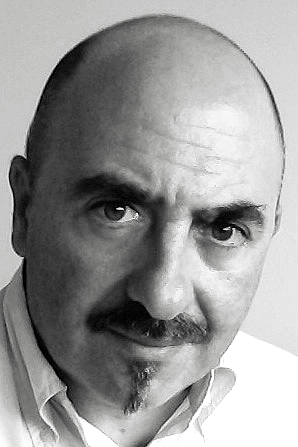
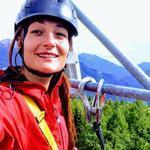
Federica Porta is an Associate Professor at the Department of Physical, Computer and Mathematical Sciences, University of Modena and Reggio Emilia. Her academic career focuses on numerical analysis, optimization, and stochastic gradient methods, particularly in machine learning and image restoration. Her research interests include: Numerical Analysis and Statistics for Computer Engineering Numerical Optimization for Artificial Intelligence Stochastic Gradient Descent with Variance Control Deep Image Prior Frameworks Regularization Techniques for Biomedical Imaging Federica's recent publications (2021–2025) demonstrate expertise in hybrid gradient projection methods, adaptive learning rate selection, and deep learning applications for image segmentation and classification. She collaborates extensively with researchers like Giorgia Franchini, Valeria Ruggiero, and Luca Zanni, applying these methods to both convex and non-convex optimization problems. She teaches courses such as Numerical Analysis and Statistics for Computer Engineering, Numerical Analysis for Mathematics, and Numerical Optimization for Artificial Intelligence. Her teaching emphasizes MATLAB/Python implementation of numerical methods, convergence properties, and computational complexity analysis. Contact: federica.porta@unimore.it | Office: Mathematics Building, Via Campi 213/b
Silvia Villa is an Associate Professor in the Department of Mathematics (DIMA) at the University of Genoa (UniGe). Her teaching responsibilities include courses such as Game Theory, Machine Learning, Optimization and Operations Research, and Operations Research at both undergraduate and master's levels. Her research focuses on optimization theory and its applications in machine learning, inverse problems, and regularization methods. She has contributed to advancements in iterative regularization techniques, stochastic optimization algorithms, and convex optimization frameworks. Her work often bridges theoretical foundations with practical applications in signal processing and data science. Her research interests emphasize structured optimization problems, including low-complexity regularizers, bilevel optimization, and sparse recovery. Key methodologies in her studies include primal-dual dynamics, proximal algorithms, and variance reduction techniques. Recent trends in her publications highlight advancements in unrolled deep networks for sparse signal restoration, adaptive optimization strategies, and convergence analysis of stochastic methods. Villa's collaborative efforts span interdisciplinary projects involving applied mathematics, computer science, and engineering. While no specific awards are listed, her prolific publication record reflects her active role in the optimization and machine learning communities. She has advised multiple research projects but no formal student names are provided in the available data.
Mauro Bisiacco is an Associate Professor at the Department of Information Engineering, University of Padova, Italy. His research focuses on control systems theory, particularly behavioral approaches to multidimensional systems. He specializes in dead-beat control, state estimation, fault detection, and observer design for two-dimensional state-space models. Research Interests: Professor Bisiacco's work spans: Behavioral theory applications in control systems Dead-beat control and estimation algorithms Fault detection/isolation in multidimensional systems Observer design (Luenberger-type, unknown input) Algebraic decomposition of system behaviors Publication Trends: His 15 most recent articles (2000-2013) predominantly explore theoretical frameworks for two-dimensional systems, with consistent themes in behavioral decompositions, dead-beat methodologies, and fault diagnosis. Later works show increased focus on optimization and controllability in multidimensional spaces. Awards: No scientific awards mentioned in available sources. Students & Collaborations: Frequently collaborates with Maria Elena Valcher. No student advisees listed.
Dorin Bucur is a Professor at Université de Savoie, specializing in spectral optimization, calculus of variations, and partial differential equations. His research focuses on eigenvalue problems, shape optimization, and geometric inequalities, often involving applications to material science and engineering. He has organized numerous conferences and workshops, including the Vito Volterra Meeting in Calculus of Variations (2025) and the Shape Optimization and Isoperimetric Inequalities conference (2016). His work frequently addresses isoperimetric inequalities, free discontinuity problems, and the interplay between geometry and spectral properties. Recent contributions include studies on the fundamental gap conjecture, nonlocal isoperimetric problems, and stability of eigenvalues under domain perturbations. Bucur has collaborated extensively, with notable co-authors like I. Fragalà, A. Giacomini, and B. Velichkov. Bucur's research also explores thermal insulation optimization and the application of phase-field methods to packing problems. He has contributed to foundational works on Faber-Krahn inequalities and the mathematical analysis of Cheeger clusters. His articles frequently appear in top journals such as Calc. Var. Partial Differential Equations and Arch. Ration. Mech. Anal.
Ivonne Sgura is a Full Professor of Numerical Analysis at the Department of Mathematics and Physics of the University of Salento in Lecce, Italy. She received her PhD in Mathematics from the University of Pisa in 1996 and has been affiliated with the University of Salento since 2000, first as a Senior Lecturer, then as Associate Professor from 2010, before achieving Full Professor status in 2017 following her Italian National Habilitation for Full Professor in Numerical Analysis. Her primary research interests focus on developing innovative numerical methods for differential equations with applications in multiple fields including nonlinear elasticity, electrochemistry, and DNA dynamics. She has made significant contributions to the understanding of pattern formation in reaction-diffusion systems, particularly Turing patterns relevant to battery technology and electrodeposition processes. Her work often bridges theoretical mathematics with practical engineering applications, especially in the development of computational tools for simulating complex physical phenomena. Analysis of her publication record shows a strong trend toward interdisciplinary research combining mathematical modeling with electrochemical systems, particularly for battery technology. Her recent work increasingly incorporates machine learning techniques, especially deep learning approaches for parameter identification in complex electrochemical systems. She has published extensively with over 90 papers and an H-index of 21 according to SCOPUS metrics. Italian National Award for Mathematics (INdAM-UMI-SIMAI) 2019 for PhD thesis supervision Member of the Istituto Nazionale di Alta Matematica (INdAM), Section of Scientific Calculus (GNCS) ORCID: 0000-0001-9207-5832 SCOPUS Author ID: 6603115525 Professor Sgura actively supervises graduate students and has developed a strong research group focusing on computational methods for physical applications. Her teaching responsibilities include Numerical Analysis for Master's degree students and Numerical Calculus for Bachelor's degree students in Mathematics. She maintains active collaborations with experimental researchers, particularly in the field of electrochemistry, where her mathematical models help interpret complex experimental observations.
Fabrizio Rossi is a Full Professor of Operations Research at the University of L'Aquila, Department of Information Engineering, Computer Science and Mathematics. He has been a member of the Board of Administration at the university since 2019 and previously from 2010 to 2012. His academic career spans over two decades, including roles as Associate Professor (2005–2019) and Assistant Professor (1997–2002). Education: Ph.D. in Operations Research, University of Rome 'La Sapienza' (1996) Laurea Degree in Electrical Engineering, University of Rome 'La Sapienza' (1992) Visiting Student in IEOR at Columbia University, New York (1996) Operations Research School, Scuola di Matematica Interuniversitaria (1996) Research Interests: Fabrizio Rossi specializes in large-scale optimization methodologies, including Integer Programming and Combinatorial Optimization. His work addresses complex applications in telecommunications network design, manufacturing process optimization, logistics systems, and healthcare. Recent innovations include algorithms for DNA sequence optimization and tumor classification using machine learning. He focuses on practical solutions through advanced techniques like lift-and-project operators and robust optimization frameworks, with significant contributions to scheduling and resource allocation in call centers and satellite missions. Scientific Awards: Informs Computing Society Prize (2014) (collaborative with Jim Ostrowski, Jeff Linderoth, Stefano Smriglio) Finalist, Euro Excellence in Practice Award (2006) for research on terrestrial broadcasting migration Advising and Grants: As a project leader, he coordinated major initiatives such as: PRIN 2010–2012 : Integer Programming methods for radio transmission networks 2008–2009 : Analog-to-digital broadcasting migration optimization IST SAILOR Project (2002–2005) : Satellite UMTS emulation systems He also contributed to European Space Agency's MAS Project (2004–2006) and collaborated with Italian regulatory bodies on telecommunication projects. His research portfolio includes over 50 projects since 1993, emphasizing real-world applications in manufacturing, logistics, and healthcare systems. Labs/Teams: His research is conducted within the Department's optimization groups and industry partnerships. Collaborations include ESA satellite scheduling, RAIWay frequency assignment, and healthcare institutions for treatment planning systems.
Epifanio Virga is a Professor in the Department of Mathematics at the University of Pavia, Italy. His research focuses on the mathematical modeling of condensed matter systems, particularly liquid crystals, with an emphasis on elastic phenomena, topological defects, and phase behavior. He leads the 'Mathematical Models for Condensed Matter' research group, applying advanced theoretical and computational methods to study soft materials. Virga's work bridges pure mathematics and applied physics, addressing challenges such as geometric frustration in nematic shells and the dynamics of chromonic liquid crystals. He has contributed extensively to understanding the interplay between molecular ordering, elastic energy, and external stimuli like light or confinement. His recent studies explore novel material behaviors, such as photoresponsive nematic elastomers and the mechanical properties of soft shells. Virga collaborates internationally, publishing in top journals and advancing interdisciplinary approaches in condensed matter physics.
Chiara Casoli is an Assistant Professor of Econometrics at the University of Insubria's Department of Economics and an Associate Researcher at Fondazione Eni Enrico Mattei (FEEM), contributing to the 'Econometrics of the Energy Transition' program. Her research focuses on time series analysis, dynamic factor models, structural VAR models, and applications to climate and energy economics. She holds a PhD in Economics from Marche Polytechnic University (2020), with a thesis on commodity price dynamics. Casoli teaches applied econometrics and time series courses at the University of Milan's PhD program. Awarded the 2022 Denis Sargan Econometrics Prize for her work on commodity price decomposition, her research explores energy market dynamics, climate change impacts, and critical raw materials for the energy transition. She leads projects like 'The Many Italies in COVID' and advises on ESG practices in emerging economies. Her work bridges theoretical econometric methodologies with practical applications in energy policy and environmental economics. Current Projects: "One, alone, indivisible: the many Italies in COVID" (2025-2027) "ESG Practices in Emerging Economies and Climate Transition in Europe" (2023-2025) Teaching: PhD courses in Applied Econometrics and Time Series Analysis at the University of Milan
Stefano Berrone is a Full Professor in the Department of Mathematical Sciences "G.L. Lagrange" (DISMA) at the Polytechnic University of Turin, where he also holds key administrative roles as Vice-Rector for Quality and President of the University Quality Assurance Committee. He is a member of the Interdepartmental Center SmartData@PoliTO and the University Committee for Research, Technology Transfer and Services to the Territory. Department of Mathematical Sciences "G.L. Lagrange" (DISMA), Polytechnic University of Turin Interdepartmental Center SmartData@PoliTO - Big Data and Data Science Laboratory Scientific leadership in EU, national, and commercial research projects Teaching assignment at Turin Polytechnic University in Tashkent (2012–2014) His research lies at the intersection of numerical analysis, scientific computing, and machine learning, with a strong emphasis on the development and analysis of advanced numerical methods. He specializes in the Virtual Element Method (VEM), mesh adaptivity and generation, high-performance computing (HPC), physics-informed neural networks, and deep learning for engineering problems. His work contributes to computational engineering, data science, and sustainable development (aligned with SDGs 4, 9, and 13). He leads multiple research groups and projects focused on numerical optimization, PDE discretization on polygonal meshes, and simulation of complex physical systems. The recent publications (2023–2025) reveal a strong trend toward hybrid computational methodologies, combining classical numerical techniques like VEM with machine learning, particularly physics-informed and neural-approximated models. There is a clear focus on stabilization-free formulations, mesh optimization, and applications in energetic materials, fluid dynamics, and subsurface modeling. The work spans high-impact journals in scientific computing, computational mechanics, and algorithms. Scientific Participations and Memberships: Full Member, SIAM (Society for Industrial and Applied Mathematics) (2020–present) Full Member, Italian Society of Applied and Industrial Mathematics (2020–present) Full Member, Italian Mathematical Union (2020–present) Full Member, National Institute of Higher Mathematics - National Group for Scientific Computing (1999–present) Research Leadership and Grants: Scientific Responsible, In-Deep (EU Horizon Europe, 2024–2028) Scientific Responsible, PYGEOM (PRIN, 2023–2026) Scientific Director of Structure, SHIMMER (Clean Hydrogen JTI, 2023–2026) Scientific Director of Structure, HPC-Spoke 6 (PNRR, 2022–2025) Scientific Responsible, AdPolyMP (PRIN, 2022–2025) Scientific Responsible, Virtual Element Methods: Analysis and Applications (PRIN, 2019–2022) Scientific Responsible, IDEA (PRIN, 2013–2015) Scientific Responsible, AIRTOLYMI (Regional, 2007–2011) Scientific Responsible, Engine Health Monitoring (Commercial, 2024–2025) Advising and Doctoral Supervision: Supervising multiple PhD students in Pure and Applied Mathematics and Mathematical Sciences Member of Doctoral Colleges in Pure and Applied Mathematics at Politecnico di Torino and University of Turin (2013–2023) Key advisor in research areas including energetic materials, computational fluid dynamics, and numerical PDEs Laboratories and Research Groups: Numerical Analysis and Scientific Computing (DISMA) Interdepartmental Center SmartData@PoliTO - Big Data and Data Science Laboratory Lead in developing computational tools like HEMSim for energetic materials simulation
Umberto Cherubini is a Full Professor of Mathematics for Economic, Financial, and Actuarial Applications at the University of Bologna since 2020 (previously Associate Professor since 1998). He joined the university in 1998 after working at Banca Commerciale Italiana's Economic Research Department, leading the Risk Management and Forecasting Unit. His research focuses on multivariate risk management, copula functions, and quantitative finance applications in macrofinance and systemic risk. He holds a BA from the University of Florence (1984) and an MA from New York University (1988). He teaches financial economics in master programs at institutions like Bocconi University, Hitotsubashi University, and Johns Hopkins University, as well as training programs for regulators (e.g., Bank of Italy, Consob) and financial institutions (e.g., WBS, Risk Training). He serves as an associate editor for Studies in Economics and Finance and the Journal of Mathematical Finance . His research explores cutting-edge topics such as q-calculus methods in finance, copula theory applications, and climate risk modeling. He has directed the Graduate Course in Quantitative Finance at the University of Bologna and collaborated with the Tandon School of Engineering at NYU. His work bridges theoretical advancements with practical finance, including derivative pricing, systemic risk assessment, and financial market dynamics.
Gianmarco Cherchi is a Tenure-Track Assistant Professor and Computer Science Researcher in the Department of Mathematics and Computer Science at the University of Cagliari, Italy, where he also completed his PhD. He teaches courses in Data Visualization and Web Programming at the undergraduate level. His research lies at the intersection of Computer Graphics and Geometry Processing, with a strong focus on surface and volumetric mesh generation, optimization, digital fabrication, and polycube-based modeling. His work combines algorithmic innovation with practical applications in fabrication, visualization, and interactive systems. The recent publications highlight a consistent trend in advanced hexahedral meshing techniques (e.g., HexBox, VOLMAP), robust geometric computation (e.g., mesh booleans), and interactive tools (e.g., ProtoSketchAR, Py3DViewer). His research spans theoretical algorithm development, benchmark creation, and applied systems for VR/AR and simulation. His scientific accolades include the Young Investigator Award 2024 from the Shape Modeling International Organization, and prior Best Thesis Awards from the Eurographics Italy Association for both his M.Sc. and Ph.D. work. Cherchi actively collaborates with researchers such as Marco Livesu, Riccardo Scateni, and others, contributing to major surveys and state-of-the-art methods in hexahedral meshing. His work is supported by publications in top venues like ACM Transactions on Graphics (SIGGRAPH), Computer Graphics Forum (Eurographics), and IEEE VR. He has also developed practical software tools like Py3DViewer for geometry processing prototyping. He leads research in digital fabrication pipelines, as evidenced by publications on polycube decomposition for manufacturing and automated flat pattern generation. His lab work involves developing interactive and robust systems for 3D modeling and analysis.
Emanuela De Negri is a Full Professor at the University of Genoa's Department of Mathematics (DIMA), serving on both the Academic Senate and Department Board. Her teaching responsibilities span undergraduate and graduate programs including Computer Science (Algebra), Mathematics (Linear Algebra and Analytic Geometry, Coding Theory), and Biomedical Engineering (Geometry). Her research centers on Commutative Algebra and Algebraic Geometry, with emphasis on structural properties of ideals and varieties. Key areas include initial ideals, radical ideals, semiregular sequences, and secant varieties, often exploring combinatorial and computational aspects with applications in coding theory and cryptography. Recent work reveals consistent focus on multigraded structures and characteristic-free methods. Publications from 2020-2022 demonstrate collaborative research patterns, particularly with Conca and Gorla, addressing foundational questions in ideal theory and tensor decompositions. The work shows strong interdisciplinary connections between abstract algebra and information theory, notably in encryption and error-correcting codes.
Ludovica Oddi is a Research Fellow at the Department of Life Sciences and Systems Biology, University of Turin, specializing in environmental botany (BIO/03) with a focus on climate change impacts on alpine and Mediterranean ecosystems. Her work integrates field studies, remote sensing, and collaborative networks to address biodiversity conservation and ecosystem dynamics. Her research interests include: Climate-driven vegetation shifts in mountain grasslands Carbon sequestration responses to heat/drought extremes Remote sensing applications (UAVs, phenocams) for ecosystem monitoring Mycorrhizal symbiosis and medicinal plant physiology Implementation of conservation frameworks like IUCN Red List of Ecosystems Woody encroachment dynamics in subalpine habitats Analysis of her 14 publications (2017-2022) reveals a consistent emphasis on climate change impacts using multi-scale monitoring approaches. Her work demonstrates strong European collaboration through networks like GLORIA ITALIA, with recurring themes of thermophilization, ecosystem heterogeneity, and socio-ecological vulnerability in alpine regions. Key methodological innovations include UAV-based mapping and quantitative microscopy techniques. Ludovica Oddi actively contributes to the MITEX project (PRIN PNRR 2022) addressing glacier extinction impacts and serves on the Departmental Council and Environmental Biology program committees for job placement and quality assurance.