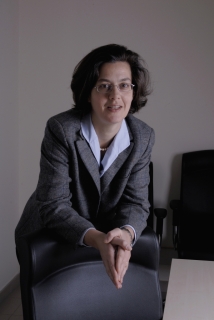
Michela Spagnuolo is a Research Director at the Italian National Research Council’s Institute of Applied Mathematics and Information Technology (CNR-IMATI-GE) since 2001. Her work bridges Computer Graphics , Geometry Processing , and Computational Topology , with applications in 3D Shape Analysis , Cultural Heritage , and Bioinformatics . Co-supervised 6 PhD theses (plus 2 ongoing) Associate Editor for journals like The Visual Computer and Computers&Graphics Chair of conferences including Shape Modeling International and EG Workshops on 3D Object Retrieval Research Interests : Focus on geometric and semantic modeling of 3D objects , computational topology for shape analysis , and structural/similarity evaluation . Her work enables advanced 3D search engines , semantic annotation , and medical imaging applications . Article Trends : Recent publications emphasize mesh quality indicators for Virtual Element Methods in engineering simulations and semantic-driven 3D model analysis for medical diagnostics and cultural heritage . Key subtopics include topological decomposition , data processing services , and multi-scale modeling . Scientific Awards : Fellow of the Eurographics Association (2014) Notable Contributions : Led projects like IQmulus (geospatial data analytics) and MultiScaleHuman (medical shape modeling). Pioneered CIDOC CRMdig for cultural heritage documentation and developed techniques for kernel computation in polyhedra .
Francesca Vipiana is a Full Professor of Electromagnetic Fields at the Department of Electronics and Telecommunications at the Polytechnic University of Turin (POLITO). She is also a member of the Interdepartmental Center PolitoBIOMed Lab - Biomedical Engineering Lab. With over 20 years of full-time research experience, Prof. Vipiana has established herself as a leading expert in computational electromagnetics and microwave imaging systems. Her research interests span antenna design , computational electromagnetics , microwave imaging for medical applications, and food safety/security monitoring . She has pioneered work in numerical techniques based on integral equations and method of moments, with particular focus on multiresolution and hierarchical schemes, domain decomposition, and advanced integration methods. Prof. Vipiana's recent publications show a strong trend toward medical diagnostics using microwave technology, particularly for Alzheimer's disease detection and brain stroke imaging. Her work increasingly integrates machine learning with electromagnetic sensing, and she has developed portable, low-cost microwave imaging systems using off-the-shelf components. Lot Shafai Mid-Career Distinguished Achievement Award (2017) URSI Young Scientist Award (2005) IEEE WiEM best poster award (2009) ISMB Best Paper Award (2011) Prof. Vipiana serves as Principal Investigator for multiple significant research projects including the Marie Sklodowska-Curie Action EMERALD, the Proof of Concept FastFood project, and the national PRIN project BEST-Food. She currently supervises 13 PhD students working on diverse topics from microwave brain imaging to glide-symmetric metamaterials. As an Associate Editor for IEEE Transactions on Antennas and Propagation and the IEEE Antennas and Propagation Magazine, she plays a key role in advancing the field. Her research group focuses on bridging theoretical electromagnetics with practical applications in healthcare and food safety.
Ada Boralevi is an Associate Professor in the Department of Mathematical Sciences "G. L. Lagrange" (DISMA) at Politecnico di Torino, Italy. She is a prominent researcher in algebraic geometry, specializing in vector bundles, tensor decomposition, determinantal representations, and related algebraic structures. Her work bridges pure mathematics with applications in numerical analysis, mathematical physics, and computational algebra. PhD in Mathematics, University of Florence, 2008 MA in Mathematics, UCLA, 2006 Laurea in Mathematics, University of Florence, 2004 Her research interests lie at the intersection of algebraic geometry, commutative algebra, and multilinear algebra. She investigates homogeneous vector bundles, secant varieties, constant rank matrices, and tensor decompositions, with a focus on geometric and algebraic properties. Her work often involves moduli spaces, stability conditions, and equivariant constructions. She is particularly known for her contributions to the theory of instanton bundles and determinantal representations. The analysis of her recent publications reveals a sustained focus on algebraic structures derived from matrices and tensors. Her work spans from foundational algebraic geometry (e.g., sections of homogeneous bundles) to applied topics such as uniform determinantal representations and tensor decomposition. A recurring theme is the interplay between geometry and linear algebra, especially in the context of rank constraints and symmetry. Her collaborations with leading mathematicians highlight her active role in the international research community. She is actively involved in the mathematical community through service and leadership. She is a member of the European Women in Mathematics and the Unione Matematica Italiana. She has organized numerous conferences and summer schools, including the TAGSS series, which promotes women in mathematics. She has also served on organizing committees for MEGA 2017, Vector Bundles Days, and several workshops on tensors and algebraic geometry. Ada Boralevi mentors PhD students, including Stefano Canino, and participates in the doctoral college in Pure and Applied Mathematics at Politecnico di Torino. She has secured research contracts with institutions such as SISSA, TU Eindhoven, and IMPAN. Her teaching includes undergraduate courses in linear algebra and geometry, as well as advanced PhD-level topics on spaces of matrices and their applications. She is a key organizer of algebraic geometry activities in Turin, jointly between Politecnico di Torino and the University of Turin. She co-founded the TAGSS (Trieste Algebraic Geometry Summer School) with Valentina Beorchia and Barbara Fantechi, a series of schools taught by outstanding women mathematicians. Her leadership in these initiatives underscores her commitment to education and gender equity in mathematics.
Stefania Cherubini is a Full Professor in the Department of Mechanics, Mathematics & Management at Politecnico di Bari, Italy. Her academic work focuses on fluid dynamics, turbulence, and wind energy, with a particular emphasis on stability analysis, computational fluid dynamics (CFD), and data assimilation techniques. Research areas: Fluid Dynamics, Turbulence, Wind Energy, Stability Analysis, Computational Fluid Dynamics, Data Assimilation, Aeroacoustics, Nonlinear Optimization Recent publications highlight her work on wind turbine simulations using Large Eddy Simulation (LES) and Fluid-Structure Interaction (FSI) models, dynamic mode decomposition (DMD) for wake analysis, and graph neural networks (GNNs) for CFD closure modeling. She investigates superhydrophobic surfaces, boundary-layer instabilities, and nonlinear optimization in transitional and turbulent flows. Key article trends include: (1) Wind turbine aeroacoustics and wake dynamics; (2) Machine learning integration in fluid flow simulations; (3) Nonlinear stability analysis of complex flows; (4) Superhydrophobic drag reduction mechanisms; (5) Turbulent transition modeling in channel and boundary-layer flows.
Claudia Califano is an Associate Professor at the Department of Computer, Control and Management Engineering, University of Rome "La Sapienza". Her work focuses on nonlinear systems, time-delay systems, and digital control with applications in biomedical systems and multi-agent networks. She has held editorial roles at the IMA Mathematical Control and Information Journal and IFAC World Congress, and served as Vice Chair for Education in IFAC Technical Committee Nonlinear Systems. B.Sc. and Ph.D. in Systems Engineering from University of Rome "La Sapienza" Research Interests: Her research spans geometric control theory for nonlinear systems, dynamic feedback linearization, and time-delay systems. Recent work includes deep learning applications for non-invasive medical diagnostics and consensus protocols for multi-agent systems with communication delays. Scientific Contributions: Her publications emphasize geometric methods for nonlinear control, integrability conditions, and observer design. Key themes include accessibility-observability duality, canonical forms, and applications to diabetic gastroparesis modeling. Best Paper Presentation Award at ACC 2010 Finalist for Best Poster at IFAC'96 Senior Member of Control Systems Society Editorial board member for IEEE and IFAC Teaching Roles: • Teaching Coordinator of Master's Degree in Emergency Engineering (2001-2013) • Courses taught: Systems Theory, Fundamentals of Automatic Control, Digital Control (in English)
Dr. Ciro Cecconi is an Associate Professor at the University of Modena and Reggio Emilia , affiliated with the Department of Physical, Computer and Mathematical Sciences (formerly the Physics Campus). His academic work spans biophysics, medical physics, and interdisciplinary education, with courses in biological physics, biochemistry, and physiology for biomedical degrees. His research focuses on biological physics (e.g., lipid bilayer mechanics, protein folding, cellular thermodynamics) and medical physics (e.g., X-ray applications, hemodynamics). Teaching modules emphasize applied physics in pharmacy, medicine, nursing, and physiotherapy, with laboratory components in advanced biophysics courses. Key themes include intermolecular forces , mechanobiology , and statistical fluctuations in biological systems. He employs English texts in teaching to foster international learning.
Mattia Zorzi is an Associate Professor in the Department of Information Engineering at the University of Padova, Italy. He has held academic positions since 2014, transitioning from Assistant Professor to Associate Professor in 2020. His research focuses on system identification, machine learning, and robust control, with applications in dynamic brain networks, robotic systems, and quantum information processing. Education: Ph.D. and M.S. in Information Engineering from University of Padova International Experience: Visiting Scientist at University of Cambridge (2013-2014), Research Associate at University of Liege (2013-2014) Zorzi's research integrates robust and distributed filtering, inverse dynamics learning, and nonparametric identification of Kronecker networks. His work bridges theoretical advancements in spectral estimation with practical applications in neuroscience (e.g., effective connectivity analysis) and control systems (e.g., robust Kalman filtering under uncertainty). Recent publications (2024-2023) demonstrate expertise in ARMA graphical models, kernel-based estimation, and optimal transport for Gaussian processes. He has contributed to the IEEE and IFAC communities as Associate Editor and actively participates in editorial roles for leading journals. Scientific Awards: IEEE Senior Member (2021) Member of IFAC Technical Committee TC 1.1 (2018) Associate Editor roles in Automatica, IEEE Control Systems Letters, and major conferences Grants & Collaborations: Collaborated on projects involving quantum channel estimation, free-space quantum communication, and biomedical signal processing.
Lidia Angeleri is a Full Professor in the Department of Computer Science at the University of Verona, specializing in Algebra (MATH-02/A). Her academic career spans multiple decades with significant contributions to representation theory of algebras and related fields. Her research interests include: Triangulated categories - studying abstract concepts and methods from homological algebra, including torsion pairs, t-structures, and localization theory Purity in representation theory - examining pure-injective modules, definable subcategories and the Ziegler spectrum Representation theory of algebras - investigating module categories and their derived categories Silting and tilting theory - developing universal methods for comparing and constructing equivalences between different categories Her work has important connections to geometry, topology, data science, and theoretical physics. She has authored approximately sixty publications in international journals and serves on the editorial boards of Journal of Pure and Applied Algebra, Annals of Representation Theory, and Applied Categorical Structures. Professor Angeleri currently leads significant research projects including FIS-2021 and PRIN-2022, with recent projects such as 'FIS - Large views of small phenomena: decompositions, localizations, and representation type - LAVIE' (starting 7/15/24) and 'Structures for Quivers, Algebras and Representations - SQUARE' (starting 9/28/23). Previously, she served as Vice-Rector for International Relations at the University of Verona from 2013 to 2019. She teaches multiple courses including Algebra, Linear Algebra and Elements of Geometry, Homological Algebra, and Methods in Representation Theory for both Bachelor's and Master's degree programs in Applied Mathematics and Mathematics.
Massimiliano Mella is a Full Professor at the University of Ferrara's Department of Mathematics and Computer Science. His research focuses on Algebraic Geometry, with particular emphasis on birational geometry, projective varieties, and Cremona groups. He has published extensively on topics such as identifiability of projective varieties, minimal Cremona degrees, and the geometry of quartic surfaces. Recent work includes studies on edge volume, tangential weak defectiveness, and geometric conjectures like Bronowski’s. His teaching includes courses such as Geometry and Algebra for Mechanical Engineering and Geometry II for Mathematics students, both taught in Italian. Notable publications include contributions to Duke Mathematical Journal, Journal of the European Mathematical Society, and Transactions of the American Mathematical Society. Mella collaborates with leading researchers in the field, including Ivan Cheltsov, Alex Massarenti, and Giorgio Ottaviani.
Giovanni Di Franco serves as Full Professor in the Department of Social and Economic Sciences at Sapienza University of Rome's Faculty of Political Science, Sociology and Communication. He directs the book series "La cassetta degli attrezzi" (Franco Angeli Milano) and holds affiliations with CIRES at Roma Tre University and Bonanno publishing house's scientific committee. His research centers on Social Research Methodology , emphasizing data collection/analysis techniques, historical evolution of methods, qualitative-quantitative integration, and micro-macro data synthesis. Specialized in Electoral Sociology , he examines polling methodologies in digital contexts, while his work on Youth Attitudes explores values during economic crises. Additional expertise spans Europeanization Processes , Social Representations of eating disorders, and Social Cohesion frameworks. Recent publications reveal methodological innovation through machine learning applications and critical analysis of intergenerational inequality, reflecting his commitment to advancing sociological research in contemporary digital landscapes. Professor Di Franco has led significant projects including immigrant family-school interactions (2009-10), food education integration (2009), Campanian legality culture (2008), and European identity formation (2007-09), alongside European Commission-funded e-inclusion research. He supervises doctoral candidates through Sapienza's PhD program in Sociology and Applied Social Sciences. He contributes to interdisciplinary research through LARFAD laboratory and CIRES center, developing methodological tools for social analysis while directing academic publications that shape methodological discourse in Italian sociology.
Domenico Tortorella is an Assistant Professor (RTD-A) in the Department of Computer Science at the University of Pisa, Italy. He earned a PhD in Computer Science (cum laude) in 2024, an MSc in Computer Science (cum laude) in 2020, and a BSc in Computer Engineering (cum laude) in 2017. His research focuses on graph neural networks , reservoir computing , and deep learning on graphs , particularly addressing challenges like heterophily, over-squashing, and structural encoding. He contributes to conferences such as ICANN, ESANN, and NeurIPS, and is part of the Computational Intelligence and Machine Learning (CIML) research group. Research Trends: His recent publications emphasize Graph topology encoding (e.g., Randomized Ising Models) Efficiency in graph kernels and neural networks Explainable AI for deep graph models Stability analysis in echo state networks Handling heterophilic graphs via reservoir computing Temporal resolution in recurrent architectures Grants & Service: He received funding from the Future AI Research (FAIR) project (2024–2025) and served on program committees for ICANN, NeurIPS workshops, and GbRPR. He was Vice-Chair of the IEEE Student Branch of Pisa (2023–2024) and holds memberships in IEEE, ACM, ENNS, and IAPR's CVPL.
Andrea Munaro is an Assistant Professor at the Department of Mathematical, Physical and Computer Sciences , University of Parma . He holds a PhD from G-SCOP Laboratory , Univ. Grenoble Alpes , supervised by András Sebő and Matěj Stehlík. His academic journey includes postdoctoral positions at institutions such as Ulm, Koper, Fribourg, Morgantown, and Belfast. Research Interests : Andrea specializes in Graph Theory and Theoretical Computer Science , focusing on width parameters like mim-width , sim-width , and tree-independence number . His work addresses algorithmic applications on graph classes (e.g., H -free, P t -free), tackling problems such as coloring , independent packing , and domination . He explores structural properties and computational complexity of graphs with respect to k-connected subgraphs and Gallai families . Scientific Contributions : His recent publications (2025–2021) include studies on width parameters , graph algorithms , and approximation schemes for problems in K 4 -free, H -free, and P t -free graphs. His research spans algorithmic graph theory , structural graph theory , and computational complexity , with applications in contact graphs , path representations , and fixed-parameter tractability . Students : He has advised Shizhou Yang (2021–2024) at Queen's University Belfast. Teaching : Andrea teaches Algorithms and Data Structures and Programming courses at the University of Parma, previously holding appointments at Queen's University Belfast and West Virginia University . He organized conferences like GWP 2025 and served on program committees for WG 2023 .
Alfonso Pedone is an Associate Professor at the Department of Chemical and Geological Sciences , University of Modena and Reggio Emilia. His research focuses on computational chemistry approaches to understanding oxide glasses, including silicates, borosilicates, and nuclear waste materials, through molecular dynamics simulations and machine learning potentials. Research Interests : Computational materials science, spectroscopy, glass structure-property relationships, quantum chemistry of minerals, and machine learning applications in material modeling. Teaching : Offers advanced courses in Physical Chemistry I , Energetics and Chemical Equilibrium , and Molecular Spectroscopy for chemistry and sustainable chemistry degree programs. Technical Expertise : Specializes in Density Functional Theory (DFT) calculations, metadynamics, and reactive molecular dynamics for surface interactions and crystallization studies. Collaborative Work : Co-author on studies involving ceria polishing mechanisms, iron toxicity modeling, and machine learning potential benchmarking for industrial applications. Publications : Recent work examines pressure-induced glass densification, dispersion interactions in machine learning potentials, and predictive modeling of glass crystallization pathways.
Simona Bonvicini is an Associate Professor at the Department of Physical, Computer and Mathematical Sciences, University of Modena and Reggio Emilia, Italy. Her research focuses on geometry, combinatorics, graph theory, and algebraic structures, with a particular emphasis on cycle decompositions, edge-colorings, and symmetric graph designs. She teaches Geometry for Mathematics students and Mathematics and Computer Science for Geological Sciences students, emphasizing affine/Euclidean geometry, linear algebra, and algorithmic problem-solving. Her work spans topics like Hamilton-Waterloo problems , Kirman Triple Systems , and 1-factorizations , often involving collaborations with researchers such as Marco Buratti and Gloria Rinaldi. She has explored automorphism groups, critical graphs, and applications to DNA self-assembly, though no specific scientific awards are mentioned in the provided data. Her recent publications address even cycle decompositions, palette indices, and structural graph properties. Teaching methods include in-person lectures, digital platforms like Moodle, and problem-solving exercises. She is available for student reception by appointment.
Augusto Ferrante is a Full Professor at the Department of Information Engineering, University of Padova. His research spans control theory, quantum computing, and linear algebra, with a focus on optimal control, spectral estimation, and matrix analysis. University: University of Padova Department: Information Engineering Research Interests: Ferrante's work addresses theoretical and applied problems in control systems, including quantum control, Riccati equations, and covariance matrix estimation. His contributions bridge mathematical rigor with engineering applications, particularly in spectral analysis and optimization. Publications Trends: His recent work (2014-2012) emphasizes quantum channel estimation, entropy-based spectral methods, and generalized Riccati equations, reflecting a synthesis of control theory and quantum information science. Book Chapters: He has co-authored works on modeling, estimation, and control, including a 2007 Modeling, Estimation and Control volume dedicated to Giorgio Picci.