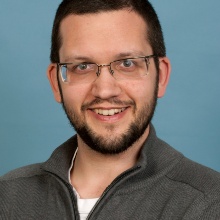
Dr. Deven Estes is an Assistant Professor at the University of Stuttgart's Faculty of Chemistry, affiliated with the Institute of Technical Chemistry. His research focuses on surface chemistry, catalysis, and materials characterization with particular emphasis on immobilized metal complexes and hydride chemistry. Research interests include catalyst design for sustainable energy applications, surface immobilization techniques, and advanced characterization methods including solid-state NMR and X-ray spectroscopy. Recent work explores hydrogen storage, CO2 conversion, and electrocatalyst development. Publication analyses show strong focus on metal hydride characterization, surface confinement effects, and catalytic mechanisms of transition metal complexes, with emerging interests in green chemistry applications and analytical method development. His group develops novel catalytic systems for energy conversion and sustainable chemical synthesis.
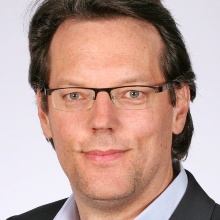
Stefan Funke is a Professor at the University of Stuttgart's Institute for Formal Methods in Computer Science, part of the Faculty of Computer Science, Electrical Engineering and Information Technology. His work focuses on algorithm design and computational geometry with applications in road networks, trajectory analysis, and geographic information systems. He leads the Algorithmics Group, developing efficient algorithms for shortest path planning, network optimization, and privacy-preserving queries. Research interests include geometric algorithms, graph theory, and practical implementations of theoretical results in transportation and spatial data analysis. Notable contributions involve contraction hierarchies for fast shortest path queries, trajectory mining techniques, and methods for preserving privacy in network-based computations. Recent work emphasizes scalable solutions for large-scale road networks, including simplification methods that preserve topological features and energy-efficient routing strategies for electric vehicles. His research often bridges theoretical foundations with real-world applications in navigation systems and smart mobility solutions. Awards and grants are not explicitly listed in the provided data, but his extensive publication record indicates sustained recognition in algorithmic research. He advises on multiple interdisciplinary projects involving spatial data processing and algorithm engineering.
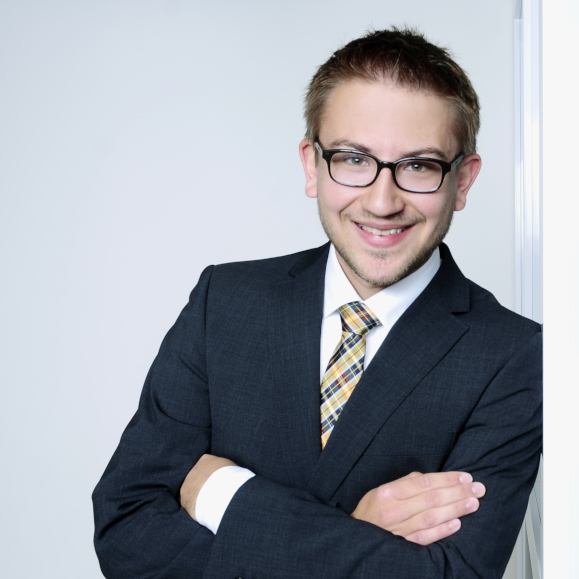
Dr. Jochen Ballof is a Staff Scientist in the Superheavy Element Chemistry department at GSI Helmholtzzentrum für Schwerionenforschung GmbH, Germany. Previously, he worked as a Research Associate at the Facility for Rare Isotope Beams (FRIB) and as a Senior Fellow at CERN-ISOLDE. His academic background includes a PhD in Nuclear Chemistry from Johannes Gutenberg University Mainz and a Dipl.-Chem. in Chemistry from the same institution. Education: PhD in Nuclear Chemistry (Johannes Gutenberg University Mainz, 2022) Diploma in Chemistry (Johannes Gutenberg University Mainz, 2014) Ballof's research focuses on nuclear chemistry, superheavy element production, and innovative ion source development. He specializes in radioactive molecular beams, gas-phase chemistry of transactinides, and experimental techniques for fundamental symmetry studies. His work bridges nuclear physics and chemical separation methods through projects like EDM 3 and TASCA. Recent publications highlight his contributions to superheavy element discovery (2025), radioactive molecule production (2024), and ion source optimization (2023). His expertise spans computational modeling of ion transfer, experimental target design, and cryogenic spectroscopy of unstable isotopes. Presentations: Invited Talk: 14th International Conference on Stopping and Manipulation of Ions (2023) Contributed Talk: Fundamental Symmetries at FRIB Workshop (2022) Poster: ISOLDE Workshop and Users Meeting (2022) Contributed Talk: 19th International Conference on Electromagnetic Isotope Separators (2022) Contributed Talk: 19th International Conference on Ion Sources (2021) Dr. Ballof mentors students Katharina Hermainski and Felix Sprunk in PhD and Master’s research. His collaborations with institutions like CERN-ISOLDE, FRIB, and Johannes Gutenberg University Mainz drive advancements in nuclear chemistry and rare isotope studies.
Termeh Shafie is a full-time Professor in the Department of Politics and Public Administration at the University of Konstanz, specializing in Computational Social Science and Data Science. With a strong statistical foundation, she develops advanced methodologies for analyzing multivariate social networks while bridging archaeological network reconstruction with modern data science techniques through projects like NEXUS 1492. Key Research Areas: Multigraph modeling, network entropy analysis, isotope geoprovenance, and hypergraph representations Projects: NEXUS 1492 archaeological network reconstruction Her 15 most recent publications demonstrate significant contributions to network methodology (random multigraph models, centrality index analysis), archaeological applications (Caribbean attack networks, Iroquoian settlement patterns), and data privacy frameworks. Articles span 2012–2025 with interdisciplinary focus on statistical sociology, archaeological theory, and computational modeling. Current teaching includes courses on social network analysis, data science, and statistical learning. Office hours available via ILIAS booking system. Contact details provided for both academic and administrative correspondence.
Jörn Birkmann is a Professor for Spatial Development and Environmental Planning and Director of the Institute of Spatial and Regional Planning (IREUS) at the University of Stuttgart. Previously, he served as Head of the Section 'Vulnerability Assessment, Risk Management and Adaptive Planning' at the United Nations University Institute for Environment and Human Security (UNU-EHS) from 2007-2014, and as Assistant Professor at the University of Bonn from 2010-2014. He received his PhD in Engineering from the University of Dortmund in 2003 with distinction and completed his habilitation in Geography at the University of Bonn in 2009. His research focuses on vulnerability and risk assessment, climate change adaptation, disaster risk reduction, and adaptive urban governance. He has developed conceptual frameworks for examining vulnerability and risk profiles in the context of natural hazards and climate change, with particular interest in coupled social-ecological systems under climate change conditions. His work spans both quantitative and qualitative assessment methods for measuring vulnerability, resilience, and adaptive capacities of societal groups, critical infrastructures, and regions. His publication record shows a strong focus on empirical studies of vulnerability dynamics, particularly regarding rural-urban linkages in flood-prone areas, heat stress vulnerability in urban settings, and transboundary vulnerability clusters requiring regional cooperation. His research often employs interdisciplinary approaches combining spatial analysis with social science methods to understand complex vulnerability patterns. IPCC Lead Author for Special Report on Managing Extreme Events Member of IRDR Science Committee since 2013 Full member of the Academy of Spatial Research and Planning Editorial Board Member of International Journal of Disaster Risk Reduction Recipient of University of Dortmund Dissertation Prize in 2004 Professor Birkmann leads a research team at IREUS that includes several academic staff members who frequently collaborate on publications, particularly focusing on vulnerability assessment in different geographical contexts. His work demonstrates strong international collaboration, with research projects spanning Germany, Pakistan, Greece, Indonesia, and other countries affected by climate-related hazards.
Helmholtz Centre for Environmental ResearchGermany
Dr. Julia Moll is a Scientist at the Department of Soil Ecology, Helmholtz Centre for Environmental Research - UFZ (UFZ) in Halle/Saale, Germany. She currently holds a Temporary Position for Principal Investigator (DFG SPP 1374) at UFZ since March 2023, following her postdoctoral position from August 2018 to February 2023. Her research is situated within the Ecosystems of the Future research unit, focusing on soil microbial ecology and decomposition processes. Dr. Moll earned her PhD in the Department for Soil Ecology at the Helmholtz Centre for Environmental Research - UFZ, with her thesis titled "Fungi in an arable soil: Resource-related community dynamics, contribution to belowground food web and carbon flow." Prior to her PhD, she completed her Diploma thesis at the Freie Universität Berlin with a major in ecology and minors in microbiology and zoology. Her research focuses on microbial communities and their contribution to ecosystem processes , particularly examining how land use change and management intensities affect these communities. She employs advanced molecular techniques including Next Generation Sequencing (NGS), Metabarcoding, and qPCR to study fungal, bacterial, and nematode diversity in soil and deadwood ecosystems. Her work bridges the gap between molecular ecology and ecosystem functioning, with particular emphasis on decomposition processes in forest ecosystems. Dr. Moll's publication record demonstrates a strong focus on deadwood decomposition ecology and the microbial communities associated with this process. Her research spans multiple tree species and examines spatial and temporal patterns in microbial communities. She has made significant contributions to understanding the relationships between fungi, bacteria, and nematodes in deadwood ecosystems, as well as developing molecular methods for studying these complex communities. As a scientist at UFZ, Dr. Moll contributes to several major research projects including the Biodiversity Exploratories: BELongDead (Multitrophic Functional Diversity and Fungal Functional Diversity). Her current work examines fungal fruiting bodies and wood sampling in long-term deadwood experiments, continuing her longstanding interest in the role of fungi in carbon cycling and decomposition processes. Dr. Moll is actively involved in mentoring students and welcomes those interested in molecular-ecological research for final theses, internships, and student assistant positions. Her laboratory work combines field sampling with advanced molecular techniques to unravel the complex interactions within soil and deadwood ecosystems.
Rhenish Friedrich Wilhelm University of BonnGermany
Prof. Dr. Sebastian Hofferberth is a Professor at the Institut für Angewandte Physik, Faculty of Mathematics and Natural Sciences, University of Bonn. His research focuses on quantum optics and quantum technology, specifically developing methods to assemble light and matter from fundamental components like photons and atoms. His group explores complex quantum states for applications in quantum technology. Research interests include: Generation and manipulation of quantum states Applications in quantum information processing Ultracold atomic systems Quantum correlations in photonic systems Recent publications demonstrate a strong focus on experimental quantum optics, particularly in Rydberg atom systems and quantum light-matter interactions. Key trends include advancements in quantum control techniques, atomic trapping methods, and novel quantum optical phenomena.
Dr. Christian R. Wick is a Principal Investigator and Coordinator of the EAM Unit Computational Advanced Materials and Processes (CAMP) at Friedrich-Alexander-University Erlangen-Nürnberg. He holds a Dr. rer. nat. in theoretical physics and focuses on multiscale modeling of materials, particularly in mechanochemistry, catalysis, and polymer networks. His research integrates computational methods like molecular dynamics and DFT to study reaction mechanisms in materials science and enzymology. He completed his education at FAU with a B.Sc. (2009), M.Sc. (2011), and Ph.D. (2015) in Molecular Science and Theoretical Physics. His work bridges theory and experiment, addressing challenges in low-temperature catalysis (e.g., water-gas shift reactions) and functional materials design. Notable contributions include advancements in SILP catalysts, epoxy resin modeling, and mechanochemical reactivity prediction. Wick has been recognized with the Lecture Award at the 28th Molecular Modelling Workshop (2014). His research outputs span over 28 publications, with key topics including ionic liquid behavior, polymer cross-linking dynamics, and computational enzyme modeling. He collaborates widely, contributing to projects like the GRK 2423 FRASCAL initiative on fracture mechanics across scales. Wick’s interdisciplinary approach involves teams in materials science, catalysis, and computational physics, with ongoing projects on advanced polymer materials, mechanochemical reaction engineering, and enzyme activity modeling. His lab (CAMP) emphasizes innovative methodologies for simulating complex material behaviors under mechanical and thermal stresses.
Rhenish Friedrich Wilhelm University of BonnGermany
Johann Ostmeyer is a post-doctoral researcher at the Helmholtz Institute for Radiation and Nuclear Physics at the University of Bonn. He holds a PhD and MSc in Physics from the University of Bonn (2021 and 2018, respectively). His research focuses on Condensed Matter Theory , Lattice Gauge Theory , and Quantum Computing . Key interests include developing Monte Carlo algorithms to address the fermion sign problem , studying quantum spin chains , and simulating organic molecular semiconductors . He also explores Hamiltonian lattice formulations and algorithmic optimization for high-precision simulations. Recent work includes advancements in radial updates for ergodicity, Fourier acceleration for autocorrelation reduction, and high-precision studies of charge transport in organic materials. His methods bridge theoretical frameworks with computational efficiency, addressing challenges in quantum many-body systems. Awards: Mario Markus Prize for Ludic Science (2022) Pineapple Science Award in Physics (2021) Initiativ-Preis der Universitätsgesellschaft Bonn (2021) His GitHub repositories showcase contributions to quantum Monte Carlo , lattice field theory , and machine learning applications . Collaborations include work on the Thirring model with domain wall fermions and Trotter decomposition optimizations for classical/quantum computing.
Rhenish Friedrich Wilhelm University of BonnGermany
Petra Mutzel is a Professor of Computer Science at the University of Bonn. Her research focuses on graph algorithmics, temporal networks, and combinatorial optimization with applications in data science and bioinformatics. She holds a PhD in Computer Science from the University of Cologne (1994) and a Diplom in Mathematics from the University of Augsburg (1990). Her work emphasizes algorithmic solutions for complex graph problems, including temporal graph analysis, graph learning, and optimization frameworks for real-world networks. She has contributed to open-source libraries like Tglib for temporal graph processing and frameworks like Scaffold Hunter for medicinal chemistry. Her research spans theoretical foundations and practical implementations, with notable contributions to graph drawing, vehicle routing optimization, and protein complex analysis. Mutzel’s recent publications (2022-2025) explore temporal network dynamics, robust combinatorial optimization, and scalable graph kernel methods. She actively engages in academic leadership, organizing conferences such as WALCOM 2022, and serves on editorial boards for journals in algorithms and computational geometry.
Benjamin Berkels is an apl. Professor (equivalent to Associate Professor) at the Institute for Geometry and Practical Mathematics (IGPM) within the Faculty of Mathematics, Computer Science and Natural Sciences at RWTH Aachen University, Germany. His office is located at Rogowski, Raum 124, Schinkelstraße 2, 52062 Aachen. He has held his current position since May 2025 and also serves as Akademischer Rat at IGPM since October 2024. Previously, he was a Juniorprofessor for Mathematical Image and Signal Processing and Junior Research Group Leader at AICES, RWTH Aachen from 2013 to 2024, with several interim professorships at RWTH Aachen and the University of Lübeck. Dr. Berkels received his educational foundation with a Dipl.-Math. from the University of Duisburg-Essen in 2005, followed by a Dr. rer. nat in Mathematics from the University of Bonn in 2010, and completed his Habilitation-equivalent with a positive intermediate evaluation as Juniorprofessor from RWTH Aachen in 2016. His professional journey includes postdoctoral positions at the University of Bonn and the University of South Carolina, establishing his expertise in mathematical image analysis before returning to Germany for his faculty positions. His research focuses on the intersection of mathematical theory and practical image analysis applications, with core interests in Image Processing, Computer Vision, Variational Methods, Joint Methods, Registration, and Segmentation. Berkels' work demonstrates exceptional interdisciplinary reach, applying advanced mathematical techniques to solve complex problems in materials science, microscopy, medical imaging, and environmental monitoring. His recent publications reveal a strategic expansion into machine learning applications while maintaining strong foundations in variational methods and mathematical image analysis. Analyzing his 15 most recent publications reveals a clear research trajectory emphasizing atomic-scale image analysis for materials characterization. Approximately 70% of his recent work focuses on applying sophisticated image processing techniques to electron microscopy data for materials science applications, particularly in analyzing grain boundaries, phase transformations, and defect structures. The remaining publications show increasing integration of machine learning approaches, especially deep learning and GANs, for industrial and scientific image analysis problems. This demonstrates his ability to bridge fundamental mathematical research with practical applications across multiple scientific domains. Dr. Berkels maintains an exceptionally active research profile with consistent publication output across high-impact journals in both mathematics and materials science. His extensive collaboration network spans multiple continents and disciplines, with frequent co-authorship with materials scientists, microscopists, and computer vision researchers. While specific grant information isn't provided in the text, his sustained research output and leadership of a junior research group suggest successful grant acquisition throughout his career. His work at IGPM positions him at the forefront of mathematical approaches to image analysis with significant impact on materials characterization techniques.
Reinhard Lührmann is a Professor and Director at the Max Planck Institute for Multidisciplinary Sciences, leading the Department of Cellular Biochemistry. He holds an honorary professorship at Georg-August University of Göttingen. His research focuses on RNA splicing mechanisms, particularly the spliceosome's structure and function. He earned his PhD from the University of Münster in 1975 and has held roles at the Max Planck Institute for Molecular Genetics (1981–1988), University of Marburg (1988–1999), and currently directs the MPI department since 1999. Research Interests: Lührmann’s lab investigates how the spliceosome recognizes intron/exon boundaries in complex metazoan pre-mRNAs, the assembly of catalytically active spliceosomes, and the structural basis of splicing. Techniques include biochemical purification, mass spectrometry, RNA engineering, X-ray crystallography, and cryo-EM to visualize spliceosome components. Work emphasizes mammalian systems but also uses yeast for core mechanisms. Publications highlight structural insights into spliceosome activation, RES complex roles, and small molecule inhibitors targeting splicing. Collaborations with structural biologists (e.g., Stark, Kastner) and functional studies on catalytic steps underscore his interdisciplinary approach. Labs/Teams: His group is part of the Max Planck Institute’s Molecular Biology and Structural Biology research networks. The lab’s homepage is here .
Professor Alexander I. Bobenko is a faculty member at the Institute of Mathematics, Technische Universität Berlin, holding the position of Professor in the Department of Geometry and Mathematical Physics. His research focuses on Discrete Differential Geometry, Integrable Systems, and Mathematical Physics, with notable contributions to the theory of discrete surfaces, circle patterns, and geometric structures. He leads the research group AG Geometrie und mathematische Physik and is involved in the DFG Collaborative Research Center (SFB/TRR 109) 'Discretization in Geometry and Dynamics.' PhD advisor for over 20 students, including Carl O. Lutz and Alexander Fairley. Recipient of extensive funding for projects on discrete geometry and integrable systems. His research interests span geometry visualization, Riemann surfaces, and applications of discrete methods in mathematical physics. Bobenko has published prolifically on topics like discrete conformal maps, minimal surfaces, and integrable systems, with over 130 peer-reviewed articles. His work bridges classical and discrete geometry, emphasizing computational and algorithmic approaches.
Overview Prof. Hong-Yu Wong holds the Chair of Philosophy of Mind and Cognitive Science at the University of Tübingen's Philosophical Seminar. He leads the CIN Philosophy of Neuroscience Group and serves as Head of the Philosophy of Neuroscience research cluster. His work bridges philosophy, cognitive science, and empirical research in VR/AR technologies. Research Focus Embodied Agency: Explores how bodily awareness structures action and self-consciousness Virtual Reality Embodiment: Studies body ownership and self-localization in immersive environments Philosophy of AI: Analyzes agency in artificial systems and ethical implications Neurophilosophy: Examines consciousness, emotion, and action through interdisciplinary lenses Key Contributions Recent work includes groundbreaking studies on agency disorders in schizophrenia (PNAS 2023), the aesthetics of magical performance (British Journal of Aesthetics 2023), and foundational papers on embodied cognition (Philosophy and Phenomenological Research 2018). His upcoming monograph *Embodied Agency* (Oxford UP) synthesizes decades of research. Academic Leadership Supervises doctoral candidate Julian Saccone Guides academic assistants like Rebecca Dreier and researchers such as Dr. Krisztina Orbán Recognition Pioneer in integrating empirical methods into philosophical inquiry, with awards including the CNCC Essay Award (2008) and multiple grants supporting interdisciplinary research initiatives.
Dr. David Peacock is a researcher affiliated with the Department of Structural Geology and Geothermics at the University of Göttingen, Germany. He is a member of the MEET group and focuses on structural geology, geothermics, and fracture analysis. His work integrates field observations, geophysical data, and theoretical models to study fault systems, geothermal reservoirs, and fluid flow dynamics. Research interests include fracture mechanics, fault network evolution, and the application of structural analysis to geothermal exploration. He has contributed to studies in the Harz Mountains and other regions, emphasizing the interplay between tectonics, fluid dynamics, and subsurface processes. Dr. Peacock’s methodologies involve high-resolution seismic analysis, Mohr diagram stress modeling, and virtual outcrop databases. His publications span structural terminology, fracture sequencing, and geothermal reservoir characterization. Collaborations with the MEET group highlight interdisciplinary approaches to energy and subsurface challenges.