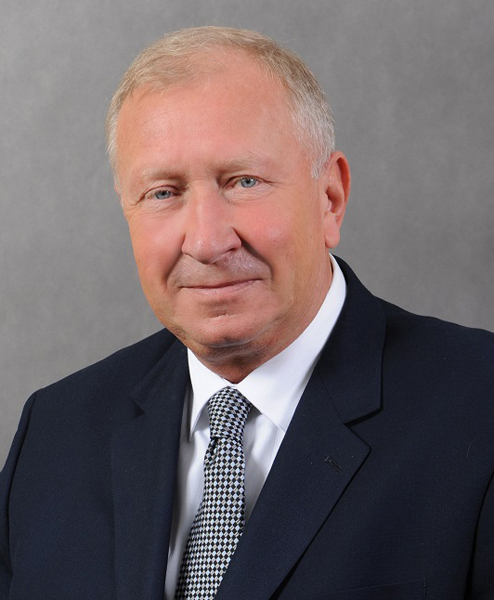
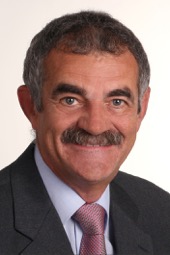
Jan Dreier is a Research Fellow at the Institute of Logic and Computation at Vienna University of Technology. His research centers on structural graph theory and algorithmic meta-theorems, particularly exploring the boundaries of tractability for model checking problems. Dreier's work bridges theoretical computer science and discrete mathematics, focusing on graph decompositions, parameterized complexity, and logical expressiveness. Key research themes include monadic stability in graph classes, applications of model theory to computer science, and efficient algorithms for logical queries on structured graphs. His publication record shows consistent focus on graph sparsity concepts and algorithmic applications of logic, with recent work expanding into approximation methods for counting queries. Research demonstrates sophisticated applications of combinatorial methods to fundamental problems in computational complexity.
Maria Chudnovsky is a Professor of Mathematics at Princeton University and a former Professor of IEOR and Mathematics at Columbia University (2006-2014). Her research focuses on graph theory and combinatorics, with significant contributions to structural graph theory, perfect graphs, and algorithmic applications. Education: B.A. Summa Cum Laude (1996) and M.Sc. (1999) from Technion, Ph.D. (2003) from Princeton University Her work addresses fundamental problems in graph coloring, forbidden induced subgraphs, and combinatorial optimization, including the proof of the Strong Perfect Graph Theorem and development of algorithms for detecting graph structures. Notable awards include the MacArthur Foundation Fellowship (2013-2017), D.R. Fulkerson Prize (2009), and Henry Burchard Fine Professor of Mathematics (2022). She has held prestigious fellowships such as the Clay Mathematics Institute Research Fellowship (2003-2008). Grants: NSF DMS-EPSRC Grant DMS-2120644 (2021-2024), US Army Research Office Grant W911NF-16-1-0404 (2016-2020), and multiple NSF grants She has advised numerous PhD/MSc students and postdocs, including Sophie Spirkl, Mingxian Zhong, and Tara Abrishami. Her outreach includes popular science communication on YouTube's Numberphile and participation in initiatives promoting women in STEM.
Jia Min Chin is an Associate Professor at the Faculty of Chemistry , affiliated with the Institute of Functional Materials and Catalysis . Her research focuses on advanced materials, particularly Metal-Organic Frameworks (MOFs), Gold nanoparticles, and N-Heterocyclic Carbene (NHC) chemistry, with applications in catalysis, environmental remediation, and sustainable technology. Her scientific work contributes to United Nations Sustainable Development Goals (SDGs) through innovations in functional materials and catalytic systems. Key projects include Breaking the ice – novel energy efficient hybrid de-icing systems and DYNAMOF: Electric Field Assisted Dynamic MOF Alignment , funded by major research grants. She received the prestigious ERC Grant in 2020 for her contributions to materials science. Chin's research spans MOF-based nanocomposites, photonic assemblies, and biomedical applications. Her publications highlight trends in Stimuli-responsive materials (electric/magnetic fields) Green catalytic systems Anti-icing and humidity-sensing coatings Cancer therapy platforms Scientific Awards ERC Grant (2020) She collaborates globally on cutting-edge topics like MOF alignment, nerve agent decomposition, and CO2 reduction, with recent activities including lectures at international conferences and workshops on material structuring.
Ivan Viola is an Associate Professor at the Institute of Computer Graphics and Algorithms, part of the Faculty of Informatics at TU Wien, Austria. He holds a leave of absence until December 2024 while also being affiliated with King Abdullah University of Science and Technology (KAUST) as an Associate Professor funded by the Vienna Research Groups program. His research focuses on visualization techniques in medicine, biological sciences, and earth sciences, with a specialty in illustrative visualization and DNA-nanotechnology applications. Viola has contributed over 100 scientific works and serves as a reviewer and panelist for major conferences in computer graphics and visualization. Education: M.Sc. (2002) and Ph.D. (2005) in Computer Graphics from TU Wien. Postdoctoral research at the University of Bergen (2006-2011), where he became Full Professor before returning to TU Wien. Research Interests: Whole-cell visualization Molecular modeling Interactive 3D environments Biomedical visualization Data-driven colormap techniques Awards: IEEE VIS 2017 Best Paper Honorable Mention, 'Best Overall Concept' for CellView, and multiple visualization awards. Active in EuroVis and IEEE VIS organizing roles. Grants & Supervision: Leads the Visualization Group at TU Wien, supervising student projects and master’s theses. Involved in grants like the Vienna Research Groups program. Labs/Teams: Visualization Group at TU Wien, collaborating on projects like CellView and Molecumentary.
Bodo Wilts is a Professor at the University of Salzburg in the Chemistry and Physics of Materials department. His research focuses on biophotonics , structural color , and photonic nanostructures in biological systems, particularly insects and beetles. Education Habilitation in Physics, University of Freiburg (2020) PhD in Physics, Rijksuniversiteit Groningen (2013) Diploma in Physics, University of Göttingen (2009) Research Trends Wilts’s recent publications highlight interdisciplinary work bridging biological optics , nanotechnology , and biomimetic materials . Key themes include: Photonic networks in insects (disordered vs. ordered structures) Self-assembly of block copolymers for advanced materials Applications of structural coloration in diagnostics and sensing 3D imaging of photonic nanostructures using X-ray tomography Projects Ra-Dia-M (2025–2026): Label-free SERS diagnostics for melanoma cells Unraveling butterfly scale morphogenesis (2022–2026): Genetics and biomechanics of butterfly scales High-aspect ratio optical structures (2024–2025): Simulation and characterization of optical metamaterials Activities Keynote on Dis/ordered photonic networks in insects (2024) Lectures on Multifunctional colors and nanostructure formation (2024) Presentations on Amorphous photonic networks (2023–2024)
Robert Peticzka serves as Assistant Professor in the Department of Geography and Regional Research at the University of Vienna, where he also directs geography studies. His research integrates physical geography, soil science, and geoecology with specialized focus on loess regions of Lower Austria. His primary research domains include: Loess-paleosol stratigraphy and quaternary landscape evolution Soil hydrology and microdialysis techniques in dry soils Geoarchaeological investigations of anthropogenic landforms Peatland carbon cycling and root exudate dynamics Environmental monitoring in urban and agricultural settings Recent publications reveal methodological innovation in soil solution analysis and paleoenvironmental reconstruction, with strong emphasis on interdisciplinary approaches combining geological, archaeological, and hydrological perspectives. His work frequently examines human-environment interactions in Central European landscapes. Professor Peticzka supervises bachelor and master students through dedicated preparatory seminars while teaching core courses in soil geography, geoecology, and field methods. He maintains active affiliation with the Physiogeographical Laboratory (http://www.univie.ac.at/physiogeographisches_labor/), conducting field research in the Vienna Basin and Lower Austrian loess regions.
University of Natural Resources and Life Sciences ViennaAustria
Dr. Christian Hansmann is a researcher at the Institut für Holztechnologie und Nachwachsende Rohstoffe , part of the Department für Biotechnologie und Lebensmittelwissenschaften at the University of Natural Resources and Life Sciences, Vienna (BOKU) . With a doctorate in wood technology (2004) and graduation in timber industry (2002), he has focused on wood modification, drying processes, and sustainable material applications. Education Doctorate, BOKU Vienna (2004) Graduation in Timber Industry (2002) His research explores wood science through innovations in wood drying , chemical modification , and bio-based composites . Notable projects include supercritical CO2-assisted impregnation, thermal insulation panels from agricultural byproducts, and eco-efficient hardwood utilization. He has supervised 15 university theses, including studies on wood laminates and bark beetle control. Recent publications highlight his work on wood modification techniques , with 15 articles from 2005–2025 covering topics like hydrophobic wood surfaces , dimensional stability , and flame-retardant treatments . Key methods include UV microscopy, siloxane treatments, and adhesive bonding analysis. Scientific Awards: tecnet Call 2009 'Eco-efficient Products' 1st Prize (2010) Dr. Wolfgang Houska Recognition Award (2009) Schweighofer Innovation Prize (2009) He has delivered 57 lectures across 15 countries, including presentations at SWST International Conventions and European Wood Modification Conferences . As a reviewer for journals like Wood Science and Technology and European Journal of Wood Products , he contributes to quality control in his field.
Helwig Hauser is a Professor in the Department of Computer Graphics within the Faculty of Informatics at Vienna University of Technology (TU Wien). His research focuses on advancing visualization techniques across multiple scientific domains. With a career spanning over two decades, he has established himself as a leading expert in visualization research. His primary research interests encompass Computer Graphics, Visualization, Data Visualization, Visual Analytics, Scientific Visualization, Information Visualization, Set Visualization, and Molecular Visualization. Dr. Hauser's work bridges theoretical foundations with practical applications, developing innovative techniques for visual data exploration and analysis across diverse fields from medical imaging to molecular biology. Analysis of his publication record reveals a consistent research trajectory focused on developing novel visualization methodologies. His work demonstrates strong emphasis on interactive visual analytics, set visualization techniques, and domain-specific applications in medical and molecular visualization. Notably, he has made significant contributions to set visualization (Radial Sets), molecular visualization (Watergate), and medical visualization (Aortic Dissection Maps). Best paper award (one out of three) at EuroVis 2007 Heinz Zemanek Preis (2006) Best paper award at SimVis 2005 Dr. Hauser has supervised numerous doctoral and master's students, with a particular focus on visual analytics of complex data types. His research has been supported by various projects including the Punkt-basierte Volumen-Graphik project (2006-2009). He has contributed significantly to the visualization community through his editorial work and service as a journal reviewer, though specific details on current grants were not provided in the source text.
Institute of Science and Technology AustriaAustria
Monika Henzinger is a Professor at the Institute of Science and Technology Austria (ISTA) since 2023 and Vice President for Technology Transfer at ISTA since 2024. Her research focuses on efficient algorithms and data structures , particularly in dynamic settings where input data changes continuously. She also investigates privacy-preserving algorithms and the practical implementation of theoretically optimal algorithms. Education: PhD in Computer Science (1993, Princeton University, USA) Research Interests: Her work spans dynamic graph algorithms, differential privacy, and transforming theoretical algorithms into practical solutions. Key areas include minimizing computational resources, proving limits of efficiency, and ensuring data privacy through noise addition. Article Trends: Recent publications emphasize dynamic algorithms for graph problems , differential privacy , and clustering techniques . Topics such as minimum cut, bipartite matching, and edge coloring in dynamic environments are prominent, alongside privacy-preserving data analysis. Scientific Awards: 2024 Best Paper Award (SODA) 2021 Wittgenstein Award and ERC Advanced Grant 2019 Carus Medal (Leopoldina Academy) 2016 ACM Fellow 2014 ERC Advanced Grant 2004 European Young Investigator Award Advising & Grants: She advises PhD students and leads projects funded by grants such as the ERC Advanced Grant, Wittgenstein Award, and Austrian Science Fund initiatives. Her team includes postdocs and PhD candidates working on dynamic data structures and privacy. Labs & Teams: Leads the Henzinger_Monika Group at ISTA, focusing on algorithms, data structures, and dynamic graph problems. Collaborates with institutions globally on projects related to network optimization and privacy.
Benjamin Sudakov is a Professor of Mathematics at ETH Zurich, where he has held positions since 2013. Previously, he served as a Professor at UCLA (2007-2014) and as an Assistant Professor at Princeton University (2002-2007). He has also been affiliated with the Institute for Advanced Study (2005-2006) and held prestigious fellowships including the Veblen Instructorship (1999-2002). His academic journey began with a Ph.D. from Tel Aviv University in 1999 under the supervision of Noga Alon. Education: Ph.D. in Mathematics, Tel Aviv University (1999) Advisor: Noga Alon Sudakov is a leading expert in combinatorics, with primary research interests in probabilistic and extremal combinatorics, random structures, and the application of combinatorial methods to theoretical computer science and mathematics. His work spans algebraic combinatorics, Ramsey theory, and graph theory, addressing foundational questions and developing novel methodologies. His publications and talks highlight his contributions to Ramsey graphs, equiangular lines, hypergraph theory, and submodular optimization. Key themes include structural graph theory, extremal problems, and probabilistic techniques in discrete mathematics. Scientific Awards: Humboldt Research Award (2014) Fellow of the American Mathematical Society (2013) Invited Speaker, ICM 2010 David Saxon Presidential Term Chair (2007-2011) NSF CAREER Award (2006-2011) Alfred P. Sloan Fellowship (2004-2006) Sudakov has mentored 21 Ph.D. students, including prominent mathematicians like Peter Keevash, Jacob Fox, and Matija Bucic, many of whom hold academic positions globally. He has received significant funding, including the SNSF grant 200021_196965, and actively participates in editorial boards and workshops on extremal combinatorics and related fields. Notable among his collaborative efforts is a series of workshops and seminars at institutions like Banff Research Center, IPAM, DIMACS, and BIRS, focusing on probabilistic and extremal combinatorics. His teaching includes graduate-level courses such as Graph Theory, Probabilistic Methods in Combinatorics, and Algebraic Methods in Combinatorics.
Eduard Gröller is a Full Professor of Visualization at the Vienna University of Technology (TU Wien), leading the Research Unit of Computer Graphics and the Visualization Group within the Institute of Visual Computing & Human-Centered Technology (VC&HCT). He holds adjunct professorships at the University of Bergen, Norway, and chairs several academic committees. His academic journey began with a PhD in 1993 from TU Wien, followed by extensive contributions to visualization research. His research focuses on visual computing, scientific visualization, and medical imaging, with applications in energy modeling, climate analysis, and molecular biology. Gröller has pioneered methods like BEMTrace for BIM-based energy models and HORA 3D for flood risk visualization. He co-authored over 300 publications, including foundational work in IEEE Transactions on Visualization and Computer Graphics and Computer Graphics Forum . Gröller's awards include the IEEE VGTC Technical Achievement Award (2019), Eurographics 2015 Outstanding Technical Contributions Award, and Fellow of the Eurographics Association (2009). He actively contributes to conferences like EuroVis and IEEE Visualization as program chair and reviewer. His educational efforts span courses in visual computing, graphics, and data analysis, with a focus on immersive tools like ImNDT for material data exploration. Current projects include Climate-Sensitive Adaptive Planning for Resilient Cities, Visual Analytics in Radiation Therapy, and scalable web-based visualization techniques. He leads teams in VRVis, a research center for applied visualization, and collaborates internationally on medical imaging and environmental data challenges.
Michał Karoński is a Professor of Mathematics at the Faculty of Mathematics and Computer Science, Adam Mickiewicz University, Poznań, Poland, and serves as head of the Department of Discrete Mathematics. He has held visiting professorships at Emory University, The Johns Hopkins University, Purdue University, and Southern Methodist University since 1975, with ongoing engagements at Emory University since 1992. Research Focus: Discrete mathematics, random discrete structures, graph theory, and theoretical computer science. Leadership Roles: Editor-in-Chief of Random Structures & Algorithms (since 1990), Chairman of the Council of National Science Centre (2010–2016), and organizer of 17 bi-annual conferences on random structures. His research group in random structures gained international recognition in the 1970s. He has authored 60 publications, delivered over 30 plenary lectures, and collaborated globally at institutions like Microsoft Research, Bellcore, and BRICS. Scientific Awards: 2016 Medal 'Homini Vere Academico' (AMU Rector) 2013 Polonia Restituta Officer Cross (President of Poland) 1990 Minister of Science and Higher Education Prize His work spans probabilistic combinatorics, algorithm theory, and graph irregularity, with influential publications on stochastic Kronecker graphs, random intersection graphs, and distributed complexity in matchings.
Jochen Wambach is a Full Professor at the Institute for Nuclear Physics, Technical University Darmstadt, Germany. He also serves as Head of the Theory Group 'Hadrons and QCD' at GSI, Darmstadt since 2004 and maintains an Adjunct Professor position at the Department of Physics, University of Illinois, Urbana-Champaign since 1996. His academic career includes previous appointments as Full Professor at UIUC (1990-1996), Associate Professor at the University of Bonn (1990-1995), and Deputy Director at the Institute for Nuclear Physics, Forschungszentrum Jülich (1990-1995). His educational background includes: Dr.rer.nat. (PhD) 1979, Physics Department, University of Bonn Dipl.Phys. 1976, Physics Department, University of Bonn Professor Wambach's research focuses on theoretical nuclear physics with particular emphasis on: Medium modifications of hadrons Relativistic heavy-ion physics Structure of hadronic matter Nuclear astrophysics Nuclear structure physics Effective field theories His publication record demonstrates expertise in quantum chromodynamics, phase transitions, and applications to astrophysical environments. His work frequently employs advanced theoretical frameworks including Dyson-Schwinger equations, functional renormalization group approaches, and studies of color superconductivity. Professor Wambach has received significant recognition including: Fellow of the American Physical Society (2003) Elected Member of the Wissenschaftliche Gesellschaft der Universität Frankfurt (2014) He has served the academic community extensively through editorial roles as Associate Editor of the European Journal of Physics A (2007-2014) and Divisional Editor of Physical Review Letters (2007-2014), as well as membership on numerous program advisory committees including those at GSI, LAMPF, and the American Physical Society. With 221 refereed publications and over 6,730 citations (h-index 43), Professor Wambach remains an active contributor to nuclear physics research.
Manuela Waldner is an Assistant Professor (tenure track) at TU Wien's Department of Computer Graphics and Visualization. She leads research in visual interfaces for exploring large-scale data, focusing on human-computer interaction and attention guidance in complex visualizations. Her work spans academic roles including Visualization Group membership and PhD Program Visual Heritage involvement. Research interests include: Interactive data exploration Guided visual attention mechanisms Emerging display environments (VR, multi-display systems) Publications emphasize practical applications of visualization techniques in domains like geographic data, medical imaging, and collaborative analytics. Notable projects include weBIGeo (geographic visualization) and Deskollage (visual information foraging). Awards include the Best Paper Award at EuroVA 2024 . Teaching roles include courses on Information Visualization , Computer Graphics , and Visual Computing . Active in academic service through program committees and editorial roles.
Sebastian Knauer is a researcher at the Faculty of Physics, University of Vienna, specializing in Nanomagnetism and Magnonics. His work bridges quantum technologies and materials science, focusing on magnonic devices, spin-wave spectroscopy, and magnetic heterostructures. Education: B.Sc., M.Sc., Ph.D. His research explores quantum magnonics, low-temperature magnetism, and inverse-design methodologies. Recent publications emphasize Yttrium-Iron Garnet (YIG) films, paramagnon propagation, and quantum Hamiltonian learning. Key trends in his publications include applications of magnonic computing, hybrid quantum systems, and nanostructured materials. Collaborations span projects like On-chip quantum MagNonIcs and Nanometer-thick YIG layers , with international partnerships in quantum technologies. Scientific awards include: Marie Skłodowska-Curie Individual Fellowship (2021) NFFA-Europe Research Infrastructure grant (2022) Top-10 MSCA Fellowship (2021) He contributes to experimental quantum model learning and advancing spin-wave-based computing architectures.