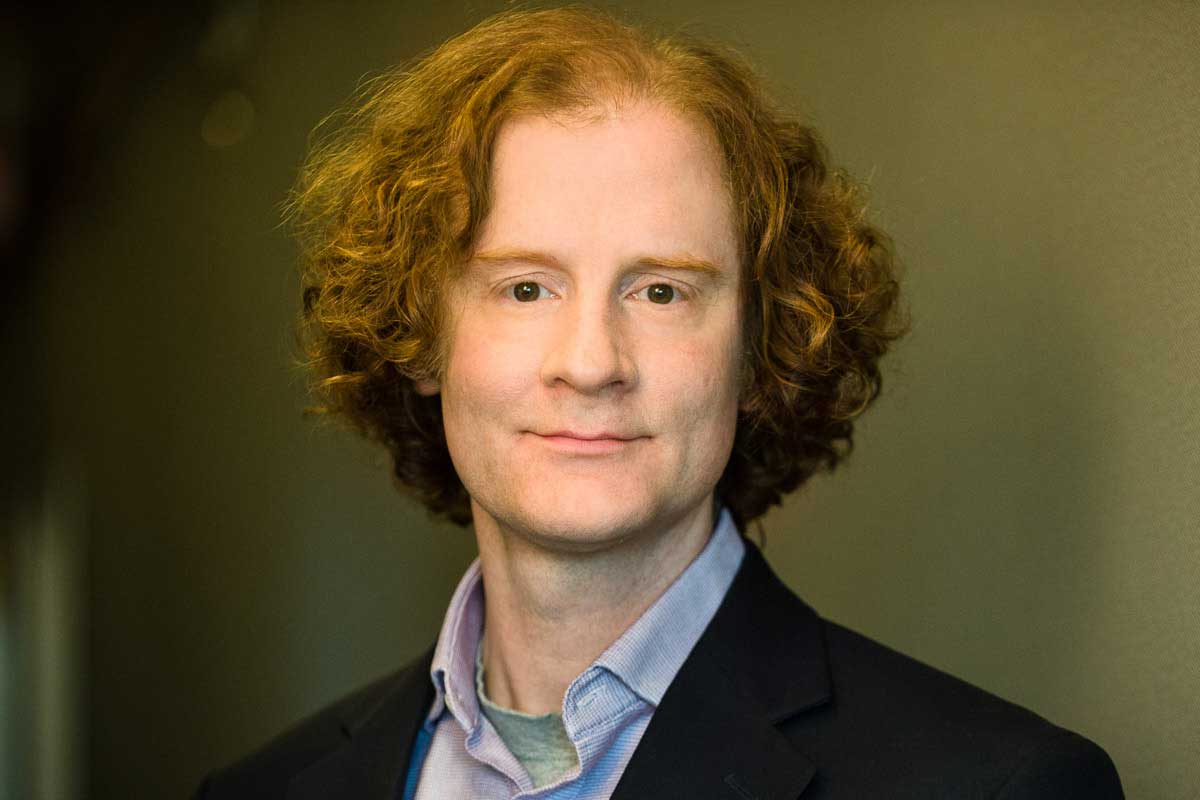
Joel Andreas is a Professor of Sociology at Johns Hopkins University since 2003, serving as Program Director of the East Asian Studies Program. His research focuses on political contention, social inequality, and social change in contemporary China. He holds a PhD in Sociology from UCLA and teaches social theory, political sociology, and courses on Chinese society. He has held visiting positions at universities including the University of Sydney, Hong Kong University, and Ningxia University. His work examines labor movements, rural land policies, and class dynamics in China. Recent research includes analyses of staff-worker congresses, rural land dispossession, and the persistence of militarism in U.S. policy. He critiques market reforms and explores the legacy of the Cultural Revolution. Andreas has contributed to debates on China’s transition to capitalism and the decline of socialist systems. His publications span topics from urbanization to state coercion in rural development. He maintains an active role in academic exchanges and policy-relevant research on China’s socio-political landscape.
Yunxiang Yan is a Professor in the Department of Anthropology at the University of California, Los Angeles (UCLA). His work focuses on China and Cultural Anthropology , with specific expertise in Economic Anthropology , Family and Kinship , and Individualization . Education: Ph.D. in Social Anthropology from Harvard University (1993). Yan’s research explores the intersection of social change , moral theory , and family dynamics in modern China. His ethnographic studies in rural villages provide foundational insights into exchange theory and cultural globalization . Recent publications analyze food safety , medical ethics , and moral crises in China, reflecting his interdisciplinary approach combining anthropology, sociology, and philosophy. Articles span themes like intergenerational intimacy , political oppression , and networked social structures . Scientific Awards: Guggenheim Fellowship Levenson Prize-winning Research Yan’s work bridges local Chinese studies with global anthropological discourse. He has held positions at the Chinese University of Hong Kong, Johns Hopkins University, and UCLA since 1996. His career reflects a commitment to documenting the lives of ordinary people, rooted in his early experiences as an expelled villager during Maoist China. Contact: yan@anthro.ucla.edu
Dr. Chang Xu is an Associate Professor in Machine Learning and Computer Vision at the University of Sydney's School of Computer Science. He holds a Bachelor of Engineering from Tianjin University and a PhD from Peking University. His research focuses on machine learning, data mining, and their applications in AI and computer vision, including multi-view learning, visual search, and face recognition. He is an ARC Future Fellow and a member of the Sydney Southeast Asia Centre and The Net Zero Institute. Education: B.E. in Engineering (Tianjin University), Ph.D. in Computer Science (Peking University). His research interests emphasize handling heterogeneous data, exploring data variety, and developing algorithms for robust AI systems. His work includes adversarial robustness, neural architecture search, and efficient deep learning models. Research trends in his articles include adversarial robustness in neural architectures, efficient vision transformers, multimodal 3D style transfer, and underwater image restoration. Key contributions span image restoration, video super-resolution, and lightweight network design. He has advised multiple PhD and master's students on topics like diffusion models, radar image synthesis, and graph similarity. Awards: ARC Future Fellow. Collaborations focus on cross-domain data integration and AI applications. His labs and teams explore generative models, robust learning, and scalable robotics policies. Recent work includes diffusion models for action segmentation and robust vision-language systems.
Gül Şen is a Senior Lecturer and Privatdozentin at the Institute of Oriental and Asian Studies, University of Bonn, and also serves as a Lecturer at the University of Heidelberg. Her academic work focuses on premodern Ottoman history, historiography, and the dynamics of dependency, particularly in maritime contexts such as galley slavery and war captivity. She is actively involved in major research programs including the DFG-Priority Program 'Transottomanica' and the Bonn Center for Dependency and Slavery Studies. Her research areas include: Premodern Ottoman historiography and narrative strategies Legitimacy of rule and political transitions Maritime unfree labor and galley slavery War captivity and captivity narratives in the 18th century Dependency and asymmetrical power relations in the early modern Mediterranean Her recent publications reveal a strong thematic trend centered on the interplay between narrative construction and social power, particularly in contexts of slavery and captivity. She investigates how historical actors used storytelling to assert legitimacy, cope with crises, and negotiate identity. Her work bridges literary analysis with social history, offering nuanced understandings of agency within systems of dependency. She frequently collaborates with leading scholars like Stephan Conermann and contributes to major edited volumes and series in Ottoman studies. Her scientific awards include: DAAD Award for outstanding academic achievements (2012) Postdoctoral Scholarship from the Fritz Thyssen Foundation (2012–2013) Postdoctoral Fellowships at the Annemarie Schimmel Kolleg (2015–2016, 2018–2019) Postdoctoral Scholarship from the University of Bonn (2019–2020) She has supervised numerous B.A. and M.A. theses at the University of Bonn and Heidelberg and has secured third-party funding, including a DFG project (€192,000) from 2016–2018 and Fritz Thyssen Foundation grants. She is co-editor of the 'Ottoman Studies' and 'Otto Spies Memorial Series' book series, and holds leadership roles in the Society for Turkic, Ottoman and Turkish Studies (GTOT) and the International Association for Ottoman Social and Economic History (IAOSEH). Her academic activities are deeply embedded in collaborative and interdisciplinary research environments. She is affiliated with the Bonn Center for Dependency and Slavery Studies and contributes to the DFG-Priority Program 'Transottomanica,' where she examines mobility dynamics and captivity narratives. Her work is supported by a strong network of international collaborations and editorial engagements.
Dr. Janet Garcia-Hallett is an Associate Professor of Criminal Justice in the Henry C. Lee College of Criminal Justice and Forensic Sciences at the University of New Haven. She earned her Ph.D. in Criminal Justice from Rutgers University School of Criminal Justice and specializes in research examining the intersection of race, gender, and the criminal legal system, with particular focus on formerly incarcerated mothers of color. Dr. Garcia-Hallett's educational background includes: Ph.D., Criminal Justice, Rutgers University School of Criminal Justice M.A., Criminal Justice, Rutgers University School of Criminal Justice B.A., Cum Laude, Honors in Sociology and Psychology, CUNY Macaulay Honors College: Hunter College Her research interests focus on the detrimental impact of incarceration on communities of color and the intersectional obstacles women of color face throughout the criminal legal process. She examines how formerly incarcerated mothers navigate motherhood while confronting systemic barriers related to gender, race, and criminal record. Her work challenges traditional narratives about mass incarceration that have historically centered on men, instead highlighting the unique experiences of women of color who must perform motherwork under oppressive conditions of surveillance and marginalization. Analysis of Dr. Garcia-Hallett's publications reveals consistent themes across criminal justice, gender studies, and race theory. Her work demonstrates a strong focus on qualitative methodologies to center the voices of marginalized populations, particularly examining the intersection of motherhood and incarceration. Recent publications increasingly address public health issues within correctional settings and community reentry challenges. Her research consistently applies critical race and feminist frameworks to challenge systemic oppression within the criminal legal system. Dr. Garcia-Hallett has received significant recognition for her scholarship: 2023 ASA Ida B. Wells-Barnett Distinguished Book Award Multiple 2023 finalists and honorable mentions for book awards 2019 SAGE Junior Faculty Professional Development Teaching Award University of Missouri President's Award for Intercampus Collaboration Her grant funding demonstrates substantial research impact, including the Prison Research and Innovation Network ($200,000) and collaboration on a $2.8 million Arnold Ventures grant for the Missouri Prison Transformation Project. Dr. Garcia-Hallett actively engages in community partnerships, such as her work with Winning Ways Inc. to empower women in the community. Her media presence shows significant public engagement through op-eds in Ms. Magazine and Hartford Courant addressing critical issues like abortion rights for incarcerated women.
David A. Smith is an Associate Professor at the Khoury College of Computer Sciences, Northeastern University. His research focuses on Natural Language Processing (NLP) and computational linguistics, with applications in machine translation, information retrieval, digital humanities, and social sciences. He is a founding member of the NULab for Texts, Maps, and Networks, a research center focused on digital humanities and computational social sciences. Smith's work has been funded by grants from the Mellon Foundation, NEH, and IMLS, supporting projects such as the Viral Texts initiative analyzing 19th-century newspaper networks and the Oceanic Exchanges project tracking transnational information flows. He has contributed to advancements in OCR for historical texts, text reuse detection, and computational analysis of classical languages. He has advised numerous PhD students, including Shijia Liu, Si Wu, and Ryan Muther, and teaches courses like Natural Language Processing and Information Retrieval. His research has been featured in outlets like Wired and the Economist .
Karl Gustafsson is a Professor at Stockholm University within the Department of Economic History and International Relations. His work bridges security studies , collective memory , and digital research methods in international relations. Current Role: Professor of International Relations, Stockholm University Previous Positions: Post-Doc at Lund University, Researcher at Swedish Institute of International Affairs Visiting Appointments: University of Tokyo, Osaka University, Keio University, Academia Sinica, Nordic Institute of Asian Studies Research Focus: Karl specializes in memory politics , ontological security , and anxiety-driven international dynamics , particularly in Sino-Japanese relations and digital platforms . His studies explore how historical narratives and online memory construction influence state identity and policy. Awards & Grants: Recipient of the Wang Gungwu Prize (2014) and Stockholm University Association’s award (2011). Holds Swedish Research Council and Marianne & Marcus Wallenberg Foundation grants for projects on apologies in international politics and digital memory in East Asia . Publications: His work appears in journals such as International Studies Quarterly , European Journal of International Relations , and Memory Studies , addressing topics like narrative power in East Asia, anxiety’s role in policy change , and digital humanities applications in IR.
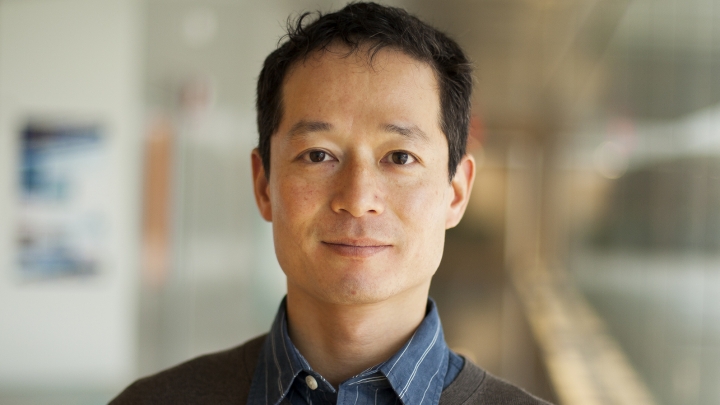
Kazuhiro Saitou is a Professor of Mechanical Engineering at the University of Michigan, affiliated with the College of Engineering. His research focuses on computational design synthesis, topology optimization, and manufacturing process integration. He leads the Algorithmic Synthesis Laboratory (ASL), advancing algorithms for automated design and optimization of mechanical systems. Education: Ph.D. (1996), MIT; M.S. (1992), MIT; B.Eng. (1990), University of Tokyo. He has held tenured positions since 1997, including roles as Founding CEO of Comnext, Inc. (2007–2012) and visiting professorships at École Centrale Paris and Donghua University. Research interests include multi-material topology optimization (M^3 TO), AI-driven design, and sustainable manufacturing. Key projects address additive manufacturing, composite structures, and energy-efficient production systems. He has pioneered methods for manufacturability-driven design and assembly optimization. Notable awards include IEEE Fellow (2018), ASME Kos-Ishii Award (2015), and NSF CAREER Award (1999). He serves as Editor-in-Chief for IEEE Transactions on Automation Science and Engineering and holds leadership roles in ASME and IEEE societies. Teaching includes courses on design optimization, CAD, and global product development. His lab has advised over 30 students, with alumni in academia and industry. Current research explores biomechanical modeling, traffic flow optimization, and medical image registration algorithms.
Gilbert Fridgen is Full Professor in Digital Financial Services and holder of the PayPal-FNR PEARL Chair at the University of Luxembourg's Interdisciplinary Centre for Security, Reliability and Trust (SnT). He leads the FINATRAX research group focusing on blockchain, digital identity, and sustainable digital solutions. His research explores decentralized technologies in finance, energy systems, and public administration. Current projects investigate blockchain applications in industrial demand response, NFT markets, EU digital identity wallets, and DeFi institutional adoption. Prof. Fridgen examines the intersection of technology with regulatory frameworks and user behavior in energy and financial systems. He collaborates extensively with industry partners including PayPal and Spuerkeess. Prof. Fridgen actively contributes to EU digital policy discussions, particularly regarding the European Digital Identity Wallet framework and decentralized finance governance.
Professor Maarten Prak is a distinguished scholar of Economic and Social History at Utrecht University, where he has been a faculty member since 1992. He is affiliated with the Faculty of Humanities and the Department of History and Art History. Prak serves on the governing board of the Royal Netherlands Academy of Arts and Sciences (KNAW) and All European Academies (ALLEA), having previously chaired the Humanities Board of the Netherlands Organisation for Scientific Research (NWO) from 2014-2016. Prak's research spans social history, urban history, guild systems, citizenship, global history, and early modern European history, with particular focus on the Dutch Golden Age. His scholarly trajectory evolved from local Dutch social history to national history, then to comparative European history, and finally to global historical perspectives. His work demonstrates how urban citizenship, guild structures, and social organization shaped political development across Europe. His publication record reveals consistent engagement with long-term historical processes, particularly examining how citizenship evolved from urban contexts to national frameworks. His research connects economic structures with political institutions, showing how guilds, urban governance, and social hierarchies influenced the development of modern political systems across Europe. Member Royal Netherlands Academy of Arts and Sciences (2008) Teacher of the Year, Universiteit Utrecht (2014) Winner of the 2015 book award of the American Ceramic Circle Winner of the 2019 Prix Dix-Septième Siècle Prak has maintained an active teaching career alongside his research, earning recognition as Teacher of the Year in 2014. His academic governance responsibilities have included serving as research director for his department and faculty, chairing the Humanities Board of NWO (2014-2016), and participating in the governing boards of KNAW and ALLEA. He has organized numerous international workshops and conferences and has been a visiting scholar at prestigious institutions including the University of Cambridge, London School of Economics, and École des Hautes Études in Paris.
Renate Sachse is a Researcher at the Chair of Structural Analysis, Technical University of Munich (TUM), where she has worked since May 2024. Previously, she held postdoctoral positions at Harvard University's Bertoldi Lab (2024) and TUM's Chair of Computational Mechanics (2021-2024), following academic staff roles at the University of Stuttgart (2015-2020). Her interdisciplinary work bridges civil engineering, biomechanics, and computational modeling. Her educational foundation includes a Master's in Civil Engineering from the University of Stuttgart (2014; thesis: 'Isogeometric contact analysis of thin-walled structures') and a Bachelor's from the same institution (2011; thesis: 'A Primary School Pavilion for Magagula in South Africa - Structural Analysis'). She also completed ERASMUS studies at ESTP Paris and internships at Foster + Partners and Werner Sobek AG. Dr. Sachse's research centers on biomechanics and biomimetics, with pioneering work on plant-inspired structures. She investigates snapping mechanisms in carnivorous plants (Venus flytrap, waterwheel plant) to develop bio-inspired adaptive systems, soft robotics, and metamaterials. Her expertise spans motion design for large-deformation structures, isogeometric analysis, and hygroscopic actuation in 4D-printed materials, emphasizing computational modeling of contact mechanics and structural stability. Analysis of her 15 most recent publications reveals a dominant focus on biomechanics (60% of articles), particularly plant movement mechanics translated into engineering solutions. Her work consistently integrates computational structural analysis with biological principles, showing increasing emphasis on motion design (25% of recent output) and additive manufacturing applications (15%). Key trends include translating snap-buckling phenomena into robotics and developing material design spaces for responsive structures. Her distinguished awards include the Bertha Benz Prize (2022), Klaus Tschira Boost Fund Fellowship (2022-2024), and University of Stuttgart Publication Award (2022). Additional recognition comprises GAMM Juniors Fellowship (2020-2022), AVK Innovation Award (2017), and Emil Mörsch Study Prize (2014). She has secured independent funding through the Klaus Tschira Boost Fund for high-risk interdisciplinary projects and participates in collaborative initiatives including CoDA, MistralWind, WINSENT, and FlexWing. While teaching advanced courses at TUM (Advanced Finite Element Methods, Theory of Plates), her mentorship focuses on computational mechanics and biomimetic design principles. Currently based at TUM's Chair of Structural Analysis under Prof. Bletzinger, she maintains active collaboration with Harvard University's Bertoldi Lab in developing next-generation adaptive structures.
Walter W. Powell is the Jacks Family Professor of Education at Stanford University, with courtesy appointments in Sociology, Organizational Behavior, Management Science and Engineering, and Communication. He serves as Faculty Co-Director of the Stanford Center on Philanthropy and Civil Society (PACS), which he co-founded in 2006, and leads the Civic Life of Cities Lab examining civil society organizations across global metropolitan areas. Powell is also an External Faculty member at the Santa Fe Institute and co-directs the CASBS summer institute on Organizations with MIT's Bob Gibbons. His educational background includes a PhD in Sociology from SUNY-Stony Brook (1978), an MA in Sociology from the same institution (1975), and a BA from Florida State University (1971). Powell's research fundamentally explores how ideas and practices transfer across organizational boundaries, with particular emphasis on network structures that enable or constrain knowledge diffusion. His work spans organizational theory, institutional analysis, university-industry relations, economic sociology, and comparative analysis of nonprofit, public, and private institutional forms. Powell's publications reveal consistent focus on network dynamics and institutional evolution, particularly examining how organizations navigate between market, hierarchy, and network governance structures. His research demonstrates how knowledge spillovers operate within biotechnology clusters, how institutional isomorphism shapes organizational fields, and how civil society organizations adapt to technological and economic pressures across different urban contexts. Dean's Award for Excellence in Graduate Teaching (2018-19) Max Weber Award for "Neither Market Nor Hierarchy" Viviana Zelizer Prize for "Network Dynamics and Field Evolution" Administrative Science Quarterly Recognition Member of Swedish Royal Academy of Science Member of The British Academy Member of American Academy of Arts and Sciences Honorary Degrees from Uppsala University, Copenhagen Business School, and Aalto University Powell has made substantial contributions to graduate education, receiving Stanford's highest teaching honor. His leadership of PACS and SCANCOR (1999-2010) demonstrates sustained commitment to advancing organizational research through collaborative initiatives. He supervises postdoctoral fellows and runs annual PhD workshops in Europe, fostering the next generation of organizational scholars. His research has been supported by grants enabling comparative studies of university-industry relations and civil society across multiple national contexts. Through the Civic Life of Cities Lab at PACS, Powell directs comparative research on civil society organizations across seven global cities, examining how these organizations navigate technological change, economic pressures, and political environments. His work bridges theoretical organizational sociology with practical applications in philanthropy, civil society development, and knowledge transfer between academic and commercial sectors.
David Sneath serves as Director of the Mongolia and Inner Asia Studies Unit (MIASU) at the University of Cambridge, holding the position of Professor of Social Anthropology and Fellowship at Corpus Christi College. His work centers on Inner Asian societies, with extensive fieldwork among Mongolian pastoralist communities and leadership in major transnational research initiatives. Professor Sneath completed his PhD at Cambridge in 1991 and received a British Academy Postdoctoral Research Fellowship in 1994 for studies on environment-society dynamics in Inner Asia. His academic trajectory includes a Lectureship in Anthropology and Development at Oxford University (1998-2000) prior to returning to Cambridge. His research explores socio-political transformations in post-socialist Mongolia, examining intersections of kinship, state structures, environmental governance, and cultural identity. Current projects address water resource management across trans-border Asian rivers, climate histories, oral histories of 20th-century Mongolia, and Mongolian-Chinese border healing practices, reflecting his interdisciplinary approach to Inner Asian studies. His publications reveal evolving scholarly focus from foundational analyses of pastoral society-state relations (2000) through theoretical examinations of nomadic political orders (2007) to contemporary investigations of post-socialist cultural reconfiguration (2018), consistently emphasizing Mongolian agency within global systems. Academic recognition includes: British Academy Postdoctoral Research Fellowship (1994) Professor Sneath actively supervises PhD candidates in Social Anthropology while directing MIASU's collaborative research portfolio, which includes Climate Histories, Pathways to Understanding Climate Change, and the Mongolian Cosmopolitical Heritage project. His work integrates anthropological fieldwork with historical and environmental analysis across multiple international partnerships. As MIASU Director, he maintains the unit's role as a global hub for Inner Asian scholarship through the journal Inner Asia (which he co-edits), research seminars, and the Chinggis Khaan Grant program, fostering connections between Cambridge scholars and Mongolian research communities.
Heather Congdon Fors is a Senior Lecturer at the Department of Economics, University of Gothenburg. She holds a Ph.D. in Economics from the University of Gothenburg (2006), an M.A. in Economics from the University of Waterloo (1999), and a B.A. (Honours) in Economics from the University of Manitoba (1997). Her research focuses on development economics, education, child labor, and political economy. She has led the research project 'Child labor and school attendance in India' (2014–2018) and serves as a reviewer for journals such as the European Journal of Political Economy and Economic Inquiry. Her teaching expertise includes macroeconomics, statistics, institutional economics, and international economics. She has completed pedagogical training programs including HPE201 to HPE103. Her work explores topics such as the impact of globalization on education, land certification on schooling in Ethiopia, and the persistence of harmful cultural norms like female genital cutting in Africa. She has published extensively in peer-reviewed journals and authored reports on child labor policies, institutional change in post-colonial states, and gender biases in education. Fors has contributed to interdisciplinary projects, including analyses of bureaucrats' use of cost-benefit analysis in environmental policy and the long-term impacts of colonial missions on cultural practices. Her research bridges theoretical frameworks with empirical studies, addressing global challenges such as sustainable development goals and educational inequalities. She is based at Vasagatan 1, Gothenburg, and can be reached at heather.fors@economics.gu.se.
Jean C. Oi serves as the William Haas Professor of Chinese Politics in Stanford University's Department of Political Science and holds multiple leadership positions including Senior Fellow at the Freeman Spogli Institute for International Studies, Director of the China Program, and Lee Shau Kee Director of the Stanford Center at Peking University. Professor Oi earned her PhD from the University of Michigan and previously taught at Lehigh University and Harvard University before joining Stanford in 1997. Her research centers on comparative politics with specialized expertise in Chinese political economy and reform processes in transitional systems. She has made seminal contributions to understanding rural politics in China, introducing the influential concept of 'local state corporatism' to describe China's development model in her award-winning book Rural China Takes Off (1999). Her current research examines China's Belt and Road Initiative, fiscal politics and central-local relations, and structural change in China. Professor Oi maintains an active publication record with works spanning four decades, including her most recent 2025 article 'A Perfect Storm: Fiscal Discipline, COVID, and Local Government Debt in China' which analyzes how pandemic-era policies exposed China's fiscal vulnerabilities. Choice Outstanding Academic Title (1999) for Rural China Takes Off Professor Oi leads significant collaborative research initiatives, including directing the Stanford China Program at the Walter H. Shorenstein Asia-Pacific Research Center. Her fieldwork with Chinese scholars has examined rural community organization, public goods provision, and fiscal pressures from rapid urbanization, culminating in works like Challenges in the Process of China's Urbanization (2017).