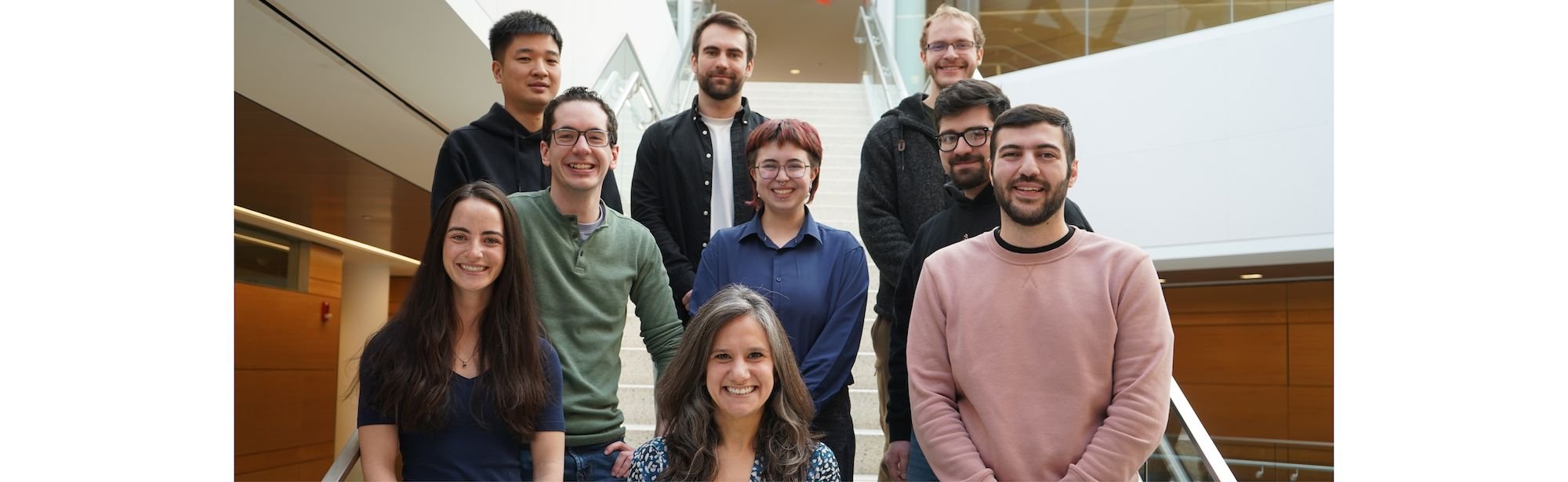
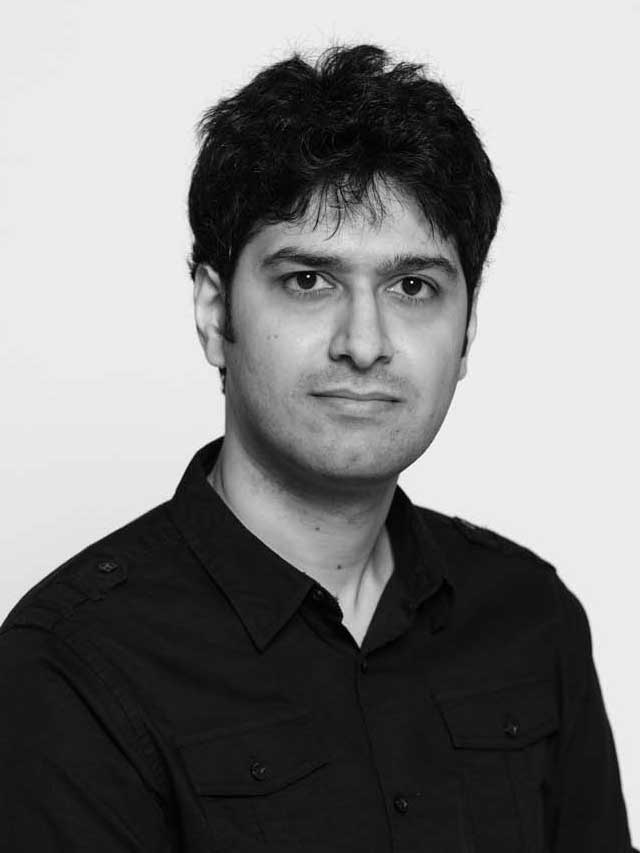
Pengyu Hong is a Professor of Computer Science at Brandeis University's Michtom School of Computer Science and an affiliated faculty member at the Benjamin and Mae Volen National Center for Complex Systems. His expertise spans Machine Learning, Bioinformatics, Materials Science, and FinTech, with a focus on interdisciplinary applications in healthcare, molecular biology, and complex systems analysis. Education: Ph.D. in Computer Science, University of Illinois at Urbana-Champaign M.E. in Computer Science, Tsinghua University B.Eng. in Computer Science, Tsinghua University Research Interests: Hong's lab develops advanced machine learning techniques for analyzing heterogeneous data (images, text, financial data), with notable contributions in glycomaterials analysis, clinical outcome prediction, and active nematics modeling. His work bridges computational methods with biomedical and material science challenges, including NMR spectroscopy analysis and molecular property prediction. Publications: Recent work focuses on machine learning applications in glycan sequencing, fairness analysis in medical algorithms, and optical flow techniques for fluid dynamics. The lab also maintains benchmark datasets like GlycoNMR for carbohydrate analysis. Labs & Teams: Hong leads research at the Volen National Center for Complex Systems, integrating computational approaches with experimental systems biology and materials science.
Julia Alterman, PhD, is an Assistant Professor at the RNA Therapeutics Institute within UMass Chan Medical School. Her research focuses on developing novel therapeutic oligonucleotides for genetically defined diseases, with particular expertise in siRNA technology and chemical optimization for extrahepatic tissue delivery. Dr. Alterman's lab works on expanding siRNA applicability to diverse tissues including skin, heart, muscle, bone, joint, eye, and inflammation targets. Her research integrates oligonucleotide chemistry and synthesis, chemical biology, and in vitro/ex vivo/in vivo pharmacology to understand structure-activity relationships of therapeutic oligonucleotides. Current projects focus on creating novel chemical architectures enabling whole-body siRNA delivery, with applications ranging from neurodegenerative disorders to inflammatory conditions. Recent publications demonstrate strong focus on CNS delivery optimization, allele-specific silencing strategies, novel scaffold development for tissue-specific delivery, and toxicity mitigation approaches. Therapeutically, her work spans neurodegenerative diseases (Huntington's, prion diseases), muscular dystrophy, ocular pathologies, and inflammatory conditions.
Mark T. W. Ebbert, PhD, is an Associate Professor at the University of Kentucky's Sanders-Brown Center on Aging, where he leads the Ebbert Lab. His work focuses on developing biomarkers for neurodegenerative diseases, particularly Alzheimer's disease (AD), leveraging cutting-edge genomic and transcriptomic techniques. He co-leads efforts in the Alzheimer's Disease Research Center's Biomarker Core, aiming to integrate neuroimaging, fluid biomarkers, and genomic data for precision medicine applications. Key research interests include analyzing genetic variants, long-read sequencing for disease resilience, and understanding inflammation's role in neurodegeneration. He has presented at high-profile venues like the Markesbery Symposium, discussing topics such as using long-read sequencing to identify AD biomarkers. His lab has produced over 55 publications, with a focus on resolving genomic 'dark regions' and improving biomarker accuracy through innovative methods like RNApysoforms visualization tools. Collaborating with interdisciplinary teams, Dr. Ebbert explores the interplay between genetics, epigenetics, and environmental factors in neurodegenerative diseases. His work bridges basic science and clinical translation, emphasizing the importance of genomic data integration for advancing AD diagnosis and treatment strategies.
Dr. Ngoc Nha Vi Tran is an Associate Professor of Computer Science at UiT The Arctic University of Norway. She holds a PhD from UiT and was a visiting scholar at Rutgers University, USA. Her research focuses on high-performance and energy-efficient computing, machine learning, and bioinformatics. She is a member of the NORA.startup Steering Group and leads the Arctic Green Computing Group. Education: PhD in Computer Science (UiT), M.Sc. in Software Engineering via Erasmus Mundus (Blekinge Institute of Technology, Sweden & Technical University of Kaiserslautern, Germany). Research interests include energy-efficient algorithms, bioinformatics tools (e.g., vCOMBAT), and applications of machine learning in healthcare and robotics. She teaches courses such as INF-2200 Computer Architecture, INF-2900 Software Engineering, and INF-2202 Concurrent Programming. Her work spans computational models for antibiotic target-binding, runtime energy optimization (REOH framework), and power models for embedded systems (RTHpower/ICE). She contributed to the EXCESS project on energy-efficient computing systems. Labs/Teams: Arctic Green Computing Group, EXCESS consortium.
Robert J. Doerksen is Professor of Medicinal Chemistry in the Department of BioMolecular Sciences at the University of Mississippi School of Pharmacy , Associate Dean of the Graduate School , and Research Professor in the Research Institute of Pharmaceutical Sciences . Since 2004 he has combined computational chemistry with experimental collaborations to advance drug discovery, particularly in glycoscience and cannabinoid research. Education: B.S. (Double First Class Honours) in Mathematics & Physics, University of New Brunswick, 1986 Graduate Diploma in Christian Studies, Regent College, Vancouver, 1996 Ph.D. in Chemistry, University of New Brunswick, 1998 (Advisor: Prof. Ajit Thakkar) Postdoctoral Fellow, UC Berkeley (with Prof. Martin Head-Gordon) Postdoctoral Fellow, University of Pennsylvania (with Prof. Michael Klein) Research Interests: Dr. Doerksen’s laboratory develops and applies computational medicinal chemistry approaches spanning chemoinformatics , molecular dynamics , virtual screening , and machine learning to understand how small molecules interact with proteins. Central themes include: Glycoscience : lectin–glycan interactions, glycosyltransferase regulation, glycomimetic design. Cannabinoids : CB1/CB2 receptor allosteric modulation, cannabidiol pharmacology, synthetic cannabinoid SAR. Neglected & Infectious Diseases : malaria, hepatitis B, tuberculosis, SARS-CoV-2, urinary-tract infections. Drug Delivery & Formulation : nanoparticle coatings, pharmacokinetic optimization, bioavailability enhancement. Publications Trend: Over 2023–2025 his 15 most recent papers reveal intense activity at the intersection of AI-driven discovery , glycobiology , and cannabinoid pharmacology , with emphasis on anti-infective, anticancer, and CNS-active agents. Key contributions include first-in-class MraY inhibitors for TB, cannabinoid-inspired antivirals against SARS-CoV-2, and glycomimetic antagonists of bacterial adhesins for UTI prevention. Scientific Awards & Honors: UM School of Pharmacy Faculty Service Award (2015–2016) UM School of Pharmacy Faculty Service Award (2010–2011) Editorial Boards: Molecules , AIMS Biophysics , Pharmaceutical Sciences , Perspectives in Medicinal Chemistry Repeated NIH, DoD, NSF, Wellcome Trust, and international grant-review panels (2010–present) Guest Editor for multiple special issues in Molecules and Frontiers journals Advising & Mentoring: As Associate Dean, Dr. Doerksen oversees University-wide graduate programs, chairs the Graduate Recruiting Fellowship and Scholarship Committee, and mentors students across disciplines. Faculty advisor for the UM chapters of the Christian Pharmacists Fellowship International (since 2005) and Taiwanese Student Association (2022–2025). He actively participates in PhD and MS thesis committees worldwide and has delivered NSF GRFP information sessions to support trainee funding. Laboratories & Teams: He directs research within the Computational Chemistry and Bioinformatics Research CORE (CCBRC) , fostering collaborative projects involving medicinal chemists, structural biologists, pharmacologists, and data scientists. The group leverages high-performance computing resources at the University of Mississippi to perform large-scale virtual screening, AI/ML model development, and integrative structural biology studies.
Joseph Ibrahim is an Alumni Distinguished Professor in the Department of Biostatistics at the Gillings School of Global Public Health, University of North Carolina at Chapel Hill, where he has served since 2002. He currently holds dual leadership roles as Director of Graduate Studies for the Department of Biostatistics and Director of the Biostatistics for Research in Genomics and Training Grant. His methodological innovations in Bayesian survival analysis and missing data methodologies have significantly advanced public health research, particularly in cancer genomics applications. Professor Ibrahim's research program centers on developing statistical frameworks for complex clinical and genomic data. His seminal contributions include Bayesian cure rate models, prior elicitation techniques, and diagnostic tools for high-dimensional survival analysis. Current work focuses on integrating multi-omics data with longitudinal tumor burden metrics and refining adaptive clinical trial designs for biomarker-driven populations. These methodologies directly address critical challenges in precision oncology and pharmacovigilance, enabling more robust inference from real-world evidence. His 2025 publications reveal three dominant trends: (1) Advancements in cure rate modeling for joint longitudinal-survival data with change points, (2) Computational innovations for high-dimensional penalized models using autoencoders and R packages like hdbayes, and (3) Methodological refinements for Bayesian trial design incorporating historical controls. These works consistently bridge theoretical statistics with cancer research applications, particularly in tumor phylogeny inference and signal detection for adverse events. Scientific awards include: Samuel S. Wilks Memorial Award (2024) from the American Statistical Association for distinguished contributions to biostatistics Professor Ibrahim has mentored 48 pre-doctoral students and 8 postdoctoral fellows, with exceptional thesis publication records in top statistical journals. As principal investigator of the T32 Cancer Genomics Training Grant since 2004, he has secured funding for 35 doctoral students. His curriculum leadership includes modernizing eight graduate courses and establishing new data science computing sequences since 2015. Current advising focuses on Bayesian methodology development for cancer genomics applications. He directs the department's Biostatistics for Research in Genomics initiative and leads the T32 Cancer Genomics Training Grant team, which integrates statistical methodology development with translational cancer research across UNC's Lineberger Comprehensive Cancer Center and clinical partners.
Max Staller is an Assistant Professor in the Department of Molecular and Cell Biology at the University of California, Berkeley, affiliated with the College of Letters & Science and the Center for Computational Biology. His lab focuses on understanding how transcriptional activation domains regulate gene expression through interdisciplinary approaches combining experimental, computational, and theoretical methods. Research Interests: Transcriptional regulation mechanisms in development and stress responses Functional analysis of intrinsically disordered protein domains Machine learning applications in protein sequence-function prediction Evolutionary dynamics of transcription factors Grants & Collaborations: Lead investigator on the NSF-funded PlantSynBio project (2021) for identifying transcriptional activation domains across plant species. Collaborates with the Cohen Lab (Washington University) on mutational scanning studies. Labs & Affiliations: Director of the Staller Lab, which integrates high-throughput experiments with computational modeling. Active in the Berkeley Bioscience community and the Center for Computational Biology.
Professor Vicki Friesen is a faculty member in the Department of Biology at Queen's University, part of the Faculty of Arts and Science. Her research focuses on evolutionary and conservation genetics, particularly in seabirds, aiming to understand mechanisms of biodiversity generation and conservation applications. She holds a cross-appointment in the School of Environmental Studies. Her research interests include evolutionary genetics, conservation genetics, biodiversity origins, and the impacts of climate change on seabird populations. She uses next-generation sequencing to study local adaptation and genetic diversity in species such as seabirds, passerines, and fish. Education: Though not explicitly detailed here, her academic roles suggest advanced training in biology or genetics. Labs/Teams: Leads the Friesen Lab, focusing on Arctic ecology and conservation genomics. Advising: Supervises numerous graduate and undergraduate students in topics like migratory mechanisms, conservation genomics, and immunology. Her work emphasizes the application of genetic tools to conservation challenges, such as delineating conservation units and understanding hybridization dynamics in threatened species.
Gemma Atkinson is an Associate Professor at Lund University's Faculty of Medicine, leading the Atkinson Lab. She specializes in protein evolution and bioinformatics, focusing on antibiotic resistance, bacteriophages, and toxin-antitoxin systems. She manages LU-Fold, an infrastructure for high-throughput protein structure prediction using AlphaFold. Her research integrates computational tools with experimental methods to uncover microbial defense mechanisms. Key projects include developing bioinformatics tools (e.g., LoVis4u, webFlaGs) and investigating phage defense systems. She leads grants from the Swedish Research Council and the Knut and Alice Wallenberg Foundation. Her lab collaborates internationally, contributing to UN Sustainable Development Goals on health and innovation. Publications highlight advancements in toxin-antitoxin systems, antimicrobial peptides, and ribosome function. The lab's tools are widely used globally, aiding researchers in structural and functional genomics analysis.
Marina Knittel is an Assistant Professor of Computer Science at Reed College in the Division of Mathematical and Natural Sciences, starting Spring 2025. She currently serves as a postdoctoral researcher at UC San Diego working with Profs. Barna Saha and Sanjoy Dasgupta on graph algorithms. She holds a PhD from the University of Maryland (2023) and a BS in Mathematics and Computer Science from Harvey Mudd College. Her research focuses on graph algorithm theory with applications spanning fairness in machine learning, mechanism design, and massively parallel computation. She explores interdisciplinary connections between computer science, economics, and biology, particularly how computational problems increasingly require cross-domain expertise. Knittel's publication portfolio demonstrates consistent focus on scalable algorithms for massive datasets, with recent work emphasizing fairness in clustering and hierarchical methods. Her articles frequently appear in top theoretical computer science venues and show sophisticated mathematical approaches to practical computational problems.
Miten Jain is an Assistant Professor in the Department of Bioengineering at Northeastern University, with a joint appointment in the Department of Physics. His research focuses on nanopore technology, single-cell analysis, and computational biology, aiming to advance genomic and transcriptomic sequencing methodologies. He holds a PhD in Bioinformatics and Biomolecular Engineering from the University of California-Santa Cruz (2017). Dr. Jain leads research projects including 'Characterization of paired tumor and normal cell lines using long read sequencing' (NIST, 2021) and 'Multi-platform, high-coverage, long read sequencing of reference human genomes' (NIST, 2020). His work bridges engineering, physics, and biology, with applications in clinical diagnostics and space microbiology. He was recognized as a top 2% most-cited scientist globally in 2024 by Stanford University. His research outputs span epigenetic profiling, nanopore sequencing innovations, and space-based microbiome analysis. Recent studies include CRISPR-based therapeutic screening for glioma and real-time microbial profiling aboard the International Space Station. Collaborations with institutions like NIST and NASA highlight his interdisciplinary impact. Grants and awards include funding from NIST and recognition for ultra-rapid genome sequencing in critical care settings. His lab focuses on developing scalable, high-resolution genomic tools with applications in precision medicine and fundamental biology.
Ivana Malenica is an Assistant Professor of Biostatistics at the University of North Carolina at Chapel Hill's Gillings School of Global Public Health. Previously, she was a HDSI Fellow at Harvard Data Science Initiative and Postdoctoral Fellow in Statistics at Harvard University. She holds a Ph.D. in Biostatistics from UC Berkeley and a B.S. in Mathematics from Arizona State University. Her research focuses on causal inference, machine learning, nonparametric statistics, efficiency theory, and precision health. She specializes in longitudinal and structured dependent settings including adaptive sequential experiments, online learning, and reinforcement learning applications in personalized health. Her recent publications demonstrate strong methodological contributions to causal inference and machine learning, with applications spanning clinical trials, public health, genomics, and reinforcement learning. Her work consistently develops novel statistical approaches for complex data structures. Awards include: Harvard Data Science Initiative Fellowship (2022) Berkeley Wellness Letter Fellowship (2020) Wellness Scholarship in Honor of Chin Long Chiang (2019) Berkeley Institute for Data Science Moore-Sloan Fellowship (2018) She teaches graduate courses including Advanced Probability and Statistical Inference I (BIOS 760). Her computational work includes contributions to the tlverse ecosystem for causal inference in R.
Dr. Stephen Attwood is a Post Doc Researcher in the Pybus group at the Natural History Museum, London, and a Scientific Associate at the same institution. He was formerly a Professor of Epidemiology at West China Medical School. His research focuses on evolutionary approaches to infectious disease epidemiology, including SARS-CoV-2 lineage tracking via the Pango nomenclature system and evaluating public health interventions. He has also contributed to understanding schistosomiasis evolution, describing three new species and identifying Mekong schistosomiasis in new regions. His work integrates genetic variation analysis, phylogenetics, and ecological studies to address disease emergence and biodiversity impacts of infrastructure like dams. Research interests span epidemiological modeling, pathogen evolution, and parasitology, with a focus on applying genetic data to real-world public health challenges. Key areas include SARS-CoV-2 transmission dynamics, schistosome taxonomy, and the ecological consequences of human activities on freshwater ecosystems. His articles explore topics ranging from viral mutation impacts on vaccine efficacy to schistosome mitochondrial genome divergence, reflecting a dual focus on contemporary pandemics and long-term parasitic disease evolution. Grants and advising details are not explicitly listed, but his lab affiliations include the Evolve.Zoo group and collaborations with global health institutions. Labs/Teams: Active in the Evolve.Zoo research lab, focusing on evolutionary biology and disease systems.
Ana Fiszbein is an Assistant Professor of Biology at Boston University, specializing in gene regulation and RNA processing. Her lab employs high-throughput genomics, bioinformatics, and molecular approaches to study co-transcriptional gene regulation in mammalian systems, with a focus on cancer genomics and therapeutic strategies. She earned her PhD from the University of Buenos Aires and leads research on how gene architecture influences transcriptional programs. Her research interests include understanding the interplay between transcription and splicing, particularly through phenomena like Exon-Mediated Activation of Transcription Starts (EMATS). The lab develops computational tools like evopython to predict gene regulatory networks and designs strategies to manipulate gene expression for therapeutic applications. Current projects explore promoter-driven RNA processing decisions, transcriptional interference between promoters, and the connection between transcript initiation and termination. The lab actively recruits undergraduate, graduate, and postdoctoral researchers. Key findings include the discovery of hybrid exons and splicing-dependent transcriptional control mechanisms.
Professor Sang-Woo Jun is a leading researcher in systems and software for big data analytics, focusing on FPGA-based hardware acceleration and non-volatile memory (NVM) storage. His work spans applications such as graph analytics and bioinformatics, with a strong emphasis on cost-effective, high-performance computing architectures. He advises PhD students like Shengquan Ni and Yicong Huang, both of whom have achieved notable milestones (e.g., thesis defense, fellowship awards). Research Interests: Hardware Acceleration for Big Data FPGA-Based System Architectures Non-Volatile Memory Systems Graph Analytics and Bioinformatics Edge Computing and Low-Power Systems Recent Contributions: His articles highlight innovations in edge accelerators (e.g., IceSpy, Eciton), genomics acceleration (Bancroft), and scalable graph processing (Durin, Sting). These works emphasize reconfigurable systems, privacy-preserving techniques, and energy-efficient designs. Lab & Team: As part of the Intelligent Systems Group (ISG), he collaborates on events like the Southern California Database Day. His research bridges hardware-software co-design with real-world applications in IoT, environmental monitoring, and genomics.