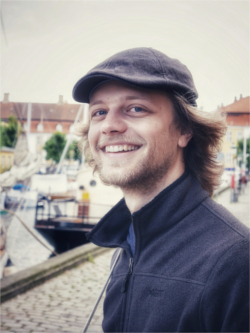
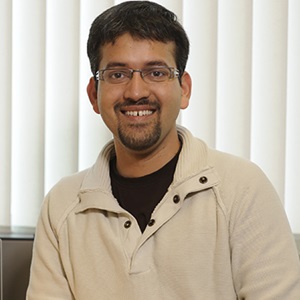
Thøger Jensen Krogh is a lecturer at the Faculty of Science , University of Southern Denmark , affiliated with the Department of Biochemistry and Molecular Biology . His research focuses on Molecular Biology , Biochemistry , and Microbiology , particularly in bacterial systems. His work explores Genomics , Protein Glycosylation , and Gene Expression Regulation , with studies on Bacteriophage Genomics , ETEC Pathogenesis , and Chromosomal Architecture . Recent publications highlight Prokaryotic Transcriptional Regulation , O-Glycosylation Mapping , and Antibiotic Resistance Mechanisms . Research Keywords: Molecular Biology, Biochemistry, Microbiology, Protein Glycosylation, Genomics, Gene Regulation Key Techniques: Mass Spectrometry, Draft Genome Assembly, SILAC, Chromosomal Modeling Academic Affiliation: Department of Biochemistry and Molecular Biology, SDU
Sebastian Weichwald is an Associate Professor at the Department of Mathematical Sciences , University of Copenhagen. He leads the Copenhagen Causality Lab (CoCaLa) and co-leads the Causality and Explainability (CX) collaboratory at the Pioneer Centre for AI. His academic journey includes a PhD at ETH Zurich (2019) and postdoctoral work at the University of Copenhagen. Research Interests: Causal Modelling, Causal Discovery, Structural Equation Models, Time Series Analysis, Neuroimaging, Biomedical Data Analysis. Awards: Best student paper at CIP 2014, Winner of Causality 4 Climate NeurIPS 2019 competition. Collaborations: Active in interdisciplinary projects with applications in cardiology, neuroscience, and biomedical imaging. Software Tools: Developed open-source libraries including CausalDisco , coroICA , tidybench , and Pymanopt for causal discovery, signal processing, and manifold optimization.
Madan Babu is a Professor at St. Jude Children's Research Hospital , leading the Department of Structural Biology and directing the Center of Excellence in Data Driven Discovery. His career spans postdoctoral research at NIH (2006), group leadership at MRC-LMB (2006–2020), and a transition to St. Jude in 2020. Research Interests include G-protein-coupled receptor (GPCR) signaling , alternative splicing in cancer , pharmacogenomics , and data-driven discovery . His work integrates structural biology , genomics , and computational approaches to unravel mechanisms of disease and drug response. Scientific Awards include the prestigious Balfour Award (Genetics Society) Colworth Medal (Biochemical Society) Young Investigator Award (EMBO) Innovator Award (International Society of Computational Biology) UK Blavatnik Award for Life Sciences Francis Crick Medal (Royal Society) EMBO Gold Medal Advising and Leadership : He has mentored postdocs and PhD students, with recent job openings in his group focusing on Cancer Genetics , Omics , and Synthetic Biology . He serves as Executive Editor at Nucleic Acids Research and Chief Editor of Molecular Systems Biology .
Anna Sherwood is an Assistant Professor in the Department of Biology at the University of Copenhagen, specializing in Computational and RNA Biology. She holds a PhD in Molecular, Cellular and Developmental Biology from Ohio State University (awarded 2015), where her thesis focused on T-box riboswitch gene regulation in Actinobacteria. Her research bridges RNA biology , virology , and plant genetics , with emphasis on RNA modifications (e.g., m6A), viral RNA mechanisms (HCV), spliceosome dynamics, and riboswitch-mediated gene regulation. She employs cutting-edge methods like nanopore direct RNA sequencing and computational genomics. Publications (2016–2023) reveal consistent themes: RNA epitranscriptomics in plants/viruses, spliceosomal regulation, and evolutionary genetics of crops. Noteworthy articles include a 2023 Nature study on HCV RNA capping and a 2022 Nature Communications paper on yam chromosome evolution. No awards, students, or grants are detailed in available sources.
Alba Refoyo Martínez is a Postdoctoral Researcher at the Globe Institute, University of Copenhagen, holding positions in both the Section for Geogenetics and the Section for Molecular Ecology and Evolution. She also serves as an Academic employee in the Department of Public Health's Section for Health Data Science and AI. Her research spans population genetics, ancient DNA analysis, and evolutionary biology, with significant contributions to understanding human evolutionary history and genetic disease risk. Her research interests focus on population genomics , ancient DNA analysis , and evolutionary adaptation . Dr. Martínez has made significant contributions to understanding population turnovers in Neolithic Denmark, the genetic origins of multiple sclerosis risk, and methodological improvements in ancestry estimation. Her work combines computational approaches with ancient DNA analysis to reconstruct human evolutionary history across Eurasia. Her publication record demonstrates substantial impact, with multiple high-profile papers in Nature in 2024 examining ancient Eurasian populations and genetic disease risk. Her research has received widespread attention across academic and public spheres. Dr. Martínez has been involved in extensive collaborative research projects, working with large international teams across numerous institutions. Her work has been featured in hundreds of news outlets and social media platforms, indicating significant scientific and public impact. She maintains active research in both the Globe Institute and the Department of Public Health, bridging evolutionary genetics with modern health data science approaches. Her dual appointment reflects the interdisciplinary nature of her research, connecting ancient population history with contemporary health implications.
Juan Antonio Rodríguez serves as an Assistant Professor at the Section for Hologenomics within the Globe Institute at the University of Copenhagen. His research integrates advanced genomic technologies with computational approaches to explore fundamental questions in evolutionary biology, conservation genetics, and disease mechanisms. His research interests center on 3D genomics and hologenomics, with particular focus on genome architecture across evolutionary timescales. Rodríguez investigates how three-dimensional genome organization influences gene regulation in development and disease, examining both contemporary biological systems and ancient DNA specimens. His work bridges computational biology with experimental genomics, developing and applying novel methodologies to analyze complex genomic datasets from diverse biological contexts including endangered species, cancer cells, and ancient specimens. Analysis of Rodríguez's publication record reveals a strong interdisciplinary approach connecting evolutionary genomics with medical applications. His work spans from fundamental studies of genome architecture to applied research in conservation biology and cancer genomics. The recurring theme across his research is the investigation of three-dimensional genome organization and its functional implications across different biological contexts and evolutionary timescales. Rodríguez maintains active collaborations across multiple institutions as evidenced by his co-authorship on numerous high-impact publications in journals such as Cell, Molecular Ecology, and Communications Biology. His research has garnered significant attention in the scientific community with multiple papers receiving substantial citations and media coverage, including pickup by 202 news outlets for his work on ancient mammoth genome architecture.
David Alejandro Duchene Garzon is an Associate Professor in the Department of Public Health, Section of Epidemiology at the University of Copenhagen's Faculty of Health and Medical Sciences. His work bridges evolutionary biology with public health, focusing on the application of genomic and computational approaches to understand disease dynamics. Education: PhD in Molecular Evolution, Australian National University (2017) Bachelor of Science with Honours in Marine Biology, James Cook University Queensland (2012) Duchene's research traverses multiple fields including phylogenetic modeling, comparative analysis, biogeography, epidemiology (phylodynamics), and machine learning in public health. His past work has focused on explaining molecular evolution in both animal and pathogen genes using diverse statistical approaches. He connects processes at macro scales (macroevolution, macroecology, phylogeography) with those at micro scales (molecular evolution), addressing fundamental questions about how and why novel living beings and pathogens emerge. Currently, he is exploring the intersection of animal movement (neuroscience), infection (epidemiology), and genomics, particularly in identifying infections in livestock and wildlife using computer vision techniques. His recent publications (2024-2025) demonstrate a strong focus on applying genomic approaches to epidemiology and evolutionary biology. These works span diverse topics including infectious disease modeling, molecular clock hypothesis testing, avian genomic evolution, and SARS-CoV-2 genomic surveillance. His research combines computational methods with biological insights to address complex questions in evolution and public health. Scientific Collaborations: Collaboration with Danish COVID-19 Genome Consortium (DCGC) International collaborations across multiple countries in genomic epidemiology Work with multiple genome-sequencing consortia Duchene has established himself as a key researcher bridging evolutionary biology and public health. His work on molecular evolution provides foundational insights that inform his current epidemiological research. He has developed strong collaborative networks across institutions and countries, particularly in genomic surveillance and evolutionary analysis. His current research direction toward computer vision applications for infection identification in wildlife represents an innovative interdisciplinary approach. Duchene maintains an active research program with significant impact, as evidenced by the broad dissemination of his work across news outlets, social media, and academic platforms. His research has been featured in major scientific journals including Nature and has influenced both academic discourse and public health practice.
Vania Alves E Silva Pereira serves as an Associate Professor in the Section of Forensic Genetics at the Department of Forensic Medicine, University of Copenhagen. With over 15 years of experience in population and forensic genetics, she leads multiple research initiatives focused on advancing DNA analysis methodologies for forensic applications. Her educational background includes: BSc. in Biology from University of Porto (2003-2007) MSc. in Forensic Genetics from University of Porto (2007-2008) PhD in Biology (Population and Forensic Genetics) from University of Porto (2009-2012) Dr. Pereira's research centers on understanding genetic diversity patterns in human populations and translating this knowledge to practical forensic casework. She has extensive experience with various genetic markers including STRs, SNPs, and Indels across all genomic regions, with a particular focus on massively parallel sequencing technologies since 2013. Her work bridges fundamental population genetics with real-world forensic challenges, developing innovative approaches to human identification and investigative leads. Analysis of her recent publications reveals a strong emphasis on four interconnected research streams: improving genetic information recovery from challenging samples, comprehensive mtDNA genome analysis (including her role as co-coordinator of a global heteroplasmy initiative), forensic age estimation through DNA methylation, and development of novel markers like microhaplotypes for specific forensic applications. These research directions demonstrate her commitment to addressing current limitations in forensic genetic analysis while anticipating future needs in the field. Dr. Pereira actively supervises PhD and MSc students and has presented her research at numerous international conferences. Her collaborative approach is evident in her extensive co-authorship network spanning multiple countries and institutions, reflecting the global nature of forensic genetics research. Her laboratory work involves state-of-the-art DNA sequencing technologies and bioinformatic analysis, contributing to the development of improved guidelines and methodologies for forensic DNA analysis worldwide. Through her research and teaching, she continues to advance the scientific foundation of forensic genetics while training the next generation of specialists in this critical field.
Itys Vacher-Comet is a Research Fellow at the Biotech Research & Innovation Centre (BRIC), University of Copenhagen, working in the laboratory of Prof. Kristian Helin since May 2009. He holds a Ph.D. in Biochemistry and Molecular Biology from Montpellier I, Medicine University, France (2007) and an M.Sc. in Chemical and Biological Sciences for Health from Montpellier II, Sciences and Techniques University, France (2002). Dr. Vacher-Comet's research focuses on elucidating the molecular mechanisms of Polycomb group (PcG) proteins in mammals. His work explores how chromatin structure and epigenetic regulation influence gene silencing, cell identity, differentiation, and cancer development. His research combines molecular biology, chromatin analysis, and genomic approaches to understand the recruitment mechanisms of PcG proteins in embryonic stem cells and during cellular differentiation. Analysis of his publication record from 2011-2023 reveals a consistent focus on Polycomb-mediated gene regulation, chromatin architecture, and cancer epigenetics. His work spans basic molecular mechanisms of chromatin organization to translational applications in cancer therapy, particularly in pediatric gliomas. The research demonstrates increasing emphasis on therapeutic applications of epigenetic knowledge in recent years. Lundbeck foundation grant (2012-2015, EUR 201k) EMBO Long-Term Fellowship (2010-2012) French National League against Cancer fellowship (2005-2006) French ministry of scientific research fellowship (2002-2005, ranked first out of 48) Dr. Vacher-Comet has mentored two master's students at University Montpellier II (2006-2007) and delivered lectures on epigenetics and structural biochemistry. His laboratory management training through the EMBO Laboratory Management Course for Postdocs (2013) supports his research leadership within Prof. Helin's internationally recognized laboratory at BRIC.
Pétur Orri Heiðarsson serves as an Associate Professor in the Department of Biology at the University of Copenhagen, specializing in Biomolecular Sciences. His research program focuses on the structural and functional dynamics of intrinsically disordered proteins within critical biological systems. His primary research interests include: Structure-function relationships of intrinsically disordered proteins Mechanisms of transcription factor regulation Protein-DNA interactions in gene expression Chromatin structure and nucleosome dynamics Protein aggregation and molecular chaperone systems Biomolecular mechanisms in disease pathways Analysis of Dr. Heiðarsson's recent publications reveals a cohesive research trajectory centered on how intrinsically disordered regions in transcription factors modulate DNA binding and gene regulation. His work frequently appears in high-impact journals including Nature Communications, Nature Chemistry, and EMBO Reports. A significant portion of his research examines pioneer transcription factors like Sox2 and MITF, with particular attention to how their disordered domains influence chromatin accessibility. His involvement with the PED Consortium demonstrates commitment to advancing structural biology methodologies for studying dynamic protein systems. Dr. Heiðarsson maintains an extensive collaborative network across European research institutions, as evidenced by his co-authorship on diverse projects spanning basic protein biophysics to melanoma mechanisms. His research group likely includes PhD students and postdoctoral researchers working at the intersection of experimental and computational approaches to biomolecular science.
Paulina Deptula is a Tenure Track Assistant Professor in the Department of Food Science at the University of Copenhagen's Faculty of Science, specializing in Food Microbiology, Gut Health, and Fermentation research. Her work bridges food science and human health through advanced genomic approaches to understand bacterial behavior in food systems and the gut microbiome. Dr. Deptula's research interests focus on the genomic and metabolic characterization of bacteria relevant to food production and human health. Her work particularly examines Propionibacterium freudenreichii's metabolic adaptations, Mycobacterium marinum pathogenesis mechanisms, and novel gut bacteria discovery. She employs cutting-edge genomic technologies including Oxford Nanopore sequencing to investigate bacterial genome structure, DNA methylation patterns, and host-microbe interactions in both food matrices and biological systems. Her publication record shows a consistent trajectory of high-impact research in bacterial genomics, with recent work spanning food fermentation microbiology, gut microbiome characterization, and pathogen-host interactions. The research demonstrates increasing technical sophistication from basic genome sequencing to integrated multi-omics approaches examining transcriptomics and surfaceome dynamics alongside genomic analysis. Dr. Deptula actively collaborates with researchers across multiple institutions, as evidenced by her co-authorship on diverse projects ranging from dairy starter culture characterization to novel bacterial species discovery. Her work appears in reputable journals including npj Biofilms and Microbiomes, Scientific Reports, mSystems, and International Journal of Systematic and Evolutionary Microbiology, indicating strong recognition within the microbiology research community.
Rasmus Stenbak Larsen is a Researcher in the Department of Biology, Ecology and Evolution at the University of Copenhagen's Faculty of Science. His research focuses on ant biology, particularly evolutionary processes, developmental mechanisms, and genetic regulation in social insects. Dr. Larsen maintains an active research profile with publications in high-impact journals and collaborations with leading scientists in the field. Dr. Larsen's research interests center on ant evolution , caste differentiation , and developmental biology . His work investigates how gene expression, hormonal regulation, and environmental factors interact to produce the complex social structures observed in ant colonies. He examines the molecular mechanisms behind phenotypic plasticity in social insects, particularly how genetically similar individuals develop into dramatically different morphological and behavioral forms. His research spans from genomic studies to ecological monitoring of invasive species, with a particular focus on the pharaoh ant ( Monomorium pharaonis ). Analysis of Dr. Larsen's publication record reveals a consistent research trajectory focused on understanding the biological basis of social organization in ants. His work combines molecular, developmental, and evolutionary approaches to address fundamental questions about how complex social systems emerge and are maintained. A significant portion of his research examines the role of juvenile hormone and gene expression networks in caste determination, representing important contributions to our understanding of phenotypic plasticity in social insects. Dr. Larsen actively collaborates with an international network of researchers including Guojie Zhang, Jacobus J. Boomsma, and Renkang Li. His work has been published in premier scientific journals including Cell , Nature Ecology and Evolution , Proceedings of the National Academy of Sciences , and Science Advances , demonstrating the significance and impact of his research within the scientific community.
Albert J. Kooistra is an Associate Professor in Data Science for Drug Design (DSDD) at the Department of Drug Design and Pharmacology, University of Copenhagen (DK). He heads the Pharmaceutical Data Science team and the Data and Computing Facility, where he develops computational approaches to advance pharmaceutical research and drug discovery. Dr. Kooistra earned his Master's degree in bioinformatics followed by a PhD in computational medicinal chemistry from the Vrije Universiteit Amsterdam (NL), with postdoctoral training in molecular dynamics, structural bioinformatics, and cheminformatics. His research spans structural bioinformatics, cheminformatics, computer-aided drug discovery & design, research tool/database development, and machine learning/AI applications in pharmaceutical sciences. He is the founder of KLIFS (https://klifs.net), a structural kinase database used by over 1,600 researchers monthly, and has made significant contributions to GPCRdb. His work bridges computational science with pharmaceutical applications to accelerate therapeutic development. Dr. Kooistra's recent publications demonstrate his focus on structural databases for drug discovery, particularly in kinase and GPCR research. His work integrates AlphaFold2 predictions, database development, and structural analysis to create valuable resources for the scientific community. MGMS Frank Blaney Award (2021) from Molecular Graphics and Modelling Society for enabling research via scientific databases Educational Innovation Award (2017) from VU University Amsterdam for implementing Virtual Reality in pharmaceutical education Dr. Kooistra has developed innovative educational programs across multiple levels, including AI in Drug Discovery (international PhD course), Hands-on Computational Medicinal Chemistry, and Digital Core Curriculum implementation for undergraduate data science education. His teaching reaches hundreds of students annually, from high school to PhD level. He leads the Pharmaceutical Data Science team and the Data and Computing Facility at the University of Copenhagen, providing essential computational infrastructure and expertise for pharmaceutical research while maintaining active industry collaborations through Synamics Therapeutics (Co-founder/CTO) and Kvantify (Senior Scientific Expert).
Laura Arribas Hernandez is a Guest Researcher in the Department of Biology at the University of Copenhagen specializing in Computational and RNA Biology. Her research focuses on RNA regulatory mechanisms in Arabidopsis thaliana , particularly N 6 -methyladenosine (m6A) modification pathways and their roles in plant development and stress responses. She maintains active collaborations with Professor Peter Brodersen's research group and contributes to high-impact publications in plant molecular biology. Her core research interests include: RNA methylation dynamics YTH domain protein function RNA interference mechanisms Stress-responsive alternative splicing Plant antiviral defense systems Post-transcriptional gene regulation Recent publications (2023-2025) reveal her pivotal contributions to understanding m6A-YTH regulatory networks in plants, including the discovery of RNAi-independent roles for DICER-LIKE2 in growth regulation and antiviral resistance. Her work bridges computational biology with molecular genetics to dissect RNA modification pathways, demonstrating how ALBA proteins facilitate cytoplasmic m6A reading and how YTHDF-PABP interactions drive organogenesis. These findings establish critical links between RNA epigenetics and plant physiology. Based at Ole Maaløes Vej 5 in Copenhagen, she operates within the Computational and RNA Biology research environment, utilizing advanced molecular techniques and bioinformatic approaches to investigate RNA regulatory networks. Her publications in The Plant Cell , EMBO Journal , and PLOS Genetics reflect significant engagement with the international plant science community.
Sofia Marcos serves as a Guest Researcher in the Section for Hologenomics at the Globe Institute, University of Copenhagen. Her work focuses on advancing hologenomic methodologies through computational genomics, particularly in agricultural species research. Her primary research interests center on hologenomics—the integrated study of host genomes and symbiotic microbial communities—and pangenomics. She specializes in developing graph-based genomic references for detecting structural variants, with significant contributions to chicken genome analysis. This work bridges evolutionary biology, agricultural genomics, and host-microbe interaction studies, offering applications in sustainable farming and biodiversity conservation. Her documented research output includes a 2023 BMC Biology publication establishing a pangenome graph for 30 chicken genomes, enabling high-resolution structural variant genotyping. This study demonstrates technical innovation in genomic data analysis and positions her within international agricultural genomics collaborations. As part of the University of Copenhagen's Globe Institute, Marcos operates within the Section for Hologenomics, contributing to interdisciplinary research on hologenomic systems through computational approaches and cross-institutional data sharing.