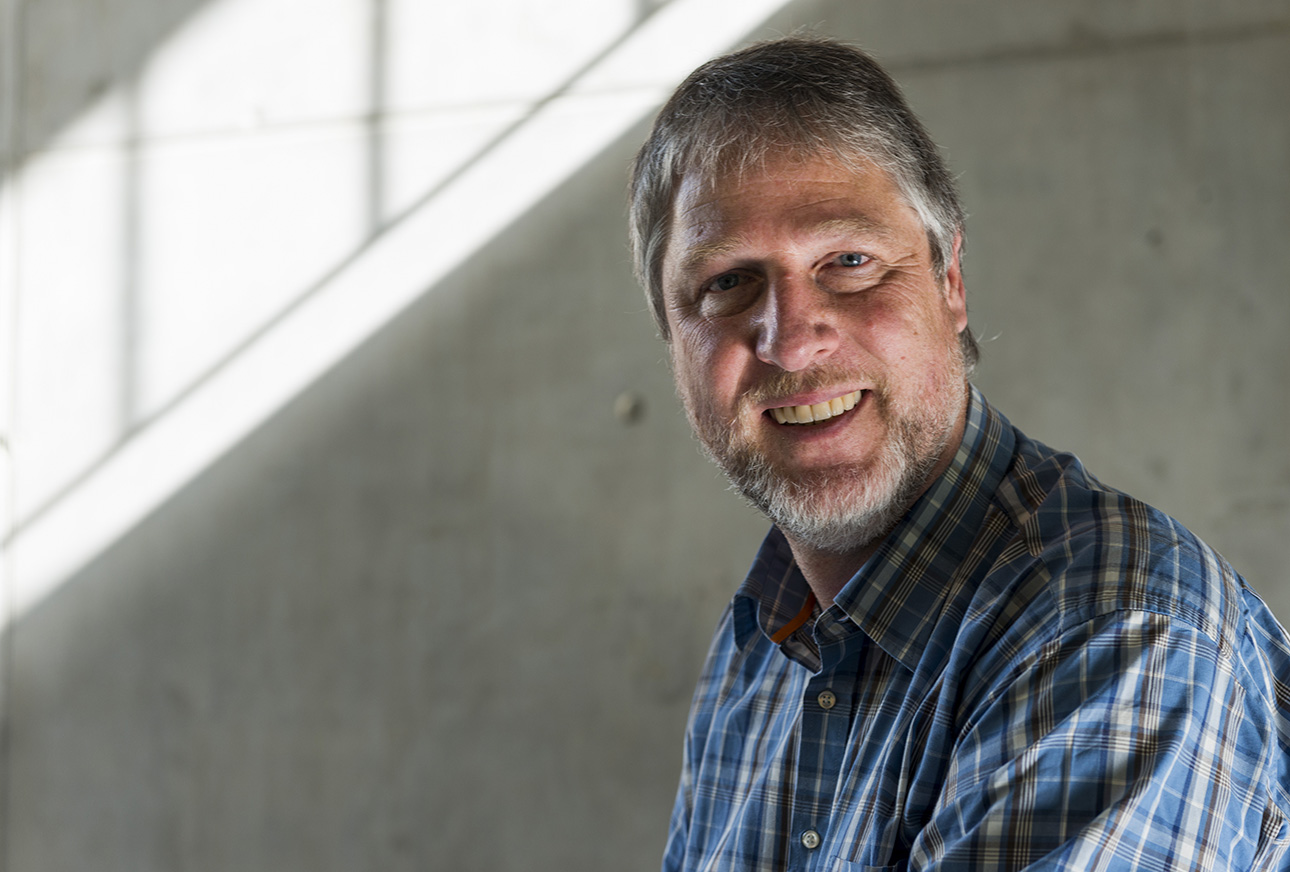
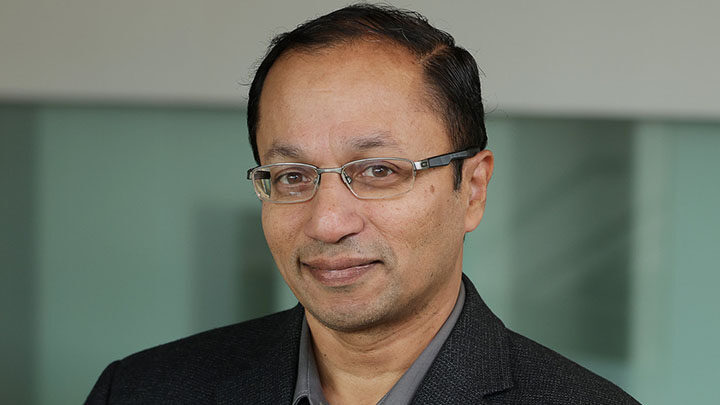
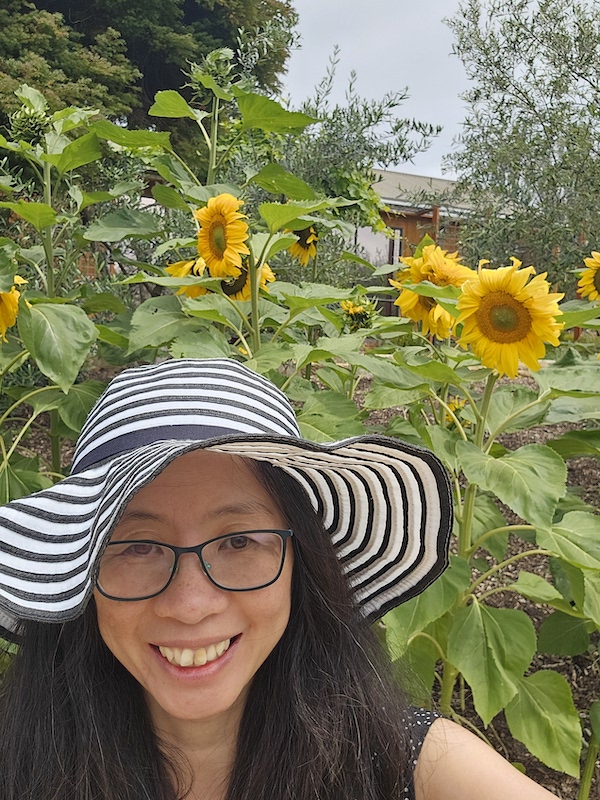
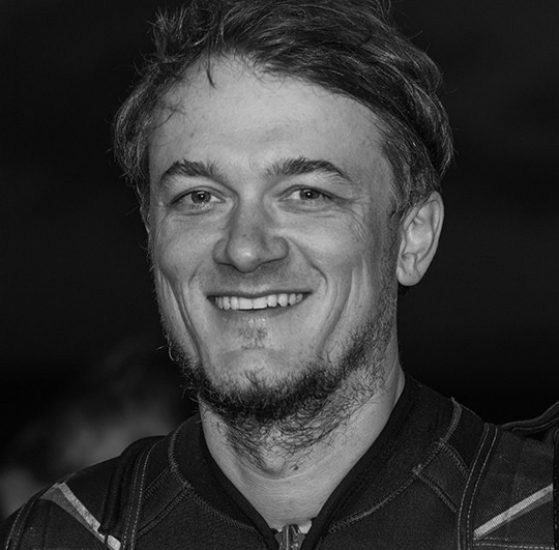
Professor Bernd Möbius is a leading academic in Phonetics and Phonology at the Department of Language Science and Technology, Saarland University. His research bridges phonetic theory with speech technology applications, focusing on text-to-speech systems, prosody modeling, and computational simulations of speech processes. Current research projects: DFG SFB 1102, C1: Information density and phonetic structure predictability DFG SFB 1102, C4: Slavic intercomprehension and surprisal theory (INCOMSLAV) Research Themes: Key areas include text-to-speech synthesis, speech prosody analysis, experimental methods in speech production/perception, information density in phonetics, and cross-linguistic studies of Slavic-Germanic languages. Scientific Contributions: Recent work explores Parkinson-induced dysarthria detection, breath noise acoustics, surprisal-driven speech behaviors, multilingual BERT models for idiomaticity, and perceptual consequences of acoustic adjustments.
Gianluca Iaccarino is a Professor of Mechanical Engineering at Stanford University and the Robert Bosch Chairholder. He serves as Director of the PSAAP Center and leads large-scale computational research initiatives in uncertainty quantification, exascale computing, and multiphysics simulations. His academic journey includes a PhD in Mechanical Engineering from Politecnico di Bari (2005), postdoctoral work at Stanford's Center for Turbulence Research, and progression from Research Engineer to full Professor. Education : PhD (Politecnico di Bari), MS/BS in Aeronautical Engineering (University of Naples) Research : Computational engineering, turbulence modeling, uncertainty quantification, biomedical fluid dynamics, and exascale-ready algorithms Publications : 15+ recent articles focus on turbulence modeling, data-driven simulations, and uncertainty quantification across diverse applications in aerospace, biomedical, and energy systems Awards : PECASE (2010), APS Fellow (2019), multiple best paper awards (AIAA, ASME), Terman Fellow (2007) Students : Advises doctoral and master's students in mechanical engineering and computational methods Leadership : Director of PSAAP Center (2014-present), Chair of Mechanical Engineering Department (2024-present)
Professor Mohammad FARD is a faculty member at RMIT University's School of Engineering, specializing in Mechanical Engineering and Intelligent Systems. He leads research in autonomous vehicles, crash safety, and driver monitoring using AI. His industry experience includes six years at Nissan Technical Centre, focusing on vehicle body design. He holds a PhD from Tohoku University and has collaborated across Engineering, Health, and Science disciplines, achieving international media coverage for work on driver drowsiness and road safety. Research Interests: Autonomous Vehicles Advanced Crash Safety Driver State Monitoring AI in Noise/Vibration Human Factors/Ergonomics Teaching & Projects: Teaches Advanced CAE, Vehicle NVH, and research supervision in areas like crash simulation and vibration control. Current projects include Formula One safety barriers and driver education for autonomous vehicles. Awards & Labs: No awards listed. Active in cross-disciplinary teams and labs addressing automotive innovation and safety.
Dr. Krishnan Mahesh is a Professor at the University of Michigan with joint appointments in Mechanical Engineering and Naval Architecture and Marine Engineering. He serves as Director of the Center for Naval Research and Education and leads the Computational Fluids Laboratory, where he develops advanced numerical methods for simulating multi-physics turbulent flows. Education: Ph.D. (1996), M.S. (1990) from Stanford University, B.Tech (1989) from IIT Bombay Leadership: Director, Center for Naval Research and Education (2022-present) His research focuses on high-fidelity simulations of turbulent flows with applications in marine propulsors, multiphase systems, cavitation, hydroacoustics, superhydrophobic surfaces, biofouling, fluid-structure interaction, and flow stability. His group develops the MPCUGLES software for unstructured grid simulations on parallel computing platforms. Recent work examines cavitation dynamics , tip vortex flows , and roughness-induced transition in complex marine and aerospace systems. His 15 most recent articles demonstrate expertise in LES/DNS of multi-physics flows, with emphasis on marine propulsion, bubble collapse, and turbulent noise prediction. Scientific Honors: 2021 AIAA Best Paper Award 2018 Fulbright Scholar 2017 Marine Propulsors Symposium Best Paper 2011 APS Fellow 2010 Taylor Award for Distinguished Research He mentors numerous graduate students and postdoctoral fellows, with collaborative projects spanning jet in crossflow analysis, gas turbine simulations, and shock-turbulence interactions. His research receives funding from ONR, NSF, and international naval programs.
Andrés Buxó-Lugo serves as an Assistant Professor of Psychology at the University at Buffalo, where he directs the Language Processing and Computation Lab. His research investigates the cognitive mechanisms underlying language production, comprehension, and acquisition with a specialized focus on speech prosody—the rhythm, intonation, and intensity patterns in speech—and their role in human communication. His primary research interests include psycholinguistics, cognitive psychology, speech prosody, language production, language comprehension, language acquisition, and computational linguistics. He examines how listeners integrate diverse linguistic cues during speech processing, how individuals learn unfamiliar constructions like non-native pronunciations or novel prosodic patterns, and the cognitive basis of durational changes in speech. His work also explores how communicative context shapes prosodic production and how higher-level linguistic information aids prosodic structure parsing. Analysis of his 15 most recent publications (2019-2025) reveals consistent interdisciplinary work bridging cognitive science, linguistics, and computational modeling. Key trends include phonological representation studies, speech planning mechanisms, intonation adaptation across talkers, lexical representation structures, and the integration of input expectations in syntactic parsing. His research demonstrates significant methodological diversity, incorporating experimental paradigms, computational modeling, and acoustic analysis to unravel language processing complexities. As director of the Language Processing and Computation Lab at the University at Buffalo, Buxó-Lugo leads research initiatives focused on developing computational models of language processing while investigating the cognitive foundations of speech and prosody through empirical experimentation and theoretical innovation.
Catherine Lai is a Reader (~Associate Professor) in the Department of Linguistics and English Language at the University of Edinburgh, with strong affiliations to the Centre for Speech Technology Research (CSTR) and the Institute for Language, Cognition and Computation (ILCC) in the School of Informatics. She is based in the School of Philosophy, Psychology and Language Sciences and is actively involved in research, teaching, and academic service. Department: Department of Linguistics and English Language School: School of Philosophy, Psychology and Language Sciences Research Institutes: Centre for Speech Technology Research, Institute for Language, Cognition and Computation Email: C.Lai@ed.ac.uk Her research centers on the role of prosody—non-lexical aspects of speech—in spoken communication. She investigates how prosody contributes to discourse structure, information structure, and affect in dialogue, using interdisciplinary methods from linguistics and machine learning. Her work bridges theoretical linguistics and practical speech technology, aiming to improve spoken language understanding and synthesis systems. She is particularly interested in how prosody shapes listener expectations and how affect and topic are expressed and perceived in conversation. Her recent publications reflect a strong focus on self-supervised learning in speech models, emotion recognition, ASR error correction using large language models, cognitive state classification, and ethical considerations in language technology. She explores topics such as the uncanny valley in synthetic speech, gender expression through voice, and community-centered development of language technologies. Prize from Scopus Profile Catherine Lai has supervised several PhD students, including Leimin Tian and Yuanchao Li, and has been involved in significant research projects, such as a Toyota-funded initiative on spoken dialogue for robot companions. She has secured multiple grants and leads a research agenda that integrates theoretical inquiry with real-world applications in assistive technologies and social science. Her academic service includes organizing major conferences like Interspeech and UK and Ireland Speech. She is a key member of research teams at CSTR and ILCC, collaborating across disciplines to advance the understanding of spoken communication and the development of robust, ethical speech technologies.
Pierre Vandergheynst is a Full Professor at the Swiss Federal Institute of Technology Lausanne (EPFL) in the Department of Electrical Engineering, with a courtesy appointment in Computer and Communication Sciences. He serves as EPFL’s Vice-Provost for Education since 2015 and leads the Signal Processing Laboratory 2 (LTS2). His research spans harmonic analysis, sparse approximations, mathematical data processing, and applications in signal/image processing, computer vision, machine learning, and graph-based data analysis. PhD in Mathematical Physics (1998), Université catholique de Louvain Postdoctoral Researcher at EPFL (1998-2001) Assistant Professor at EPFL (2002-2007) His research explores geometry/symmetry in high-dimensional data, redundant dictionaries for dimensionality reduction, and computational harmonic analysis on manifolds. Recent work focuses on protein structure modeling, geometric deep learning, and graph-based signal processing. Key article trends include graph neural networks for protein analysis, geometric deep learning in neuroscience, and structured knowledge priors in neural models. His 2023-2025 publications emphasize interpretable AI, long-range dependencies in graphs, and molecular representation learning. Scientific Awards: IEEE Signal Processing Magazine Best Paper Award (2023) Signal Processing Society Best Paper Award (2022) Apple ARTS Award (2007) De Boelpaepe Prize, Royal Academy of Sciences of Belgium (2009-2010) He has supervised over 30 PhD theses and contributed to foundational work in graph signal processing, compressive sensing, and geometric deep learning. His lab develops tools for data science on non-Euclidean structures, with applications in medicine, astronomy, and wireless systems.
Dragan Huterer is a Professor of Physics and Associate Chair for the Graduate Program at the University of Michigan. His research focuses on cosmology, particularly dark energy and large-scale structure, utilizing data from the Dark Energy Survey (DES) and the Dark Energy Spectroscopic Instrument (DESI) collaborations. He earned his Ph.D. from the University of Chicago (2001) and B.S. from MIT (1996). His work explores the nature of dark energy through cosmological probes like Type Ia supernovae, galaxy clustering, and cosmic microwave background anisotropies. Key contributions include co-leading DESI's first-year cosmological analysis, revealing unprecedented constraints on dark energy and neutrino masses. He also investigates the statistical isotropy of the universe and authored the textbook A Course in Cosmology: From Theory to Practice . Awards include the Friedrich Wilhelm Bessel Research Award (2019) and the Chambliss Astronomical Writing Award (2025). He has advised numerous graduate and undergraduate students, and his funding includes DOE, NSF, and NASA grants. Current projects include the Michigan Cosmology Summer School and leadership in the DESI Collaboration.
Prof. Dr. Malte Oppermann is a full Professor at the University of Basel , leading the Ultrafast Chiral Dynamics Laboratory within the Department of Chemistry. His group specializes in developing cutting-edge time-resolved spectroscopic techniques to probe molecular transformations on femtosecond to microsecond timescales, focusing on chirality and structural dynamics in complex systems. Research Focus: Ultrafast Chiral Spectroscopy : Using circularly polarized laser pulses to resolve structural changes in chiral systems. Molecular Motors & Protein Dynamics : Capturing conformational changes in synthetic motors and proteins in native environments. Photoactive Materials : Investigating light-energy conversion mechanisms in chiral photochemical systems. His research bridges physics and chemistry, employing state-of-the-art laser technology and collaborating internationally across synthesis, spectroscopy, and theory. Publications & Impact: Prof. Oppermann’s work (2011–2025) spans ultrafast spectroscopy , chiral dynamics , nanomaterials , and biomolecular photophysics . Key themes include spin-crossover dynamics, DNA photodamage, and plasmonic nanoparticles, with techniques like transient X-ray absorption and deep-UV circular dichroism. Team & Opportunities: The group actively recruits MSc/PhD students and postdocs in physics, chemistry, and materials science. Interested candidates are encouraged to contact Prof. Oppermann directly.
Ben Eischens is an Assistant Professor in the Department of Linguistics at UCLA. His work focuses on the intersection of phonology and phonetics, particularly in San Martín Peras Mixtec, an Otomanguean language spoken in Oaxaca, Mexico and diaspora communities. He holds a Ph.D. from UC Santa Cruz (2022) and collaborates extensively with Indigenous communities on language documentation and description. His research explores tone systems, laryngeal features, speech rate effects, and negative nominal structures, emphasizing empirical fieldwork and community partnerships. Recent work includes studies on vowel reduction, polar question formation, and the phonetic grounding of phonological theories. Eischens has presented at major conferences such as the International Congress of Phonetic Sciences (ICPhS), Annual Meeting on Phonology (AMP), and workshops on Languages of the Americas. His publications appear in journals like the International Journal of American Linguistics and Phonological Data & Analysis. He teaches courses in linguistic theory and field methods at UCLA, maintaining active research partnerships with San Martín Peras Mixtec community members. His work bridges theoretical linguistics with applied documentation, prioritizing Indigenous language revitalization efforts.
Takemichi Okui is a Professor of Physics at Florida State University (FSU), part of the Department of Physics within the College of Arts and Sciences. He holds a Ph.D. from the University of California, Berkeley (2003), and a B.Sc. from Hokkaido University, Japan (1998). His research focuses on High Energy Theory, with expertise in particle physics, cosmology, and quantum field theory. Okui has been recognized with awards such as the FSU Developing Scholar Award (2017) and University Teaching Award (2016). He has mentored multiple graduate students and postdoctoral researchers. Okui's academic roles include serving on FSU's Graduate Affairs Committee and organizing events like the Dirac Lectures. He has taught advanced courses in high energy physics, quantum field theory, and relativity. His research has been supported by grants from the U.S. Department of Energy (DOE) and Japan's JSPS, totaling over $10 million in funding. Key research interests include neutrino physics, dark matter, and axion models. Recent work explores primordial black holes and B-meson decays at the Belle II experiment. Okui actively contributes to professional services, reviewing grants for NSF/DOE and refereeing top journals like Physical Review Letters.
Anthony Rollett is a Professor in the Department of Materials Science and Engineering at Carnegie Mellon University , where he has been a faculty member since 1995. He serves as the Principal Investigator and Co-Director of the NASA-supported Institute for Model-Based Qualification & Certification of Additive Manufacturing (IMQCAM) and co-director of the Next Manufacturing Center . Prior to CMU, he held leadership roles at Los Alamos National Laboratory (1991-1995). Education: Ph.D., Materials Engineering, Drexel University (1987) MA, Metallurgy and Materials Science, Cambridge University (1977) Research Interests: Rollett’s work focuses on microstructural evolution and microstructure-property relationships in 3D using experiments and simulations. His expertise spans additive manufacturing , metal 3D printing , materials for energy systems , grain growth , recrystallization , and stereology , with techniques like high-energy diffraction microscopy (HEDM) and dynamic x-ray radiography (DXR) . Scientific Contributions: He has over 320 peer-reviewed publications and an h-index >80 . His recent articles highlight machine learning for laser processing , fatigue analysis of additively manufactured alloys, and design optimization for heat exchangers in supercritical CO2 and solar thermal applications . Scientific Awards: Fellow of ASM International (1996) Fellow of the Institute of Physics (UK) (2004) Fellow of The Minerals, Metals & Materials Society (TMS) (2011) Cyril Stanley Smith Award (TMS, 2014) Member of Honor, French Metallurgical Society (2015) US Steel Professor (2017) Francqui International Professor (2020-2021) International FAME Award (2023) Leadership & Impact: Rollett co-led the development of a NASA Space Technology Research Institute for additive manufacturing and established a new master’s program in additive manufacturing (2018). His research group is funded by industry , federal agencies , and Pennsylvania state grants . He also serves on the Basic Energy Science Advisory Committee and Defense Programs Advisory Committee for the Department of Energy.
Jiwon Yun is an Associate Professor in the Department of Linguistics at Stony Brook University. She holds a Ph.D. in Linguistics from Cornell University (2013) and a B.S.E. in Computer Science & Engineering from Seoul National University (cum laude with honors). Her research focuses on speech prosody, syntax-semantics interfaces, and computational modeling of sentence processing, with special attention to East Asian languages like Korean, Mandarin, and Japanese. Dr. Yun teaches undergraduate and graduate courses in computational linguistics, semantics, pragmatics, and experimental phonetics. Her work bridges theoretical linguistics and experimental methods, examining how prosody interacts with syntactic and semantic structures. Recent publications investigate prosodic disambiguation of syntactic ambiguities, computational models of relative clause processing, and intonation patterns in Korean and Mandarin. She has developed tools for automated speech corpus analysis and maintains a Hangul-Yale Romanization Converter for linguistic research. Her research has been published in journals like Humanities and Social Sciences Communications , Linguistic Inquiry , and Journal of East Asian Linguistics . Teaching responsibilities include courses such as LIN 335 (Computational Linguistics) and LIN 627 (Computational Semantics).
Nirupam Roy is an Assistant Professor at the Department of Computer Science, University of Maryland, College Park, and Director of the iCoSMoS research lab. His work bridges wireless networking, mobile computing, and acoustic sensing with applications in IoT, localization, healthcare, security, and wearables. Research Focus: Wireless Networking & Mobile Sensing Awards: Best paper award, MobiSys 2022 Best demo award, MobiSys 2021 CSL Ph.D. Thesis Award, UIUC 2019 Students: Nakul Garg, Yang Bai, Irtaza Shahid, Harshvardhan Takawale, Aritrik Ghosh, Ayushi Mishra, Sumbul Zehra, Justin Goodman Grants: NSF CAREER award (2023), Meta Research Award (2023)
Farhad Rachidi-Haeri is a Titular Professor and Head of the Electromagnetic Compatibility (EMC) Group at EPFL. His expertise spans EMC research, lightning electromagnetics, time reversal techniques, and fault location in power systems. He has led the EMC Group since the 1980s, with funding from the Swiss National Science Foundation, European Union, and private sector collaborations. His work involves international partnerships with institutions like the University of Toronto and KTH. Education: PhD in Electrical Engineering from EPFL (1991), M.S. from EPFL (1986). Roles: President of Swiss National Committee of URSI (2012–2020), Editor-in-Chief of IEEE Transactions on EMC (2013–2015), and member of the Academy of Sciences of Bologna Institute (2019). Research Focus: Lightning interaction with infrastructure, electromagnetic field modeling, time reversal applications for fault detection, and high-frequency transient analysis. His work bridges theoretical physics and engineering, addressing challenges in power systems, lightning protection, and aerospace. Awards: IEEE EMC Technical Achievement Award (2005), Berger Award (2016), and Distinguished Honorary Professor at Tsinghua University (2024). Over 400 peer-reviewed papers and 500 conference contributions reflect his prolific research output. Labs/Teams: Leads the EMC Laboratory at EPFL, focusing on experimental and numerical studies of electromagnetic phenomena. Collaborates with global networks on projects like Laser Lightning Control and structural lightning protection for wind turbines.