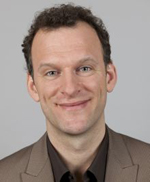
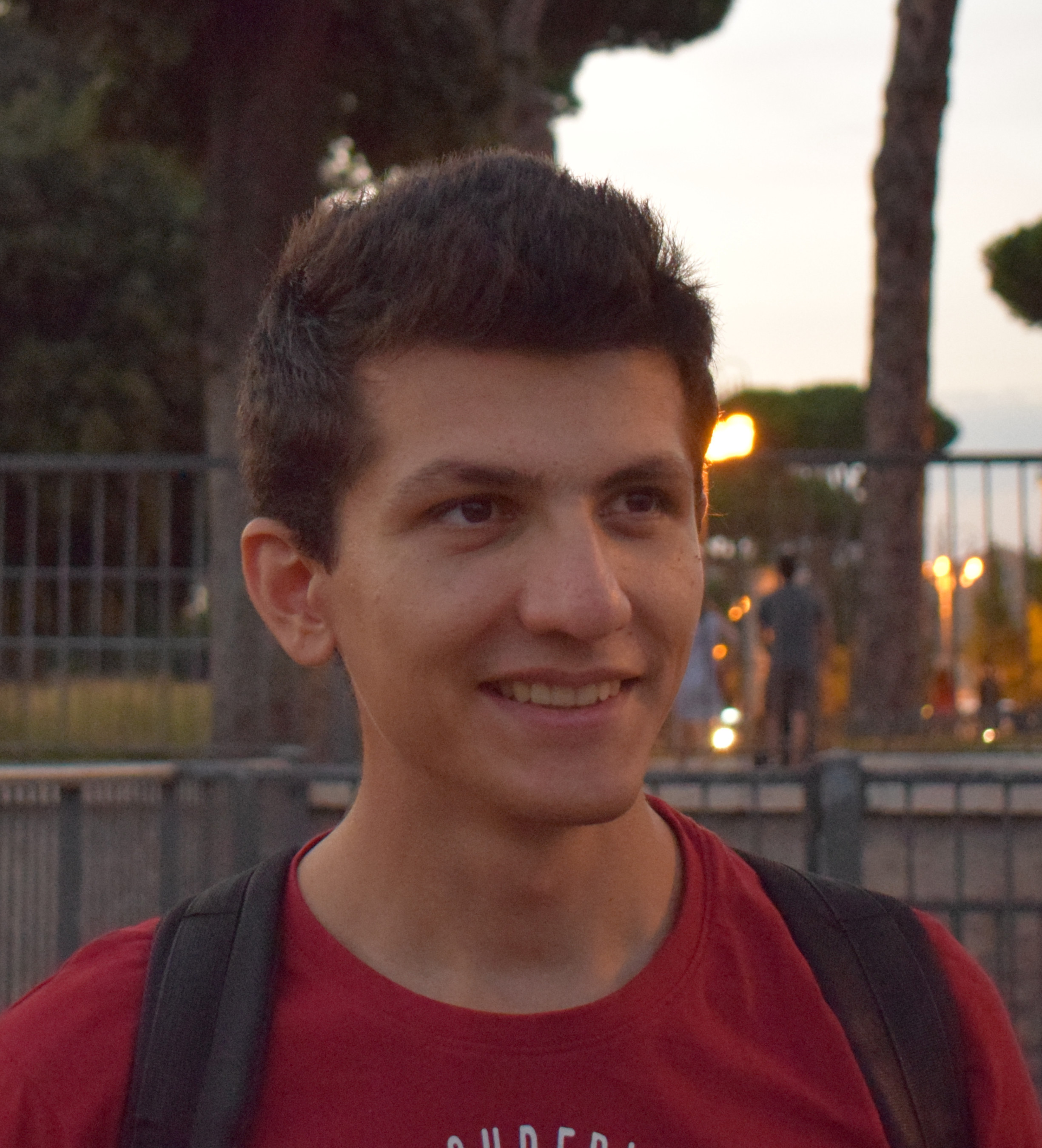
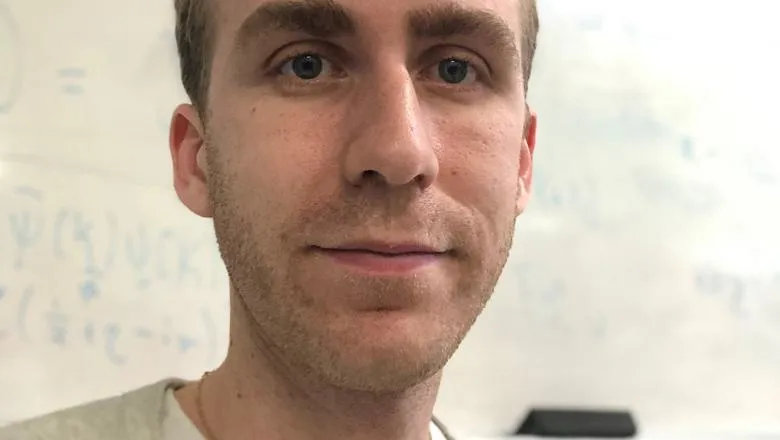
Professor Michael Green is a prominent academic at the University of Cambridge's Department of Applied Mathematics and Theoretical Physics (DAMTP). He holds the academic rank of Professor and is affiliated with the High Energy Physics research group. His work focuses on theoretical physics, particularly superstring theory, modular forms, and supersymmetric Yang-Mills theories. Research interests include scattering amplitudes, string dualities, non-perturbative effects in quantum field theory, and the interplay between string theory and mathematical structures like modular forms and elliptic functions. His contributions to understanding modular covariance of type IIB string amplitudes and their Yang-Mills duals have been groundbreaking. Key publications include reviews on scattering amplitudes, studies on modular invariance in superstring theory, and analyses of Feynman diagrams on toroidal topologies. His work often bridges high-energy physics with advanced mathematical techniques, contributing to both theoretical frameworks and computational methods in string theory. Professor Green's research has implications for understanding quantum gravity, non-renormalization theorems, and the behavior of gauge theories at high energies. His affiliations and collaborations span international institutions, reflecting the global nature of his field.
Professor Paul Kingsley Townsend is a DAMTP Professor of Theoretical Physics at the University of Cambridge, affiliated with the Department of Applied Mathematics and Theoretical Physics (DAMTP) under the Faculty of Mathematics. He holds a Royal Society Fellowship (2000) and has contributed extensively to General Relativity, supersymmetry, string/M-theory, solitons, and cosmology. His career includes postdoctoral positions at SUNY Stony Brook (USA), CERN (UK Junior Fellow), and the École Normale Supérieure in Paris (Joliot-Curie Fellow) before joining DAMTP as a lecturer in 1984. His research focuses on gravitational theories, quantum field theories, and their interplay with high-energy physics. Recent work emphasizes nonlinear electrodynamics, 3D gravity formulations, and the exploration of chiral bosons in higher dimensions. Notable contributions include ‘Trirefringence and the M5-brane’ (2023) and ‘Causal self-dual electrodynamics’ (2024), addressing foundational aspects of field and string theories. His awards highlight his impact on theoretical physics, including the Royal Society Fellowship. His affiliations also include the Relativity and Gravitation research groups within DAMTP, where he contributes to advancing quantum gravity and cosmological models.
Oleg Lunin is an Associate Professor in the Department of Physics at the University at Albany (SUNY). He obtained his PhD from Ohio State University in 2000, followed by postdoctoral positions at Ohio State University (2000–2002), the Institute for Advanced Study in Princeton (2002–2005), the University of Chicago (2005–2009), and the University of Kentucky (2009–2010). He joined the University at Albany as an Assistant Professor in 2010 and was promoted to Associate Professor in 2016. His research explores fundamental problems in theoretical physics, including quantum gravity, string theory, and gauge/gravity duality. Key interests include the dynamics of supersymmetric gauge theories, black hole quantum properties, and geometric structures in supergravity. His work often bridges mathematical physics with phenomenological implications for strong interactions and spacetime quantization. Lunin's publications predominantly focus on black holes, T-dualities, and deformed geometries in string theory. Recent articles analyze higher-dimensional spacetimes, α′-corrections, and integrable systems, reflecting a consistent emphasis on exact solutions and holographic principles. Trends indicate deepening work on cosmological extensions of black hole geometries and non-abelian dualities. Lab affiliations or team collaborations are not explicitly detailed, but his publications frequently involve co-authors from institutions like SUNY Albany, indicating active research networks.
Zoakos Dimitrios is an Assistant Professor in the Department of Theoretical and Mathematical Physics, Astronomy and Astrophysics at the University of Patras, affiliated with the School of Sciences. His research focuses on theoretical physics, particularly holography, conformal field theories, and quantum gravity, with applications to string theory and strongly coupled systems. He is available via email at dzoakos@upatras.gr and holds office hours on Tuesdays 11:00-13:00 and Wednesdays 12:00-13:00 (prior notice requested). His research interests include holographic dualities (AdS/CFT correspondence), defects in conformal field theories, supersymmetric field theories, and non-relativistic systems like Schrödinger geometries. He explores phenomena such as magnetic catalysis, anisotropic fluids, and finite-temperature/finite-density effects in holographic setups. Notable recent work involves codimension-2 defect CFTs, universal SUSY RG-flows, and thermodynamic properties of anisotropic fluids. His studies bridge high-energy physics with condensed matter systems, leveraging string theory to model complex quantum phases. While no formal advising or grant information is listed, his contributions span over 30 publications since 2004, reflecting deep engagement with cutting-edge theoretical physics topics. He is part of the University of Patras Physics Department, contributing to its research infrastructure and educational mission.
Dr. Carlos Mafra is a Royal Society University Research Fellow and Principal Research Fellow at the University of Southampton since 2016. His research focuses on the pure spinor formalism of superstring theory , particularly in computing scattering amplitudes and exploring connections to quantum gravity . He also teaches Differential Geometry to fourth-year undergraduates and supervises PhD students in the School of Mathematics. PhD from São Paulo, Brazil (2008) Postdoc at Albert Einstein Institute, Germany (2008-2011) Postdoc at DAMTP, Cambridge (2011-2014) Research Fellow at Institute for Advanced Study, Princeton (2014-2016) His research spans string theory , supersymmetry , and mathematical physics , with recent work on massive amplitudes , non-minimal pure spinors , and algebraic structures in scattering calculations. Funded by the Royal Society and STFC, his work aims to unify quantum gravity and particle physics . Key trends in his publications include pure spinor methods , amplitude duality , and mathematical identities in string theory. Awards include the Royal Society University Research Fellowship. He supervises PhD students Radu-Nicolae Moga, Chen Huang, and Jan Philip Becker.
Andrew R Linshaw is a Professor in the Department of Mathematics at the University of Denver's College of Natural Sciences and Mathematics. He specializes in representation theory, vertex algebras, and their applications to mathematical physics. Linshaw received his Ph.D. in Mathematics from Brandeis University in 2005 under Bong H. Lian, followed by postdoctoral positions at institutions including the National University of Singapore and UC San Diego before joining DU in 2013. His research bridges pure mathematics and theoretical physics, with a focus on invariant theory, Lie algebras, and conformal field theories. Linshaw teaches both undergraduate and graduate mathematics courses and has developed a first-year seminar on Mathematics and Art. His recent work explores topics like W-algebras, vertex algebras associated with super Lie algebras, and chiral de Rham complexes on geometric manifolds. He collaborates with mathematicians and physicists to advance understanding of algebraic structures in modern theoretical frameworks. His publications from 2022–2025 highlight advancements in vertex algebra constructions, invariant theory for arc spaces, and applications to geometric and physical systems. Notable themes include modular representations of affine Lie algebras, orbifold vertex algebras, and trialities in orthosymplectic W-algebras. Linshaw's work contributes to foundational aspects of algebraic geometry and quantum field theory.
Mateo Paulišić is a Researcher at the Faculty of Physics, University of Rijeka. His office is located in Ured O-S11, reachable via internal phone 584 639. His research focuses on theoretical physics, particularly in quantum field theory, higher-spin symmetries, and non-commutative geometry. He has published extensively on topics involving Moyal products, gauge models, and spacetime singularities. Paulišić's work explores advanced mathematical frameworks applied to fundamental physics problems, including particle content analysis in higher-spin theories and non-perturbative approaches to gravitational anomalies. His recent articles highlight innovations in gauging symmetries using non-commutative methods and the interplay between algebraic structures and physical phenomena. While no scientific awards are explicitly listed, his prolific publication record indicates significant contributions to theoretical physics. No advising or grant details are provided in the text. His research group likely engages with cutting-edge topics in mathematical physics, though specific lab affiliations are not mentioned. The full academic trajectory and educational background remain unspecified beyond his postdoctoral role.
Veronika Hubeny is a Professor in the Department of Physics at the University of California, Davis, since 2015. Her research focuses on string theory, quantum gravity, and holography, particularly in the context of gauge/gravity duality and black holes. She holds a Ph.D. from the University of California, Santa Barbara (2001), and has held postdoctoral positions at Stanford University and the University of California, Berkeley, before joining Durham University in the UK (2005–2015), where she advanced to Reader and then Professor. Her work explores the interplay between quantum entanglement and gravity, including holographic entropy inequalities, entanglement entropy, and black hole thermodynamics. Major contributions include studies of the subadditivity cone, covariant bit threads, and the fluid/gravity correspondence. Hubeny has been recognized with prestigious awards such as the Barry M. Goldwater Scholarship (1994–1996), the J.R. Dorfman Prize (1995), and multiple Gravity Research Foundation Essay Honorable Mentions (2003, 2005, 2008). Her recent articles investigate entropy inequalities in holographic systems, quantum marginal independence, and covariant formulations of entanglement. She has contributed to Snowmass reports outlining theoretical physics frontiers and continues to advance foundational aspects of quantum gravity through holography.
Susanne Reffert is a Professor of Theoretical Physics at the University of Bern, affiliated with the Albert Einstein Center for Fundamental Physics (AEC) and the Institute for Theoretical Physics. Her research focuses on quantum field theories in large charge sectors, string theory (including brane constructions and dualities), supersymmetric gauge theories, and their connections to integrable models. She leads a research group supported by the Swiss National Science Foundation. Teaching includes advanced courses such as 'Quantum Field Theory I/II,' 'Conformal Field Theory,' and 'Lie Algebras and their Extensions.' She organizes the 'Fields and Strings' seminar and has initiated conferences like the AEC Women in HEP Day (2018) to promote gender diversity in high-energy physics. Current positions include coordinating graduate courses on supersymmetric gauge theories and integrable models. Her academic contributions span theoretical physics education and cutting-edge research in dualities, with publications tracked on INSPIRE. She actively participates in international conferences, including events on large charge systems and string theory.
Bettina Skrzypczak is a Polish-Swiss composer and Professor at the Lucerne School of Music, Institute of New Music, Composition and Theory. Her career spans three decades with a focus on orchestral works, chamber music, and music-aesthetic theory. Doctorate in Composition (Krakow, 1999) Studied with Luigi Nono, Iannis Xenakis, and Rudolf Kelterborn Active in festivals like Venice Biennale, Lucerne Festival, and Warsaw Autumn Her research explores chaos theory , processive composition , and spatial-temporal duality . Works like 'SN 1993 J' and 'Landschaft des Augenblicks' exemplify her synthesis of harmonic transformation and metaphysical symbolism . The 15 most recent articles demonstrate her engagement with Xenakis's stochastic methods , transcendence in music , and systemic duality . Key themes include the interplay of fixed points and fluidity , epistemological inquiry , and interdisciplinary inspiration . Scientific Awards : 1988 Composition Prize at Zagreb Music Biennale She leads the Ensemble Boswil and co-directs the Young Composers Project , fostering collaborations with orchestras like Symphonieorchester des Bayerischen Rundfunks and Deutsches Symphonie-Orchester Berlin .
Diederik Roest is a Full Professor of Theoretical Physics at the Faculty of Science and Engineering, University of Groningen, where he is affiliated with the Van Swinderen Institute for Particle Physics and Gravity. His research focuses on theoretical cosmology and gravity, with particular emphasis on string theory, inflation models, and the double copy framework connecting gravity to particle physics. Roest received his PhD in theoretical physics in 2004 with cum laude distinction. After postdoctoral positions in London and Barcelona, he joined the University of Groningen in 2008 with a VIDI fellowship. He was appointed assistant professor in 2010, associate professor in 2014, and full professor in 2019. His research interests span theoretical aspects of cosmological models, particularly those of the primordial Universe, as well as field theory aspects of gravity. He has made significant contributions to different models of inflation and their observational signatures. More recently, his work has focused on the double copy relations between gravity and Yang-Mills theories, which provides a powerful framework for understanding gravitational phenomena through simpler gauge theories. His research often bridges abstract theoretical concepts with concrete observational predictions, such as those related to cosmic background radiation. Roest's recent publications reveal a strong focus on the double copy framework, exceptional field theories, and connections between gravitational physics and particle physics. His work on inflationary models continues to be influential, with ongoing research into multi-field inflation scenarios and their cosmological implications. He has also expanded into black hole physics, particularly studying phenomena around extremal black holes. Member of the Young Academy (2014) FOM projectruimte (2015) FOM personal grant (2014) VIDI 5-year fellowship (2008) Roest has supervised 13 PhD students and serves as Programme director for the BSc programme in Physics and Applied Physics since 2020. He is also the Educational director for the Van Swinderen Institute for Particle Physics and Gravity. Beyond his research, he is passionate about science communication and has contributed to public outreach initiatives, including an online course on science for children aged 10-12. He is actively involved with the Cosmic Frontier research group at the University of Groningen, collaborating with international teams on projects related to the Laser Interferometer Space Antenna (LISA) and other cosmological observatories. His work often involves interdisciplinary collaborations across theoretical physics, mathematics, and observational cosmology.
Dr. Anton Nedelin is a Researcher in the Theoretical Physics Division at the Department of Mathematics, King’s College London. His work focuses on the intersection of physics and mathematics, particularly in supersymmetric gauge theories and integrable systems. He has held postdoctoral positions at the University of Milano-Bicocca, the Israeli Institute of Technology, and the University of Geneva before joining King’s College London in 2023. Education: PhD in Physics, Uppsala University (2015) MSc in Physics, MIPT (2010) BSc in Physics, MIPT (2008) Research Interests: Dr. Nedelin explores mathematical structures in supersymmetric gauge theories, including elliptic integrable systems arising from superconformal indices and defects. His work bridges theoretical physics and advanced mathematical frameworks, with recent contributions to van Diejen model generalizations and AdS/CFT correspondences. Grants and Advising: While specific grants are not detailed, his postdoctoral trajectory reflects sustained engagement with leading institutions. He currently advises no listed students but contributes to collaborative research projects in his field. Labs/Teams: Affiliated with King’s Theoretical Physics Group, focusing on supersymmetry, string theory, and related areas. Active in international collaborations as evidenced by his institutional transitions and publication record.
Christopher Herzog is a Professor of Theoretical Physics at King's College London, Department of Mathematics, within the Faculty of Natural, Mathematical & Engineering Sciences. He previously held positions as Associate Professor at the Yang Institute for Theoretical Physics (Stony Brook University) and Assistant Professor at Princeton University. His research focuses on AdS/CFT correspondence, gauge/gravity dualities, and strongly interacting field theories, particularly QCD and string theory applications. He received his PhD from Princeton University in 2002 under Igor Klebanov. Research Interests: Herzog explores quantum field theories using holography and conformal field theory techniques. His work includes boundary CFTs, entanglement entropy, and applications of gauge/gravity duality to condensed matter systems. He is part of a group advancing research in supersymmetry, string theory, and M-theory. Scientific Awards: In 2019, he was awarded the Royal Society Wolfson Fellowship, recognizing his contributions to theoretical physics. Advising & Grants: While specific student names are not listed, his extensive research output indicates active mentorship in theoretical physics. His work is supported by grants related to his cutting-edge research areas. Labs & Teams: Leads the theoretical physics research group at King's College, collaborating internationally on projects in holography and conformal field theory.
Dr. Damián Galante is a Lecturer in Theoretical Physics and Stephen Hawking Research Fellow at King’s College London’s Department of Mathematics, within the Faculty of Natural, Mathematical & Engineering Sciences. He holds a PhD from the Perimeter Institute for Theoretical Physics and the University of Western Ontario, Canada, and has held postdoctoral positions at the University of Amsterdam and King’s College London. Education: Bachelor’s in Physics, University of Buenos Aires (2012) PhD in Theoretical Physics, Perimeter Institute & University of Western Ontario (2016) Research Interests: His work focuses on the emergent nature of spacetime via the AdS/CFT correspondence, with a particular emphasis on cosmological event horizons, quantum origins of black hole horizons, and time-dependent quantum systems. He employs techniques from condensed matter physics and quantum information theory to explore these areas. Publications: His most recent work includes studies on conformal boundaries near extremal black holes, Krylov complexity in SYK models, and gravitational observatories in AdS. These contributions highlight his expertise in holography, quantum gravity, and cosmological dynamics. Awards: UKRI Stephen Hawking Fellowship (2021) Bronze Prize, STEM for Britain (2020) Engagement & Outreach: He actively promotes STEM through initiatives like In2scienceUK and international workshops (e.g., a Black Holes workshop in Pakistan for young physicists). His research group, KCLstrings, explores supersymmetry, string theory, and holography. Labs/Teams: Leads the KCLstrings research group, collaborating on topics like de Sitter space, holographic cosmology, and quantum entanglement dynamics.
Silvia Georgescu is a Research Fellow at King’s College London’s Department of Mathematics, affiliated with the Faculty of Natural, Mathematical & Engineering Sciences. She completed her PhD in Physics at the Institute of Theoretical Physics (IPhT), Saclay, graduating in 2024. Her research focuses on quantum gravity, holographic dualities, and black hole physics, employing both top-down and bottom-up methodologies. She is part of the Theoretical Physics group at King’s, which specializes in supersymmetry, string theory, and M-theory. Research Interests: Quantum Gravity Holographic Dualities Asymptotic Symmetries Covariant Phase Space Methods Black Hole Physics No publications, awards, or grants are listed in the provided text. She is associated with the Theoretical Physics group at King’s, contributing to foundational studies in high-energy physics.